
The best communication coaches give away a lot of what they know, in blogs, videos, podcasts and newsletters. A few well-chosen follows can sharpen how you speak, listen and handle hard conversations, and they show you how a working coaching practice presents itself to clients.
You will find coaches here for stage presence, storytelling, hard conversations and business English. Each entry says what the coach teaches, who they work with and where you can follow along. Use the table to see who focuses on what, then read the entries that match the skill you want to build next, and ignore the rest until you need them.
TL;DR
The coaches worth following online fall into three groups. Gary Genard, Ivy Naistadt and Nick Morgan teach public speaking and executive presence. Carmine Gallo teaches storytelling and persuasion for leaders, while Cynthia Blair Kane and Genelle Aldred focus on conversations that are hard to have. Scottie Spurzem is the language specialist, helping international professionals speak clearer American English. Nearly all of them publish something free, such as a blog, a podcast, a newsletter or a YouTube channel, and most back it with books, courses or one-on-one coaching. Choose the first coach by the skill you need rather than by fame, then add a second whose style is different.
How We Chose These Communication Coaches
What we compared: seven coaches who teach communication, from public speaking and executive presence to difficult conversations and business English.
How we chose them: each has a working website that describes current coaching or training services and a clear specialty.
Where the details come from: each coach’s own website and, where one is listed there, their YouTube channel page.
What we left out: coaches whose own websites would not open, including language coach Gabriella Kovács, and follower counts from platforms that ask visitors to log in first.
One thing to check yourself: awards and client lists come from each coach’s own pages, so read them as the coach’s description. Sample two or three free pieces before you follow along or hire.
Which Coach Teaches What?
The table shows who teaches what and where to start. The pages behind it were read on 23 November 2026. YouTube subscriber counts come from the channel pages, and a dash means the coach lists no channel on their website.
| Coach | Best known for | Good place to start | YouTube subscribers |
|---|---|---|---|
| Gary Genard | Theater-based public speaking and stage fright | His blog | 343 |
| Carmine Gallo | Storytelling and presentations for leaders | His YouTube channel | 3.96K |
| Ivy Naistadt | Executive speaking coaching | Her blog | – |
| Nick Morgan | Speaking, voice and presence | His podcast | 478 |
| Cynthia Blair Kane | Calm, clear difficult conversations | Her YouTube channel or newsletter | 1.18K |
| Genelle Aldred | Leadership communication and media training | Her TEDx talk | – |
| Scottie Spurzem | Business English and accent management | Her website | – |
1. Gary Genard
Gary Genard is an actor and speech coach who built the Genard Method on theater techniques. He holds a Ph.D. in theater from Tufts University, trained at the Webber Douglas Academy of Dramatic Art in London and has taught at Harvard, Tufts and Boston College.
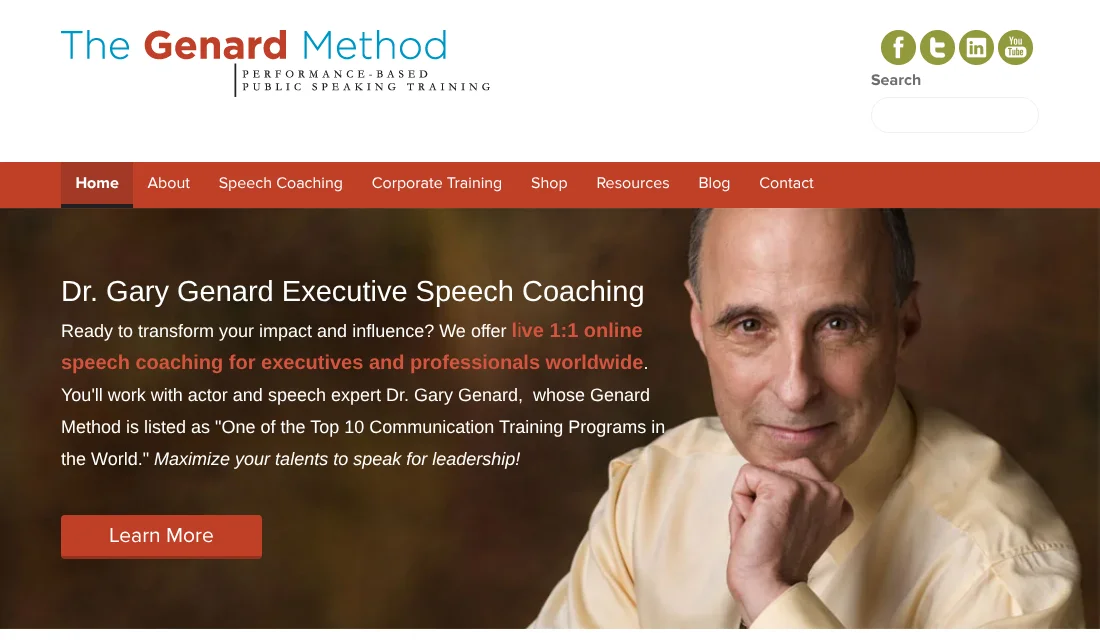
His coaching applies what actors do to pitches, presentations, keynotes and fear of speaking. Executives can book live one-on-one Zoom coaching in ten-week online courses: Leadership Communication, Voice and Speech Improvement or Fearless Speaking. His site reports that Global Gurus named him to its list of the world’s top 30 communication professionals for the ninth year in a row in 2022.
The free part is his blog, which covers body language, vocal dynamics, stage fright and storytelling, with new posts in October and November 2026. His YouTube channel holds only four videos, so the blog is the better place to follow him.
Where to follow: Blog, X, YouTube
2. Carmine Gallo
Carmine Gallo is a keynote speaker, Harvard instructor and communication coach who has written ten books translated into more than 40 languages, including Talk Like TED and The Bezos Blueprint.
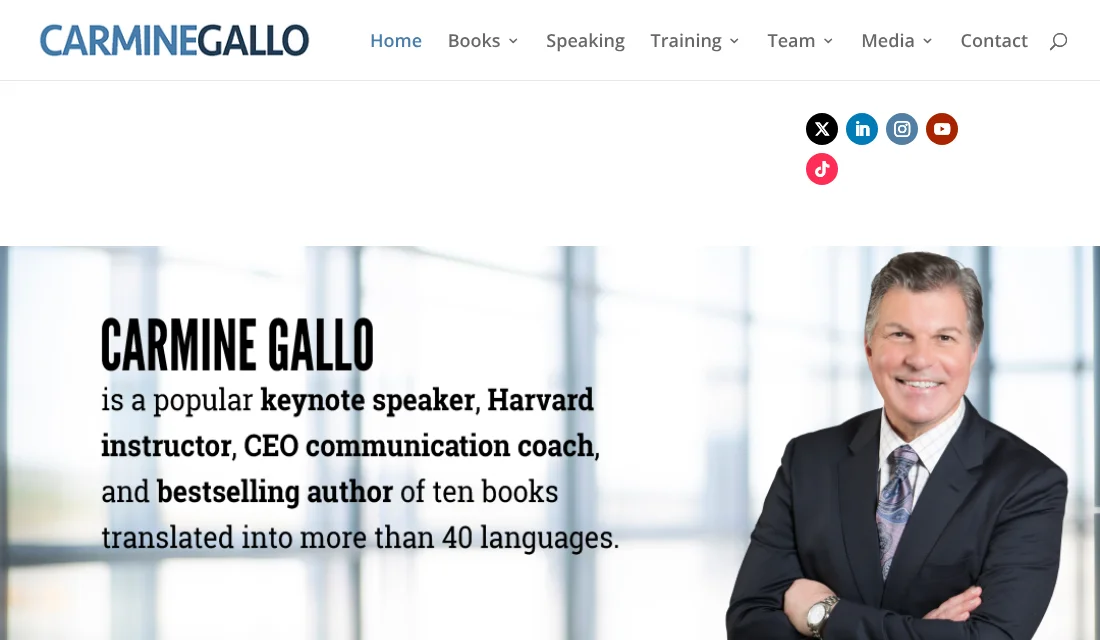
His training covers body language development, media and crisis communication, messaging and storytelling, and a Talk Like TED workshop built on his best-known book. His site, citing Fortune, says he coaches leaders at 7 of the top 10 “Most Admired Companies.”
Carmine Gallo TV is the easiest place to start, and he says he posts new videos every week. If you learn best from video, other coaches teach on YouTube too, including life coaches on YouTube who share personal growth lessons rather than presentation skills.
3. Ivy Naistadt
Ivy Naistadt is a New York speaking coach who has helped individuals and Fortune 500 companies communicate with confidence for more than 25 years. She has also worked as an actress in television and theater and as a corporate spokesperson, which shapes how she approaches stage fright.
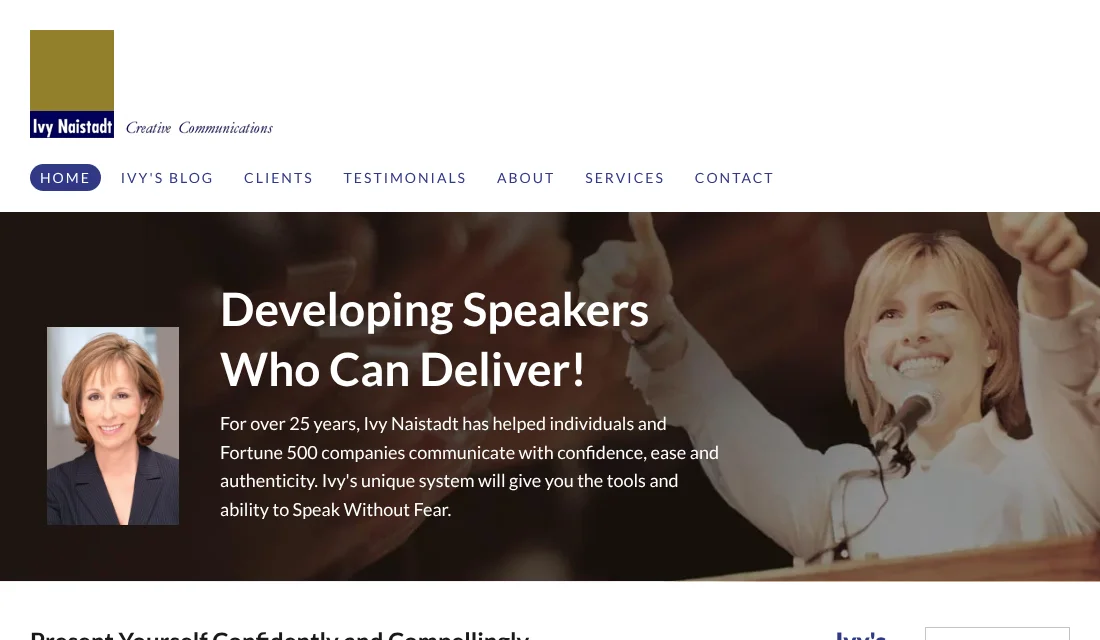
Her clients include Comcast, IBM, The New York Times and Pitney Bowes, and she has worked with universities such as Princeton, NYU and Rensselaer Polytechnic. She offers one-on-one executive speaking coaching, in person or virtually, and interactive workshops that mix individual coaching with group instruction.
Her site describes Speak Without Fear as a total system for becoming a natural, confident communicator. Her blog shares short, practical tips, such as how to make a fully scripted speech sound natural.
Where to follow: Ivy’s blog
4. Dr. Nick Morgan
Nick Morgan founded Public Words in 1997, and its site calls him one of America’s leading communication theorists and coaches. Public Words works with thought leaders, professional speakers and senior executives to shape ideas and deliver them with authority.
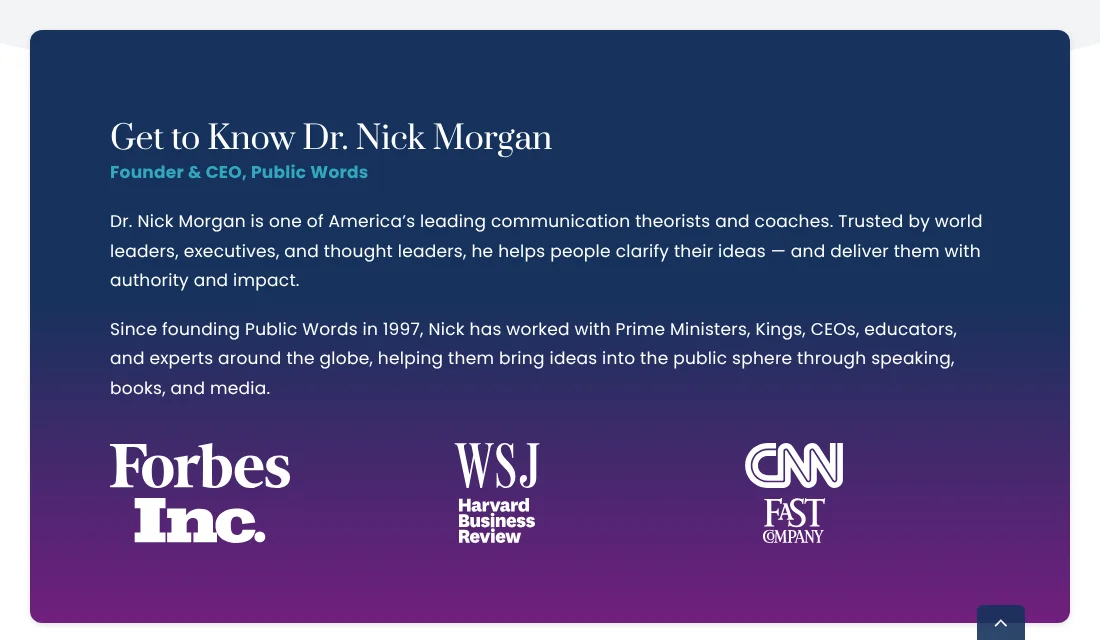
He is a speaking coach and Harvard lecturer who has written four books on communication, presence and trust, and his keynotes blend neuroscience, psychology and decades of coaching.
He also co-hosts a podcast with professional speaker John Israel about the craft and business of public speaking. Episodes cover opening a speech, keeping an audience’s attention and giving a TEDx talk.
Audio is an easy way to learn on the move. If you want to hear how other coaches talk about their work, try these coaching podcasts from life coaches.
Where to follow: Podcast, Public Words on YouTube
5. Cynthia Blair Kane
Mindful communication is the core of what Cynthia Blair Kane, who also goes by Cynthia Kane, teaches through the Kane Intentional Communication Institute she founded. Her approach blends Buddhist principles, emotional awareness and practical tools.
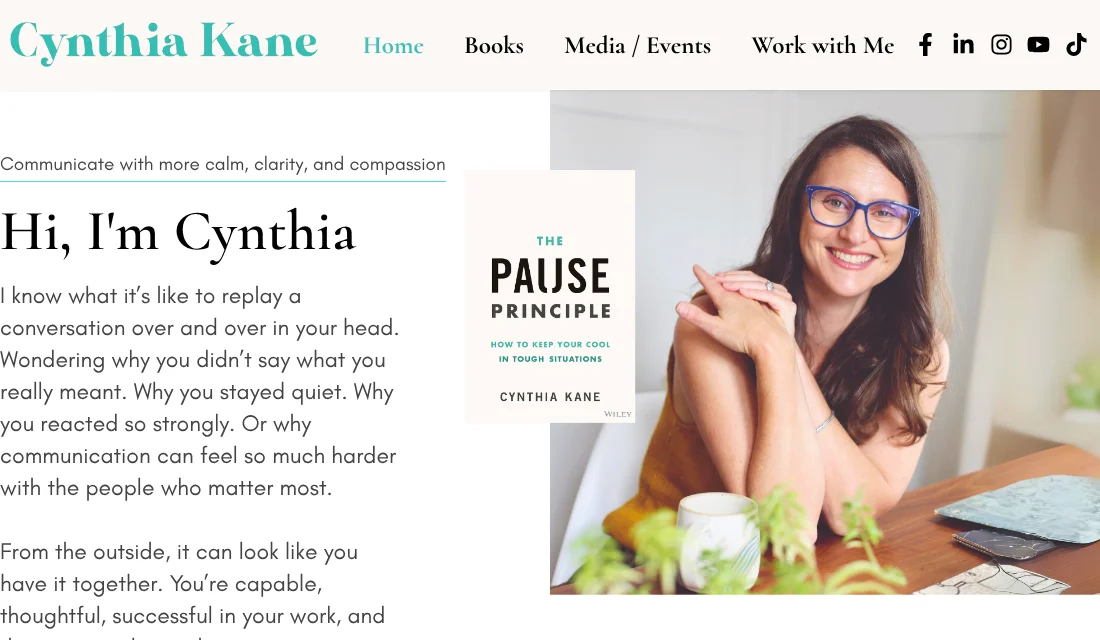
Her work centers on conversations that feel hard, such as setting a boundary, giving honest feedback or speaking up in a meeting. She offers a training program, one-on-one coaching, a yearlong community, workshops for organizations and self-paced audio courses.
Her books include How to Communicate like a Buddhist and Talk to Yourself like a Buddhist. Her newest is The Pause Principle (Wiley, 2025).
Her site says Yahoo named her the #2 communication coach to watch in 2021. Her YouTube channel has 252 videos, and she sends a free weekly newsletter called The Mindful Communication Insider.
6. Genelle Aldred
Genelle Aldred is a communications consultant with over 17 years of experience in media and strategic communication. She has worked as a newsreader and journalist at ITN, ITV and the BBC, and she now coaches and trains senior leaders.
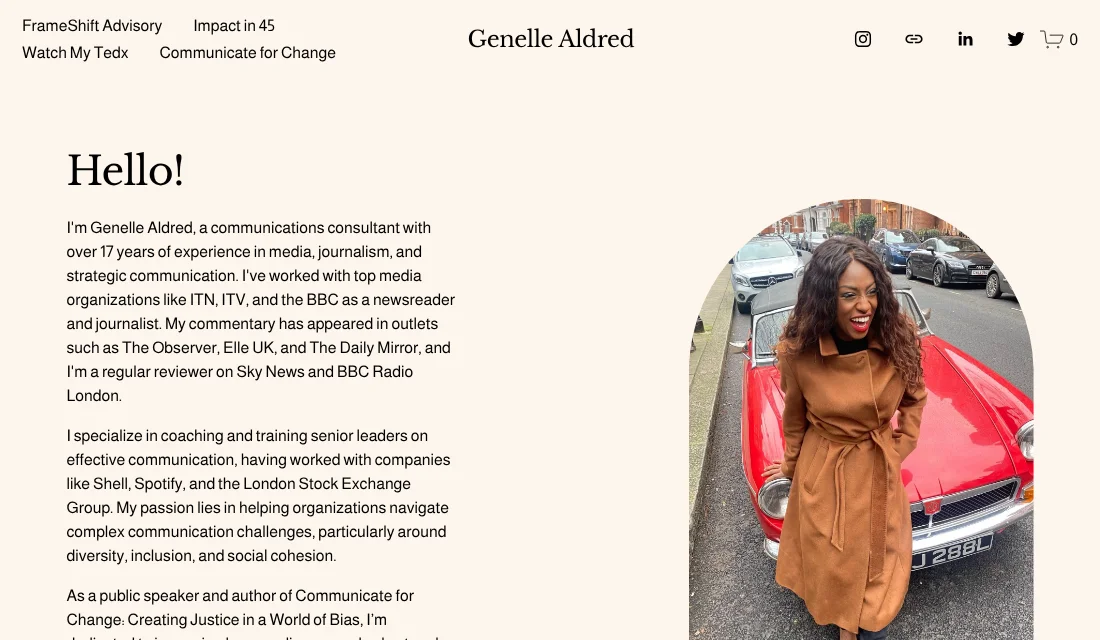
She has worked with companies such as Shell, Spotify and the London Stock Exchange Group, with a focus on communication around diversity, inclusion and social cohesion. Her book Communicate for Change: Creating Justice in a World of Bias, published in autumn 2021, is about having better conversations on bias, race and culture.
Her workshops and communication training run through FrameShift Advisory, and Impact in 45 is a half-day leadership communication masterclass built around clear thinking, confident delivery and lasting visibility. Her TEDx talk on how to communicate when you disagree is a quick way to hear her style first.
7. Scottie Spurzem
Strong communication also depends on language, and Scottie Spurzem coaches international business professionals who want to communicate more comfortably in American English.
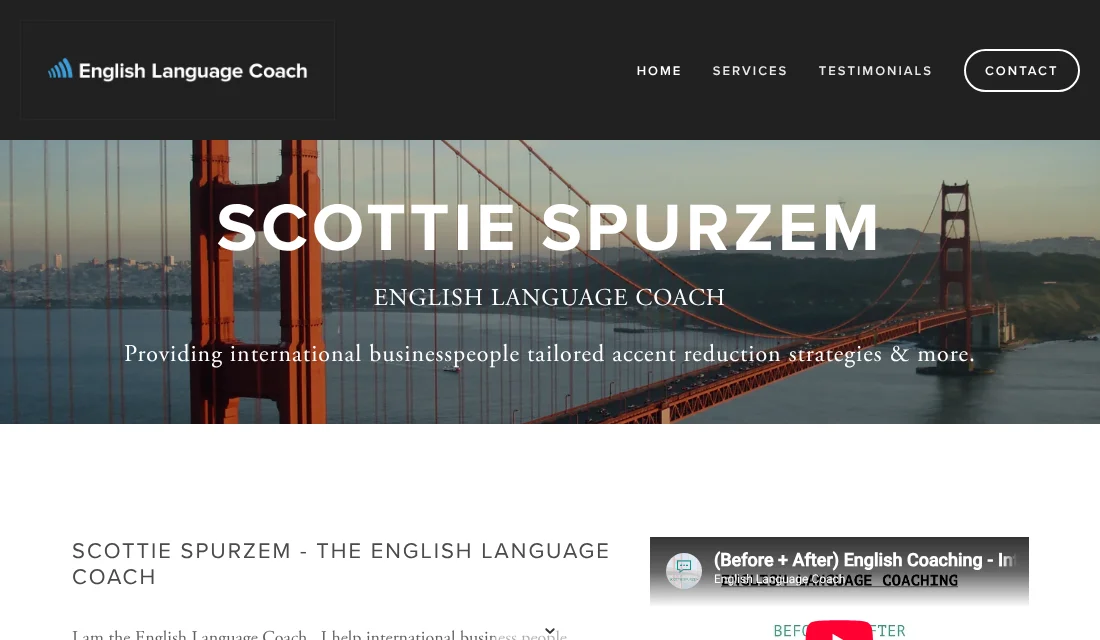
She is a CELTA-certified teacher and a former investor relations consultant. Her sessions focus on accent management, pronunciation, vocabulary and grammar for conversations, presentations and emails, one-on-one or in small groups, virtually or in person in the San Francisco Bay Area.
Her clients include business professionals, doctors, entrepreneurs and graduate students, and she is an Industry Fellow at the UC Berkeley Sutardja Center for Entrepreneurship and Technology. She is the language specialist on this list.
Where to follow: the English Language Coach website
Which Coach Should You Follow First?
Start with the skill that is holding you back rather than the biggest name. The map below pairs common goals with the coaches who teach them. Add a second coach with a different style once the first feels familiar.

What Can You Borrow for Your Own Coaching Business?
When you are building a coaching business of your own, the seven coaches above show different ways to present yourself. Each has made choices about what to share openly and what to offer as paid work.
Look at what they share for free. Gary Genard and Ivy Naistadt write blogs, Nick Morgan co-hosts a podcast, Carmine Gallo posts videos and Cynthia Blair Kane sends a weekly newsletter.
Then look at what sits behind it, from books and audio courses to live coaching and workshops. Three of them also name their approach, as in the Genard Method, Intentional Communication and Speak Without Fear, which makes it easy to remember what each coach stands for. Following is only the first step.
Carmine Gallo, Nick Morgan and Genelle Aldred all give keynotes, so each is a possible contact. Good networking for coaches works best when you start by engaging with work they already publish. Pick one habit to copy, such as a regular post or a named method, and keep it consistent with the services you sell.
Conclusion
The seven coaches here come at communication from different angles: theater-trained speaking, storytelling for leaders, difficult conversations and business English. Each shares a body of work you can sample for free before you decide whom to learn from.
Start with the coach whose specialty fits your biggest gap, then widen your reading. If you coach for a living, notice how each one turns free content into paid work.
Simply.Coach is built around the daily work of running such a practice, with scheduling, client notes and client workspaces in one place.
Key Takeaways
- Pick by skill: match the coach to the skill you want next, whether that is stage presence, storytelling, hard conversations or business English.
- Sample first: read or watch two or three free pieces before you decide to follow along or hire a coach.
- Use the strong channel: each coach is strongest in one place, such as a blog, a podcast or a YouTube channel, so start there.
- Mix styles: add a second coach whose approach differs from the first, such as theater-based speaking beside mindful conversation.
- Study the offers: notice how free content leads to books, courses and one-on-one work, and borrow that structure for your own practice.
- Read claims carefully: awards and client lists come from each coach’s own pages, so treat them as the coach’s description, not an independent ranking.
- Engage before you reach out: comment on or share their work first, because following is the start of networking.
Learning from other coaches is one part of growing a practice, and running it day to day is the other. Simply.Coach keeps your calendar, notes and client work together, so admin takes less of your week and your clients get more of it. See how its client management software for coaches works.
Frequently Asked Questions (FAQs)
Who are the best communication coaches?
The coaches in this list are Gary Genard, Carmine Gallo, Ivy Naistadt, Nick Morgan, Cynthia Blair Kane, Genelle Aldred and Scottie Spurzem. Each runs a working coaching practice and shares ideas online. The best one for you depends on the skill you want to build, so use the table above to match your goal.
What does a communication coach do?
A communication coach helps you speak, listen and write more effectively at work and in personal life. They give feedback on how you come across, offer a fresh perspective, teach practical techniques and keep you accountable while you practice, whether the focus is presentations, leadership, difficult conversations or language.
How do I choose a communication coach to hire?
Start with the problem you want to solve, such as public speaking, leadership presence, difficult conversations or business English. Then read or watch a coach's free content, ask for a short call and check that their experience fits your situation. Compare format and fit before you compare fame.
What is the difference between a communication coach and a public speaking coach?
A public speaking coach works on delivering talks and presentations, including structure, voice and stage presence. A communication coach covers more ground, including everyday and difficult conversations, listening and leadership communication. On this list, Gary Genard and Ivy Naistadt are mainly speaking coaches, while Cynthia Blair Kane focuses on conversations.
Can a language coach help with business communication?
Yes, when the barrier is language rather than technique. Scottie Spurzem, for example, helps international business professionals with accent, pronunciation, vocabulary and grammar for conversations, presentations and emails in American English. Pair that with a speaking coach if you also want help structuring talks.
Where can I follow communication coaches for free?
Most share free material. Gary Genard and Ivy Naistadt write blogs, Nick Morgan co-hosts a podcast, Carmine Gallo and Cynthia Blair Kane post on YouTube, and Cynthia also sends a weekly newsletter. Genelle Aldred's TEDx talk is on her website, and Scottie Spurzem shares her profile on LinkedIn.
Can coaches use this list to build their own business?
Yes. Look at how each coach pairs free content with books, courses and one-on-one work, then borrow the structure rather than the style. Keep your own voice and a clear method of your own, and reach out to the coaches you follow once you have engaged with their work.