
Coaching has become a key tool for personal and professional growth, with the International Coaching Federation (ICF) at the forefront of this evolution. The ICF has set the global standard for coaching certifications, shaping the industry significantly.
In fact, 80% of coaches believe their clients expect them to be certified or credentialed. This growing expectation highlights the importance of maintaining high professional standards.
In this blog, we’ll take a deep dive into the ICF and its crucial role in the coaching industry. We will also discuss how becoming ICF certified can enhance your coaching practice, boost credibility, and meet clients’ increasing demands for quality and expertise.
Key Takeaways
- ICF certification enhances credibility and trust with clients, positioning you as a skilled professional in the coaching field.
- The certification process ensures coaches meet global standards, fostering competency and professionalism in coaching practices.
- Mastering ICF core competencies improves client outcomes by focusing on ethical, client-centered coaching techniques.
- ICF-certified coaches are more attractive to high-value clients. This leads to increased opportunities and long-term engagements.
- ICF certification provides ongoing professional growth, ensuring coaches stay updated with evolving industry standards.
What is the International Coaching Federation?
The International Coaching Federation is a globally recognized, non-profit professional organization that serves as the leading authority in the coaching industry. Founded in 1995, the ICF has set the global standard for coaching practices and credentials.
Through its certification programs, the ICF ensures that coaches have the necessary skills, ethics, and tools to provide meaningful, transformative results for their clients.
They have pioneered the development of coaching as a professional service, influencing how coaches are trained, certified, and evaluated. Its impact on the coaching profession is vast, from introducing the ICF credentialing process to creating ethical guidelines that have shaped the practices of coaches worldwide.
The Role and Importance of the ICF in the Coaching Industry
The ICF has played a crucial role in shaping the professional coaching landscape, elevating coaching from an informal practice to a globally respected profession. Their certification process ensures that coaches maintain high standards of competence, professionalism, and ethical conduct. Here’s an overview of the ICF’s role:
- Setting global standards: The ICF is the global authority in coaching, providing internationally recognized certifications.
- Ethical coaching: ICF’s ethical standards ensure that coaches maintain integrity and professionalism in every aspect of their work.
- Global recognition: ICF certification is respected by organizations worldwide and signals high standards of coaching quality.
ICF’s influence has helped shape not just the industry but also the effectiveness of coaching as a transformative tool. Coaching practices that meet ICF’s standards offer significant benefits to both clients and coaches.
Also Read: A Guide to ICF Coaching Definition and Ethics Code
ICF’s Mission and Core Values
The ICF’s mission is simple but profound: to advance the coaching profession by setting the highest standard. They also look to provide independent certification and build a globally recognized network of trained professionals.
The ICF’s core values are:
- Integrity: Acting in a transparent, honest, and ethical manner
- Excellence: Striving for continuous improvement and innovation
- Collaboration: Working together to advance the profession and benefit clients
These values form the foundation for ICF’s work. It ensures that coaching practices are focused on creating measurable results while fostering an environment of trust, professionalism, and growth.
Why is ICF Certification Important for Coaches?
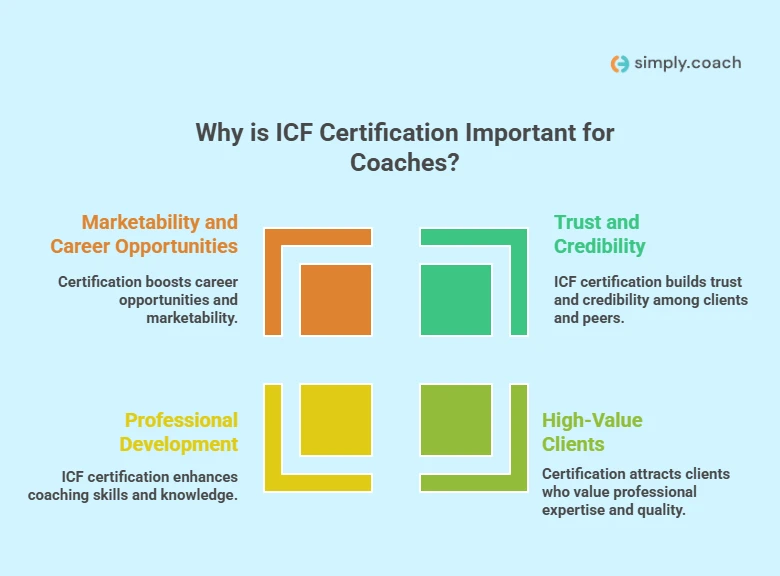
As a coach, whether you’re focusing on leadership, career, or personal development, establishing credibility and trust is important to your success. The ICF certification demonstrates your commitment to delivering high-quality coaching, enhancing your marketability, and improving client outcomes. Here’s why ICF certification is essential for your coaching practice:
1. Establishing Trust and Credibility
ICF certification validates your skills and knowledge, helping you to deal with even difficult clients. This further establishes you as a professional with the right tools and competencies. When clients see the ICF logo, they know they’re working with someone who has met rigorous standards. This trust directly translates into increased opportunities and stronger client relationships.
2. Attracting High-Value Clients
ICF certification acts as a magnet for high-value clients who are looking for coaches with proven credentials. Being ICF-certified opens the door to better opportunities, higher fees, and long-term engagements. As the demand for certified coaches increases globally, clients are seeking professional coaches who are committed to their development and success.
3. Enhancing Professional Development
ICF certification provides ongoing professional growth opportunities. It offers access to cutting-edge coaching methodologies, training programs, and networking. This constant development ensures you remain updated in the field and continuously improve your coaching expertise.
4. Boosting Marketability and Career Opportunities
An ICF certification enhances your marketability by distinguishing you in the competitive coaching market. It can lead to more job opportunities, partnerships, and collaborations, as clients, organizations, and companies increasingly value ICF-certified coaches for their professional expertise and ethical standards.
The ICF Certification Process: What You Need to Know
ICF certification is not just a mark of professionalism; it’s a process that requires dedication, training, and real-world experience. Here’s how the process works and what you need to know:
Understanding ICF’s 3 levels of certification
ICF offers three levels of certification to match your experience and expertise:
- Associate Certified Coach (ACC): Designed for newer coaches with foundational skills.
- Professional Certified Coach (PCC): For experienced coaches with a deeper understanding of coaching techniques and processes.
- Master Certified Coach (MCC): The highest level, awarded to coaches with extensive experience and a proven track record of success.
Each level comes with its own requirements and expectations. The certification you choose should align with your current experience and future coaching goals.
Also Read: Understanding ACC, PCC, and MCC: Guide to ICF Credential Levels
The ICF certification process: A step-by-step guide
To become an ICF-certified coach, you must follow a clearly defined process. This journey involves several key steps to ensure that you meet ICF’s rigorous standards:
- Choose your certification path: Decide which ICF level of certification is right for you (ACC, PCC, or MCC), depending on your experience and career goals.
- Complete accredited training programs: Enroll in ICF-accredited training programs that teach coaching competencies, ethical practices, and real-world coaching strategies.
- Track coaching hours: Accumulate a specified number of coaching hours, which include both practice hours and client interaction. This ensures you gain practical experience while applying the techniques learned in training.
- Pass the written exam: After completing the required hours and training, you must pass the ICF exam. The exam assesses your understanding of core coaching competencies, ethics, and best practices.
- Submit your application: Once all the requirements are met, submit your application for certification to ICF for review. If everything is in order, you’ll receive your certification.
This structured process ensures that ICF-certified coaches are equipped to handle diverse client needs, maintain professional integrity, and create lasting results for those they serve.
Learn Useful Tips to Pass the New ICF ACC Credentialing Exam
The ICF Core Competencies
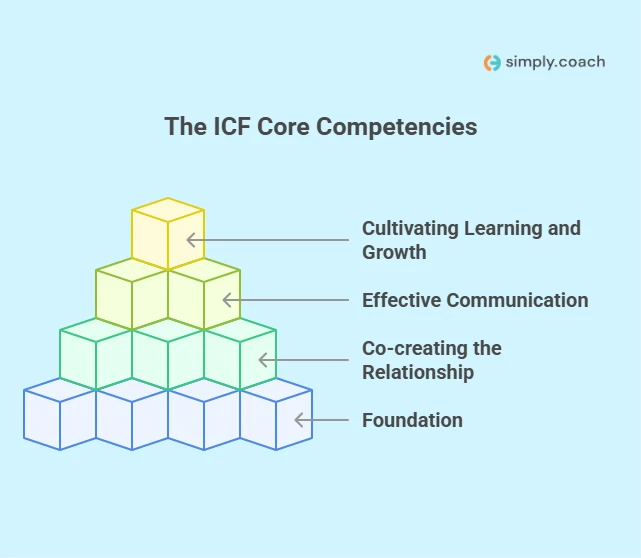
ICF’s core competencies are the essential skills and behaviors every certified coach must demonstrate. These competencies are fundamental in ensuring that coaches are providing high-quality, client-centered services. Understanding these competencies will guide you in refining your core competencies, coaching techniques and improving client outcomes. The ICF core competencies are grouped into four major categories:
1. Foundation
This involves maintaining integrity, adhering to coaching ethics, and consistently showing professionalism. For example, you might encounter a client who struggles with vulnerability. By fostering a safe and open environment, you can encourage them to share more openly, which can lead to deeper insights and transformation..
2. Co-creating the Relationship
The coach-client relationship must be built on mutual trust and respect. Clear agreements outline roles, expectations, and the boundaries of the coaching process. For instance, if your client is unsure about their goals, you might discuss boundaries and clarify how the coaching relationship works to build confidence and trust.
3. Effective Communication
Coaches excel in understanding verbal and non-verbal cues as effective communicationis the backbone of impactful coaching. Active listening helps uncover deeper insights, while powerful questioning prompts clients to think critically, gain clarity, and explore new perspectives. If your client mentions feeling stuck but doesn’t express why, using open-ended questions like “What’s holding you back?” can help uncover the root cause, guiding them toward breakthroughs.
4. Cultivating Learning and Growth
This competency involves guiding clients through change by helping them develop new perspectives and behaviors. Let’s say a client struggles with time management. You could help them create a personalized action plan with specific, measurable tasks that enable them to track their improvement and adjust strategies as needed.
How to Integrate These Core Competencies Into Your Coaching Practice?
Learning the ICF core competencies enhances your effectiveness as a coach. Here’s how to integrate them into your practice:
- Use active listening: Focus on listening not just to words but also to the emotions and needs behind them.
- Set clear agreements: Ensure your client understands the coaching process, objectives, and responsibilities.
- Promote growth: Use techniques that challenge clients to think deeply and take action.
Also read: Guide to ICF Core Competencies for Coaching Leadership
The Impact of ICF Certification on Coaching Careers
ICF certification offers more than just a badge; it has a tangible impact on your coaching career. It helps you build trust, increase marketability, and attract high-quality clients. Here’s how ICF certification boosts your career:
- Credibility: A coach who gains ICF certification is often trusted more by clients, enabling them to confidently engage with high-level executives who value professional credentials.
- Career opportunities: A coach with the certification may find it easier to secure corporate partnerships or land higher-paying positions. They can even attract international clients who seek globally recognized standards of excellence.
- Professional development: By attending ICF’s advanced training programs, a coach can improve their skills in specific areas. This could be emotional intelligence or leadership coaching, helping them stand out in specialized coaching markets.
Overcoming Common Challenges in the ICF Certification Process
While the ICF certification process is rewarding, it’s not without challenges. From navigating the application process to managing the time commitment, it’s important to be prepared for these hurdles.
1. Navigating the application process
The application process can seem daunting, with various requirements and documentation needed. Here’s how to navigate it smoothly:
- Start early: Begin gathering your required coaching hours and documentation well in advance.
- Be thorough: Double-check that all your materials are complete and meet the ICF’s standards.
2. Overcoming time and resource constraints
Many coaches struggle with finding the time to complete the necessary hours for certification. Here’s how to overcome this hurdle:
- Create a schedule: Break down your coaching hours into manageable chunks to avoid feeling overwhelmed.
- Use online platforms: Utilize online coaching sessions to maximize your coaching hours.
Also read: ICF Coach Certification: Things to Know Before Getting Certified
How Simply.Coach Supports your Coaching Practice
While understanding and mastering the ICF competencies is key to your success, effective coaching also requires the right tools to support your practice. Simply.Coach, a digital coaching platform, can help streamline your workflow and improve client interactions, enabling you to focus on delivering high-quality results.
Here’s what Simply.Coach offers:
- Client management: Manage client goals, development plans, and progress with tailored action plans and comprehensive reports.
- Scheduling: Easily schedule sessions, sync calendars, and handle time zone differences with ease.
- Note-taking: Keep track of key insights and client progress in a secure, organized manner.
- Resource sharing: Share valuable resources, exercises, and files directly with your clients to support their growth.
- Invoicing & payments: Simplify your financial management with automatic invoicing and seamless payment integrations.
Final Thoughts
ICF certification is a powerful tool for career advancement, providing credibility, recognition, and a structured path for personal and professional growth. Whether you’re just starting out or looking to deepen your expertise, ICF certification can propel your coaching practice to new heights.
But before diving in, assess if the certification aligns with your long-term coaching goals and commitment.
Also, don’t forget to prepare your coaching journey from day one, i.e, the moment you engage with a client. With tools like Simply.Coach, you can simplify progress tracking, streamline communication, and ensure each session drives tangible results. This small shift can allow you more time to focus on your client’s transformation easily.
Frequently Asked Questions (FAQs)
1. Is the International Coaching Federation legitimate?
Yes, the International Coaching Federation is a globally recognized and respected organization within the coaching profession. It sets high ethical standards and offers certification that adheres to international coaching competencies, ensuring coaches meet the highest professional benchmarks.
2. What are the 4 competencies of ICF?
ICF’s four core competencies are Foundation, Co-Creating the Relationship, Communicating Effectively, and Cultivating Learning and Growth. These competencies ensure a comprehensive, ethical, and client-centered coaching approach, empowering coaches to guide clients toward actionable results and continuous growth.
3. How difficult is the ICF exam?
The ICF exam is known for its rigor, requiring a deep understanding of the ICF core competencies and their application. With a pass rate of 75% on the first attempt, preparation is key.
4. Is it worth investing in becoming an Associate Certified Coach from the International Coaching Federation?
Yes, investing in becoming an Associate Certified Coach (ACC) through the ICF provides long-term benefits. The ACC certification boosts your credibility and enhances trust with clients, increasing your professional opportunities and positioning you as a qualified expert in the coaching industry.