
As a coach, you often face a significant challenge that clients exhibit resistance to change during coaching engagements. This resistance can manifest as denial, anger, or reluctance to engage, making progress difficult. Without a clear framework, guiding clients through these emotional stages becomes even more challenging.
The change curve offers a structured approach to understanding and addressing these emotional responses, helping you support clients effectively through transitions.
Your role is critical in helping clients navigate change. Recognizing where they are on the change curve allows you to tailor your strategies and provide the right support, enhancing outcomes and strengthening your coaching relationship.
In this blog, we’ll explore the coaching curve model, break down each emotional stage, and provide practical strategies to help your clients through their transformations.
Key Takeaways
- The Change Curve is a model that helps coaches understand the emotional stages clients experience during significant changes.
- Clients typically go through stages of Denial, Anger, Bargaining, Depression, Acceptance, and Commitment as they process and adapt to change.
- Understanding where clients are on the Change Curve allows you to adjust your coaching methods for maximum impact.
- Practical strategies for each stage include using Socratic questioning, mindfulness, goal-setting, and cognitive reframing.
- Simply.Coach helps you guide clients through the Change Curve by offering tools for goal setting, progress tracking, automated check-ins, and insightful reports.
- Mastering the Change Curve enhances your coaching effectiveness and strengthens your client relationships
What is the Change Curve?
The change curve is a model introduced by Elisabeth Kübler-Ross, originally developed to describe the emotional stages of grief. It helps coaches understand the emotional process clients go through during significant changes. The framework explains how clients experience emotional shifts when adapting to new circumstances, whether in their personal lives or professional journeys.
By recognizing where your client is on the change curve in coaching, you can adjust your approach to provide the support they need at any given moment, ensuring a more effective coaching experience.
Why coaches should care about the Change Curve
The change curve is an essential tool for any coach who wants to guide clients through emotional transitions effectively. Understanding this model allows you to enhance your coaching and provide deeper support throughout your client’s transformation. Here’s why it’s important:
- Tailor your coaching approach: Understanding the coaching curve helps you adjust your strategies based on where your client is emotionally, making your coaching more relevant and impactful.
- Provide targeted support: Knowing your client’s emotional stage enables you to offer the right tools and techniques that will move them forward, ensuring progress at every step.
- Enhance client engagement: When you’re aware of the emotional journey your client is on, you can create a stronger connection and foster greater trust, leading to better engagement.
- Facilitate progress: Guiding your client through the emotional stages of change helps them overcome resistance and move toward acceptance and action.
- Strengthen your role as a coach: Mastering the change curve helps you become a more effective and empathetic coach, giving you the confidence to support your clients through their transformations.
Also read: What Is Transformational Coaching? A Complete Guide for Coaches
The Stages of the Change Curve and How They Relate to Coaching
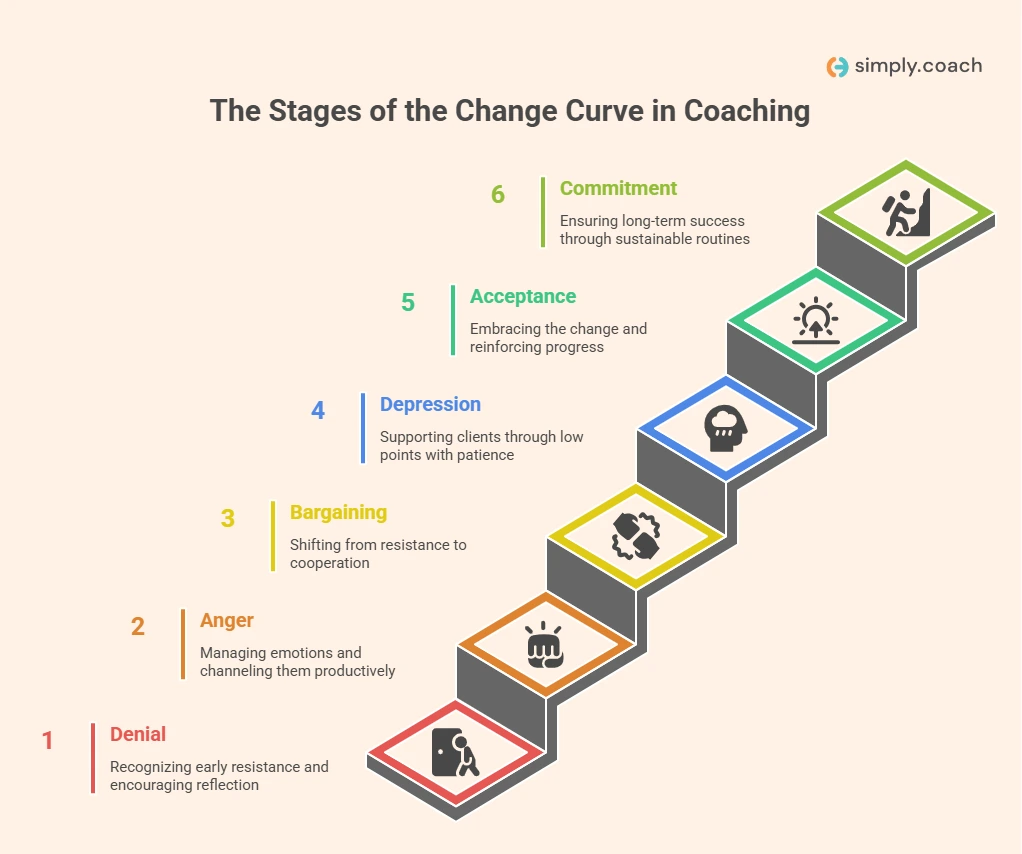
Understanding where your client is emotionally during times of change is essential. The change curve provides a roadmap for you to support clients through their transformation. Below are the key stages and how you can effectively coach your clients through each one.
Stage 1: Denial – Recognizing early resistance in clients
In the denial stage, your clients may refuse to accept that change is happening. They might avoid acknowledging the situation, minimize its importance, or act like nothing has changed. This often happens when the change feels overwhelming, and they’re not ready to confront it yet.
How to coach through it
- Encourage your client to reflect on their current situation by asking open-ended questions.
- Gently guide them to recognize the change without overwhelming them. Break the change into smaller steps, helping them see the situation more clearly.
- Validate their feelings and let them know that denial is a normal part of the process. Your role is to help them slowly accept the change at their own pace.
Stage 2: Anger – Helping clients manage emotions
Clients in the anger stage feel frustrated and upset by the change. They may direct this anger at themselves, others, or the situation. Anger often arises when they feel out of control or believe the change is unfair.
How to coach through it
- Listen actively and acknowledge their anger. Let them express their feelings and validate their emotional response.
- Use techniques like mindfulness, deep breathing, or relaxation exercises to help them manage this emotion.
- Guide your client to channel their anger productively. Encourage them to focus on practical solutions and take actionable steps that move them forward.
Stage 3: Bargaining – Shifting from resistance to cooperation
During bargaining, your client may try to negotiate with the change, attempting to find ways to avoid or minimize it. They may ask questions like “Can I just change this part?” or seek compromises, trying to keep some of their old ways intact.
How to coach through it
- Help your client understand that while bargaining is natural, embracing the full scope of change is necessary for progress.
- Set realistic, achievable goals with your client that focus on the benefits of embracing the change fully.
- Gently challenge their bargaining attempts by highlighting the long-term benefits of full acceptance and encouraging them to move toward cooperation.
Stage 4: Depression – Supporting clients through low points
In the depression stage, your client may feel overwhelmed, helpless, or stuck. They may question their ability to handle the change or feel disheartened by the process, seeing it as too difficult to manage.
How to coach through it
- Provide consistent emotional support and remind your client that the depression stage is temporary.
- Break the change down into smaller, more manageable tasks. Celebrate even the smallest wins to give your client a sense of progress.
- Encourage patience and self-compassion. Help them see how far they’ve come and focus on small, achievable steps to move forward.
Stage 5: Acceptance – Guiding clients to embrace the change
When your client reaches acceptance, they begin to fully acknowledge and embrace the change. They no longer resist it, and they are ready to move forward with a more positive mindset.
How to coach through it
- Reinforce your client’s progress by highlighting the steps they’ve taken and the positive outcomes they’ve achieved.
- Help them set new, future-focused goals that align with their current reality.
- Encourage them to reflect on the growth they’ve experienced, reinforcing the positive aspects of the change and helping them feel empowered to take further action.
Stage 6: Commitment – Ensuring long-term success
At this stage, your client has fully committed to the change. They consistently apply new behaviors, mindsets, or habits in their daily life. The change is no longer something they struggle with but something they actively integrate into their routine.
How to coach through it
- Help your client create sustainable routines that reinforce the changes they’ve made.
- Use accountability strategies, such as regular check-ins or progress reviews, to ensure they stay on track.
- Encourage them to set new goals and continue developing the skills that support long-term success, preventing any return to old habits or complacency.
Practical Coaching Strategies for Each Stage of the Change Curve
To guide your clients through the Change Curve, it’s essential to tailor your approach based on their emotional state at each stage. The following strategies, along with examples, can help you provide effective support at every step.
1. Tailored coaching tools for each stage
| Stage | What to do | Example |
| For Denial | Use Socratic questioning to help your client examine the situation from different angles. This questioning technique encourages them to explore their beliefs and gently challenge their denial. | If a client is denying the need for career change, ask questions like, “What are the risks of staying in your current role?” or “What could be different if you embraced this change?” These questions help the client reflect and recognize reality. |
| For Anger | Introduce mindfulness techniques such as deep breathing, grounding exercises, or short meditation practices to help clients manage frustration and anger. | If a client is angry about being passed over for a promotion, guide them through a deep-breathing exercise to calm their mind. You could then ask, “What positive actions can we take today to move closer to your goals?” This helps refocus their energy. |
| For Bargaining | Guide your client to set realistic, achievable goals. Clients at this stage often try to find ways to make the change smaller or more manageable, hoping to avoid full commitment. Use the Simply.CoachGoal and development planning tool to break down the full change into small, actionable steps. | If a client keeps asking if they can take only partial action, help them break down the full change into small, actionable steps. “How about we work together to develop a 3-month plan that leads you to full acceptance of this new role?” |
| For Depression | Provide consistent encouragement and use cognitive reframing to help clients see the benefits of the change. Help them break down the change into manageable chunks. | If a client feels overwhelmed by a career shift, offer phrases like, “It’s okay to feel stuck right now. Let’s take this one step at a time.” Help them set one small goal, like updating their resume, to regain confidence. |
| For Acceptance | Use visualization techniques to help your client see themselves fully embracing the change. Visualization strengthens their belief in the possibility of success and helps them move forward with confidence. | If a client has accepted their job change, guide them through visualizing themselves excelling in the new role. “Imagine yourself in 6 months—feeling confident in your new responsibilities. What does success look like to you?” |
| For Commitment | Encourage long-term goal-setting and use accountability strategies like regular check-ins to keep the client focused. Help them turn new behaviors into consistent habits. | If a client has embraced a fitness change, help them develop a routine. “Let’s set a weekly check-in to track your workouts and nutrition. How can we make your workout schedule consistent for the next few months?” |
2. The role of active listening
Active listening is essential to understanding where your client is emotionally within the Change Curve. You need to listen closely to their words, tone, and body language to gauge their readiness to move to the next stage.
How to use it effectively:
- When a client expresses frustration, listen for the underlying causes. They might say, “I just don’t think this will work,” but deeper listening reveals a fear of failure or lack of confidence.
- Reflect what they say back to them to ensure understanding. For example, “It sounds like you’re worried about failing in this new role, is that right?” This ensures you understand their emotions and helps build trust.
Active listening allows you to adjust your coaching strategies to match your client’s emotional state, making your support more effective. For more insights read, Three Levels of Coaching Listening: Unlock Deeper Connections & Client Success
3. Modeling change
As a coach, it’s important to model the behavior you want to see in your clients. When you openly embrace change, it sets an example and encourages clients to do the same.
How to do it effectively:
- Share personal examples of how you’ve embraced change in your own life. For instance, you could say, “When I switched careers a few years ago, I felt uncertain and afraid, but I took one small step at a time, and here I am today, confident in my new role.”
- Let clients know that change is an ongoing process and it’s okay to face challenges. Model how to handle setbacks by being transparent about your own experiences and how you work through difficulties.
By applying these specific coaching strategies, you provide tangible tools that help clients move through each stage of the change curve with confidence. Tailoring your approach based on their emotional state, active listening, and modeling change yourself enhances your effectiveness as a coach and strengthens the client-coach relationship.
Also read: Mastering Transformational Coaching: Techniques, Tools, and Strategies for Lasting Change
Advanced Techniques to Coach Clients Through the Change Curve
Helping your clients move through the change curve requires structured frameworks, mindset techniques, and self-reflection tools. Here are advanced coaching strategies to enhance your effectiveness in guiding clients through their emotional journey.
1. The GROW model as a framework for change
The GROW model provides a powerful structure to align your coaching with the client’s current emotional stage on the change curve in coaching. This model ensures clarity, focus, and actionable steps.
- Goal: Define what the client wants to achieve.
- Reality: Assess the current situation and identify obstacles.
- Options: Explore possible strategies and solutions.
- Will: Commit to specific actions and set accountability measures.
For a comprehensive guide and downloadable template, refer to Simply.Coach’s GROW Model Template.
2. Mindset shifting tools
Shifting your client’s mindset is crucial for navigating the Change Curve. A growth mindset helps clients overcome obstacles and adapt to change more effectively.
- Growth mindset: Introduce the concept of a growth mindset. Help your clients understand that challenges and setbacks are part of the growth process. Encouraging them to see change as an opportunity rather than a threat fosters resilience and adaptability.
- Viewing failure as part of growth: Explain that failure is a natural and necessary part of growth. Help your clients reframe their perspective on failure, viewing it as a learning experience rather than something to be feared or avoided.
Read: 17 Best Mindset Coaching Tools for Personal Growth
3. Self-reflection practices for coaches
As a coach, your self-awareness is key to providing effective guidance. By reflecting on your own biases and emotional responses, you can offer more objective and empathetic support.
- Recognizing your biases: Be aware of your own biases, particularly when it comes to how you perceive change. Recognizing how your own experiences might influence your perspective ensures you remain neutral and supportive, rather than imposing your views on your clients.
- Managing emotional responses: Acknowledge your emotional reactions when working with clients through difficult stages, such as anger or depression. By practicing emotional regulation, you ensure that your feelings don’t interfere with your client’s progress and you can maintain a calm and empathetic presence.
These advanced techniques offer deeper coaching tools to help your clients successfully navigate the Change Curve. The GROW Model, mindset shifting strategies, and your own self-reflection will ensure that you provide a supportive, focused, and impactful coaching experience.
Common Challenges Coaches Face When Navigating the Change Curve
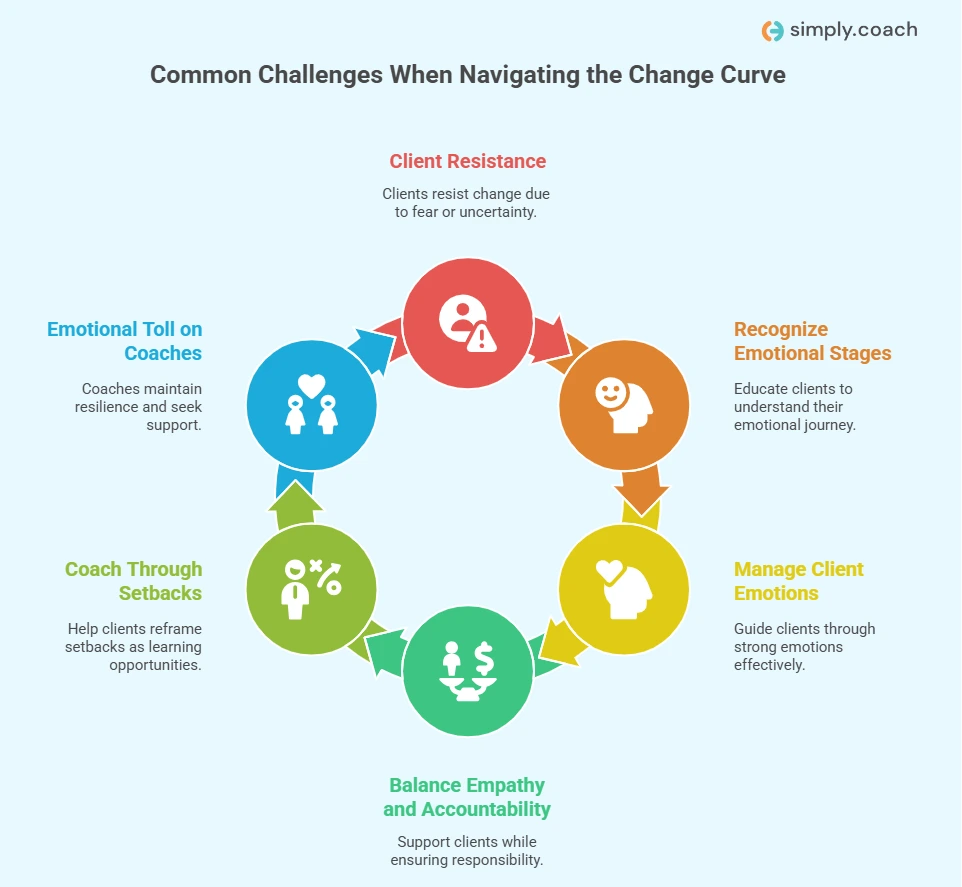
Coaching clients through the change curve can be complex, with several challenges that require your strategic approach. Below are some common hurdles you may face when guiding your clients through emotional transitions:
- Client resistance: Many of your clients will resist change due to fear, uncertainty, or an unwillingness to embrace new realities. This resistance can show up as denial, anger, or avoidance, making it challenging for them to move forward and engage with the process.
- Difficulty recognizing the curve: Some of your clients may not immediately recognize the emotional stages they are going through, which can slow down their progress. Educating them about the change curve early on will help them understand the emotional journey and allow them to embrace the transformation.
- Managing client emotions: As a coach, you will often face the challenge of addressing strong emotions like anger, denial, or depression. It’s crucial to guide your clients in processing these emotions effectively without letting them get stuck in them, while ensuring you don’t become overwhelmed yourself.
- Balancing empathy and accountability: Striking the right balance between being empathetic and holding your clients accountable can be tough. While it’s important to offer support and understanding, you also need to ensure that your clients stay focused on their goals and take responsibility for their actions.
- Coaching through setbacks: Your clients may experience setbacks during their transformation, which can derail their progress. It’s your job to help them reframe these setbacks as learning opportunities, ensuring they stay motivated and maintain a positive outlook.
- Emotional toll on coaches: Coaching through the change curve can take an emotional toll on you as a coach. You must maintain your own emotional resilience and seek support from mentors or peers to stay effective and balanced, especially when dealing with challenging emotional states.
For inspiration and real-world advice on coaching clients through change-
listen to growth dialogues podcast episode “Coaching Through Change with Career Relocation Coach Lynn Wagner.” In this episode, Lynn discusses how she helps clients navigate major career transitions and relocations, which can be especially challenging during times of change.

How Simply.Coach Helps in the Change Curve
Simply.Coach provides a suite of tools that are designed to support you as a coach throughout the Change Curve. These tools allow you to guide your clients more effectively, helping them move through each emotional stage with clear goals and consistent support. Here’s how Simply.Coach can enhance your coaching process:
- Goal setting and progress tracking: Set clear goals and track progress in real-time to keep clients aligned with their stage in the Change Curve.
- Automated check-ins and nudges: Use automated check-ins and nudges to keep clients engaged and on track, especially during resistance or setbacks.
- Client workspaces for engagement: Enable clients to take ownership of their journey with personalized workspaces for goals, action plans, and resources.
- Action plans and behavioral reinforcement: Create actionable plans to reinforce positive behavior and ensure clients stay accountable at every stage.
- Reports and insights for coaches: Access detailed reports to adjust your approach based on your client’s progress and emotional state.
Simply.Coach helps you provide targeted support for your clients, guiding them through each stage of the change curve with efficient, data-driven tools.
Conclusion
Navigating the coaching curve with your clients is a powerful yet challenging process. By understanding each emotional stage, you can provide the right support, helping clients overcome resistance and embrace transformation. With the right tools, coaching through change becomes an opportunity for growth, both for your clients and yourself. By applying the strategies outlined in this blog, you’ll be well-equipped to guide your clients through their emotional journey and ensure lasting success.
Simply.Coach the leading digital coaching platform is designed to support you through each stage of the change curve in coaching. With features like goal setting, automated check-ins, and insightful reports, you can streamline your coaching process and keep clients engaged. Whether you’re dealing with resistance, depression, or acceptance, Simply.Coach offers the tools you need to enhance your coaching and provide more value to your clients.
FAQs
1. How can I assess which stage of the Change Curve my client is in?
Understanding your client’s current stage on the Change Curve is crucial for tailoring your coaching approach. Utilize active listening, observe behavioral cues, and ask reflective questions to gauge their emotional state. Tools like emotion wheels or journaling exercises can also help clients articulate their feelings, providing clearer insights into their stage.
2. What are effective strategies for clients who are stuck in the Depression stage?
Clients in the Depression stage often feel overwhelmed and may struggle to see a way forward. Implementing cognitive reframing techniques can help them view the situation from a different perspective. Encouraging small, achievable goals and celebrating minor successes can build momentum and restore a sense of control.
3. How can I maintain my own emotional resilience while coaching clients through the Change Curve?
Coaching clients through emotional transitions can be taxing. It’s vital to engage in regular self-reflection and seek supervision or peer support to process your own emotional responses. Establishing clear boundaries and practicing self-care routines can also help maintain your emotional well-being.
4. How do I help a client transition from the Anger stage to the Bargaining stage?
To help a client move from Anger to Bargaining, first acknowledge their anger and allow them to express it. Use mindfulness or deep-breathing exercises to calm them. Once they’ve calmed down, help them set realistic goals and focus on the benefits of embracing the change.
5. What are common signs that a client is ready to move from Acceptance to Commitment?
Signs that a client is ready to move from Acceptance to Commitment include consistent application of new behaviors, increased confidence in their ability to handle the change, and setting new goals aligned with the change. They will demonstrate a more active engagement in their transformation.