
Which coaching standards help you respond when a leader asks for advice instead of space to think? The ICF core competencies, from the International Coaching Federation, describe the ethics and behaviors you use to support a client’s thinking and choices. The current model includes updated expectations for your own development as a coach.
Working with leaders also means paying attention to the people and expectations surrounding their decisions at work. You need to understand each competency well enough to use it when a conversation changes direction. Applying ICF Core Competencies in Leadership connects those expectations to choices you can make before, during and after sessions.
TL;DR
The 2025 ICF Core Competencies describe eight areas of coaching practice across four domains, covering ethics, mindset, relationships, communication and the client’s ability to turn learning into action through coaching. The update keeps the main framework while adding five sub-competencies, revising eleven others and expanding expectations for coach development, including awareness of bias, technology use and personal health around sessions. In leadership coaching, you apply these expectations when agreeing on sponsor involvement, exploring what a leader means, supporting choices about action and reviewing your own responses throughout the coaching engagement.
Overview of ICF Core Competencies
For practice in 2026, use the 2025 ICF coaching competencies to connect professional standards with specific behaviors you can review. Knowing those expectations gives you context for ICF coach certification, while the competency details also guide everyday practice.
1. Structure of Core Competencies
The International Coaching Federation organizes the 8 ICF core competencies into four domains that group related coaching responsibilities. Each competency has a definition and sub-competencies describing the behaviors expected of a coach.
A domain groups related work; the 2025 document does not prescribe a sequence for using the competencies. For example, confidentiality remains relevant while you listen, discuss goals and review progress.
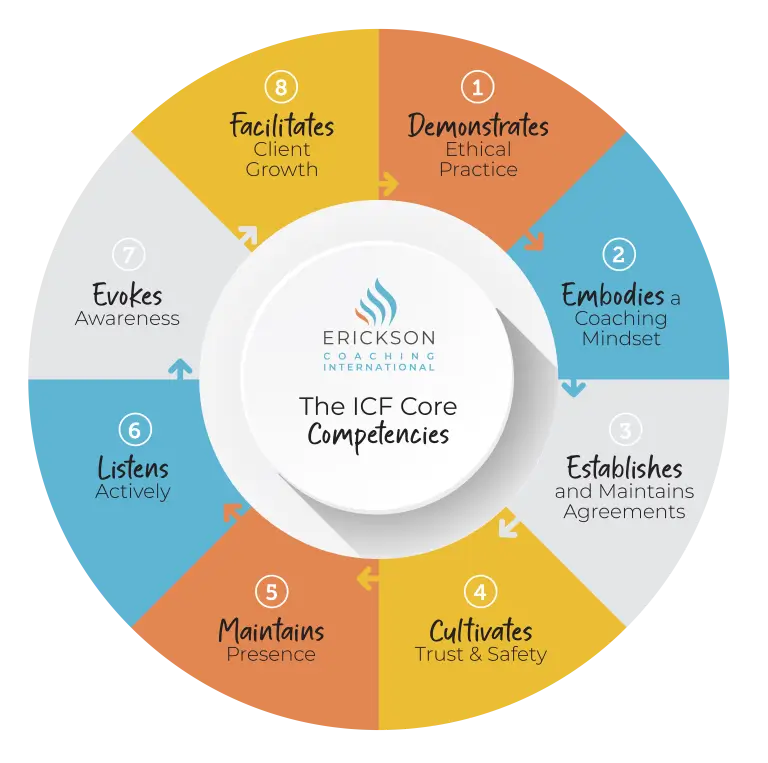
2. Division of the Coaching Competencies Into Four Categories
The ICF core competencies list below pairs every competency with its domain and a short explanation of the coach’s responsibility. The leadership examples show how those definitions apply when you work with a client inside an organization.
| Domain | Competency | What it asks of the coach |
|---|---|---|
| A. Foundation | 1. Demonstrates Ethical Practice | Understand and consistently apply coaching ethics and standards. |
| A. Foundation | 2. Embodies a Coaching Mindset | Keep learning, seek support as needed and stay open, curious, flexible and focused on the client. |
| B. Co-Creating the Relationship | 3. Establishes and Maintains Agreements | Agree on the relationship, process, plans and goals for the engagement and each session. |
| B. Co-Creating the Relationship | 4. Cultivates Trust and Safety | Create a supportive space for sharing, with mutual respect and trust. |
| B. Co-Creating the Relationship | 5. Maintains Presence | Stay fully present with an open, flexible, grounded and confident approach. |
| C. Communicating Effectively | 6. Listens Actively | Understand spoken and unspoken communication within the client’s context, supporting their expression. |
| C. Communicating Effectively | 7. Evokes Awareness | Support insight and learning through questions, silence, metaphor or analogy. |
| D. Cultivating Learning and Growth | 8. Facilitates Client Growth | Turn learning into action with the client while supporting their autonomy. |
1. Demonstrates Ethical Practice: Ethical practice requires you to understand coaching ethics and apply coaching standards consistently. The definition concerns your conduct, including how you handle information and the limits of your role.
- Act with integrity: Be honest in your interactions with the leader, sponsor and other relevant stakeholders.
- Respect personal context: Stay sensitive to the client’s identity, environment, experiences, values and beliefs throughout your work together.
- Choose respectful language: Use language appropriate to the client, sponsor and other people involved in the engagement.
- Uphold professional standards: Follow the ICF Code of Ethics and uphold the ICF Core Values in your coaching practice.
- Protect client information: Maintain confidentiality according to stakeholder agreements and applicable laws when handling information about the client.
- Keep roles distinct: Maintain the distinctions between coaching, consulting, psychotherapy and other support professions when explaining or providing your services.
- Refer when appropriate: Refer clients to other support professionals when the support they need calls for a different professional role.
If an HR sponsor asks for a leader’s session notes, check the agreed disclosure terms and applicable law before responding. A sponsor’s involvement does not remove your confidentiality responsibilities. ICF’s ethical practice video is a learning resource on this competency.
2. Embodies a Coaching Mindset: The 2025 definition covers your ongoing personal and professional development, including work with coaching supervisors or mentor coaches as needed. It also calls for an open, curious, flexible mindset that keeps the client at the center of coaching.
- Respect client choices: Acknowledge that clients remain responsible for their own choices throughout the coaching relationship.
- Keep learning: Continue your development as a coach, including awareness of current coaching best practices and the use of technology.
- Reflect on practice: Develop an ongoing habit of examining your experiences and responses so you can improve your coaching.
- Consider your biases: Stay aware of how biases, context and culture influence you and others involved in the coaching work.
- Use self-awareness: Bring awareness of yourself and your intuition to the work in ways that benefit the client.
- Manage your emotions: Develop and maintain your ability to manage your own emotions as part of your coaching practice.
- Care for yourself: Maintain emotional, physical and mental well-being before, throughout and after each session with a client.
- Seek outside help: Recognize when you need help from outside sources and seek that support when necessary.
- Nurture curiosity: Encourage openness and curiosity in yourself, the client and the coaching process as you work together.
- Notice your influence: Remain aware of how your thoughts and behaviors affect the client and other people.
A leader’s approach to authority may differ from yours; notice whether you start treating your own preference as the right answer. A mindset coach certification is a training choice; the competency describes behaviors you apply with any coaching client. Choose learning around a need in your practice, and keep responsibility for the leader’s decisions with them.
3. Establishes and Maintains Agreements: Agreements cover your partnership with the client and relevant stakeholders, including the coaching relationship, process, plans and goals. You establish expectations for the entire engagement and for each session.
- Explain your approach: Describe your coaching philosophy and clearly define what coaching is and is not for potential clients and stakeholders.
- Agree on responsibilities: Clarify appropriate boundaries, what you offer and each person’s responsibilities, including commitment to working toward coaching goals.
- Set relationship terms: Agree on logistics, fees, scheduling, duration, termination, confidentiality and the inclusion of others in the coaching relationship.
- Plan the engagement: Work with the client and relevant stakeholders to establish an overall coaching plan and goals.
- Check the fit: Partner with the client to determine whether the coaching relationship is a suitable match for both of you.
- Confirm session goals: Identify or reconfirm what the client wants to accomplish during the session you are about to hold.
- Identify necessary work: Ask what the client believes they need to address or resolve to reach their desired session outcome.
- Define success together: Agree on measures of success for the engagement or session, and reconfirm those measures when needed.
- Share session management: Partner with the client to manage the time and focus available within the coaching session.
- Allow client redirection: Continue toward the client’s desired outcome unless the client indicates that they want to change direction.
- Close with respect: Partner with the client to close the coaching relationship in a way that respects them and the coaching experience.
- Review the agreement: Revisit the agreement when necessary to check that your coaching approach continues to meet the client’s needs.
If a sponsor wants better delegation, ask the leader what they want to work on and agree how progress will be recognized. When planning a coaching session, reconfirm the leader’s goal and what they believe needs attention.
4. Cultivates Trust and Safety: Your partnership should create a safe, supportive space where the client can speak freely. The definition also calls for a relationship of mutual respect and trust.
- Understand the context: Seek to understand the client’s identity, environment, experiences, values and beliefs within the circumstances they describe.
- Adapt with respect: Respect the client’s identity, perceptions, style and language, and adapt your coaching to the person you are working with.
- Recognize their contribution: Acknowledge and respect the client’s unique talents, insights and work during the coaching process.
- Show care: Respond with support, empathy and concern for the client as they discuss their experiences and challenges.
- Support their expression: Acknowledge the client’s feelings, perceptions, concerns, beliefs and suggestions, and support their expression during coaching.
- Be open: Show openness and transparency, including a willingness to be vulnerable, as you build trust with the client.
If a leader hesitates to describe a mistake, ask what would help them discuss it. Let the leader decide what to share, while you maintain the boundaries you agreed together.
5. Maintains Presence: Being present means staying fully conscious and engaged with the client through an open, flexible, grounded and confident approach.
- Stay engaged: Remain focused, observant, empathetic and responsive to the client throughout the conversation you are having together.
- Stay curious: Bring curiosity to the coaching process, including moments when the client’s response differs from what you expected.
- Notice emerging experience: Stay aware of what is emerging for you and the client in the present moment.
- Manage your reactions: Manage your emotions so you can remain present with the client during the coaching conversation.
- Meet strong emotions: Work confidently with strong client emotions while staying within your coaching role and professional boundaries.
- Accept not knowing: Be comfortable working without knowing the answer or where the client’s exploration will lead.
- Allow quiet: Create or allow space for silence, pauses and reflection when the client needs room to think.
Suppose a leader becomes frustrated and pauses after describing a difficult conversation with their team. Give them space, notice your own reaction and resist filling the silence just to ease your discomfort.
6. Listens Actively: Active listening means attending to what the client says and leaves unsaid, in the context of their relationships and environment. The aim is to understand the communication and support the client’s ability to express themselves.
- Listen in context: Consider the client’s identity, environment, experiences, values and beliefs when working to understand what they are communicating.
- Check your understanding: Reflect or summarize what the client is communicating, giving them room to confirm or clarify the meaning.
- Ask about omissions: Recognize when there may be more to the client’s communication and inquire about what remains unexplored.
- Explore observed changes: Notice, acknowledge and explore emotions, energy shifts, nonverbal cues and other behaviors in the client’s communication.
- Connect different signals: Consider words, tone of voice and body language together when seeking the full meaning of the client’s communication.
- Notice recurring patterns: Look across sessions for trends in the client’s behavior and emotions that may reveal themes worth exploring.
If a leader says a decision is settled but their tone changes, describe what you noticed and ask about it. Let the leader explain the shift before you connect it to a pattern from previous sessions.
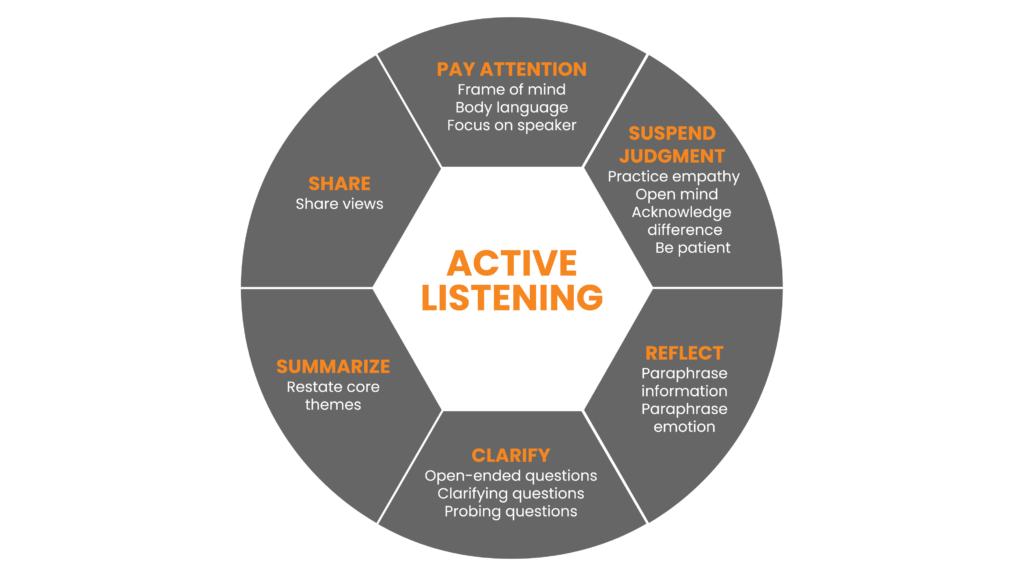
7. Evokes Awareness: Questions, silence, metaphors and analogies can support client insight and learning. Choose an approach that suits the client’s experience and helps them examine how they understand their situation.
- Consider their experience: Take the client’s experience into account when deciding which approach might be most useful for them.
- Offer useful challenge: Challenge the client in ways intended to encourage awareness or insight into the situation they are exploring.
- Explore what matters: Ask about the client’s way of thinking, values, needs, wants and beliefs as these relate to their experience.
- Extend their thinking: Ask questions that help the client explore possibilities beyond how they currently understand the situation.
- Explore the moment: Invite the client to share more about what they are experiencing during the conversation with you.
- Notice useful approaches: Pay attention to what is working for the client and how it supports their progress.
- Respond to needs: Adjust your coaching approach in response to the client’s needs as you learn more about their experience.
- Examine influencing factors: Help the client identify factors shaping current and future patterns in their behavior, thinking or emotions.
- Invite their ideas: Ask the client to generate possibilities for moving forward and consider what they are willing or able to do.
- Support another perspective: Help the client consider a different way of seeing a situation, belief or experience that matters to them.
- Share without attachment: Offer observations, knowledge and feelings that could create new insights, while remaining open to the client’s response.
When a leader says delegation always fails, ask what they expect would happen if someone else chose the approach. You can share an observation or relevant knowledge, while allowing the leader to question your interpretation.
8. Facilitates Client Growth: Client growth involves working together to turn learning and insight into action while supporting the client’s independence in the coaching process.
- Connect learning with life: Work with the client to integrate new awareness, insight or learning into their worldview and behavior.
- Design action together: Partner on goals, actions and accountability measures that draw on new learning and create room for further learning.
- Support client ownership: Respect the client’s autonomy when they choose goals, actions and the ways they want to stay accountable.
- Explore possible learning: Help the client identify what an action might produce or what they could learn from trying it.
- Consider practical conditions: Invite the client to consider the resources, support and potential barriers involved in moving forward.
- Summarize learning together: Partner with the client to summarize learning and insight within a session or between sessions.
- Support ongoing progress: Work together to integrate learning and sustain progress throughout the engagement, including the work between conversations.
- Acknowledge their progress: Recognize the client’s progress and successes as they work toward the goals they have chosen.
- Close the session: Partner with the client to bring the session to a close in a way you shape together.
After exploring delegation, a leader might choose a task to hand over and decide what they want to learn from doing so. Online coaching tools can help organize agreed actions and progress, while the leader chooses their goals and accountability arrangements.
ICF has a video series on competencies for coaches studying the framework. The 2025 text provides the current definitions and behaviors to use alongside these videos.
What Changed in the 2025 ICF Core Competencies?
ICF released the 2025 ICF Core Competencies in September 2025, retaining eight main competencies and the same four domains. A 14-month job analysis drew on data from nearly 3,000 coaches worldwide, including ICF members and nonmembers. The update added five sub-competencies, revised 11 existing sub-competencies, changed one competency definition and introduced a glossary.
Several changes affect Competency 2, Embodies a Coaching Mindset, whose definition now includes personal and professional learning and work with coaching supervisors or mentor coaches as needed. Revised behavior 2.02 adds awareness of current coaching best practices and technology use to the coach’s ongoing learning. Revised behavior 2.07 extends preparation to maintaining emotional, physical and mental well-being before, throughout and after each session.
New behavior 3.12 calls for revisiting the coaching agreement when necessary so the approach continues to meet the client’s needs. Together, these examples connect development, readiness and agreements to responsibilities you review throughout your work with a leader.

Importance of ICF Core Competencies in Coaching Leadership
Organizations can bring several voices into a coaching engagement, so clarity about responsibilities and client choice matters. A sponsor may help define the work, while the leader remains responsible for their own choices.
Personal qualities help describe what makes a good coach, while formal competencies specify behaviors you can examine. For example, being curious matters in how you listen, but the framework asks you to notice context, check understanding and explore what remains unsaid.
The ICF competencies give your professional development a specific focus beyond whether a session felt productive. You can reflect on whether you respected the agreement, left room for the leader’s thinking and supported their chosen action.
Applying ICF Core Competencies in Leadership
A leadership engagement gives you repeated opportunities to agree on direction, listen carefully and review both client learning and your own coaching. Suppose a leader wants to stop taking back tasks they have delegated.
- Agree on purpose: Clarify with the leader and sponsor what the work covers, which information can be shared and how progress will be discussed. Apply Demonstrates Ethical Practice and Establishes and Maintains Agreements when setting those expectations.
- Prepare for sessions: Notice assumptions about delegation that come from your own leadership experience, and check whether you are ready to listen. Embodies a Coaching Mindset keeps that reflection and your own well-being part of the work.
- Open the conversation: Reconfirm what the leader wants today and ask what would make the conversation useful. Cultivates Trust and Safety means respecting their perspective when the issue feels difficult to discuss.
- Explore the pattern: Use Maintains Presence and Listens Actively when the leader pauses, changes tone or describes repeating the same behavior. Ask what happened and what the leader thinks it means, while noticing your own response.
- Test an assumption: Evokes Awareness can include asking what the leader fears losing when someone else makes a decision. Let their answer shape which possibilities you explore.
- Choose and review: Facilitates Client Growth means partnering on a chosen action, the learning it could produce and a way to review progress. The leader might select a task to delegate, decide what support is needed and choose how to stay accountable.
Useful one-on-one coaching strategies keep the session focused while allowing the leader to change direction. If the original agreement no longer meets their needs, revisit it together before carrying on.
After each session, reflect on where your questions followed the leader and where your own assumptions took over. A mentor coach can offer feedback based on observed or recorded coaching, while a supervisor supports reflective dialogue about your practice. Use that support as needed, within the confidentiality arrangements that apply to the engagement.
Professional learning can include practice, discussion and training, depending on the need you have identified. Options to consider include:
- Peer practice: ReciproCoach is a peer coaching practice platform.
- Professional communities: ICF Communities of Practice are resources to consider when planning your ongoing learning.
- Coach training: CoachU is a coach training program.
Conclusion
The ICF framework gives you a reference for choosing how to respond when a leadership coaching conversation becomes uncertain. Use it to check the agreement, understand the leader’s meaning and leave decisions about goals, action and accountability with the client.
Your own development belongs alongside that client work, including reflection on the assumptions and reactions you bring to a session. Choose a behavior that needs attention, practice it deliberately and review what happened before deciding on your next learning priority.
Key Takeaways
- Check source versions: Use the 2025 definitions when a course note, diagram or older resource uses different competency wording.
- Protect information boundaries: Agree what a sponsor may receive, and apply confidentiality requirements before sharing anything from a session.
- Revisit agreed goals: If the leader changes direction, check what they now want and whether the existing agreement still fits.
- Question your assumptions: Treat your reaction to a leader’s behavior as something to examine, especially when your expectations differ.
- Check observed cues: Describe a change in expression or tone, then ask the leader what it means before interpreting it.
- Respect client choice: Help the leader choose an action, define useful learning and decide how they want to stay accountable.
- Choose focused learning: Use reflection or professional support to identify a specific coaching behavior you can practice in another session.
Working with leaders means keeping track of what happens during sessions and what needs attention between conversations. Simply.Coach’s coaching platform for HR teams keeps sessions, notes, goals and progress in one place. Use it to organize coaching work across your learning and development or HR team.
Frequently Asked Questions (FAQs)
What are the 8 ICF core competencies?
Competencies 1 to 4 are Demonstrates Ethical Practice, Embodies a Coaching Mindset, Establishes and Maintains Agreements, and Cultivates Trust and Safety. Competencies 5 to 8 are Maintains Presence, Listens Actively, Evokes Awareness, and Facilitates Client Growth.
What changed in the 2025 ICF Core Competencies?
The 2025 update retained the eight main competencies and four domains. It added five sub-competencies, revised 11 others, expanded the definition of Embodies a Coaching Mindset and added a glossary of terms.
What are the four ICF competency domains?
Foundation contains competencies 1 and 2. Co-Creating the Relationship contains 3, 4 and 5; Communicating Effectively contains 6 and 7. Cultivating Learning and Growth contains competency 8, Facilitates Client Growth.
How is a coaching mindset different in the 2025 model?
The 2025 definition includes ongoing personal and professional learning and development, plus work with coaching supervisors or mentor coaches as needed. It retains an open, curious, flexible and client-centered mindset, with added attention to technology, biases and the coach's well-being.
Do the ICF competencies have to be used in order?
The 2025 document groups the competencies into four domains but does not prescribe an order for applying them. Several responsibilities continue across the engagement, including confidentiality, reflective practice and revisiting coaching agreements when necessary.
What should a coaching agreement cover?
A coaching agreement covers goals, responsibilities, logistics, fees, scheduling, duration, termination, confidentiality and the inclusion of others. The coach and client also agree on session outcomes and measures of success, and revisit agreements when necessary to meet the client's needs.
How can a mentor coach or supervisor support my development?
A mentor coach provides feedback based on observed or recorded coaching sessions to develop coaching style and skills in line with the competencies. A coaching supervisor uses reflective dialogue and collaboration to support personal, professional and ethical development.