
You often work with clients who describe goals, yet cannot explain what shaped their decisions or emotional patterns. Their stories feel scattered, and sessions drift into disconnected conversations that limit real progress. You need a clear structure that helps clients see their life as an organized story instead of isolated experiences.
A life map gives you a visual method to document key life events, present realities, and future intentions. It allows you to uncover repeated behaviors, internal conflicts, and values that influence client choices. This clarity helps you guide sessions with focus and build stronger, outcome-driven coaching plans.
In this blog, you will learn what a life map means in coaching and how it supports deeper client insight. You will explore when to use life mapping, how it works, and how to create one effectively. You will also review a practical life map template example you can use with clients.
Key Takeaways
- A life map helps you organize client experiences into one clear visual structure that supports deeper self-awareness and coaching direction.
- Life mapping reveals emotional patterns, repeated decisions, and hidden influences that standard goal-setting conversations often fail to uncover.
- You can use life maps during intake, transitions, stuck phases, and long-term programs to strengthen clarity and session focus.
- Effective life maps combine past experiences, present realities, and future intentions into one working coaching reference.
- Techniques like timelines, mind maps, Wheel of Life, and reflective journaling adapt life mapping to different client thinking styles.
- Simply.Coach supports life mapping as a goal-setting workflow inside one all-in-one coaching platform where you track goals, sessions, and client progress in one place.
What Is a Life Map?
A life map is a visual framework that organizes a client’s life experiences, priorities, and future direction. It allows you to capture where a client has been, where they stand now, and where they want to go. Unlike simple goal lists, a life map connects emotions, decisions, and turning points into one clear view. This connection helps you guide clients through insight instead of assumption.
A life map turns abstract conversations into something visible and structured. You and your client can observe patterns, identify conflicts, and highlight areas that need attention. This shared reference keeps sessions focused and prevents important details from getting lost across conversations.
What a life map typically includes
A well-structured life map captures the full personal context that shapes how your client thinks, decides, and moves forward.
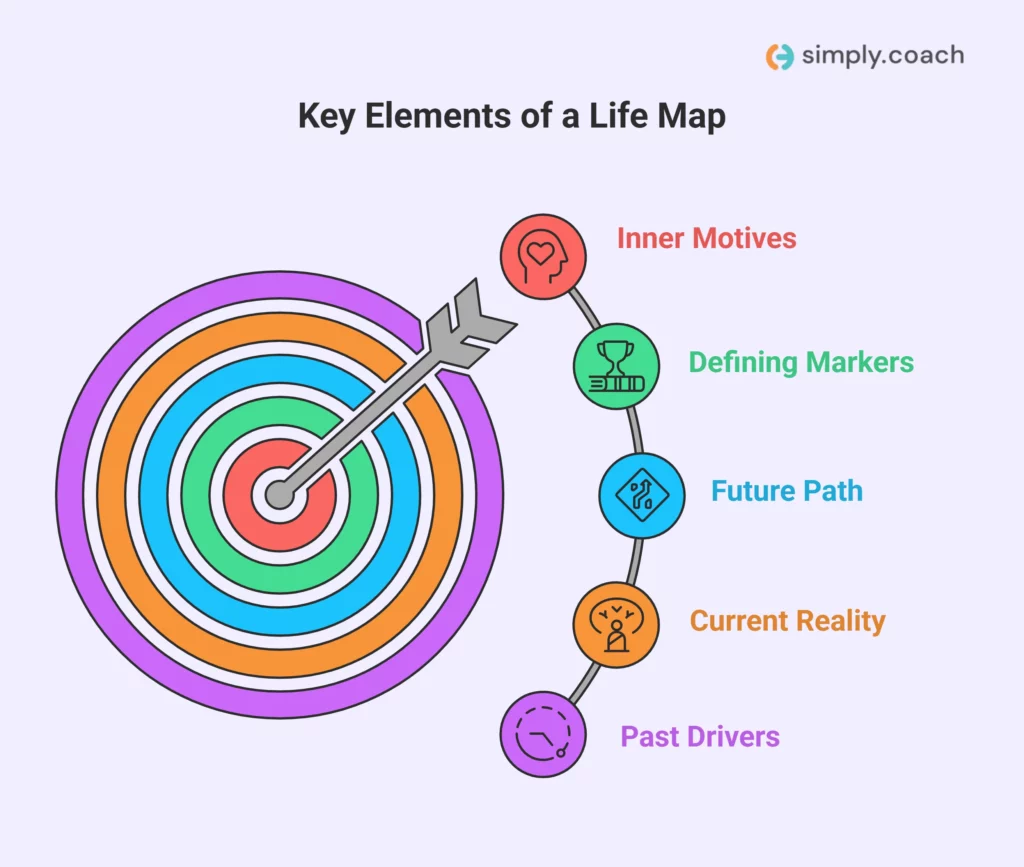
- Past influences and formative experiences: Key moments that shaped beliefs, behaviors, emotional responses, and personal identity over time.
- Present life realities across core areas: Current conditions in career, relationships, health, finances, and personal development.
- Future vision and long-term direction: Desired life direction connected to values, meaning, and evolving self-identity.
- Milestones and defining life moments: Important transitions, achievements, setbacks, and personal challenges that influenced growth.
- Internal drivers and recurring patterns: Motivations, fears, emotional triggers, and decision habits that repeatedly impact client choices.
Why Life maps are especially useful in coaching relationships
Life maps give you a shared visual language that deepens your coaching conversations. Clients stop explaining pieces of their life in fragments and begin seeing meaningful connections. This clarity helps you ask stronger questions rooted in context instead of surface goals.
You can track emotional patterns, recurring obstacles, and motivation shifts across sessions. This allows you to design coaching strategies that reflect who the client is, not only what they want. Life maps also strengthen trust, because clients feel understood at a deeper personal level.
Also read: Steps to Build a Successful Coaching Relationship
When Should Coaches Use a Life Map?
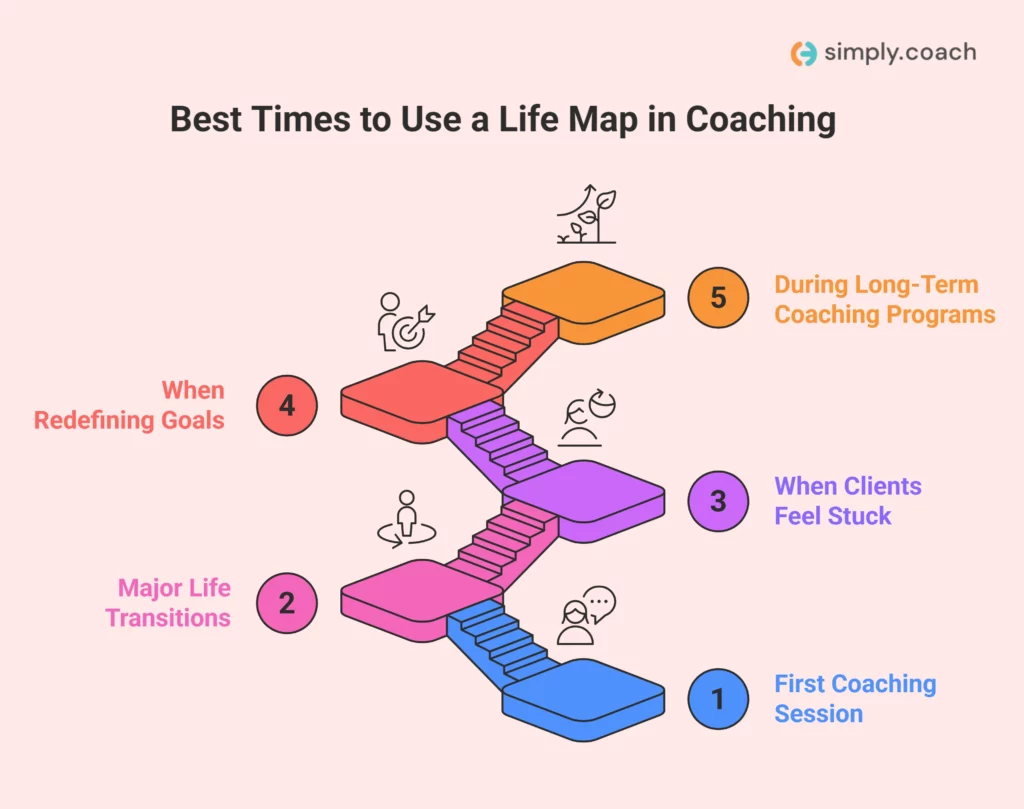
You should introduce a life map when clarity becomes more important than speed within the coaching process. Life mapping works best when clients need structure to organize experiences, emotions, and direction. These moments often appear at specific stages of the coaching relationship.
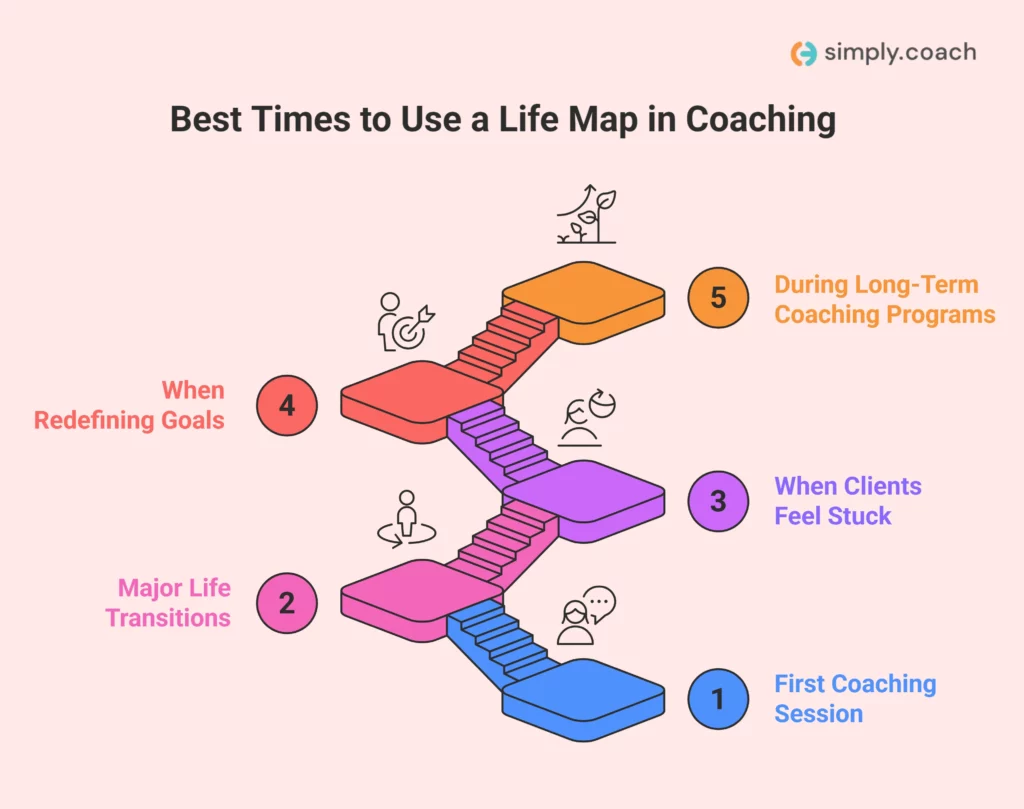
- First coaching session or intake phase: You use a life map to capture personal history, emotional influences, and values shaping the client’s current situation. This context helps you guide goal discussions with clarity from the beginning.
- Career or major life transitions: You support clients facing role changes, career shifts, or personal transitions by reviewing past decisions and emotional responses. This reflection helps clients approach change with confidence and self-awareness.
- When clients feel stuck or overwhelmed: You organize scattered thoughts, unresolved experiences, and competing priorities into a clear visual structure. This process reduces confusion and creates an immediate path for coaching progress.
- When redefining goals or personal identity: You guide clients to reassess values, release outdated goals, and clarify who they are becoming. This ensures future goals align with personal identity rather than external expectations.
- During long-term coaching programs: You revisit the life map to track mindset shifts, behavior changes, and emotional growth across sessions. This visual record reinforces progress and strengthens client commitment.
A life map supports coaching at moments where clarity and self-understanding directly influence meaningful client progress.
Also read: Life Coaching Tools and Resources to Help Coaches Grow Their Skills & Practice
Benefits of Using Life Maps With Coaching Clients
Using life maps changes how you work with client information within coaching sessions. Instead of relying on fragmented stories, you guide clients through a visible personal structure. This structure allows insight, emotional awareness, and goal clarity to develop naturally across the coaching journey.
Below are the specific benefits life maps bring into coaching relationships.
- Reveals recurring behavioral and emotional patterns: Life maps make repeated decisions, emotional reactions, and life themes visible, helping clients recognize why familiar challenges keep returning.
- Creates accurate context for current struggles: Placing past experiences beside present realities helps clients understand how earlier events still influence confidence, relationships, and professional choices.
- Strengthens emotional awareness and processing: Experiences become easier to examine and reframe because emotions appear within a broader personal narrative rather than isolated incidents.
- Improves goal relevance and commitment: Goals emerge from values, identity, and lived experience, increasing motivation and reducing resistance during the change process.
- Maintains session focus and continuity: Life maps act as ongoing reference points, allowing themes and insights to build logically instead of restarting each session.
- Documents mindset shifts and personal development: Updates to the map highlight changes in beliefs, decision patterns, and emotional responses across the coaching engagement.
- Deepens trust and client engagement: Clients feel accurately understood when their experiences are reflected clearly, supporting openness and more honest coaching conversations.
Life maps move coaching work from surface discussion into structured personal development grounded in real life experience.
Also read: How to Become a Certified Personal Development Coach: Step-by-Step Guide
How Coaches Can Guide Clients to Create a Life Map
Creating a life map doesn’t need to be complicated, but as a coach, your role is to guide the client effectively. The goal is to make the process structured, meaningful, and reflective, so clients gain clarity, see patterns, and set actionable goals.
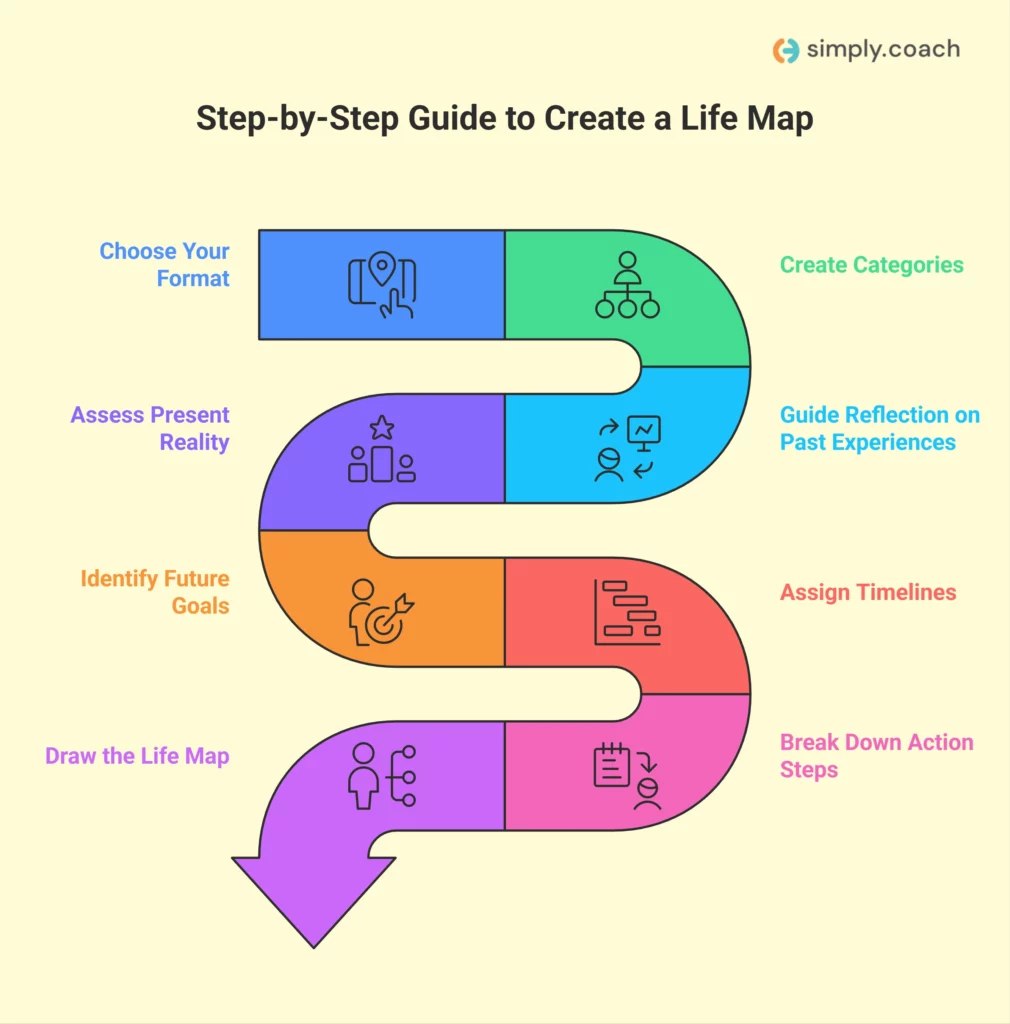
1. Choose your format
Decide whether you will use digital tools or physical materials for the life map. Digital options include presentation software, flowcharts, or collaborative platforms that allow easy editing. Physical materials can be paper, poster boards, sticky notes, or colored markers to make the session interactive and engaging.
Tip: Select a format that suits your client’s learning style and session logistics. Physical maps often encourage reflection and creativity, while digital versions work well for ongoing updates.
2. Create categories
Divide the life map into meaningful life domains such as personal growth, career, relationships, health, and hobbies. Categories help clients organize their experiences and ensure no important area is overlooked.
Tip: Tailor categories to each client’s priorities. For example, an executive client may need sections for leadership development, team dynamics, and professional network, while a personal development client might focus on habits, mindset, and wellness.
3. Guide reflection on past experiences
Ask clients to reflect on their past achievements, challenges, and significant life events within each category. The goal is to identify influences that shaped beliefs, behaviors, and choices.
Questions to ask your client
- Which experiences shaped your confidence or self-perception ?
- What lessons came from setbacks or challenges ?
- How have past decisions affected your current priorities ?
Tip: Watch for emotional intensity. High emotional responses often highlight areas for deeper coaching exploration.
4. Assess present reality
Once past experiences are mapped, guide your client to examine where they currently stand. This step grounds the life map in reality and prevents future goals from being based on assumptions or outdated self-perceptions.
Questions to ask your client
- What does your day-to-day life look like right now in this area?
- What feels stable, and what feels misaligned or draining?
- Where are you investing most of your time and energy?
- What challenges or limitations are you actively facing?
Encourage clients to rate their satisfaction or engagement in each category if helpful. This quickly highlights gaps between effort and fulfilment and reveals areas that need attention before setting future goals.
Tip: Notice inconsistencies between what the client says they value and how they currently spend their time. These gaps often uncover hidden priorities, unspoken fears, or habits that require coaching focus.
5. Identify future goals
Help clients articulate what they want across each category. Goals should be specific, measurable, and grounded in values and identity, not just aspirations.
Questions to ask your client
- What would an ideal career, relationship, or lifestyle look like for you ?
- Which goals truly matter to your growth and fulfillment ?
- How can these goals align with your personal values ?
Tip: Encourage specificity. Instead of “get fit,” guide clients to define concrete outcomes, e.g., “run a 5K by June” or “attend yoga twice a week.”
6. Assign timelines
Guide clients in prioritizing goals by short-term and long-term timelines. Short-term goals may cover weeks or months, while long-term goals could extend over years. Timelines create structure and help clients focus on achievable steps.
Tip: Tie timelines to motivation. Discuss realistic pacing to prevent overwhelm while maintaining accountability.
7. Break down action steps
For each goal, work with the client to outline the steps needed to achieve it. Smaller, manageable actions make progress visible and attainable.
Questions to ask your client
- What specific steps will move you closer to this goal ?
- Which habits or routines support these actions ?
- What obstacles might you need to address ?
Tip: Encourage the client to commit to concrete actions rather than vague intentions.
8. Draw the life map
Once all elements are identified, guide the client in connecting categories, goals, milestones, and notes visually. Encourage use of colors, symbols, images, or diagrams that make the map intuitive and meaningful.
Tip: A visually engaging life map enhances reflection, helps clients see patterns, and makes follow-up sessions more productive. Revisit and update the map regularly to track progress and evolving priorities.
Life Map Example
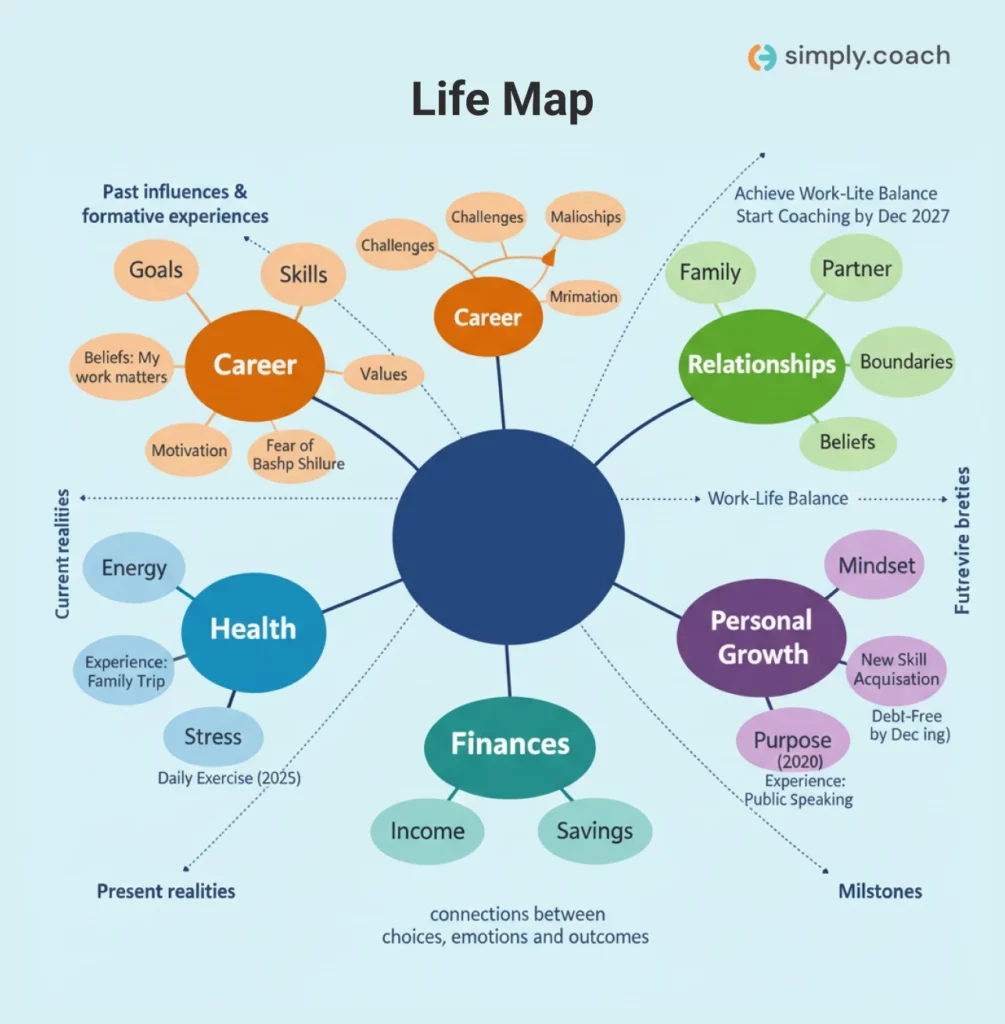
Also read: 80 Impactful Life Coaching Questions for Client Transformation
Effective Life Mapping Techniques for Coaches
As you guide clients through life mapping, certain techniques make the process clearer, structured, and easier to work with. Each approach supports different coaching goals, learning styles, and session outcomes. You can use one method or combine several, depending on what best serves your client.
1. Mind map
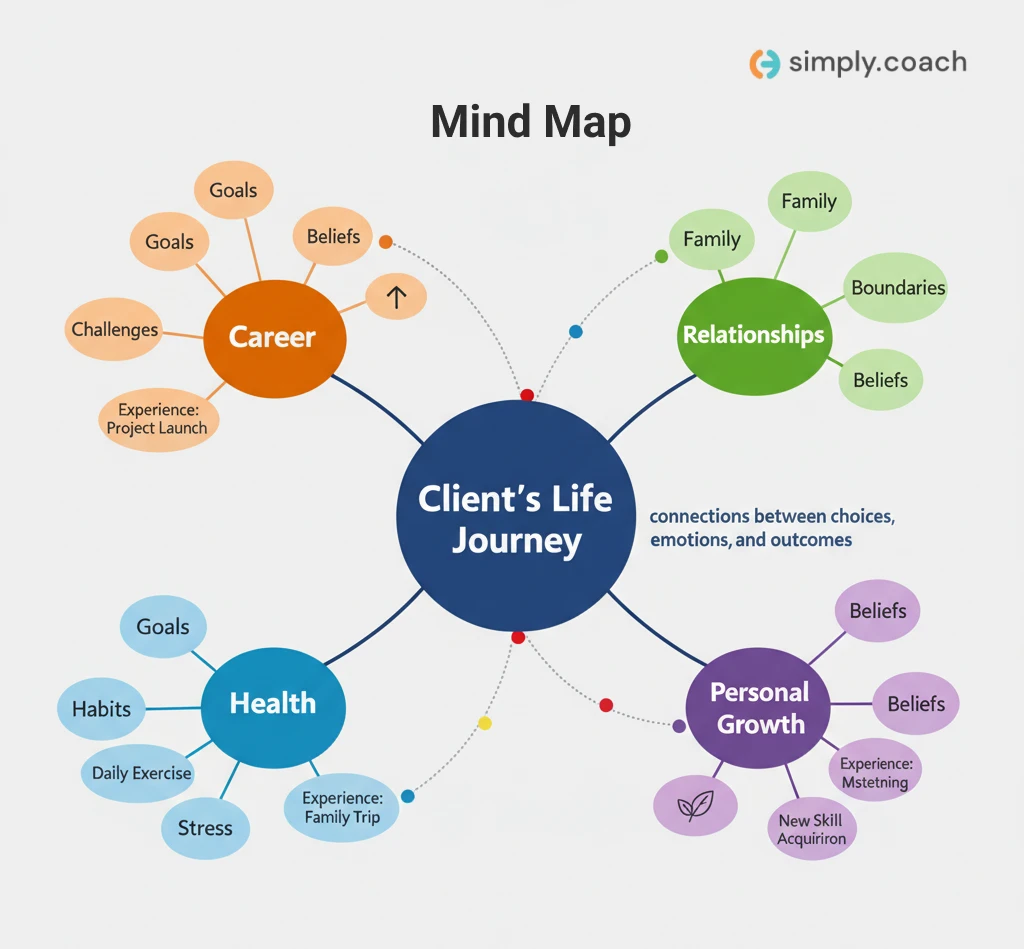
A mind map helps you organize a client’s experiences, goals, and life areas into one connected visual structure.
- Place the client’s central focus or life direction in the center of the page.
- Draw branches for core life areas such as career, relationships, health, and personal growth.
- Add sub-branches for beliefs, goals, habits, challenges, and important experiences.
- Use colors, shapes, or simple symbols to highlight patterns and emotional themes.
This technique supports clients who need to see connections between choices, emotions, and outcomes.
2. Timeline
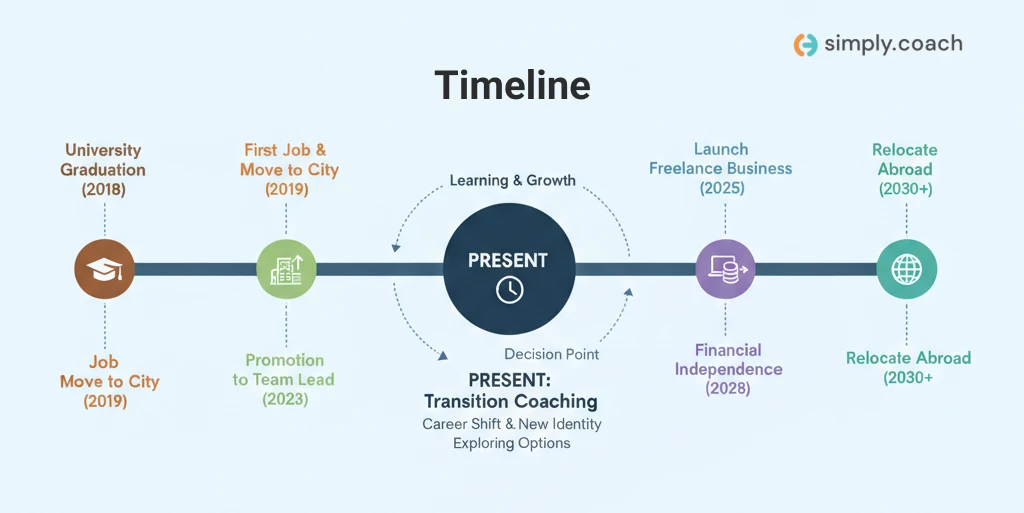
A timeline helps you and your client see life progression and decision patterns across time.
- Draw a horizontal line representing the client’s life journey.
- Mark significant past events, transitions, and achievements on the left side.
- Place current circumstances in the middle for present-moment clarity.
- Add future goals, milestones, and phases on the right with approximate timeframes.
This method works especially well during transition coaching and identity-based coaching work.
3. Vision boards
Vision boards helps clients translate internal desires into visible future direction.
- Ask the client to represent goals using short phrases, images, or symbolic drawings.
- Group future goals into life domains to maintain structure and clarity.
- Arrange elements in a way that reflects importance and emotional resonance.
- Encourage keeping the vision map visible between sessions for reinforcement.
This approach strengthens motivation and keeps long-term direction emotionally connected.
4. Reflective journaling
Journaling supports deeper emotional processing and pattern recognition.
- Divide sections according to life areas such as work, relationships, health, and mindset.
- Record meaningful experiences, challenges, and recent decisions.
- Reflect on emotional responses, lessons learned, and repeated reactions.
- Note what needs to change to support the client’s desired future direction.
This technique benefits clients who gain insight through writing and internal reflection.
5. Wheel of Life
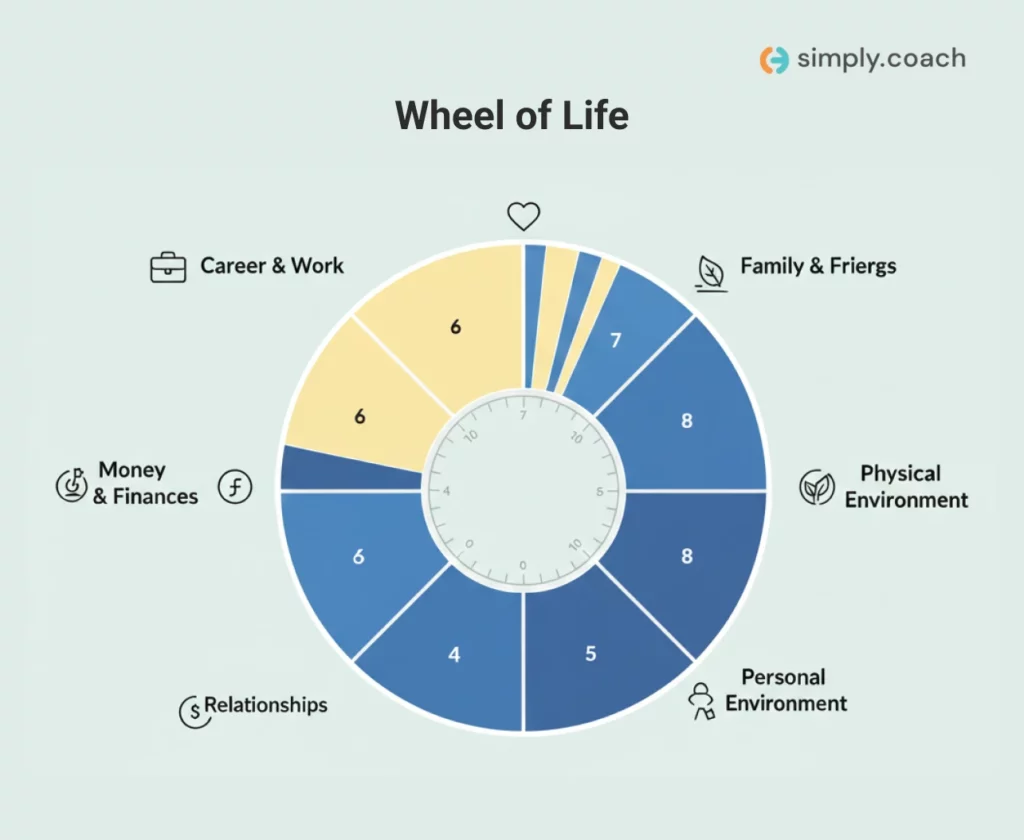
The Wheel of Life helps you assess balance, satisfaction, and neglected life areas.
- Draw a circle and divide it into segments representing major life categories.
- Ask the client to rate satisfaction in each segment based on current experience.
- Identify gaps, overinvestment, or emotional strain across life domains.
- Define specific actions to strengthen underdeveloped or imbalanced areas.
This method provides quick clarity and supports structured priority setting.
When you choose the right life mapping technique, the life map becomes more than an activity. It becomes a practical coaching tool that supports insight, decision clarity, and long-term personal development.
Also read: 12 Life Coaching Questions to Uncover Your Client’s Hidden Challenges
Recommended Life Map Template Resources for Coaches
Finding ready-made life map templates saves preparation time and helps you guide clients through structured, visual reflection. The platforms below offer customizable options you can adapt for different coaching goals and session formats.
- Canva: Canva offers flexible, visually driven life map templates that allow you to organize life domains, milestones, and future direction in one clear layout that clients can revisit between sessions.
- The Coaching Tools Company: The Coaching Tools Company provides a professional life mapping tool built specifically for coaching work, supporting deeper exploration of turning points, emotional themes, and long-term development patterns.
- EdrawMax: EdrawMax delivers editable life map and diagram templates that help you structure timelines, categories, and connections inside one visual framework that supports insight-driven coaching sessions.
- MindManager: MindManager supplies structured mind map templates that can be adapted into life maps to organize goals, influences, and priorities in connected views clients understand quickly.
Choosing the right template platform allows you to spend less session time on setup and more time on insight, pattern recognition, and intentional goal development, strengthening both clarity and coaching outcomes.
Common Mistakes Coaches Make With Life Mapping
Life mapping creates powerful insight for your clients, yet specific coaching errors quietly reduce clarity, depth, and measurable transformation.
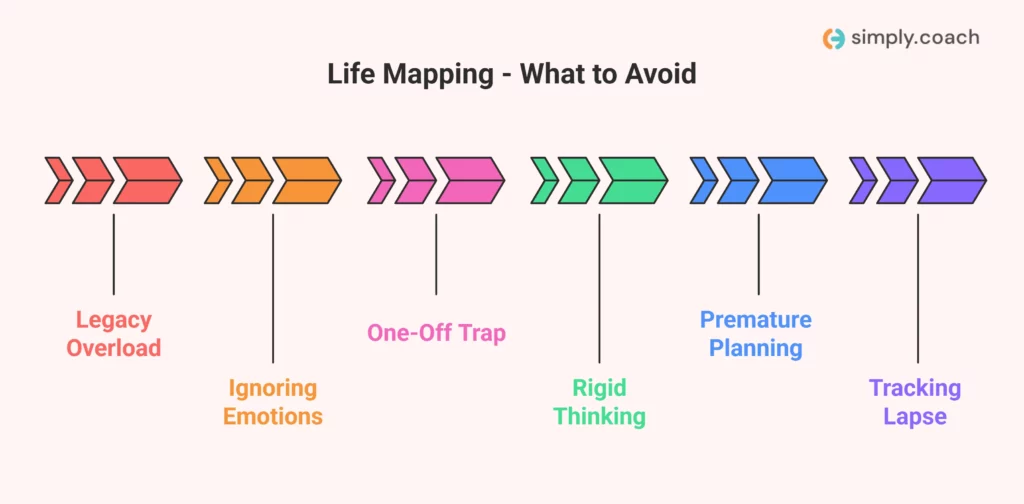
- Overloading the past: Long storytelling sessions dilute insight and shift life mapping away from strategic pattern discovery and purposeful coaching direction.
- Skipping emotional patterns: Ignoring emotional responses blocks access to core beliefs that shape decisions, habits, and repeated personal outcomes.
- Treating life maps as one-time tools: A life map used only once loses relevance, momentum, and its ability to reflect evolving client identity.
- Using rigid life categories: Fixed sections often override client language, reducing ownership and disconnecting the map from real priorities.
- Setting goals too early: Premature goal setting produces surface-level objectives that rarely support deep, sustainable behavioral change.
- Failing to track updates: An unupdated map hides progress, weakens motivation, and limits your ability to guide long-term direction.
Avoiding these mistakes protects the depth of your sessions, strengthens coaching authority, and turns life mapping into a living transformation tool.
Related: Mastering Transformational Coaching: Techniques, Tools, and Strategies for Lasting Change
Conclusion
Life mapping functions as a structured form of goal setting that brings clarity, meaning, and direction into your coaching conversations. It helps you guide clients to connect past experiences with present decisions and future intentions clearly. This approach turns scattered stories into organized insight that supports focused planning and measurable progress for clients. Throughout this guide, you explored definitions, coaching applications, techniques, benefits, and common mistakes to avoid in practice.
Simply.Coach supports life mapping as a goal-setting process inside an all-in-one coaching platform built for professionals. It lets you organize and set client goals, session notes, and shared resources in one secure workspace. You can track progress, manage programs, and document growth without juggling disconnected tools or systems. With automated scheduling, client portals, and outcome tracking, Simply.Coach helps you turn insight into consistent action.
FAQs
1. What types of formats can a life map take?
A life map can be a timeline, mind map, vision board, collage, or flowchart depending on client preference and the depth of reflection you want to elicit.
2. How often should a life map be reviewed or updated?
Life maps should be revisited at key coaching milestones or whenever significant shifts occur to reflect progress and adjust future goals.
3. Can life maps be used for teams or organizations?
Yes, life maps can be adapted to track group or organizational histories, milestones, and future strategic goals beyond personal use.
4. What should you include in a basic life map?
A basic life map includes key events from the past, present situation, and future aspirations, along with goals and milestones.
5. How to integrate a life map into regular coaching conversations?
Life maps become a dynamic reference you revisit during sessions to track patterns, reassess goals, and support deeper client insight as work evolves.
6. Can life maps help clients improve decision-making?
Yes, visualizing past influences and future goals helps clients make decisions that align with their long-term direction and personal values.
7. Do life maps reduce stress or anxiety for clients?
Life mapping can reduce overwhelm by giving clients a visual overview of their goals and progress, which enhances clarity and confidence.