
How much can you really earn as a certified wellness coach in 2026?
The U.S. health and wellness coaching market is projected to reach over $21.5 billion in 2026, showing clear and rising demand for your expertise. That growth creates more opportunities, but income varies widely based on where you work and how you structure your services.
If you plan to build or grow your coaching career, you need accurate salary data before making pricing or job decisions. Clear numbers help you set realistic income goals, compare employment options, and decide where to focus your efforts.
In this article, you will see the average certified wellness coach salary in the USA, along with hourly and annual breakdowns. You will also find a state-by-state overview, top paying cities, salary by job role, key income factors, and practical ways to increase your earnings.
Key Takeaways
- The average certified wellness coach salary in the USA is $47,264 per year as of March 2026, with most earning between $36,000 and $52,500.
- Top 10% of certified wellness coaches earn $65,500+ annually, especially in high-demand states like California, Massachusetts, and Washington.
- Your salary depends on certification level, experience, specialization, location, and business model.
- Corporate wellness roles and program management positions often pay more than entry-level private practice roles.
- Online coaching, group programs, and multi-week packages can significantly increase income beyond hourly rates.
- States with higher wellness spending and urban demand offer stronger earning potential than rural markets.
- Building structured programs and setting strategic pricing directly impacts how much you earn in 2026.
- Using a professional coaching platform like Simply.Coach helps certified wellness coaches streamline client onboarding, automate scheduling and payments, deliver structured programs, and scale revenue efficiently, directly improving long-term earning potential.
What is Wellness Coaching?
Wellness coaching is a professional practice that helps clients improve their overall health, lifestyle, and well-being. As a wellness coach, you guide individuals to build sustainable habits, manage stress, and achieve measurable life changes. Your role focuses on practical strategies rather than medical treatment. This approach empowers clients to take consistent action toward better health outcomes.
Core responsibilities of a wellness coach
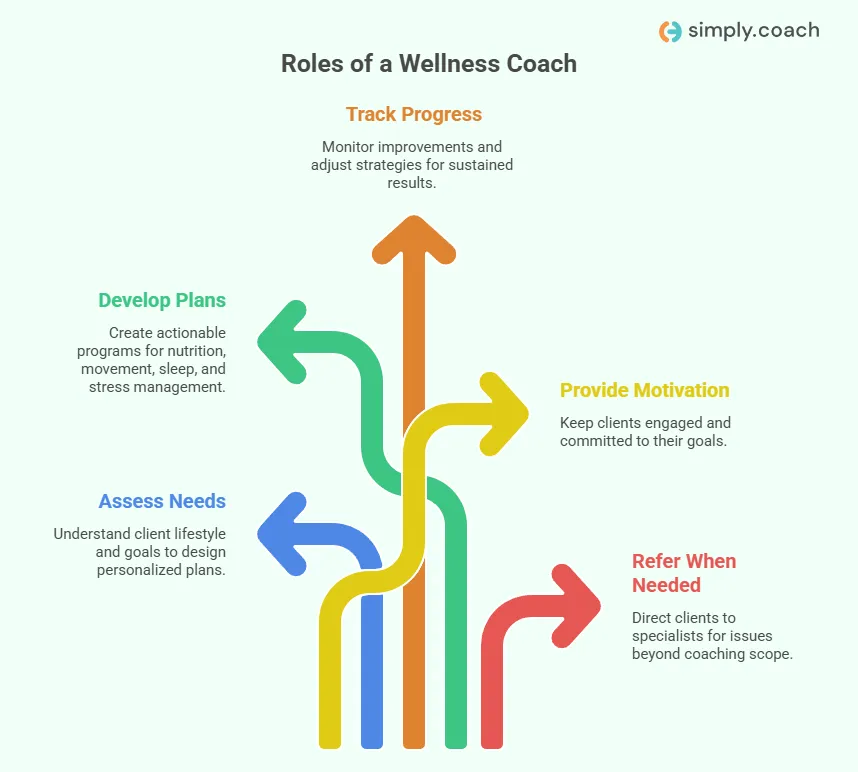
- Assess client needs and goals: Evaluate lifestyle habits, health patterns, and personal objectives to design effective coaching plans.
- Develop personalized wellness plans: Create actionable programs that include nutrition, movement, sleep, and stress management tailored to each client.
- Track progress and adjust strategies: Monitor client improvements, provide feedback, and modify plans to ensure sustained results.
- Provide accountability and motivation: Keep clients engaged, committed, and responsible for following through on their wellness goals.
- Refer to qualified professionals when needed: Direct clients to medical, mental health, or specialized experts for issues outside your coaching scope.
Wellness coaching combines guidance, accountability, and personalized strategies to help clients achieve lasting lifestyle improvements.
How Much Does a Wellness Coach Make in the USA
If you want to grow your wellness coaching career, it’s important to understand your earning potential in the United States. Knowing these numbers helps you set realistic income goals, plan your rates, and target the right locations and skill levels. Recent data shows where most certified wellness coaches currently stand and the opportunities to move into higher earning brackets.
Average salary breakdown
- National average: $47,264 per year
- Typical hourly rate: $22.72
- Monthly pay: $3,938
- Weekly pay: $908
- Typical annual range: $24,000 to $72,000
These figures come from real-time job posting scans on ZipRecruiter as of March 2026. They highlight strong earning potential, especially for skilled coaches in high-demand regions.
Wellness coach salaries by percentile
Annual salaries vary based on experience, certifications, specialization, and location. The percentiles below show where most coaches fall and what top earners make:
| Percentile | Salary |
| 10th | $24,000 |
| 25th | $36,000 |
| 50th | $47,264 |
| 75th | $52,500 |
| 90th | $65,500 |
This table highlights a $16,500 gap between mid-range earners and top-tier wellness coaches. That gap shows the potential to increase your income by gaining certifications, developing specialized skills, or targeting high-paying states and cities.
State‑by‑State Salary Overview for Wellness Coaches in the USA
Salaries for certified wellness coaches vary widely across the United States, reflecting differences in demand, cost of living, and local wellness industries. Understanding these state-by-state figures helps you plan your career, set competitive rates, and target the right regions for growth. Knowing where your skills are most in demand allows you to maximize both income and professional opportunities.
Here is a real, reliable state salary breakdown for ‘Certified Wellness Coaches’ using data from ZipRecruiter and Salary.com as of early 2026.
| State | Annual Salary | State | Annual Salary |
| Alabama | $50,930 | Nevada | $54,866 |
| Alaska | $60,011 | New Hampshire | $56,043 |
| Arizona | $54,100 | New Jersey | $60,088 |
| California | $61,147 | New Mexico | $51,346 |
| Colorado | $56,562 | New York | $58,935 |
| Connecticut | $59,246 | North Carolina | $52,682 |
| Delaware | $56,141 | Ohio | $44,205 |
| District of Columbia | $53,430 | Oklahoma | $51,257 |
| Florida | $52,500 | Oregon | $56,296 |
| Georgia | $53,469) | Pennsylvania | $55,188 |
| Hawaii | $57,943 | South Carolina | $51,944 |
| Idaho | $53,086 | Tennessee | $51,806 |
| Illinois | $56,507 | Texas | $42,971 |
| Indiana | $44,817 | Utah | $53,086 |
| Massachusetts | $60,332 | Virginia | $55,825 |
| Michigan | $54,594 | Washington | $60,110 |
| Mississippi | $49,439 | Wisconsin | $54,533 |
| Montana | $52,338 |
This table shows that wellness coach salaries can vary widely depending on the state you work in, with some higher cost markets offering significantly higher incomes.
Top 10 Highest-Paying States for Certified Wellness Coaches
If your goal is to maximize earnings as a certified wellness coach, targeting high-paying states can significantly increase your income. The top 10 states below offer salaries well above the national average of $47,264, giving you clear guidance for career planning.
| State | Annual salary |
| California | $61,147 |
| Massachusetts | $60,332 |
| Washington | $60,110 |
| Alaska | $60,011 |
| New Jersey | $60,088 |
| Connecticut | $59,246 |
| New York | $58,935 |
| Hawaii | $57,943 |
| District of Columbia | $61,380 |
| Colorado | $56,562 |
These states reflect markets with high demand for wellness professionals, allowing you to command higher pay. Moving to or focusing your services in these regions can provide substantial economic advantage while supporting career growth in 2026.
Also read: Life Coach Salary 2026: How Much Does a Life Coach Make & Earn?
Salary of Wellness Coach by Job Type
Your earnings as a wellness coach vary depending on the role, experience, and delivery model. The table below highlights recent salary ranges for different types of wellness coaching roles, helping you plan your career and target higher-paying opportunities.
| Job Type | Entry-Level | Mid-Level | Experienced / Top Earners | Notes |
| Corporate Wellness Coach | $23,500 | $41,250 | $59,500 | Salaried positions leading employee wellness programs, workshops, or corporate initiatives. |
| General Wellness Coach | $20,000 | $36,479 | $53,500 | Works one-on-one or small groups, income increases with certifications and specialization. |
| Health & Wellness Coach | $49,400 | $55,500 | $63,600+ | Combines behavior change, fitness, nutrition, and lifestyle guidance. |
| Holistic Wellness Coach | $48,000 | $63,263 | $82,000+ | Integrates nutrition, mindset, and movement; top earners offer full transformation packages. |
| Certified Wellness Coach | $48,500 | $63,916 | $84,500+ | Certification adds credibility and allows higher rates from clients or companies. |
| Financial Wellness Coach | $47,000 | $62,714 | $90,000+ | Coaches partner with companies or financial institutions; income rises with group programs or courses. |
| Wellness Program Manager / Director | $60,000 | $75,000 | $95,000+ | Oversees wellness programs, budgets, and teams; strategic and managerial role. |
| Online Wellness Coach | $40,000 | $70,000 | $120,000+ | Income varies with packages, group programs, subscriptions, and online marketing. |
| Health & Wellness Educator | $50,000 | $60,000 | $70,000+ | Similar to coaching but focused on teaching wellness concepts in institutions or communities. |
These figures reflect real, recent salary estimates for 2026. Your income potential increases with experience, niche expertise, certifications, and corporate or online contracts.
Related: Top 15 Health & Wellness Coaches to Follow in 2026: Essential Insights for Health Coaches
What Determines Wellness Coach Salary
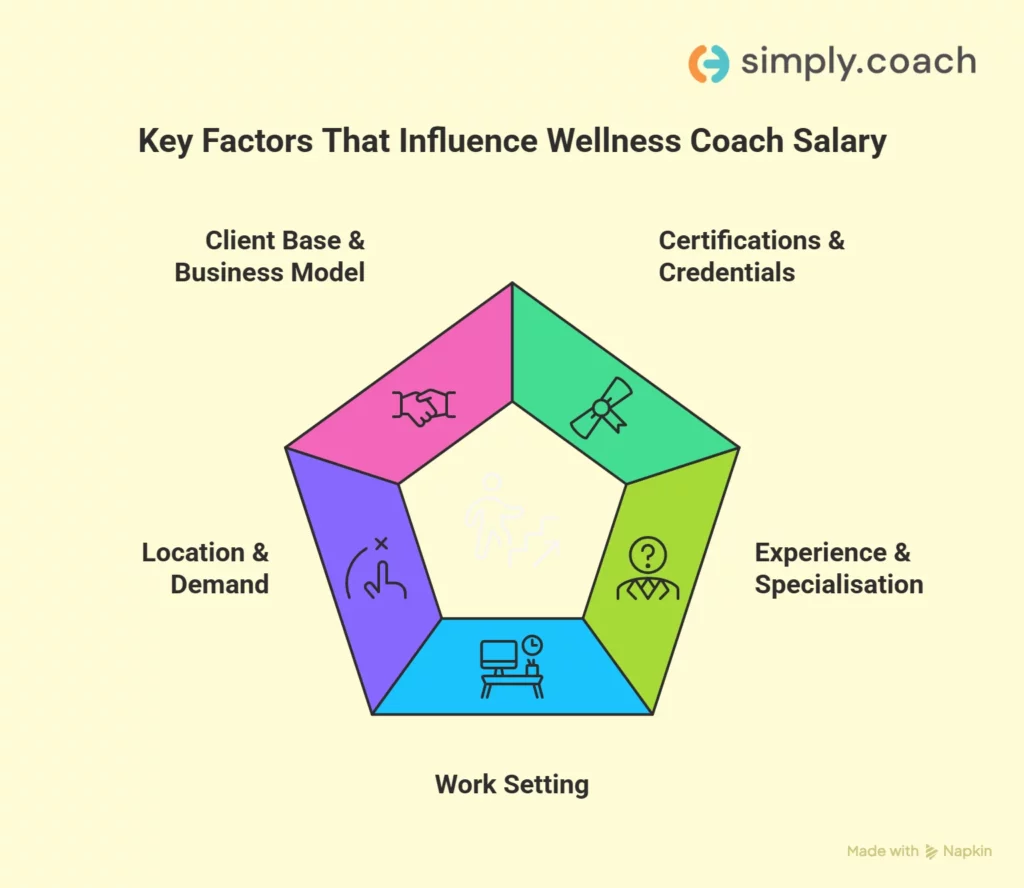
Several key factors directly impact how much you can earn as a certified wellness coach. Understanding these elements helps you plan your career, target higher-paying opportunities, and set realistic income goals.
- Certification & credentials: Holding board certifications like NBHWC can significantly increase your credibility. Certified coaches often command 10–30% higher rates than uncertified peers.
- Experience and specialization: Coaches with 5+ years of experience or expertise in corporate wellness, holistic health, or financial wellness earn considerably more. Niche specializations allow you to package premium programs and attract higher-paying clients.
- Employment setting: Salaries differ depending on your work environment. Corporate wellness coaches typically earn steady salaries with benefits, private practice coaches earn through session packages, and online coaches scale income through courses, memberships, or subscriptions.
- Geographic location & local market demand: Urban centers like San Jose, Seattle, or New York pay above average due to high demand and wellness spending. Rural or low-demand areas often offer lower salary ranges, even for certified coaches.
- Client base & business model: One-on-one coaching offers consistent income, while group programs, workshops, and corporate contracts can significantly multiply your revenue. Coaches who diversify into multiple delivery models maximize earnings.
Focusing on these factors strategically allows you to increase your earning potential and position yourself among the highest-paid wellness coaches in the industry.
Boosting Your Wellness Coach Salary
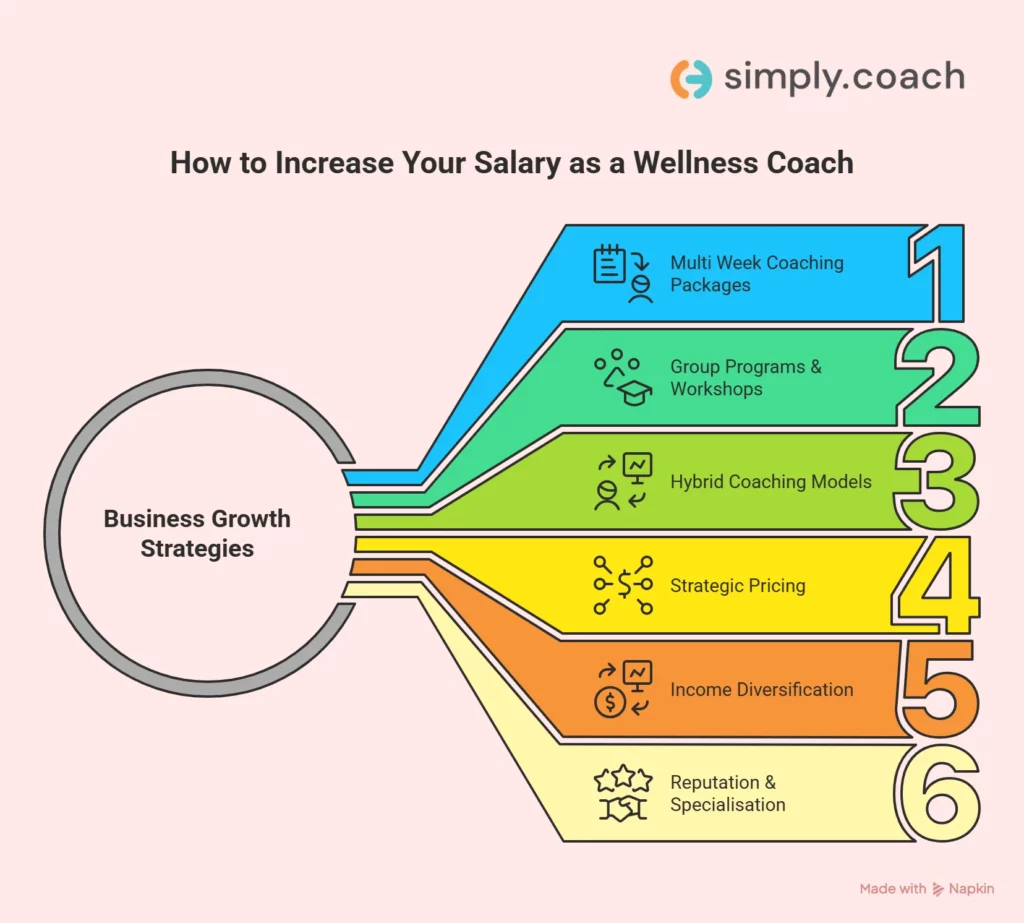
Your earnings as a wellness coach are shaped by your expertise, niche, delivery model, and ability to structure programs that clients value. By implementing scalable strategies, you can move beyond base hourly rates, increase client lifetime value, and build a more predictable income. The following approaches show exactly how to grow your earnings in 2026 while delivering measurable client results.
1. Offer multi-week coaching packages
Structured programs allow you to deliver consistent results while increasing your revenue per client. You can design tiered offerings for different commitment levels, ensuring clients see measurable improvements while paying for added value.
- Tiered 6–12 week programs: Offer foundational ($800–$1,500), intermediate ($2,000–$3,000), and premium packages ($3,500+) with clear goals and outcomes.
- Outcome-focused programs: Build packages around stress reduction, habit transformation, nutrition optimization, or fitness integration.
- Additional resources: Include check-ins, progress tracking, or accountability tools to justify higher pricing.
Structured programs also help predict cash flow and client scheduling, giving you more control over income.
How to Design u0026amp; Launch Your Signature Coaching Program.
If you want a practical, step-by-step roadmap to structure profitable multi-week packages including program positioning, transformation mapping, pricing tiers, and delivery formats, explore Simply.Coach’s “How to Design u0026amp; Launch Your Signature Coaching Program.” It shows you exactly how experienced coaches build scalable, outcome-driven offers.

2. Run group programs, workshops, and educational sessions
Supporting multiple clients at once allows you to scale income without adding extra hours. Group sessions also create peer accountability, which improves client retention and satisfaction.
- Small group coaching: Cohorts of 5–10 clients let you balance personalized support with income scalability.
- Focused workshops: Deliver short, actionable sessions on nutrition, stress management, or corporate wellness.
- Digital programs or memberships: Offer recurring access to structured wellness education and resources for ongoing engagement.
These models can multiply revenue per hour worked and position you as an authority in your niche.
Also read: Top 8 Group Coaching Platforms Every Wellness Coach Should Know
3. Create hybrid coaching models
Integrating one-on-one sessions with group or digital offerings lets you expand services while maintaining flexibility. Hybrid approaches allow you to meet diverse client needs and maximize revenue.
- Integrated coaching: Offer personalized support through individual sessions plus group workshops for broader impact.
- Ongoing digital support: Include access to resource libraries, check-ins, or wellness tracking tools to extend engagement.
- Extended client relationships: Design renewal packages, follow-ups, or maintenance programs to maintain consistent income and support long-term results.
Hybrid models also increase client satisfaction, which often leads to referrals and repeat business.
4. Set competitive rates strategically
Pricing is a direct reflection of your experience, expertise, and the results you deliver. Strategic rate-setting ensures clients see value while maximizing your earning potential.
- Evaluate local and remote demand: Research local and online competition to position your rates competitively.
- Highlight niche expertise: Specialize in areas such as corporate wellness, holistic nutrition, or lifestyle transformation to command higher rates.
- Use certifications: Certifications like NBHWC or ACE increase credibility and justify premium pricing.
- Package services: Offer multi-week programs, group sessions, and add-on resources to increase average revenue per client.
The Complete Guide: Pricing Strategies for Your Coaching Business
If you need a clear framework to set profitable rates, structure packages, and position your services confidently, explore Simply.Coach’s “The Complete Guide: Pricing Strategies for Your Coaching Business” It walks you through proven pricing models, value-based positioning, and revenue optimization strategies used by successful coaches.

5. Diversify income streams
Expanding beyond hourly sessions helps create predictable and scalable revenue. Diversification also protects your practice from seasonal fluctuations.
- Workshops and corporate programs: Offer specialized sessions to teams or companies for higher-paying contracts.
- Online courses and subscriptions: Digital products allow recurring income while reaching clients worldwide.
- Membership or follow-up plans: Structured monthly programs maintain engagement and build long-term relationships.
Diversifying ensures your income is less dependent on single clients and aligns your earnings with the value you deliver.
6. Focus on experience, reputation, and specialization
Your professional reputation directly affects your ability to charge premium rates. Experienced and specialized coaches attract clients who pay for results.
- Build credibility: Collect client testimonials, case studies, and measurable outcomes.
- Offer specialized programs: Combining certifications, niche expertise, and experience lets you package premium solutions.
- Target high-demand markets: Urban centers or corporate clients often pay more for certified, experienced coaches.
Investing in your skills, reputation, and niche expertise positions you among the highest-paid wellness professionals.
Conclusion
Understanding the certified wellness coach salary helps you make informed career decisions based on location, specialization, certifications, and business model. As this guide shows, your earning potential is not fixed; it evolves with experience, niche expertise, and how you structure your services. From corporate roles to scalable online programs, there are multiple pathways to increase income strategically. By positioning yourself intentionally, you can move beyond average pay and build a profitable, sustainable wellness coaching career in 2026 and beyond.
If you are a growing coaching practice or an established wellness professional looking to streamline operations, automate workflows, and scale programs efficiently, Simply.Coach provides an all-in-one life coaching platform built for serious coaches. From client management and goal tracking to program delivery and payments, it helps you run and grow your coaching business with structure and clarity. Whether you work one-on-one, in groups, or through hybrid models, Simply.Coach equips you with the systems needed to increase revenue while delivering measurable client outcomes.
FAQs
1. How much does a certified wellness coach make per year in the United States?
A certified wellness coach in the U.S. earns on average around $47,000–$55,000 annually, with experienced coaches and certain niches exceeding that range in high-demand markets.
2. What factors affect a certified wellness coach’s salary?
Your salary changes with experience, certifications, niche specialization, geographic location, and employment setting (corporate, private practice, or online).
3. Do certified wellness coaches make more than non-certified coaches?
Yes. Certification tends to increase pay because clients and employers value formal training and structured skillsets. Coaches with recognized credentials often command higher rates.
4. What states pay wellness coaches the highest salaries?
States like California, Massachusetts, Washington, and Alaska typically show higher wellness coach salaries, often above the national average due to strong market demand and higher cost of living.
5. Can wellness coaches earn more than $100,000 per year?
Yes. Coaches with corporate contracts, premium packages, or scalable online programs can surpass $100,000, especially in major urban markets or specialized niches.
6. Is there a difference between a wellness coach and a health coach salary?
Often, health coaches (focused on clinical or medical environments) may earn slightly more than general wellness coaches, especially in healthcare settings or institutional roles.
7. Can I increase my wellness coach salary with online services?
Yes. Offering online programs, digital courses, group coaching, and memberships helps you scale beyond hourly rates and increases your income potential significantly.