
Struggling to attract consistent clients or stand out in the crowded coaching space can be frustrating for life coaches. Many coaches find themselves offering general services but getting lost in a sea of competitors, making it harder to grow their business and increase their income. With over 109,200 certified coaches worldwide and 34,200 in North America alone, the competition is fierce, and finding a clear path to profitability can feel overwhelming.
Focusing on a specific life coaching niche can change that by connecting you with clients who truly need your expertise. In this blog, we’ll explore the most profitable life and mindset coaching niches for 2026, highlighting areas with rising demand and showing how specializing can boost both your impact and your revenue.
Key Takeaways
- The life coaching industry is competitive, with 109,200 certified coaches worldwide and 34,200 in North America. Standing out requires specialization.
- Choosing a profitable coaching niche helps you attract ideal clients, command higher fees, and simplify marketing.
- This guide covers 100 profitable life coaching niches for 2026 across 10 categories, including mindset, career, executive, health, relationships, finance, small business, parenting, confidence, and spirituality.
- Each niche comes with sub-niches, client types, services, and earning potential to help you decide where to focus.
- A clear niche ensures better client engagement, retention, and referrals, turning your coaching practice into a sustainable business.
- Use your strengths, experience, and client demand as filters to pick the right niche for long-term growth.
Why Niche Selection is Crucial for Life Coaches
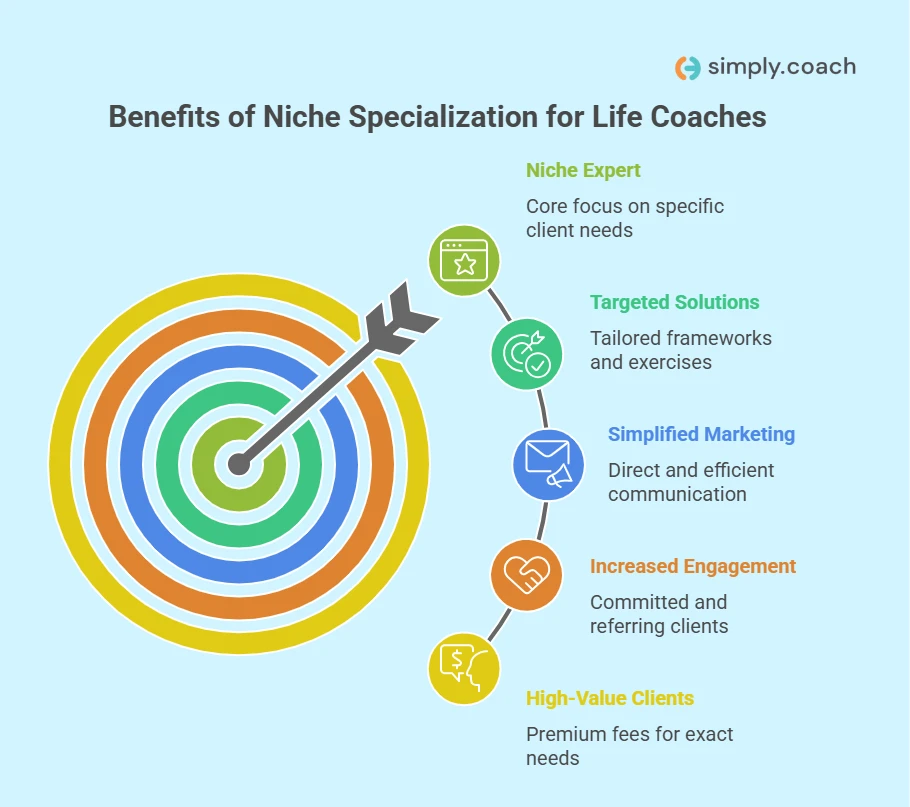
Choosing the right niche can transform your coaching business. When you focus on a specific audience, you attract clients who resonate with your expertise, increase engagement, and grow your income more efficiently. Here’s why narrowing your focus matters:
- Stand out as an expert: Specializing positions you as the go-to coach for a specific challenge. Clients trust coaches who focus on problems they experience daily, such as career transitions or confidence building.
- Attract high-value clients: Clients pay more for solutions that meet their exact needs. Focusing on areas like executive burnout or postpartum adjustments helps you justify premium fees.
- Increase client engagement: Tailored sessions and exercises keep clients committed. When your content addresses their unique struggles, they stay longer and refer others.
- Simplify marketing: A clear niche lets you create messages, social posts, and offers that speak directly to your audience, reducing wasted effort.
- Deliver targeted solutions: Specializing allows you to design frameworks and exercises that solve real problems. Mindset coaches for entrepreneurs, for example, can teach decision-making under pressure.
Take the First Step to Master Your Life Coaching Niche
If you want to truly understand life coaching, define your niche, and grow your client base confidently, the Simply.Coach Life Coaching Track is designed for you. It provides actionable guidance to get certified, start your coaching business, attract clients effectively, and equip you with tools and technology to run your practice smoothly.

Profitable Life Coaching Niches to Consider in 2026

Choosing the right niche can define your success as a life coach and help you attract clients consistently. In 2026, certain niches are showing strong demand, emerging trends, and profitable opportunities. Here are ten niches you can focus on to grow your coaching practice:
1. Mindset Coaching
Mindset coaches help clients shift limiting beliefs, adopt empowering habits, and build a resilient mindset for personal growth. You guide individuals to break mental barriers, develop self-discipline, and achieve clarity in their goals.
Your services may include:
- Overcoming self-doubt and fear of failure
- Goal-setting and habit formation
- Stress management and emotional regulation
- Enhancing focus and productivity
- Building a growth-oriented mindset
Your clients may include professionals, entrepreneurs, creatives, and individuals seeking personal or career development. Many clients look for mindset coaches during career transitions, leadership development, or when aiming for life transformation.
Most successful mindset coaches have personal development experience, psychology backgrounds, or training in cognitive-behavioral techniques. Certification in life or executive coaching adds credibility but is not mandatory for entry-level coaching.
Average fee potential: ~$100,000–$250,000 per year. Entry-level coaches may earn $50,000–$75,000, while experienced coaches with specialized corporate clients can exceed $300,000.
Why it’s profitable: Clients invest in mindset coaching because mental clarity, confidence, and high performance directly impact their careers, businesses, and personal life. The transformation you deliver is high-value and justifies premium pricing.
Popular mindset coaching niches:
- Confidence coaching
- Productivity coaching
- Resilience coaching
- Performance coaching
- Stress management coaching
- Goal achievement coaching
- Emotional intelligence coaching
- Leadership mindset coaching
- Career mindset coaching
- Positive psychology coaching
2. Career Coaching
As a life coach, career coaching allows you to help clients identify their strengths, overcome professional challenges, and navigate career transitions with confidence. You guide individuals in achieving promotions, exploring new industries, or finding meaningful work that aligns with their goals.
Your services may include:
- Resume and LinkedIn profile optimization
- Job search strategies and interview preparation
- Career transition planning and guidance
- Skills assessment and development
- Promotion and leadership coaching
Your clients may include professionals seeking career growth, individuals switching industries, or recent graduates entering the workforce. Many clients seek career coaches during periods of job dissatisfaction, layoffs, or leadership advancement.
Most successful career coaches have HR, recruitment, or corporate experience. Certifications in career coaching or psychology can enhance credibility but aren’t always required for coaching individuals effectively.
Average fee potential: ~$70,000–$120,000 per year. Corporate or executive clients may allow you to command higher rates, while early-stage coaches may start at $50,000 annually.
Why it’s profitable: Clients value career coaches because strategic guidance can accelerate promotions, salary increases, and career satisfaction. They are willing to pay for clarity and actionable steps that save time and reduce uncertainty.
Popular career coaching niches:
- Executive career coaching
- Job search coaching
- Career change coaching
- Leadership development coaching
- Graduate career coaching
- Remote work coaching
- Corporate coaching
- Skills development coaching
- Work-life balance coaching
- Salary negotiation coaching
3. Executive Coaching
Executive coaching helps you guide business leaders and senior professionals to sharpen their leadership skills, improve team performance, and make strategic decisions. As a coach, you support clients in navigating organizational challenges, enhancing communication, and achieving measurable business results. Focusing on this niche positions you as a trusted partner in driving executive success and organizational growth.
Your services may include:
- Leadership development programs
- Performance coaching for executives
- Team management and conflict resolution
- Strategic planning support
- Public speaking and presentation coaching
Your clients may include CEOs, senior managers, and business owners seeking growth, performance improvement, or leadership transformation. Many executives hire coaches during organizational change, promotions, or career transitions.
Most successful executive coaches have corporate leadership experience, management consulting backgrounds, or certifications in executive coaching. While not mandatory, advanced degrees or business experience can increase credibility and attract high-paying clients.
Average fee potential: ~$100,000–$180,000 per year. Rates can be higher for long-term corporate contracts or high-level executives.
Why it’s profitable: Executives invest heavily in coaching that delivers measurable impact on leadership, productivity, and company performance. They are willing to pay premium fees for actionable guidance that drives results.
Popular executive coaching niches:
- CEO coaching
- Leadership development
- Team performance coaching
- Board advisory coaching
- Change management coaching
- Conflict resolution coaching
- Strategic decision-making coaching
- High-potential employee coaching
- Public speaking coaching
- Organizational culture coaching
4. Health and Wellness Coaching
Health and wellness coaches support clients in achieving better physical, mental, and emotional well-being. You guide individuals to develop sustainable habits, manage stress, improve nutrition, and create a balanced lifestyle that aligns with their goals. Your role often combines accountability, motivation, and practical strategies tailored to each client’s needs.
Your services may include:
- Personalized nutrition and fitness planning
- Stress management and mindfulness techniques
- Habit formation and behavior change strategies
- Sleep improvement guidance
- Chronic condition or weight management support
Your clients may include adults seeking lifestyle improvements, individuals with chronic conditions, corporate wellness programs, and those aiming for better work-life balance. Many clients seek coaches when they want long-term lifestyle changes rather than quick fixes.
Most health and wellness coaches have certifications in health, fitness, nutrition, or coaching. Popular credentials include National Board Certified Health & Wellness Coach (NBC-HWC) or certifications from reputable organizations like ACE or NASM. While formal degrees aren’t always required, they enhance credibility.
Average fee potential: ~$50,000–$90,000 per year.
Why it’s profitable: Clients invest in lasting health improvements, and many pay premium rates for personalized guidance that helps them achieve long-term wellness.
Popular health and wellness coaching niches:
- Fitness coaching
- Nutrition coaching
- Stress management coaching
- Mindfulness and meditation coaching
- Corporate wellness coaching
- Chronic illness management coaching
- Weight management coaching
- Women’s health coaching
- Holistic lifestyle coaching
- Sleep coaching
5. Relationship Coaching
Relationship coaches help clients improve personal and professional relationships by addressing communication, emotional intelligence, and conflict resolution. You guide individuals or couples to build stronger connections, set healthy boundaries, and navigate challenges effectively. Your support focuses on creating lasting, meaningful interactions that enhance overall life satisfaction.
Your services may include:
- Couples coaching for communication and intimacy improvement
- Conflict resolution strategies
- Dating and romantic guidance
- Family dynamics coaching
- Emotional intelligence and social skills development
Your clients may include couples seeking stronger relationships, singles navigating dating challenges, and individuals wanting to improve family or workplace relationships. Many clients seek coaches during transitions, such as marriage, separation, or career-related interpersonal challenges.
Most relationship coaches have backgrounds in psychology, counseling, social work, or coaching certifications. Popular credentials include Certified Relationship Coach (CRC) or programs from reputable coaching organizations. While formal degrees aren’t always required, they add credibility and trust with clients.
Average fee potential: ~$60,000–$100,000 per year.
Why it’s profitable: Clients are willing to invest in improving their most important relationships, making relationship coaching a high-demand and valuable service.
Popular relationship coaching niches:
- Couples coaching
- Marriage coaching
- Dating coaching
- Family coaching
- Divorce coaching
- Workplace relationship coaching
- Communication skills coaching
- Emotional intelligence coaching
- Conflict resolution coaching
- Social skills coaching
6. Financial Coaching
Financial coaches guide clients to manage money effectively, achieve financial goals, and reduce money-related stress. You provide practical strategies for budgeting, saving, debt management, and wealth-building while helping clients develop a healthier relationship with money. Your support empowers clients to make informed financial decisions, improve financial literacy, and plan for long-term security.
Your services may include:
- Budgeting and cash flow management
- Debt reduction strategies
- Investment planning and education
- Retirement planning guidance
- Credit score improvement coaching
Your clients may include individuals seeking to get out of debt, young professionals planning their financial future, couples managing joint finances, or small business owners needing better financial control. Many clients seek coaches during major life transitions, such as buying a home, career changes, or preparing for retirement.
Most financial coaches have backgrounds in finance, accounting, or financial planning certifications. Popular credentials include Certified Financial Coach (CFC) or Certified Financial Planner (CFP). While not always required, these certifications add credibility and trust with clients.
Average fee potential: ~$70,000–$110,000 per year.
Why it’s profitable: Clients are willing to pay for guidance that helps them save money, reduce debt, and secure their financial future. Financial coaching becomes a high-value investment that delivers measurable results.
Popular financial coaching niches:
- Budgeting coaching
- Debt reduction coaching
- Retirement planning coaching
- Investment coaching
- Credit repair coaching
- Wealth-building coaching
- Financial literacy coaching
- Small business financial coaching
- Tax planning coaching
- Expense management coaching
7. Small Business Coaching
Small business coaches help entrepreneurs and small business owners grow, manage, and scale their ventures effectively. You provide guidance on operations, marketing, sales, financial management, and strategic planning to improve business performance and sustainability. Your support enables clients to overcome challenges, optimize processes, and make decisions that drive growth.
Your services may include:
- Business planning and strategy development
- Marketing and customer acquisition strategies
- Financial management and budgeting guidance
- Operational efficiency and process optimization
- Leadership and team development coaching
Your clients may include solo entrepreneurs, small business owners, startups, and family-run businesses. Many seek coaching during early growth phases, when pivoting their business model, or facing challenges in scaling operations.
Most small business coaches have entrepreneurial experience or a background in business management, marketing, or finance. Real-world experience in running a business provides credibility and practical insights. Certifications such as Small Business Coach Certification can further boost client trust.
Average fee potential: ~$65,000–$110,000 per year.
Why it’s profitable: Small business owners are willing to invest in expertise that helps them increase revenue, streamline operations, and achieve sustainable growth. Your guidance directly impacts their bottom line, making your services highly valuable.
Popular small business coaching niches:
- Startup coaching
- Marketing strategy coaching
- Sales and conversion coaching
- Operations optimization coaching
- Leadership coaching for small teams
- Financial management coaching
- Productivity and time management coaching
- E-commerce business coaching
- Franchising and expansion coaching
- Customer experience and retention coaching
8. Parenting Coaching
Parenting coaches support parents in navigating the challenges of raising children, improving family dynamics, and fostering a healthy parent-child relationship. You provide practical strategies, guidance, and emotional support to help parents manage stress, communicate effectively, and encourage their child’s development. Your coaching helps parents feel more confident, consistent, and prepared in their parenting journey.
Your services may include:
- Positive parenting strategies and behavior management
- Emotional intelligence and communication coaching
- Time management and work-life balance guidance
- Supporting children with special needs or learning challenges
- Navigating adolescence and teen development
Your clients may include new parents, single parents, parents of teenagers, and families facing specific challenges such as behavioral issues or developmental delays. Many seek coaching to build stronger connections with their children and create a nurturing home environment.
Most parenting coaches have backgrounds in psychology, counseling, education, or family therapy. Experience as a parent also adds credibility and practical insights. Certifications such as Parenting Coach Certification or relevant child development credentials enhance client trust.
Average fee potential: ~$50,000–$90,000 per year.
Why it’s profitable: Parents are willing to invest in guidance that improves their child’s well-being and family harmony. Your expertise directly enhances their parenting skills, making your coaching highly valued.
Popular parenting coaching niches:
- New parent coaching
- Single parent support
- Teen and adolescent coaching
- Parenting children with special needs
- Positive discipline strategies
- Work-life balance coaching for parents
- Communication and conflict resolution coaching
- Family dynamic improvement
- Child behavior and emotional support
- Parental self-care coaching
9. Confidence Coaching
Confidence coaching helps clients overcome self-doubt, develop a strong sense of self-worth, and perform better in personal and professional areas. You guide clients to identify limiting beliefs, strengthen their mindset, and take actionable steps that improve how they present themselves and handle challenges. This coaching empowers clients to feel capable, assertive, and motivated in pursuing their goals.
Your services may include:
- Overcoming imposter syndrome and self-doubt
- Public speaking and presentation coaching
- Assertiveness and communication skills
- Personal branding and self-promotion guidance
- Building resilience in personal and professional challenges
Your clients may include professionals seeking career growth, entrepreneurs, students, and individuals facing life transitions or social anxiety. Many clients come to boost self-esteem, improve decision-making, and enhance overall confidence in interactions and performance.
Most confidence coaches have backgrounds in psychology, life coaching certifications, or professional development experience. Practical experience in leadership, mentoring, or public speaking strengthens credibility.
Average fee potential: ~$60,000–$100,000 per year.
Why it’s profitable: Clients value the ability to transform self-doubt into action and are willing to pay for strategies that increase their personal and professional effectiveness.
Popular confidence coaching niches:
- Public speaking confidence
- Executive confidence and leadership presence
- Social confidence and networking skills
- Career transition confidence
- Confidence for entrepreneurs
- Academic and student confidence
- Dating and relationship confidence
- Self-esteem building for adults
- Assertiveness and boundary setting
- Overcoming fear and self-limiting beliefs
10. Spiritual Coaching
Spiritual coaching guides clients to explore their inner values, beliefs, and purpose, helping them find clarity, peace, and direction in life. You support clients in connecting with their spiritual path, developing mindfulness practices, and aligning actions with personal values. This coaching helps individuals navigate life transitions, reduce stress, and deepen self-awareness.
Your services may include:
- Mindfulness and meditation guidance
- Exploring life purpose and personal values
- Developing spiritual practices and rituals
- Energy and intuition coaching
- Integrating spirituality into daily life
Your clients may include individuals seeking meaning, life balance, or personal transformation, as well as those navigating major life changes or searching for clarity. Many clients turn to spiritual coaching to enhance self-awareness, manage stress, and cultivate a more fulfilling life.
Most spiritual coaches have backgrounds in life coaching, counseling, psychology, or spiritual studies. Experience in mindfulness, meditation, or energy work strengthens credibility and client trust.
Average fee potential: ~$50,000–$90,000 per year.
Why it’s profitable: Clients invest in spiritual coaching to gain guidance that supports long-term personal growth, emotional clarity, and life satisfaction. The results often feel transformational, making it a high-value service.
Popular spiritual coaching niches:
- Mindfulness and meditation coaching
- Life purpose and clarity coaching
- Energy and chakra coaching
- Intuition and inner guidance development
- Spiritual growth for entrepreneurs
- Stress reduction through spirituality
- Healing from past trauma
- Conscious living and decision making
- Gratitude and positive mindset practices
- Transformational spiritual life coaching
How To Choose The Right Life Coaching Niche
Finding the right niche is one of the most important decisions for your coaching business. When you focus on an area that matches your skills and resonates with clients, you can attract the right audience faster and grow your practice with confidence. A clearly defined niche also positions you as an expert, making it easier to charge premium fees and deliver real impact.
1. Identify problems people are willing to pay for
To build a profitable coaching business, focus on solving problems that clients actively invest in. Understanding what people are willing to pay for ensures your services meet real demand and creates faster client acquisition.
- Become the version of themselves they aspire to be such as being more confident, successful, or fulfilled.
- Gain what they desire, such as a better career, financial stability, or meaningful relationships.
- Feel emotions they value, such as being empowered, secure, or motivated.
Look at social media groups, LinkedIn discussions, forums, or past client questions to see what problems people actively spend money to solve.
2. Align your niche with your experience and strengths
Choosing a niche that reflects your expertise allows you to deliver practical solutions and gain credibility quickly. When your niche uses both professional and personal experience, clients trust your guidance more easily. Ask yourself:
- What skills do I use at work that others struggle with?
- What personal challenges have I overcome that I can guide others through?
- What areas do friends, family, or colleagues often seek advice on?
Choosing a niche that leverages your experience makes it easier to deliver value and gain credibility quickly.
3. Get specific about your ideal client
The more precise your target client, the faster you can attract the right audience and deliver meaningful results. Defining your ideal client makes marketing easier and positions you as a specialist in a crowded market.
“I help [specific type of person] achieve [specific outcome] so they feel [specific result].”
For example:
- Generic: “I help people improve their careers.”
- Specific: “I help mid-level marketing professionals land leadership roles and increase their salaries by 25% in one year.”
A defined niche makes marketing simpler, attracts ideal clients faster, and allows you to charge premium fees because you solve exact problems.
Read more: How to Find Your Niche as a Life Coach: Tips for Attracting Your Ideal Clients
Conclusion
Focusing on a life coaching niche can transform your business, helping you attract the right clients, deliver real results, and grow your income. Whether it’s mindset, career, executive, or health coaching, specializing lets you stand out in a crowded market. By understanding client needs and leveraging your strengths, you can create a coaching practice that’s both impactful and profitable. The right niche turns your passion into a thriving business.
Simply.Coach provides an all-in-one life coaching software designed to help you define your niche, manage clients, and run your practice efficiently. From client tracking to automated scheduling, it equips coaches with the tools needed to deliver results and scale confidently. Everything you need to grow your coaching business is in one platform.
Frequently Asked Questions (FAQs)
1. How do I price life coaching packages without undercutting value?
Research comparable coaches, base tiers on client outcomes, and test pricing by offering value-driven packages that reflect your expertise and results.
2. Which coaching niche is seeing rising demand in 2026?
Mental wellness coaching is on the rise, driven by growing stress and anxiety post-pandemic; demand for emotional resilience is especially high.
3. How do I market multiple niches without confusing clients?
Group your offers under a broader theme (e.g., “life coaching”) but highlight specific niches on landing pages so clients find targeted clarity.
4. How often should I refresh my niche to stay relevant?
Evaluate performance annually. As long as client demand stays strong, your niche stays valid, pivot only when demand shifts or burnout arises.
5. What tools can help me manage a coaching business online?
Coaches benefit from client management software, scheduling tools, and automated billing. Platforms like Simply.Coach combine all features in one, streamlining operations and saving time.
6. How long does it take to build a full client base as a life coach?
It varies by niche and marketing strategy but typically 6–12 months for consistent clients. Specializing, networking, and offering free workshops or content accelerates growth.