
A client arrives with their inbox still running in their head, and every goal you planned to discuss turns into a talk about how overwhelmed they feel. Stress management for coaches is the set of tools you teach so clients spot what drives their stress and respond to it better. It covers the 4 A’s, mindfulness, thought reframing, planning and healthy routines.
The aim is not to remove stress from a client’s life, which no one can do, but to help them handle it without losing focus or progress. You will find practical techniques to teach, a four-step way to coach a stressed client and the tools that keep the work going between sessions. If you need something for your next session, start with the coach’s toolkit.
TL;DR
Coaching a client through stress starts with seeing what triggers it, then teaching them how to respond. The 4 A’s give the frame: avoid stressors they can drop, alter situations they can change, accept what they cannot change and adapt how they think and act. Inside that frame, teach a few tools that fit the client’s day. Good options are 4-7-8 breathing, questioning stressful thoughts, journaling, breaking tasks into steps, time-blocking and steady sleep and exercise habits. Run the coaching in four steps: build trust, assess stress, set clear goals and build a personal plan. Track progress between sessions, and refer the client to a mental health professional when stress points to something coaching cannot treat.
What Are the 4 A’s of Stress Coaching?
Stress management means helping clients recognize what sets off their stress and giving them practical ways to cope. Stress is common among the people you coach, and in Gallup’s August 2024 survey, 51% of U.S. employees said they felt stress during a lot of the previous day.
The goal is not to remove stress completely. It is to help clients respond in ways that protect their well-being, keep their focus and let them perform at their best.
The 4 A’s of Stress Coaching
Many coaches build their stress work around the 4 A’s of stress management, which are avoid, alter, accept and adapt. Each one gives clients a different way to respond, depending on how much control they have over the source of their stress:

- Avoid: Help your clients spot unnecessary stressors and remove them where they can. That might mean setting boundaries, taking on fewer commitments or spending less time around negative influences. Encourage them to simplify tasks and put first the activities that serve their goals.
- Alter: Support clients in changing how they approach stressful situations. Teach them to communicate more clearly, manage their time better or restructure tasks to ease the pressure. Encourage them to solve problems and negotiate responsibilities where possible.
- Accept: Guide clients to recognize situations they cannot change and to focus on how they respond. Suggest social support, journaling or mindfulness exercises for stress they cannot avoid, and help them see challenges as chances to learn.
- Adapt: Encourage clients to adjust their attitudes and behaviors so stress has less hold on them. That can mean new coping routines, healthy habits like exercise or meditation, or turning negative thoughts into practical actions. Teach them to watch their stress levels and adjust as they go.
Sorting stressors this way often shows clients that some of their stress comes from habits they could change. When that happens, the wheel of change helps them decide which behaviors to start, keep, stop or accept.
The Coach’s Toolkit for Stress Management
You can help your clients handle stress better by teaching a handful of practical methods. This toolkit covers mindfulness, thinking techniques, time management, goal setting and healthy lifestyle habits, which together help clients reduce stress, build resilience and stay focused.

1. Mindfulness and Self-Awareness
Mindfulness in coaching and self-awareness are skills you can teach clients so they recognize stress triggers and respond well. When clients learn to notice their thoughts, emotions and physical reactions, they stay steadier in hard moments. These four practices help:
- Full attention in conversations: Show clients how to notice both their thoughts and their body’s reactions to stress, and to observe emotions without judging them. This helps them spot triggers and respond calmly.
- Breathing exercises: Introduce simple techniques such as box breathing or 4-7-8 breathing, where clients inhale for four counts, hold for seven and exhale for eight. Suggest using them before meetings, presentations or hard tasks.
- Quick stress relief: Help clients use short exercises like deep belly breathing or guided imagery. For instance, they can picture a calm scene for three to five minutes whenever stress spikes, as often as they need through the day.
- Silence and reflection: Encourage clients to set aside a few quiet minutes daily. A self-reflection form helps them look back on what caused stress, how they responded and which strategies worked.
Some clients feel stress flood in so fast that they act before they can think. For those moments, the emotional audit gives them five short questions to slow down and regain control.
For actionable insights on teaching mindfulness in coaching, check out:
the Growth Dialogues Podcast episode “Integrating Mindfulness in Coaching for Lasting Client Transformation” with Coach Kevin Parker. This episode provides practical strategies and examples to help your clients achieve lasting results through mindfulness.

2. Cognitive Behavioral Techniques
Cognitive behavioral techniques help clients recognize and change the thought patterns that add to their stress. You can guide them to see how their thoughts shape their emotions and reactions, so they meet challenges more calmly and confidently. Four techniques work well in coaching:
- Challenging negative thoughts: Help clients identify thoughts that create unnecessary stress. Ask questions such as, “Is this thought based on fact?” or “What evidence supports it?” This separates real concerns from exaggerated worries.
- Cognitive restructuring: Teach clients to reshape unhelpful thinking into a more useful view. A client who believes they will never manage a project can reframe it as, “This is hard, but it can be done one step at a time.”
- Thought replacement: Guide clients to swap repetitive, stressful thoughts for calmer statements. Examples are “This is manageable” or “Calm and focused, one task at a time.” Practiced regularly, these statements help break cycles of worry.
- Journaling for stress relief: Introduce journaling as a way to process emotions and clear their thinking. Clients can write about daily stressors, feelings and possible solutions, which releases tension and builds better coping strategies over time.
Some stress has deeper roots than daily pressure. If a client’s stress connects to past trauma, use trauma-informed coaching techniques and know when to refer them to a therapist.
3. Time Management and Goal Setting for Clients
Good time management and structured goal setting help clients reduce overwhelm and take back control of their days. When they learn to set priorities and track progress, they feel more confident about handling stress. Three practices make the difference:
- Break tasks into steps: Show clients how to split large tasks into small, achievable steps, so they focus on one action at a time. A simple checklist or daily task board helps them see what is done.
- Plan and schedule on purpose: Introduce time-blocking, calendars and reminders. Help clients set specific times for tasks, breaks and rest, because a planned week leaves less room for last-minute pressure.
- Set SMART goals for stress reduction: Guide clients to create goals that are specific, measurable, achievable, relevant and time-bound. One example is “Practice deep breathing for 10 minutes each morning for the next 30 days.” SMART goals give structure and a sense of progress.
Many of the time management strategies for coaches that keep your own week in order work for clients too. Share the ones that help you, and adapt them to the client’s job.
4. Physical Activity and Lifestyle Changes
Healthy habits and regular movement help clients manage stress. When you show them how to fit activity and wellness routines into their week, they build resilience and emotional stability. Two areas matter most:
- Regular exercise: Encourage movement your client enjoys, such as walking, swimming, yoga or dancing. Even short daily sessions can ease tension and help them focus.
- Healthy daily habits: Guide clients toward balanced meals with whole foods, fruit, vegetables, lean protein and whole grains, and toward a regular sleep schedule with a calm, distraction-free bedroom.
Habits like these sit at the heart of lifestyle coaching, and they work like protective “stress shields” that give clients more room to cope. If a client wants outside ideas for routines, point them to health and wellness coaches who share their methods publicly.

How Do You Coach Clients on Stress?
Coaching clients through stress takes structure, empathy and clear guidance. These four steps help clients understand their stress, take action and build coping skills that last.
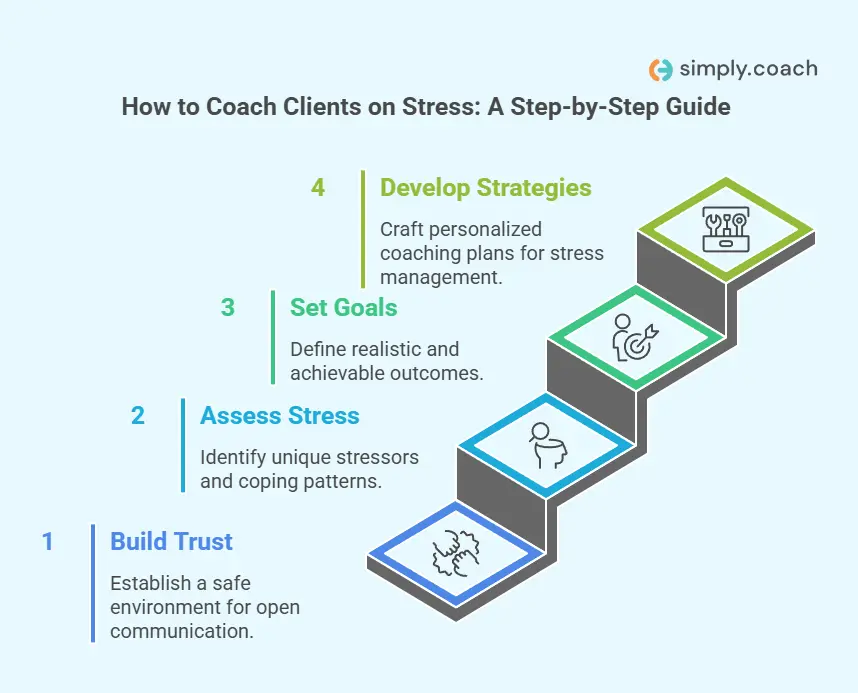
1. Build Trust With Clients
Create a safe, non-judgmental space where clients feel comfortable sharing their thoughts and emotions. Listen at a deeper level, show empathy and acknowledge what they are going through. Steady trust leads to open conversations, which is how you learn what triggers their stress.
2. Assess Stress Levels
Ask reflective questions to find each client’s stressors and coping patterns. Look for where stress is highest and which patterns feed the overwhelm. Good discovery questions keep this assessment focused on the client’s specific needs.
3. Set Clear Goals
Work with your clients to define realistic outcomes for managing stress. Break larger goals into small steps and help them decide what comes first. Clear goals give structure, keep clients motivated and make progress easy to see.
4. Develop Personalized Strategies
Build a personalized coaching program that suits each client’s needs, strengths and circumstances. Include tools such as mindfulness practices, thinking techniques and lifestyle guidance. Adjust the plan as clients progress, so they can manage stress in real situations.
Following these steps, you can guide clients toward less stress, more resilience and better focus and balance in their daily lives.
Using Technology and Apps in Stress Management Coaching
Technology helps clients manage stress between sessions, when you are not in the room. Digital tools cut your admin, track progress and give clients practical support that fits their day. Apps alone give clients practice, while coaching helps them choose what to practice and why it matters.
| Question | Stress apps | Stress coaching |
|---|---|---|
| What does it give the client? | Guided exercises and a log, on demand | A plan built around their own stressors |
| Who decides what to work on? | The client, from the app’s menu | The client and coach, together |
| What happens when practice stops? | Usually nothing, unless reminders are on | The coach notices and follows up |
| Where does it fit best? | Daily practice between sessions | Choosing, adjusting and sticking with the right tools |
1. Use Simply.Coach to Support Clients With Stress
Simply.Coach handles the admin and tracking side of stress coaching, so you can spend sessions teaching techniques and supporting progress. These features help:
- Goal setting and development planning: set clear, measurable stress management goals for each client and track progress over time.
- Session scheduling and automatic reminders: let clients book sessions themselves and get nudges that keep them consistent.
- Action plans: assign specific stress-reducing tasks, such as mindfulness exercises or journaling, and track whether they get done.
- Reports and progress dashboards: follow client progress, see goal attainment and adjust your coaching as needed.
- Client workspaces and resource sharing: give clients one place to find worksheets, guided exercises, videos and other tools to practice between sessions.
Used this way, the platform keeps clients engaged and accountable while they learn to manage stress.
2. Recommend Mindfulness Apps
Encourage clients to use apps like Headspace, Calm or Insight Timer for mindfulness and relaxation exercises. These apps make it easy to fit short stress-relief practices into the day, even between sessions.
3. Track Stress With Specialized Apps
Suggest apps that log stress levels, mood and daily habits, such as Moodfit. Patterns tracked over time show you and your client which coping strategies work, so you can adjust them together.
Conclusion
Teaching clients to manage stress protects their well-being, their focus and their progress toward everything else you coach them on. The 4 A’s give them a way to sort stressors, and a few well-chosen techniques give them something to do about each one.
Start with trust and a clear picture of what drives the client’s stress, then build a short, personal plan and review it often. Keep the line between coaching and therapy clear, and refer the client on when their stress needs more than coaching can offer.
Key Takeaways
- Sort before you treat. Ask which stressors the client can drop, change or only accept, because each one needs a different response.
- Teach two or three tools. A short list the client uses every week beats a long menu of techniques they never try.
- Practice before pressure. Breathing and reframing work best when clients rehearse them on calm days first.
- Question the thought. Asking what evidence supports a worry often shrinks it faster than reassurance does.
- Plan the week, not just the goal. Time-blocked breaks and smaller tasks prevent much of the overwhelm clients bring to sessions.
- Measure what changes. A weekly stress rating or sleep log shows whether a technique is earning its place.
- Know your limit. Severe anxiety, low mood or trauma calls for a referral, not more coaching.
Stress habits slip fastest between sessions, when the client is busy and nobody is checking in. With Simply.Coach’s client management software for coaches, you can set action plans for breathing, journaling or planning practice and send nudges that keep clients consistent until the new habits stick.
Frequently Asked Questions (FAQs)
What is the difference between stress coaching and therapy?
Stress coaching looks forward. It helps clients build coping skills, set goals and practice new habits. Therapy is provided by licensed professionals and can work on past experiences, trauma and mental health conditions. A coach refers a client to therapy when their stress points to something deeper.
How can I identify when a client needs professional mental health support?
Watch for severe or lasting anxiety, low mood that does not lift, trauma surfacing in sessions or any mention of self-harm. When you see these signs, pause the coaching agenda and refer the client to a licensed mental health professional.
How do I measure the effectiveness of stress management techniques with clients?
Agree on a few measures at the start, such as a weekly stress rating, sleep quality or how often a technique gets used. Review them at progress check-ins alongside client feedback, and swap out any technique that is not helping.
Can stress management coaching be effective for children and adolescents?
It can help younger clients when the techniques suit their age, such as short breathing games or simple planning tools, and when parents or carers are involved. Coaches who work with minors should have the right training and follow local safeguarding rules.
How can I maintain my own well-being while coaching clients on stress management?
Use the same tools you teach. Set limits on your working hours, build breaks in between sessions and look for supervision or peer support to talk through hard cases. A coach who is running on empty finds it harder to stay calm and present.
What are 7 effective stress management techniques?
Seven that coaches often teach are breathing exercises, mindfulness, questioning negative thoughts, journaling, breaking tasks into steps, regular exercise and a steady sleep routine. Pick two or three that fit the client's day rather than introducing all seven at once.