
Have you ever felt unsure about how to start a coaching relationship with a new client? The discovery call is your opportunity to make a strong first impression and set the tone for the entire coaching journey. Without asking the right questions, you risk missing key insights that could make or break your success with the client.
A discovery call is more than just a conversation, it’s a critical step in understanding your client’s challenges, aligning their goals with your coaching expertise, and determining if you’re the right fit for each other. The right coaching discovery call questions help you uncover what’s truly important to your client, giving you the clarity needed to create a personalized coaching plan that delivers results.
In this blog, we’ll explore the essential questions to ask during your coaching discovery calls, how to structure these sessions effectively, and why they’re key to building strong, lasting client relationships.
Key Takeaways
- Discovery calls are essential for building strong coaching relationships by helping you assess client needs, challenges, and goals.
- The purpose of a discovery session is to determine if you and the client are a good fit for each other and to set clear expectations.
- Ask the right questions during the call to uncover the client’s pain points and motivational questions like “What’s your biggest challenge right now?” and “What does success look like to you?”
- Structure your discovery call with preparation, clear communication, and active listening to ensure both you and the client align on goals.
- Common pitfalls to avoid include being too rigid, not listening actively, and overwhelming the client with too many questions.
- Simply.Coach helps streamline the discovery call process with tools for scheduling, client management, and follow-up, allowing you to focus on coaching rather than administrative tasks.
- Follow-up after the call with a summary, next steps, and clear instructions on how to proceed with the coaching process.
What is a Coaching Discovery Session?
A coaching discovery session is a focused, initial conversation between you and a potential client to determine whether you are a good fit to work together. It’s the first step in evaluating the client’s challenges, goals, and whether your coaching approach aligns with their needs. During this session, you’ll gain clarity on their current situation, identify their pain points, and discuss their desired outcomes, helping both you and the client decide whether to proceed with a coaching partnership.
The purpose of the discovery session is to understand the client’s readiness for change, establish rapport, and set expectations for the coaching process. It’s a time to assess their commitment to achieving their goals and whether your coaching services can provide the transformation they’re seeking.
On the other hand, a coaching discovery session is NOT:
- A free coaching session where you give advice without commitment.
- An opportunity for the client to ‘pick your brain’ about strategies or insights without a formal partnership.
- The beginning of a coaching program—this is simply the assessment phase.
As the coach, it’s essential for you to guide the session and set clear boundaries. While some potential clients may expect free advice or view the session as a free consultation, you can maintain control by structuring the call effectively. The discovery session is your opportunity to assess the client’s fit and help them understand if and how you can work together toward their goals.
Want to deliver transformative coaching ?
Learn more on How to Plan a Productive Coaching Session (Templates and Examples)

Why is it Important to Have a Discovery Session?
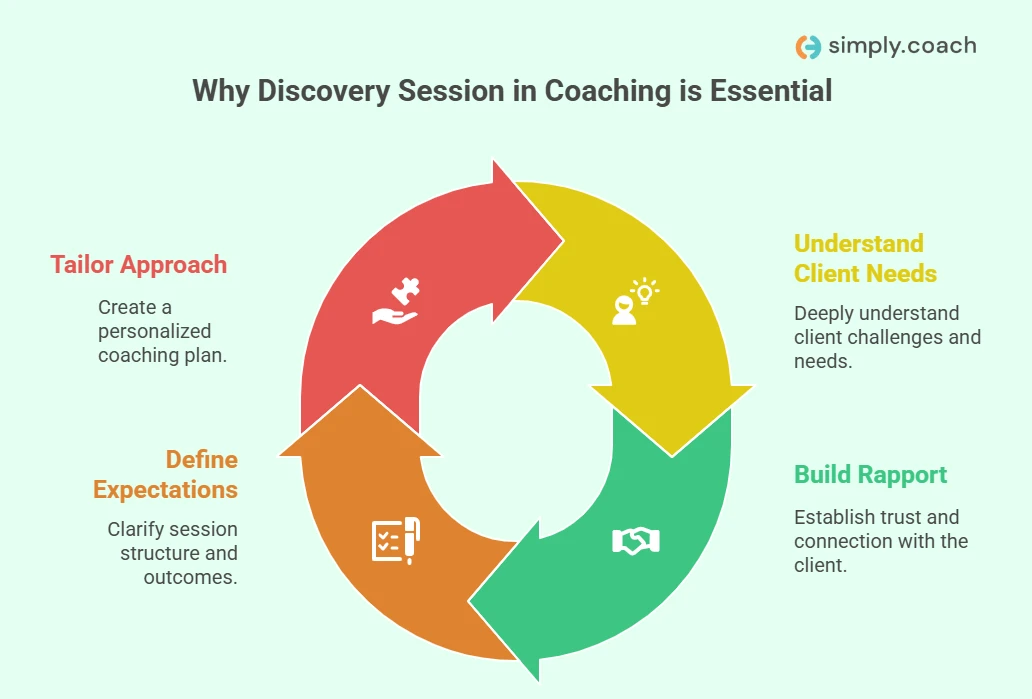
The discovery session is a critical step in setting the foundation for a successful coaching relationship. It allows both you and your client to ensure you’re aligned and ready to move forward. Here’s why it’s so important:
- Client-centered understanding: The discovery session allows you to deeply understand your client’s specific challenges and needs before committing to a full coaching relationship. This helps you avoid offering generic solutions and ensures that your approach is truly relevant to their situation.
- Building rapport: Establishing trust during the discovery call is crucial. It’s your chance to create a connection with the client, making them feel comfortable and safe in sharing their struggles and goals. When trust is built early on, the coaching relationship becomes more collaborative and effective.
- Defining expectations: This session ensures that both you and the client have a clear understanding of what to expect from the coaching process. You can outline the structure of your sessions, discuss potential outcomes, and clarify the commitment required, helping to avoid misunderstandings later on.
- Tailored approach: By assessing the client’s unique situation during the discovery call, you can create a coaching plan that is specifically designed for them. A personalized approach leads to better outcomes and ensures that the client feels heard and valued.
Read more: Steps to Build a Successful Coaching Relationship
How to Structure a Successful Discovery Call
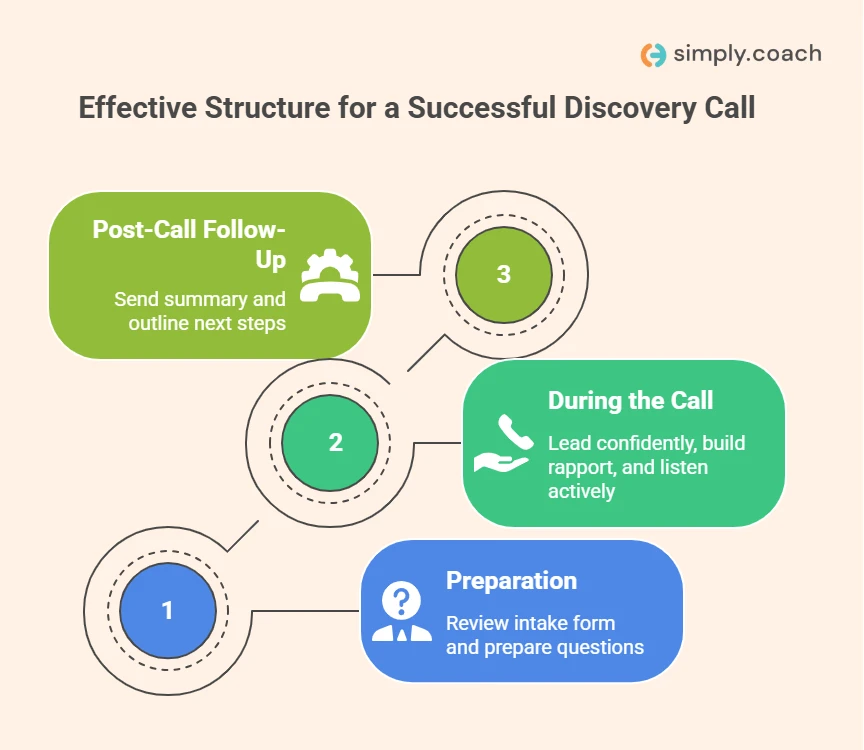
A well-structured discovery call sets the stage for a productive coaching relationship. It helps you assess whether you and the potential client are a good fit, while also building trust and aligning expectations. Here’s a step-by-step guide to structuring your discovery call to maximize its impact.
1. Preparation
- Review intake form: Before the call, go through the client’s intake form to understand their pain points, goals, and any immediate challenges. This information will help you prepare focused questions that get to the heart of their needs.
- Prepare discovery call questions: Be ready with targeted questions designed to explore the client’s deeper motivations and obstacles. Use open-ended questions that allow the client to provide detailed responses and give you insight into their mindset.
2. During the call
- Take control of the session: Lead the discovery call confidently by explaining its purpose upfront. Set clear expectations for the session to make sure both you and the client are on the same page from the start.
- Build rapport: Start by referencing something from the intake form to create a personal connection. This small gesture can break the ice and build trust early on, making the client feel valued and heard.
- Ask targeted questions: Use the questions you’ve prepared to dive into the client’s situation. Focus on understanding their challenges, goals, and any other factors that are preventing them from moving forward. Follow up with probing questions to dig deeper.
- Practice active listening: Listen carefully to what the client is saying, and ask follow-up questions to clarify their needs. Don’t just hear their words—understand the context and emotions behind them to form a full picture of their situation.
3. Post-call follow-up
- Send a summary: After the call, send a recap email summarizing the key points discussed. This helps reaffirm what was said, shows your attentiveness, and gives the client something to refer to.
- Outline next steps: Be clear about what happens next, whether it’s scheduling another call, sending resources, or providing details about your coaching program. Giving the client a clear path forward keeps the momentum going.
By following this structure, you’ll ensure that every discovery call is purposeful, efficient, and sets the foundation for a strong coaching relationship.
Read more: Intuition in Coaching: Building Stronger Client Relationships
Top 15 Coaching Discovery Call Questions to Ask Clients
Asking the right questions during a discovery call helps you get to the heart of your client’s needs, challenges, and goals. These questions not only build rapport but also give you the insights needed to decide if you and the client are a good fit. Here are the top 15 questions every coach should consider asking:
- What is your biggest challenge right now?
This question helps you understand the client’s main pain point, giving you an entry point into their needs and struggles. - What does success look like to you?
A great way to define clear, tangible goals. Understanding their vision of success ensures you’re both aligned on outcomes. - What’s been stopping you from achieving this success?
Identifies obstacles and limitations that might be holding them back. This also sheds light on their current barriers to success. - What have you tried so far to address this?
Gauges their prior efforts and experiences. It shows if they have taken steps before and helps you avoid repeating strategies that haven’t worked. - Why is now the right time for you to make a change?
This question helps assess the client’s readiness and motivation. It reveals whether they’re truly prepared to invest in the change process. - How do you usually stay motivated?
Understand their approach to accountability and how they stay on track. This gives insight into their commitment to the process. - What would achieving this goal mean for you personally/professionally?
Understand the broader impact of their success. This helps you tap into their deeper motivations, both personal and professional. - What do you feel is your biggest strength?
Identifies their strengths, which you can leverage during the coaching process. Recognizing strengths allows you to build on them and enhance their confidence. - How do you hold yourself accountable?
Insights into their self-discipline and accountability. This reveals how they track their progress and stay committed to their goals. - What is the most important change you want to make right now?
Narrows the focus to the client’s top priority. This helps you direct your coaching efforts to their most urgent needs. - What are you hoping to gain from working with a coach?
Clarifies their expectations. This ensures that both of you understand what they aim to achieve through coaching. - What do you think is holding you back?
Identifies deeper barriers. This question uncovers emotional or practical factors that may be hindering progress, providing valuable insight for tailored coaching. - What would a successful coaching experience look like for you?
Sets clear expectations for coaching outcomes. This ensures both you and the client are aligned on the definition of success. - What is your ideal outcome from coaching?
Solidifies goal alignment by confirming that you’re on the same page regarding what success looks like from the coaching process. - How ready do you feel to commit to making changes?
This helps assess their readiness for action. Understanding their level of commitment ensures you both have a shared understanding of their willingness to put in the work.
These questions are designed to uncover the core motivations, challenges, and goals of your clients. They’ll help you establish a deeper connection while also giving you the insight needed to create a personalized coaching plan.
Check out the Simply.Coach Guide
u0022The Ultimate Guide to Asking Powerful Life Coaching Questionsu0022 If you’re looking to take your coaching conversations even further. This guide provides additional questions and insights that can help you unlock even more value in your discovery calls
How to Effectively Close a Discovery Call
The way you close a discovery call can greatly influence whether a client chooses to move forward with your coaching program. A confident and clear conclusion will help reinforce the value of your services and encourage the client to take the next step. Here’s how to close a discovery call effectively:
1. Recap the discussion
Start by summarizing the key points discussed during the call. Reinforce the client’s challenges, goals, and insights you’ve gained together. This shows you’ve been actively listening and ensures that both you and the client are on the same page moving forward.
2. Offer your coaching framework
Present a tailored coaching plan based on what the client shared during the call. This could include a customized program, specific goals, and actionable steps. By clearly outlining the path forward, you help the client see how your coaching will address their unique challenges.
Questions to engage:
- What do you think about this strategy?
- Can you see how this plan will help eliminate your challenge?
- Do you feel confident that you can execute this plan?
These questions help ensure the client feels aligned with the proposed plan while allowing space for them to voice any concerns.
3. Offer payment options
Once the strategy is confirmed, politely present your payment options. Make sure the client understands the available plans, whether it’s a one-time fee, installment payments, or a subscription model. This clarifies the financial aspect and makes the process smooth for both parties.
4. Closing remark
End the call by leaving the door open for follow-up. Thank the client for their time and outline the next steps, whether it’s scheduling a follow-up call, sending additional details, or simply waiting for their decision.
5. Feedback request
Finally, ask for feedback on the discovery call itself. This can be done by asking questions like,
- How did you feel about today’s session?
- Is there something I can do differently in future calls?
Gathering feedback helps you refine your approach and improve future sessions, while also showing the client that you value their input.
Also read: How to Create and Manage a Client Information Sheet for Coaches (+ Templates)
Common Pitfalls to Avoid During Discovery Calls
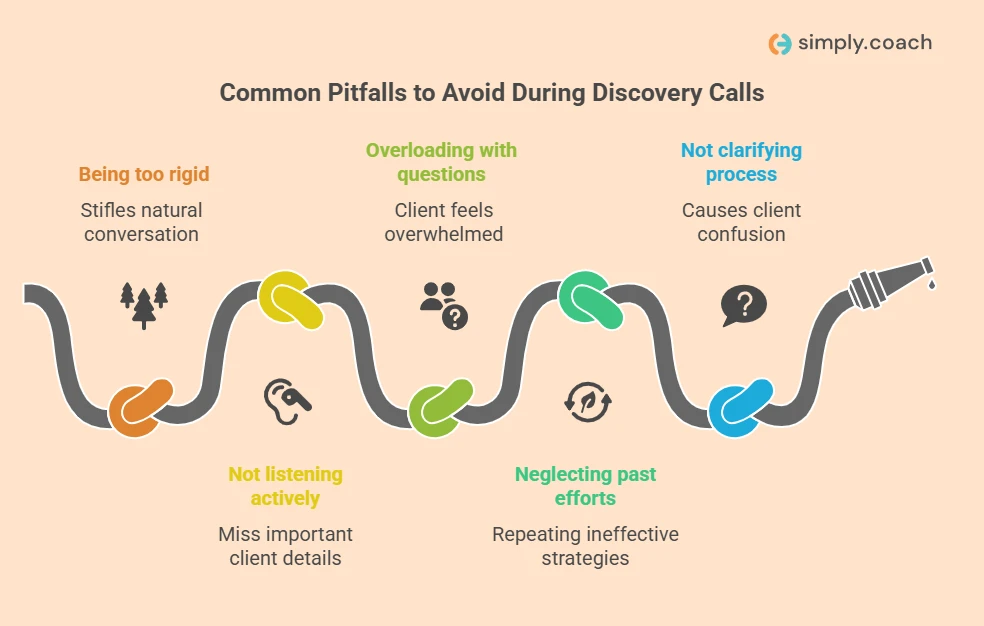
Discovery calls are crucial for building a solid coaching relationship, but there are several common mistakes that can derail the process. Here are the key pitfalls to watch out for:
- Being too rigid: Sticking too strictly to your script can stifle the conversation. Allow flexibility to adapt based on the client’s responses.
- Not listening actively: Focusing too much on your next question can make you miss important details. Listen carefully to truly understand their needs and concerns.
- Overloading clients with questions: Asking too many questions in a short time can overwhelm the client. Space out questions to give them time to reflect and respond.
- Neglecting to ask about past efforts: Not understanding what the client has tried before can lead to repeating ineffective strategies. Always ask about previous efforts to ensure a fresh approach.
- Not clarifying the coaching process: Failing to explain how coaching works can cause confusion. Be clear about your coaching approach and what your client can expect.
- Avoiding tough questions: Shying away from tough topics can prevent real insights. Don’t hesitate to ask about struggles, past failures, or limiting beliefs.
- Not addressing next steps clearly: Leaving the call without clear next steps can lead to indecision. Always outline what comes next, whether it’s scheduling or sending additional information.
Avoiding these common pitfalls will ensure that your discovery calls are more effective, engaging, and productive. By being flexible, actively listening, and maintaining clear communication, you’ll build stronger, more meaningful relationships with your clients.
How Simply.Coach Helps You Maximize the Impact of Your Discovery Calls
Simply.Coach a leading digital coaching platform is designed to support coaches in every step of the discovery call process, from preparation to follow-up. Here’s how our platform can help:
- Streamlined client intake: Easily collect client information through customizable forms, ensuring you’re prepared with the right insights before the discovery call.
- Effortless scheduling: Automatically sync coaching sessions and discovery calls with your calendar, avoiding any scheduling conflicts and saving time.
- Goal tracking: Keep track of each client’s goals and progress within the platform, so you can align your discovery call questions with their specific needs.
- Automated reminders: Send timely reminders to clients about their discovery call, ensuring they’re prepared and ready to engage.
- Personalized client dashboard: After the call, you can customize the client’s dashboard to reflect key takeaways, action steps, and coaching milestones.
- Easy follow-up: Send automated follow-up emails summarizing key points discussed in the call, outlining next steps, and scheduling future sessions.
With Simply.Coach, you can spend less time on administrative tasks and more time focusing on building meaningful client relationships and achieving results.
Learn to understand your clients
As you become familiar with the best practices for structuring your coaching discovery calls, listen to this episode of the Growth Dialogues Podcastabout ‘‘Evolving Client Expectations in Digital Coaching: How Coaches Can Stay Ahead.’’

Conclusion
In conclusion, discovery calls are a crucial part of building strong coaching relationships. Asking the right questions, listening actively, and setting clear expectations will help you create a solid foundation with your clients. These calls offer you a chance to understand their unique challenges and goals while ensuring you both align on the coaching process. With the right approach, you’ll not only gain valuable insights but also build trust and rapport that lead to long-term success.
Simply.Coach allows you to focus on what you do best, coaching your clients, while we take care of the administrative tasks. Our platform simplifies scheduling, client management, and follow-up so you can spend more time delivering impactful coaching and less time on paperwork.
FAQs
1. How long should a coaching discovery call last?
Discovery calls typically last between 20 to 30 minutes. This duration is sufficient to assess compatibility without overwhelming the client or veering into a full coaching session.
2. Should I offer a free discovery call?
Yes, offering a free discovery call can attract potential clients and provide them with a taste of your coaching style. However, ensure you set clear boundaries to prevent it from turning into a free coaching session.
3. How can I build rapport during a discovery call?
Start with a warm greeting, show genuine interest in the client’s background, and actively listen to their concerns. This approach fosters trust and sets a positive tone for the conversation.
4. What should I do if a client isn’t a good fit?
Politely acknowledge the mismatch and suggest alternative resources or coaches who might better suit their needs. Maintaining professionalism ensures a positive experience for both parties.
5. How do I handle objections during a discovery call?
Listen to the client’s concerns without interrupting, validate their feelings, and provide clear, concise information to address their objections. This demonstrates empathy and helps in finding common ground.
6. Should I provide a coaching plan during the discovery call?
Yes, if there’s mutual interest, outline a tailored coaching plan that aligns with the client’s goals. This shows your commitment and helps the client visualize the potential outcomes.