
You have business experience, but a prospective client wants to know how you learned to coach. A business coach certification can help you develop and demonstrate those skills, provided the training matches the work you intend to do. Start by deciding whether you need foundational coach education, an advanced credential or a focused addition to your existing practice.
Those choices lead to different courses and budgets, because using coaching as a manager is different from preparing for an independent coaching credential. Best Business Coaching Certification Programs separates these routes, explains the published tuition and identifies what to confirm before paying. You can then judge the options against your clients, schedule and experience.
TL;DR
Business coach training ranges from broad professional education to short leadership courses and advanced credentials for experienced practitioners. iPEC and Coach U offer substantial coach education, while WABC CBC has experience requirements and more than one route. Mindvalley and Marshall Goldsmith describe continuing coach education credit; that is different from earning an individual ICF credential. Brown focuses on leaders applying coaching at work. Compare the exact award, supervised practice and full tuition before choosing. Several providers require a current quote, and advertised offers can be tied to an old intake. A useful shortlist starts with the service you plan to provide, rather than the lowest visible fee.
How We Compared Business Coaching Options
What we compared: Ten business-coaching programs, short courses and credential routes, ranging from introductory learning to advanced professional recognition.
Where details come from: Provider course pages, published tuition and the credentialing organization’s own description of what applicants must complete.
How to compare them: Read each option by intended learner, learning format, practical coaching work, award and total price. These routes serve different purposes.
What is outside the list: Services that coach business owners as clients, rather than train coaches, and unrelated clinical or specialist qualifications.
Before you pay: Request the current syllabus and a written fee breakdown. Check whether mentoring, assessment, membership and any credential application are included in the package you are buying.
Why Is It Useful to Get a Business Coaching Certification?
Good training gives you a way to practice coaching, receive feedback and explain your approach to clients. The certificate records what you completed; its value depends on the requirements behind it and whether those skills fit your work.
- Professional and credible. An assessed program gives you concrete training to describe. Clients still need to evaluate your experience and the service you offer.
- Committed. Completing coursework and practice shows an investment in learning. Ongoing development matters after the certificate is awarded.
- Skilled. Listening, contracting, questioning and goal setting improve through practice and feedback. A library of worksheets alone cannot show how you use them.
- Ethical. Training should help you agree boundaries, protect confidentiality and recognize work outside your competence. A logo does not replace those decisions.
- Results-oriented. You can learn to agree useful goals and review progress with clients. Business results still depend on the client, the context and how the work is applied.
For experienced consultants, the adjustment may involve knowing when to offer advice and when to help clients think for themselves. A business coaching franchise adds another operating model to consider. Its brand and commercial arrangements are separate from the quality of your coach education.
Certified vs. Accredited and What Each Means
A school may certify that you completed its course and passed its assessment. Accreditation usually applies to a training program, while a professional credential is awarded to an individual who satisfies a separate body’s requirements. These terms describe different checks, so ask who awards the qualification and exactly what was assessed.
ICF accreditation does not mean every graduate automatically becomes an ACC, PCC or MCC. Continuing Coach Education, usually shortened to CCE, also serves a different purpose from a complete initial training pathway. The ICF credential levels have their own application requirements, including experience and assessment.

Best Business Coaching Certification Programs for 2026
This 2026 comparison covers ten training and credential options for business coaches. Published fees below are in US dollars unless stated otherwise; a quote is needed where the current package cannot be priced reliably.
Course terms and fees were checked on 2026-10-21. Confirm the current offer and the requirements for your chosen route before enrolling.
| Option | Published tuition | Format and timing | Award or recognition | Useful focus |
|---|---|---|---|---|
| iPEC | $9,995 core; $1,995 optional specialization | Core 7-10 months; 160 hours | School certifications; ICF-accredited education | Broad coach preparation with executive applications |
| Coach U | $6,395 per phase; conditional early fee $5,995 | Live online; 78-hour and 72-hour phases | Coach education; check the selected credential route | Structured foundational and advanced study |
| WABC CBC | Route-specific quote | Training or portfolio route; experience required | Advanced WABC business-coach credential | Experienced business coaches |
| PBCA | Request current quote | Confirm current schedule and support | Confirm exact award and recognition | Business-specific training inquiry |
| Mindvalley | $4,999 displayed; confirm current intake | Online; 16 weeks | 40 ICF CCE units | Business-coaching development |
| Marshall Goldsmith SCC | $4,000-$5,500 | Online; 7-9 months | School certification; 36 ICF CCE units | Stakeholder-based leadership behavior work |
| Udemy | Check current course offer | On-demand course; confirm current syllabus | Course completion; verify any additional award | Introductory business-coaching study |
| Brown University | $2,995 online; $3,495 on campus | Online course 7 weeks; campus format differs | Certificate of completion | Leaders using coaching at work |
| IECL | Request location-specific quote | 6 weeks; 44 hours; three-day workshop | Level 1 course; further credential requirements | Organizational coaching foundations |
| Center for Business Coaching | Request current quote | Confirm training and clinic schedule | Optional certification; confirm requirements | Business experience applied through coaching |
Some courses also address beliefs and emotional awareness in leadership. If that is your main learning need, compare mindset coach certification separately. A specialty course can complement business coach training, but it does not replace the broader skills your client work requires.
1. iPEC Executive Coach Certification Program
iPEC combines core coach education with its Core Energy Coaching and Energy Leadership approaches. Its executive coaching training applies that foundation to leadership and business settings. Evaluate the coaching practice and assessment alongside the appeal of a particular methodology.
The core tuition package is $9,995 for 160 training hours over 7-10 months. It includes the Certified Professional Coach and Energy Leadership Index Master Practitioner designations. The optional COR.E Dynamics specialization adds $1,995, 40 hours and an estimated 2-4 months; it is a separate purchase.
- Live modules and independent work support the core learning route. Check the current attendance and completion requirements.
- The executive application is part of a wider coaching foundation. Ask which specialization, materials and mentoring the quoted package includes.
Right fit. You want substantial coach education and are comfortable learning a specific school methodology.
Wrong fit. You need a short leadership workshop or only an inexpensive introduction.
| Potential advantage | Practical limitation |
|---|---|
| Broad coach preparation with executive applications | The core course requires a substantial budget and months of study. |
| Live learning alongside independent work | Scheduled attendance still has to fit around your practice. |
| Optional specialization after the core | Adding a niche changes both the full cost and completion schedule. |
2. Coach U Professional Coach Training Program
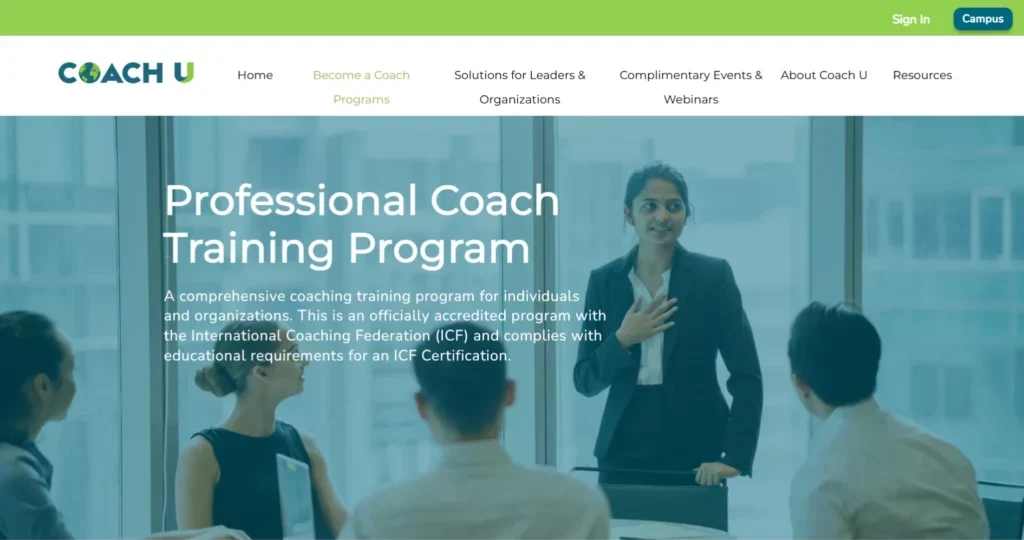
Coach U separates its professional coach training into Core Essentials and Professional Essentials. The first develops a foundation, while the second deepens coaching skills. The phases provide 78 and 72 hours respectively, so compare a single phase with other partial courses and the complete route with complete programs.
Each phase lists tuition of $6,395. Coach U also lists an early fee of $5,995 when purchased at least 28 days before the program starts. Buying both at the standard fee totals $12,790 before any separate costs; eligibility for a discount must be checked for each phase.
- Live online classes and practice require time beyond watching recorded material. Ask how the schedule, mentoring and evaluation fit your credential goal.
- The provider offers different scheduling routes. Obtain the actual calendar rather than assuming that every learner finishes in the same number of months.
Right fit. You want a phased coach-education route with live teaching and opportunities to practice.
Wrong fit. You cannot attend scheduled sessions or want a narrowly business-specific short course.
| Potential advantage | Practical limitation |
|---|---|
| Two phases let you plan progression | The combined tuition is much higher than the single-phase headline. |
| Live learning supports discussion and feedback | Synchronous sessions may conflict with work or client appointments. |
| Foundation followed by advanced study | Confirm which additional credential requirements remain after your chosen phase. |
3. WABC Certified Business Coach CBC
The WABC CBC credential is designed for business coaches at an advanced level. It is a credential route rather than one uniform online course. Applicants need relevant experience, including at least three years of business coaching and seven years in business or an organizational context.
WABC describes training and portfolio routes. The course provider, your prior learning and the selected route affect the evidence, schedule and fees involved. Ask for the requirements of that route, including membership or certification costs, before comparing it with a beginner training package.
Right fit. You already have substantial business and coaching experience and want business-specific professional recognition.
Wrong fit. You are entering coaching for the first time and need initial skills training.
| Potential advantage | Practical limitation |
|---|---|
| Specific focus on business-coaching practice | Experience requirements exclude a typical beginner. |
| More than one route can recognize prior learning | You must establish which route your evidence supports. |
| Assessment addresses an advanced professional scope | There is no single tuition or duration to quote for every applicant. |
4. Professional Business Coaches Alliance PBCA
PBCA is a business-coaching-specific option to investigate for work with business owners and leaders. Its business coach certification page is the place to request the current syllabus, delivery format and membership arrangements. Obtain those details before using it as a priced alternative to the other courses.
Request a current program description and written quote to confirm tuition, training hours and recognition. Ask PBCA to identify the award, who observes your coaching, what support follows completion and whether continuing membership carries a separate fee. Do not assume a professional credential is included because the program uses the word certification.

Right fit. You want to investigate a business-specific training community and can compare a written proposal.
Wrong fit. You need a confirmed price, schedule or accredited education route before contacting a provider.
| Potential advantage | Practical limitation |
|---|---|
| Business coaching is the stated focus | The exact current syllabus needs confirmation. |
| Certification and membership can be discussed together | Separate membership and ongoing fees need a written breakdown. |
| A provider inquiry can address your intended clients | Current recognition and assessed-practice details remain unverified. |
5. Mindvalley Certified Business Coach Program
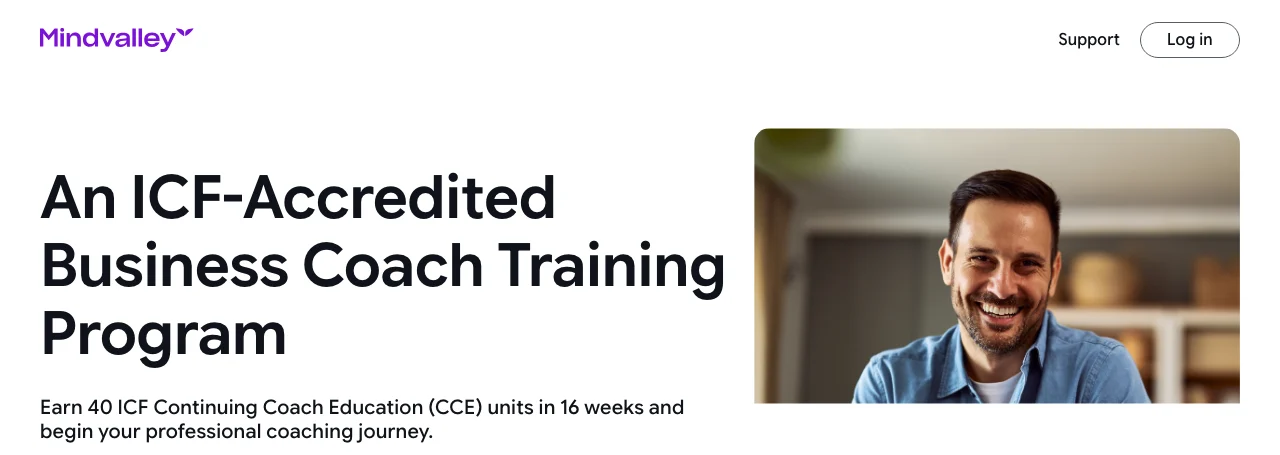
The Mindvalley business coach program combines business-coaching learning with business-building topics. Its page describes 16 weeks online and 40 ICF Continuing Coach Education units. Those units are not an independently awarded ACC or PCC credential.
The public page displays a total investment of $4,999, but its intake banner names a date that has already passed. Confirm the current cohort, payment terms and total with the provider before relying on that figure. Also ask which live practice, feedback and resources are included in your specific enrollment.
Right fit. You want a defined online program focused on business coaching and understand the role of CCE.
Wrong fit. Your goal is a complete initial ICF credential pathway and you have not checked the remaining requirements.
| Potential advantage | Practical limitation |
|---|---|
| Business-coaching and practice-building subjects are combined | A course description does not establish future client acquisition. |
| The page specifies a 16-week format | Confirm the next available intake and live-session calendar. |
| The stated credit is 40 ICF CCE units | CCE must not be presented as automatic ACC or PCC certification. |
6. Marshall Goldsmith Stakeholder Centered Coaching Certification
Marshall Goldsmith Stakeholder Centered Coaching centers on leadership behavior and feedback from relevant stakeholders. Its coach certification program suits work where leaders can identify development goals and involve others appropriately. Agree confidentiality and reporting boundaries before using stakeholder input with a client.
The program lists a tuition range of $4,000-$5,500, a 7-9 month duration and 36 ICF CCE units. The quoted package and delivery arrangement determine the applicable price. The method-specific certification and continuing education credit are distinct from an individual ICF credential.
Right fit. You work with leaders and want a structured stakeholder-based coaching method.
Wrong fit. You need broad entry-level coach education or a method that requires no stakeholder participation.
| Potential advantage | Practical limitation |
|---|---|
| A defined leadership-development approach | The method depends on appropriate participation and agreements. |
| Focus on observable behavior and feedback | It is not a general qualification for every coaching specialty. |
| Published tuition range and CCE information | Confirm which package, support and assessments your fee covers. |
7. Udemy Business Coaching Certification FECBC Business Fundamentals
The Udemy business coaching course is an on-demand option for exploring business-coaching fundamentals. The course title includes FECBC, but that label alone does not establish ICF accreditation or an independently recognized professional credential. Read the issuer and assessment details before describing the award to clients.
Check the current course price, video duration and resource list in the applicable enrollment offer. Udemy can display individual-course purchases and subscriptions separately, and prices depend on the offer and currency. A monthly subscription amount is not the total tuition for a professional coach-training route.
Right fit. You want an introduction and can evaluate it as a self-directed learning resource.
Wrong fit. You need verified supervised coaching, mentor support or a complete credential pathway.
| Potential advantage | Practical limitation |
|---|---|
| On-demand study can fit around work | A video course does not by itself provide observed coaching practice. |
| A focused introduction can help you test your interest | Current course scope and the award need confirmation. |
| An individual purchase may differ from subscription access | Do not compare a promotional or monthly amount with a complete program fee. |
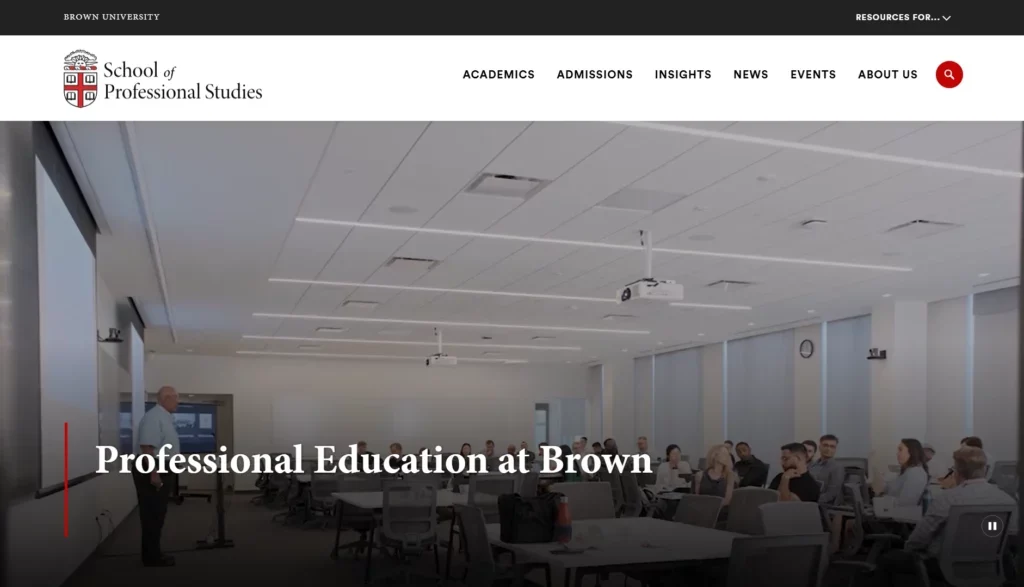
8. Leader as Coach Executive Program at Brown University
Brown’s Leader as Coach program is aimed at leaders applying coaching in their organizations. It develops a coaching approach to workplace conversations, rather than functioning as a complete professional coach credential. Completion awards a certificate from the university program.
Published tuition is $2,995 for the online format and $3,495 for the campus format. The online course is listed as seven weeks; the campus schedule is different. Check the actual cohort dates and attendance requirements before deciding which format fits your role.
Right fit. You are a manager or leader who wants to use coaching skills in your existing job.
Wrong fit. You need a complete independent-coach qualification or an ICF credential from this course alone.
| Potential advantage | Practical limitation |
|---|---|
| Direct relevance to leadership conversations | Its purpose differs from training for an independent coaching practice. |
| Online and campus formats offer a choice | Schedules and participation requirements vary by format. |
| Published tuition supports a clear budget comparison | A university completion certificate is not an ICF credential. |
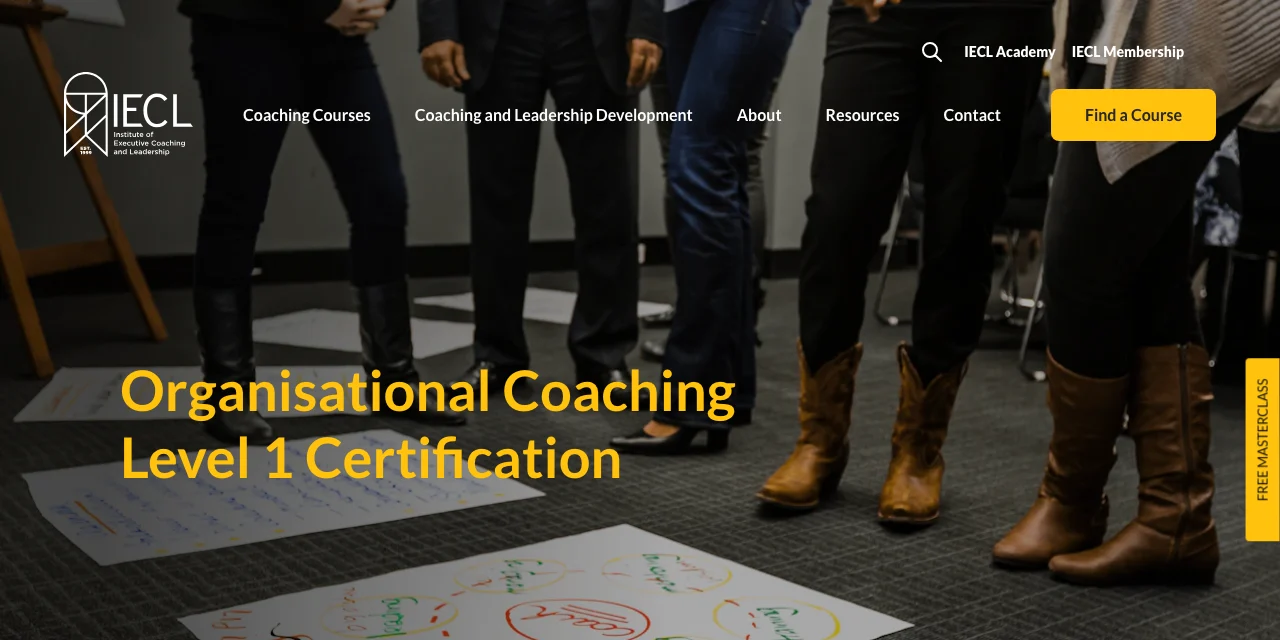
9. IECL Organizational Coaching Level 1 Certification
The IECL Level 1 course introduces organizational coaching through preparation, a three-day workshop and follow-up learning. The provider lists six weeks and 44 hours. Virtual and in-person arrangements depend on the scheduled course and location.
IECL describes further accreditation, mentoring and evaluation steps for an ICF credential route. Do not equate its course name Level 1 with a guarantee that the single course satisfies every ICF Level 1 pathway requirement. Request the full route and a location-specific fee before enrolling.
Right fit. You want an organizational-coaching foundation with a scheduled workshop.
Wrong fit. You need one clearly priced purchase that already covers every requirement of your intended credential.
| Potential advantage | Practical limitation |
|---|---|
| Organizational context gives the learning a defined application | It is not specialist education for every client population. |
| Preparation and follow-up surround a live workshop | Workshop attendance remains a fixed commitment. |
| A further development route is described | Additional education, mentoring or assessment can affect the total cost. |
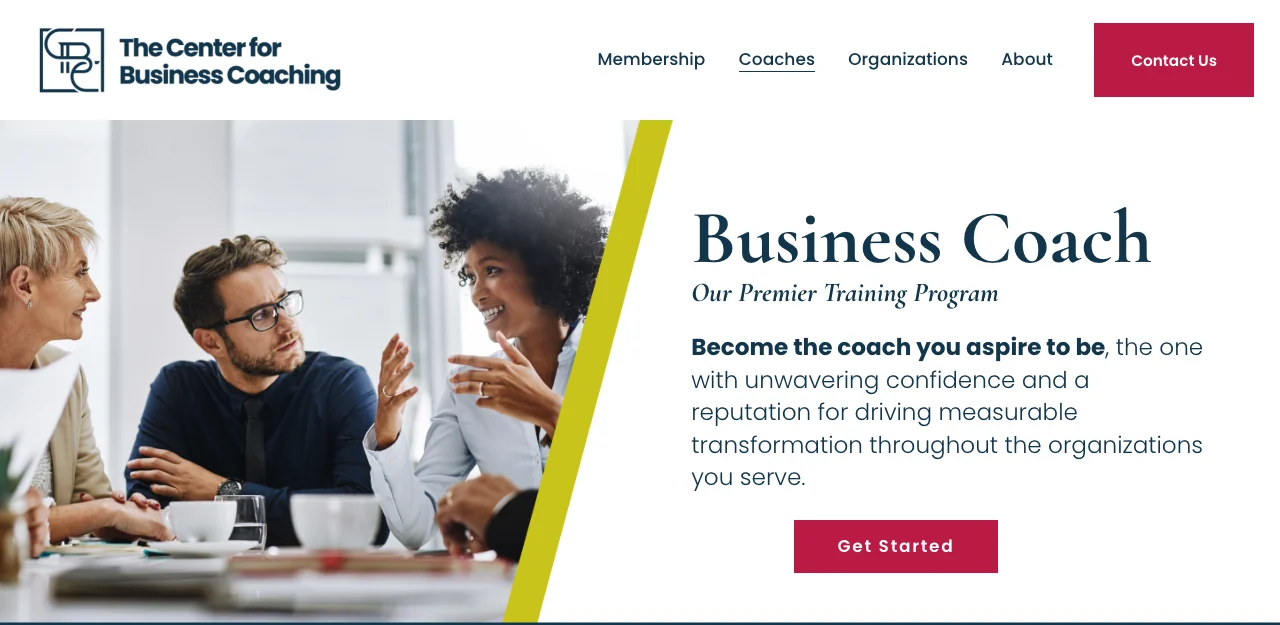
10. The Center for Business Coaching Business Coach Training
The Center for Business Coaching’s current Business Coach training describes an Expertise Integration approach and its Cornerstones methodology. It focuses on bringing business experience into coaching conversations. Consider how the model fits your experience and how it distinguishes coaching from consulting.
The current offer describes training, clinics and optional certification. Request the schedule, assessment criteria, materials license and complete fee for the route you intend to take. Confirm any claimed external recognition for that exact program; an optional school certificate is not automatically an ICF credential.
Right fit. You have business experience and want to evaluate a defined method for applying it through coaching.
Wrong fit. You need a verified beginner credential pathway or a public all-inclusive tuition figure.
| Potential advantage | Practical limitation |
|---|---|
| Uses business experience as part of the approach | You still need clear boundaries around advice and coaching. |
| Clinics can support applying a method | Confirm the practice opportunities and feedback in your package. |
| Optional certification may fit different learning goals | The current award, requirements and fee need a written proposal. |
How to Choose the Right Business Coaching Certification Program
Choose the route that prepares you for the work you intend to offer and meets the requirements that matter to your clients. A recognized name is useful only when the program behind it fits that purpose.
- Accreditation. Identify the program, awarding body and current recognition. ICF accredited coaching programs provide a broader training comparison. Check the exact route, rather than treating every ICF logo as the same award.
- Training content quality. Look for contracting, listening, ethical decisions and practice with feedback. Business strategy lessons can add context, but they should not crowd out the coaching skills you need.
- Delivery format. Check live dates, time zones, attendance rules and independent work. Flexible access to recordings does not necessarily replace a required workshop.
- Mentorship support. Ask who observes your sessions and how feedback is delivered. Distinguish group discussion from individual review of your actual coaching.
- Specializations. Small business coaching certification should match work with owners; executive coach certification should match leadership and organizational demands. Emotional-intelligence learning may supplement either, without becoming a separate clinical qualification.
- Cost versus return. Add mentoring, assessment, membership and application fees to tuition. The life coach certification cost comparison provides context for general coach education. It cannot predict the income a business-coaching course will produce.
- Alumni experience. Ask graduates about teaching, practice and support in the exact program you are considering. A testimonial or an earnings story cannot establish typical outcomes.
- Goal alignment. Identify the service you plan to provide before purchasing. You can reject a well-known program when its method, entry requirements or schedule do not fit.
Business-coaching study is not a substitute for executive-function coaching, mental-health training, career counseling or intimacy-coaching preparation. Those specialties have different client needs and boundaries. If one is your intended focus, evaluate specialist preparation directly rather than assuming a general business certificate covers it.
Conclusion
Your strongest choice is the course or credential route that fills a specific gap in your practice. Compare the learning and assessment first, then check the full fee and any requirements left after graduation. A lower starting price is not a saving if it buys a different outcome.
Once you have appropriate training and agreements in place, Simply.Coach can help you organize client goals, sessions and follow-through. That practical structure supports the service you have learned to deliver; your competence and credential claims still need their own evidence.
Key Takeaways
- Start with service. Write down who you want to coach and what the work involves before comparing schools or credentials.
- Check entry requirements. An advanced business-coach credential can require years of experience. Establish eligibility before budgeting for a particular route.
- Request practice evidence. Compare a sample assessment with the support promised in the syllabus. Lessons and worksheets provide different kinds of preparation.
- Price complete routes. Include additional phases, specializations, mentoring and assessments. Compare what you will actually purchase, including any required ongoing fees.
- Confirm credit purpose. Use the exact name of the education or award when describing it to clients; check external acceptance separately.
- Save written terms. Keep the current syllabus, cohort calendar and fee breakdown together so the package you buy matches the one you evaluated.
When your training leads to client work, you need a consistent place for goals, session records and agreed actions. Simply.Coach’s business coaching platform helps you organize those engagements and review progress, so the administration supports the coaching relationship you are building.
Frequently Asked Questions (FAQs)
What is a business coach certification and why is it important?
A business coach certification usually records completion of a provider’s training and assessment. It can help you develop and describe relevant skills, but its meaning depends on the issuer and requirements. Check whether it is a school certificate, accredited education or an independently awarded professional credential.
How do I become a certified business coach in the USA?
Choose the work you intend to offer, compare appropriate training and complete the provider’s coursework, practice and assessment. If you also want an ICF or WABC credential, check its separate eligibility and application requirements. Course completion alone does not automatically award that credential.
Do I need a certification to become a business coach?
Requirements depend on your location, services, client contracts and any professional title you use. Do not assume a course certificate is a license or that certification is the only measure of competence. Appropriate education, ethical boundaries, relevant experience and clear agreements all matter when you offer coaching.
What is the best business coaching certification in the USA?
There is no single best route for every coach. A beginner may need foundational education and assessed practice, while an experienced business coach may qualify for an advanced credential. A manager seeking workplace skills has another goal. Compare the award, support and total fee against your intended work.
How long does it take to complete a business coaching certification program?
The listed options have different scopes. Brown lists seven weeks for its online leadership course, Mindvalley describes sixteen weeks, and iPEC lists seven to ten months for its core program. A professional credential can require additional experience or assessment beyond the course calendar.
How much does a business coach certification cost in the USA?
Published examples include $2,995 for Brown’s online course and $9,995 for iPEC’s core training. Coach U lists $6,395 per phase before eligible discounts. These are different products, so compare the complete route and any mentoring, assessment, membership or application fees rather than treating them as equivalent qualifications.
Is an ICF-accredited business coaching certification worth it?
ICF-accredited education can be useful when it fits your professional credential goal or a client requirement. Confirm the exact program and what it includes. Continuing education credit is different from a complete initial pathway, and neither recognition nor higher tuition guarantees clients, income or coaching outcomes.
Can I take an online business coaching certification program?
Yes, several listed providers offer online learning. Some combine independent study with mandatory live sessions, practice and assessment, so online does not always mean self-paced. Check time zones, attendance, recorded-session policies and feedback arrangements before deciding whether a program fits your schedule.