
As a spiritual coach, you’ve likely faced the frustration of not knowing which questions will truly resonate with your clients. You’re trying to guide them toward breakthroughs, but sometimes, the right words don’t come easily. It’s not always clear how to ask questions that provoke deep reflection, insight, and lasting transformation. This challenge can leave you questioning whether you’re providing the best support possible or if you’re just skimming the surface.
The truth is, the right questions are the key to unlocking your clients’ full potential. Asking the wrong questions can lead to stagnation or surface-level discussions, while the right ones invite profound change. Effective questions not only spark self-awareness but also help clients connect with their deeper selves, enabling them to grow spiritually and emotionally.
In this blog, we’ll explore how specific spiritual coaching questions can make a world of difference in your practice. We’ll walk you through 25 powerful questions that guide your clients toward transformation, show you the types of questions that work best, and share the common mistakes to avoid when asking them.
Key Takeaways
- Powerful questions are key to unlocking your clients’ potential and guiding them through deep spiritual growth.
- Effective questions should be open-ended, thought-provoking, non-judgmental, and specific to the client’s spiritual path.
- 25 spiritual coaching questions can help your clients gain insight, align with their higher selves, and take empowered action.
- Common mistakes to avoid include asking yes/no questions, leading clients to specific answers, and overloading them with too many questions.
- Simply.Coach is an all-in-one life coaching software that automates processes, freeing up more time for your spiritual coaching practice.
What is Spiritual Coaching?
Spiritual coaching is a transformative process where you, as a coach, guide your clients to connect deeply with their inner selves, uncover their true purpose, and navigate life’s challenges with clarity and purpose. Unlike traditional life coaching, which often focuses on achieving specific goals, spiritual coaching delves into the essence of one’s being, exploring beliefs, values, and spiritual alignment.
In spiritual coaching, you facilitate a journey of self-discovery, helping clients identify and overcome limiting beliefs, align their actions with their core values, and cultivate a deeper connection with their spirituality. This approach empowers individuals to live authentically, make decisions that resonate with their true selves, and experience a profound sense of fulfillment and peace.
By integrating spiritual practices and principles, you provide a holistic framework that supports your clients in achieving personal growth and transformation. This process not only enhances their spiritual well-being but also positively impacts other areas of their lives, including relationships, career, and overall life satisfaction.
To explore more about this fulfilling journey, check out our detailed guide on Becoming a Spiritual Life Coach.
How a Great Question Empowers the Client in Spiritual Coaching
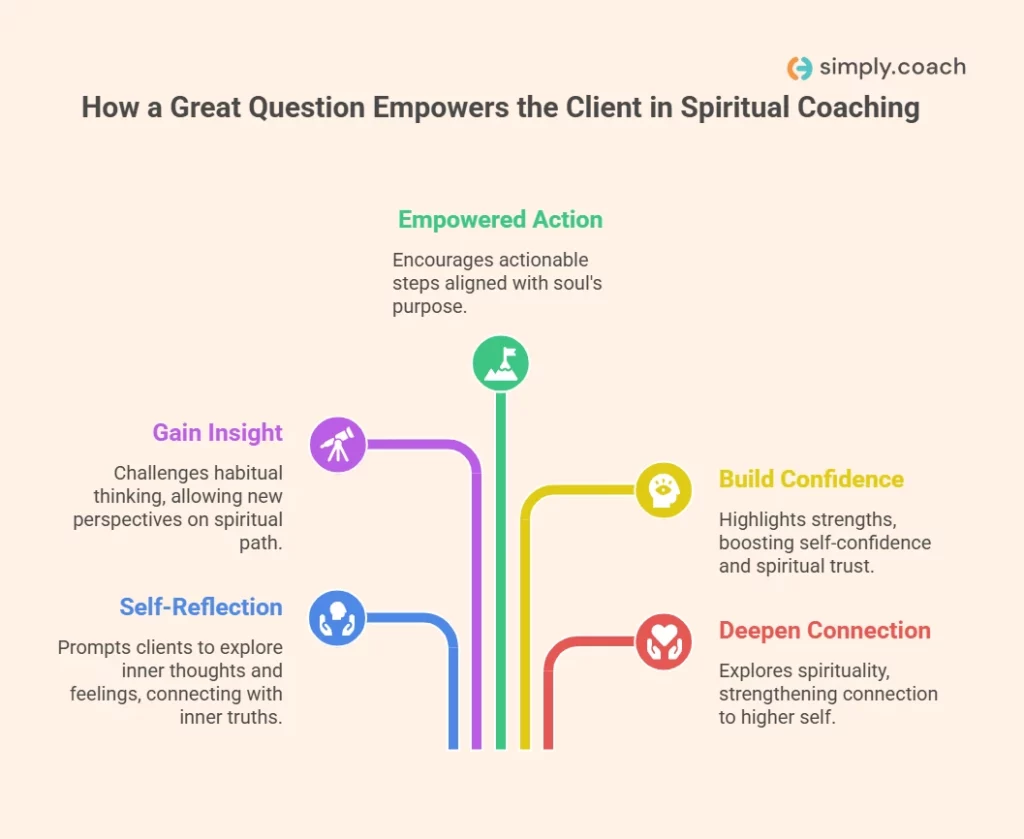
A great question in spiritual coaching is not just a tool to gather information; it serves as a catalyst for deep transformation. These questions are intentional, crafted with the purpose of guiding your clients toward self-awareness, clarity, and alignment with their true selves. When you ask the right questions, you empower your clients to:
- Self-reflect: Great questions prompt your clients to explore their inner thoughts, feelings, and behaviors, helping them connect with their higher wisdom and inner truths.
- Gain insight: Thought-provoking questions challenge your clients to step outside of their habitual thinking, allowing them to see their spiritual path from new, expanded perspectives.
- Take empowered action: Questions that are clear and specific help your clients move beyond just understanding, into actionable steps that align with their soul’s purpose.
- Build confidence: Questions that recognize and highlight your client’s strengths empower them to trust their inner power, boosting self-confidence and spiritual trust.
- Deepen spiritual connection: Asking questions that invite clients to explore their relationship with their spirituality helps them strengthen their connection to their higher self, fostering a deeper sense of purpose and fulfillment.
Also read: 80 Impactful Life Coaching Questions for Client Transformation
What Kind of Questions Work Better in Spiritual Coaching?
As a spiritual coach, your questions should be intentional and transformative. The best questions are those that invite deep reflection and facilitate lasting change. Below are the types of questions that work most effectively in spiritual coaching:
1. Open-ended questions
These questions encourage your clients to dive into their thoughts and emotions, inviting expansive and thoughtful responses. They allow clients to explore their inner worlds fully and without constraint, helping them arrive at their own insights. When you ask open-ended questions, you’re inviting the client into a space of limitless possibility.
- What new beliefs are emerging in your life that you feel called to embrace?
- How do you sense your spiritual path evolving at this point in your life?
2. Thought-provoking questions
These questions challenge clients to step beyond their comfort zones and reconsider their current thinking. They provoke a shift in perspective and often lead to profound breakthroughs in how your client views themselves and their spiritual journey. Thought-provoking questions stimulate growth and allow clients to step into new realities.
- If your soul had a message for you today, what would it be?
- In what ways do you hold yourself back from fully living your spiritual truth?
3. Relevant questions
These questions focus on the client’s current spiritual experiences and challenges, making them directly applicable to their present circumstances. Relevant questions help your clients connect their day-to-day life with their spiritual practices, ensuring they see the immediate value and impact of their spiritual growth.
- How is your current struggle guiding you toward a deeper connection with your higher self?
- What in your life right now requires the most spiritual attention, and why?
4. Non-judgmental questions
As a spiritual coach, creating a safe and non-judgmental space is critical. These questions encourage exploration without making the client feel criticized or pressured. By using non-judgmental questions, you help your clients be more honest and open in their exploration, enabling them to confront deeper emotions and beliefs.
- What aspects of yourself do you struggle to accept, and what might that reveal about your spiritual journey?
- What are you most hesitant to embrace in your life, and how might that be limiting your spiritual growth?
5. Specific empowering questions
These questions focus on actionable steps that help clients move forward in alignment with their spiritual path. They are grounded in the practical aspects of spiritual growth, helping clients translate insights into real-world actions. These types of questions empower your clients to make tangible changes in their lives, fostering continuous progress.
- What action can you take today that will bring you one step closer to your soul’s purpose?
- How can you integrate spiritual practices into your daily routine in a way that feels authentic and sustainable?
Also read: Simply Powerful Coaching Questions to Ask Your Clients
25 Powerful Spiritual Coaching Questions to Elevate Your Clients’ Growth
As a spiritual coach, the questions you ask your clients can be the catalyst for their transformation. The right question can unlock deep insights, spark powerful realizations, and guide them toward greater alignment with their true selves. Below are 25 spiritual coaching questions designed to foster self-awareness, clarity, and purpose, helping your clients connect with their higher selves and experience lasting change.
1. What is the one small action you can take today to nurture your spiritual growth?
This question focuses on taking actionable steps. It encourages you to help your clients think about the next step they can take to align with their spiritual goals and make progress, no matter how small. Small actions build momentum over time and help integrate spiritual practices into everyday life.
2. What recurring thoughts or feelings indicate where your soul needs more attention?
This question helps your clients notice patterns in their thoughts and emotions, guiding them to areas of their life that require spiritual focus. By identifying these repeating thoughts or feelings, your clients can begin to address them and find deeper meaning or healing.
3. Which areas of your life feel out of harmony with your spiritual values, and why?
Identifying areas of misalignment between values and actions is crucial for spiritual growth. This question helps your clients pinpoint where their current behavior or choices may not be in alignment with their true spiritual beliefs, giving them an opportunity to make changes.
4. If you fully trusted your intuition, what decision would you make differently right now?
This question challenges your clients to trust their inner guidance. It helps them recognize moments where intuition has been dismissed or overlooked and encourages them to take spiritually aligned action moving forward.
5. How do you define abundance in your life beyond material wealth, and how can you cultivate it daily?
Spiritual abundance goes beyond material success. This question invites your clients to reflect on what abundance truly means to them, whether it’s peace, love, or spiritual connection and how they can actively nurture this abundance every day.
6. What is one limiting belief about yourself that you are ready to release, and how would letting it go transform your spiritual journey?
Letting go of limiting beliefs is a powerful step in spiritual growth. This question helps your clients identify the mental blocks holding them back, empowering them to release these beliefs and create space for new, positive spiritual experiences.
7. Which relationships nourish your spiritual growth, and which ones challenge or drain your energy?
Your clients need to assess their relationships to see which ones are supportive of their spiritual journey. This question encourages them to evaluate their social environment and recognize the importance of surrounding themselves with people who uplift their energy.
8. What rituals or practices make you feel most connected to your higher self?
Spiritual practices help deepen the connection with one’s higher self. This question encourages your clients to identify the activities that bring them closer to their true nature, fostering a sense of peace, clarity, and alignment.
9. When was the last time you felt fully aligned with your spiritual purpose, and what contributed to that experience?
Reflecting on past moments of alignment helps your clients identify what factors contribute to spiritual fulfillment. This question allows them to explore their past and replicate these experiences in their current lives, leading to sustained spiritual harmony.
10. How can you honor your authentic self in a choice you are facing today?
This question prompts your clients to make decisions that reflect their true selves. By aligning their choices with their authentic nature, they reinforce spiritual growth and deepen their connection to their purpose.
11. Looking back at your life so far, if it were a book, what would its title be? If you started a new chapter today, what would the new title be?
This question helps your clients reflect on their spiritual journey and life experiences. It provides an opportunity to see the patterns in their life and encourages them to envision a new chapter of growth and transformation. The symbolic question allows them to take ownership of their story.
12. Picture your ideal future where everything falls into place. If you could speak to that future self, what guidance would they share?
This question helps your clients connect with their future selves and explore the wisdom they hold. It prompts them to envision a spiritually aligned future and identify the steps they need to take to make that vision a reality.
13. What is one spiritual or personal desire you’ve always hesitated to pursue, and what’s been holding you back?
Identifying what your clients truly desire and why they hesitate can be incredibly freeing. This question helps them uncover fears or limiting beliefs that prevent them from pursuing their dreams, allowing them to work through those blocks and move forward with confidence.
14. If you could design your ultimate day that nourishes your soul, what would it include, and how would it make you feel?
This question invites your clients to imagine a day dedicated to their spiritual well-being. It helps them identify activities and experiences that bring them joy, peace, and connection, empowering them to integrate those practices into their lives.
15. Imagine money as a person. How would you describe your spiritual relationship with it, and how does it influence your life?
Money can carry emotional and spiritual significance. This question helps your clients explore their relationship with money and how it aligns with their spiritual beliefs. It fosters awareness of any imbalances or limiting beliefs around abundance.
16. Suppose you had a magic wand to transform any part of your current life. Which area would you change, and what would you create instead?
This question allows your clients to visualize change in their lives, removing limitations and opening up possibilities for transformation. By imagining a life with no constraints, clients can gain clarity on what they truly desire spiritually and practically.
17. Reflecting on your life so far, what is the most meaningful spiritual lesson you’ve learned, and how has it changed your path?
This question encourages your clients to look back at their spiritual growth and recognize the lessons that have shaped them. It allows them to appreciate how far they’ve come and apply those lessons to current challenges.
18. What does spirituality mean to you, and how does it guide your daily choices?
Understanding what spirituality means to a client is crucial to their path. This question helps your clients define their personal spiritual framework, guiding them toward making choices that align with their highest values.
19. If practical concerns weren’t a factor, what path would most align with your soul’s purpose, and what excites you about it?
This question helps your clients connect with their true soul’s purpose, free from external limitations. It inspires them to pursue what excites them spiritually, empowering them to make choices that align with their deepest desires.
20. What spiritual insight or lesson do you feel you’re ready to explore deeper, and how can you actively invite this understanding into your life right now?
This question invites your clients to reflect on a specific spiritual insight or lesson they may feel ready to engage with, encouraging them to take an active step toward deeper understanding. It’s distinct in its focus on exploration and openness to new insights rather than consistency in practices.
21. What part of your life are you resisting the most, and how can embracing it lead to spiritual growth?
Resisting change can hinder spiritual progress. This question helps your clients recognize areas where they may be avoiding transformation and encourages them to embrace what needs healing or change.
22. What does a spiritually balanced life look like to you, and how can you move closer to it today?
This question helps your clients define spiritual balance and provides an actionable path for them to take toward a more harmonious life.
23. In moments of silence, what is the most profound message your soul whispers to you?
By asking this question, your clients are encouraged to connect with their inner voice. It deepens their spiritual practice and helps them tune in to subtle guidance that leads to clarity.
24. If fear wasn’t present, what would your next step on your spiritual journey look like?
Fear can often hold your clients back from taking the next step. This question helps them imagine a fear-free future, allowing them to move forward in alignment with their spiritual path.
25. What does true spiritual freedom mean to you, and how can you step into it more fully?
Spiritual freedom is about releasing limitations and living authentically. This question helps your clients reflect on what spiritual freedom looks like to them and identify ways to step into it more fully.
Want to take your coaching to the next level?
Download “The Ultimate Guide to Asking Powerful Life Coaching Questions” to learn more strategies, tips, and examples that will help you craft even more impactful questions that drive meaningful transformation.

Common Mistakes to Avoid While Asking Questions
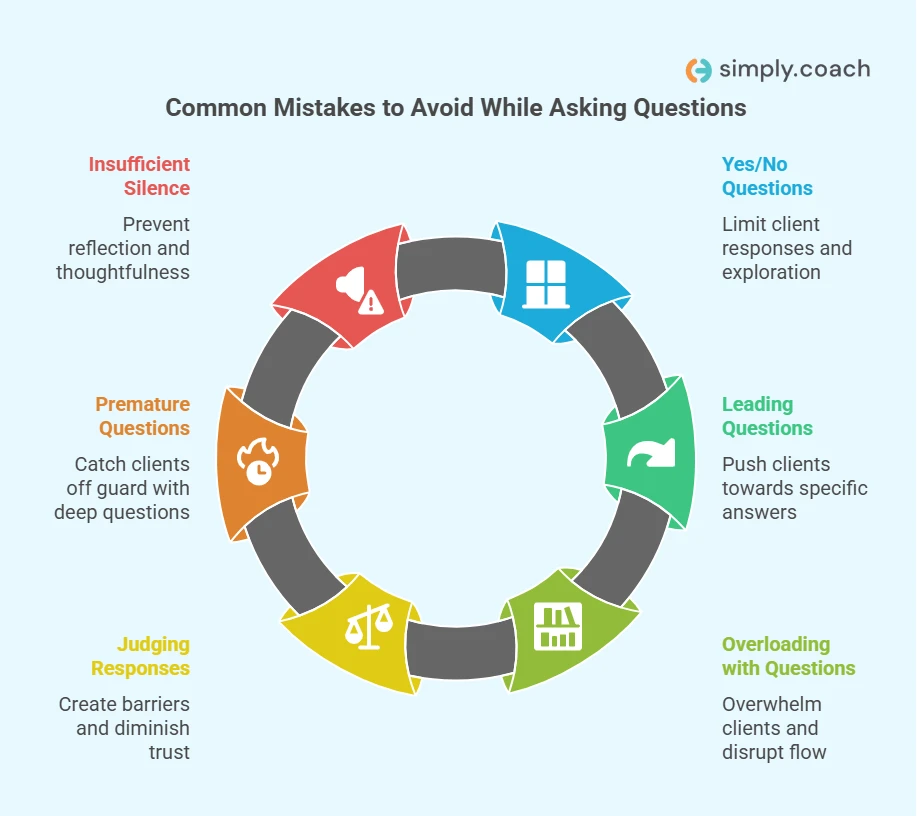
As a spiritual coach, the questions you ask can significantly impact the depth of your client’s spiritual journey. To ensure you are guiding them effectively, avoid these common mistakes:
- Asking yes/no questions: Yes/no questions limit your clients’ responses and prevent deeper reflection. They don’t allow space for exploration, which is crucial for uncovering deeper insights.
- Leading questions: Leading questions push clients toward a particular answer, limiting their authentic expression. It’s important to create a neutral environment where clients feel free to explore their own answers.
- Overloading with questions: Asking too many questions at once overwhelms clients and disrupts the flow of the session. Focus on asking one or two thought-provoking questions that allow time for meaningful responses.
- Judging the client’s response: Judging a client’s answers creates a barrier in the coaching relationship and diminishes trust. Always maintain a neutral tone and encourage an open, non-judgmental space for sharing.
- Asking questions too soon: Asking deep, introspective questions too early can catch clients off guard. It’s important to build trust and rapport before diving into powerful questions that require emotional vulnerability.
- Not providing enough silence after asking questions: Jumping in too soon after asking a question prevents reflection and thoughtfulness. Give your clients the necessary space to process and connect with their inner wisdom before responding.
Also read: 7 Best Spiritual Life Coach Certification Programs
Conclusion
As a spiritual coach, the questions you ask play a critical role in unlocking your clients’ potential and guiding them on their transformative journey. The right question can spark deep reflection, reveal hidden truths, and encourage your clients to make aligned, impactful changes in their lives. By focusing on open-ended, thought-provoking, and empowering questions, you create an environment where your clients can grow spiritually, emotionally, and mentally. As you apply these 25 powerful spiritual coaching questions, you’ll help your clients achieve clarity, alignment, and lasting transformation.
To make your coaching practice even more impactful, explore Simply.Coach an all-in-one life coaching software designed to automate your processes and streamline your client management. With features like goal setting, progress tracking, automated reminders, and personalized client workspaces, Simply.Coach frees up your time so you can focus more on your clients’ growth and less on administrative tasks. Whether you’re a new or an experienced spiritual coach, Simply.Coach is the perfect platform to elevate your practice.