
A course can share your spiritual outlook and still offer too little coaching practice. Choose spiritual life coach certification by how it prepares you to work with clients, including its method, supervised practice, assessment and boundaries. Then check what the certificate awards and whether it supports any separate professional credential you want.
Spiritual training programs use similar language for different learning experiences, from broad coaching foundations to personal exploration and specialist continuing education. Top Spiritual Life Coach Certification Programs compares their approaches, published fees and recognition so you can identify a suitable starting point. The selection section helps you ask practical questions about each course before you commit your time and money.
TL;DR
Spiritual coach training should help you support client-led reflection, meaning and practical action within a clear nonclinical scope. The eight options here differ in philosophy, practice and recognition. Compare complete routes: Deep Coaching Foundations is a different purchase from the full Deep Coaching Intensive, and a school certificate is different from an ICF credential. Recognition can mean continuing education, a school award or eligibility for a separate credential. Ask Natural Wellness Academy to confirm current NBHWC approval for its exact course. Published prices do not all include the same training, and several programs require a quote. Prioritize assessed practice and respect for client beliefs, then confirm the full fee and remaining credential requirements.
How We Compared Spiritual Coaching Programs
What we compared: Eight spiritual or purpose-oriented coaching programs, including self-paced study, supported training and specialist development routes.
Where details come from: Official course descriptions, tuition pages and each provider’s statements about certification or continuing education recognition.
How to compare them: Consider the approach, intended learner, observed practice, assessment, full price and the exact award. A shared spiritual vocabulary does not make the programs equivalent.
What is outside the list: Personal retreats without coach training and clinical qualifications. The courses here should not be treated as clinical qualifications.
Before you pay: Request the complete route and its current fee. Confirm whether the price covers a foundation course, the full certification, mentoring and assessment, or an additional professional credential pathway.
What Is Spiritual Coaching?
Spiritual coaching can support a client in exploring meaning, values and the relationship between beliefs and daily choices. The client’s own perspective should guide that work. A coach does not need to impose a belief system or claim access to answers the client cannot question.
A session might use reflection, mindful attention or open questions to help someone decide what matters and what to do next. Whole-person coaching also considers connections across areas of a person’s life. Neither label, by itself, establishes a clinical qualification or a particular evidence base.
Choose training that explains consent, professional boundaries and when to refer a client to other support. Emotional healing is not a result you can promise from a coaching course or session. A useful program helps you connect reflection to the goals and actions the client chooses.
Intuitive spiritual-coaching courses may emphasize reflection or awareness, but the label does not identify one standardized professional credential. Ask what trainees practice, what is assessed and how the school handles consent. Describe the actual training you completed rather than treating an intuitive or spiritual title as proof of a wider qualification.
How to Become a Certified Spiritual Life Coach
A sound training route combines a coaching foundation with practice, feedback and an honest description of your scope. Use the following steps to evaluate a program rather than assuming every certificate includes the same preparation.
- Decide what you want to practice. Identify the clients and conversations you want to support. If you are exploring the field, free life coaching courses can provide an introduction. They do not automatically replace assessed professional education.
- Check the program’s credibility. Read the syllabus, trainer backgrounds and stated outcomes. Ask which body recognizes the exact course and whether that recognition is for initial training or continuing education.
- Complete training and coursework. Learn coaching fundamentals as well as the chosen spiritual approach. Check how the course teaches consent and working with beliefs different from your own.
- Practice real coaching conversations. Look for opportunities to coach, receive feedback and reflect on your choices. Supervised or observed work can reveal gaps that independent study leaves hidden.
- Meet assessment requirements. Confirm what you must submit or demonstrate and who evaluates it. A school’s completion rules remain separate from any outside credential application.
- Define your niche. Describe a useful, nonclinical service around meaning, values or personal development. Describe the service within your actual qualifications and refer clinical needs to an appropriately qualified professional.
- Set up your practice. Establish agreements, confidentiality and a consistent way to organize sessions and follow-through. Administration supports the work; it does not establish professional competence.
Once those foundations are in place, Simply.Coach supports client goal planning and organizing agreed actions. Its progress reporting tools can help you review recorded progress. Those records should reflect goals the client chose, not claims about spiritual or clinical outcomes that you cannot substantiate.
You can also use integrated video sessions to organize remote conversations. Agree privacy and participation expectations with the client. Thoughtful spiritual coaching questions can support reflection, but a set of prompts is not a substitute for training and feedback.

Top 8 Spiritual Life Coach Certification Programs for 2026
This 2026 comparison includes eight different learning approaches, with fees in US dollars where a current published amount is available. The recognition column distinguishes continuing education, a school certificate and an independent professional credential.
Course terms and fees were checked on 2026-10-21. Confirm the current offer and the requirements for your chosen route before enrolling.
| Program | Learning focus | Recognition to check | Published tuition | Timing |
|---|---|---|---|---|
| Natural Wellness Academy | Spiritual wellness, meditation and mindfulness | School certification; confirm any current NBHWC credit | $2,495; $2,246 displayed full-payment offer | 9-18 months |
| Life Purpose Institute | Purpose, values and spiritual coaching | School certification; additional ICF-route requirements | Request current quote | Confirm chosen cohort |
| Center for Transformational Coaching | Deep Coaching Intensive | 40 ICF CCE for stated full DCI route | $6,999 standard full DCI; Foundations alone $2,999 | Full DCI 6-7 months |
| Transformation Academy | Self-paced spiritual coaching bundle | CPD recognition; not an ICF credential | $497 | Self-paced |
| World Coach Institute | Spiritual coaching specialty and broader routes | Confirm exact route and current recognition | Request current quote | Depends on route |
| Psychospiritual Institute | Psychosynthesis coaching and leadership | Center for Credentialing & Education; separate BCC eligibility | $9,997 | Confirm training schedule |
| Awakened Academy | Spiritual coaching and business development | School awards; confirm outside recognition | $2,500 foundation; higher levels $9,000+ | 3-18 months by level |
| Udemy | On-demand spiritual coaching introduction | Verify the issuer behind any accreditation label | Check current course offer | Confirm current syllabus |
1. Natural Wellness Academy Spiritual Wellness Specialist Certification
Natural Wellness Academy’s Spiritual Wellness Specialist course combines spiritual-wellness learning with meditation and mindfulness instruction. Its approach may appeal if you want those subjects within your coaching practice. Examine how it teaches client choice and how it distinguishes spiritual methods from clinical care.
Published tuition is $2,495, with a displayed full-payment offer of $2,246. The provider gives a 9-18 month completion range. Confirm the applicable payment plan, mentoring arrangements and requirements for the school’s awards before enrolling.
If you need NBHWC credit, ask the provider to confirm current approval for this exact course. Continuing education approval would not make it an initial board-certification pathway or award the board credential. Consider its mindfulness learning on its own merits, without extending any recognition claim.
- Spiritual-wellness, meditation and mindfulness subjects are combined.
- Self-paced learning allows flexibility within the provider’s completion requirements.
- Ask how practice and feedback are assessed, rather than treating a spiritual-method claim as proof of outcomes.
Right fit. You want this specific mix of spiritual-wellness and contemplative learning.
Wrong fit. You need this single course to qualify you automatically for a board or ICF credential.
2. Life Purpose Institute Spiritual Coach Certification Program
Life Purpose Institute’s spiritual coach training focuses on meaning, values and life direction. It connects reflective work with coaching skills and practical action. Ask how trainees practice listening, questioning and helping a client choose goals without imposing a spiritual interpretation.
The provider distinguishes its base school certification from the additional steps involved in an ICF route. Request a current quote and calendar for the exact spiritual course and any further training or mentoring you need. Do not assume every advertised course package includes the same pathway.
- Purpose and values provide a defined focus for the learning.
- Check the current practice, small-group support and assessment arrangements.
- Compare the complete fee for your goal, including any additional credential preparation.
Right fit. You want purpose-focused coaching education and can clarify the route and support with the provider.
Wrong fit. You need an instantly comparable public tuition figure or assume the base certificate itself is an ICF credential.
3. Center for Transformational Coaching Deep Coaching Intensive
The Deep Coaching Intensive emphasizes presence, listening and reflective work. It fits a learner interested in the school’s approach to transformational coaching. Evaluate the actual learning activities and feedback, rather than interpreting the program name as a promised result.
Deep Coaching Foundations is a twelve-week course priced at $2,999. The full Deep Coaching Intensive combines Foundations and Mastery, with a standard tuition of $6,999 and an overall 6-7 month description. The provider states 40 ICF CCE units for the full DCI route; the foundation price is not the fee for the whole certification.
A separate Portfolio route lists standard tuition of $8,249 and 9-10 months. Ask which additional requirements it supports and what remains for your individual application. Compare standard full-route fees when promotional deadlines or cohort descriptions do not agree.
- Foundations and Mastery are distinct parts of the broader training.
- The school emphasizes presence and depth of listening in its method.
- A Portfolio route and CCE credit should be checked against your own credential goal.
Right fit. You want the school’s supported reflective approach and can commit to the complete route.
Wrong fit. You are budgeting only the Foundations fee while expecting the full DCI or an automatically awarded ICF credential.
4. Transformation Academy Master Spiritual Coach Certification
Transformation Academy’s Master Spiritual Coach program is a self-paced bundle listed at $497. The provider combines spiritual life coaching with subjects such as energy alignment and law of attraction, plus a choice of another course. Review the selected bundle before deciding whether its assumptions fit your approach.
The provider describes lifetime access and CPD recognition. Those are different from an ICF-accredited initial training pathway or a professional license. The course names describe what is taught; evidence for each method and the needs of each client still require separate consideration.
- A bundle makes several spiritual-coaching subjects available in one purchase.
- Independent study can fit around existing commitments.
- Check the assessment and opportunities for feedback on your actual coaching.
Right fit. You want self-directed learning in these specific spiritual methods and understand the award’s scope.
Wrong fit. You want a complete ICF pathway or expect CPD recognition to validate every underlying belief or technique.
5. World Coach Institute Certified Spiritual Coach Program
World Coach Institute’s Certified Spiritual Coach program describes several ways to combine spiritual specialty learning with its broader coaching courses. The entry point can depend on prior education. Ask which course sequence, practice and assessments apply to you.
The page still uses legacy ACSTH language in describing its wider education. That wording does not establish a current ICF Level 1 or Level 2 listing for every spiritual route. Request confirmation of the exact program’s current recognition, complete fee and schedule before comparing it with another school.

- Spiritual specialty learning can be part of a wider coaching sequence.
- Multiple routes make the starting qualification and course code important.
- Confirm how the program addresses differing client beliefs, consent and nonclinical scope.
Right fit. You want to investigate a spiritual specialty alongside a defined broader training route.
Wrong fit. You need a single published price or current accreditation status without clarifying which route is being offered.
6. Psychospiritual Institute Psychosynthesis Life Coach and Leadership Certification
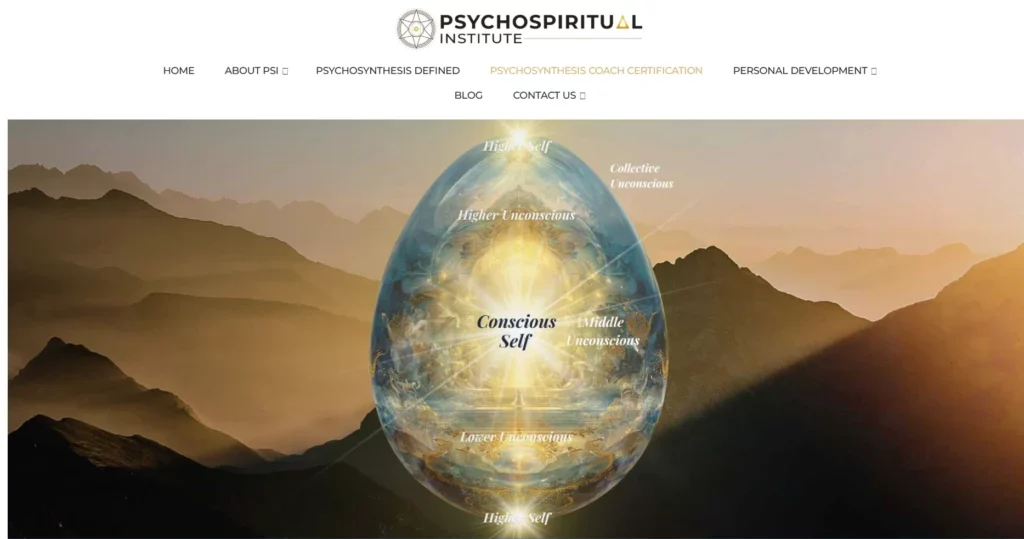
Psychospiritual Institute’s psychosynthesis coaching certification combines coaching with a psychosynthesis approach to self-awareness and leadership. It describes experiential learning, reflection and supported practice. Read the method and assessment requirements to judge whether they fit your intended work.
Published tuition is $9,997, with payment plans described by the provider. The school identifies recognition by the Center for Credentialing & Education (CCE), which administers the Board Certified Coach credential. Confirm your eligibility and remaining application requirements; school completion does not automatically award BCC.
CCE here names a credentialing organization, not ICF Continuing Coach Education credit. Check any claimed ICF recognition separately for the exact program.
The use of psychology and spiritual language does not make this a clinical training license. If you already hold a separate professional qualification, distinguish which role you are using with each client. A coaching agreement should make that clear.
- A defined psychosynthesis framework connects the course’s subjects.
- Live mentoring and supervised learning are described; confirm the current arrangements.
- The tuition is a substantial commitment, so review the full calendar and payment terms.
Right fit. You want sustained study of this coaching approach and its reflective practice.
Wrong fit. You want brief introductory learning or a clinical qualification.
7. Awakened Academy Spiritual Life Coach Certification
Awakened Academy’s spiritual life coach training connects spiritual development with coaching and building a practice. Its courses place a strong emphasis on the school’s philosophy. Check whether that approach allows you to work respectfully with clients whose beliefs differ from your own.
The provider lists foundational training at $2,500 and higher-level options at $9,000 or more. Its stated 3-18 month range depends on the level. Ask which mentoring, individual sessions, resources and assessment belong to your quoted package, rather than combining benefits from different tiers.

- Different levels serve different commitments and learning goals.
- Coaching and business-development subjects appear together.
- School certification and any outside recognition must be evaluated separately; business teaching does not establish future income.
Right fit. You want to study within this spiritual approach and can identify the right training tier.
Wrong fit. You need a verified ICF-accredited route or treat business-building promises as evidence of likely earnings.
8. Udemy Spiritual Coach Certification
The Udemy spiritual coaching course offers on-demand introductory learning. Its title includes an accreditation claim, so check the named issuer and exactly what that recognition covers. A marketing label alone does not identify an ICF pathway.
Confirm the current syllabus, price and certificate terms for your location. Individual-course purchases and monthly subscriptions are different offers, and the available terms can change. Evaluate a short video course as introductory or supplementary learning unless its assessed practice and professional scope are clearly established.
- On-demand material can help you explore the subject.
- Check which resources and business-setup lessons the current version includes.
- Ask whether any coaching is observed and how a completion certificate is awarded.
Right fit. You want an introduction and can check the exact current offer before purchasing.
Wrong fit. You need verified supervision, a complete professional credential route or a currently confirmed low tuition figure.
How to Choose the Right Spiritual Life Coach Certification
Choose a program that fits your intended service and gives you enough practice to use its methods responsibly. Shared values can help you feel comfortable, but the quality of teaching and assessment still needs to be examined.
- Accreditation and recognition. Check the exact program and the purpose of its approval. The ICF coach training options provide a broader education comparison. It does not make every spiritual specialty an ICF credential route.
- Training content depth. Look for coaching skills, agreements and ethical decisions alongside spiritual subjects. Ask how the school teaches you to work with beliefs that differ from your own.
- Mentoring and supervised practice. Find out who sees your coaching and what feedback you receive. Watching a demonstration is different from having a trainer review your choices in a real conversation.
- Faculty and philosophy. Check relevant qualifications and the approach the trainers teach. Choose a method you can explain without promising healing, certainty or access to hidden truth.
- Practicum and assessment. Understand what you must demonstrate to pass. Compare lesson exposure, peer rehearsal, observation and assessment against stated criteria; they provide different evidence of your learning.
- Business support. Confirm whether practical work on agreements, services and pricing is included. Treat it as education, not as a promise of referrals or future income.
- Community and support. Ask what remains available after the course and for how long. A community can support learning without guaranteeing client opportunities.
- Cost and flexibility. Compare total coaching certification costs when budgeting for broader education as well as a specialty. Include required mentoring, assessment and application fees, and check the actual attendance schedule.
Ask the provider for an example of the feedback a learner receives and the standard used for assessment. That makes the choice more concrete than comparing spiritual language or testimonials. A program can be a poor fit for your next step even when its approach appeals to you.
Conclusion
Choose spiritual coach training that you can connect to a clear, ethical service. The course should respect client beliefs, develop coaching skills and show how your practice will be evaluated. Compare the complete learning route and award before deciding whether its price fits your goals.
Simply.Coach can help you organize the sessions, goals and follow-through that support that practice. Clear administration gives your coaching work a consistent structure, while your training and professional boundaries determine what you can responsibly offer.
Key Takeaways
- Read exact awards. Identify the school certificate, education credit or outside credential involved, then check the requirements behind each relevant label.
- Compare complete routes. Ask which modules belong to the full certification. A lower foundation fee may leave substantial training still to purchase.
- Inspect assessed practice. Find out who observes sessions, what standard they use and how their feedback helps you improve your coaching choices.
- Respect client beliefs. Ask how trainers handle differing worldviews. Choose an approach that supports consent and client choice in actual coaching conversations.
- Keep scope honest. Describe your service and qualifications precisely. Spiritual language or psychology-related course content does not itself establish a clinical qualification.
- Check total commitments. Save the fee breakdown and attendance calendar before enrolling. Confirm how long mentoring, resources and community support remain available.
When you begin supporting clients, keeping goals, session notes and agreed actions together helps you prepare thoughtfully. Simply.Coach’s client management tools provide a place to organize those records and review progress, so each conversation can build on the work the client has chosen.
Frequently Asked Questions (FAQs)
What is the best spiritual coach certification in 2026?
The strongest fit depends on your coaching foundation, preferred approach and credential goal. Compare supervised practice, assessment, complete tuition and the exact recognition of the course. A spiritual method that appeals to you may still be unsuitable if the program provides too little support for your intended work.
What is a holistic spiritual coach certification?
It is usually a school award for training that combines coaching with spiritual or whole-person approaches, such as values reflection or mindfulness. The term does not describe one universal standard. Check the syllabus, assessment and professional scope rather than assuming every holistic certificate carries the same recognition.
How much does a holistic spiritual coach certification cost in the USA?
Published examples here include Transformation Academy’s $497 bundle, Natural Wellness Academy’s $2,495 listed tuition and Psychospiritual Institute’s $9,997 program. Those purchases differ in scope. Compare the complete route, payment terms and any additional mentoring, assessment or outside credential fees before choosing.
How long does it take to complete an accredited spiritual coach certification?
Duration depends on the exact course and recognition you need. The full Deep Coaching Intensive is described as six to seven months, while Natural Wellness Academy lists nine to eighteen months. Self-paced courses differ again. An independent credential may require additional experience and assessment after the school course.
Do you need an accredited spiritual coach certification to start coaching?
Requirements depend on your location, the services you offer, client contracts and the titles you use. Accreditation can matter for an intended professional credential, but a school certificate is not a general license. Develop appropriate competence, use clear agreements and avoid implying clinical qualifications you do not hold.
What is the difference between a holistic spiritual coach certification and a regular life coach certification?
A spiritual or holistic course usually places more emphasis on meaning, beliefs or a particular reflective approach. General life-coach education may cover a wider foundation. Either can address values and practical goals, so compare the actual syllabus and assessment instead of assuming one provides deeper or better coaching.
Can you build a coaching business after spiritual coach certification?
Training can help you prepare a service, and some programs include business-development lessons. You still need appropriate competence, clear agreements, a defined offer and a way to manage client work. Completing a certificate does not guarantee demand, referrals or income, even when the school teaches marketing.
What should you look for in an accredited spiritual coach certification?
Check which body recognizes the exact course and whether the recognition covers initial education or continuing development. Then assess the coaching practice, feedback, trainer experience and professional boundaries. Request a full fee and requirements breakdown, including anything needed for a separate ICF, BCC or other credential.