
We’ve all been there: a coaching session begins, and the client gives a polite but generic ‘It’s going well.’ So, what do you do next? The quality of your coaching hinges on your ability to dig deeper. It’s easy to get comfortable with surface-level conversations, but true coaching excellence comes from asking the right questions and uncovering insights that drive transformation.
Many coaches, especially those just starting out, often struggle with check-ins that feel more like routine status updates than powerful, transformational conversations. Without asking the right questions, it’s easy for sessions to become stagnant. This leads to stalled progress, client disengagement, and results that fall short of expectations. When your check-ins don’t go beyond the basics, you’re missing the chance to create real breakthroughs.
This blog post will provide you with a clear, structured framework to guide your coaching check in questions. We’ll explore a curated list of open-ended questions, designed to help you dive deeper into your clients’ thoughts, challenges, and progress. These questions are meant to turn every check-in into a high-value, transformative experience for both you and your client.
Key Takeaways
- Coaching check-ins are essential for maintaining client progress, uncovering challenges, and fostering accountability.
- Strategic check-ins go beyond simple status updates by diving into client emotions, mindset, and goals to create meaningful breakthroughs.
- Key moments to check in include the start of the session, when you’re out of sync, after energy shifts, and before closing.
- Effective coaching check-in questions help build trust, uncover hidden obstacles, and celebrate client wins big or small.
- Common mistakes to avoid include asking closed-ended questions, not following up on past actions, focusing too much on the past, and skipping follow-up questions.
- Simply.Coach offers an all-in-one platform to streamline your check-ins with customizable forms, goal tracking, automated reminders, and more, allowing you to focus on coaching.
What is Check-In in Coaching?
A client check-in is more than just an update, it’s a structured, purposeful conversation that allows you to assess your client’s progress, address challenges, and plan for future growth. Think of it as a pulse check for the client-coach relationship. During these sessions, you’re not just reviewing what’s been done; you’re digging deeper to understand what’s working, what isn’t, and how to move forward more effectively.
Coaching check-ins are essential for ensuring that the client stays on track with their goals. These conversations help reinforce accountability, providing the client with a clear understanding of what they’ve accomplished and what they still need to work on. More importantly, check-ins create the space to address challenges or roadblocks, so clients feel supported, heard, and empowered to stay committed to their journey. By regularly checking in, you ensure your client has the right tools, strategies, and mindset to keep progressing toward their goals.
To further enhance your coaching practice, download
“The Ultimate Guide to Asking Powerful Life Coaching Questions.” This comprehensive guide will provide you with even more strategies, tips, and examples to sharpen your questioning techniques and help you drive meaningful transformation in your clients.

When should a coach check in?
As a coach, it’s important to check in multiple times during each session to keep your client engaged and ensure the conversation stays on track. These check-ins are key to maintaining focus, deepening the coaching relationship, and addressing any shifts in the session. Here are some crucial moments for you to check in:
- At the start: Use this moment to establish partnership and set the tone for the session. It ensures that you and your client are aligned and ready to begin.
- When you are out of sync: If there’s been a long silence or a gap in communication, it’s important to check in and re-establish connection to ensure smooth communication.
- When you sense the client has learned something: When you notice your client has had a breakthrough or gained new insights, check in to reflect on their learning and solidify their understanding.
- When you notice energy shifts: Pay attention to any shifts in energy during the session. These can signal new realizations, emotional responses, or changes in focus that need to be addressed.
- Before you close: Always check in before wrapping up the session to ensure your client leaves with clarity on the takeaways and next steps, reinforcing the session’s value.
Also read: 15 Essential Coaching Discovery Call Questions to Understand Client Needs
Why Strategic Check-Ins are Essential for Effective Coaching
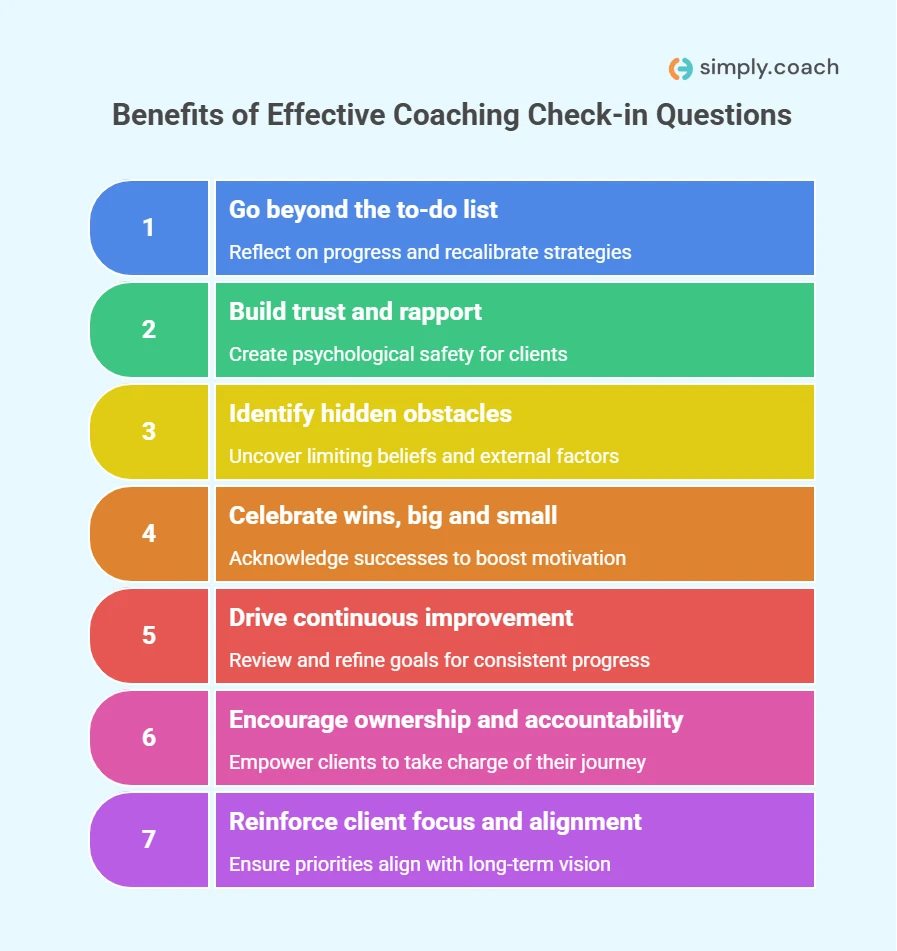
Strategic check-ins are a crucial element of effective coaching. They provide the space for deeper conversations that foster progress, accountability, and growth. When done correctly, check-ins ensure that your coaching sessions don’t just become routine; instead, they become powerful tools for transformation.
- Go beyond the to-do list: A check-in isn’t just a review of tasks; it’s a time to reflect on progress and recalibrate when needed. It’s your chance to assess what’s working, what’s not, and adjust your approach to ensure continued growth.
- Build trust and rapport: Thoughtful coaching check in questions help create psychological safety for your clients. This trust allows them to open up about their challenges and breakthroughs, making the coaching process more effective and meaningful.
- Identify hidden obstacles: The right questions during a check-in can uncover limiting beliefs, mindset blocks, or external factors that clients might not recognize on their own. This insight allows you to address these issues head-on, facilitating real change.
- Celebrate wins, big and small: Acknowledging both small and significant successes boosts client motivation. Celebrating progress, no matter the size, reinforces positive behavior and helps keep clients engaged in the coaching process.
- Drive continuous improvement: Strategic check-ins create an opportunity to review and refine goals. By regularly reassessing progress, you help clients make consistent improvements and adjustments, ensuring they stay on track toward their objectives.
- Encourage ownership and accountability: Check-ins empower clients to take ownership of their journey. By setting clear goals and following up on action plans, clients feel more accountable, leading to greater commitment and independent progress.
- Reinforce client focus and alignment: During check-ins, you can help clients reassess their priorities and ensure they’re aligned with their long-term vision. This helps them stay focused on what truly matters, leading to more meaningful progress.
Also read: 80 Impactful Life Coaching Questions for Client Transformation
Powerful Coaching Check-In Questions for Every Phase of Your Session
A coaching check-in isn’t just about getting an update from your client; it’s a strategic tool for enhancing their growth, providing actionable feedback, and ensuring you stay on track with their goals. Here’s an enhanced breakdown of Powerful Coaching Check-In Questions for each phase of your session, taking insights from the ICF markers and SET framework into account to ensure clarity and accountability.
Step 1: Opening & reflection (The “temperature check”)
This step is critical for understanding where your client stands emotionally, mentally, and practically. You’re setting the tone for the session and ensuring your client’s current mindset is aligned with their coaching goals.
Questions to include
- On a scale of 1 to 10, with 1 being ‘stuck’ and 10 being ‘on fire,’ what’s your overall outlook right now, and why?
- What were your top 3 wins since our last session? (And what made them wins?)
- What’s one thing you’re most proud of this week, and what can you learn from it?
- What’s one thing you wish had gone differently this week? (Frame it as a learning opportunity, not a failure.)
- What’s been on your mind lately that you haven’t shared?
- How did you feel before today’s session, and how do you feel now?
- What would make this session feel successful for you?
- If you could sum up your emotional state right now, how would you describe it?
- What’s something that’s been weighing on you this week?
- What’s the biggest challenge you’ve encountered since our last session?
These questions are designed to gauge your client’s emotional and mental state, creating a safe space for them to express their feelings. It helps build trust and allows both you and your client to adjust focus for the session.
Step 2: Deep dive & exploration (The “uncovering”)
In this phase, you’re digging deeper into the client’s thoughts, beliefs, and the true essence of their challenges. You’ll focus on identifying internal barriers, uncovering insights, and pushing past surface-level goals to achieve real breakthroughs.
Questions to include
- What specifically would you like to focus on for our time together today?
- How does this challenge or goal align with your long-term vision or values?
- What’s the story you’re telling yourself about this situation?
- If you were to approach this from a place of complete confidence and no fear, what would be different?
- What have you tried so far, and what were the results?
- What’s the most significant barrier you feel is standing in your way right now?
- What limiting beliefs do you think might be holding you back?
- What would success look like for you in this area?
- How do you think your current habits are impacting your ability to move forward?
- What new perspective do you need to embrace to move past this obstacle?
These questions dig deeper into the client’s mindset, helping them uncover the root cause of their challenges. They guide your client to rethink their current approach, reassess their goals, and provide insights that may have been previously hidden.
Step 3: Solutions & action (The “moving forward”)
This is the most actionable part of the session. After reflecting on the client’s situation and uncovering insights, you need to work with them to develop clear steps to move forward and overcome any obstacles.
Questions to Include
- What’s the one small, immediate action you can take to make progress this week?
- On a scale of 1 to 10, how confident are you in completing that action? (If less than 8, what would it take to raise that number?)
- What potential obstacles do you anticipate, and how will you prepare for them?
- Who or what can support you in staying on track?
- How will you hold yourself accountable between now and our next session?
- What’s the first step you can take today to begin this process?
- What resources or tools do you need to succeed with this action?
- How will you track your progress and make adjustments if needed?
- What’s one thing you’ll commit to doing daily to stay on track?
- If you hit a setback, how will you reframe it and keep moving forward?
This phase focuses on breaking down the client’s challenges into actionable steps. These questions are designed to help your client build confidence, recognize potential hurdles, and develop strategies to overcome them.
Step 4: Looking ahead & wrap-up (The “consolidation”)
The final phase of your session ensures your client leaves with a clear sense of direction. You’ll summarize key takeaways, reinforce commitments, and ensure they leave motivated to act.
Questions to include
- What’s the most valuable insight or takeaway you’re leaving with today?
- What’s one thing you will remember from our conversation a week from now?
- How will you know when you’ve succeeded in achieving this goal?
- What will we be celebrating at our next check-in?
- What’s the one thing you’ll do differently moving forward based on today’s session?
- How will you measure your success between now and our next session?
- What is one commitment you’re making to yourself after today’s conversation?
- How will you stay focused on your goal as you move forward?
- If you could summarize today’s session in one sentence, what would it be?
- What’s the first action you’ll take after this session?
These questions ensure the client leaves the session with clarity and motivation. You’re reinforcing their commitment and helping them visualize their next steps with confidence.
Also read: 22 Effective Techniques and Tools Used in Coaching Sessions
Common Mistakes to Avoid During Coaching Check-Ins
Coaching check-ins are critical for client growth, but certain mistakes can hinder their effectiveness. By being aware of these common pitfalls, you can ensure that your sessions remain focused, impactful, and productive.
1. Asking closed-ended questions
Closed-ended questions limit a client’s ability to reflect and dig deeper. For example, asking “Did you achieve your goal?” only requires a yes or no response. Instead, ask questions like, “What specific steps did you take to move towards your goal this week?” These types of questions encourage the client to think critically and provide richer, more meaningful responses.
2. Not following up on past actions
Accountability is key to progress. Check-ins should revisit previous commitments to track the client’s progress. Without following up on past actions, you miss the opportunity to acknowledge achievements, address setbacks, and adjust strategies if needed. Always ask, “What progress have you made on the actions we discussed last time?”
3. Focusing too much on the past
While reflecting on the past can be valuable, over-emphasizing past mistakes or challenges can halt forward momentum. Rather than dwelling on what went wrong, focus on what’s next. Ask questions that move the client toward future actions, like “What will you do differently moving forward?” or “How can you use what you’ve learned to take action today?”
4. Skipping the follow-up questions
Follow-up questions are critical for uncovering deeper layers of a client’s experience. Questions like “Tell me more about that” or “What else?” help you understand the underlying issues and gain clarity on what’s really going on. These follow-up questions allow your client to explore their thoughts more thoroughly and provide you with the insights needed to guide them effectively.
Best Practices for Conducting Effective Coaching Check-Ins
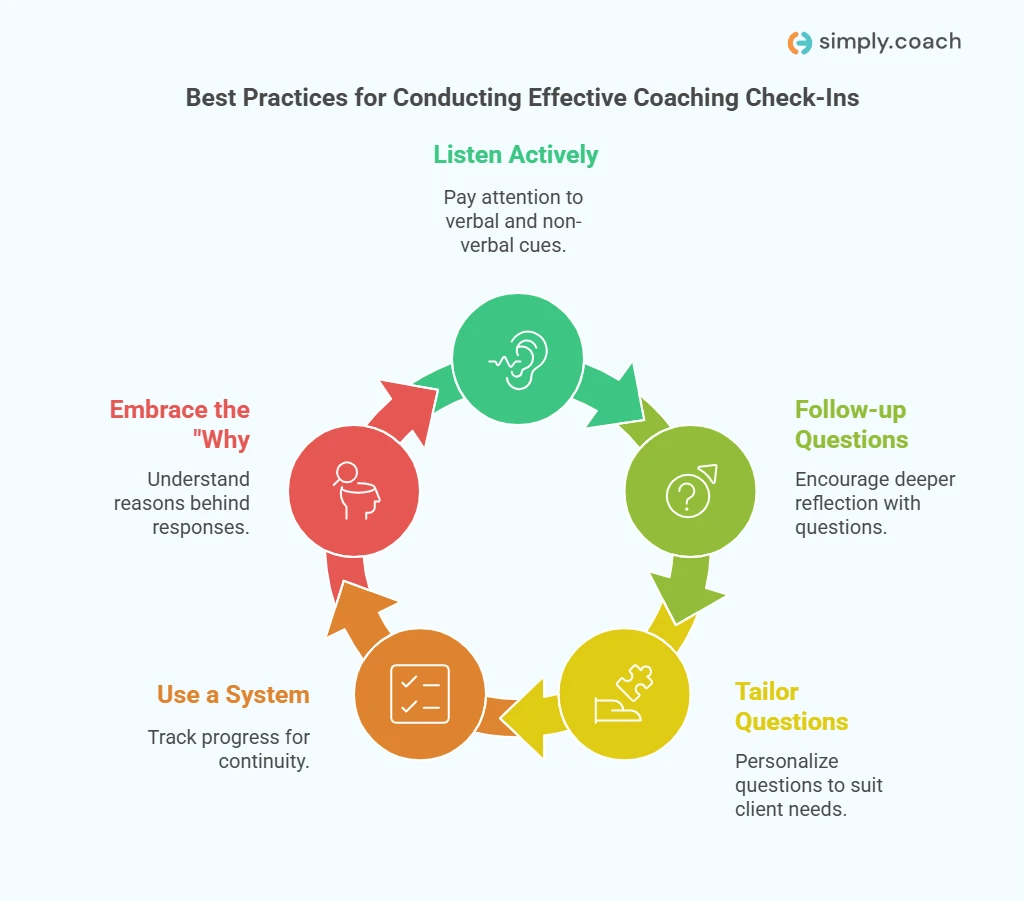
Effective coaching check-ins are key to driving client progress and ensuring that the coaching relationship remains productive. Here are some best practices that will help you make the most out of every check-in session.
- Listen actively, don’t just ask: Pay full attention to both verbal and non-verbal cues. Active listening helps you gain deeper insights into your client’s needs and strengthens the coaching relationship.
- The art of the follow-up: Use follow-up questions like “Tell me more about that” to encourage deeper reflection. This technique uncovers valuable insights and ensures your client’s true challenges are addressed.
- Tailor the questions: Adjust your questions to suit each client’s personality and goals. Personalizing your approach keeps sessions relevant and engaging, enhancing their effectiveness.
- Use a repeatable system: Create a system to track client progress, such as using a form or coaching platform like Simply.Coach. Consistent tracking ensures that you can refer back to key insights and maintain continuity in sessions.
- Embrace the “why”: Dig into the reasons behind your client’s responses. Understanding the “why” helps uncover root causes and leads to meaningful breakthroughs.
Also read: Asking Powerful Coaching Questions : How Important Is It, Really?
Conclusion
As a coach, your ability to ask the right coaching check in questions is the key to unlocking meaningful insights and driving client transformation. The most powerful check-ins don’t just track progress, they dig deep into your clients’ challenges, triumphs, and mindset, allowing you to address obstacles and celebrate growth. By applying the strategies shared in this blog, you can turn each check-in into a high-impact session that keeps your clients motivated and accountable.
Simply.Coach is designed to support you in making every coaching check-in seamless and impactful. The platform offers tools like customizable forms, goal-setting features, and progress tracking, all in one place. Whether you’re managing client goals, scheduling sessions, or automating reminders, Simply.Coach simplifies the administrative work so you can focus on what really matters: your client’s growth and success.
FAQs
1. How can I tailor coaching check-in questions to different client personalities?
Understanding your client’s personality type can help you customize your questions to resonate with them. For instance, analytical clients may appreciate data-driven questions, while creative clients might respond better to open-ended, exploratory questions. By aligning your questions with their communication style, you foster a more engaging and effective coaching session.
2. What role do emotions play in coaching check-ins?
Emotions are integral to coaching check-ins as they provide insight into a client’s current state and can influence their progress. By acknowledging and addressing emotions, you create a safe space for clients to express themselves, leading to deeper self-awareness and more meaningful breakthroughs.
3. How can I effectively follow up on previous coaching check-in questions?
Effective follow-up involves revisiting earlier discussions to assess progress and identify any new challenges. Questions like, “Since our last session, what actions have you taken?” or “How have your perspectives shifted?” encourage clients to reflect on their journey and maintain accountability.
4. How can I use coaching check-in questions to build trust with my clients?
Asking thoughtful, empathetic questions demonstrates genuine interest in your client’s well-being and goals. Consistently using open-ended questions that encourage reflection fosters a trusting relationship, making clients feel valued and understood.