
Keeping clients engaged across all sessions often feels uncertain. Many coaches see clients drop out before making meaningful progress. In the U.S., the average client retention rate in coaching is just 65%, even when coaches follow traditional approaches.
That’s where understanding the stages and levels of coaching becomes invaluable. These aren’t just concepts, they guide you in diagnosing where clients truly are, and what is missing in your process.
Coaching levels help you identify whether you’re working on immediate tasks, habit shifts, or deeper mindset transformation. Stages outline a clear path, from onboarding to review to renewal, so every client journey is intentional.
When you combine coaching levels and stages thoughtfully, you deliver clarity and momentum to clients. You also gain a repeatable structure that builds consistency and trust across your offerings. In this blog, you’ll learn how levels and stages of coaching work together, and how to plug them into a step‑by‑step framework that empowers your coaching practice.
Key Takeaways
- Coaching Levels: Understanding the three levels, Level 1 (Goals, Tasks, Actions), Level 2 (Behavioral Changes, Mindset Shifts), and Level 3 (Identity, Values, Transformation)—helps you tailor your coaching to the client’s specific needs and depth of change required.
- Coaching Stages: The four stages of coaching—Discovery, Action, Review, and Closure—structure the client journey, providing clarity and momentum throughout the process.
- Aligned Framework: Combining coaching levels and stages creates a clear, repeatable framework that enhances client engagement, boosts retention, and ensures consistent progress.
- Simply.Coach Tools: Tools like SMART goal templates, action plans, nudges, progress check-ins, and reflection spaces enable you to implement these concepts efficiently and effectively, ensuring each session is purposeful and productive.
What Are the Levels of Coaching?
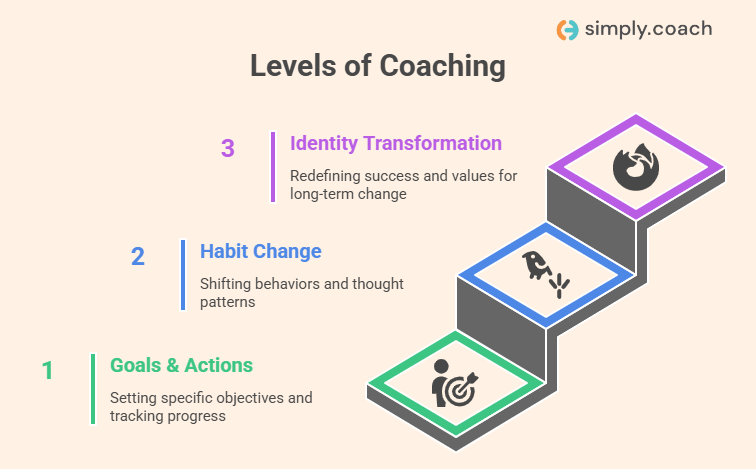
Coaching levels describe the depth and focus of work you are doing with a client at any given time. They help you identify whether the client needs tactical support, behavioral change, or a deeper shift in identity. Each level builds on the one before it and requires a different type of conversation, toolset, and outcome tracking.
Understanding these levels allows you to adapt your sessions to meet clients where they are, instead of applying the same approach to every situation.
Level 1: Goals, Tasks, and Measurable Actions
At this level, the client wants to achieve something specific. The focus is on setting clear objectives and taking action. The work is tactical. You help define the goal, break it into steps, and hold the client accountable.
Examples:
- Creating a 90-day business growth plan
- Organizing a job transition with weekly milestones
- Preparing for a promotion with targeted skill development
Everything at this level is measurable. You track deadlines, outputs, and commitments. Progress is based on what gets done.
Also read: Goal Setting in Coaching: How to Help Clients Set Goals They Can Achieve
Level 2: Habit Change, Patterns, and Mindset Shifts
When clients stall or repeat patterns, the issue often isn’t the goal, it’s how they think or behave. Level 2 work focuses on awareness and change. You explore what gets in the way, uncover beliefs, and introduce new ways of thinking.
Examples:
- Replacing procrastination with consistent planning habits
- Identifying internal narratives that block decision-making
- Practicing emotional regulation in leadership situations
Here, the outcomes are not tasks. The progress is seen in how your client handles situations differently over time.
Level 3: Identity, Values, and Transformation
This is the deepest level of coaching. The focus shifts from action and behavior to identity. Clients start questioning what drives them, what they believe, and who they want to become. You help them explore those shifts with honesty and reflection.
Examples:
- Redefining what success means after career burnout
- Exploring a new identity during a life transition
- Aligning leadership with personal values
The goal here is not performance improvement, it is clarity, alignment, and long-term internal change. This level often brings the most lasting impact, but it requires more time, space, and trust.
Also read: The Wheel of Change Model: A Guide to a Great Client Transformation
What Are the Stages of Coaching Engagement and Why They Matter
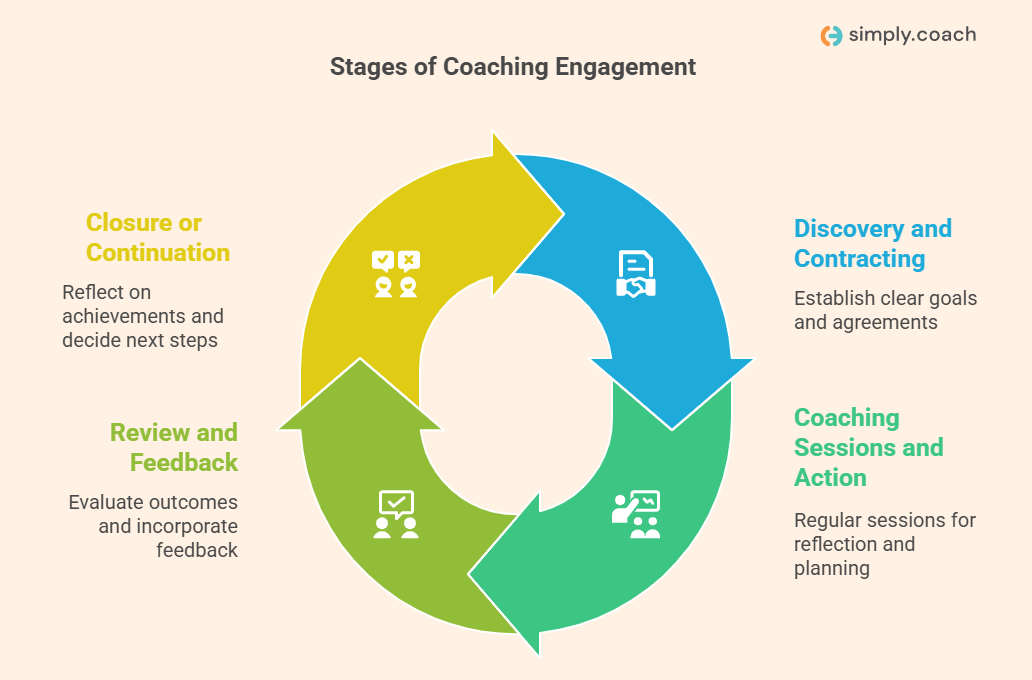
A successful coaching relationship needs structure. Without a clear flow, clients lose direction and outcomes become harder to measure. These four stages help you define the path from first conversation to final session, so you can stay focused and guide clients with clarity.
1. Discovery and Contracting
This stage lays the foundation for the entire coaching engagement. You meet the client to understand their goals, priorities, and what they’re expecting from the process. You agree on session structure, timelines, communication preferences, and pricing.
You also define how progress will be tracked and how accountability will work. A clear contract at this point prevents scope creep, builds trust, and gives both of you a reference point for future decisions.
2. Coaching Sessions and Action
This is the working stage. You hold regular sessions where clients reflect, plan, and act. You help them break down complex goals into doable steps, challenge assumptions, and stay focused on outcomes that matter.
These sessions reveal whether the client needs structure, mindset work, or deeper exploration. Each conversation gives you new data to adjust your approach and keep momentum high.
You’re not just giving space to talk. You’re keeping the work targeted, consistent, and productive across every session.
Also read: Strategies for Conducting Great One-on-One Coaching Sessions
3. Review and Feedback
You pause to evaluate what’s shifted. This isn’t a casual check-in—it’s a structured review of outcomes, patterns, and roadblocks. You assess whether the original goals are still relevant and what needs to change.
In team or executive settings, this is where you bring in feedback from sponsors or stakeholders. Their perspective adds useful context to what the client has shared. This review helps realign the coaching plan and uncover blind spots that might slow progress.
A strong review sets the direction for the next phase with clarity.
Read more: How to Provide Effective Feedback as a Coach: Strategies and Tips
4. Closure or Continuation
Every coaching engagement needs a clear endpoint. You use this stage to look back at what the client achieved, how their thinking has shifted, and what changes they’ve sustained.
Some clients will complete their goals and move on. Others will uncover deeper needs and want to continue with a new focus.
You’re not just ending sessions, you’re closing a loop. This creates a sense of completion, reinforces value, and leaves the door open for future work if needed.
Where Levels and Stages Intersect in Coaching Practice
Levels and stages are not separate frameworks. They work together throughout the coaching process. As the engagement moves through stages, the depth of work and the coaching level naturally shift to meet the client’s evolving needs.
Below is a clear view of how this progression typically plays out in practice.
Stage 1 and Level 1: Goals and Performance Metrics
In the discovery and contracting stage, most clients arrive with clear objectives. They want to solve a problem, achieve a milestone, or gain traction in a specific area. At this point, your coaching work is focused on setting goals, identifying success metrics, and defining the steps required to move forward.
For example, a business owner may want to launch a new service within 90 days. An executive may need to prepare for a critical leadership review. In both cases, you’re helping the client create structure, set targets, and organize their actions. The work is tactical, focused, and driven by measurable outcomes.
Stage 2 and Level 2: Behavior, Patterns, and Momentum
Once regular coaching sessions begin, progress often slows or becomes inconsistent. Clients may avoid certain actions, question their direction, or repeat unproductive patterns. These signs indicate that surface-level strategies are no longer enough.
This is where coaching shifts into Level 2. You begin to focus on behavioral patterns, emotional triggers, and recurring blocks. You help the client identify what’s getting in the way, and guide them toward new ways of thinking and responding.
In executive or team settings, this is often when stakeholder feedback becomes important. Input from colleagues, managers, or team members helps the client see patterns they may have overlooked. You can also introduce systems for reflection and accountability, such as structured check-ins or weekly behavioral tracking.
Stage 3 and Level 3: Identity, Values, and Reflection
As the engagement moves into the review or continuation phase, some clients reach their original goals but feel that something is still unresolved. They begin asking deeper questions about purpose, motivation, and identity.
At this point, Level 3 coaching becomes the focus. You support the client in exploring who they are, what drives them, and how they want to lead or live moving forward. This work often involves clarifying personal values, reframing long-held beliefs, or navigating a transition that challenges their self-image.
Techniques like journaling, reflective prompts, and long-form discussions become more useful here. The goal is not just progress but alignment—helping the client connect their internal values with their external decisions and actions.
Also read: Client Engagement in Coaching: Best Practices for Better Results
Navigating Team Engagements and Group Contexts
When you’re coaching teams or working in a corporate setting, you’ll often see different individuals operating at different levels. One team member may need help setting clear priorities and staying accountable, while another may be questioning their long-term role or leadership identity.
As the coach, your role is to manage these variations without losing the shared focus of the engagement. You help each person progress at their pace, while keeping the team aligned around common goals and commitments. This requires careful observation, strong facilitation, and the ability to balance individual coaching within a broader organizational context.
Learn more: 10 Effective Coaching Strategies to Enhance Team Performance
Coaching Models That Align with Each Level
Each level of coaching calls for a different type of structure. When you choose a model that matches the depth of work your client needs, you make each session more intentional and impactful. The following models align naturally with specific coaching levels, and you can easily integrate them into your existing workflows.
1. GROW Model
When a client comes to you with a clear outcome in mind but needs structure to reach it, the GROW model fits well. It helps you keep the session focused on what matters: defining a goal, understanding current reality, identifying options, and committing to action. This model supports short-term results without losing clarity.
How to apply it:
- Use a session template that mirrors the GROW sequence
- Start with a form to capture the client’s goal and baseline
- Break down the goal into clear, time-bound steps
- Use brief check-ins to monitor execution and hold accountability
2. CLEAR and STEPPA Models
As your sessions progress, you may notice clients getting stuck or repeating patterns. When that happens, you need to shift from surface-level planning to uncovering what drives their choices. Models like CLEAR and STEPPA allow you to guide the client through deeper exploration without losing direction.
They’re especially helpful when a client struggles with emotional triggers, inconsistent behavior, or thought loops that affect performance.
How to apply it:
- Use pre-session forms to explore what’s holding the client back
- Create a template that prompts deeper questions around emotion and perception
- Guide the client through pattern recognition during sessions
- Include a regular review process to track mindset and behavior shifts
3. Developmental Coaching
Eventually, some clients start asking different questions—not just about performance, but about purpose and identity. When a client reaches this point, your role becomes less about guiding action and more about holding space for reflection and internal alignment.
Developmental coaching helps clients explore who they are, what they value, and how those beliefs shape the decisions they make. It’s less structured, but deeply meaningful when done right.
How to apply it:
- Set up a journaling space where the client can reflect between sessions
- Use open-ended prompts that invite exploration rather than direct answers
- Track internal insights through written reflections or recorded narratives
- Create space for client-led dialogue, without forcing structure or speed
By aligning your coaching models to the right level of depth, you create sessions that feel more relevant to your client and more effective over time.
If you’re exploring which models work best in real coaching scenarios, this blog on impactful coaching models offers practical insights you can apply right away.
Benefits of Structuring Your Practice with Levels and Stages
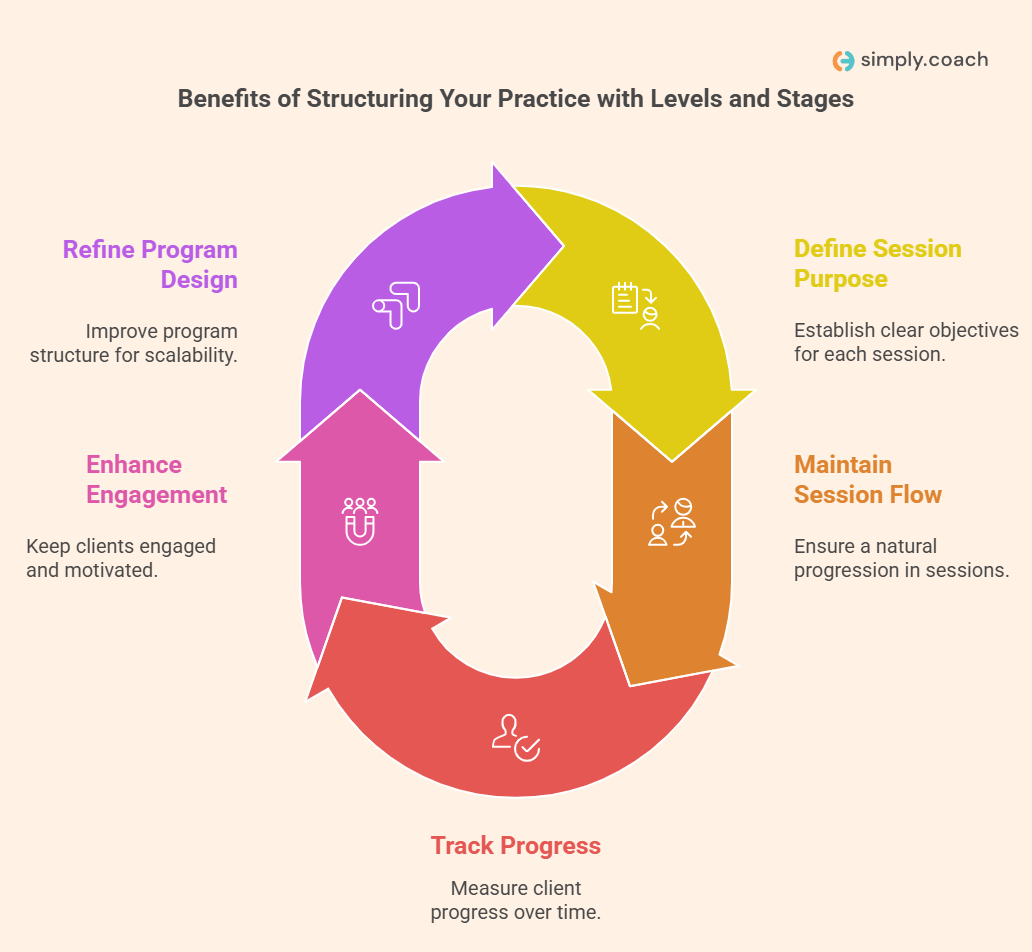
When you organize your coaching practice using levels and stages, you bring clarity to every part of the engagement, for yourself and your client. You stop guessing what comes next, and your clients know what to expect, how they’re progressing, and why each session matters.
Here’s how this structure strengthens your practice:
- Stronger client outcomes: Clients move with intention when each session has a clear purpose. By knowing what level they’re operating at, you can meet them where they are and guide them more effectively toward meaningful change.
- More consistent session flow: You avoid repetition or drift when your sessions follow a natural progression. Stages give you a framework, and levels tell you how deep to go. That combination keeps the coaching focused and productive.
- Easier to track progress: When goals, patterns, and transformations are tied to specific stages and levels, it becomes easier to track movement over time. You can show the client how far they’ve come, not just in results, but in mindset and identity.
- Better engagement and retention: Clients are more likely to stay engaged when they understand the structure of their journey. They know what’s next, how it connects to their goal, and how the process supports their growth.
- Clearer program design: Whether you coach individuals or teams, having a levels-and-stages structure allows you to build repeatable programs. You can map out onboarding, session cadence, tools, and reviews in advance, making your coaching easier to deliver and scale.
How Simply.Coach Supports Coaches Across All Levels
As your coaching engagement shifts between levels, Simply.Coach provides the right tools to support each stage of depth. The platform helps you stay organized, track progress, and deliver value, whether you’re focusing on goal execution or deeper transformation.
| Coaching level | What the client needs | How Simply.Coach supports it |
| Level 1 | Clear goals, structure, and task accountability | – SMART goal planning and development– Action planswith assigned tasks- Session schedulingand tracking |
| Level 2 | Behavior change and progress consistency | – Automated nudgesand reminders- Periodic progress check-ins- Behavioral trend tracking |
| Level 3 | Space for reflection, alignment, and deeper insight | – Session notes with reflection prompts- Stakeholder feedbackcollection- Private journaling and shared workspaces |
With Simply.Coach, you’re not only equipped with the tools to meet clients where they are, but you’re also empowered to take their coaching journey to the next level.
Conclusion
Understanding the stages and levels of coaching is crucial to delivering intentional, impactful sessions that truly help clients achieve long-term growth. By mapping out the levels and stages, you create a clear, repeatable framework that keeps the coaching focused and results-driven. When you meet your clients where they are and guide them through each phase, their progress becomes more meaningful, and sustainable. With a structured approach, you increase both client satisfaction and retention, ensuring consistent success.
Simply.Coach provides the all in one digital coaching platform to integrate these levels and stages into your practice. From goal setting to deep reflection, Simply.Coach has the tools to support every stage of your coaching journey, making your sessions more efficient and impactful. Whether you’re tracking progress, nudging for consistency, or diving into deeper transformations, Simply.Coach helps you deliver high-quality coaching at every level.
FAQs
1. How can I determine which coaching level my client is at?
To identify your client’s coaching level, discuss their current challenges and goals. If they are focused on tasks and measurable outcomes, they are likely at Level 1. If they are exploring emotional responses or patterns, they may be at Level 2, and if they are reflecting on their identity, values, or purpose, they are in Level 3.
2. What is the typical duration of a coaching engagement?
The length of a coaching engagement varies based on the client’s needs and objectives. Generally, engagements last between 3 to 12 months. Short-term coaching focuses on specific goals, while longer-term engagements allow for deeper exploration and transformation.
3. How do coaching models like GROW, CLEAR, and STEPPA differ?
Each model serves a different purpose. GROW focuses on setting goals and actionable steps, CLEAR builds emotional awareness and trust, and STEPPA addresses psychological factors for holistic development. The choice of model depends on the client’s current needs and coaching level.
4. Can coaching be effective without a structured framework?
While coaching can happen without a rigid structure, having a framework makes the process more effective. A structured approach provides clarity, keeps the coach and client aligned, and ensures measurable outcomes. Without it, sessions may lack direction and consistency.