Model Overview
Over the years, I’ve seen how easily coaching sessions can begin with energy and good intent, only to lose direction without a clear frame.
The CLEAR model addresses this challenge. Step by step, through Contracting, Listening, Exploring, Action, and Review, it keeps conversations purposeful while leaving space for discovery. Trusted by executive and leadership coaches worldwide, it has become a go-to framework for building clarity, accountability, and momentum.
Why was CLEAR created?
The CLEAR Model was developed in the 1980s by Professor Peter Hawkins, a leading voice in systemic and organizational coaching. At the time, executive coaching was gaining traction, but many conversations lacked structure and follow-through. Coaches could build rapport and spark reflection, yet sessions often drifted without clear agreements or actionable outcomes.
Hawkins designed CLEAR to address this gap. His goal was to create a rhythm for coaching conversations that balanced depth with direction, giving space for authentic listening and exploration while ensuring clarity, agreements, and accountability.
Over the years, CLEAR has become a foundation in executive and leadership coaching because it speaks directly to organizational realities such as the need for alignment, measurable outcomes, and sustainable progress.
When and why to use CLEAR Model
In real coaching, clients look for progress without losing the space for reflection. CLEAR helps me slow down to listen deeply, then speed up into action with accountability. I reach for clear model coaching when:
- A leader needs to clarify outcomes, not just solve the immediate fire.
- A team needs to turn a persistent challenge into learning and a concrete plan
- We need a shared contract at the start and a rigorous review at the end.
The model is especially useful in business and executive contexts and in team conversations because it emphasizes mutual responsibility, behavior change, and measurable outcomes. Digital coaching platforms often adapt CLEAR to structure remote sessions with clarity and feedback loops, which mirrors how I work in hybrid settings
Framework Breakdown
Below I share how I use each phase, plus CLEAR coaching model questions you can copy. For every stage you will find 5 open questions and 5 follow-ups to deepen the conversation. Use these as prompts, not scripts.
1) Contract
Contracting is the foundation that gives a session its shape. At this stage, coaches work with clients to agree on purpose, outcomes, roles, time, and boundaries. Done well, it creates clarity and a sense of shared responsibility. By slowing down at the start, coaches set up the session to stay focused and prevent the drift or rushing that can easily happen later.
Purpose: Create a shared agreement about purpose, outcomes, roles, time, and confidentiality. Good contracting reduces drift and prevents rushing later.
Short description: Success for the session is defined, boundaries are confirmed, and what will make the time most useful is clarified. This aligns with Hawkins’s emphasis on mutual responsibility and clarity at the start.
Open questions
- What would you like to focus on in today’s session?
- What outcome do you want from this conversation?
- How will you know this has been a useful session?
- What feels most important to achieve in the time we have together?
- What do you need from me, and what can I expect from you in return?
Follow-ups
- If we had to choose one outcome, which one matters most and why?
- What would make this a step toward your broader goals this quarter?
- What constraints should we acknowledge at the start?
- What assumptions about my role or yours should we make explicit?
- How will we know we are done, and what will happen next?
2) Listen
If contracting sets the direction, listening builds the foundation. This stage is where trust deepens and clients feel fully heard, not only for their goals but also for the story behind them. By slowing down and creating space, coaches uncover insights that might otherwise stay hidden while helping clients hear their own thinking more clearly.
Purpose: Create space for the story behind the goal, and listen with empathy and precision. This builds trust and reveals what truly matters before we jump to options.
Short description: Reflective listening, silence, and summaries are used to help the client hear themselves. This stage is central to CLEAR’s depth and is widely cited as a distinctive strength of the model.
Open questions
- What is most important for you right now?
- Tell me more about that situation.
- What is the impact on you, others, and results?
- What feels unresolved as you think about this?
- What emotions are present that we should name?
Follow-ups
- I am hearing X, what did I miss or misinterpret?
- When has this pattern shown up before, and what happened then?
- What have you already tried, and what did you learn?
- What strengths are you bringing that we can amplify?
- What is not being said that needs a voice here?
3) Explore
Exploration is where the conversation opens up. Coaches invite clients to look at perspectives, obstacles, and resources with fresh eyes, creating space for insights that might not surface otherwise. This stage is intentionally expansive, challenging assumptions, reframing the issue, and widening the field of possibilities before narrowing down to practical next steps.
Purpose: The purpose here is to generate insight and expand options. Coaches uncover assumptions, reframe challenges, and design viable paths forward.
Short description: The stage involves examining perspectives, obstacles, resources, and possibilities. Exploration in CLEAR is deliberately expansive before it becomes practical.
Open questions
- What options are available to you?
- What might be possible if constraints were different?
- What is getting in the way, and what could remove that barrier?
- Whose perspective, if considered, would shift your view?
- What small experiment could you run to learn quickly?
Follow-ups
- If you knew you could not fail, what would you try first and why?
- What criteria will you use to choose among these options?
- What trade-offs are you willing to accept?
- What support or resources would make this simpler?
- How might you test two options in parallel next week?
4) Action
Action is where insight turns into movement. Coaches work with clients to translate reflection into clear commitments, steps with owners, timelines, and measures that make progress real. In the CLEAR model, this stage matters because actions are co-created and owned by the client, building accountability and ensuring change takes hold, especially in organizational settings.
Purpose: The purpose of this stage is to convert insights into concrete commitments with owners, timelines, and measures
Short description: This stage involves co-creating specific steps, success indicators, and accountability measures. CLEAR emphasizes tangible actions that the coachee owns, which is why it works effectively in organizations.
Open questions
- What will you do, specifically and by when?
- How will you schedule this in your calendar?
- What resources or people will you engage?
- What might block you, and how will you respond?
- How will you measure progress and results?
Follow-ups
- What is your first 48-hour step, and what comes right after?
- How will you keep yourself accountable, and who will you tell?
- What makes this plan realistic given your current workload?
- Where will you record actions so we can track them next time?
- What feedback loops will help you adjust quickly?
5) Review
Review brings the conversation full circle. Coaches pause with clients to reflect on what has shifted, what worked well, and what could be refined. Though often overlooked, this stage is where learning deepens and accountability takes root. By making progress visible, review sustains change and reinforces the impact of the coaching process over time.
Purpose: Reflect on learning, results, and the coaching process, then close the loop. This stage is often skipped, which reduces learning and accountability.
Short description: The stage involves checking what worked, what changed, and what can be refined. Review makes progress visible and sustains change, a hallmark of the CLEAR coaching model highlighted in the literature.
Open questions
- What did you find most helpful today?
- What will you do differently next time?
- What learning do you want to capture before we end?
- What commitments are you carrying forward, and what support do you need?
- How did our coaching process work for you today?
Follow-ups
- What result did we achieve against your contract for today?
- Where did we drift, and what does that tell us?
- What signals will show that the change is sticking?
- What will you review at the start of our next session?
- What feedback do you have for me that will improve our work?
Digital coaching application
The CLEAR Model works well for virtual coaching because each step maps cleanly to digital behaviors: an explicit Contract in the session invite, active Listening captured in shared notes, structured Explore prompts in a document, Action tracked as tasks, and a scheduled Review.
This is exactly how digital coaching programs cited in the research incorporate CLEAR to drive accountability and learning in remote contexts.
Tools that support templated sessions and shared action logs make this straightforward. Platforms like Simply.Coach allow coaches to operationalize the CLEAR sequence within their workflow, alongside other structured models.
Challenges and limitations of CLEAR
The CLEAR Model can feel slow in situations that demand immediate directive decisions. It also requires coach maturity to avoid over-directing during the Listen or Explore stages. When Review is skipped, learning and accountability suffer, and progress becomes hard to sustain.
Common pitfalls to watch out for
Rushing the Contract
When the opening agreement is hurried, it often leads to drift, hidden assumptions, and mismatched expectations later on. A crisp contract prevents scope creep and gives clarity about what success means for this session. Naming outcomes, roles, time, and what will not be tackled reflects research highlighting the risks of weak or rushed contracting.
Over-talking in Listen and jumping to solutions
Advising too quickly, especially with senior clients under pressure, can undermine insight and ownership. When coaches dominate the airtime, the client’s deeper thinking is lost. Using silence, summaries, and reflective questions helps clients hear themselves more fully. Research consistently flags “insufficient listening” and over-directing as common pitfalls.
Skipping Review or making it a quick thumbs-up
Without a real Review, there is no learning loop or accountability. I always ask what shifted, what was most helpful, and what will be done differently next time. I also check the coaching process itself. The research is clear that neglecting Review undermines outcomes.
Adapting across cultures and contexts
CLEAR’s flexibility allows it to work across diverse cultural and organizational settings. In hierarchical or non-Western contexts, contracting is most effective when expectations and psychological safety are made explicit, challenge is agreed upon in advance, and formality matches local norms.
Exploration benefits from adapting question styles to communication preferences, including stakeholder perspectives respectfully, and pacing challenge with care. Research highlights that flexible contracting and tailored exploration are critical in these contexts, while review works best as a respectful learning conversation that preserves dignity and supports collective outcomes.
Comparative Analysis Table
No coaching model is one-size-fits-all. CLEAR stands out for combining structure with depth, particularly where accountability and learning transfer matter. The table below shows how it compares with other well-known frameworks.
| Model | Core Components | Best Use Case | Strengths | Limitations |
| CLEAR | Contract, Listen, Explore, Action, Review | Executive or developmental coaching | Deep listening, mutual responsibility, strong review | Sessions may take longer, requires coaching maturity |
| OSKAR | Outcome, Scaling, Know-how, Affirm, Review | Solution-focused coaching, quick wins | Highlights progress, strengths-based, simple to teach | May miss emotional depth or complex dynamics |
| GROW | Goal, Reality, Options, Will | General coaching, leadership, performance | Easy to remember, widely adopted, balances exploration and action | Can feel too linear in emotionally complex sessions |
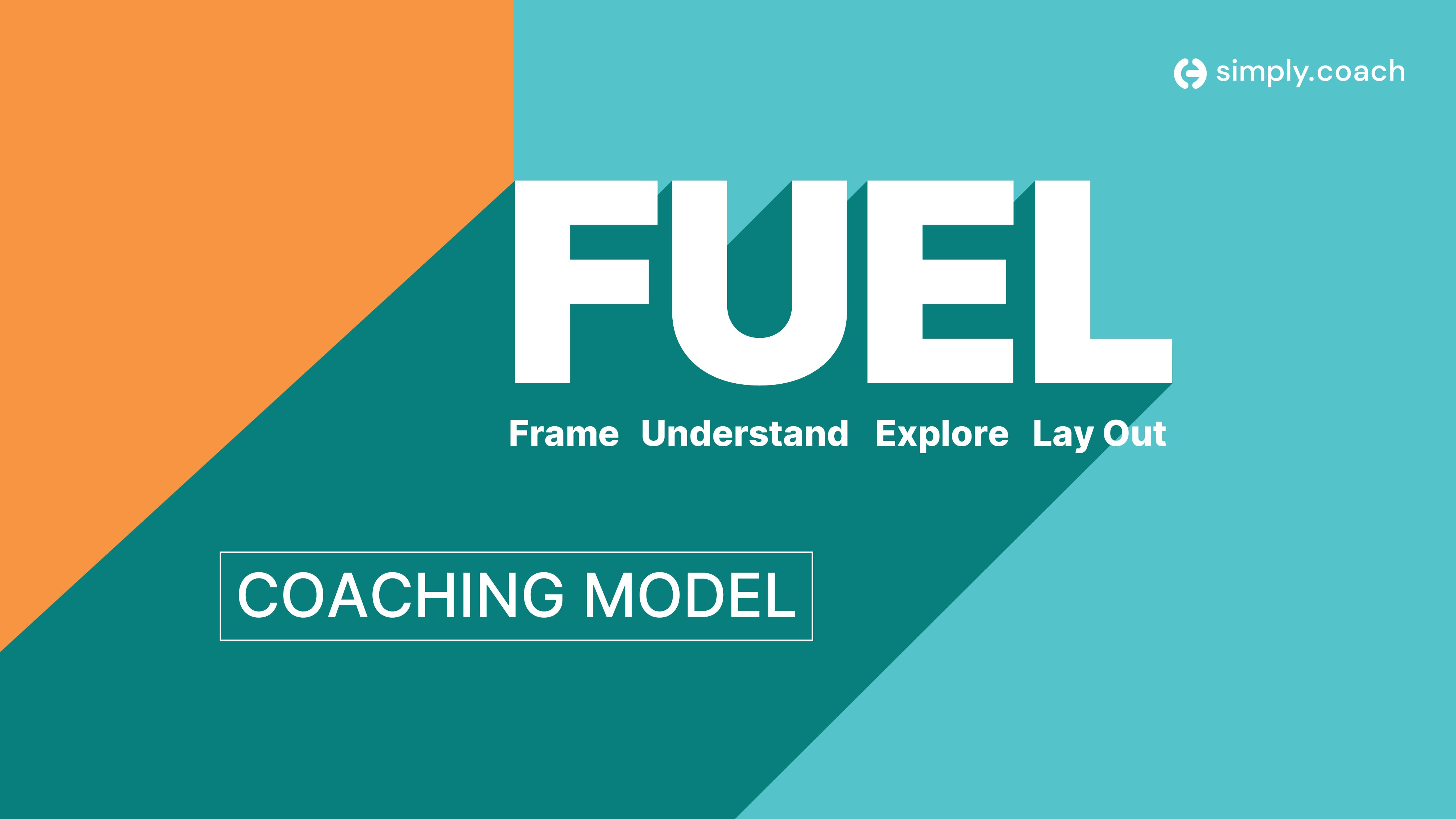
| FUEL | Frame the Conversation, Understand Current State, Explore Desired State, Lay Out a Success Plan | Broad performance and development, especially when goals are unclear | Strong framing, surfaces assumptions, builds ownership and plans | Slightly more coach-led framing at the start |
Distinctive Insights
Strengths
- Provides a clear roadmap for sessions, avoiding distraction or wasted time.
I use Contract to set one outcome, then move through Listen, Explore, Action, and Review so the conversation stays purposeful and contained.
- Ensures mutual responsibility, builds trust, supports deep reflection.
Contracting clarifies roles and boundaries, while deep listening creates psychological safety so clients own insights and next steps.
- Flexible enough for individuals, groups, and digital settings.
I can run CLEAR in one-to-ones, peer circles, and virtual sessions by keeping the same spine and adapting tempo, tools, and facilitation.
- Promotes employee initiative, self-confidence, resilience.
Explore and Action place decisions with the client, which grows agency, strengthens follow through, and builds capacity beyond the session.
Limitations
- Can be misapplied if a coach rigidly sticks to steps without context adaptation.
I flex the order and depth to suit the person, culture, and goal instead of forcing a script.
- May require more time and coach maturity for maximum effect.
The depth in Listen and Review pays off, but it asks for presence, discipline, and comfort with silence.
- Risk of losing emotional or reflective depth if Review and Explore are skipped.
When those phases are rushed, learning and accountability drop, and actions become superficial.
Why CLEAR Works with How the Brain Learns and Acts
Contract:
The Contract stage reduces ambiguity, sets intention, and creates accountability — all of which are supported by research in psychology and cognitive science.
- Clear goals reduce ambiguity, lowering cognitive load and helping the brain prioritize what matters now.
- A shared contract turns vague desires into specific intentions, creating accountability and supporting follow-through.
- Strong contracting mirrors best practice guidance, providing structure for learning and measurable outcomes.
Listen:
The Listen stage builds trust and psychological safety, creating the conditions for clients to think openly rather than defend. It is central to depth and change in the CLEAR model.
- Deep, non-judgmental listening reduces defensiveness and creates space for fresh thinking to emerge.
- Reflecting and summarizing support metacognition, helping the brain organize experience into meaning.
- Fostering clarity and presence enables clients to hear themselves more fully and uncover hidden insights.
Explore:
The Explore stage expands perspective and opens the field of possibilities. It is the engine of insight in the CLEAR model, deliberately broad before narrowing into action.
- Curious, open questions trigger cognitive reframing and perspective shifts that unlock new options.
- Considering multiple paths increases perceived control and strengthens motivation to act.
- Deliberate exploration is highlighted in research as the foundation of insight before planning.
Action:
The Action stage transforms insight into behavior by aligning with how the brain turns intention into execution. In the CLEAR model, actions are specific, time-bound, and client-owned, which strengthens accountability and embeds change.
- Translating insights into concrete steps creates intention plans that the brain can encode and act on.
- Owners, timelines, and measures serve as environmental and cognitive cues, reinforcing new neural pathways and habits.
- Linking action to practice and feedback leverages repetition, making follow-through between sessions more reliable and sustainable.
Review:
The Review stage consolidates learning by tapping into how the brain encodes memory and strengthens behavior. Often skipped in other models, this step in CLEAR sustains change by closing the loop and embedding progress.
- Looking back with structured reflection converts short-term experience into long-term memory, updating mental models for future choices.
- Feedback loops make progress visible, activating the brain’s reward system to sustain motivation and accountability.
- Closing the learning cycle reinforces neural pathways, ensuring that insights are retained and transformation continues beyond the session.
Best practices for coaches using CLEAR
The CLEAR Model is most effective when applied with discipline and adaptability. Coaches who follow best practices not only strengthen outcomes for their clients but also build consistency in their own process. The following guidelines translate CLEAR’s principles into practical habits for everyday coaching.
- Contract like a pro.
Contract with clarity. Identify one outcome for today, clarify roles, boundaries, and success signals. Decide what will not be covered and how the session will close.
- Make listening visible.
Paraphrase, summarize, and check what you may have missed. Use silence and short prompts to center the client’s voice.
- Explore before you optimize.
Generate options, assumptions, and perspectives first. Only then narrow with criteria and trade-offs.
- Action with owners, dates, and measures.
Turn insights into calendar-ready steps, owners, and simple metrics. Capture blockers and supports in the same place.
- Review with rigor. Ask what changed, what worked, and what needs adjustment. Invite feedback on the coaching process and schedule the next review.
- Tailor to context. Adapt contracting and questioning to cultural norms and hierarchy. Keep the core structure, but flex the style.
Coaching skills that bring CLEAR to life
- Deep listening and presence
The ability to tune in, reflect, and hold space without rushing. This builds trust and enables deeper work in the Listen and Explore stages
- Powerful questioning
Open, non-leading questions that surface assumptions, widen options, and invite ownership. Essential for Explore and Review.
- Contracting and boundary setting
Clear agreements, defined timeframes, and outcome alignment. This prevents drift and creates shared responsibility from the start.
- Feedback and accountability
Supportive challenge, measurable actions, and consistent follow-through. These skills convert insight into sustained behavior change in the Action and Review stages.
- Cultural and systems awareness
Sensitivity to hierarchy, norms, and stakeholders. Keeps the process respectful and effective across contexts.
See it in Action
The best way to understand CLEAR is to watch it unfold in practice. The resources below show the model applied end-to-end and in real-world settings.
- Episode 48: Coaching Demonstration of the CLEAR model – A concise, end-to-end demo that walks through Contract, Listen, Explore, Action, and Review in a single coaching conversation.
- Coaching in Child Welfare: The CLEAR Coaching Model – A short, practical session where a coach applies each CLEAR step with a real-world client scenario in child welfare.
FAQs
Q. How is the CLEAR model different from GROW in practice?
CLEAR emphasizes deep listening and a formal Review, which adds emotional depth and learning. GROW is excellent for speed and clarity on goals and options. The research positions CLEAR as slightly earlier and often more developmental in tone (Peter Hawkins; comparative notes).
Q. What are the main disadvantages of the CLEAR coaching model?
If used rigidly, it can feel slow. It requires coach maturity to listen without over-directing, and skipping Review weakens outcomes. In urgent or technical scenarios, a lighter or directive approach can be better.
Q. Do I need a clear coaching model pdf to run a session?
No, but a one-page checklist helps with timeboxing and tracking actions. The research notes that training providers publish diagrams and that digital platforms incorporate CLEAR, which you can mirror in your own template.
Q. What does the clear model stands for in simple terms?
Contract the work, Listen for meaning, Explore options, take Action, and Review for learning. That sequence is the backbone of clear model coaching and explains its staying power in organizations.
Q. What are good clear coaching model questions to start with?
Begin with “What would you like to focus on today” in Contract, then “What is most important for you right now” in Listen. In Explore ask “What options are available to you,” in Action “What will you do,” and in Review “What did you find most helpful” as provided in the research set.
Q. How long should a session last using CLEAR?
The research notes 45 to 60 minutes as typical for a focused session, which creates enough room to Listen and still move to Action and Review.
Q. Can CLEAR be adapted for groups or teams?
Yes. The materials describe peer coaching circles and team retrospectives that follow the same sequence with shared contracting, structured rounds, and group review to convert discussion into owned actions.