Model Overview
There’s a reason I often return to the OSKAR model, and I know many coaches feel the same. It is one of those rare frameworks that brings clarity without complication. OSKAR helps coaching conversations stay focused on what is working and where progress can be made instead of getting stuck in what went wrong.
What I appreciate most is its balance of structure and openness. It provides a clear path for guiding a session while leaving space for curiosity and reflection. The five stages, Outcome, Scaling, Know-how, Affirm & Action, and Review, make it easy to turn insights into measurable next steps. For me, that combination of simplicity, focus, and forward movement is what makes OSKAR so effective across different coaching contexts.
Origins of the OSKAR Model
The OSKAR Coaching Model was created by Paul Z. Jackson and Mark McKergow as part of their Solutions Focus approach to coaching and leadership development. They wanted to design a model that emphasized progress over problem-solving, one that could be easily understood and applied by managers, coaches, and facilitators alike.
When and Why the OSKAR Model Works
The OSKAR model is designed for movement and real progress. It’s been used in real organizations with measurable results. One hospital network saw a 15% drop in patient complaints and a 40% rise in completed staff training after adopting it. Walkers Snackfoods used OSKAR to strengthen performance coaching, and it has since been adopted by organizations such as the Metropolitan Police, BSkyB, Tate, and several local councils.
OSKAR works because it helps people recognize existing strengths and take the next practical step — a shift that builds confidence and momentum. It creates movement without getting stuck in the past. And in fast-paced, action-focused coaching, that’s often exactly what’s needed.
For example:
- When a manager needs to coach but doesn’t have time for a long conversation.
- When a team is low on morale and needs to see progress again.
- When a coachee feels stuck and prefers focusing on solutions rather than problems
- When performance conversations are happening, but not landing.
Framework Breakdown
I think of” feels tentative. You can make it more assured: “To me, OSKAR is a conversation that helps clients move forward by focusing, not fixing. Each step builds on the last. You start with what the client wants, look at where they are, tap into what they already know, affirm their strengths, and land on actions worth taking. It’s simple, repeatable, and highly effective, especially when time is short or energy is low.

It’s a model I’ve seen used everywhere, from hospitals to creative teams to busy managers who need a way to coach that doesn’t get stuck in the weeds. OSKAR offers just enough structure to hold a session, without making it rigid. Each stage gives the client something to notice, build on, or try. And when used well, it moves the conversation forward every time.
Outcome – Naming What They Want
This step sets the direction. It’s not about fixing a problem; it’s about getting clear on what the client wants instead. That clarity gives shape to the session. It turns a vague concern into something actionable.
A well-defined outcome gives both coach and client a shared sense of purpose. It doesn’t have to be grand. Sometimes it’s as simple as “leave with a plan” or “feel more confident about a decision.” For example, a new manager might say, “I want to feel less anxious walking into team meetings.” That gives you something real to work toward.
Questions to open things up:
- What would you like to be different after today?
- If this went well, what would you walk away with?
- What does a good outcome look like in this situation?
- Suppose the challenge was gone, what would you notice?
- How would you know this conversation has been helpful?
Prompts to sharpen the focus:
- Why is this the right time to focus on this?
- What would be a small sign of progress?
- Who else would notice if things improved?
- What part of this feels most important?
- What does “better” actually look like to you?
Scaling – Seeing Where They Are
Scaling is a simple but powerful way to make progress visible and tangible. It helps clients see they’ve already started, and gives them something to build on. It shifts the conversation from “how far off am I?” to “how far along am I already?”
It’s one of the simplest tools in coaching, yet among the most powerful because it transforms perception into momentum. It makes change feel measurable, even in conversations that are short, emotional, or complex. For example, a client might say, “I’m at a 4 out of 10 in how confident I feel,” and then realise, “Actually, I’ve come up from a 2 last month, I’m moving.”
Questions to open things up:
- On a scale of 0 to 10, where 0 is the starting point and 10 is your desired outcome, where are you right now?
- What’s helped you get that far?
- Where would you like to be?
- What’s the smallest step that would move you up one point?
- How would a 10 look and feel for you?
Prompts to deepen insight:
- What’s keeping you at your current number?
- What would a half-step up look like?
- When have you been at a higher number before?
- What would someone else rate your progress as?
- What is one thing that would nudge you up by half a point?
Know-how – Surfacing Strengths and Resources
This is where OSKAR turns reflection into action. Instead of asking what’s missing, the focus moves to what’s already working and what resources the coachee brings to the table. When we’re in the thick of it, it’s easy to forget what we already know. This stage helps clients reconnect with their own sense of capability.
These discoveries often become the foundation for sustainable change, because they draw on what’s familiar rather than forcing something new. For example, a team lead who’s struggling to delegate might realize they’ve successfully trained someone before, but they just haven’t applied that same mindset to their new team.
Questions to open things up:
- What’s helped in similar situations?
- What personal strengths have helped you before?
- Who or what could support you?
- What have you learned that could help here?
- What do you already know that you’re not using yet?
Prompts to build clarity:
- Think of a time when this went well. What made the difference?
- What resources are you already using?
- What’s already moving in the right direction?
- What’s one thing you’ve done right lately?
- Who could you lean on for support?
Affirm & Action – Naming What’s Strong and What’s Next
First, reflect on the strengths you’ve heard. Then shift into action with doable next steps rather than large plans. OSKAR doesn’t push for big breakthroughs. It’s about nudging the next right move into motion.
These two parts, affirming and acting, help clients feel seen and supported. And that combination often leads to stronger follow-through. For example, after hearing their wins reflected back, a client might say, “You’re right. I’ve handled worse. I can have that conversation this week.
Questions to move forward:
- What strengths have shown up today?
- What’s something you’re already doing well?
- What’s one step you’re ready to take?
- What would that look like in practice?
- When could you try it?
Prompts to create movement:
- That’s working, how can you do more of it?
- What feels like a manageable first step?
- How could you test this in real life?
- What support would make this easier?
- What could you put in motion today?
Review – Noticing What’s Better
In follow-ups, Review helps clients see their own progress. It keeps the energy high and effort focused. Even a small shift is worth noticing, and OSKAR makes space for that.
This final step also builds self-awareness. It helps clients look back and name what they did, what changed, and what they want to keep doing. For example, a client might reflect, ‘I’m not just more confident, I’m speaking up without second-guessing myself.’ That kind of insight matters.
Questions to check in:
- What’s better since our last session?
- What did you try?
- What worked?
- What did you learn about yourself?
- What’s next?
Prompts to reinforce progress:
- Let’s look at what moved, even slightly.
- What felt easier than expected?
- What surprised you?
- What would you repeat?
- What’s worth building on now?
Each step in OSKAR isn’t just a stage, it’s a gentle nudge that helps clients see movement is already happening, and that they have what they need to keep it going.
Applications & Adaptations
The OSKAR model was designed for real-world coaching, and that’s where it shines. It’s been used across healthcare, policing, retail, the arts, and more, often by people who don’t even see themselves as coaches. That’s part of what makes it powerful: it’s accessible, adaptable, and easy to learn.
Team Development and Performance Reviews
BSkyB used OSKAR in team development settings, but not to solve big issues. Instead, they focused on progress, even half-steps forward. Teams were asked: What’s working? What’s already moving in the right direction? Then came the rest: Where are we now? What’s one thing we can do more of?
That shift, from gaps to gains, changed the tone of performance conversations. It made teams more collaborative, more engaged, and more invested in their own solutions.
Healthcare and Staff Engagement
In healthcare, where time and energy are scarce, OSKAR has been used to great effect. One NHS trust integrated it into staff development, improving training completion and reducing complaints. Another used it to guide reflective conversations that made employees feel heard, not evaluated.
The real impact didn’t come from large coaching sessions but from asking simple, consistent questions that reinforced competence and encouraged follow-through.
Digital Coaching Applications
OSKAR’s structured simplicity makes it a strong fit for virtual coaching environments.
Whether in a self-paced app or a live digital platform like Simply.Coach, each OSKAR stage can be mapped clearly into templates. This helps coaches document outcomes, scaling scores, and affirmations in real time. This structure makes it especially useful in asynchronous coaching, where clients can reflect and respond at their own pace while still engaging with the full model.
Challenges & Limitations
OSKAR offers a refreshingly simple structure, and for many coaching moments, that’s exactly what’s needed. But like any framework, it has limits. At times, its future-focused lens may overlook the deeper reflection a client needs.
Common Pitfalls to Watch For
One of the most common traps is rushing through the Scaling stage. When that step feels like a checkbox rather than a conversation, we miss a big opportunity. That moment of scaling reveals what’s really driving confidence, or where doubt still lingers. When done well, it becomes a bridge between awareness and action.
Another challenge I’ve seen is coaches skipping the Know-how phase too quickly. It’s tempting to move from identifying a problem straight into action. But Know-how is where clients rediscover their own capabilities. It’s where we pause long enough for them to say, “Actually, I’ve done something like this before.” Without it, actions can feel fragile.
And sometimes, especially in outcome-driven environments, there’s a risk of making the whole session about what’s next, without fully affirming what’s already working. OSKAR isn’t just about planning — it’s also about recognizing small wins that sustain momentum. Skipping that step can make the session feel rushed.
Where OSKAR Might Not Fit
OSKAR isn’t ideal for every coaching context. If a client is in a moment of grief, burnout, or deep personal crisis, the structure can feel too goal-oriented. They may need space to sit with emotion, not scale it.
I’ve also seen it fall short in longer-term coaching relationships where the agenda evolves session to session. OSKAR works well for clarity and action, but it may not hold the ambiguity of exploratory coaching as gracefully.
In group settings where trust is low or teams feel unsafe to speak openly, OSKAR can feel like a performance tool rather than a coaching guide. Slowing down to build relational safety is sometimes more important than moving through stages.
Model Comparison Table
Understanding where OSKAR sits among other coaching models helps coaches make better choices for their context. While OSKAR thrives in fast-paced, solution-oriented environments, other models bring different strengths to the table.
| Model | Core Components | Best For | Strengths | Limitations |
| OSKAR | → Outcome → Scaling → Know-how → Affirm → Review | Solution-focused coaching, quick wins | Highlights progress, strengths-based, simple to teach | May miss emotional depth or complex inner dynamics |
| GROW | → Goal → Reality → Options → Will | General coaching, leadership, performance | Easy to remember, widely adopted, balances exploration/action | Can feel too linear in highly reflective or emotionally complex sessions |
| CLEAR | → Contract → Listen → Explore → Action → Review | Executive or developmental coaching | Emphasizes deep listening and mutual responsibility | Sessions may take longer, requires more coaching maturity |
| TGROW | → Topic → Goal → Reality → Options → Will | Situations needing early clarity | Adds structure when clients are overwhelmed or scattered | Redundant if goals are already clear |
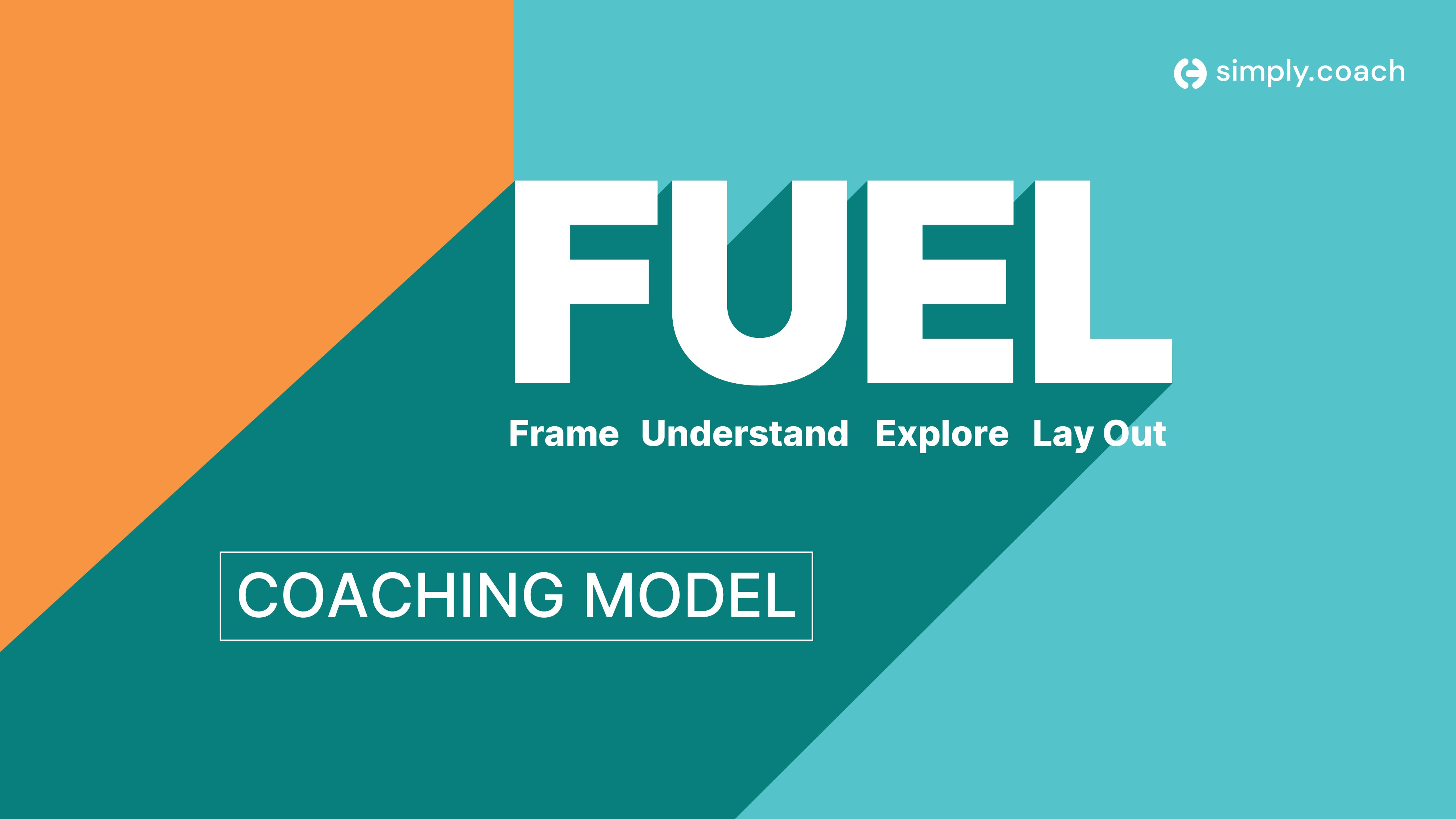
| FUEL | → Frame → Understand → Explore → Layout | Manager-led coaching, corporate settings | Business-focused, helps frame feedback constructively | Less personal depth, more performance-focused |
Distinctive Insights
One question I hear often from coaches is, “Does OSKAR work better in certain contexts?” Absolutely. Its strength lies in its ability to simplify, not dilute, complex change. That’s why many programs build on it or blend it with others.
OSKAR’s bias for action makes it ideal for short coaching windows, line manager conversations, and any space where time is tight and outcomes matter. However, OSKAR doesn’t exist in isolation, it often works best when complemented by other approaches.
In fact, I’ve seen coaches pair OSKAR with models like CLEAR when deeper reflection is needed. In practice, many coaches start with OSKAR and transition into Co-Active or narrative frameworks as the relationship deepens.
Most accredited programs I’ve worked with use GROW or TGROW as the foundation, then introduce OSKAR as a way to coach without overcomplication. When used together, the models help coaches meet the moment with more flexibility and precision.
What Research Shows About OSKAR’s Effectiveness
The research behind OSKAR echoes what many coaches have seen in practice: when attention stays on what’s working, change follows faster, with greater buy-in.
Walkers Snackfoods & BSkyB (The Solutions Focus)
In corporate environments, OSKAR has been adopted by companies like Walkers Snackfoods and BSkyB to support line managers in delivering effective day-to-day coaching. These weren’t professional coaches, just managers using OSKAR’s structure to guide performance conversations. The result: greater clarity, engagement, and a stronger culture of ownership, especially in time-pressured or low-motivation environments.
Source: The Solutions Focus
UK Hospital Trust (Creately, 2023)
In the public sector, a hospital trust applied OSKAR to support staff development and patient care. The outcomes were measurable: a 40% increase in completed staff training programs and a 15% drop in patient complaints. These changes didn’t come from major system overhauls but from giving frontline teams space to reflect on what worked and apply it more consistently. Source: Creately
Why OSKAR Works with How the Brain Learns and Acts
The more we understand how people build confidence and take action, the more OSKAR makes sense. It aligns naturally with what we know about motivation, reflection, and behavioral momentum.
Outcome – Directing Attention Forward
Starting with the Outcome primes the brain for positive focus. It activates goal-oriented pathways and gives the session direction, without requiring a deep dive into problems.
Scaling – Measuring Perceived Progress
Asking “where are you now on a scale?” helps the brain visualize progress and future growth. That small measurement boosts dopamine, which enhances motivation and clarity.
Know-how – Accessing What Already Works
Exploring existing strengths taps into the brain’s reward system. It creates psychological safety and reminds the client they’re not starting from zero—they already have resources to draw on.
Affirm & Action – Reinforcing Agency
Affirming what works and setting micro-actions helps lock in new behavior. This step uses a principle from behavioral psychology: confidence grows when action feels achievable and meaningful.
Review – Strengthening Neural Feedback Loops
The Review stage encourages reflection on progress, which builds memory pathways around success, not struggle. It helps the brain internalize growth and prepares it for the next step.
When coaches work this way, they’re not just supporting change, they’re creating the conditions where change is more likely to stick.
Creative Applications in Practice
One of OSKAR’s biggest strengths is its adaptability. It’s not just for structured one-to-one coaching — it fits into meetings, performance reviews, group conversations, and moments of reflection across a range of settings.
Retrospectives That Drive Progress
Whether in agile teams or project debriefs, OSKAR works beautifully to shift focus from problems to progress. Teams start by identifying the Outcome they want from the discussion, scale where they are now, and highlight internal know-how. Rather than rehashing everything that went wrong, they walk away with small wins and clear actions that build momentum.
Learning and Onboarding Programs
Instead of overwhelming new hires with information, OSKAR helps them frame their onboarding goals. I’ve seen HR teams use it to co-create short-term success markers with employees, assess how prepared they feel, and plan concrete steps for learning. It’s a tool that makes early coaching more human and personal.
Organizational Change Conversations
When change hits — be it reorgs, new leadership, or strategic pivots — OSKAR offers a way to anchor people in agency. Rather than dwelling on uncertainty, it helps them identify what is working, what skills they already have, and what immediate actions they can take. It turns change into a conversation, not a directive.
Best Practices for Coaches
Using OSKAR effectively means more than just memorizing its steps. From working with other coaches and my own experience, here are some principles that elevate the model:
Stay solution-focused, not script-bound: It’s tempting to stick to the order rigidly, but OSKAR works best when you let the flow follow the client’s energy. If they’re brimming with ideas before scaling, ride that wave.
Affirm with sincerity: The “Affirm” step isn’t about shallow praise. It’s about reflecting back real strengths and naming what’s already working. That shift in perspective can be a turning point.
Use silence generously: Especially during Scaling and Know-How, pausing gives clients space to discover insights rather than jump to quick fixes. OSKAR thrives in reflective spaces.
Watch for assumptions: Coaches often bring their own definitions of success. Let the client define what progress means — not just the outcome, but how they want to get there.
Teach clients to self-coach: Over time, clients start asking themselves the OSKAR questions on their own. That’s the real magic: when the model becomes part of their inner dialogue.
Coaching Skills That Bring OSKAR to Life
The model is simple. But the coaching skills needed to bring it alive are anything but basic:
- Open-ended questions that keep attention on what’s working
- Deep listening to uncover the coachee’s internal resources
- Reflective language to affirm strengths and build confidence
- Gentle challenge to move from knowing to action
- Follow-up that supports, not pressures
Each stage of OSKAR calls for its own coaching presence:
Outcome: Use future-focused visioning and goal-shaping questions. Help the client name a change they can feel.
Scaling: Be curious and compassionate. Ask what’s already helping them score where they are — and how they might go one point higher.
Know-How: Spot their wins. Mine their past for skills, experiences, and insights that could transfer here.
Affirm: Reflect their language back. Name what they may not see in themselves. Anchor them in their competence.
Review: Ask what’s better, not just what’s done. Help them celebrate movement and set the tone for what comes next.
These skills align with the ICF Core Competencies and are regularly taught in solution-focused coaching certifications like those from The Solutions Focus.
See It in Action
Want to see OSKAR in motion? These resources bring the model to life:
- Using Review in a Coaching Session – Leadskill: Shows how to close sessions using the OSKAR Review step.
- The OSKAR Model in Time Management – Durham University: A short video on applying OSKAR to coaching around productivity.
They show what many coaches experience: OSKAR isn’t just a model, it’s a mindset. And when used well, it shifts how people see themselves, their work, and their next step.
Bringing It All Together
After years of using OSKAR, it’s clear to me: this isn’t about fixing problems. It’s about amplifying what’s already working — and trusting that momentum will do the rest.
OSKAR works in fast-paced business contexts, personal coaching moments, and everything in between. It gives structure without rigidity, and optimism without denial. And when paired with strong coaching presence, it becomes something far more powerful than a five-letter acronym.
It becomes a way of helping people move forward, one meaningful question at a time.
FAQs
Q: Is OSKAR only for solution-focused coaching?
Not exclusively. While its roots are solution-focused, many coaches use OSKAR alongside models like GROW or CLEAR. Its emphasis on strengths makes it useful in nearly any session where the client needs momentum.
Q: What if the client gets stuck during Scaling?
Invite reflection. Ask, “What makes you say that number?” or “What’s helped you get this far?” Often, clients discover they’re further along than they thought, or see what could shift.
Q: Can OSKAR work in digital coaching sessions?
Absolutely. In fact, platforms like Simply.Coach offers OSKAR-aligned templates, letting you guide clients through each stage while tracking progress digitally. Its clarity makes it ideal for remote work.
Q: What if the client doesn’t respond to affirmation?
Some clients aren’t used to hearing their strengths reflected. Stay grounded and sincere. Over time, affirmation becomes less about praise and more about helping them recognize what’s already working.
Q: Is OSKAR too structured for exploratory sessions?
It depends on the moment. If a session needs emotional space or isn’t goal-driven, other models may fit better, but OSKAR can still hold space for reflection.