Model Overview
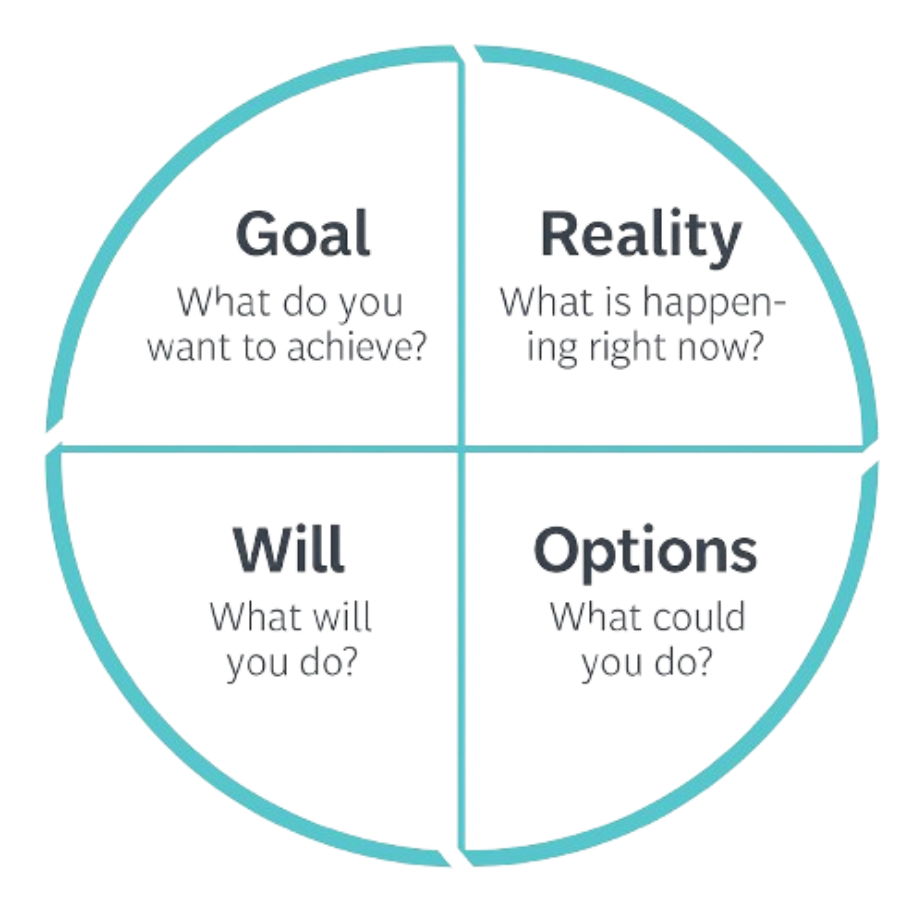
There’s a reason I keep returning to the GROW model, and I know I’m not alone. It’s not flashy, but it’s quietly effective. First introduced by Sir John Whitmore and his team in Coaching for Performance (Routledge, 2017), GROW structures a session around four simple stages: Goal, Reality, Options, and Will. It keeps the conversation focused, grounded, and moving toward action.
What I appreciate most about GROW is that it’s open. No one owns it. It’s not trademarked. That means coaches everywhere use it freely, and you’ll find it at the core of respected programs from ICF‑accredited training provider like Performance Consultants’ and Grow Group’s EMCC‑accredited curriculum.
But beyond the structure, GROW offers something deeper. For me, it’s a way to hold space for clarity, insight, and forward motion. It meets people exactly where they are and helps them move, one step at a time, toward where they want to be.
Key Takeaways
- GROW is a simple, non-trademarked, four-stage framework (Goal, Reality, Options, Will) widely used globally for its balanced structure and flexibility.
- It is highly versatile, effective in diverse settings like leadership, personal development, team coaching, and performance management, especially for those feeling stuck or unclear.
- GROW’s effectiveness is rooted in its alignment with cognitive processes, as each stage fuels motivation, calms unknowns, unlocks creativity, and primes action.
- Coaches often use variations like TGROW, IGROW, GROWTH, and GROWTHS to tailor the model, but GROW works best when clarity and momentum are the primary goals.
- The model’s success heavily relies on the coach’s skills (e.g., open questions, deep listening, co-creating SMART goals) and fostering a client self-coaching mindset for lasting transformation
When and Why the GROW Model Works
Over 70% of employees say they feel unprepared for the future of work, a stat that should make any leader pause . Add to that the finding that companies with strong coaching cultures report 26% less disruption to productivity compared to those without, and the need for structured, impactful coaching becomes hard to ignore.
This is where the GROW model tends to earn its place. It offers a simple but solid framework that supports people who are stuck, overwhelmed, or unclear on what to do next.
I’ve seen coaches and managers turn to GROW in situations like these:
- When performance conversations lack follow-through or clarity.
- When high-potential employees feel stalled without a clear path forward.
- When leaders are navigating change and need space to reflect and decide.
- During onboarding, to help new hires define what success really looks like.
- In team settings where shared goals and ownership need to be reestablished.
Its strength lies in that balance structured enough to focus the session, flexible enough to meet the moment.
Framework Breakdown
I think of GROW as a conversation that unfolds in four steps, each building on the last. We move from exploring a client’s goal, to understanding their current reality, to opening options, and finally to deciding on what they’ll do next.
It’s taught in countless ICF‑ and EMCC‑aligned programs because it does something rare: it stays simple enough to use in the moment, while still offering the depth we need to hold powerful, transformative conversations.
Goal – Defining the Destination
Every powerful conversation starts with a clear sense of where we’re headed. In this first stage, I work with clients to shape a goal that feels meaningful and energizing, something that gives the session direction and purpose.
Questions to open things up:
- What would make this session feel successful for you?
- What do you want to walk away with clarity on?
- If progress happened, what would it look or feel like?
- What does success mean to you in this context?
- If we checked in 30 days from now, what would you want to see different?
Prompts to sharpen the focus:
- How will you measure progress or success?
- Why does this goal matter to you now?
- What would change in your day-to-day if this were resolved?
- Is this goal within your control, or dependent on others?
- How does this goal align with your bigger picture?
Reality – Examining the Current Situation
Once the destination is clear, I turn attention to where things stand right now. This stage is about honest reflection, surfacing strengths, obstacles, and even hidden assumptions that might be shaping the path forward.
Questions to explore:
- What’s happening right now that relates to this goal?
- What have you already tried?
- What’s going well? What’s not?
- What are you noticing about your role in this?
- Where do you feel stuck, and what might be underneath that?
Prompts to deepen insight:
- What have you learnt from what you have tried?
- Who else is involved, and how do they impact this?
- What assumptions might be influencing your thinking here?
- Are there patterns you’ve seen before in similar situations?
- How does this compare to how you’ve handled similar goals?
- What might you be avoiding that needs naming?
Options – Generating Possibilities
With clarity on the current reality, I invite expansive thinking. This is where clients get to explore what might be possible without immediately worrying about constraints. It’s a space to be creative, to try ideas on, and to see what resonates.
Questions to spark ideas:
- What are all the ways you could approach this?
- If nothing were off the table, what might you try?
- What advice would you give someone else in your shoes?
- Which past successes could you apply here?
- What could you do if you were 10x more confident?
Prompts to widen the lens:
- What else could be worth exploring here?
- What haven’t you tried, and what’s stopped you?
- Which options feel exciting? Which feel forced?
- What are the pros and cons of each path?
- Who could help or challenge your thinking here?
Will – Committing to Action
Insight only takes us so far. Lasting change comes when we turn clarity into action. In this final stage, I help clients shape a concrete next step and build momentum beyond the session.
Questions to move forward:
- What would you do?
- What’s the first step you’re ready to take?
- When will you do it?
- What would taking that action look like in real terms?
- What might get in the way, and how will you respond?
- What support do you need to follow through?
Prompts to strengthen follow‑through:
- How will you track your progress?
- Who will you share this commitment with?
- What will you do if you hit a roadblock?
- On a scale of 1 to 10, how committed are you to this step?
- What would make it easier to start today?
Many coaches also bring in simple tools at this point, whether it’s a GROW worksheet or a digital template on platforms like Simply.Coach, to capture these commitments and make sure the next conversation starts with real progress in hand.
Applications & Adaptations
One of the reasons I see coaches keep returning to the GROW framework is its flexibility. It doesn’t belong to any one niche. I’ve seen it show up in accredited programs, inside boardrooms, in life-coaching conversations, and even in digital coaching tools. Wherever clarity and measurable progress matter, GROW seems to fit right in.
Leadership and Executive Development
In high-stakes environments, senior leaders don’t just need inspiration, they need structure that translates ambition into action. The GROW model provides exactly that.
In practice, this might look like a senior executive using GROW to set a measurable strategic priority, unpack resistance within their leadership team, explore ways to build alignment, and walk away with a plan, not just a perspective.
Whether in one-on-one coaching or internal leadership programs, GROW brings structure to what can otherwise become abstract dialogue and anchors it in decisions leaders can take forward.
Personal Development and Life Coaching
Not every client arrives with a roadmap. Sometimes they come with a “feeling I’m stuck,” “I want clarity,” “Something needs to change.” That’s where the GROW model earns its place. It brings just enough structure to keep the conversation from drifting, while still leaving space for reflection, emotion, and clarity.
I’ve seen this with someone navigating a life transition, maybe they’ve returned from a career break or are stepping into a new phase of parenthood. In the Goal stage, they define what progress looks like in their words. Not a title or milestone, but something like “feeling like myself again.” Through Reality, we unpack what’s happening beneath the surface, habits, fears, competing priorities. Options become experiments, not commitments: a new morning routine, a part-time course, a boundary-setting conversation. And in Will, we anchor it all in one or two doable steps they can take that week.
EMCC-accredited programs often highlight this exact use case: not chasing breakthroughs but helping clients build quiet momentum. The kind that sticks.
Team Coaching
GROW gives teams a simple way to think together. It helps them align on a goal, reflect on what’s working and what’s not, explore new ideas, and decide on clear next steps.
I’ve seen coaches use it in retrospectives or planning sessions. Teams walk through each stage together: naming what they want to achieve, surfacing current blockers, brainstorming options, and agreeing on actions.
EMCC case studies show teams using GROW to boost ownership and collaboration, especially in cross-functional settings. Instead of just talking, teams leave with a plan they’ve built and bought into.
Performance Management
GROW helps managers turn reviews into real coaching conversations. Instead of just giving feedback, they use the model to look ahead, setting goals, exploring what’s getting in the way, and mapping out next steps.
It’s especially useful when people feel stuck or unsure how to grow. By walking through each stage, employees don’t just hear what to improve, they help shape the plan to get there. That shared ownership leads to stronger follow-through.
Variations in Practice
I’ve seen coaches tailor the GROW model to fit the moment, and the client, in some interesting ways.
TGROW – Topic, Goal, Reality, Options, Will
TGROW starts with a “Topic” step, which makes a big difference when someone shows up with multiple concerns or a general sense of overwhelm. This stage helps narrow the focus before diving into goal-setting. It’s often used in first-time sessions or when a client needs space to sort out what really matters most.
IGROW – Issue, Goal, Reality, Options, Will
IGROW begins with “Issue,” letting the client speak freely about what’s on their mind before shaping it into a goal. I’ve seen this work well when emotions are running high or when the line between coaching and therapy feels blurred. It gives space to process before planning.
GROWTH – Goal, Reality, Options, Will, Tactics, Habits
GROWTH adds two useful elements to the original model, Tactics and Habits. “Tactics” are all about the how: what the client will do and when. “Habits” help those actions stick over time. Coaches working on long-term behavior change often lean into this version because it supports real-world consistency.
GROWTHS – Goal, Reality, Options, Will, Tactics, Habits, Strengths
GROWTHS takes things one step further by adding “Strengths.” It encourages clients to look at what they already do well and how to build on it. I’ve seen this used in leadership and positive psychology contexts, where progress often comes from deepening, not just fixing.
Digital Coaching Applications
The beauty of GROW is that it travels effortlessly into virtual spaces. The ICF specifically notes that its clarity makes it effective for AI‑powered coaching tools. On platforms like Simply.Coach, you’ll find session templates built around each stage, a place to capture notes, goals, capture actions, and track progress. Whether the session happens in person or online, the structure stays intact, and the conversation stays meaningful.
Challenges & Limitations
The GROW model is one of the most trusted tools in our profession, and for good reason. But no single framework works flawlessly in every situation. I’ve found that part of our craft is noticing where friction appears and adapting in the moment.
Common Pitfalls to Watch For
One trap I see often is moving too quickly through the Goal stage. When we don’t take time to shape a goal that’s specific and motivating, the rest of the conversation can feel untethered. The best sessions I’ve seen are the ones where coach and client co-create goals that are crystal clear and measurable, something that can truly anchor the work.
Another challenge is getting stuck in Reality. It’s easy to keep digging into what’s wrong or what’s blocking progress until the whole session feels heavy. When I catch that happening, I like to ask, “What possibilities does this open up?” It shifts the energy toward solutions.
And here’s another subtle one: leading questions. We all slip into them at times, nudging a client toward our own ideas instead of holding the space for theirs. Reframing with open-ended prompts like, “What else might work?” or “What do you see as next steps?” keeps the ownership where it belongs with them.
Where GROW Might Not Fit
GROW isn’t always the right fit for every coaching moment. In sessions that are emotional, exploratory, or focused on deep reflection, the structure can feel too directive. Clients navigating burnout, grief, or identity shifts often need space, not a plan.
In long-term coaching journeys, goals evolve. Coaches may start with GROW but blend in other coaching models to stay flexible. And in team settings, if trust is low or goals are unclear, it helps to pause and align before diving into GROW.
The model works best when clarity and momentum are the goal. When the work is about presence or healing, softer frameworks may serve better.
Adapting Across Cultures and Contexts
Culture shapes the way people set goals and commit to action. In some teams or regions, building trust or aligning on group priorities must come before individual goals. Slowing down, spending more time on shared context, or focusing on collective outcomes first allows GROW to stay effective while respecting those dynamics.
Comparative Analysis
One question I hear a lot from fellow coaches is: Are there models that work better in certain contexts? Absolutely. GROW is a brilliant starting point but understanding how it stacks up against other models helps me (and many others) stay versatile in the room.
| Model | Core Stages | Best For | Strengths | Considerations |
| GROW | Goal → Reality → Options → Will | General coaching, leadership, life coaching, team coaching | Simple, widely known, action-oriented | Can feel linear in highly exploratory sessions |
| OSKAR | Outcome → Scaling → Know-How → Affirm → Review | Solution-focused coaching | Highlights progress and strengths | Explores underlying issues less deeply |
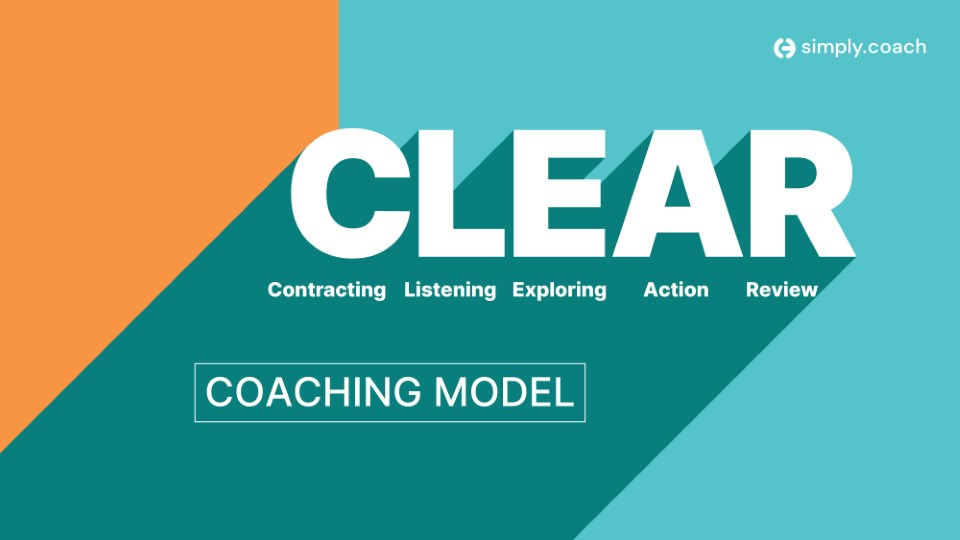
| CLEAR | Contracting → Listening → Exploring → Action → Review | Executive or organisational coaching | Builds strong agreements, reflective space | Sessions may take longer |
| TGROW | Topic → Goal → Reality → Options → Will | Sessions needing upfront topic clarity | Adds helpful context before goal-setting | Adds an extra step if topic is already clear |
Most accredited programs I’ve seen start with GROW because it’s so intuitive. But over time, coaches often borrow from other models, maybe it’s OSKAR’s strength-based approach or CLEAR’s deeper contracting — depending on what the moment needs.
What Research Shows About GROW’s Effectiveness
The research backs up what many of us have experienced firsthand.
Scoular & Linley (2006) compared GROW-based coaching to sessions with no formal model. Interestingly, the outcomes weren’t significantly different. That told me something important: a model can be useful, but it’s the coach’s presence, skill, and the quality of relationship that really make change possible.
In Korea, Kang, Lee & Joung (2021) used GROW with nursing students in peer coaching. The result? Stronger motivation, better study habits, and clearer planning. A good reminder of how powerful a structured conversation can be for self-development.
And in a nine-week program by Lee, Kim & Kang (2022), 109 school administrators coached through GROW reported a boost in well-being and the results lasted three months beyond the program. That kind of sustained impact is what we’re all aiming for.
Why GROW Works with How the Brain Learns and Acts
Once I understood the neuroscience behind coaching, the GROW model started making even more sense. Here’s why it works, cognitively:
Goal – Fueling Motivation
A well-defined goal lights up the brain’s reward system. The prefrontal cortex gets to work mapping a path, and dopamine creates that feeling of “I’m ready to act.” A goal isn’t just a nice intention, it’s a neurological trigger to get moving.
Reality – Calming the Unknowns
When clients get real about their current situation, the stress drops. Their brain moves from ambiguity to clarity, from reactive to problem-solving. That shift opens up space to take constructive steps forward.
Options – Unlocking Creativity
This is where ideas start flowing. Encouraging clients to generate options lights up creative neural networks. The more possibilities they see, the more capable and confident they feel. It’s energizing, and empowering.
Will – Turning Intent into Action
Once clients commit, the brain starts rehearsing the action. The same neural pathways fire as if they were already doing it, making follow-through more likely. That’s why even small commitments matter: they prime the brain to follow through.
Creative Applications in Practice
What I love about the GROW model is how adaptable it is. It’s not just for one-to-one coaching sessions, I’ve seen it work across all kinds of settings:
- Team retrospectives: Guiding a team through GROW can turn a routine meeting into a focused, solution-oriented conversation that actually moves things forward.
- Onboarding processes: Helping new hires define early wins and shape their learning journey makes them feel seen, supported, and empowered from day one.
Best Practices for Coaches
How we use GROW matters just as much as the model itself. From what I’ve seen and heard from other experienced coaches, a few reminders make all the difference:
- Keep it flexible: Let the framework guide the session, but don’t let it limit you. If something important surfaces, loop back and explore. That’s where breakthroughs often live.
- Prioritize the relationship: Trust is what allows the GROW process to take root. Deep listening during the Reality stage often reveals insights that no model can script in advance.
- Teach the mindset: One of the best outcomes is when clients start to self-coach. They begin asking themselves, “What’s my goal? What are my options?” That’s a lasting transformation, one that lives well beyond our sessions.
Coaching Skills That Bring GROW to Life
GROW doesn’t work on its own. It comes to life through the coach, through how we show up, ask questions, and hold the space.
That means:
- Asking open-ended, non-leading questions
- Listening with empathy and depth, not just for what’s said but what’s not
- Co-creating SMART goals and revisiting them as the client’s journey unfolds
- Following up with care, not pressure, to build accountability that feels supportive
Each stage calls for a different coaching presence:
- Goal: Use visioning and clarifying prompts to help clients articulate what they truly want
- Reality: Be patient, allow silence, and ask probing questions to deepen awareness
- Options: Open up the space, encourage brainstorming, explore pros and cons
- Will: Help narrow down choices into clear commitments, timelines, and steps to follow through
These micro-skills align closely with the ICF Core Competencies, which is why so many coaches (myself included) choose ICF or EMCC-accredited programs to sharpen them.
See It in Action
If you want to see what this looks like in real coaching conversations, here are a couple of strong demos:
- How to Use the GROW Model – The Coaching Academy: A 14-minute video showing a coach walking through each stage in a career coaching session.
- The GROW Model in Action – South West Coaching: A role-play that captures tone, pacing, and questioning techniques in a live dialogue.
Watching these can be eye-opening. They remind me that GROW isn’t just a theory, it’s a conversation style that, when done well, creates momentum.
Bringing It All Together
The longer I’ve worked with GROW, the more I’ve come to see it not just as a model, but as a mindset.
It helps us hold space for clarity, stay present when things get messy, and move clients toward action they can actually commit to. It’s simple enough to use in real time, but deep enough to adapt across cultures, roles, and life stages.
And when it’s paired with trust, empathy, and curiosity, it becomes more than a sequence. It becomes a way of being, one that invites growth, not just direction.
Because coaching isn’t about having all the answers. It’s about helping clients find their own. And GROW, for all its simplicity, does that beautifully.
That’s the real magic. And that’s why it still earns its place in so many powerful coaching conversations.
FAQ’s
Q: Is the GROW model less effective than other approaches?
Not at all. Every model has its sweet spot. GROW brings clarity and structure, while others like CLEAR or OSKAR, might be a better fit when a session calls for deeper reflection or a more solution‑focused lens. The best coaches don’t pick one “right” method; they blend and adapt based on what will serve the client best in that moment.
Q: What if I feel stuck in one of the GROW stages?
It happens. The beauty of GROW is that it’s not rigid. You can loop back, spend more time where it’s needed, or move ahead when the client is ready. Let the conversation breathe and follow their process rather than forcing a straight line.
Q: How do I keep sessions engaging and client‑centered in digital or group settings?
Lean on tools that make collaboration easy. Shared worksheets, virtual whiteboards, and group exercises can keep everyone involved. GROW translates beautifully to online platforms, you can capture notes, track follow‑ups, and maintain accountability in real time while still keeping the client (or team) at the heart of the conversation.
Q: What if my client doesn’t have a clear goal?
Start with curiosity. Ask what brought them to coaching or what feels stuck. Use prompts like “What would be different if this issue weren’t there?” Clarity often emerges when clients feel safe to explore, not pressured to decide.