
Have you ever wondered why some people effortlessly reach their goals while others, despite their best efforts, seem to hit roadblocks? This is because motivation is the key to achieving success, especially when properly channeled into actionable steps.
With over 34,200 certified coaches in the US alone, the demand for skilled professionals to guide others toward success is growing. As a motivational coach, you’ll help individuals not only find their motivation but also transform it into lasting change.
But how do you become a motivational coach? What does it take to empower others to overcome their limitations and achieve extraordinary results?
In this blog, we’ll break down the essential steps to becoming a coach motivational. We will show you how to create a successful and sustainable coaching practice that truly makes a difference.
Key Takeaways:
- Motivational coaching helps clients tap into their intrinsic motivation and achieve actionable outcomes that lead to lasting success.
- Establishing measurable goals and breaking them down fosters client focus and progress.
- Building trust through active listening and empathy is key to understanding clients’ needs and guiding mindset shifts.
- Regular feedback, progress tracking, and adapting your approach ensure clients stay engaged and make consistent progress.
- Expanding your coaching practice through scalable programs and a strong brand helps you reach more people while maintaining personalized support.
What is Motivational Coaching?
Motivational coaching helps people identify their goals, overcome obstacles, and take actionable steps toward success. It is quite different from life coaching, which often focuses on broad personal development. Motivational coaching zeroes in on helping clients push past limiting beliefs and take decisive action. It’s also about helping clients to move past their fears and create measurable outcomes.
Motivational coaching is built on helping clients:
- Identify clear, actionable goals
- Tap into intrinsic motivation
- Build the confidence to face challenges
- Stay consistent and accountable
- Overcome internal barriers like fear of failure or self-doubt
What Sets Motivational Coaching Apart?
Motivational coaching is distinct as it’s outcome-oriented and geared toward achieving specific results. Motivational coaching differs in its:
- Mindset transformation: Motivational coaches help clients break through limiting beliefs and adopt a growth mindset.
- Focus on actionable outcomes: It’s about achieving results.
- Focused impact: While other coaching may touch on various aspects of life, motivational coaching targets a specific area. It can be a career or fitness, leading to clearer, more focused results.
Also Read: 17 Best Mindset Coaching Tools for Personal Growth
Essential Steps to Becoming a Motivational Coach
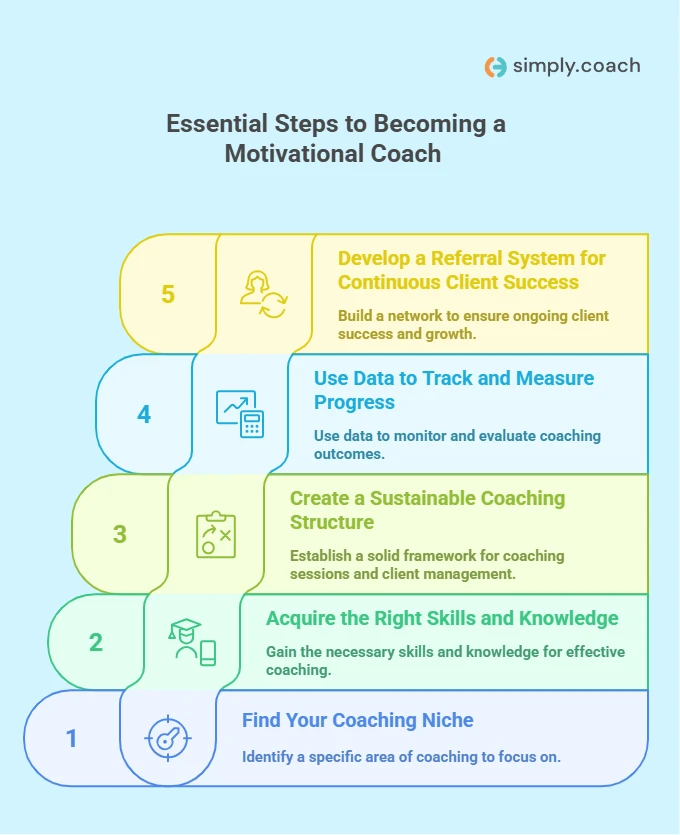
How do you transition from being someone who inspires others to actually guiding them toward success? Becoming a motivational coach requires structure, expertise, and the right tools. Let’s dive into the steps you need to follow:
Step 1: Find your coaching niche
Your niche defines who you serve and how you serve them. It allows you to tailor your approach, message, and branding to reach the right audience. As a motivational coach, you must find a nichethat resonates with your passion and expertise.
Here’s how to approach it:
- Dive into your passions and expertise: Think about where you have both knowledge and enthusiasm. For instance, are you passionate about helping professionals overcome imposter syndrome, or do you want to help people take action toward fitness goals?
- Understand the needs of your ideal clients: Who do you want to help? Knowing your ideal customer profile may make it easier for you to begin your coaching journey.
For example, a coach focusing on “career advancement for women in tech” would create a coaching program geared to resolve the individual challenges faced by these clients. It could be building confidence in a male-dominated field or overcoming career stagnation.
Also read: Why You Should Choose a Coaching Niche
Step 2: Acquire the right skills and knowledge
Certifications and courses can help add credibility to your practice. However, to truly make an impact, you need the experience and emotional intelligence that come with real client interaction. As a motivational coach, your role is to guide clients through significant transformations. You can only do that when you develop the skills that address their needs.
Here’s how to approach it:
- Cognitive reframing: Help clients change their perspective on negative situations by challenging and altering their thought patterns. This can lead to healthier responses and empower them to take control of their circumstances.
- Emotional regulation techniques: Help clients manage their emotions effectively, whether they’re dealing with anxiety, fear, or stress, so that they can focus on their goals.
- Client mindset shifts: A key part of motivational coaching is shifting clients from a fixed mindset to a growth mindset. This allows them to embrace challenges and see setbacks as opportunities to learn and grow.
Suppose a client is facing career stagnation; using motivational interviewing can help uncover the root cause. Together, you both can solve issues like fear of failure, lack of confidence, or a need for more knowledge. Once you identify the issue, you can help them develop a path forward.
Step 3: Create a sustainable coaching structure
A successful coaching business requires a clear structure. Develop a sustainable coaching framework that’s both flexible and measurable. This will allow your clients to make progress while still feeling supported.
Here’s how to approach it:
- Create a personalized plan: Understand your clients’ unique challenges and goals, then tailor your approach to address those needs specifically.
- Define session structure: Decide on session frequency, duration, and delivery format (e.g., one-on-one calls, group sessions, or online coaching).
- Adaptability is key: No two clients are the same, so adapt your methods to meet their preferences. Some may prefer weekly check-ins, while others might benefit from a more flexible, on-demand coaching structure.
For instance, a wellness coach may offer a hybrid plan, where clients receive weekly calls for accountability, supplemented by a digital app where they track their progress, nutrition, and workouts. This combination keeps clients engaged while giving them access to continuous support.
Also read: How to Plan a Productive Coaching Session (Templates and Examples)
Step 4: Use data to track and measure progress
Data-driven results are essential to both your coaching practice and your client’s success. Tracking progress is essential to ensure that clients are moving forward. It also provides tangible metrics that keep both of you motivated.
Here’s how to approach it:
- Set clear, measurable targets: Use metrics that align with clients’ goals. For example, if they aim to increase productivity, they track key performance indicators (KPIs) like projects completed, deadlines met, or hours worked.
- Client self-assessment tools: Empower your clients by using tools that allow them to reflect on their own progress. Whether it’s a journaling prompt or a self-assessment quiz, regular check-ins will keep them engaged.
- Visual progress trackers: Use visual aids, like progress dashboards or graphs, to help clients see their growth over time.
In case of a client working on career advancement, track their progress by logging the number of networking events they’ve attended, interviews they’ve had, and job applications submitted. These concrete milestones give them a visual representation of their growth.
Explore the 10 Best Coaching Tools for Tracking Progress in 2025
Step 5: Develop a referral system for continuous client success
No one coach can solve every problem, and sometimes your clients will need additional resources beyond your expertise. So whether it’s a therapist for emotional trauma or a mentor for specific career advice, developing a referral system is important for long-term success.
Here’s how to approach it:
- Recognize when clients need additional support: As a motivational coach, it’s essential to know when to recommend outside resources. Whether it’s therapy, financial advice, or a specialized coach, recognizing your limits benefits the client.
- Develop relationships with experts: Build a network of trusted professionals you can refer your clients to when they need specific help.
- Collaborate for client success: Partner with other experts to ensure your clients get the best possible support, whether that means collaborating with a career coach or a health professional.
For example, if a client is struggling with self-doubt and imposter syndrome, refer them to a therapist who specializes in Cognitive Behavioral Therapy (CBT). This approach ensures your client gets holistic support, and you still play an active role in their growth.
Mastering Core Skills to Thrive as a Motivational Coach
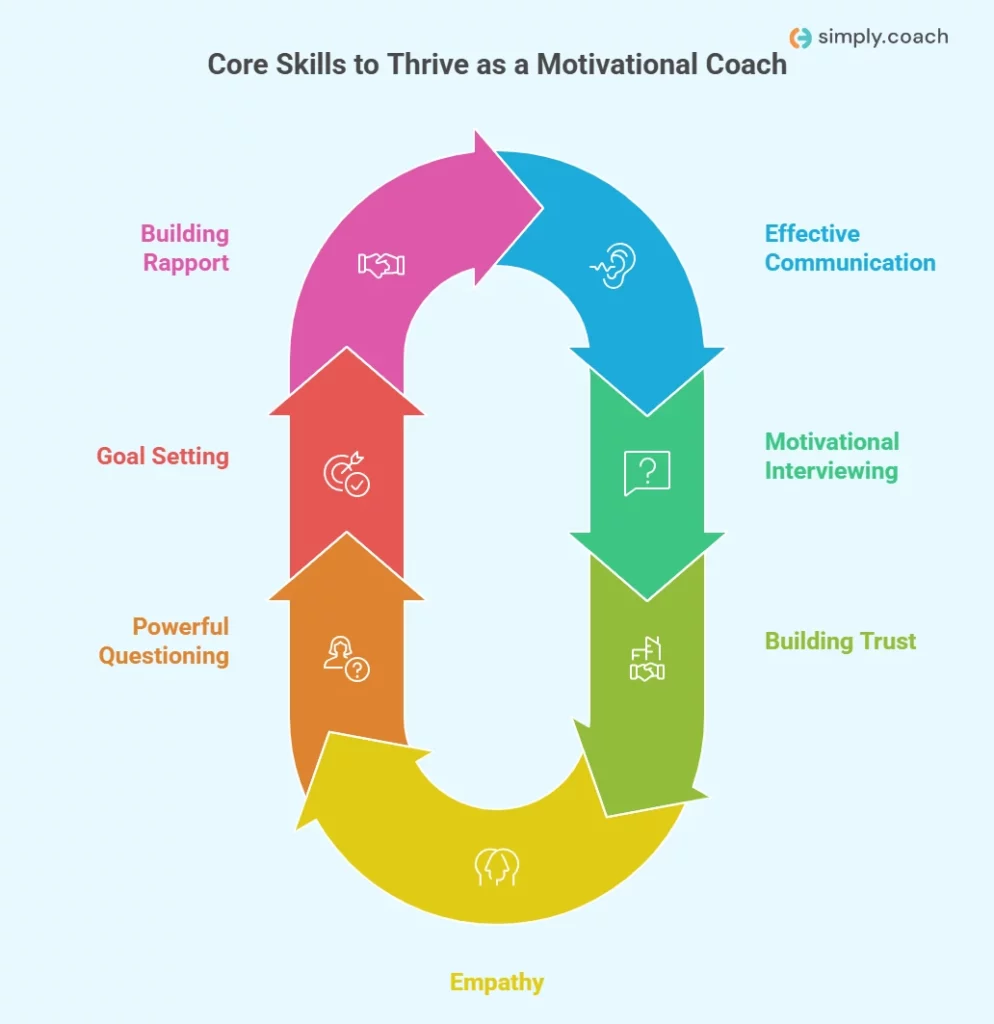
Being a great motivational coach requires more than just techniques and tools. It requires mastering key skills that foster trust, build rapport, and create lasting change. Let’s look at the essential skills you need to thrive:
1. Effective communication and active listening
Motivational coaching requires deep empathy and active listening. It’s about both: hearing what’s said and what’s left unsaid.
Here’s what you should focus on:
- Understand your clients’ fears, challenges, and motivations.
- Look for non-verbal cues like body language and tone.
- Establish trust from the beginning so your clients feel comfortable, encouraging them to share their struggles more openly.
2. Motivational interviewing techniques
These techniques are important in helping clients articulate their desires for change and confront any resistance they might have.
Here’s what you should focus on:
- Encourage clients to think critically about their goals.
- Ask questions like, “What would your life look like if you achieved this goal?”
- Help clients see their potential, making them feel capable of taking actionable steps toward their goals.
3. Building trust and empowering clients
Building a relationship based on trust is non-negotiable in motivational coaching. Clients must feel confident that you are there to support them, not judge them.
Here’s what you should focus on:
- Celebrate small wins to show your clients that their progress matters.
- Motivate them to continue moving forward.
- Empower clients to recognize their strengths and celebrate their achievements independently.
4. Empathy and emotional intelligence
Empathy is crucial for understanding and connecting with your clients on a deeper level. It’s about sharing their feelings without being overwhelmed by them.
Here’s what you should focus on:
- Remain emotionally aware and non-judgmental.
- Create a safe space where clients can express themselves freely.
- Use emotional intelligence to manage your responses and support your clients effectively.
5. Powerful questioning
Motivational coaches use open-ended, thought-provoking questions to guide clients toward self-discovery and accountability.
Here’s what you should focus on:
- Ask open-ended questions that encourage clients to reflect deeply.
- For example, instead of asking, “Did you achieve your goal?”, ask, “What challenges did you face, and what did you learn from them?”
- This fosters responsibility and helps clients gain new insights about themselves.
6. Goal setting and accountability
Motivational coaches help clients set clear, realistic, and motivating goals. Accountability plays a key role in helping clients stay on track and achieve their objectives.
Here’s what you should focus on:
- Break down larger goals into smaller, actionable steps.
- Regularly check in with clients to review progress and hold them accountable.
- Celebrate milestones and use setbacks as learning opportunities.
7. Building rapport
A successful coaching relationship is built on a foundation of trust. Coaches must be authentic and create a non-judgmental environment where clients feel safe to share their deepest fears and aspirations.
Here’s what you should focus on:
- Be genuine and transparent in your interactions.
- Create a space where vulnerability is encouraged.
- Build trust and rapport gradually by being consistent and supportive in your approach.
Also Read: 15 Essential Coaching Discovery Call Questions to Understand Client Needs
Challenges of Motivational Coaching and How to Overcome Them
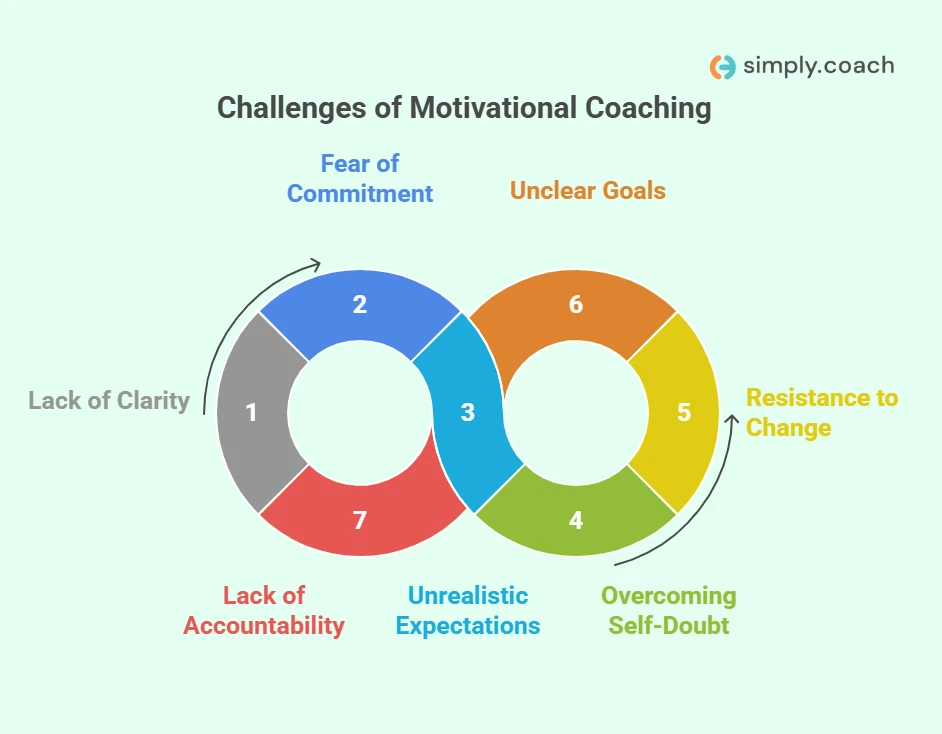
While motivational coaching can be highly rewarding, it’s not without its challenges. Below, we highlight some of the common hurdles and actionable solutions.
1. Lack of clarity and focus
Sometimes clients come in with big dreams but without clear, actionable goals. This can leave you both frustrated as you struggle to define a path.
How to overcome this hurdle:
- Start by helping them articulate their vision.
- Use the SMART goals framework to turn abstract goals into concrete ones.
2. Fear of commitment
Clients sometimes hesitate to fully commit to their growth journey because of fear or past failures. This can result in missed opportunities and stunted progress.
How to overcome this hurdle:
- Foster an environment where commitment feels safe and achievable.
- Shift their focus from fear to opportunity and help them see that failure is a learning opportunity.
3. Unrealistic expectations
Ambitious clients often set lofty goals, and while this is good, they can quickly become overwhelmed by the scale of their objectives, leading to burnout.
How to overcome this hurdle:
- Help your clients set achievable milestones that are aligned with their current capabilities.
- Provide step-by-step guidance that allows clients to see progress without feeling defeated.
4. Overcoming self-doubt
Many clients struggle with feelings of inadequacy or fear of failure, making it hard for them to push forward.
How to overcome this hurdle:
- Help your clients understand that self-doubt is a common part of the growth process.
- Offer positive reinforcement to remind clients of their strengths.
5. Resistance to change
Even with the best intentions, some clients may resist change due to fear of the unknown or deeply ingrained habits. This can lead to stagnation and frustration.
How to overcome this hurdle:
- Encourage small, incremental changes rather than overwhelming shifts.
- Help clients see the benefits of change by connecting it to their long-term vision.
6. Unclear or misaligned goals
Sometimes clients come to you with vague or unrealistic goals that aren’t aligned with their true desires. This can create confusion and a lack of progress.
How to overcome this hurdle:
- Work with your clients to dig deeper into their motivations and desires.
- Regularly check in to ensure their goals are aligned with their evolving aspirations.
7. Lack of accountability
Without proper accountability, clients may lose motivation or stray from their goals. This can cause progress to stall or even reverse.
How to overcome this hurdle:
- Set clear expectations and timelines for check-ins and progress assessments.
- Foster a sense of ownership by helping clients track their own progress.
How to Expand Your Impact as a Coach Motivational?
As you grow in your motivational coaching practice, it’s essential to expand your reach and influence. Scaling your impact means delivering value to a broader audience while maintaining your unique coaching approach. Let’s look at two essential ways to expand your influence.
1. Building your coaching brand
Investing time in defining your unique value proposition is essential to standing out in a competitive coaching industry. Understand what makes your coaching style distinct and how it addresses your clients’ specific needs.
Along with this, price it with your ideal client in mind. You must create packages that give clients options based on their needs and commitment level. This allows you to cater to different budgets while still delivering high-value coaching.
Also Read: 8 Tips for Powerful Personal Branding for Coaches
2. Creating scalable coaching programs
Once you’ve honed your coaching style and built your client base, it’s time to consider scaling. Transitioning from one-on-one coaching to group coaching or digital programs allows you to help more people without compromising the quality of your sessions.
Offering online courses, workshops, or memberships helps you reach a broader audience while still delivering personalized value to clients.
Learn more: Motivation Assessment Scale II : An Example and Guide
Transform Your Motivational Coaching with Simply.Coach
Motivational coaching is all about inspiring lasting change in your clients. But to truly deliver transformative results, you need the right tools to streamline your process and enhance client experiences. Simply.Coach helps you manage every aspect of your coaching process, so you can focus on what really matters: empowering your clients.
Here’s how Simply.Coach supports motivational coaches by offering:
- Goal & Development Planning: Create clear, actionable goals for your clients, track their progress, and adjust strategies in real time to ensure consistent growth.
- Coaching Programs: Develop personalized coaching programs that cater to each client’s specific needs and motivations. This ensures the client stays aligned with their long-term vision.
- Client Workspaces: Centralize all client resources, notes, and progress updates in one secure workspace, making it easy for clients to stay on track and engaged.
- Nudges: Use automated nudges to remind clients of their goals, help them stay motivated between sessions, and ensure they never lose sight of their objectives.
- Action Plans: Break down big goals into smaller, manageable actions to ensure clients make steady progress. Simply.Coach helps you keep them accountable every step of the way.
With Simply.Coach, you’ll have all the tools you need to empower your clients, track their progress, provide personalized, consistent, and highly impactful coaching while streamlining your practice; all in one platform.
Conclusion
Becoming a motivational coach requires the right mindset, skills, and strategies to help clients flourish. By following the essential steps outlined above, you can guide your clients toward success while building a sustainable and impactful coaching practice. With a strong foundation, you’ll not only transform lives but also establish a coaching business that thrives on measurable success.
Meanwhile, keep improving your skills, stay adaptable, and empower your clients to break through barriers and achieve their highest potential. With the right tools, like Simply.Coach, you’ll not only achieve success for your clients, but for your coaching practice as well.
Watch Simply.Coach in action and see how the platform can elevate your practice
Also, check out Our reviews on G2 and testimonials on Simply.Coach to learn how we’ve helped other coaches succeed.

Frequently Asked Questions (FAQs)
1. How do I become a motivational speaker or a life coach?
Focus on your niche and expertise. Gain certifications or training, practice speaking publicly, and develop your personal brand. Build a portfolio of content to establish credibility and attract clients.
2. How can I become a motivational coach without experience?
Start by honing your communication skills and emotional intelligence. Consider certifications to gain credibility and build practical experience by offering free sessions or assisting experienced coaches to learn the ropes.
3. How much do motivational coaches make?
Earnings vary widely depending on experience, niche, and location. On average, motivational coaches make between $30,000-$150,000 annually, with top coaches earning more through group programs and speaking engagements.
4. What advice do you have for someone looking to start a life coaching business?
Start with clear goals and identify your niche. Build a strong online presence, network actively, and invest in certification programs. Focus on delivering value, and word-of-mouth will help grow your client base.