
You may hesitate when a client shares something deeply personal and familiar. A memory from your own life surfaces, and you wonder if sharing it could help. Many therapists face this exact dilemma during sessions. You want to show empathy and understanding, yet you also want to protect professional boundaries. That tension often makes therapist self-disclosure one of the most challenging clinical decisions.
Self disclosure in therapy occurs when you intentionally share personal experiences, emotions, or perspectives with a client during treatment. The disclosure must always support the client’s therapeutic goals rather than your own need to relate. Some therapists use brief disclosures to normalize client experiences or strengthen trust. Others avoid them because they fear shifting attention away from the client.
Used thoughtfully, therapist self-disclosure can deepen the therapeutic relationship and support emotional openness. However, it also carries ethical and relational risks when used without clear purpose. Understanding when and how to disclose personal information helps you maintain professional boundaries while still offering authentic connection. This article explores the benefits, risks, ethical considerations, and practical guidelines that help therapists use self-disclosure responsibly.
Key Takeaways
- Therapist self-disclosure is the intentional sharing of personal experiences, emotions, or perspectives during therapy to support a client’s therapeutic goals.
- Used thoughtfully, it can strengthen trust, normalize emotions, and deepen the therapeutic alliance by helping clients feel understood and supported.
- Overuse or poorly timed disclosure can create risks, including blurred boundaries, role confusion, or shifting the focus away from the client’s needs.
- Ethical self-disclosure requires clear intention, clinical relevance, and professional judgment to ensure it benefits the client rather than the therapist.
- Different therapy approaches view self-disclosure differently, with some encouraging authenticity and others prioritizing therapist neutrality.
- Therapists should evaluate timing, client readiness, and therapeutic impact before sharing personal information in a session.
- Secure practice management systems like Simply.Coach, an all-in-one HIPAA-compliant therapist practice management software, help therapists manage client data, documentation, and sessions while maintaining ethical and professional standards.
What is Self-Disclosure in Therapy?
You may sometimes feel tempted to share a personal experience when a client describes something familiar. The intention usually comes from empathy and a desire to help the client feel understood. Therapist self-disclosure refers to the intentional sharing of personal information, feelings, or experiences during a therapy session. The purpose must always support the client’s therapeutic goals rather than the therapist’s personal expression.
This form of communication requires careful judgment. The disclosure should relate directly to the client’s situation and offer therapeutic value. Thoughtful self-disclosure can strengthen connection, normalize difficult emotions, or clarify therapeutic insights. However, the information shared must remain focused, limited, and clinically appropriate to preserve the therapeutic structure.
Key characteristics of therapist self-disclosure
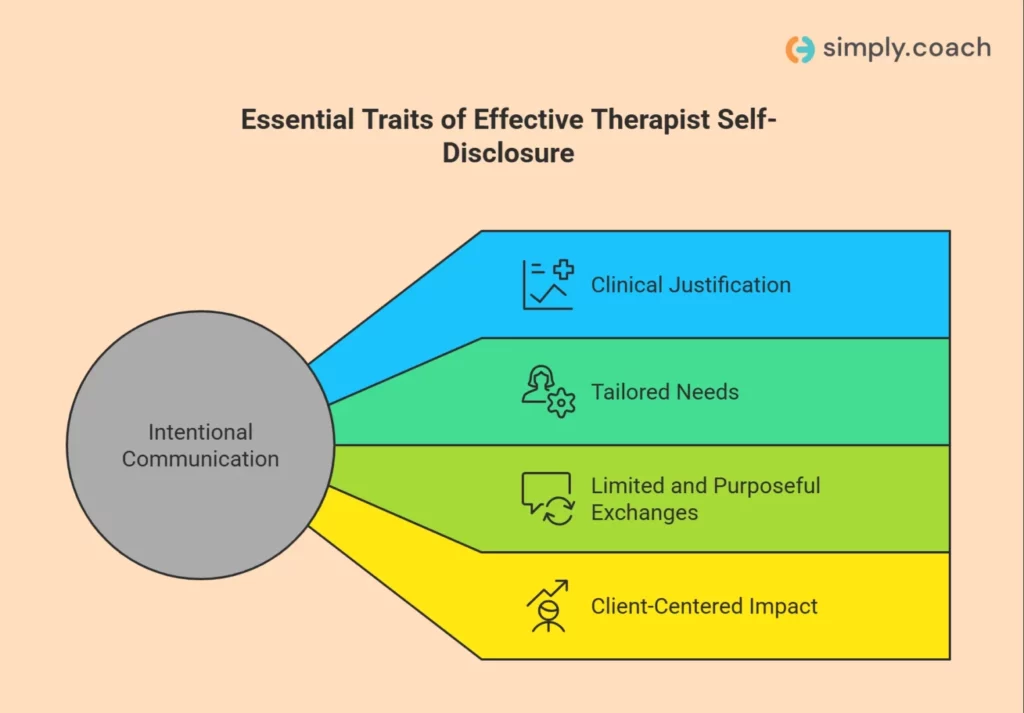
Therapist self-disclosure follows clear principles that protect the therapeutic relationship and maintain professional boundaries.
- Intentional communication: You disclose personal information only when it serves a clear therapeutic purpose for the client.
- Relevant to client progress: The disclosure connects directly to the client’s experience, emotional challenge, or therapy goals.
- Clinically justified: You assess timing, context, and client readiness before sharing personal information.
- Limited and purposeful: Short, focused disclosures keep attention on the client rather than shifting the conversation toward you.
- Client-centered impact: You evaluate how the disclosure may influence the client’s emotions, perception of therapy, and therapeutic progress.
How self-disclosure differs from casual sharing
Therapeutic disclosure differs significantly from everyday conversation. Casual sharing often focuses on mutual connection or social bonding. Therapy conversations require clear professional boundaries and clinical intention.
| Aspect | Therapist self-disclosure | Casual personal sharing |
| Purpose | Supports the client’s therapeutic progress | Builds social connection or conversation |
| Focus | Remains centered on the client’s experience | Often shifts attention to both people |
| Boundaries | Guided by professional ethics and clinical judgment | Informal with fewer boundaries |
| Depth of Information | Limited and purposeful | May include detailed personal stories |
| Outcome | Encourages insight, trust, or emotional processing | Strengthens social relationships |
Types of Therapist Self-Disclosure
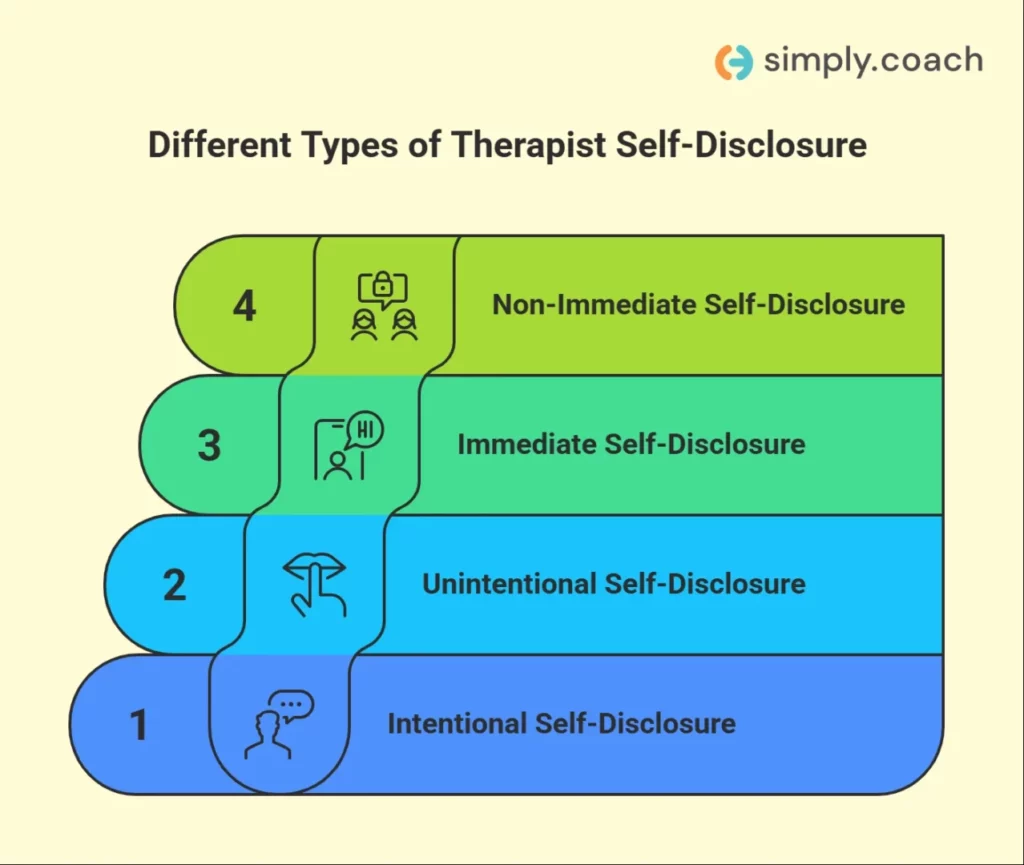
Therapist self-disclosure does not appear in one single form. It can occur intentionally during a clinical intervention or indirectly through subtle cues in the therapy environment. Understanding the different types helps you decide when disclosure supports therapeutic progress and when restraint protects the client relationship.
Each type carries different clinical implications. Recognizing these forms allows you to respond thoughtfully while maintaining ethical and professional boundaries.
1. Intentional self-disclosure
Intentional self-disclosure occurs when you deliberately share personal insight, experiences, or strategies to support a client’s therapeutic progress. The disclosure must connect directly to the client’s challenge and remain brief.
Common situations where therapists use intentional disclosure include:
- Normalizing a client’s emotional reaction during grief, trauma, or life transitions
- Sharing a coping technique that may help the client manage stress or anxiety
- Demonstrating that certain struggles reflect common human experiences
- Offering a brief example that clarifies a psychological concept
Example: A client describes overwhelming grief after losing a parent and feels ashamed about their emotional intensity.
You might respond:
“Many people notice that grief comes in strong waves rather than a steady feeling. Pausing and focusing on slow breathing can help during those moments.”
The response validates the client’s experience while offering a practical strategy without shifting attention toward your personal story.
2. Unintentional self-disclosure
Unintentional self-disclosure happens when clients learn personal information about you without direct conversation. These signals can still influence the therapeutic relationship.
Therapists often underestimate how observant clients can be during sessions.
Common sources of unintentional disclosure include:
- Office environment details such as family photos, cultural symbols, or books
- Emotional reactions like facial expressions, tone changes, or pauses
- Personal interests visible through artwork or decorations
- Public information on social media platforms
Example: A client notices a marathon medal displayed in your office. They may assume you value discipline or physical wellness. This observation might influence how they perceive your approach to stress or resilience.
Small environmental cues can shape the client’s expectations about you even without verbal discussion.
3. Immediate self-disclosure
Immediate self-disclosure involves sharing your reactions within the present therapy interaction. The focus remains on what you observe or feel during the session rather than events from your personal life.
This approach often supports relational awareness and emotional insight.
Therapists may use immediate disclosure to:
- Highlight patterns in the therapeutic relationship
- Help clients recognize how their communication affects others
- Encourage deeper emotional reflection during the conversation
- Strengthen relational authenticity within the session
Example: A client repeatedly criticizes themselves during the conversation.
You might say:
“I notice I feel concerned when I hear how harshly you speak about yourself.”
The statement reflects your response while guiding the client to explore their self-critical thinking.
4. Non-immediate self-disclosure
Non-immediate self-disclosure refers to sharing information from your personal past, professional journey, or previous experiences. This form involves deeper personal content and requires careful judgment.
These disclosures should remain short and closely connected to the client’s therapy goals.
Therapists sometimes use non-immediate disclosure to:
- Normalize recovery processes during addiction or trauma work
- Illustrate coping strategies developed through experience
- Explain long-term patterns observed in professional practice
- Encourage hope during difficult therapeutic moments
Example: A client in recovery feels discouraged after a relapse.
You might respond:
“Recovery often includes setbacks before long-term change becomes stable. Many people experience several attempts before they feel confident in their progress.”
The statement reassures the client without shifting focus toward the therapist’s personal story.
Also read: What Is Person-Centered Therapy: A Practical Guide for Mental Health Practitioners
Core Advantages of Self-Disclosure in Therapy
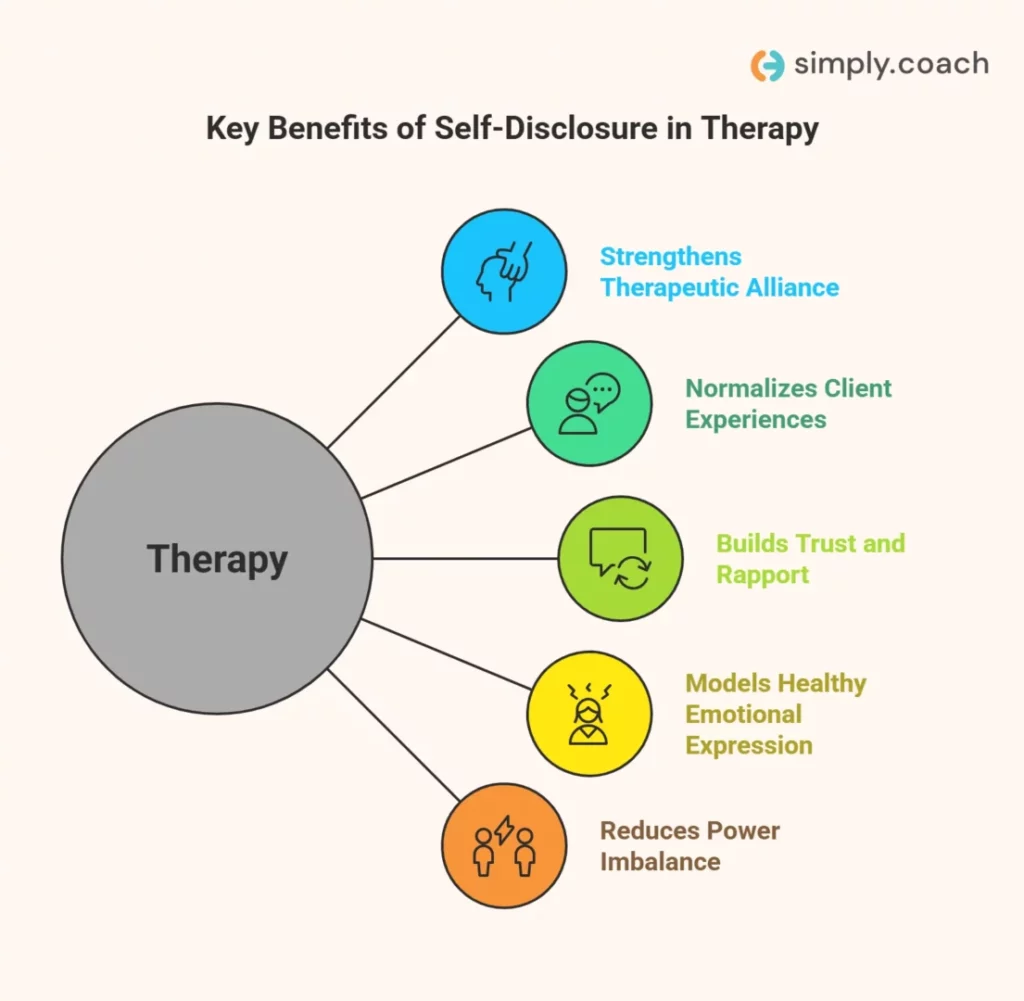
When you use disclosure carefully, it can strengthen the therapeutic relationship and encourage deeper client engagement. The following benefits often appear when disclosures remain brief, intentional, and closely connected to the client’s needs.
- Strengthens the therapeutic alliance: Clients often feel more understood when you acknowledge experiences that resonate with their struggles. This recognition can deepen emotional connection and strengthen your working relationship.
- Normalizes client experiences: Many clients believe their reactions make them unusual or flawed. A brief disclosure can reassure them that certain emotions and challenges reflect common human experiences.
- Builds trust and rapport: Clients may open up more freely when they sense authenticity in your responses. Thoughtful vulnerability can help create a safe space for deeper emotional exploration.
- Models healthy emotional expression: Your communication style teaches clients how to reflect on emotions. A careful disclosure can demonstrate how to acknowledge feelings without judgment or avoidance.
- Reduces power imbalance in therapy: Therapy can sometimes feel hierarchical from the client’s perspective. Limited disclosure may help clients see you as a supportive human presence rather than a distant authority figure.
These benefits appear when your disclosure remains intentional and client-focused. Careful reflection helps ensure that personal sharing strengthens the therapy process rather than distracting from it.
Also read: Effective Strategies to Grow Your Therapy Practice in 2026
When Should Therapists Use Self-Disclosure?
Deciding when to disclose personal information can feel complex during a therapy session. You want to remain authentic while still protecting professional boundaries. The key is to evaluate the intention behind the disclosure and its potential impact on the client.
A practical way to approach this decision is to ask one central question: Will this disclosure support the client’s therapeutic progress? If the answer remains clear and client-focused, disclosure may serve a useful purpose. If the motivation relates to your own emotions or needs, restraint usually protects the therapeutic process.
The following framework can help you evaluate when self-disclosure may support therapy and when it may create unnecessary risk.
| Situations where self-disclosure can help | Situations where disclosure should be avoided |
| Normalizing trauma recovery: You may briefly explain that healing from trauma often involves setbacks and gradual emotional processing. This reassurance can reduce shame and self-blame. | Emotional venting: Therapy sessions should not become spaces where you release personal frustrations or unresolved emotions. |
| Modeling resilience: A short example of how people cope with stress or loss can demonstrate that recovery and adaptation remain possible. | Seeking validation: Disclosure should never serve the purpose of gaining agreement, sympathy, or emotional support from the client. |
| Strengthening the therapeutic alliance: A small, relevant disclosure may help clients feel understood and emotionally supported during vulnerable conversations. | Unresolved therapist issues: Personal experiences that still carry strong emotional weight may interfere with objective clinical judgment. |
| Helping clients challenge self-critical beliefs: A brief statement that emotional struggles are common can encourage clients to view their reactions with greater compassion. | Shifting the focus of the session: Long personal stories may cause clients to stop discussing their own experiences or feel responsible for listening to yours. |
| Supporting psychoeducation during skill building: You might reference practical coping strategies that people often use to manage anxiety, stress, or grief. | Responding impulsively during intense sessions: Emotional reactions during difficult conversations can lead to disclosures that lack clinical purpose. |
Risks and Challenges of Therapist Self-Disclosure
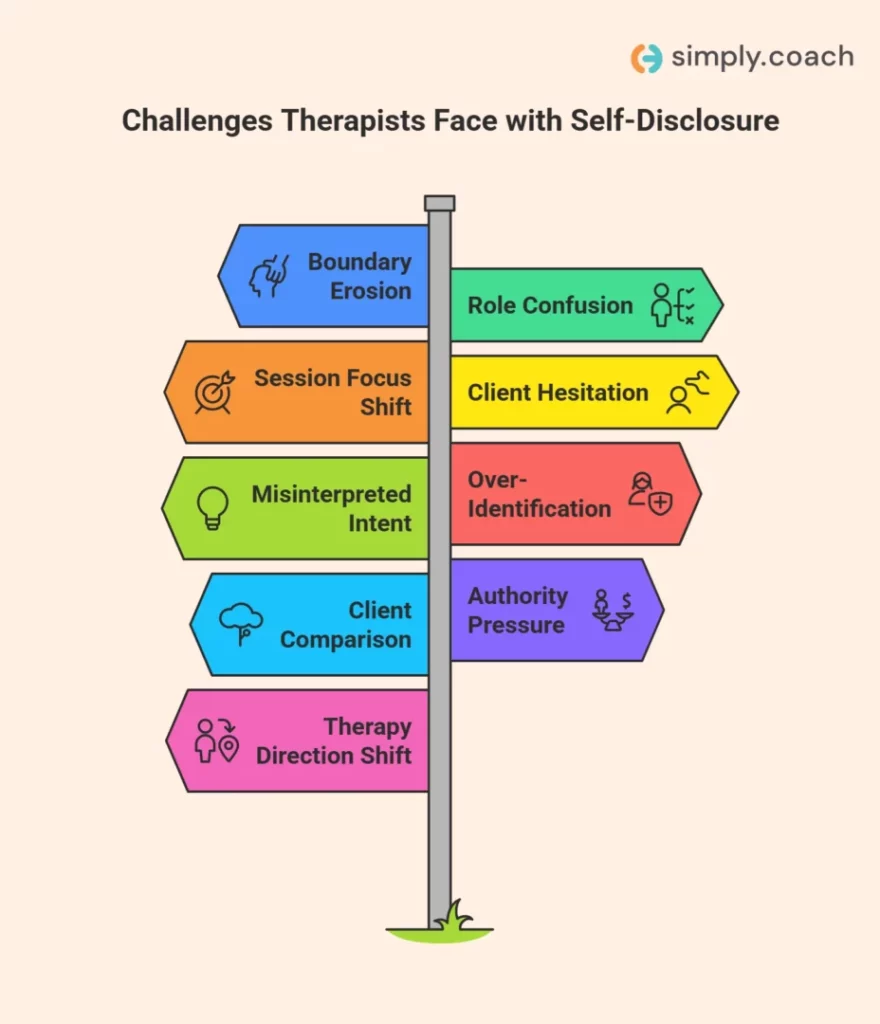
Self-disclosure can strengthen therapy when used carefully, but it also carries clear clinical risks. Personal sharing can change how clients perceive you, influence session dynamics, and affect professional boundaries. You need to evaluate these risks before deciding to disclose personal information.
- Boundary erosion: Frequent personal sharing can shift the relationship from therapist–client to a more informal or friendship-like dynamic.
- Role confusion for the client: Clients may start feeling responsible for your emotions or reactions after hearing personal experiences.
- Session focus drifting away from the client: Long or detailed disclosures can unintentionally turn the conversation toward your life instead of the client’s struggles.
- Client hesitation in sharing: Some clients may hold back sensitive topics if they believe they must listen to or respond to your experiences.
- Misinterpretation of therapist intentions: Clients might assume the disclosure signals advice, expectations, or judgment about their own behavior.
- Over-identification with the client: Your personal experience may lead you to assume the client’s emotions or solutions mirror your own journey.
- Triggering client comparison: Clients may compare their progress or coping abilities with yours and feel inadequate.
- Unintended authority influence: Clients may feel pressured to follow coping strategies you mention because they see you as the expert.
- Disclosure influencing therapy direction: A personal example might unintentionally guide the conversation toward issues that matter more to you than the client.
Recognizing these risks helps you pause and evaluate the purpose of a disclosure before sharing. Careful reflection ensures that personal information remains a clinical tool rather than an emotional reaction.
Best Practices for Ethical Therapist Self-Disclosure in Therapy
You may feel that sharing a personal insight could help a client feel understood. The challenge lies in deciding how much to share and when it truly benefits the client. Ethical self-disclosure requires clear intention, careful judgment, and ongoing reflection on how the disclosure affects the client.
Strong practice guidelines help you maintain professional boundaries while still offering authentic connection. These best practices ensure that disclosure supports the client’s growth rather than shifting the session toward your experiences.
Best practices you should follow when considering self-disclosure:
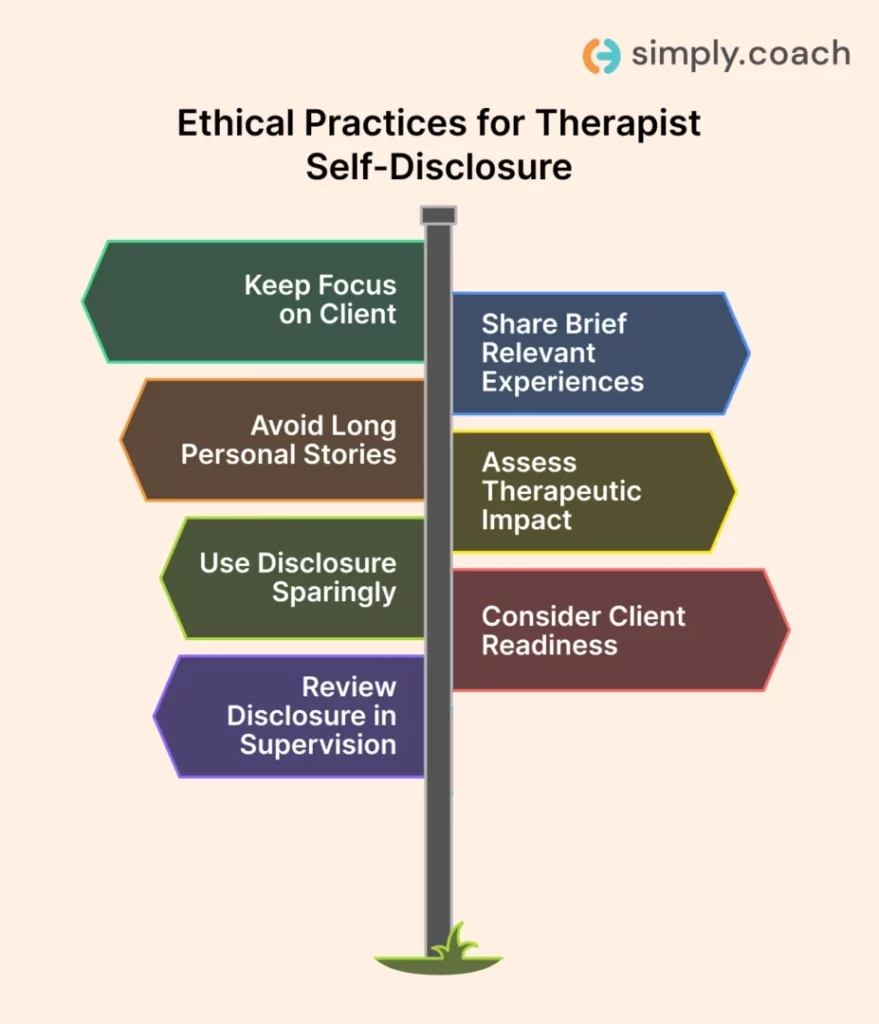
- Keep the focus on the client: After sharing a brief insight, redirect the discussion toward the client’s feelings, thoughts, or reactions.
- Share brief and relevant experiences: Limit disclosure to one or two sentences that connect directly to the client’s concern.
- Avoid detailed personal narratives: Long personal stories can shift the session toward your life instead of the client’s needs.
- Evaluate the therapeutic impact: Pay attention to how the client responds. Continue only if the disclosure encourages deeper reflection.
- Use disclosure sparingly: Frequent personal sharing can change how clients perceive your professional role.
- Consider the client’s readiness: Some clients appreciate therapist openness, while others prefer clearer emotional distance.
- Discuss disclosure decisions in supervision: Reviewing these moments with supervisors or peers strengthens clinical judgment.
Ethical considerations for therapist self-disclosure
Ethical reflection helps you decide when disclosure protects the client and when restraint serves the therapy process better. Professional therapy standards emphasize client welfare, informed boundaries, and responsible communication.
Important ethical considerations to evaluate before self-disclosing:
- Professional ethics guidelines: Follow the ethical codes from professional bodies such as the American Psychological Association and the American Counseling Association, which emphasize maintaining client welfare and professional boundaries.
- Therapist motivation: Ask yourself a direct question before sharing: “Why am I sharing this right now?” The answer should clearly support the client’s therapeutic progress.
- Client-centered decision making: Your disclosure should benefit the client’s understanding, emotional safety, or therapeutic insight rather than your own expression.
- Client autonomy: Avoid disclosures that might pressure the client to agree with your perspective or adopt your coping strategies.
- Cultural sensitivity: Clients from different cultural backgrounds may interpret therapist openness differently. Cultural expectations about authority, privacy, and emotional expression can influence how disclosure is received.
- Impact on therapeutic boundaries: Evaluate whether the disclosure may change how the client views the professional relationship.
Careful attention to these ethical considerations helps you ensure that therapist self-disclosure remains a responsible clinical decision rather than an impulsive response.
Also read: The Importance of ACA Code of Counseling Ethics: A Detailed Guide
Key Questions Therapists Should Ask Before Self-Disclosing
Self-disclosure often happens in the moment during a therapy session. A client shares something painful, and you may feel that a brief personal insight could help them feel understood. Before sharing, pause and evaluate whether the disclosure truly supports the therapeutic process.
A short mental checklist can help you make that decision with clarity. These questions guide you to focus on the client’s needs, protect professional boundaries, and maintain the structure of therapy.
Use this quick checklist before sharing personal information with a client:
- Is this disclosure for the client’s benefit? Ensure the intention supports the client’s understanding, growth, or emotional safety.
- Will it strengthen the therapeutic relationship? Consider whether the disclosure will help the client feel supported and understood.
- Is it clinically relevant to the client’s situation? The information should directly connect to the client’s challenge, emotions, or therapy goals.
- Could it shift focus away from the client? If the disclosure might turn the session toward your experiences, it may not serve the client.
- Am I sharing this to meet my own emotional needs? Personal reactions sometimes create the urge to disclose, but therapy should not meet the therapist’s emotional needs.
- Is the timing appropriate in the session? Early disclosures in therapy may feel intrusive before trust develops.
- How might this client interpret the disclosure? Clients may respond differently depending on personality, culture, or expectations about therapy.
- Will this disclosure encourage deeper reflection from the client? The response should invite the client to explore their feelings rather than react to your experience.
- Can the same therapeutic point be made without personal disclosure? Sometimes a question or reflection can achieve the same outcome.
- Will this disclosure influence the client’s decision-making or independence? Clients should not feel pressure to follow your experiences or coping methods.
Taking a brief pause to reflect on these questions helps you use self-disclosure intentionally and responsibly.
Also read: How to Ask the Right Therapy Intake Session Questions: A Practical Guide for Therapists
Therapist Self-Disclosure Across Different Therapy Approaches
Therapists often approach self-disclosure differently depending on their clinical framework. Each therapeutic model holds specific views about the therapist’s role, emotional presence, and communication style. Understanding these differences helps you decide how disclosure fits within your approach.
Some therapy models emphasize neutrality and distance. Others encourage authentic therapist presence when it supports the client’s growth. The following table highlights how different therapy approaches typically view therapist self-disclosure.
| Therapy approach | How self-disclosure is used |
| Psychodynamic Therapy | This approach traditionally limits therapist disclosure. The therapist maintains neutrality so clients can project feelings and relational patterns onto the therapist. Limited disclosure helps reveal unconscious dynamics within the therapeutic relationship. |
| Humanistic Therapy | Humanistic approaches encourage authenticity and genuine connection. Therapists may use brief and thoughtful disclosures to strengthen empathy, emotional safety, and relational trust with the client. |
| Cognitive Behavioral Therapy (CBT) | CBT uses disclosure selectively and mainly for psychoeducation. Therapists may share brief examples that demonstrate coping strategies, cognitive restructuring techniques, or behavioral change methods. |
| Trauma-Informed Therapy | Trauma-informed practice prioritizes safety, trust, and empowerment. Limited disclosure may help normalize recovery experiences or reinforce hope while maintaining strong emotional boundaries. |
Understanding how your therapeutic framework approaches disclosure helps you make intentional decisions during sessions and maintain consistency in your clinical practice.
Also read: Top 18 Apps for Therapists to Use With Clients in 2026
Conclusion
Self-disclosure in therapy requires careful balance between authenticity and professional boundaries. Thoughtful disclosure can strengthen trust, normalize difficult emotions, and deepen the therapeutic alliance. However, every disclosure should remain intentional, relevant, and focused on the client’s progress. When you apply clear ethical judgment, self-disclosure becomes a powerful clinical tool rather than a personal conversation.
Managing ethical therapy practices also requires reliable systems that protect confidentiality and simplify daily practice operations. Platforms like Simply.Coach support therapists with secure client management, scheduling, documentation, and progress tracking in one place. It functions as an all-in-one HIPAA-compliant therapist practice management software, helping you manage sensitive client data while running your practice efficiently. The platform also offers goal tracking, session management, invoicing, and secure documentation so you can focus more on client outcomes rather than administrative work.
FAQs
1. Is therapist self-disclosure allowed in psychotherapy?
Yes, therapist self-disclosure is acceptable when it supports the client’s therapeutic goals. The key requirement is that the disclosure benefits the client and does not shift attention toward the therapist’s personal experiences.
2. How much should a therapist disclose to a client?
Therapists typically keep disclosures brief, relevant, and limited. Excessive personal sharing can blur professional boundaries and disrupt the therapeutic structure of the session.
3. Can therapist self-disclosure improve therapy outcomes?
Thoughtful disclosure can strengthen empathy and help clients feel understood. It may also encourage clients to share openly when the therapist models honest communication.
4. Why do some therapists avoid self-disclosure?
Some therapeutic models prioritize therapist neutrality and minimal personal information. This approach allows clients to explore their thoughts and emotions without being influenced by the therapist’s experiences.
5. What are examples of therapist self-disclosure in practice?
Examples include sharing a brief coping strategy, acknowledging a personal reaction in the session, or providing a relatable experience that supports the client’s insight. Each example remains short and clearly tied to the client’s situation.
6. How can therapists decide when to self-disclose?
Therapists often pause to evaluate intention, timing, and client readiness. If the disclosure supports the client’s insight or emotional safety, it may be appropriate to share briefly.
7. Does therapist self-disclosure vary across therapy styles?
Yes, different therapy approaches treat disclosure differently. Humanistic therapies encourage authenticity, while psychodynamic models often limit personal sharing to preserve analytic neutrality.