
Many counselors struggle when clients’ cultural values and experiences shape their behaviors in ways they do not anticipate. Misunderstanding these differences can stall progress and damage trust. Awareness of these challenges helps you prevent miscommunication and build stronger therapeutic relationships.
Recognizing diversity in counseling is crucial because it directly affects client engagement, treatment outcomes, and ethical practice. Considering cultural backgrounds allows you to respond effectively to each client’s unique needs. Developing cultural insight also helps you identify barriers that may otherwise go unnoticed in therapy sessions.
In this blog, you will examine how cultural differences shape client experiences and influence counseling outcomes. You will understand why integrating multicultural perspectives is essential for building trust and fostering meaningful progress.
Key Takeaways
- Multicultural diversity in counseling shapes how clients communicate, build trust, and engage in therapy.
- Cultural values influence emotional expression, decision-making, and expectations from counseling sessions.
- Cultural competency helps you reduce bias, improve client engagement, and support ethical practice.
- Effective multicultural counseling requires awareness, knowledge, sensitivity, and adaptable counseling skills.
- Intersectionality matters because overlapping identities affect stress, safety, and disclosure in therapy.
- Ethical responsibility increases when culture influences consent, power dynamics, and assessment decisions.
- Simply.Coach supports multicultural counseling by offering an all-in-one platform to manage sessions, clients, documentation, and workflows securely.
What Is Multicultural Diversity in Counseling?
Multicultural diversity in counseling means understanding and respecting the unique cultural backgrounds, beliefs, and experiences your clients bring. Each client’s worldview shapes how they perceive challenges, express emotions, and respond to your guidance. Recognizing these differences allows you to provide more effective, ethical, and empathetic support.
Overlooking cultural factors can create misunderstandings, reduce trust, and limit client progress. Valuing diversity ensures you respond to each client’s needs rather than applying a one-size-fits-all approach.
Why cultural competency matters in multicultural counseling
As a counselor, developing cultural competency is essential to understand your clients accurately and provide meaningful support. Cultural competency helps you navigate differences and make informed decisions during sessions.
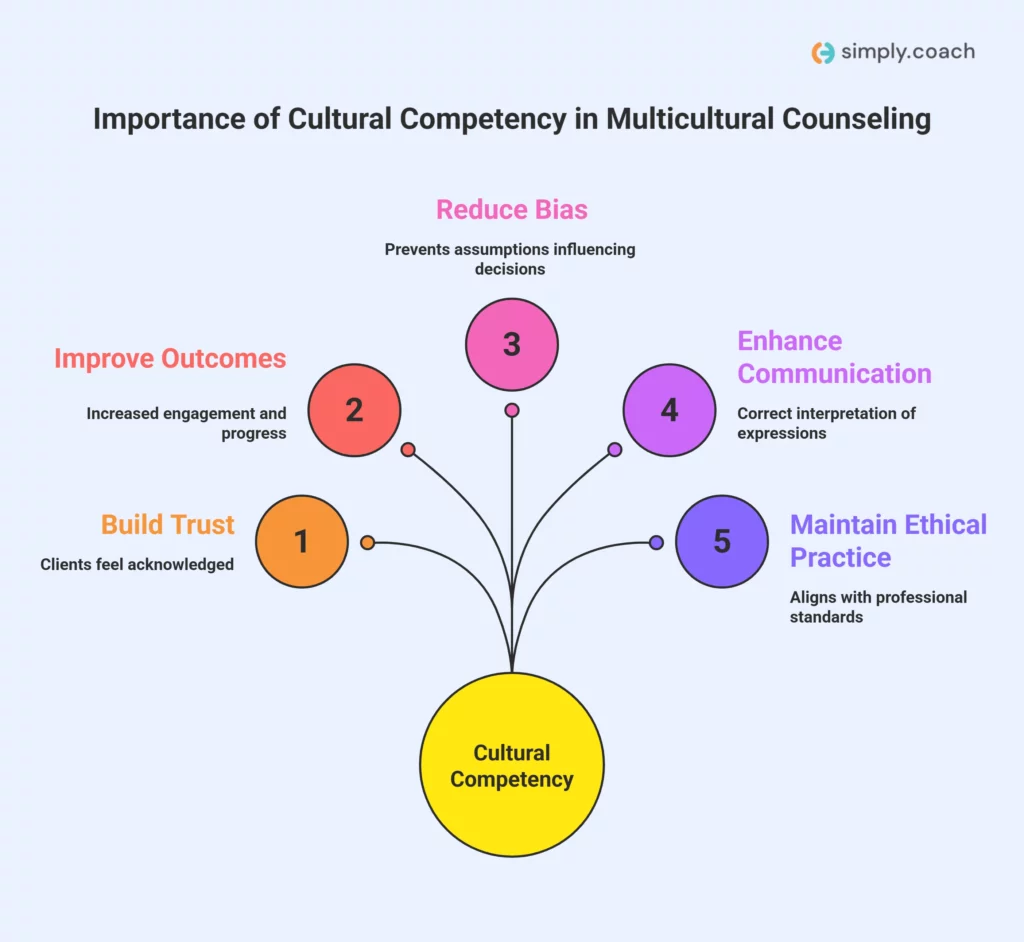
- Build trust: Clients feel acknowledged and respected when you consider their cultural perspectives.
- Improve outcomes: Adjusting your approach to cultural contexts increases engagement and progress.
- Reduce bias: Recognizing your assumptions prevents them from influencing client decisions.
- Enhance communication: Understanding cultural norms helps you interpret client expressions correctly.
- Maintain ethical practice: Applying culturally informed strategies aligns with professional standards.
Focusing on cultural competency ensures your practice is inclusive, respectful, and effective, strengthening your impact with every client.
Also read: 8 Effective Strategies for Culturally Responsive Counseling to Enhance Client Engagement
Key Components of Multicultural Counseling
As a counselor, your effectiveness depends on understanding how culture shapes client experiences. Multicultural counseling requires deliberate attention to identity, communication, and context to avoid missteps that can harm progress.
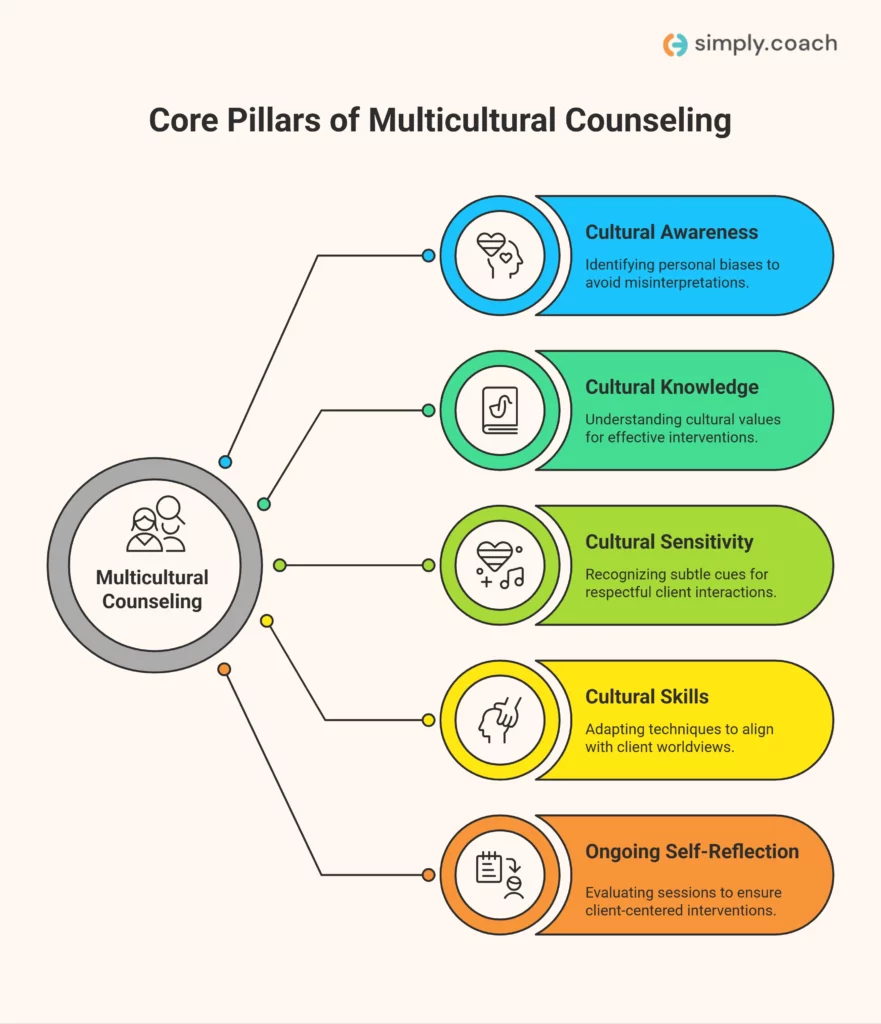
- Cultural awareness: You need to identify your own assumptions about race, ethnicity, religion, and gender. Awareness helps you notice when personal beliefs could bias interpretations of a client’s concerns.
- Cultural knowledge: Understanding cultural values, traditions, and communication styles allows you to select interventions that resonate. For instance, some clients may prefer indirect feedback or family-involved decision-making.
- Cultural sensitivity: Recognizing subtle cues, like nonverbal gestures or spiritual practices, helps you respond respectfully. Sensitivity prevents unintentional microaggressions that could break client trust.
- Cultural skills: You must adapt your techniques to align with clients’ worldviews. For example, framing coping strategies through culturally familiar metaphors can improve understanding and engagement.
- Ongoing self-reflection: Frequent reflection on your sessions and decisions highlights blind spots in judgment. This continuous evaluation ensures your interventions remain client-centered and ethically sound.
Integrating these components strengthens your capacity to handle diverse perspectives, reduces misunderstandings, and fosters lasting therapeutic relationships with every client.
Challenges in Multicultural Counseling
As a counselor, you frequently encounter situations where cultural differences directly influence how clients communicate and respond. These challenges can affect engagement, progress, and the effectiveness of your interventions. Understanding these hurdles helps you anticipate potential issues and adjust your approach accordingly.
- Biases (implicit & explicit): Unexamined assumptions about clients’ culture can influence your interpretation of their concerns.
- Language and communication barriers: Differences in language or expression can lead to misunderstandings or incomplete sharing of emotions.
- Systemic and institutional obstacles: Limited resources, culturally insensitive intake procedures, or insurance restrictions can block client participation.
- Misinterpretation of cultural norms: Misreading behaviors like eye contact, gestures, or family involvement can reduce trust and rapport.
Recognizing these challenges allows you to proactively address barriers, maintain client trust, and provide counseling that respects each client’s cultural context.
Common mistakes counselors make
Even experienced counselors can fall into patterns that limit their effectiveness with culturally diverse clients. Being aware of these mistakes allows you to correct course and improve your interactions.
- Assuming cultural homogeneity: Treating clients from the same background as identical can overlook individual differences and needs.
- Using one-size-fits-all approaches: Applying the same interventions to all clients ignores cultural context and reduces engagement.
- Neglecting intersectionality: Failing to consider overlapping identities such as gender, socioeconomic status, or disability can result in incomplete understanding.
Being mindful of these mistakes helps you refine your practice, respond appropriately to each client, and strengthen trust and outcomes in multicultural counseling.
Practical Strategies for Effective Multicultural Counseling
As a counselor, supporting clients from diverse cultural backgrounds requires intentional strategies that go beyond theory. Applying structured methods ensures you address cultural nuances, reduce misunderstandings, and strengthen client engagement. The strategies below provide practical, session-level approaches you can implement immediately.
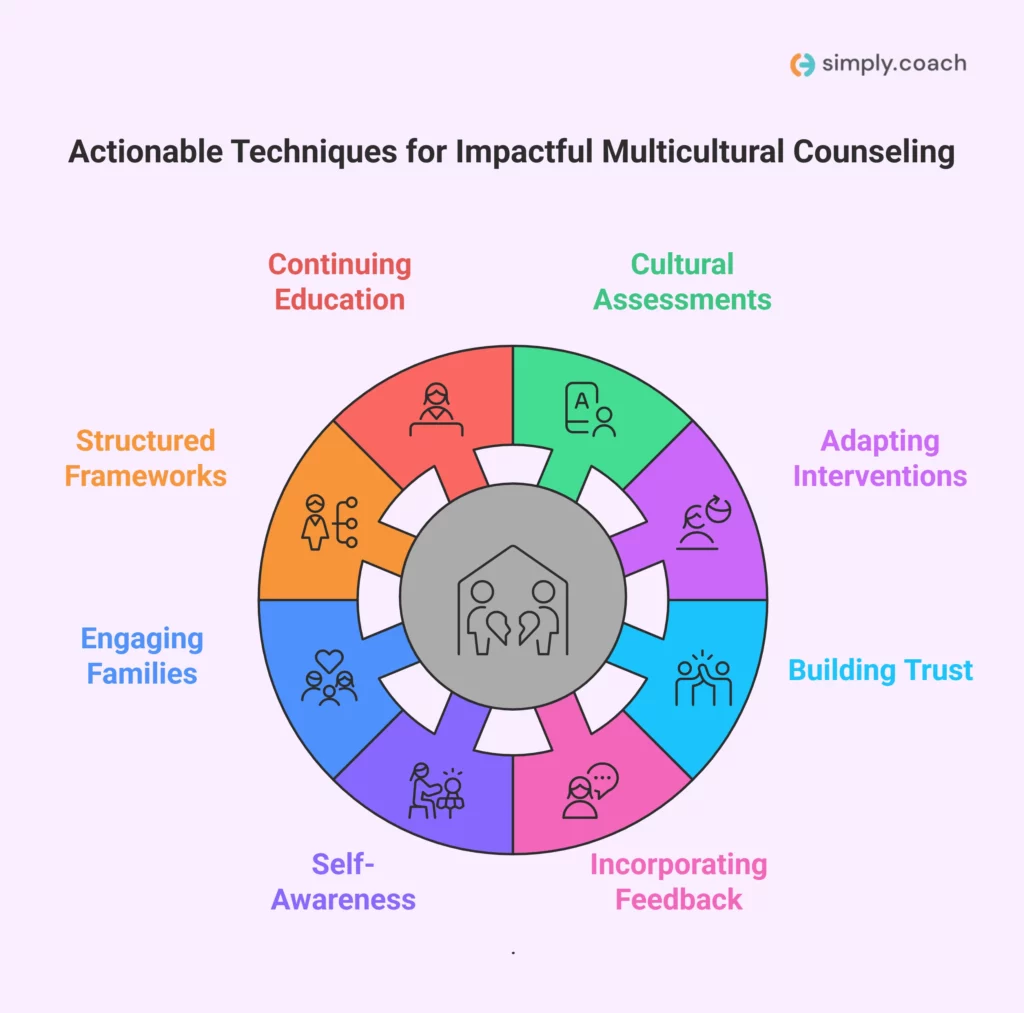
1. Conducting cultural assessments
Conducting a thorough cultural assessment helps you understand your client’s worldview, beliefs, and experiences. This knowledge allows you to anticipate challenges, tailor interventions, and avoid missteps that could hinder progress. Consistently assessing culture ensures your approach is informed and client-centered.
- Cultural identity: Ask clients to describe their cultural, ethnic, and spiritual background to guide session planning.
- Family and community influence: Identify family or community dynamics that shape client values and decision-making.
- Communication preferences: Determine preferred language, nonverbal cues, and discussion styles to avoid misinterpretation.
- History of experiences: Explore experiences of discrimination, migration, or cultural transition that may impact therapy.
2. Adapting interventions to cultural context
Adjusting interventions to fit the client’s cultural context ensures engagement and understanding. Every strategy, activity, or example should resonate with the client’s experiences and values. Tailoring your approach avoids misunderstandings and enhances the effectiveness of your counseling.
- Language and examples: Adjust terminology and metaphors to match cultural understanding and avoid confusion.
- Culturally relevant techniques: Integrate practices familiar to the client, such as storytelling, group discussions, or family-focused interventions.
- Session structure: Modify pacing, session length, or homework assignments to fit cultural routines and expectations.
- Digital integration: Use tele-counseling or client portals to provide culturally sensitive exercises or resources when appropriate.
3. Building trust and rapport with diverse clients
Establishing trust is essential for clients to feel safe and fully engage in counseling. Trust develops through consistent actions, cultural respect, and empathy. By focusing on rapport, you create an environment where clients can openly explore challenges without fear of judgment.
- Acknowledging experiences: Validate clients’ cultural experiences and avoid minimizing challenges they face.
- Respecting norms: Observe and mirror culturally appropriate gestures, greetings, and formality levels.
- Consistency: Maintain reliable scheduling, follow-ups, and session boundaries to reinforce trust.
- Empathy demonstration: Show genuine interest in understanding client perspectives without judgment.
4. Incorporating client feedback
Using client feedback allows you to fine-tune your approach and ensures counseling remains relevant to their cultural context. Actively seeking input demonstrates respect and strengthens the therapeutic alliance. Feedback helps identify areas where methods may not align with client values or expectations.
- Session check-ins: Regularly ask clients how comfortable they feel with approaches and interventions.
- Adaptation of methods: Modify techniques based on verbal and nonverbal feedback.
- Monitoring progress: Track client responses to interventions, noting cultural factors influencing engagement.
- Open communication: Encourage clients to share concerns about cultural misalignment or misunderstanding.
5. Ongoing self-awareness and reflection
Self-awareness ensures your cultural assumptions do not interfere with your counseling. Reflecting on your beliefs, biases, and session choices allows you to make informed adjustments and maintain ethical, client-centered care. Continuous self-reflection improves the accuracy and sensitivity of your interventions.
- Bias identification: Recognize personal assumptions about culture, ethnicity, gender, or religion and their influence on sessions.
- Case review: Reflect on interactions where cultural misunderstanding occurred and determine corrective measures.
- Supervision and consultation: Discuss multicultural cases with peers or mentors to gain perspective.
- Continuous learning: Regularly evaluate knowledge gaps and seek educational resources for culturally competent practice.
6. Engaging families and communities when appropriate
In some cultural contexts, clients’ families or communities significantly influence therapy outcomes. Involving them appropriately can strengthen support systems, enhance understanding, and ensure interventions respect cultural norms. Thoughtful engagement integrates external perspectives without compromising client autonomy.
- Identifying stakeholders: Determine family or community members who influence client decisions.
- Consent and boundaries: Ensure client approval before involving external participants.
- Integrating perspectives: Include cultural values from family or community when planning interventions.
- Education: Clarify roles and expectations for all participants to maintain session focus and respect cultural norms.
7. Applying structured multicultural frameworks
Frameworks provide systematic guidance for navigating cultural diversity in counseling. Using structured approaches ensures consistency, reduces bias, and allows you to measure effectiveness while remaining client-centered. They also help integrate theory into practical session-level strategies.
- STEP framework: Practice Self-awareness, pursue Training, demonstrate Empathy, and integrate Practice in sessions.
- Culturally adapted techniques: Use models like culturally responsive CBT or narrative therapy tailored to client background.
- Outcome measurement: Track progress with culturally relevant tools to assess engagement and therapeutic impact.
- Digital tools: Employ tele-counseling or secure client portals to provide flexible, culturally appropriate support.
8. Continuing education and professional development
Staying informed on cultural trends, research, and best practices ensures your counseling remains effective. Engaging in professional development strengthens your cultural competence and equips you with the knowledge to address emerging challenges.
- Workshops and seminars: Attend programs focused on cultural competence and emerging trends in counseling.
- Research review: Stay informed about US demographic shifts and cultural influences on mental health.
- Professional groups: Join networks specializing in diversity in counseling to share knowledge and resources.
- Mentorship: Seek guidance from experienced multicultural practitioners to refine approaches and improve client outcomes.
Applying these strategies consistently allows you to respond thoughtfully to cultural differences, reduce misunderstandings, and deliver counseling that feels relevant, respectful, and effective for every client you serve.
Also read: Stress Management Counseling Techniques and approaches
Intersectionality in Multicultural Diversity in Counseling
Intersectionality is a core consideration in multicultural diversity in counseling because clients experience mental health challenges through multiple, overlapping identities. These identities interact with social power, cultural expectations, and systemic barriers that directly influence therapy outcomes. As a counselor, recognizing these intersections helps you avoid partial assessments and deliver more accurate, ethical care.
- Overlapping identities shape client stressors: Cultural background combined with gender, class, or disability can intensify stress in ways that are not visible when identities are viewed separately.
- Gender influences help-seeking behavior: Gender roles may affect emotional expression, disclosure comfort, and expectations from counseling.
- Disability intersects with cultural stigma: Cultural beliefs may frame disability as shameful or invisible, affecting client openness and trust.
- Socioeconomic status impacts treatment engagement: Financial instability can limit session consistency, access to resources, and perceived control.
- Religion shapes coping and decision-making: Faith-based values may guide moral choices, emotional processing, and attitudes toward therapy.
- LGBTQ+ identity affects safety and disclosure: Clients may withhold identity details due to fear of cultural or familial rejection.
- Power dynamics influence therapeutic alliance: Clients assess authority, safety, and judgment based on intersecting identity factors.
- Identity priorities shift over time: What feels most relevant at intake may change as trust develops and life contexts evolve.
This intersectional approach strengthens multicultural diversity in counseling by ensuring your interventions reflect the full reality of your client’s lived experience, not a single cultural dimension.
Also read: Protecting Client Confidentiality in Counseling: A Comprehensive Guide for Counselors
Ethical and Professional Responsibilities in Multicultural Counseling
As a counselor, ethical responsibility becomes more complex when cultural differences influence power, trust, and client vulnerability. Decisions that seem clinically appropriate may cause harm if cultural context is ignored. Understanding your professional responsibilities helps you protect clients and maintain ethical integrity across diverse counseling relationships.
Multicultural counseling requires you to balance ethical standards with cultural sensitivity at every stage of care. This balance directly affects informed consent, boundaries, assessment accuracy, and long-term client outcomes. Clear ethical awareness prevents unintentional harm and strengthens professional accountability.
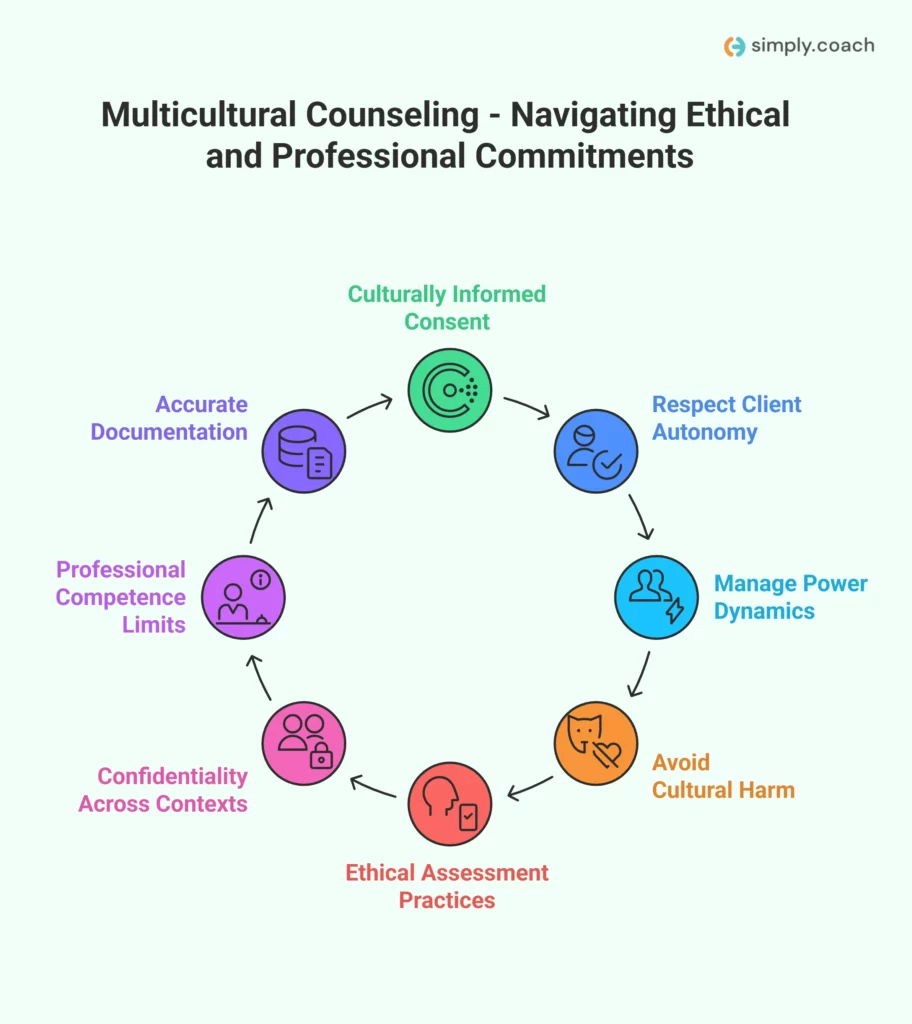
- Culturally informed consent: You must ensure clients fully understand goals, risks, and processes within their cultural and linguistic context.
- Respect for client autonomy: Cultural values may influence decision-making, but client choice must remain central without coercion or assumptions.
- Managing power dynamics: Cultural, social, or immigration status differences can amplify perceived authority and require deliberate boundary awareness.
- Avoiding cultural harm: Interventions should not reinforce stereotypes, invalidate beliefs, or pressure clients to abandon cultural identities.
- Ethical assessment practices: Diagnostic tools and interpretations must account for cultural expression of distress and coping styles.
- Confidentiality across cultural contexts: You must explain privacy limits clearly, especially when family or community involvement is expected.
- Professional competence limits: You are responsible for seeking supervision or referral when cultural complexity exceeds your expertise.
- Accurate documentation: Case notes should reflect cultural considerations that influenced clinical decisions and treatment planning.
Upholding these responsibilities ensures multicultural diversity in counseling remains ethical, respectful, and grounded in client well-being rather than assumptions.
Also read: The Importance of ACA Code of Counseling Ethics: A Detailed Guide
Conclusion
Multicultural diversity in counseling is not just an idea, it is central to how clients experience trust, understanding, and positive change. When you recognize cultural context, intersectionality, and ethical responsibility, your clinical decisions become more precise and respectful. This awareness helps prevent misinterpretation, supports deeper connection, and strengthens client engagement over time. Cultivating cultural competence ensures you honor each client’s unique perspective and lived experience.
Simply.Coach is an all-in-one counseling software designed to help you manage every part of your practice from one secure platform. It simplifies session scheduling, digital assessments, shared resources, goal tracking, contracts, and invoicing, all in one place. The platform also offers client progress reporting, customizable tools, and integrations with calendars and conferencing tools so you can focus on client work, not admin. With HIPAA, SOC2, and GDPR compliance, Simply.Coach supports ethical, organised engagement for your culturally diverse practice.
FAQs
1. What does multicultural counseling look like in practice?
Multicultural counseling means integrating clients’ cultural identities into every session, including worldview, values, and communication styles. You tailor questions, language, and interventions to each client’s background. This helps clients feel understood and reduces misunderstanding.
2. How can multicultural counseling improve client outcomes?
Clients who feel their culture is understood are more likely to open up and engage in therapy. Addressing cultural context can reduce stigma, strengthen rapport, and improve treatment adherence. Inclusive care supports longer-term progress.
3. Is multicultural counseling only for minority clients?
No. Multicultural counseling values all identity factors affecting clients, including race, gender, religion, class, and ability. This broader approach helps you understand each client holistically and avoid assumptions about their needs.
4. How does culture influence mental health symptoms?
Culture shapes how clients express distress, interpret events, and cope with challenges. Some clients may somaticize stress or use culturally specific idioms to describe feelings, affecting assessment and intervention choices.
5. How should you address spirituality in multicultural counseling?
When appropriate, you explore spirituality respectfully and include it in treatment plans if it matters to the client’s healing process. You must avoid assumptions and ask open questions about its role in the client’s life.