
Coaches working with HR and L&D teams often meet the same challenge after a coaching program ends. Stakeholders ask a direct question: “What measurable impact did this coaching create for the organization?”
The Kirkpatrick Model gives you a structured way to answer it, because it evaluates a program the way HR and L&D teams already do, from reactions to business results. Participant satisfaction and positive feedback rarely answer that question, since HR leaders expect clear evidence that coaching improved leadership capability, influenced workplace behavior, or supported business outcomes. The application steps below show how to build that evidence into your next coaching program, so the sponsor’s question has an answer before it is asked.
TL;DR
The Kirkpatrick Model evaluates a program at four levels. Reaction covers how participants experienced it, learning what they gained, behavior what they now do differently at work, and results what changed for the organization. For coaches, it answers the sponsor’s question of what the coaching achieved, in terms HR and L&D teams already use. Start from the business outcome the program should move and name the leadership behaviors that would move it. Then design sessions around those behaviors and collect evidence at every level, with behavior evidence coming from managers and peers rather than the client alone. Expect behavior change to take weeks or months, and treat results as a contribution rather than proof, because factors other than coaching also shape business numbers.
What is the Kirkpatrick Model
The Kirkpatrick Model is a structured framework designed to evaluate the effectiveness of learning and training programs. It measures outcomes across four levels: reaction, learning, behavior, and results, providing a systematic way to determine whether training achieves its intended goals.
The model was developed in 1959 by Donald Kirkpatrick (1924-2014), an American professor, author, and consultant, who is often referred to as the “Father of Training Evaluation”. Kirkpatrick created it to address a common problem in organizations: large investments in training often lacked evidence showing real impact on performance. The framework allows organizations to move beyond subjective feedback and assess learning outcomes with measurable data.
Why the Kirkpatrick Model
The Kirkpatrick Model provides clarity for decision-makers by linking learning activities to results that matter. It helps identify which programs are effective, which skills are being adopted, and whether learning translates into behavior change and real outcomes. Organizations can use it to prioritize learning initiatives and make informed decisions about training investments.
As a coach working with corporate clients, you can apply the Kirkpatrick Model to structure evaluation for coaching programs. You can measure participant reactions, track knowledge and skill acquisition, assess behavioral changes, and connect these outcomes to organizational objectives. This approach demonstrates the value of your coaching in a measurable, evidence-based way, and simple coaching outcome templates give you a format for recording it.
Where the Kirkpatrick Model is Used
HR and L&D teams apply this framework, alongside analytics and reporting tools, to corporate initiatives where leadership capability, skill development, and behavioral change must be measured clearly. In each one, the question is whether the program creates a measurable improvement in performance.
- Leadership development programs: Organizations use the model to evaluate whether leadership training improves communication, decision-making, and the management skills behind team performance.
- Management and supervisory training: Companies apply the framework to measure whether new managers apply learned skills such as delegation, feedback, and conflict resolution.
- Corporate training and upskilling initiatives: HR teams rely on the model to assess whether professional development programs improve employee productivity and job performance.
- Organizational change programs: Large change initiatives often include learning interventions. The Kirkpatrick Model helps determine whether employees adopt the new behaviors the change requires.
- Executive coaching and leadership coaching programs: Organizations increasingly apply the model to understand how coaching influences leadership effectiveness, team engagement, and organizational performance, often alongside dedicated leadership coaching tools.
Using the Kirkpatrick Model to Measure Coaching Program Impact
When you work with HR and L&D teams, coaching outcomes are often expected to show clear developmental progress. The Kirkpatrick Model provides a practical structure to evaluate coaching programs and demonstrate how leadership development translates into workplace performance.
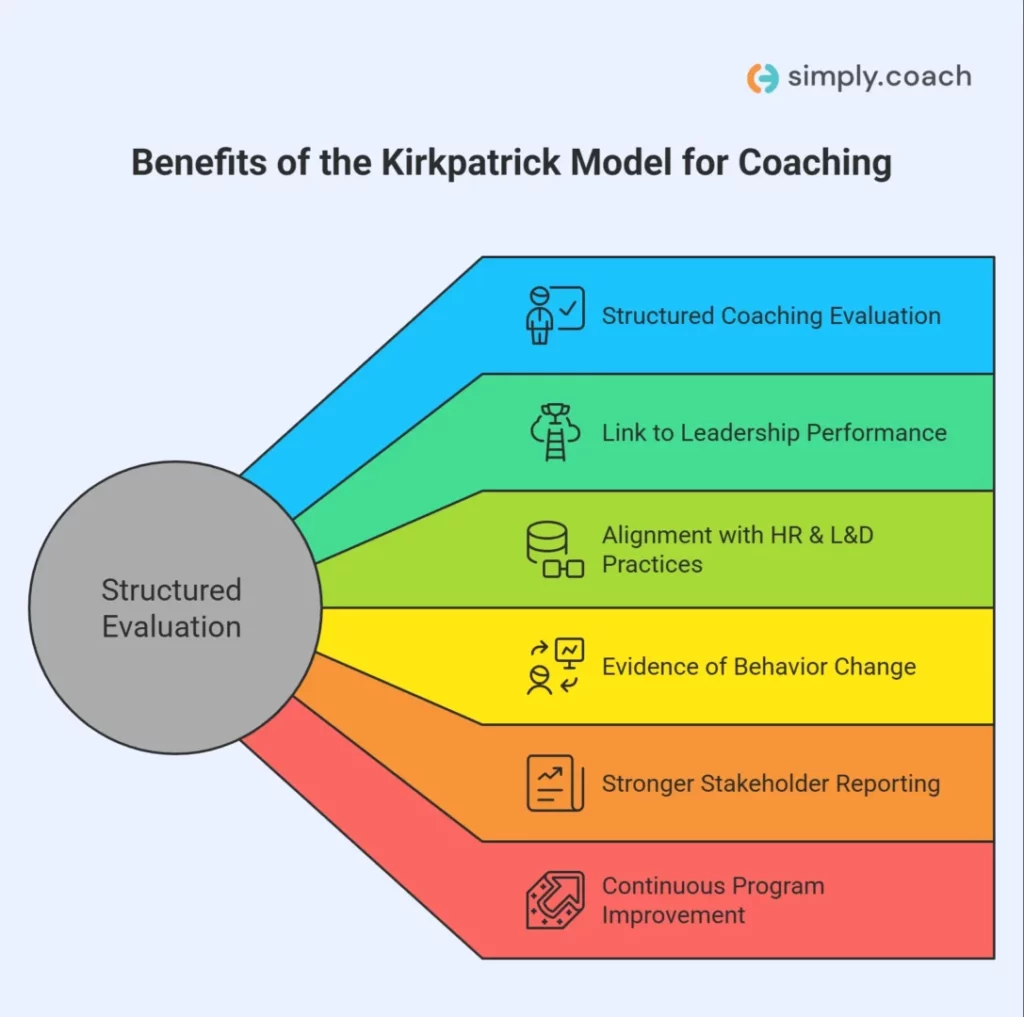
- Structured evaluation of coaching outcomes: You can evaluate coaching programs across participant feedback, skill development, behavior change, and organizational impact.
- Clear link between coaching and leadership performance: The framework helps you connect coaching goals with observable leadership behaviors such as communication, delegation, and decision-making.
- Alignment with HR and L&D evaluation practices: Many organizations already use this model for training evaluation. Using the same structure helps your coaching results align with existing learning frameworks.
- Evidence of workplace behavior change: You can assess whether leaders apply insights from coaching in real work situations, including team management and collaboration.
- Stronger reporting for stakeholders: The model provides a clear format to present coaching outcomes to HR leaders, program sponsors, and senior management.
- Continuous improvement of coaching programs: Evaluation insights help you refine coaching approaches, identify development gaps, and improve future leadership coaching engagements.
Using this model helps you present coaching as a structured leadership development intervention that contributes to measurable organizational outcomes. The evidence is easier to gather when progress is recorded as you go, which is what coaching tracking tools are built for.
The 4 Levels of the Kirkpatrick Model
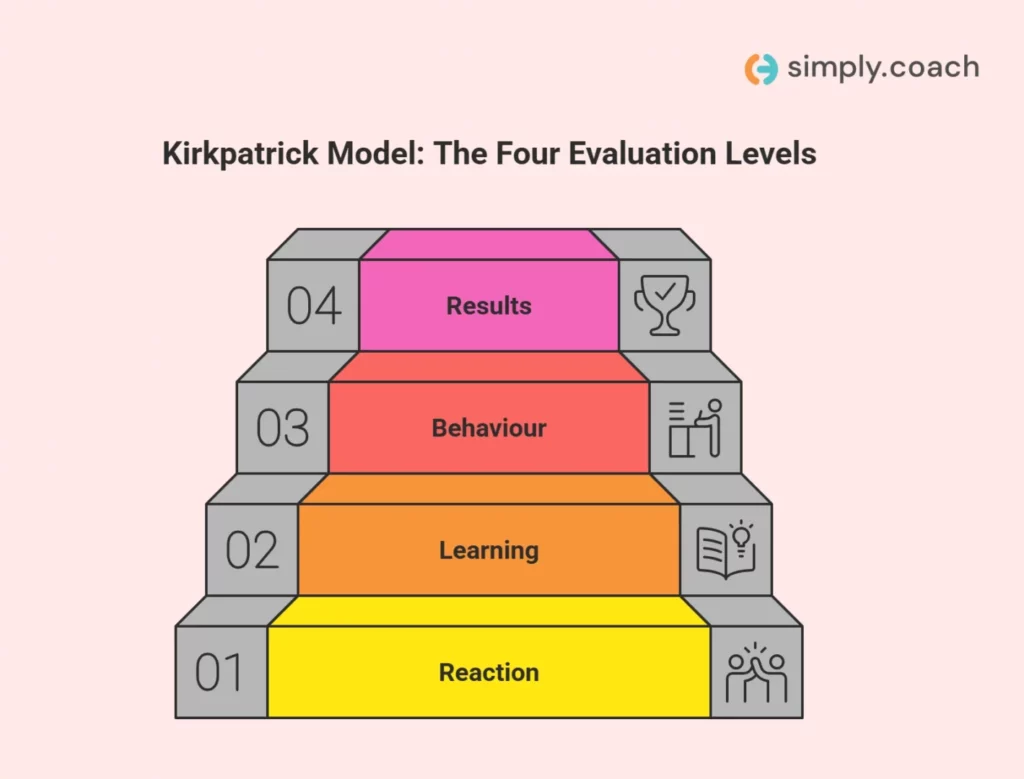
Each level examines a different dimension of program effectiveness, starting with participant experience and ending with measurable business outcomes. The levels are progressive, so the evidence at each one supports the claim you make at the next.
This structure shows how participants felt about a program and whether learning translated into behavioral change and organizational results. When you apply these levels to coaching engagements, you can move beyond subjective feedback and evaluate how leadership development influences real workplace performance.
1. Reaction: How participants experience the program
Level 1 evaluates how participants perceive the learning experience immediately after the program. This stage focuses on engagement, relevance, and perceived usefulness rather than skill development.
For coaching engagements, this level helps you understand whether leaders found the sessions valuable and aligned with their development needs. Positive reactions often indicate that participants see coaching as relevant to their leadership challenges.
Common indicators measured at this stage include:
- Perceived relevance of coaching discussions to current leadership responsibilities
- Clarity of coaching conversations and session structure
- Level of participant engagement during coaching sessions
- Usefulness of insights gained during the interaction
Typical evaluation methods include:
- Post-session feedback surveys
- Short self-reflection forms after coaching sessions
- Participant satisfaction ratings
- Qualitative 360 feedback collected during coaching reviews
Reaction data helps identify how well the coaching process resonates with participants. However, positive feedback alone does not confirm that learning or development has occurred.
2. Learning: What participants actually learn
Level 2 evaluates the knowledge, perspectives, and skills participants gain during the learning process. At this stage, the focus shifts from participant satisfaction to measurable development.
In leadership coaching engagements, learning often occurs through reflection, guided questioning, and practical leadership frameworks. Participants begin to develop new perspectives on decision-making, communication, and leadership effectiveness.
Examples of learning outcomes in coaching programs include:
- Deeper understanding of leadership styles and their impact on teams
- Improved awareness of communication patterns and leadership behaviors
- Development of structured approaches to problem-solving and decision-making
- Stronger emotional awareness when managing team dynamics
Common evaluation approaches include:
- Pre- and post-program self-assessments
- Leadership capability assessments
- Structured reflection exercises
- Scenario-based leadership discussions
At this stage, organizations begin to see whether participants are developing meaningful insights and leadership capabilities that can influence workplace performance.
3. Behavior: How participants apply what they learn
Level 3 evaluates whether participants apply new skills and leadership behaviors in their work environment. This stage is critical because learning only creates value when it influences everyday leadership practices.
Coaching programs often aim to change how leaders communicate, manage teams, and approach decision-making. Behavioral evaluation examines whether these changes appear consistently in workplace interactions.
Examples of observable behavioral shifts include:
- Leaders providing clearer direction and feedback to their teams
- Improved handling of difficult conversations and conflict situations
- More structured decision-making processes during leadership discussions
- Stronger accountability in managing team performance
Organizations often evaluate behavioral change through multiple sources, such as:
- 360-degree feedback
- Manager or peer observations
- Leadership performance reviews
- Follow-up coaching evaluations
Behavioral change provides strong evidence that learning is influencing leadership effectiveness within the organization. When behavior is the main target of an engagement, the behavioral coaching modalities give you ways to work on it directly.
4. Results: Organizational impact and business outcomes
Level 4 evaluates the broader organizational impact of the program. At this stage, the focus shifts from individual development to measurable improvements in business performance.
Learning and coaching initiatives exist to support organizational goals. This level examines whether leadership development contributes to outcomes that matter to the business.
Examples of measurable outcomes may include:
- Improved employee engagement within teams led by coached managers
- Stronger team productivity and collaboration
- Higher retention of high-performing employees
- Improvements in sales performance or customer satisfaction metrics
Evaluation at this level often combines leadership performance data with organizational metrics. When these outcomes align with the coaching initiative, organizations can clearly see how leadership development contributes to business success.
Sponsors weigh the benefits of executive coaching the same way. If a sponsor wants that result expressed in money, calculating training ROI adds that step on top of Level 4.
As a coach, you can deepen your expertise by exploring advanced programs on Kirkpatrick evaluation, executive coaching metrics, and L&D measurement. These programs help you confidently implement each level with actionable insights, making your coaching outcomes measurable, credible, and aligned with organizational objectives.
How Coaches Can Apply the Kirkpatrick Model in Coaching Programs
The work starts before the first session, when you agree the business outcome with HR and L&D teams and design the engagement backward from it. Used this way, the model allows you to design interventions that connect leadership development directly to organizational outcomes, moving beyond subjective feedback.
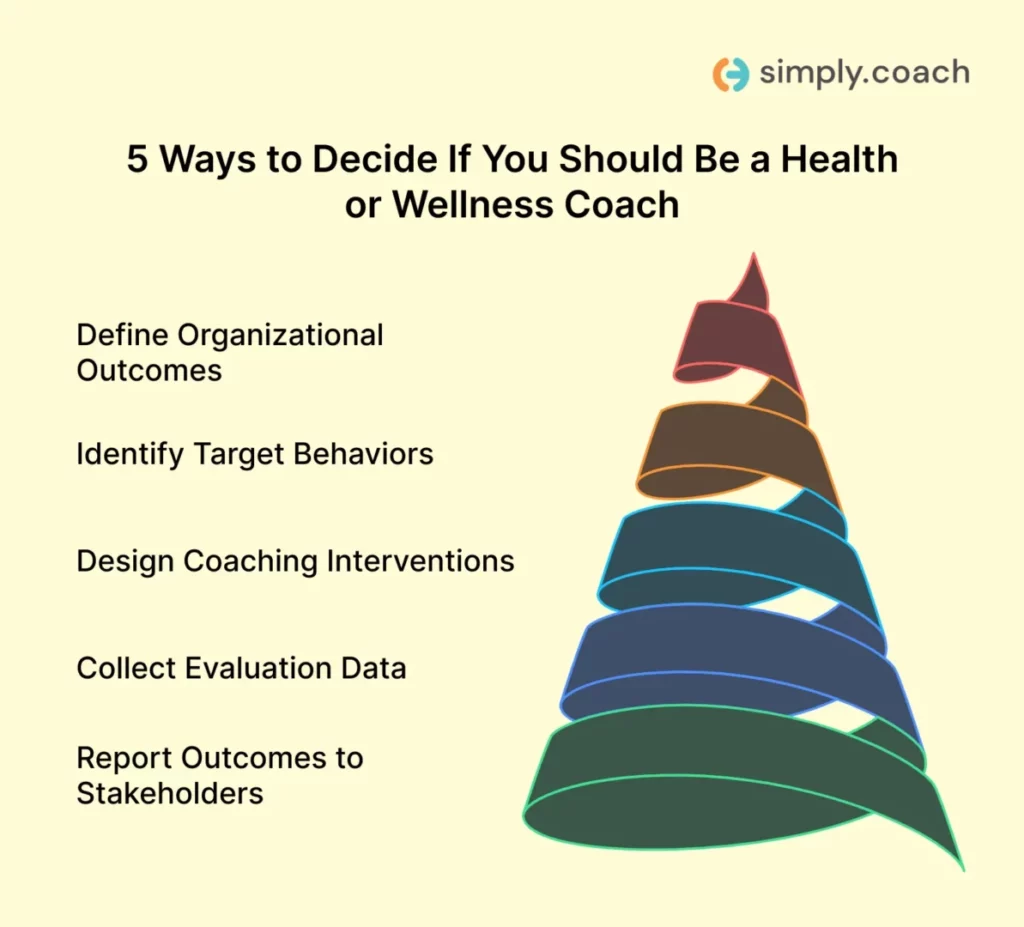
1. Define organizational outcomes
Start by identifying the specific business results your coaching program is intended to impact. Don’t settle for generic statements like “improve leadership skills.” Dig deeper into the real business challenges, such as reducing turnover in high-potential teams, improving engagement scores, or increasing decision-making efficiency in critical roles.
Tips:
- Conduct a discovery session with HR and L&D leaders to find strategic priorities and organizational pain points.
- Map leadership behaviors to business outcomes: for example, improved conflict management leading to faster project delivery.
- Identify both short-term indicators (participant feedback, initial skill application) and long-term outcomes (employee retention, productivity metrics, or customer satisfaction).
Pitfall to avoid: Aligning coaching only with “soft skill” development risks your program being undervalued. Always tie objectives to measurable business impact.
2. Identify target behaviors
Once organizational outcomes are clear, determine the specific leadership behaviors you want to influence. These behaviors should be observable and measurable in day-to-day work.
Examples of target behaviors:
- Delivering clear and actionable coaching feedback during team meetings.
- Handling conflicts calmly and constructively.
- Structuring decision-making processes and following through on commitments.
- Delegating effectively while maintaining accountability.
Tips:
- Use pre-coaching interviews or 360-degree feedback to pinpoint gaps in leadership behaviors.
- Develop a behavior checklist that you can reference during sessions and follow-ups.
- Prioritize behaviors that have the highest potential to influence organizational KPIs.
Clearly defined behaviors make it easier to measure progress at Level 3 (Behavior) and show HR and leaders concrete evidence of your coaching impact.
3. Design coaching interventions
Plan coaching sessions that directly address the behaviors and capabilities you want to influence. Your interventions should combine learning, reflection, and practical application.
Tips:
- Incorporate real-world scenarios and role-playing exercises that mirror challenges participants face at work.
- Use guided questioning to help participants reflect on their decision-making, communication patterns, and team management approach.
- Schedule structured follow-ups to reinforce behavior change and track progress over time.
Pitfalls to avoid: Designing sessions that are purely theoretical or discussion-based may lead to engagement without observable change. Always include exercises that link learning to action.
Advanced learning opportunity: Consider training in behavioral coaching techniques or leadership frameworks that allow you to embed measurable outcomes within each session.
4. Collect evaluation data
Measure coaching outcomes at every Kirkpatrick level to capture a complete picture of impact:
- Reaction: Use survey and feedback forms, pulse checks, and qualitative reflections to understand participant engagement and satisfaction.
- Learning: Track skill acquisition and knowledge gain through assessments, reflective exercises, and scenario-based evaluations.
- Behavior: Observe real-world application using 360-degree feedback, manager input, and follow-up coaching assessments.
- Results: Connect behavioral change to organizational outcomes such as team productivity, engagement scores, or retention metrics.
Tips:
- Combine quantitative data (scores, metrics) with qualitative insights (participant reflections, manager feedback).
- Maintain a consistent evaluation schedule to monitor progress over time.
- Use dashboards or visual reporting tools to make data easy to interpret for stakeholders.
Avoid relying solely on one type of data. Triangulate multiple sources to present a credible and complete evaluation of your coaching impact.
5. Report outcomes to stakeholders
Present your findings to HR, L&D leaders, and program sponsors in a way that clearly links coaching to business value. Demonstrate both individual development and organizational impact.
Tips:
- Highlight measurable behavioral changes in leaders with examples of how these influenced team or business outcomes.
- Use before-and-after comparisons, graphs, and concise narratives to communicate progress.
- Show alignment with organizational priorities and KPIs, emphasizing where coaching contributed to concrete results.
Framing your report in terms of business outcomes strengthens your credibility and positions coaching as a strategic development tool rather than a soft skill add-on.
Advanced learning opportunity: Consider professional programs in coaching ROI measurement, Kirkpatrick evaluation, or executive coaching metrics. These can help you confidently link leadership development to organizational performance and refine your evaluation practices.
Using this approach positions you not just as a coach but as a partner in organizational leadership development, helping stakeholders see coaching as a contributor to measurable business success.
| Learn more with Simply.Coach’s The Enterprise Guide to Designing Coaching Programs for Business Impact |
Example of Using the Kirkpatrick Model in a Leadership Coaching Program
Scenario: You are coaching a group of new managers in a mid-sized organization. The goal of the leadership coaching program is to improve their ability to lead teams effectively, communicate clearly, and make strategic decisions that improve team performance.
Evaluation across the four Kirkpatrick levels might look like this:
| Level | Observation / Outcome | Coach Tips | Measurable Impact |
|---|---|---|---|
| Level 1: Reaction | Managers report sessions are engaging, relevant, and applicable to daily responsibilities. | Use short reflection prompts or pulse surveys after each session to capture immediate reactions and adjust content. | High participant satisfaction; increased motivation to apply coaching insights. |
| Level 2: Learning | Participants demonstrate understanding of leadership frameworks, decision-making, and communication skills. | Encourage participants to document key insights and practice small experiments at work for knowledge retention. | Improved leadership knowledge; better decision-making and communication. |
| Level 3: Behavior | Managers apply feedback techniques, delegation strategies, and conflict resolution in the workplace. | Schedule follow-up sessions to reinforce behaviors and address challenges to ensure consistent application. | Observable leadership behavior changes; improved team interactions and management practices. |
| Level 4: Results | Teams led by coached managers show higher engagement, productivity, and collaboration. | Track both qualitative outcomes (team morale, confidence) and quantitative metrics (engagement, productivity, retention). | Measurable organizational improvements; fewer escalated issues and better team performance. |
By using this example as a practical framework, you can demonstrate to HR and L&D teams that your coaching programs are structured, measurable, and create real leadership and organizational impact. If the organization already works with a competency model, map the Level 2 and Level 3 indicators to it so the evaluation speaks the same language as their reviews.
Common Limitations of the Kirkpatrick Model
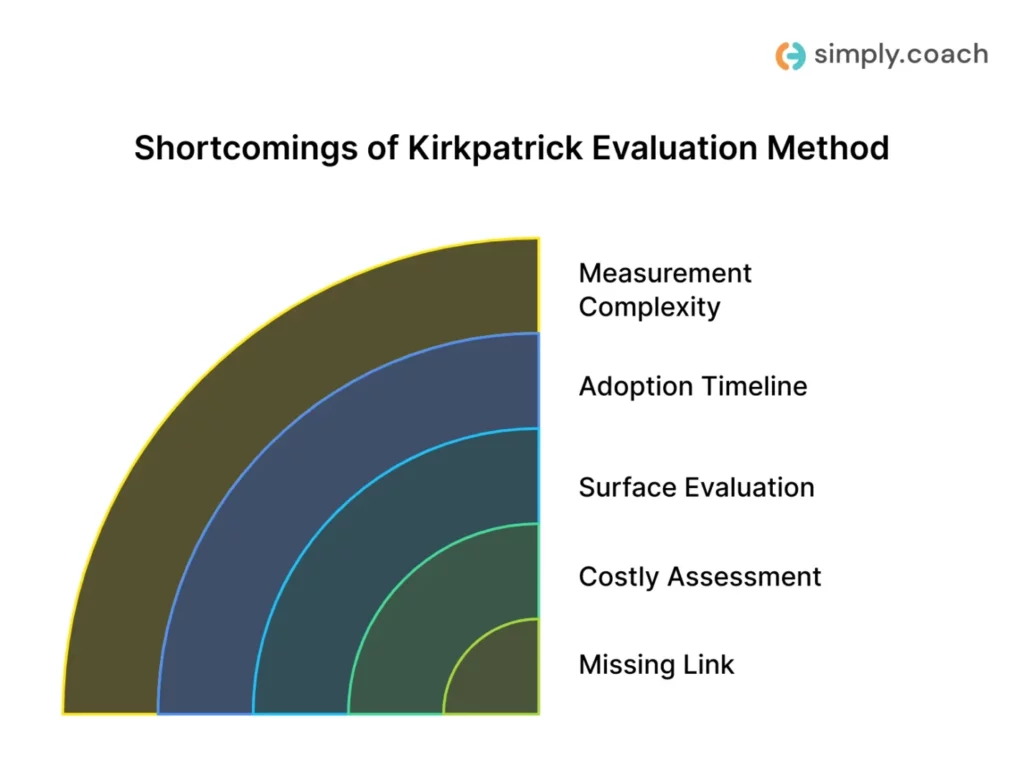
Most of the model’s limits appear at Levels 3 and 4, where evidence takes longer to gather and is harder to tie to coaching. Knowing them before you apply it to leadership and corporate learning programs helps you plan more effective evaluations and manage expectations with HR and L&D stakeholders.
- Difficulty measuring Level 4 results: Organizational outcomes are influenced by many factors beyond coaching, making it hard to isolate the program’s direct impact.
- Time required for behavioral change: Participants may take weeks or months to consistently apply new skills, requiring extended observation and follow-up.
- Overemphasis on Levels 1 and 2: Many organizations stop at participant reactions and learning assessments, limiting insight into actual workplace behavior and business results.
- Resource-intensive evaluation: Collecting reliable data for Levels 3 and 4 often requires ongoing feedback, structured assessments, and collaboration with managers.
- Limited guidance on linking coaching to metrics: The model shows what to measure but does not prescribe how to connect coaching activities directly to business performance indicators.
Despite these limitations, the Kirkpatrick Model remains one of the most practical and recognized frameworks for evaluating the effectiveness of coaching and corporate learning initiatives. It evaluates a program rather than designing one, so it pairs well with a design framework such as the ADDIE model. It is also worth comparing with other training evaluation models before you commit to one.
How Simply.Coach Helps Coaches Implement the Kirkpatrick Model Effectively
Simply.Coach keeps the evidence for all four levels in one place, from the first feedback survey to the report a sponsor reads. As a leadership coaching platform, it provides tools to manage coaching programs, involve stakeholders, gather feedback, and track outcomes, helping you show clear impact at every level of evaluation.
- Client workspaces: Each client gets a dedicated dashboard where you can set goals, map development plans, and monitor progress over time. These spaces hold the coaching outcomes that align with Kirkpatrick Levels 1 and 2 (reaction and learning).
- Stakeholder integration: You can involve external stakeholders such as managers, peers, or HR sponsors in the evaluation process. This feature enables you to collect diverse perspectives on participant behavior and supports a full Level 3 (behavior) evaluation.
- 360° feedback and assessments: The platform includes digital tools for 360-degree feedback, impact assessments, and structured surveys. These tools help you gather data on participant reactions, skills gained, and leadership behavior changes, which are essential for all four Kirkpatrick levels.
- Automated reporting and ROI dashboards: The platform automatically generates visual reports on engagement progress, development outcomes, and ROI. These reports allow you to present clear evidence of coaching impact to HR and L&D leaders, directly supporting Level 4 (results) evaluation.
- Action plans and nudges: The action plan and automated nudge features help reinforce learning and drive behavioral change. These reminders and structured action tracking help participants move from learning to real workplace application.
- Scheduling software and integration tools: With calendar sync and video conferencing integrations including Google Calendar, Zoom, and Microsoft Teams, you can manage coaching sessions and evaluations without switching between tools.
Together, these features help you move from anecdotal feedback to data-driven insights that HR and organizational leaders value. If you run cohort programs, these group coaching tools for HR cover the group side, and this overview of software for coaches sets out what to compare.
Conclusion
If a sponsor will ask what your coaching achieved, build the evaluation in before the first session. Decide with the sponsor which result matters and who will observe the change in each leader at work. Then collect evidence at each level while the program runs, because it is hard to rebuild once the engagement has ended.
Reported level by level, coaching reads as a development investment with evidence behind it, which strengthens your credibility with HR and L&D. Simply.Coach brings that evidence together in one place, so the report takes less time to prepare.
Key Takeaways
- Four levels, four questions. Reaction, learning, behavior and results each answer a different question about a coaching program, so each needs its own evidence.
- Speak the sponsor’s language. HR and L&D teams already use the model, so reporting coaching through it makes the value easier to accept.
- Plan backward from the business. Agree the organizational outcome first, then the behaviors that would move it, then the sessions.
- Behavior needs other eyes. 360-degree feedback and manager observations show change at work that self-reports cannot.
- Give it time. New leadership habits take weeks or months to settle, so schedule follow-ups before judging Level 3.
- Results are a contribution. Business numbers move for many reasons, so present coaching as one cause alongside the evidence from the middle levels.
- Keep the evidence together. Workspaces, feedback, action plans and reports in one place make each level faster to document.
If evidence for each level lives in a different tool, every review starts with rebuilding it. Simply.Coach is HR and L&D coaching software that keeps goals, feedback, session notes and reports together, so you can show a sponsor what changed at every level.
Frequently Asked Questions (FAQs)
What are the four levels of the Kirkpatrick Model?
The model evaluates a program at four levels. Reaction measures participant satisfaction and engagement, learning assesses the knowledge, skills and insights gained, behavior tracks how new skills are applied at work, and results evaluates the organizational impact and measurable business outcomes.
Can the Kirkpatrick Model be adapted for digital or hybrid coaching environments?
Yes. In digital and hybrid settings, you can use digital surveys and learning analytics to measure reactions and learning. The same systems let you collect performance data and connect outcomes to KPIs, while behavior evidence still comes from managers and peers.
Is ROI part of the original Kirkpatrick Model?
No. Return on investment is not part of the original four levels. It is often treated as an optional fifth level, introduced by Jack Phillips, which compares the financial return of a program with its full cost.
What common mistakes do organizations make when using the Kirkpatrick Model?
Teams often delay measurement until after rollout, focus too much on reactions, or fail to link evaluation data to business outcomes. Planning the evaluation before the program starts and aligning it with strategic goals makes the results more accurate.
Can qualitative data be used with the Kirkpatrick Model?
Yes. While the framework often focuses on quantitative outcomes, qualitative evidence such as interviews, manager observations and participant stories adds depth that metrics alone may miss, especially at the behavior level. Note who gave each account when you report it.
Does the Kirkpatrick Model suit all types of programs?
It works well for structured leadership and training programs with a clear intended outcome. It is less effective for informal learning or one-off sessions without clear outcomes, and in fast-moving environments you may need complementary evaluation methods alongside it.
What is the difference between the Kirkpatrick Model and instructional design models?
The Kirkpatrick Model evaluates how effective a program was, while instructional design models such as ADDIE guide how learning experiences are created and delivered. The two work well together: design the program with one and evaluate it with the other.
Who created the Kirkpatrick Model?
Donald Kirkpatrick, an American professor and consultant, introduced the four-level model in 1959 in a series of articles on evaluating training programs. It is still developed by Kirkpatrick Partners, and Jack Phillips later added return on investment as a separate fifth level.