
As therapists, you work to communicate clearly while protecting client data, reducing no-shows, and keeping session documentation structured. But when you rely on generic email tools, gaps appear, confidentiality risks increase, and even small interruptions can disrupt the flow of your sessions.
You might be in the middle of a session, fully focused on a client, when a message with sensitive details arrives through an unsecured channel. In that moment, your attention shifts, the session flow breaks, and client data is put at risk. This is why HIPAA-compliant email for therapists is essential, not merely to protect your client information, but to maintain continuity and presence in your work.
In this article, you will learn what HIPAA-compliant email for therapists requires, how to choose the right tools, and how to implement secure communication without disrupting your clinical workflow.
Key Takeaways
- Using HIPAA-compliant email protects PHI (Protected Health Information), maintains client trust, and prevents potential legal and ethical breaches.
- Compliance depends on your practice type – solo, hybrid, or affiliated – and whether you handle PHI directly or through a business associate.
- Sending unsecured or poorly structured emails can trigger client anxiety, impair rupture repair, and reduce adherence to therapeutic goals.
- Segregate administrative and clinical messages, use encrypted platforms, automate reminders, and document consent to safeguard sensitive information.
- With encrypted email, client workspaces, automated nudges, forms, and embedded video conferencing, Simply.Coach streamlines communication while protecting PHI and supporting session-level outcomes.
What Makes an Email Service HIPAA Compliant?
HIPAA-compliant email is about encryption and about protecting client confidentiality, maintaining session integrity, and supporting clinical judgment. End-to-end encryption, access controls, secure storage, and a signed Business Associate Agreement (BAA) are essential. These safeguards ensure sensitive disclosures, trauma reflections, and post-rupture communications remain private and auditable.
As a therapist, you may often risk client safety using standard email for session notes, homework, or reminders. Common pitfalls include unsecured attachments, personal accounts, and missing two-factor authentication. A HIPAA-compliant service integrated with video conferencing, automated reminders, and pre-session forms protects confidentiality and also reduces no-shows and supports structured care.
As Irvin D. Yalom and Molyn Leszcz stated in their seminal text, ‘The Theory and Practice of Group Psychotherapy’ – “The relationship is the therapy; the relationship is the vehicle of change.” In practice, this means every aspect of your work, including how you communicate, must actively protect and reinforce trust within that relationship.
Once you know the requirements, it’s crucial to understand why compliance matters for your therapy practice.
Why HIPAA Compliant Email Communication Matters for Your Therapy Practice
Using standard email for client communication can compromise trust and introduce clinical risk. You have to manage sensitive disclosures, trauma reflections, and post-rupture work.
- Protects confidentiality: HIPAA-compliant email communication ensures session notes, homework, and sensitive reflections are encrypted. This prevents accidental exposure, safeguarding clients who are trauma-activated or dealing with high emotional dysregulation.
- Supports clinical judgment: You can focus on interventions instead of worrying about administrative breaches. Secure communication preserves emotional attunement during sessions and ensures post-session follow-ups don’t disrupt therapeutic pacing.
- Reduces no-shows: Automated reminders sent via compliant email keep clients engaged without compromising confidentiality. You can schedule nudges, pre-session forms, or check-ins that reinforce session adherence and emotional preparation.
- Maintains session structure: Integrating email with secure systems helps preserve clinical flow. You can manage pre- and post-session communication, preventing fragmented attention during sensitive dialogue or rupture repair.
- Tracks communication safely: Audit logs allow you to review message history if clinical decisions require reflection or supervision. This supports accountability without violating client trust or safety.
Also read: Top 9 HIPAA-Compliant Note-Taking Tools for Therapists in 2026
With the importance clear, you may wonder who specifically needs to follow these rules.
Do All Therapists Need to Use HIPAA-Compliant Email?
Therapists must comply with HIPAA if they are a “covered entity” or a “business associate” of one, such as working in hospitals, clinics, or agencies handling Protected Health Information (PHI). Employees in these settings are not responsible for creating policies or implementing technical safeguards, but they remain accountable for following employer-mandated procedures.
Even without administrative duties, you, as a therapist, have important compliance responsibilities. You must follow all applicable HIPAA Privacy Rule standards, avoid shortcuts or non-sanctioned apps, and use email as instructed to maintain trust and secure communication. Violations can lead to sanctions from employers, even if the standard wasn’t covered in training.
Next, let’s see how the type of therapist or practice model affects how email compliance is implemented in daily workflow.
Classifying 5 Types of HIPAA-Regulated Therapists
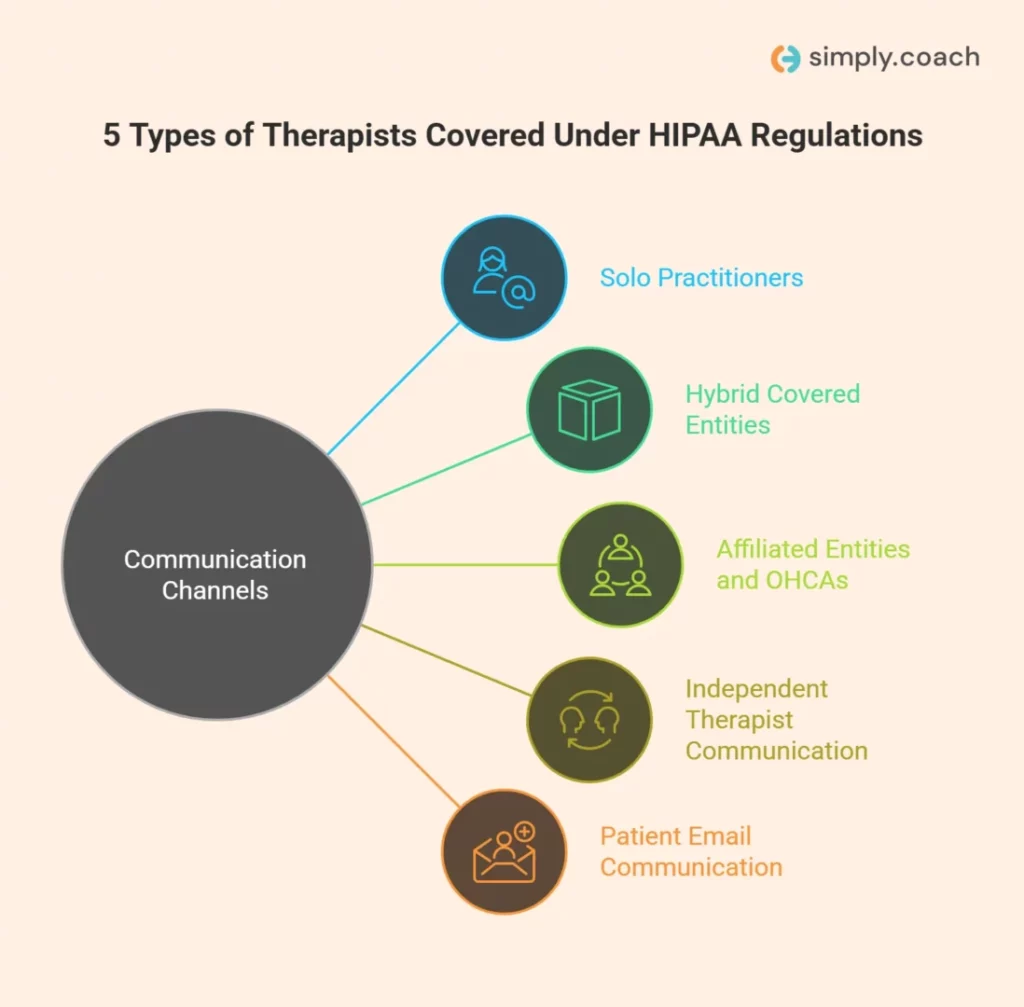
The discussion around HIPAA-compliant email for therapists is complicated by the fact that you, as a therapist, can fall into different HIPAA-covered categories. These distinctions are clinically relevant because when emails are exchanged about a patient, the type of entity determines whether additional transmission safeguards, like encryption, are required to maintain confidentiality and session continuity.
1. Solo practitioners
If you’re an independent therapist who qualifies as a HIPAA-covered entity, you must ensure that all email communication, even with other providers or patients, meets HIPAA requirements. Encryption, access controls, and audit logs are essential to protect sensitive client disclosures and support rupture repair and emotional regulation.
2. Hybrid covered entities
Organizations that provide both covered and non-covered therapy services must follow HIPAA email standards for communications involving PHI. Internal clinical discussions may benefit from secure internal networks, but email to external providers or clients still requires full safeguards.
3. Affiliated covered entities and OHCAs
When you work within a network of therapists protected by internal firewalls, certain transmission security measures, like encryption, may be mitigated. However, you must still ensure that all communication about patients preserves confidentiality, trust, and clinical integrity.
4. Independent therapists exchanging emails
If you work with a HIPAA-covered entity and communicate outside its network, you must use safeguards like encryption, secure portals, and controlled access tracking to protect client information. This protects clients in indirect treatment relationships and ensures compliance even across different organizations or email platforms.
5. Emails with patients
Regardless of the therapist classification, all email communication with clients must meet HIPAA standards unless a clear exception applies. Maintaining session structure, reducing no-shows, and supporting clinical outcomes requires secure, reliable email communication at all times.
Also read: Protecting Client Confidentiality in Counseling: A Comprehensive Guide for Counselors
No matter the type, certain critical email features are essential to safeguard PHI in practice.
Safeguarding Data: 8 Key HIPAA Criteria Every Therapist Should Look for in Email Systems
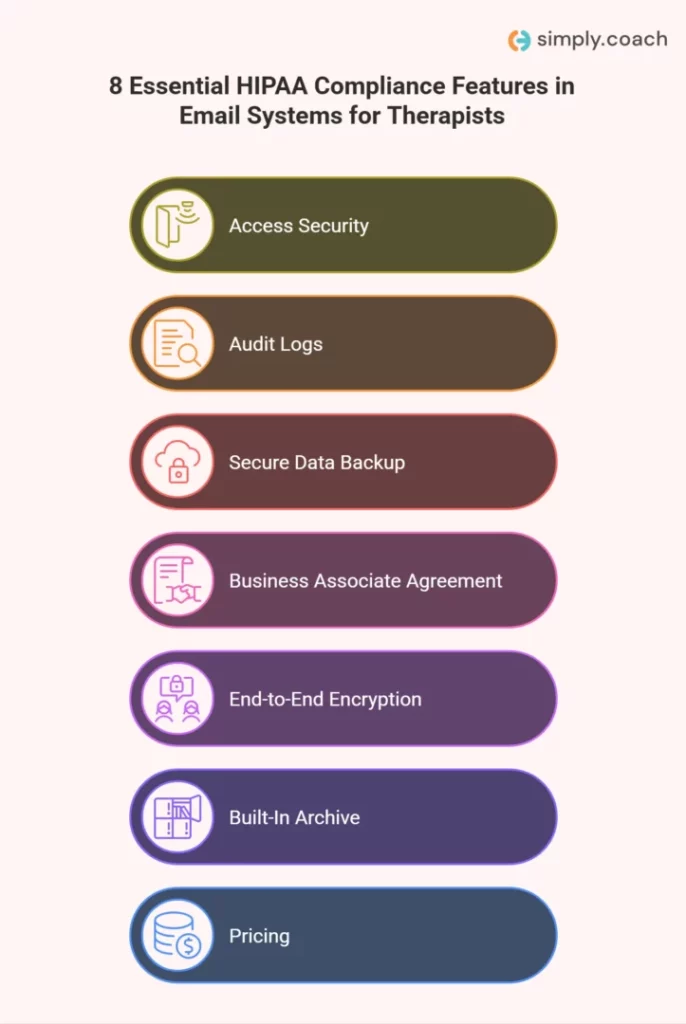
You need email systems that protect client confidentiality while supporting therapeutic workflow. Proper features allow secure communication, structured follow-ups, and accurate documentation without disrupting sensitive interventions.
1. Access security
Only authorized individuals should view Protected Health Information (PHI). You must control permissions for staff, supervisors, or collaborating providers, ensuring sensitive session content, such as trauma disclosures or rupture repair notes, is never inadvertently shared.
2. Audit logs
All email activity, including sending, reading, and forwarding, should be tracked. Audit logs allow you to verify communication integrity, support supervision, and investigate any discrepancies without compromising the therapeutic alliance. In clinical practice, this can help confirm who accessed sensitive notes during post-rupture debriefs or treatment planning.
3. Secure data backup and storage
Email systems must store messages and attachments safely with controlled access and regular backups. This ensures session notes, homework assignments, and pre-session forms remain available for ongoing treatment, even if devices fail. Proper storage maintains continuity of care, supports adherence to treatment plans, and protects PHI during unexpected events.
4. Business Associate Agreement (BAA)
A signed BAA with the email provider legally acknowledging the shared responsibility for PHI. This allows you to focus on interventions, emotional attunement, and session structure without worrying about third-party compliance.
5. End-to-end encryption
All email communication and stored data must remain encrypted. When sending session reflections, homework, or pre-session forms, encryption ensures only the intended recipient can access sensitive content. This protects clients’ trauma-related disclosures, supports emotional regulation, and preserves the integrity of therapeutic interventions across sessions.
6. Built-in archive
A HIPAA-compliant email with built-in archive allows you to store messages, attachments, and session-related forms securely over long periods. This supports clinical documentation, post-rupture review, and continuity of care, ensuring past communications remain accessible and protected.
7. Pricing
HIPAA-compliant email plans may start at lower prices, but you should always evaluate what’s included. Typical tiers bundle critical practice management tools such as secure online forms, archiving with audit logs, e-signatures, and secure file sharing, all supporting clinical workflow and client confidentiality. E-signatures streamline consent, and secure file sharing preserves trust while facilitating homework and collaborative interventions.
Also read: Top 10 HIPAA-Compliant Therapy Practice Management Software: A 2026 Guide for Therapists
Alongside these features, privacy and security requirements ensure your emails meet regulatory standards.
4 Privacy Requirements for HIPAA Compliant Emails
HIPAA-compliant emails must protect client information beyond technical safeguards. You are responsible for maintaining the confidentiality of context, timing, and content in communication, ensuring that even subtle clinical details are not exposed inadvertently. Key considerations include:
- Contextual privacy: You should avoid including identifiable PHI in subject lines or summaries. Even small details in email headers can inadvertently disclose sensitive information outside the clinical relationship.
- Minimizing shared content: Limit email communication to the necessary information for treatment or administrative purposes. For example, sharing a client’s progress update with another provider should exclude irrelevant personal data.
- Timing and session relevance: Emails should respect therapeutic timing. Sending messages at inappropriate intervals (e.g., late-night reflections) may unintentionally trigger emotional distress or misinterpretation by the client.
- Client-specific policies: You should ensure clients understand how email will be used for communication, boundaries, and emergency limitations, reinforcing informed consent and trust.
Privacy goes hand-in-hand with security, ensuring messages are fully protected from unauthorized access.
4 Security Requirements for HIPAA Compliant Emails
Security extends beyond encryption and access control. You must ensure that emails are stored, transmitted, and handled in a manner that prevents accidental exposure, loss, or misrouting, while supporting the therapeutic process. Secure practices also minimize clinical disruption.
Key security requirements include:
- Device and endpoint security: You must ensure that devices used for sending or receiving emails, computers, tablets, and phones are secured with updated software, strong passwords, and screen locks to prevent unauthorized access.
- Segregation of clinical and personal email: You should separate personal and professional accounts to reduce accidental exposure of PHI and ensure session-related communications remain within controlled environments.
- Regular security audits: Periodic reviews of email usage, forwarding practices, and storage procedures help you identify and correct potential vulnerabilities before they affect clients.
- Contingency planning: Systems should include clear procedures for lost devices, email breaches, or accidental misdelivery, allowing you to respond promptly and maintain client safety and trust.
Even with a disclaimer in place, lack of security measures remain a critical practice risk.
6 Problems with Therapists Using HIPAA-Compliant Email Disclaimers
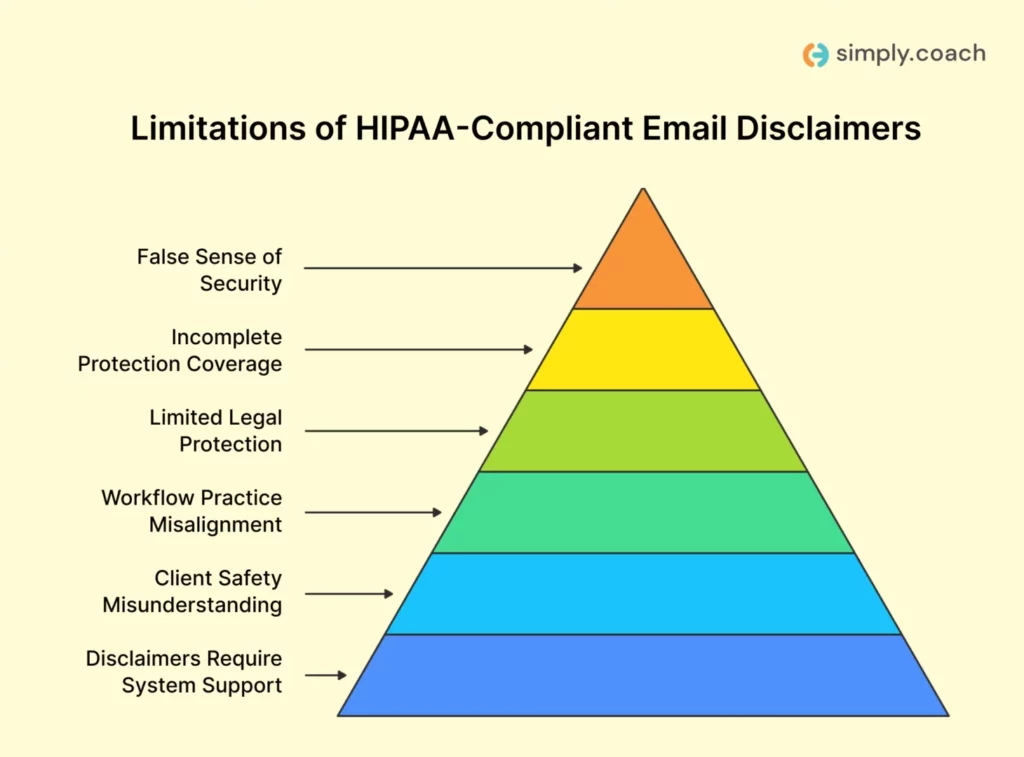
Many therapists rely on email disclaimers claiming messages are “HIPAA-compliant,” believing this alone protects client information. In reality, disclaimers do not replace proper security measures and can create a false sense of safety. This can lead to inadvertent disclosures, broken trust, and administrative risk, especially when emails contain sensitive session reflections, trauma-related disclosures, or post-rupture communications.
- False sense of security: Simply adding a HIPAA disclaimer does not encrypt messages or prevent accidental forwarding. You may feel protected while sensitive PHI is still vulnerable, potentially undermining session safety and client trust.
- Incomplete coverage: Disclaimers typically do not account for all recipients, devices, or networks. Emails may pass through unsecured servers or personal accounts, leaving clinical content exposed and increasing the risk of emotional harm or breach reporting.
- Limited enforceability: Legal language in disclaimers rarely provides protection if a breach occurs. You should be responsible for maintaining clinical boundaries, confidentiality, and session integrity, regardless of the text included in the email.
- Misalignment with workflow: Relying on disclaimers can lead you to skip secure practices, such as using approved email platforms, pre-session forms, or internal communication protocols. This can disrupt session flow and reduce adherence to therapeutic goals.
- Client confusion: Clients may assume that the presence of a disclaimer automatically guarantees safety. Misunderstandings can affect emotional regulation, disclosure levels, and engagement, particularly with trauma-activated or high-risk clients.
- Decision support: You should view disclaimers as supplementary, not primary. Using them alongside HIPAA-compliant systems, secure portals, and pre-session protocols ensures protection of PHI while maintaining clinical focus and therapeutic trust.
Knowing the pitfalls helps guide the choice of the right HIPAA-compliant provider for your practice.
Top 4 HIPAA-Compliant Email Providers for Therapists
Choosing the right HIPAA-compliant email provider is critical for you. The system should support secure client communication and integration with reminders and pre-session forms and protect session-related reflections, trauma disclosures, and post-rupture documentation. Here are some top options:
1. Hushmail for Healthcare
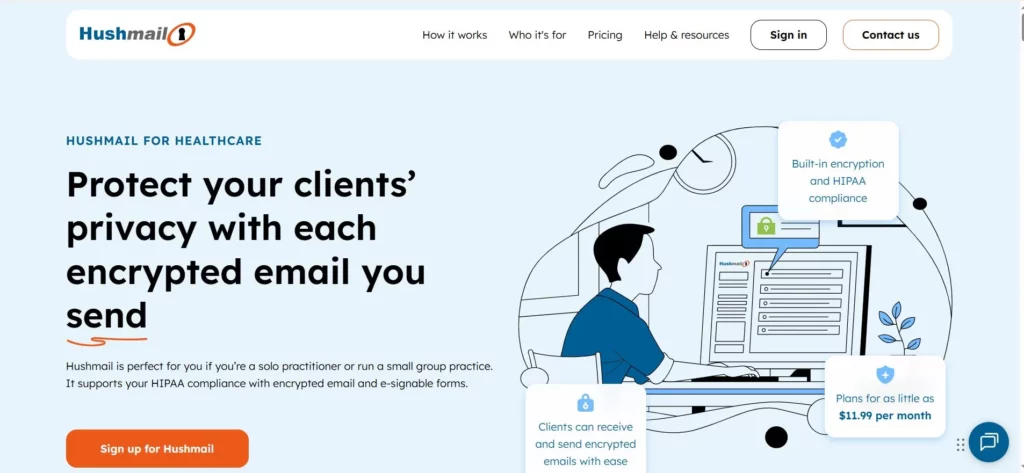
Hushmail is one of the most widely recognized encrypted email services designed specifically for healthcare professionals. The platform also includes secure forms that allow clients to submit sensitive information, such as intake forms and consent documentation. With a signed Business Associate Agreement (BAA), you can confidently exchange protected health information.
Key features
- Encrypted email: Protect client communication with built-in encryption designed for healthcare use.
- Secure web forms: Allow clients to submit intake forms, consent documents, and assignments safely.
- Password-protected messages: Add an extra security layer for sensitive client conversations.
- Business associate agreement (BAA): Establish shared responsibility for HIPAA compliance.
- Email reminders: Support appointment continuity and reduce missed sessions.
Pricing:
Plans typically start around $11 per month; higher tiers available with added features.
Ratings:
- G2: 3.7/5
- Capterra: 4.6/5
2. Google Workspace (with BAA)
Google Workspace can meet HIPAA requirements when configured correctly with a signed BAA. Many therapists prefer it because Gmail integrates naturally with calendars, forms, and document storage. However, compliance depends on proper configuration and disciplined email use. When paired with secure forms and structured scheduling workflows, Google Workspace can support a reliable and organized communication system for therapy practices.
Key features
- Gmail encryption: Protect email communication when configured under Google Workspace compliance settings.
- Google Forms: Collect secure intake forms, feedback, and client questionnaires.
- Google Calendar: Schedule sessions and send automated appointment reminders.
- Google Drive: Store documents securely with access control and encryption.
- Admin controls: Manage data security, user permissions, and compliance policies.
Pricing:
Plans typically start around $18/user/month, depending on the tier.
Ratings:
- G2: 4.6/5
- Capterra: 4.7/5
3. Microsoft 365 (with BAA)
Microsoft 365 offers a widely used HIPAA-compliant option for therapists through its business-level Outlook email system. The platform combines encrypted communication, secure file storage, and administrative controls for data protection. Many therapy practices adopt Microsoft 365 because it integrates well with scheduling and documentation tools. When configured properly with a BAA, it supports compliant client communication and organized record management.
Key features
- Outlook encrypted email: Send secure email communication through Microsoft 365 business plans.
- OneDrive secure storage: Store therapy documents and client resources safely in the cloud.
- Calendar integration: Schedule sessions and manage appointment reminders efficiently.
- SharePoint collaboration: Share files securely with team members or administrative staff.
- Compliance controls: Enforce organizational security policies and access permissions.
Pricing:
Business plans typically range between $6 – $22 per user per month.
Ratings:
- G2: 4.5/5
- Capterra: 4.6/5
4. Paubox
Paubox is known for offering seamless end-to-end email encryption without requiring clients to log into a separate portal. Messages arrive directly in the client’s inbox while remaining encrypted, which reduces technical friction. Therapists can send homework assignments, reflections, or follow-ups while preserving confidentiality and therapeutic pacing.
Key features
- Automatic encryption: Protect emails with seamless end-to-end encryption.
- Portal-free delivery: Allow clients to read secure messages directly in their inbox.
- Secure email archiving: Maintain protected records of sensitive communications.
- HIPAA compliance tools: Support healthcare communication standards and security practices.
- Threat protection: Guard against phishing, malware, and unauthorized access.
Pricing:
Plans generally range from $32 to $75 per month, depending on features.
Ratings:
- G2: 4.9/5
- Capterra: 5/5
Also read: Top HIPAA-Compliant Scheduling Software for Therapists in 2026
Given these options, there are exceptions where standard email may still be considered.
4 Exceptions to HIPAA Compliant Email for Therapists
Not all email communication falls strictly under HIPAA requirements. Certain exceptions allow you to use non-compliant channels, but only with careful consideration of risk, client consent, and session context. Exceptions should never replace clinical judgment or compromise therapeutic safety.
- Client-directed communication: If a client explicitly requests email communication, knowing the risks, you may comply after documenting informed consent. This is only appropriate for clients who can assess their own risk, such as highly self-aware adults, and should not be used with trauma-activated or vulnerable clients.
- Minimal PHI disclosure: Sending non-identifiable administrative content (e.g., appointment reminders without client names or session details) can sometimes bypass strict HIPAA requirements. You must ensure the content cannot be linked to sensitive clinical material, especially during early treatment phases or post-rupture periods.
- Emergencies or urgent communication: In rare cases, non-secure email may be used if no other secure option exists and client safety or immediate clinical intervention is at stake. You must document rationale, timing, and follow-up and use secure alternatives as soon as possible.
- Careful documentation: Even under exceptions, you should maintain notes about why a non-compliant email was used, client understanding, and potential risks, ensuring continuity of care and preserving session integrity.
Awareness of these risks highlights common challenges you might face when integrating email into your workflow.
What Are the Risks of Using Regular Email to Communicate PHI?
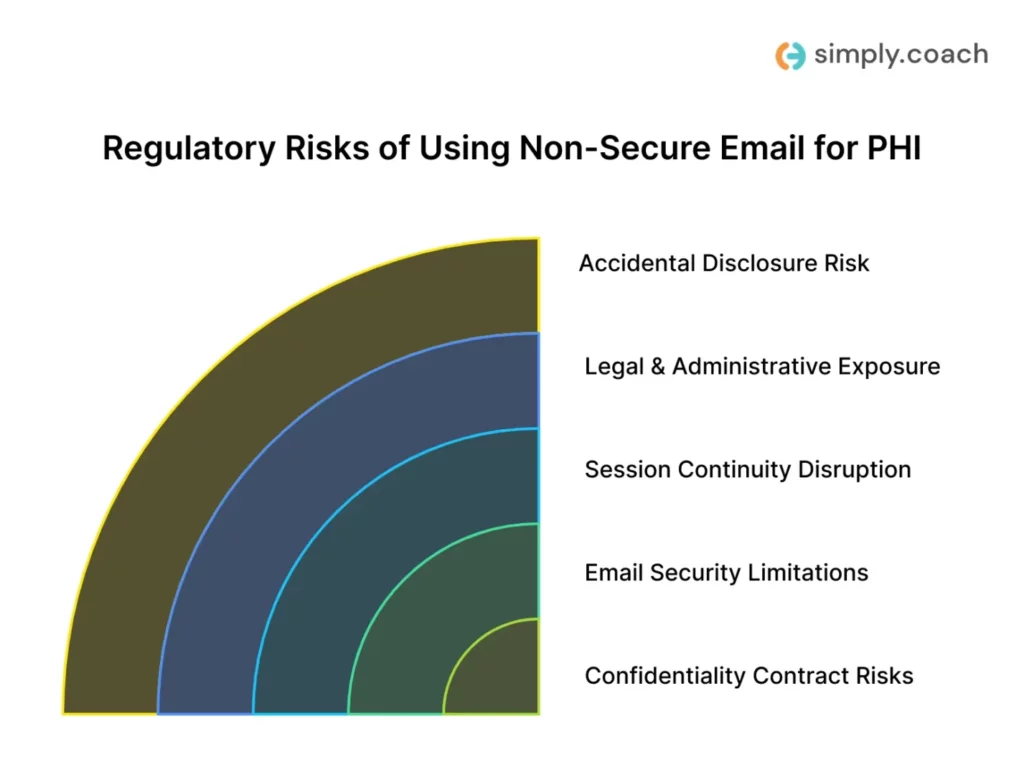
Using standard email for client communication introduces substantial clinical, ethical, and legal risks. Even well-intentioned emails can compromise confidentiality, therapeutic safety, and client trust, particularly when sessions involve trauma, rupture repair, or emotionally dysregulated clients.
- Accidental disclosure: Emails can be forwarded, misdirected, or accessed by unauthorized parties. Sensitive session reflections, trauma disclosures, or progress notes could be exposed, disrupting therapeutic trust and emotional safety.
- Legal and administrative consequences: Breaches through unsecured email can trigger HIPAA violations. You will be held responsible, even if the exposure was unintentional, and may face sanctions or supervision review, impacting your professional credibility.
- Disrupted session continuity: Clients who receive PHI insecurely may experience anxiety or withdrawal, affecting engagement, rupture repair, and adherence to therapeutic goals. Miscommunication or fear of exposure can escalate emotional dysregulation.
- Technical vulnerability: Regular email lacks encryption, access control, and secure storage. Messages can be intercepted or permanently lost, leaving therapists without reliable documentation for supervision, post-session review, or complex case coordination.
- Ethical implications: Using unsecured email can unintentionally violate the client-therapist contract of confidentiality. Even if administrative risk is managed, the emotional impact on clients, especially those with trauma histories, can disrupt the therapeutic alliance and reduce the effectiveness of interventions.
Also read: The Importance of ACA Code of Counseling Ethics: A Detailed Guide
Understanding exceptions also highlights the risks of using regular, unsecured email to communicate PHI.
5 Problems Faced by Therapists With Email Communication
Even if you’re an experienced therapist, you may encounter challenges when using email, especially when sensitive clinical content is involved. These problems can affect session flow, client engagement, and emotional safety.
- Using personal or unsecured accounts: Sending PHI via personal email risks accidental exposure. Clients’ trauma-related disclosures or session reflections could be compromised, breaking trust and triggering emotional dysregulation.
- Over-reliance on email for complex interventions: Attempting to resolve relational or emotionally intense issues via email can backfire. Without in-session containment, clients may misinterpret guidance, escalating distress or rupturing the therapeutic alliance.
- Delayed responses or inconsistent communication: Slow or unpredictable email replies can increase client anxiety or reinforce maladaptive patterns. Timing and consistency are crucial, particularly for clients with attachment or emotional regulation difficulties.
- Mixing administrative and clinical content: Combining sensitive clinical notes with scheduling or billing messages can unintentionally disclose PHI. You should segregate content and avoid shortcuts that compromise confidentiality or session safety.
- Improper use of disclaimers: Relying solely on “HIPAA-compliant” disclaimers creates a false sense of security. Clients may assume confidentiality is guaranteed, but emails remain exposed without proper safeguards.
To address these problems, you can follow best practices for safe and effective email communication.
6 Effective Guidelines for Using Email in a HIPAA-Compliant Way
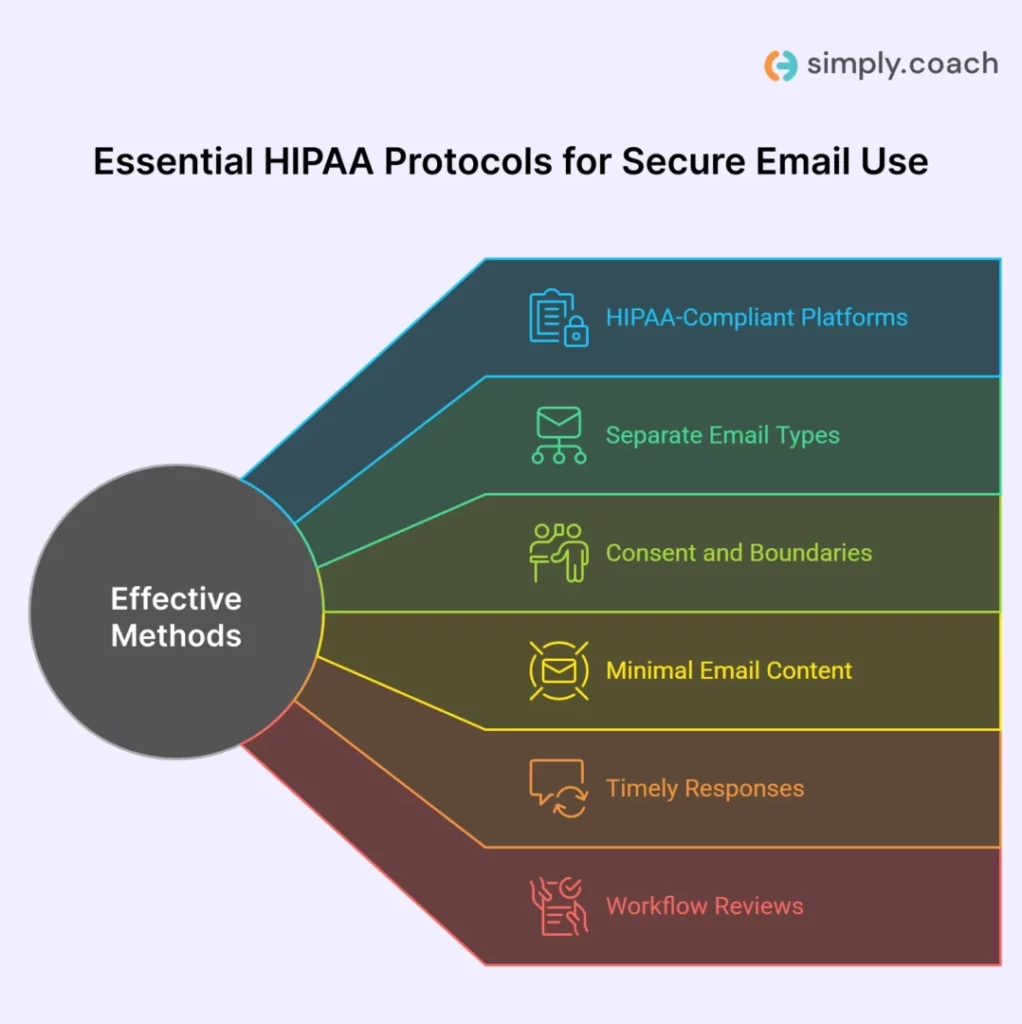
HIPAA-compliant email supports safe and structured therapy workflows when used thoughtfully. The following best practices go beyond encryption and legal requirements; they prioritize client safety, session integrity, and emotional regulation.
- Use secure, HIPAA-approved platforms: Always send emails through encrypted, compliant systems with signed BAAs. This protects PHI while enabling workflow integration, pre-session forms, and reminders without disrupting sessions.
- Separate administrative and clinical communication: Keep scheduling, forms, and homework distinct from session reflections. This minimizes accidental exposure and maintains session-focused clarity for clients.
- Document informed consent and boundaries: Clearly explain email use, limitations, and response expectations. This supports client understanding, reduces misunderstandings, and preserves the therapeutic alliance.
- Limit content to what is necessary: Only include information required for the purpose of the message. Avoid unnecessary details that could trigger trauma activation, emotional dysregulation, or misinterpretation.
- Maintain timely and predictable communication: Respond consistently and within a timeframe agreed upon with the client. This reinforces trust, supports adherence to therapeutic goals, and reduces anxiety between sessions.
- Regularly review email workflows: Audit email practices, test secure forms, and check reminder systems. This ensures the platform functions as intended, safeguards PHI, and integrates smoothly into clinical workflow without interrupting therapeutic interventions.
If you’re seeking a complete, secure solution, Simply.Coach offers an all-in-one HIPAA-compliant platform.
Manage Secure Client Conversations and Therapy Workflows with Simply.Coach
Managing client emails, therapy session workflows, and sensitive information requires both clinical precision and HIPAA compliance. Simply.Coach is designed as an all-in-one HIPAA-compliant therapy practice management platform that ensures your email communication, client engagement, and session administration remain secure, efficient, and clinically focused.
It goes beyond basic email, integrating HIPAA-compliant messaging with tools that directly support therapeutic outcomes, such as adherence to treatment goals, post-session reflection, and rupture repair.
- Goal & development planning: Track and assign actionable client goals, monitor progress securely, and maintain session continuity without risking sensitive clinical information.
- Forms: Pre-session intake, consent forms, or homework submissions can be securely collected and stored, ensuring client privacy and therapeutic safety.
- Reports: Generate secure, encrypted reports detailing client progress, session adherence, and post-session reflections, supporting supervision and structured care planning.
- Action plans: Assign and track tasks linked to therapeutic goals with automated reminders, maintaining client accountability while keeping PHI protected.
- Nudges: Automated, non-intrusive reminders reinforce client engagement and skill practice between sessions, reducing reliance on insecure email communication.
- Scheduling: Integrated, HIPAA-compliant self-scheduling and calendar management reduce administrative emails, ensuring timely and secure session coordination.
- Client workspaces: Provide clients with a secure space to access session notes, exercises, and shared materials, centralizing communication while protecting sensitive data.
- Embedded video conferencing: Conduct online sessions via Zoom, Google Meet, or Microsoft Teams within the platform, keeping session notes and forms fully protected.
Simply.Coach goes beyond offering HIPAA-compliant email solutions. It serves as a comprehensive communication and workflow platform that enables you to manage client communication securely, automate engagement, and preserve session continuity while protecting PHI.
Conclusion
HIPAA-compliant email for therapists is a regulatory requirement and also an essential tool to maintain client confidentiality, session integrity, and therapeutic safety. Throughout this guide, we explored what makes an email service HIPAA-compliant, the critical privacy and security features, the risks of using unsecured email, and practical workflows that help you maintain adherence to therapeutic goals, reduce emotional escalation, and strengthen the therapeutic alliance.
More than encryption or a signed BAA, choosing the right email solution involves evaluating workflow integration, client readiness, session relevance, and team collaboration needs. You must weigh the type of covered entity, clinical context, and client vulnerability when implementing email practices, ensuring that communication enhances care rather than creating risk.
Simply.Coach offers comprehensive HIPAA-compliant software that includes secure client workspaces. It allows you to manage all client communications and session workflows in one place while maintaining strict compliance with HIPAA, SOC2, and GDPR standards.
FAQs
1. What is HIPAA-compliant email for therapists?
HIPAA-compliant email ensures that all electronic communication containing Protected Health Information (PHI) is encrypted, secure, and auditable, protecting client confidentiality and meeting regulatory requirements.
2. Do all therapists need HIPAA-compliant email?
Therapists who are “covered entities” or work for a covered entity/business associate must use HIPAA-compliant email. Employees must also follow employer policies and avoid unsecured apps unless an exception applies.
3. Can I use Gmail or Outlook for HIPAA-compliant email?
Yes, but only via Google Workspace or Microsoft 365 with a signed BAA and proper configuration. Regular personal accounts do not meet HIPAA standards.
4. What features should I look for in HIPAA-compliant email for therapists?
Essential features include end-to-end encryption, audit logs, secure storage, access controls, automated backups, and a signed BAA. Bonus features include integrated forms, scheduling, and reporting.
5. Are HIPAA-compliant email disclaimers enough?
No. Disclaimers alone do not secure PHI. Without encryption and proper safeguards, sensitive client information remains at risk, and disclaimers do not protect against liability.
6. Can HIPAA-compliant email be used for client reminders or check-ins?
Yes. Automated, secure reminders can reinforce therapeutic homework, skill practice, and session adherence. They should be used thoughtfully to avoid emotional escalation or triggering trauma.
7. What are the risks of using regular email for client communication?
Standard email can lead to accidental disclosure, legal violations, disrupted trust, and client anxiety, especially when sensitive session content or trauma-related information is shared.