
Even experienced coaches sometimes run sessions that feel insightful in the moment but translate poorly into measurable progress. Conversations flow, ideas surface, yet clients leave with loosely defined actions or inconsistent follow-through.
For executive coaches and consultants working with senior leaders, this can create bigger challenges. Goals become broad rather than operational, progress is harder to demonstrate to sponsors, and sessions risk drifting into reflection rather than structured development.
The GROW model coaching framework offers a simple structure to guide outcome-focused conversations. Popularised by Sir John Whitmore, the GROW model—Goal, Reality, Options, and Will—helps move clients from insight to commitment.
In this article, we explain how the model works, break down each stage, share coaching questions, and walk through a practical example.
Key Takeaways
- The GROW model provides a clear structure for coaching conversations by guiding clients through four stages: Goal, Reality, Options, and Will.
- Using a structured framework helps coaches keep sessions focused and ensures discussions lead to clear, actionable outcomes.
- The model works well across multiple contexts, including life coaching, leadership coaching, mentoring, and feedback conversations.
- Asking thoughtful questions at each stage helps clients reflect on their situation, explore possibilities, and commit to meaningful action.
- One common risk when using the model is rushing through stages, which can result in unclear goals or weak action plans.
- Consistently documenting goals, actions, and progress helps coaches track client development across multiple sessions.
- Digital coaching platforms like Simply.Coach help organise goals, session notes, and action plans, making it easier to manage structured coaching engagements and maintain accountability.
What is the GROW Model in Coaching (And Why Coaches Use it)
The GROW model in coaching is a structured conversation framework used to guide coaching sessions and help clients move from discussion to clear action. It breaks a coaching conversation into four stages, so coaches can help clients define what they want to achieve, examine their current situation, explore possible strategies, and commit to practical next steps.
In practice, coaches use the GROW framework to keep conversations focused and outcome-oriented. Instead of letting sessions become open-ended discussions, the model provides a simple structure that encourages reflection, problem-solving, and accountability.
You’ll typically see the GROW model used in situations such as:
- Life and career coaching sessions to clarify goals and personal development plans
- Leadership coaching conversations with managers and executives
- Mentoring discussions focused on professional growth
- Performance or feedback conversations in workplace coaching
It is also important to understand what the model does not do. The GROW framework does not provide answers or solutions by itself. Instead, it helps you, as a coach, ask better questions so clients can reflect, identify their own options, and take ownership of the actions they commit to.
As a coach, sessions often involve multiple goals, evolving challenges, and ongoing progress tracking. Using a consistent framework like the GROW model makes it easier to structure conversations across sessions and keep your clients focused on measurable progress.
Also read: The GROW Model Template: A Proven Framework for Coaching Success
What Does the GROW Model Stand For
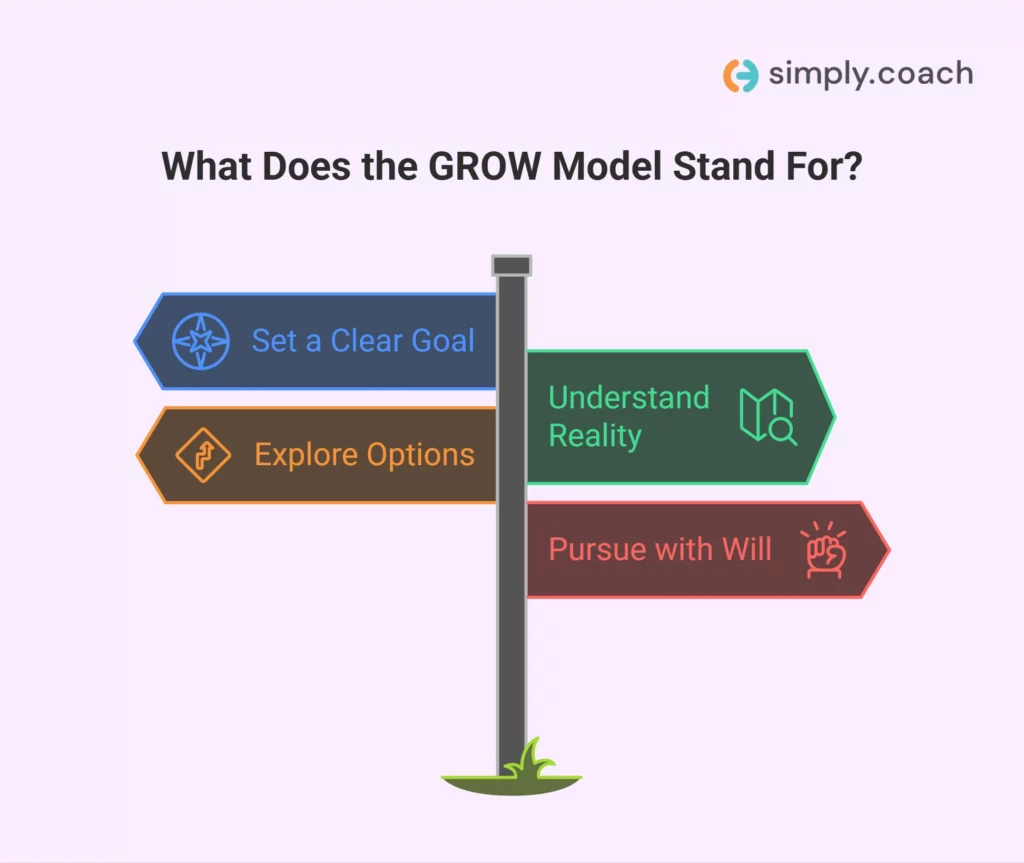
The GROW model coaching framework breaks a coaching conversation into four clear stages: Goal, Reality, Options, and Will. This structure helps you guide clients from identifying what they want to achieve to committing to specific actions.
By following these stages, coaching sessions become more focused, practical, and outcome-driven.
In simple terms, each stage of the GROW model helps answer a different question in the coaching conversation:
- Goal: What does the client want to achieve?
- Reality: What is happening right now?
- Options: What possible strategies or solutions exist?
- Will: What actions will the client take next?
This framework works well because it balances reflection with action. Instead of jumping straight to solutions, the model encourages clients to first clarify their goals and understand their current situation before exploring possible ways forward.
1. Goal
The Goal stage focuses on defining the desired outcome of the coaching conversation. You help clients clarify what they want to achieve and why it matters. A clear goal ensures the session remains focused and measurable.
Typical focus areas include:
- Personal or professional growth goals
- Leadership development objectives
- Career advancement targets
- Improving productivity or performance
If the outcome of the session is not clearly defined, the coaching conversation can quickly lose direction.
Also read: Goal Setting in Coaching: How to Help Clients Set Goals They Can Achieve
2. Reality
The Reality stage explores the client’s current situation. You ask questions to understand what is actually happening, what challenges exist, and what progress has already been made.
This stage typically examines:
- Current obstacles or constraints
- Previous attempts to solve the issue
- Available resources or support
- The gap between the current state and the desired goal
Understanding the current reality prevents both you and the clients from setting unrealistic plans.
Also read: 15 Essential Coaching Discovery Call Questions to Understand Client Needs
3. Options
During the Options stage, you encourage clients to brainstorm possible strategies or solutions. The focus is on generating ideas rather than immediately deciding which one to pursue.
Common exploration areas include:
- Possible actions the client could take
- Alternative approaches to the problem
- Resources or people who could help
- Creative or unconventional solutions
The goal is to expand possibilities before choosing the best path forward.
Also read: 10 Effective Coaching Strategies to Enhance Team Performance
4. Will (Way Forward)
The Will stage converts ideas into commitment and action. You help clients decide what they will actually do after the session and how they will stay accountable.
This stage often includes:
- Selecting the most practical option
- Defining specific actions or tasks
- Setting timelines or milestones
- Identifying accountability mechanisms
Without clear commitment and follow-up actions, even the best coaching conversations rarely lead to real change.
Also read: How Coaches Can Improve Coachability and Drive Better Client Results
When the GROW Model is Not the Right Approach for Coaching
While the GROW model coaching framework is widely used, it is not always the best approach for every coaching conversation. Some situations require deeper exploration, emotional processing, or long-term behavioural change that may not fit neatly into a structured four-step framework.
The GROW model works best when the focus is goal clarity, problem solving, or decision-making. However, as a coach, you often work with clients whose needs extend beyond structured goal-setting conversations.
Use the “Conversation Complexity” Rule
A simple guideline coaches often follow is: Use the GROW model when the goal is clear and the client mainly needs structure to move forward.
If the client is still trying to understand their situation or emotions, a more exploratory coaching approach may work better.
Many coaching practices involve hybrid or complex situations, such as:
- Therapist–coach hybrid: The client may need emotional exploration or healing conversations before focusing on goals and action plans.
- Coach working with leadership transformation: When behavioural change and mindset shifts are the primary focus, sessions may require deeper reflection rather than quick goal-setting.
- Coach + consultant role: If the engagement involves strategic advice or business consulting, the conversation may be more advisory than exploratory.
- Coach supporting long-term personal development: Some conversations may focus on identity, purpose, or life transitions rather than immediate action steps.
The GROW model works best when clients have a clear objective and need a structured way to move from reflection to action.
Also read: How to Build an Effective Personal Development Coaching Program (2026)
Different Ways Coaches Use the GROW Model (With Practical Use-Cases)
The GROW model coaching framework is flexible and can be applied across many coaching contexts. While it is most commonly used in one-to-one coaching sessions, many professionals adapt the model for mentoring, leadership development, and feedback conversations.
Understanding where the framework fits best helps you structure conversations more effectively and deliver clearer outcomes for your clients.
1. GROW Model for Leadership Development
Leadership and executive coaches frequently use the GROW model when working with managers, founders, and senior professionals. The framework helps leaders reflect on challenges, explore possible strategies, and commit to clear development actions.
The model is often used for:
- Improving leadership and communication skills
- Navigating workplace challenges or team conflicts
- Preparing for promotions or new responsibilities
- Developing decision-making and management capabilities
Also read: A Guide to Leadership Development Coaching: 12 Strategies for Success
2. GROW Model for Mentoring Conversations
Mentors often use the GROW model to structure mentoring conversations. Instead of immediately giving advice, the mentor guides the mentee through reflection so they can identify their own solutions and career direction.
This approach is useful for:
- Career development mentoring
- Professional growth planning
- Identifying skill gaps and learning opportunities
- Exploring long-term career decisions
Also read: What Does a Life Mentor Do? Roles, Skills & Career Guide (2026)
3. GROW Model for Feedback Conversations
The GROW model can also support structured feedback conversations in professional settings. It helps move discussions from identifying issues to defining improvement actions.
Typical use cases include:
- Improving employee performance
- Addressing workplace challenges
- Supporting professional development conversations
- Helping individuals reflect on performance feedback
Also read: How to Provide Feedback as a Coach to Develop Better Leaders
4. GROW Model for Team or Group Coaching
Coaches sometimes apply the GROW framework in team coaching or group sessions. In these situations, the model helps teams align on goals and identify collective actions.
It can support conversations around:
- Improving team performance
- Aligning team goals and priorities
- Facilitating leadership development programmes
- Supporting organisational change initiatives
The GROW model works best in coaching situations where the goal is to move from reflection to clear, actionable next steps.
Also read:Coaching the Growth Mindset: A Mindful Approach to Unlocking Leadership Potential
How to Use the GROW Model in a Coaching Session (Simple Decision Framework)
While the GROW model coaching framework is straightforward, many coaches struggle with how to apply it consistently during real sessions. A simple step-by-step structure helps ensure that the conversation moves logically from goal clarity to committed action.
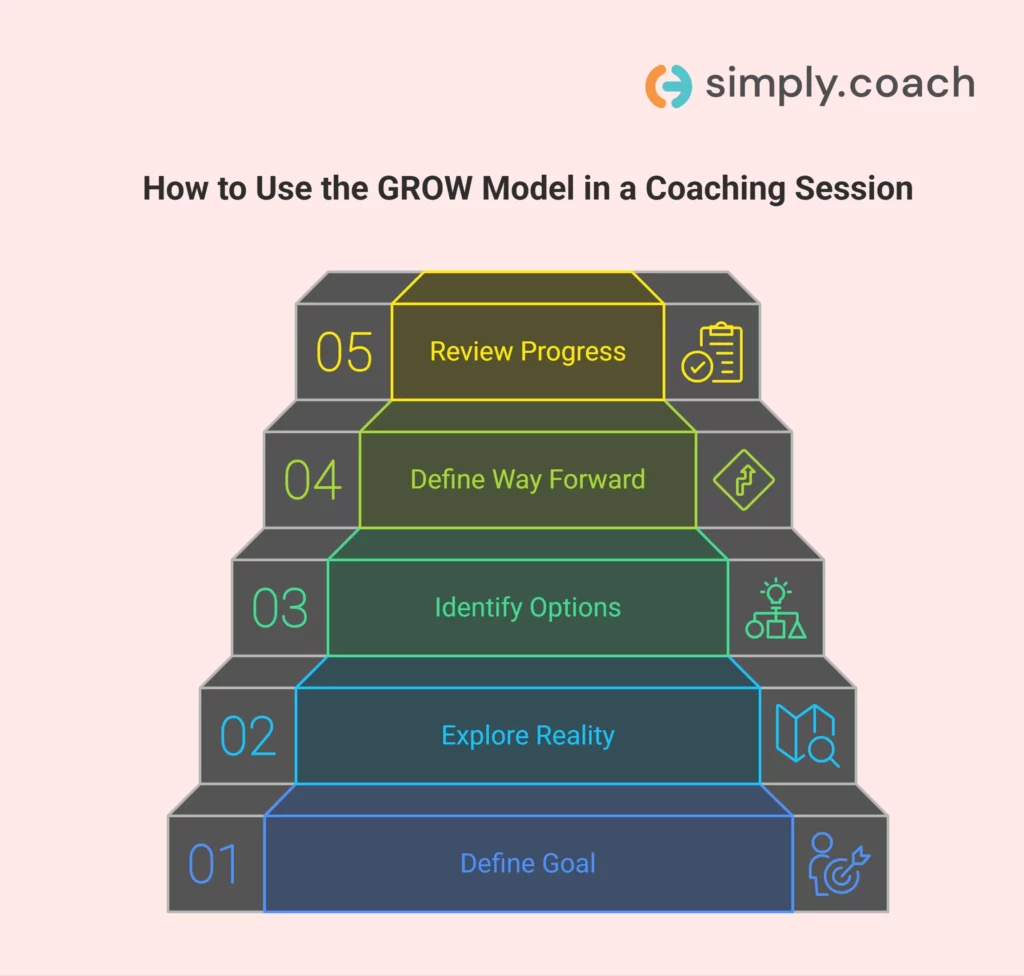
Using a repeatable process also makes coaching sessions more focused and easier to track across multiple client engagements.
Step 1: Define the Goal
Start the session by clarifying what the client wants to achieve. The goal should be specific enough to guide the conversation and meaningful enough to motivate action.
Examples of questions you may ask:
- What would you like to achieve from this session?
- What outcome would make this conversation valuable for you?
Step 2: Explore the Current Reality
Once the goal is clear, explore the client’s current situation. This helps identify the gap between where the client is today and where they want to be.
Key areas to explore include:
- Current challenges or obstacles
- Resources available to the client
- Previous attempts to solve the issue
Step 3: Identify Possible Options
At this stage, you encourage the client to explore different ways forward. The focus is on generating ideas rather than immediately choosing a solution.
Possible discussion prompts include:
- What options do you have right now?
- What else could you try?
Step 4: Define the Way Forward (Will)
Finally, the conversation shifts toward commitment and action. The client decides what steps they will take after the session and how they will stay accountable.
This step often includes:
- Selecting the most practical option
- Defining specific actions
- Setting timelines or milestones
Step 5: Review and Track Progress
In ongoing coaching engagements, the final step is reviewing progressin future sessions. This helps you and your clients evaluate what worked, what needs adjustment, and how goals are evolving.
Following a simple GROW structure helps coaching conversations stay focused while turning insights into real action.
Also read: 10 Best Coaching Tools for Tracking Progress in 2026
Common Mistakes Coaches Make When Using the GROW Model
The GROW model coaching framework is simple to understand, but many coaches struggle to apply it effectively during real conversations. Small mistakes in how the framework is used can lead to sessions that feel rushed, unclear, or lacking in actionable outcomes.
Being aware of these common pitfalls can help you run more structured and productive coaching sessions.
1. Rushing Through the Goal Stage
Some coaches move too quickly into problem-solving without clearly defining the client’s goal.
This can lead to:
- Unclear session outcomes
- Discussions that drift between topics
- Actions that do not address the real objective
How to avoid it: Spend enough time clarifying what success looks like before moving to the next stage.
2. Focusing Only on Solutions Too Early
A common mistake is jumping straight to advice or brainstorming options without fully exploring the client’s current reality.
This often results in:
- Surface-level solutions
- Overlooking underlying challenges
- Actions that are difficult to implement
How to avoid it: Use thoughtful questions to fully understand the client’s situation before exploring options.
3. Asking Leading or Directive Questions
If a coach pushes the client toward a particular solution, the conversation becomes more like consulting than coaching.
This may cause:
- Reduced client ownership of decisions
- Limited reflection and self-discovery
How to avoid it: Ask open-ended questions that allow clients to explore their own ideas.
4. Ending Sessions Without Clear Action Steps
Some coaching sessions end with insights but no clear commitment to action.
This can lead to:
- Lack of accountability between sessions
- Limited progress toward goals
How to avoid it: Ensure the Will stage ends with specific actions, timelines, and accountability.
5. Not Tracking Progress Between Sessions
Without tracking goals and actions, it becomes difficult to measure coaching outcomes over time.
This may result in:
- Repeated conversations without progress
- Difficulty demonstrating client improvement
How to avoid it: Keep a clear record of goals, actions, and progress so future sessions can build on previous discussions.
The GROW model works best when you slow down the conversation, ask thoughtful questions, and ensure every session ends with clear, trackable actions.
Also read: Client Engagement in Coaching: Best Practices for Better Results
How Simply.Coach Helps You Run a Structured, Growth-Ready Coaching Practice
As coaching practices grow, many professionals struggle to keep sessions organised and track client progress consistently. Goals may be documented in separate tools, action items may get lost between sessions, and scheduling or follow-ups can become time-consuming. Without a structured system, it becomes difficult to maintain accountability and demonstrate measurable outcomes for clients.
Simply.Coach, a leading digital coaching platform, helps coaches manage client relationships, structure coaching programmes, and track progress in one place. By combining coaching workflows with operational tools, the platform allows professionals to focus more on delivering impactful coaching rather than managing administrative tasks.
Key features that support structured coaching delivery include:
- Client workspaces → Keep goals, notes, forms, and action items organised in one place for each client.
- Journeys→ Create reusable coaching programme templates so delivery stays consistent across multiple clients.
- Scheduling with automatic time-zone conversion → Reduce back-and-forth emails and minimise no-shows.
- Reports → Track progress and demonstrate coaching outcomes or ROI to clients and stakeholders.
- Nudges and Action plans → Encourage accountability by reminding clients about actions between sessions.
- Enterprise-grade Security→ SOC 2, HIPAA, and GDPR compliance with encryption, access controls, and secure infrastructure.
Together, these capabilities help you run more structured coaching engagements while maintaining clear visibility into client progress and programme outcomes.
Conclusion
The GROW model remains one of the most widely used coaching frameworks because it provides a simple yet powerful structure for coaching conversations. By guiding clients through Goal, Reality, Options, and Will, you can move discussions from reflection to clear action, helping clients stay focused on progress and measurable outcomes.
However, running structured coaching sessions consistently also requires organised workflows, clear documentation, and reliable follow-ups between sessions. Platforms like Simply.Coach help you bring this structure into your practice by keeping client goals, actions, session notes, and progress tracking in one place, making it easier to manage coaching engagements and demonstrate results.
FAQs
1. Is the GROW model suitable for every coaching situation?
The GROW model works best when clients have a specific challenge or goal they want to address. However, it may be less effective in situations where clients need deeper reflection, emotional processing, or exploratory conversations before defining clear objectives.
2. How long does a typical GROW coaching conversation take?
A GROW-based coaching conversation can last anywhere from 15 minutes to a full coaching session, depending on the complexity of the client’s challenge. Some coaches use the model for short check-ins, while others structure entire sessions around it.
3. Can the GROW model be used across multiple coaching sessions?
Yes. Many coaches use the GROW framework across several sessions, especially when working toward long-term goals. Each session may revisit the client’s goal, reassess their reality, explore new options, and refine the action plan.
4. How is the GROW model different from giving advice?
The GROW model focuses on facilitating self-discovery rather than providing direct solutions. Instead of telling clients what to do, coaches guide them through questions that help them evaluate their situation and decide on their own course of action.
5. Can beginners use the GROW model effectively?
Yes. One reason the GROW model is widely used is that it is simple to learn and easy to apply. Even new coaches can use it to structure conversations, although experienced coaches often adapt the framework depending on the client’s needs.
6. Do coaches always follow the GROW stages in order?
Not necessarily. While the framework is designed as a sequence, experienced coaches sometimes move back and forth between stages. For example, exploring options may reveal new insights about the client’s current reality.
7. Can the GROW model be combined with other coaching frameworks?
Yes. Many coaches combine the GROW model with other approaches such as solution-focused coaching, strengths-based coaching, or behavioural coaching. The framework often acts as a guiding structure rather than a rigid process.
8. What skills help coaches apply the GROW model effectively?
Using the GROW model effectively requires strong coaching skills such as active listening, asking open-ended questions, encouraging reflection and helping clients stay accountable to their commitments. These skills help ensure the conversation remains meaningful and action-oriented.