
As a coach, you know that identifying and addressing your clients’ challenges is key to their growth. But how often do you feel like you’re missing the mark or not getting to the core of their struggles? That’s where wheel of life questions come in, they help uncover what’s truly holding your clients back, guiding them to deeper self-awareness and actionable steps.
The right questions give you the tools to pinpoint specific areas of improvement and create tailored action plans. In this blog, we’ll explore powerful wheel of life questions for each life area, and show you how to use them effectively to drive real change in your clients’ lives. You’ll also learn how to connect those insights to actionable goals and help clients stay on track for growth.
Key Takeaways
- Wheel of Life is a tool that helps visualize and assess life balance across eight key areas: Career, Finances, Health, Relationships, Personal Growth, Fun, Environment, and Spirituality.
- Asking the right Wheel of Life questions helps uncover areas for growth and guides clients toward deeper self-awareness.
- The assessment provides clarity on priorities, actionable insights, and encourages holistic growth by addressing interconnected life areas.
- Use SMART goals to set actionable steps based on low-rated life areas and create focused action plans for measurable progress.
- Simply.Coach supports coaches with tools for goal planning, action plans, progress tracking, client workspaces, and nudges to keep clients engaged and on track.
What is the Wheel of Life Assessment?
The wheel of life assessment is a coaching tool that allows your clients to visualize and evaluate their life balance across eight key areas: Career, Finances, Health, Relationships, Personal Growth, Fun, Environment, and Spirituality. Each area is rated on a scale of 1 to 10, giving a clear snapshot of how balanced or unbalanced their life is in each aspect.
By creating a visual representation of their life, your clients can immediately see which areas are thriving and which need improvement. This tool isn’t just about measuring; it’s about prompting deeper self-reflection, sparking honest conversations, and uncovering the root causes of any dissatisfaction.
Read: The Wheel of Life: A Coaching Tool to Help Clients Prioritise & Bring Balance
Benefits of the Wheel of Life Assessment
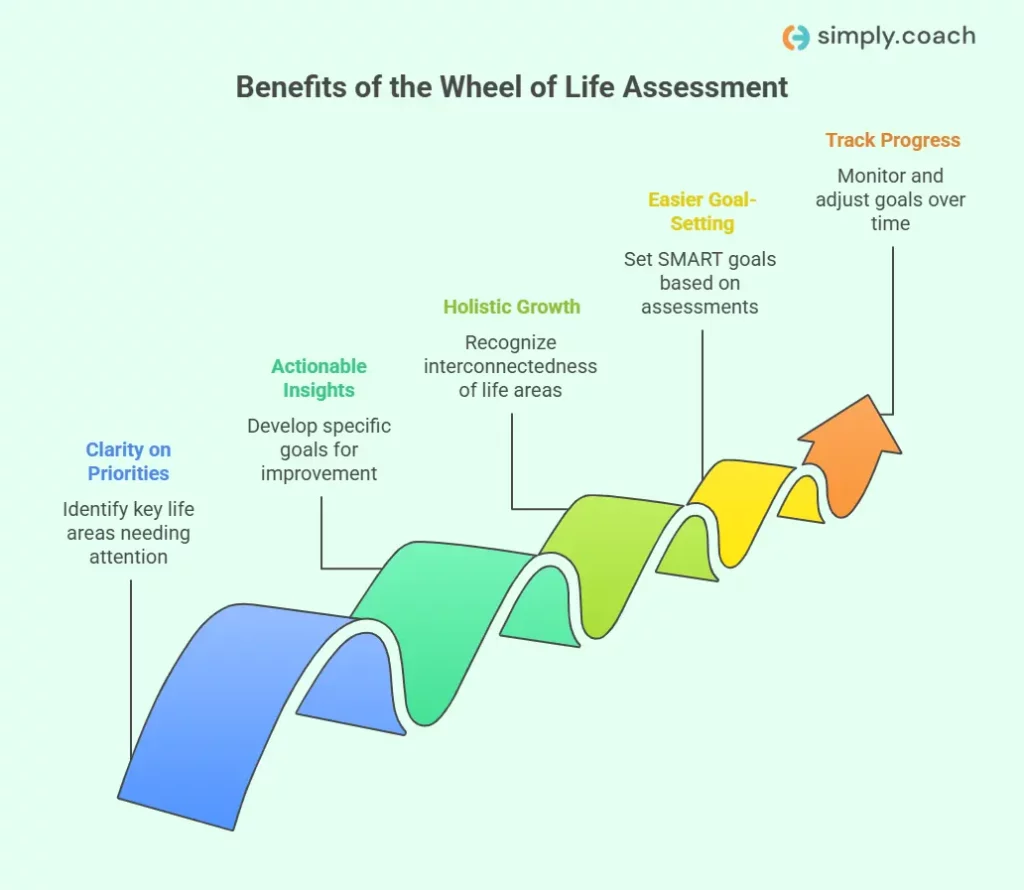
The wheel of life assessment isn’t just a tool for reflection, it’s a practical approach that delivers real, actionable benefits. Here’s how it can transform your coaching practice and support your clients’ personal growth:
- Clarity on priorities: The assessment forces your clients to confront the discrepancies between where they are and where they want to be. This clarity helps them identify which life areas deserve the most attention and which ones are currently draining their energy.
- Actionable insights: Unlike abstract reflections, the wheel of life gives your clients clear, actionable insights into specific areas that require focus. Whether it’s career advancement or improving health habits, the tool helps set precise goals for growth.
- Promotes holistic growth: It’s easy for clients to get fixated on one area of life, but the wheel of life assessment ensures that they consider the bigger picture, highlighting how interconnected each life area is and how neglecting one affects others.
- Easier goal-setting: The ratings of each area provide an immediate starting point for setting goals. You can guide your clients to create SMART goals based on their lowest-rated life segments, ensuring they work toward specific, measurable changes.
- Track progress effectively: The Wheel of Life isn’t just a one-time exercise. It allows you to track progress over time. By reassessing their wheel regularly, clients can see tangible improvements or areas where they need to refocus. This makes the process more dynamic and engaging.
How to Use the Wheel of Life (A Step-by-Step Guide)
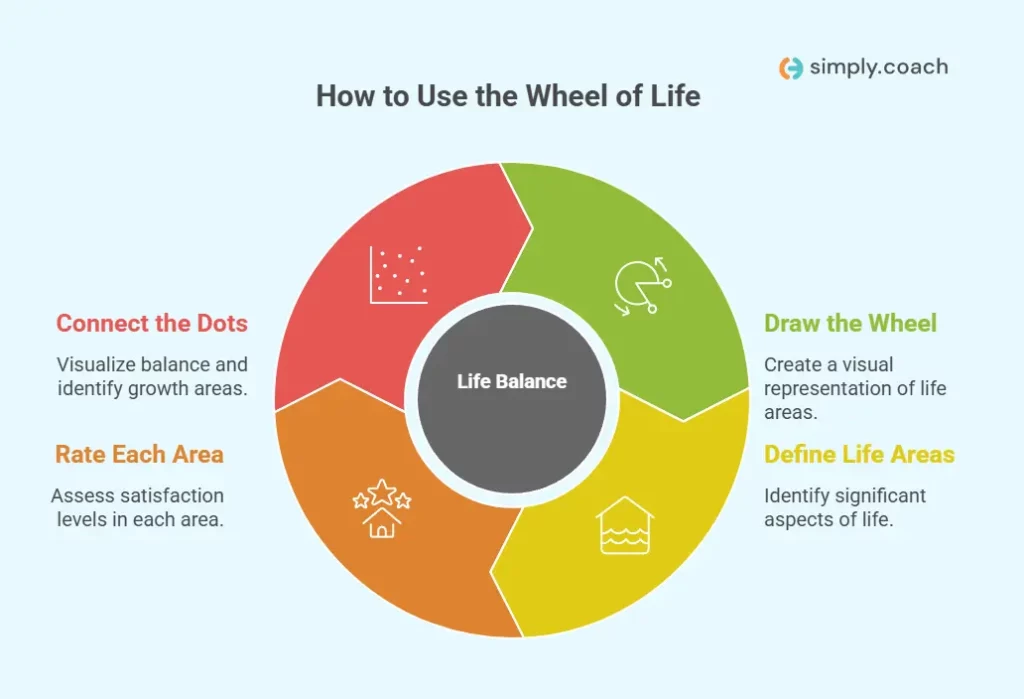
The wheel of life is a powerful tool that helps clients assess their life balance and gain clarity on which areas need more attention. By breaking life into eight key areas, clients can visually see where they are thriving and where they might be struggling. This tool not only helps them understand their current state but also guides them in setting meaningful, actionable goals for growth.
Step 1: Draw the wheel
Begin by having your client create a visual representation of their life. Draw a circle and divide it into 8 equal sections. Each section represents a different area of life. This can be done on paper or with a digital version, depending on what your client prefers. By creating this wheel, they’ll be able to see their life in a way that’s easy to understand and reflect upon.
Step 2: Define the 8 life areas
Each section of the wheel should represent a significant aspect of your client’s life. Here are the most common life areas to include:
- Career/Work: This covers job satisfaction, career progression, and work-life balance.
- Finances/Money: Reflect on financial security, budgeting, and future financial goals.
- Health/Well-Being: Assess physical and mental health, as well as overall wellness.
- Relationships/Love: Look at personal relationships with family, friends, and romantic partners.
- Personal Growth/Learning: Focus on personal development, learning new skills, and self-improvement.
- Fun/Recreation: Hobbies, leisure activities, and time spent doing what brings joy.
- Physical Environment/Home: How your client’s living and working spaces impact their well-being.
- Spirituality/Contribution: Sense of purpose, spiritual practices, or involvement in the community.
You can adjust these categories based on your client’s priorities, but these are the core areas most commonly used to assess life balance.
Step 3: Rate each area
Now, ask your client to rate each area on a scale of 1 to 10. A score of 1 represents significant dissatisfaction, while 10 indicates perfect satisfaction. Encourage your client to be completely honest during this step, this is where true self-awareness begins. If they rate any area too high out of attachment, they might miss the opportunity to work on areas that need improvement. The goal here is to assess life as it is, not as they wish it to be. This will help identify where they need to focus their energy for change.
Step 4: Connect the dots
Once your client has rated all eight life areas, have them connect the dots to form the shape of their wheel. A perfect circle indicates balance, while any flat or jagged areas highlight where they’re experiencing difficulties or neglect. These low points represent opportunities for growth. As a coach, you can now help your client focus on these areas, setting actionable goals to bring balance back to their life.
For a more in-depth exploration of the Wheel of Life and additional resources, you might find this article helpful: 7-Step Exercise with Free Wheel of Life Template for Coaching
The Most Powerful Wheel of Life Questions (By Category)
The secret to transforming your client’s wheel isn’t just about the rating—it’s the questions you ask them. The wheel of life gives you a visual snapshot of where your clients stand, but the right questions will guide them to deeper insights and lasting change. Below are thought-provoking questions for each area of life, designed to help you facilitate meaningful conversations and set actionable goals with your clients.
1. Career/Work
- Does your current work align with your values and purpose?
- What skills do you need to develop to advance in your career?
- How do you feel about your current work-life balance?
- What aspect of your career gives you the most satisfaction?
- What obstacles are preventing you from reaching your career goals?
- How do you handle stress at work, and how could you manage it better?
- What professional goals do you want to achieve this year?
- How do you feel about your job stability and future career opportunities?
- What changes could you make to feel more fulfilled in your work?
- What would your ideal career look like, and what’s stopping you from achieving it?
2. Finances/Money
- Are you living within your means, or are you constantly stressed about money?
- How would you describe your relationship with money?
- Are you actively budgeting, or do you spend without a clear plan?
- What financial goals do you want to achieve in the next 6 months?
- How confident are you about your current savings and investments?
- What areas of your finances need improvement?
- Are there any financial habits you’d like to break or develop?
- Do you have an emergency fund, and how secure does it make you feel?
- How satisfied are you with your current income?
- What steps can you take to gain more control over your financial future?
3. Health/Well-Being
- What does a truly healthy life look like to you, physically, mentally, and emotionally?
- How often do you engage in physical activity, and how does it make you feel?
- Are you getting enough sleep, and how does your sleep affect your daily life?
- How do you manage stress, and what could you do to lower it?
- Are you eating a balanced diet, and how does it impact your energy levels?
- How would you rate your mental health, and what could improve it?
- Are you prioritizing self-care, or are you burning out?
- What does your ideal wellness routine look like?
- How often do you take time off to rest and recharge?
- What changes would you make to improve your overall health and well-being?
4. Relationships/Love
- Which relationships in your life energize you, and which ones drain you?
- How well do you communicate your needs with those closest to you?
- Are you truly present in your relationships, or are you often distracted?
- How often do you invest time and effort into the people who matter most?
- What relationships need more attention, and how can you nurture them?
- Are you satisfied with your romantic life, and what could improve it?
- How do you handle conflict in relationships, and how can you manage it better?
- Are you setting boundaries in your relationships to protect your well-being?
- What would it take for you to feel more connected with your loved ones?
- How do you show appreciation to those who support you?
5. Personal Growth/Learning
- What new skills or knowledge would make you feel more confident and fulfilled?
- How much time do you dedicate to learning and self-improvement?
- What personal growth goals have you set for yourself this year?
- How often do you step outside your comfort zone?
- What limiting beliefs are holding you back from growing further?
- How do you stay motivated to continue learning, even when it’s challenging?
- What book, podcast, or mentor has had the most positive impact on your growth?
- How do you apply the knowledge you gain in a meaningful way?
- How do you evaluate your progress in personal development?
- What new habit can you start to further your personal growth?
6. Fun/Recreation
- When was the last time you did something just for the sake of fun?
- How often do you engage in activities that bring you joy?
- Are you making time for play, or are you stuck in work mode?
- How do you feel after spending time on hobbies or activities you enjoy?
- What’s one fun activity you’ve been putting off, and why?
- How well do you balance work and leisure in your life?
- What could you do to bring more joy and play into your routine?
- How much do you prioritize relaxation and rest, and how could it improve your well-being?
- What activities recharge you, and how often do you make time for them?
- How do you feel about your overall work-life balance, and how could you improve it?
7. Physical Environment/Home
- Does your home environment feel like a sanctuary, or does it contribute to your stress?
- How organized and clutter-free is your living space?
- How does your environment affect your mood and productivity?
- What changes could you make to your workspace to improve focus and efficiency?
- Does your home inspire you, or does it feel overwhelming?
- How often do you declutter or refresh your living space?
- Does your home reflect your personality and values?
- How comfortable and safe do you feel in your living space?
- What small changes could you make to make your environment more peaceful?
- How do you feel about your work environment, and what improvements would make it better?
8. Spirituality/Contribution
- What legacy do you want to leave, and how are you living in alignment with it?
- How often do you reflect on your purpose and whether your actions align with it?
- How connected do you feel to something greater than yourself?
- What does spiritualitymean to you, and how do you nurture it?
- How much time do you dedicate to giving back to your community or the world?
- What practices help you feel a sense of peace and purpose?
- How do you integrate your values into your daily life and decisions?
- How can you contribute to the causes that matter most to you?
- How does your current life reflect the spiritual beliefs and values you hold?
- What small actions can you take to deepen your connection to your purpose?
Get more life coaching insights!
To dive deeper into asking powerful life coaching questions, check out “The Ultimate Guide to Asking Powerful Life Coaching Questions.” Download and enhance your coaching practice with proven strategies and questions designed to unlock your client’s potential.

From Questions to Action – Creating a Growth Plan
Your wheel of life is not a one-time exercise; it’s a living roadmap that evolves with your clients. After guiding your clients through the assessment, it’s time to turn those insights into action. Here’s how you can help them move from reflection to tangible steps for growth.
1. How to interpret your results
Low scores aren’t a failure, they represent opportunities for growth. When you look at the areas your client rated lower, it’s not about seeing them as setbacks but as places to focus their efforts. These areas highlight where they can make the most impact. Use this as a chance to dig deeper with your client and explore the underlying issues that may be contributing to those low scores. Help them reframe their thinking so they see these low scores as a starting point for improvement.
For example, if your client rates their “Health” as a 3, you can explore why they feel this way. Is it due to lack of exercise, poor diet, or high stress levels? Once you uncover the reasons, you can work with them to create realistic, actionable goals that move this area forward.
2. Set SMART goals
Now that you have the insights, it’s time to create actionable steps. Introduce the SMART goal framework to your clients to help them set clear and measurable goals:
- Specific: Make the goal clear and focused.
- Measurable: Ensure there’s a way to track progress.
- Achievable: The goal should be realistic given the time and resources available.
- Relevant: The goal should align with what’s most important to your client.
- Time-bound: Set a deadline for achieving the goal.
Encourage your clients to create SMART goals for the areas that need attention.
For example, if your client wants to improve their Health score, a SMART goal could be: “Walk for 30 minutes, five days a week, for the next three months to increase my energy levels and reduce stress.”
- Specific: Walk for 30 minutes.
- Measurable: Five days a week can be tracked.
- Achievable: Fits into a manageable daily routine.
- Relevant: Directly supports the client’s health and energy improvement.
- Time-bound: Target is three months.
This structure will not only help them stay on track but also give them a sense of accomplishment as they make progress.
3. Choose 1-3 key areas to focus on first
Avoid overwhelming your client by trying to tackle everything at once. It’s important to focus on 1-3 key areas that need immediate attention. By narrowing their focus, your client can direct their energy toward the most impactful changes. This approach prevents burnout and keeps them engaged with the process.
For example, if your client’s Wheel shows low scores in Health (3), Finances (4), and Relationships (5), you could guide them to start with these areas. They might set goals around building a consistent wellness routine, creating a simple monthly budget, and scheduling weekly quality time with loved ones. These areas are practical, measurable, and have a ripple effect on other parts of life.
Use this time to help them prioritize the areas where they can make the biggest difference. By focusing on these areas, your client can make noticeable improvements without feeling overwhelmed.
4. Create a simple action plan
Once the focus areas are set, break those goals down into simple, actionable steps. Let’s take an example of improving a client’s health:
Goal: Improve my Health score from a 4 to a 6.
- Action 1: Walk for 30 minutes, 3 times a week.
- Action 2: Meditate for 10 minutes every morning.
- Action 3: Drink 2 liters of water daily.
Now, it’s important to track progress. Help your client stay consistent by setting reminders and monitoring their commitment. Consistency is key in turning those small actions into significant progress. You can use tools or apps to automate reminders or have regular check-ins with your client to track their success. Keep it simple, measurable, and achievable.
How Simply.Coach Helps You Turn Insights into Action
Transforming your client’s wheel of life insights into actionable goals is essential for their growth. Simply.Coach provides the tools to streamline this process, ensuring that your clients stay on track and see real progress. Here’s how:
- Goal planning tool: Create SMART goals based on your client’s wheel of life insights, ensuring that goals are specific, measurable, and time-bound.
- Action plans: Break down goals into clear, actionable tasks, and assign them to your clients with automated reminders to maintain accountability.
- Client workspaces: Provide a personalized space for clients to track progress, update goals, share reflections, and access resources, making collaboration seamless.
- Progress reports: Generate automated reports to track client progress over time, offering data-driven insights to guide future coaching sessions.
- Nudges: Send automated, friendly reminders to your clients, encouraging them to stay committed to their goals and actions, boosting their motivation.
Conclusion
The wheel of life is a powerful tool for gaining insight into your client’s life balance, but the real transformation happens when you turn those insights into action. By asking the right wheel of life questions, you can uncover areas for growth and help clients set meaningful goals. With the right tools and strategies, such as the SMART goal framework and action plans, your clients can make lasting changes. As a coach, your guidance and support are key to helping them move from reflection to real-world improvement.
Simply.Coach, the leading digital coaching platform, streamlines this process by offering a suite of tools designed to help you track goals, monitor progress, and keep clients engaged. With features like automated progress tracking, client workspaces, and nudges, you can focus more on coaching and less on administrative tasks. Simply.Coach helps you create an organized, impactful coaching experience for both you and your clients.
FAQs
1. How often should I reassess my Wheel of Life?
It’s recommended to reassess the Wheel of Life every 3 to 6 months to track progress and adjust goals accordingly. However, more frequent assessments can be beneficial if you’re actively working on specific areas or experiencing significant life changes.
2. Can I customize the categories in the Wheel of Life?
Absolutely! The Wheel of Life is a flexible tool. You can tailor the categories to better fit your client’s unique life circumstances and priorities, ensuring a more personalized assessment.
3. How do I interpret an uneven Wheel of Life?
An uneven Wheel of Life indicates areas of imbalance or dissatisfaction. The flatter the wheel, the more significant the imbalance. Focus on the lowest-rated areas to set targeted goals for improvement.
4. Is the Wheel of Life suitable for group coaching?
Yes, the Wheel of Life can be effectively used in group coaching sessions. Participants can individually assess their life balance and then share insights, fostering group discussions and collective goal-setting.
5. Can the Wheel of Life be used in professional settings?
The Wheel of Life is versatile and can be adapted for professional settings. It helps individuals assess work-life balance, job satisfaction, and career development, making it a valuable tool for workplace coaching.
6. What are some common mistakes when using the Wheel of Life?
Common mistakes include not being honest during self-assessment, focusing solely on high-rated areas, and neglecting to set actionable goals. Ensure a balanced approach by addressing both strengths and areas for improvement.