
Are you considering a career transition in your late 30s or 40s? With years of experience behind you, life coaching could be the ideal path to turn your life lessons into a fulfilling career.
Making a career shift at this stage in life can feel daunting, but it also offers a unique opportunity. With years of personal and professional experiences, you already possess valuable insights that can guide others. Life coaching allows you to transform these experiences into a meaningful career, where you help others achieve their goals while creating a fulfilling future for yourself.
In this blog, we’ll walk you through how to turn your past experiences, both the challenges and successes, into coaching strengths. We’ll explore how you can define your niche, gain the necessary certification, and set up your coaching practice. Additionally, we’ll cover strategies for expanding your offerings and overcoming common obstacles, so you can build a successful coaching career that aligns with your skills and passion.
Key Takeaways
- Turning life experience into a coaching career allows you to help others while fulfilling your own sense of purpose by guiding them through their personal growth.
- Finding a niche in your coaching practice helps you attract the right clients and build credibility in your field, whether it’s career, wellness, or executive coaching.
- Certification boosts your credibility and provides structure, but isn’t strictly necessary to start your coaching business.
- Simply.Coach offers an all-in-one platform to streamline the business side of coaching, helping you manage clients, sessions, and progress reports effortlessly.
- Start small by offering free sessions or workshops to build trust and gain testimonials, gradually expanding your client base.
- Focus on building strong relationships with clients and setting clear goals to help them achieve measurable progress over time.
Understanding Life Coaching
Life coaching is a professional relationship that helps clients set and achieve personal or professional goals. Unlike therapy, which focuses on healing psychological issues, life coaching is about empowerment and practical strategies for growth. It’s a forward-focused approach that works with individuals to unlock their potential and overcome obstacles.
The role of experience
Your life experiences are crucial in shaping your approach as a life coach. The challenges you’ve faced and the lessons you’ve learned provide you with unique insights that resonate with your clients. Your ability to understand and empathize with struggles makes you an authentic and relatable guide. By sharing your story, you can create trust, which is essential for fostering effective coaching relationships. Your experiences make you credible and allow you to offer real, actionable advice from a place of personal understanding.
As a life coach, your role is not just about giving advice; it’s about guiding your clients through a process of self-discovery, goal-setting, and action. You’ll play a key part in your clients’ personal growth, helping them unlock their potential and move forward in life. Here are the main roles and responsibilities you’ll take on:
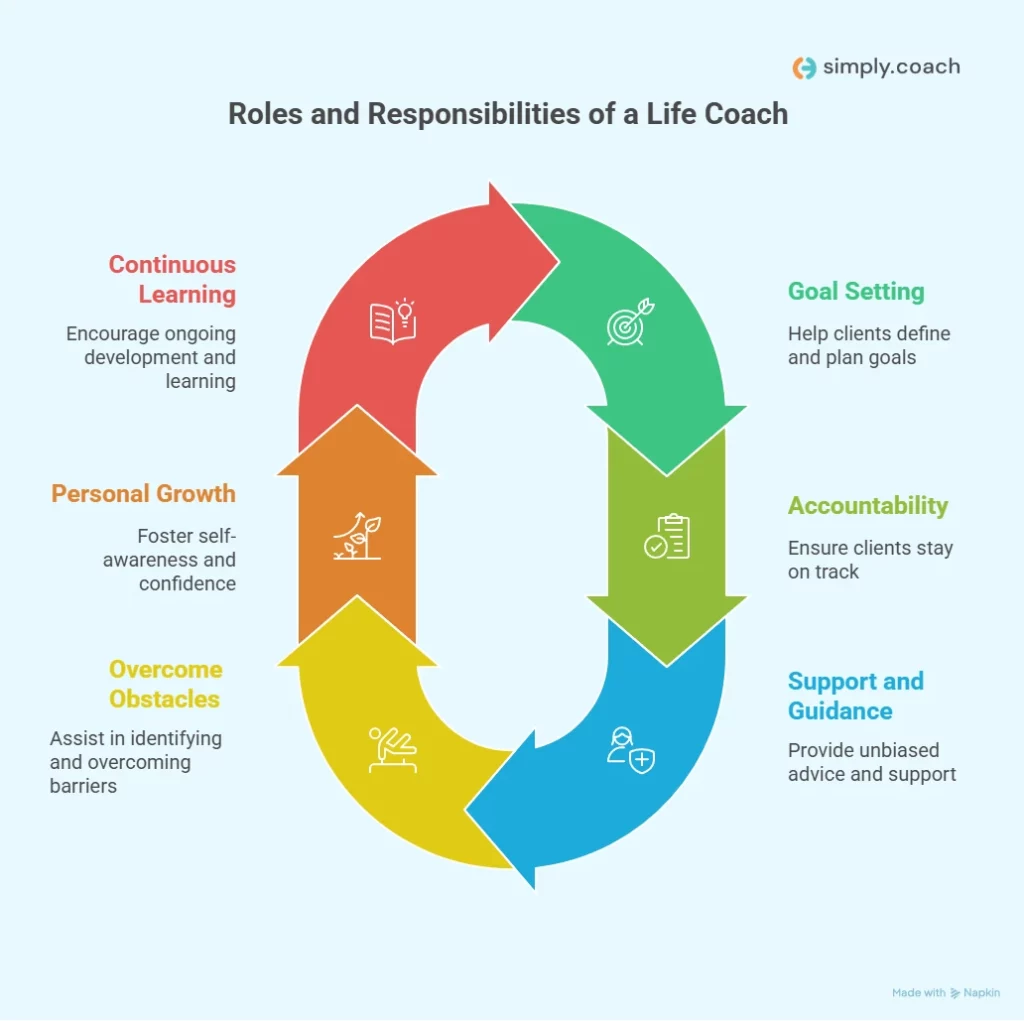
- Goal setting and action planning: You will help clients identify their goals and break them down into actionable steps, ensuring that they have a clear roadmap to success.
- Providing accountability: As a life coach, you’ll hold your clients accountable for their actions and progress, ensuring they stay on track to reach their goals.
- Offering unbiased support and guidance: You will provide a safe, non-judgmental space where clients can explore their challenges and receive unbiased advice, helping them make informed decisions.
- Helping clients identify and overcome obstacles: You will assist clients in recognizing personal or external barriers that may be holding them back and offer strategies to overcome these challenges.
- Fostering personal growth and self-awareness: One of your core responsibilities will be to help clients develop self-awareness, build emotional intelligence, and become more confident in their decision-making.
- Encouraging continuous learning and development: You’ll guide clients towards adopting a growth mindset and encourage ongoing learning, helping them enhance their skills, knowledge, and overall well-being.
Also read: 67 Powerful Life Coaching Quotes To Inspire
How You Can Turn Your Life Experience into Life Coaching
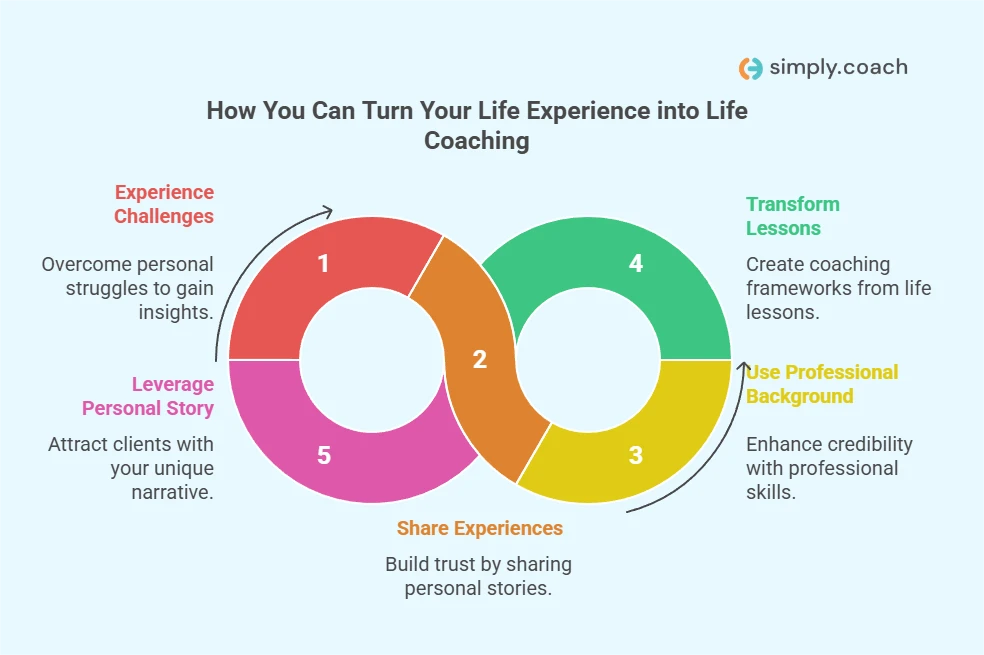
Your life experiences, whether challenges or successes, have shaped you into someone who can guide others toward personal growth. Whether overcoming obstacles, navigating career changes, or learning life lessons, your journey can inspire others and help them unlock their potential. Here’s how you can turn those experiences into a fulfilling coaching career.
1. Experience your own challenges
Overcoming personal challenges allows you to connect with clients on a deeper level. When you’ve faced struggles, you gain insights and empathy that make you a more effective coach. You can guide clients through their own challenges with understanding and compassion.
- Example: If you’ve gone through a major career transition, you understand the uncertainty and fear that often accompany such changes. This experience enables you to offer valuable advice and support to clients undergoing similar shifts in their lives.
Your own growth through challenges will serve as proof to your clients that change is possible. You show them that transformation can happen, not just through words, but through shared experience.
2. Be willing to share your life experiences
Sharing your personal experiences with clients is essential for building trust. Being open about your struggles and successes shows clients that you understand them on a human level. When you are transparent, it encourages them to open up and engage in the coaching process.
- Example: If you’ve experienced a personal setback, such as a failed relationship, sharing this can help clients feel less isolated in their own challenges. It demonstrates that setbacks are part of growth and offers clients hope.
By sharing your story, you create a safe space for clients to express themselves, which fosters a stronger connection and enhances the coaching relationship.
3. Use your professional experience to enhance coaching credibility
Your professional background provides you with valuable insights that make your coaching practice more credible. Whether you’ve worked in leadership, healthcare, education, or any other field, the skills you’ve developed can be applied directly to help clients in similar situations.
- Example: If you’ve led teams or managed projects, your leadership experience can be used to guide clients in managing their own teams or navigating workplace challenges.
Your professional experience helps build authority and trust with clients, making it easier for them to relate to you and see you as an expert in your field.
4. Transform life lessons into coaching frameworks
The lessons you’ve learned throughout your life can be turned into structured coaching frameworks. These frameworks provide clients with clear steps and strategies they can follow to achieve their goals and overcome challenges. They help make the coaching process more actionable and impactful.
- Example: If you’ve developed a method for managing stress or setting effective goals, you can share this process with your clients, guiding them through each step to achieve the same success.
Your life experiences give you the ability to create structured systems that empower clients to take control of their own growth and create lasting changes in their lives.
5. Your personal story as your selling point
Your personal story can be one of your greatest assets as a coach. Sharing how you’ve navigated challenges and transformed your life gives you an edge in a competitive market. It not only inspires potential clients but also helps them connect with you on a deeper level.
- Example: If you’ve successfully transitioned from a corporate job to full-time coaching, your story can resonate with clients who are contemplating a similar career shift. Your experience serves as proof that making such a transition is possible.
A compelling personal story sets you apart, building trust and inspiring potential clients to take action. It shows them that you understand their challenges and that you have the tools and experience to help them succeed.
Start Your Life Coaching Journey Today
If you’re ready to take the next step in becoming a life coach, our Life Coaching Track is designed to equip you with the tools, knowledge, and support needed to succeed. This track includes actionable content to help you:Fully understand the professionGet certified as a life coachStart your life coaching businessAttract clients and grow your practiceBecome a better life coachEquip yourself with the latest tools and technology

Step-by-Step Guidelines to Launch Your Life Coaching Career
Here’s how to take your newfound life coaching skills and experience and turn them into a profitable business. By following a clear and structured approach, you can build a successful coaching practice that helps others while also creating a rewarding career for yourself.
1. Find your niche
Finding your niche is one of the most important steps in building a successful life coaching business. Focusing on a specific area, whether it’s career coaching, wellness coaching, or executive coaching, allows you to attract the right clients and tailor your services to meet their unique needs.
- Why it matters: Specializing in a niche helps you stand out in a crowded market and makes it easier for potential clients to understand how you can help them.
- How to choose: Reflect on your expertise, passion, and the challenges you’ve overcome. Consider what you’re most passionate about and where you can make the biggest impact.
- Example: If you have experience in corporate leadership, executive coaching might be your ideal niche. If you’ve overcome personal health struggles, wellness coaching could be a perfect fit.
By focusing on a specific area, you’ll build credibility in that space, making it easier to gain clients who need exactly what you offer.
Also read: 100 Life Coaching Niches to Grow a Profitable Coaching Business in 2025
2. Obtain certification
Becoming a certified life coach adds significant value to your career. Certification from a respected organization like ICF (International Coach Federation) boosts your credibility, increases client trust, and helps you stand out in the competitive coaching industry.
- Why it’s important: Certification demonstrates to clients that you’ve undergone formal training and adhere to professional standards. It also gives you structure and tools to guide your clients more effectively.
- How to choose the right program: Look for accredited certification programs that align with your niche. Make sure the program includes practical training, offers hands-on coaching opportunities, and is recognized by industry organizations.
- Tip: Research different certification programs to find the one that best suits your career goals and learning style. Consider both online and in-person options.
Certification ensures that you have the skills and qualifications necessary to help clients achieve their goals while also giving them the confidence that they are in capable hands.
3. Set up your coaching sessions
Once you have your niche and certification, it’s time to structure your coaching sessions. The way you organize your sessions will influence the client experience and your success as a coach.
- Frequency: Decide how often you want to meet with clients. Some coaches offer weekly sessions, while others prefer bi-weekly meetings. Choose a schedule that fits your style and availability.
- Duration: Typically, coaching sessions last about 60 minutes. This allows enough time to explore issues and create actionable plans without overwhelming the client.
- Session flow: Establish a clear session structure. Start with a check-in, review the client’s progress, set new goals, and discuss next steps. This helps create consistency and accountability for your clients.
Organizing your sessions in a structured way not only improves the client experience but also helps you stay on track with your goals as a coach.
Need More Help Designing Your Coaching Program?
Download our free guide, "How to Design & Launch Your Signature Coaching Program," and learn step-by-step how to create a program that aligns with your niche, goals, and client needs. This guide covers everything from structuring your program to launching it successfully, helping you create a lasting impact with your coaching.
4. Build your coaching brand
Your brand is how you present yourself to potential clients and the world. A strong, consistent brand helps you build recognition and trust. This starts with creating a professional online presence and clearly defining what you offer.
- Create a website: A well-designed website is essential for showcasing your services, credentials, and client testimonials. Make sure it clearly communicates who you are and how you can help.
- Develop your value proposition: Clearly define the problem you solve and the benefits clients will receive from working with you. What makes you unique as a coach, what distinct value do you bring to the coaching approach?
- Consistency: Ensure your branding (logo, colors, tone) is consistent across your website, social media, and marketing materials. This reinforces your professionalism and builds trust.
Building a strong brand helps establish you as an authority in your niche, making it easier for clients to find and connect with you.
5. Market your services
Once your brand is established, it’s time to market your services. Effective marketing is key to attracting clients and growing your business. The goal is to raise awareness and build relationships that convert into clients.
- Social media: Use platforms like LinkedIn, Instagram, or Facebook to share content, engage with your audience, and promote your coaching services. Regularly post valuable insights or tips to position yourself as a thought leader.
- Networking: Attend events, both online and offline, where your target audience is. Networking with other coaches or professionals in related fields can lead to collaborations and referrals.
- Content marketing: Start a blog, create a podcast, or even host webinars. Sharing valuable content helps build your authority and attracts potential clients who resonate with your message.
Marketing is an ongoing process, and by consistently offering value and engaging with your audience, you’ll steadily grow your coaching practice.
Looking to Master Social Media Marketing for Your Coaching Business?
Download our free guide,"Social Media Strategies for Coaches – A Definitive Guide" and discover effective techniques to grow your online presence, engage your audience, and convert followers into clients. This comprehensive guide provides actionable tips to help you build a strong social media strategy tailored to your coaching business.
6. Start with free sessions or workshops
Offering free sessions or workshops is a great way to build trust, gain testimonials, and establish a client base. It allows potential clients to experience your coaching style and see the value you bring before committing to a paid package.
- Why it works: Free sessions give clients a risk-free opportunity to experience the transformation you offer. It also builds confidence in your abilities and encourages them to sign up for longer-term coaching.
- How to structure: Consider offering free 30-minute discovery sessions where clients can discuss their goals and challenges. Alternatively, host a free group workshop or webinar to give a taste of your coaching style.
- Collect testimonials: After these sessions or workshops, ask participants for feedback or testimonials. This social proof will be essential for attracting future clients.
Starting with free sessions helps you establish credibility and grow your client base, making it easier to transition into a full-time coaching career.
Mistakes to Avoid When Turning Your Experience into Life Coaching
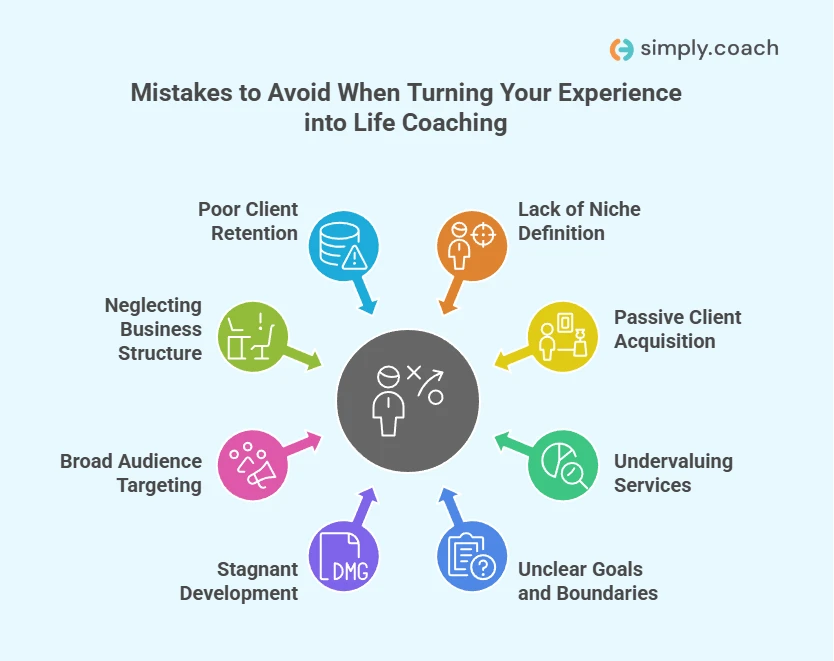
Transitioning from your current profession to life coaching is an exciting journey, but it’s easy to make common mistakes that can hinder your success. Being aware of these pitfalls can help you navigate the process smoothly and build a thriving coaching practice. Here are some mistakes to avoid when turning your experience into a life coaching career:
- Failing to define a clear niche: Not narrowing down the coaching focus makes it difficult to attract ideal clients. Without a well-defined niche, potential clients may struggle to understand what exactly is being offered and why they should choose you.
- Expecting clients to come without putting in effort: Relying on word-of-mouth or simply having the right experience doesn’t guarantee clients will find you. Actively marketing your services, networking, and building an online presence are all crucial for getting noticed.
- Undervaluing services to attract clients: Offering services at a lower rate to attract clients may attract people who aren’t fully committed or value your expertise. This can lead to burnout and diminished confidence in your abilities. Pricing should reflect the value you bring based on your experience and skills.
- Not setting clear goals and boundaries with clients: Without establishing clear goals and expectations upfront, clients may feel uncertain about the process and outcomes of coaching. Clear communication around session structure, progress, and mutual expectations helps maintain a productive relationship.
- Relying solely on past experience without ongoing development: Thinking past career experience alone is enough to coach effectively can limit growth. The coaching industry evolves, and continuous learning through certifications and training helps provide better outcomes for clients.
- Trying to be everything to everyone: Attempting to cater to a broad audience can lead to frustration and scattered results. Specializing in a niche allows for deeper expertise and attracts clients who need exactly what you offer.
- Neglecting the business side of coaching: Focusing only on client sessions without setting up a business structure can result in missed opportunities. Developing a clear business plan, pricing model, and systems for scheduling, payments, and marketing ensures long-term success.
- Overlooking the importance of client retention: Gaining clients is only the first step. Maintaining ongoing engagement and creating long-term relationships with clients are vital for building a sustainable coaching practice. Without a strategy for retaining clients, a coaching business can face high turnover rates.
How Simply.Coach Will Help You Start Your Life Coaching Career
Simply.Coach is a leading all-in-one life coaching platform designed to streamline your coaching business, enhance client engagement, and make your life coaching career more efficient. Whether you’re starting from scratch or looking to enhance your current practice, Simply.Coach provides the tools needed to run a successful life coaching business. Here’s how Simply.Coach will support you in starting your career as a life coach:
| Feature | Explanation |
| Showcase page | Create a personalized, professional website to showcase your coaching services, credentials, testimonials, and client success stories. This helps you establish a strong online presence and attract potential clients. |
| Subscription & session packages | Offer clients flexible subscription and session packages. You can create multiple pricing tiers and allow clients to easily sign up for recurring sessions or buy packages in advance. |
| Video conferencing | Simplify online coaching with built-in video conferencing integrations. With Simply.Coach, you can seamlessly conduct coaching sessions via Zoom, Google Meet, or Microsoft Teams without switching platforms. |
| Goal setting | Easily set and track client goals with SMART goal-setting templates. Simply.Coach allows you and your clients to track progress and adjust goals as needed, ensuring measurable outcomes. |
| Action plans | Build customized action plans for your clients. You can track their steps, set milestones, and ensure accountability. Automated reminders help keep clients on track. |
| Reports | Generate automated progress reports that provide insights into your clients’ achievements. This feature helps you and your clients review progress over time and adjust strategies accordingly. |
| Nudges | Send automated, personalized nudges to your clients to encourage them to stay on track with their goals. This tool helps maintain client engagement between sessions without constant manual follow-up. |
| Personalized client workspace | Provide each client with a dedicated workspace where they can access shared resources, track their goals, and view progress reports. This fosters collaboration and enhances the client-coach relationship. |
Simply.Coach equips you with the tools needed to effectively manage your coaching business, grow your client base, and provide a seamless experience for both you and your clients. From client management to session delivery, everything you need to kickstart your life coaching career is in one platform.
Conclusion
Turning your life experience into a life coaching career is an incredible way to make a lasting impact on others. By using the challenges you’ve overcome and the lessons you’ve learned, you can guide clients through their own personal growth. Your unique journey provides valuable insights that can help others unlock their potential and create meaningful change in their lives, while you build a coaching career that’s fulfilling and purposeful.
Simply.Coach is the all-in-one platform that simplifies the process of becoming a successful life coach. From creating personalized client workspaces and goal-setting systems to automating session reminders and offering seamless video conferencing, Simply.Coach streamlines your entire coaching process, allowing you to focus on delivering impactful coaching and nurturing client relationships.
FAQs
1. Do I need a formal certification to become a life coach?
While certification isn’t legally required, obtaining credentials from recognized bodies like the International Coaching Federation (ICF) can enhance your credibility and attract clients.
2. How do I determine my coaching niche?
Reflect on your personal experiences and expertise. Consider areas where you’ve faced challenges and achieved growth, such as career transitions or personal development, to identify a niche that resonates with you and potential clients.
3. What are the typical income expectations for a life coach?
Income varies based on factors like experience, niche, and client base. On average, life coaches earn between $100 to $300 per hour.
4. How can I build a client base as a new life coach?
Start by offering free workshops or webinars to showcase your expertise. Utilize social media platforms and create a professional website to increase visibility and attract potential clients.
5. What tools or platforms can assist in managing my coaching practice?
Platforms like Simply.Coach provide features such as client management, scheduling, and goal tracking, streamlining administrative tasks and allowing you to focus on coaching.
6. How do I handle clients who may need therapy instead of coaching?
It’s essential to recognize the distinction between coaching and therapy. If a client presents issues beyond your scope, refer them to a licensed mental health professional while maintaining a supportive stance.