
Effective communication is no longer just a soft skill, it is a strategic asset. According to the 2024 Pew Research Center report, 85% of U.S. workers consider interpersonal and communication skills to be extremely or very important in today’s economy.
This statistic highlights how essential clear, effective communication has become across workplaces and leadership roles. As a communication coach or someone aspiring to become one, you are in a position to guide clients in overcoming these challenges. Your skills can shape how individuals and teams collaborate, influence decisions, and achieve results.
In this guide, you will discover what communication coaching truly involves, explore its core components, understand the benefits it delivers, and learn the practical tools and techniques that can elevate your coaching practice. You will also get a clear step-by-step roadmap to becoming a certified communication coach.
Key Takeaways
- Communication coaching helps clients express themselves clearly, build confidence, and influence outcomes.
- Core components include verbal and non-verbal skills, active listening, emotional intelligence, and feedback mechanisms.
- Types of coaching include business, personal, leadership, and specialized areas such as public speaking, media, and crisis communication.
- Tools and techniques include role-playing, video review, speech analysis, mindfulness practices, and feedback surveys.
- To become a coach, evaluate your strengths, learn coaching principles, attend training and certifications, create structured packages, and launch your practice.
- Simply.Coach is a leading digital platform that helps you manage clients, track goals, and run coaching programs efficiently while growing your practice.
What is Communication Coaching?
Communication coaching is a focused practice that helps you guide clients in mastering how they express themselves and how they listen. It emphasizes clarity, confidence, and impact in every interaction, whether verbal, non-verbal, or written. This type of coaching goes beyond general advice and teaches practical techniques to improve delivery, engagement, and understanding in both personal and professional settings.
Through communication coaching, you help clients identify gaps in their messaging, refine their tone and body language, and build strategies for connecting with different audiences. Your guidance ensures that every conversation, presentation, and written communication becomes purposeful, persuasive, and memorable.
According to Grammarly’s report, knowledge workers spend 88% of their workweek communicating, including 19 hours on written communication. This highlights the critical need for effective communication. As a coach, your guidance helps clients communicate clearly and confidently, strengthening trust, collaboration, and overall results with teams, stakeholders, and clients.
Also read: How to Strengthen Coaching Communication: Best Practices and Models
Core Components of Communication Coaching
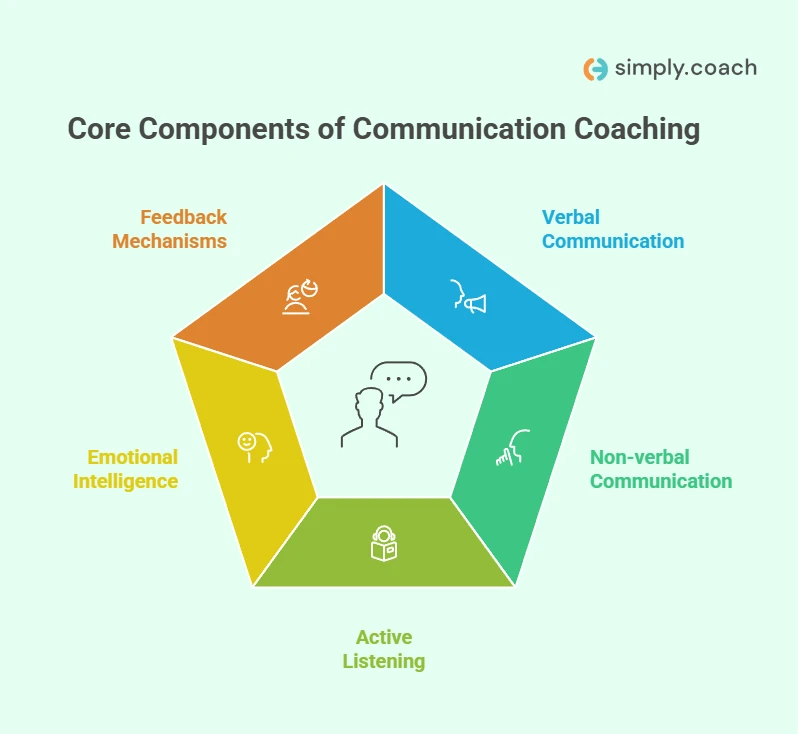
As an experienced communication coach, or an aspiring one, you understand that mastery in communication requires more than basic skills. The core components ensure your clients connect, influence, and achieve results in every interaction.
1. Verbal communication: Precision and persuasion
Verbal communication is about delivering messages with clarity and purpose. You help clients refine their language, tone, and storytelling to maximize impact in every conversation.
- Intentional language choice: Guide clients in selecting words that align with their objectives, ensuring clarity and purpose in every conversation.
- Tone modulation: Teach the impact of tone on message reception, coaching clients to adjust their tone to suit different contexts and audiences.
- Pacing and pauses: Instruct on the power of pacing and strategic pauses to enhance message delivery and listener engagement.
- Storytelling techniques: Incorporate storytelling to make messages more relatable and memorable, a skill particularly effective in leadership and persuasive communication.
2. Non-verbal communication: Alignment and influence
Non-verbal cues shape how messages are perceived. You train clients to align gestures, expressions, and posture to reinforce credibility and connection.
- Body language awareness: Educate on the significance of posture, gestures, and facial expressions in conveying confidence and openness.
- Cultural sensitivity: Address how non-verbal cues can vary across cultures and the importance of being adaptable in diverse settings.
- Mirroring techniques: Teach clients to subtly mirror the body language of others to build rapport and trust.
- Space utilization: Discuss the concept of proxemics and how personal space can affect communication dynamics.
3. Active listening: Deep engagement and reflection
Active listening ensures clients truly understand others. You teach them to listen for intent, emotion, and nuance to foster meaningful dialogue.
- Reflective listening: Encourage clients to paraphrase and reflect back what they’ve heard to confirm understanding.
- Empathetic engagement: Train clients to recognize and respond to the emotional undertones in conversations, fostering deeper connections.
- Non-verbal feedback: Highlight the importance of nodding, eye contact, and other non-verbal cues that show attentiveness.
- Avoiding interruptions: Coach clients on the value of allowing others to speak without interjecting, promoting a respectful dialogue.
4. Emotional intelligence: Self-regulation and social awareness
Emotional intelligence allows clients to manage their emotions and understand others. You help them navigate interactions with composure, empathy, and influence.
- Self-awareness: Guide clients in recognizing their emotional triggers and understanding how their emotions influence their communication.
- Self-regulation: Teach techniques to manage emotions, especially in high-stress situations, to maintain composure and clarity.
- Empathy: Foster the ability to understand and share the feelings of others, enhancing interpersonal relationships.
- Social skills: Develop clients’ abilities to navigate social complexities, manage conflicts, and build networks.
5. Feedback mechanisms: Constructive and actionable
Feedback is a critical tool for growth. You train clients to give and receive feedback effectively to enhance performance and communication skills.
- Specificity: Instruct clients on giving clear, specific feedback that focuses on behaviors rather than personal attributes.
- Timeliness: Stress the importance of providing feedback promptly to ensure relevance and impact.
- Constructive framing: Teach clients to frame feedback positively, focusing on growth and improvement.
- Receiving feedback: Coach clients on how to receive feedback gracefully, viewing it as an opportunity for development.
Also read: An Introduction to Adaptive Communication in Coaching Relationships
Types of Communication Coaching
As a communication coach, you tailor your approach based on the client’s goals and context. Each type of coaching requires distinct strategies, outcomes, and frameworks that align with the client’s professional and personal communication needs.
1. Business communication coaching
In business contexts, you help clients refine how they present ideas, negotiate deals, and communicate across teams and hierarchies. The goal is to elevate clarity, confidence, and influence in corporate interactions.
- Executive presentations: Train clients to build data-backed narratives that hold attention and drive decisions.
- Negotiation mastery: Coach on balancing assertiveness with empathy to reach mutually beneficial outcomes.
- Internal communication: Help leaders craft concise updates and feedback loops that improve collaboration.
- Cross-functional clarity: Enable teams to eliminate miscommunication across departments and time zones.
2. Personal communication coaching
Here, you guide clients to communicate authentically in everyday settings—personal relationships, social environments, or community interactions. The focus is on connection, emotional clarity, and self-expression.
- Confidence building: Help clients overcome communication anxiety through structured practice and reflection.
- Relationship communication: Teach active listening and empathy to strengthen personal bonds.
- Social fluency: Coach on adapting tone and energy to different audiences and situations.
- Boundary setting: Guide clients to express needs assertively without conflict.
3. Leadership communication coaching
You work with leaders to refine their communication style for stronger influence and trust. Leadership communication combines strategic clarity with emotional intelligence.
- Vision articulation: Train leaders to communicate mission and goals in a way that inspires teams.
- Conflict resolution: Coach leaders on de-escalating tension through neutral language and active listening.
- Executive presence: Help clients project authority through confident tone, composure, and posture.
- Team communication: Develop systems for transparent and consistent internal messaging.
4. Specialized communication coaching
Specialized coaching focuses on specific, high-pressure scenarios where communication directly impacts perception and outcomes. You prepare clients for public visibility, media exposure, and crisis situations.
- Public speaking: Train clients to structure speeches, use storytelling, and handle stage anxiety.
- Media training: Coach clients on concise, message-driven responses during interviews or panels.
- Crisis communication: Prepare leaders to address stakeholders with honesty, calm, and control during critical moments.
- Virtual presence: Guide clients in engaging digital audiences with on-screen clarity and connection.
Also read: 5 Reasons Why Leadership Communication Skills Are Essential in Leadership Coaching
Tools and Techniques Used in Communication Coaching
The most effective communication coaching goes beyond conversation practice. It uses structured tools, performance analytics, and reflective techniques that help clients see, hear, and measure their growth. As a communication coach, you combine technology with behavioral methods to transform communication habits into sustainable strengths.
1. Speech analysis software
You use speech analysis tools to help clients identify patterns they cannot hear themselves. These tools analyze tone, pacing, filler words, and articulation to provide objective feedback.
- Praat and Orai: Analyze pitch, clarity, and vocal energy across different sessions.
- Yoodli: Uses AI-based scoring to detect filler words and suggest delivery improvements in real time.
- VoiceVibes: Evaluates tone and emotional cues, helping clients develop a confident and engaging delivery.
Coaching insight: Use quantitative metrics from these tools to create targeted voice and tone improvement plans.
2. Role-playing exercises
Role-playing helps clients practice communication in realistic settings, board meetings, performance reviews, or high-stakes negotiations. It lets them refine both delivery and emotional control.
- Scenario design: Create situations based on real workplace dynamics or client challenges.
- Iterative feedback: Pause, review, and replay conversations to improve phrasing, tone, or body alignment.
- Emotional regulation: Teach clients to stay composed and intentional, even under pressure.
Coaching insight: Use these exercises to help clients internalize communication behaviors through repetition and reflection.
3. Video recording and playback
Recording sessions provides clients with a clear mirror of their communication style. When clients watch themselves, they become more aware of habits and subtle cues they previously overlooked.
- Recording platforms: Use Zoom or Loom for seamless recording and annotation.
- Playback sessions: Review recordings together and highlight moments of strong or weak delivery.
- Self-review journals: Encourage clients to document what they notice and what they’ll adjust next.
Coaching insight: Compare early and later recordings to show measurable progress in tone, posture, and clarity.
4. Mindfulness practices
Mindfulness enhances a client’s ability to stay calm, listen deeply, and respond thoughtfully. It builds the mental discipline required for impactful communication.
- Pre-session grounding: Begin sessions with a two-minute breathing or centering exercise.
- Awareness check-ins: Ask clients to notice tone, posture, and energy in real-time conversations.
- Mindful listening: Teach clients to focus entirely on the speaker before formulating a response.
Coaching insight: Encourage clients to integrate short mindfulness routines before high-stakes conversations.
5. Feedback tools and structured evaluations
Feedback mechanisms allow you to quantify communication improvement and maintain accountability. Structured evaluations provide both coach and client with objective progress markers.
- 360° feedback forms: Collect input from peers, managers, or team members on communication effectiveness.
- Surveys and scorecards: Use structured forms like SurveyMonkey or Typeform for targeted feedback.
- Behavioral observation checklists: Record measurable indicators such as tone control, active listening, and body alignment.
Coaching insight: Review data at regular intervals to fine-tune strategies and sustain momentum.
How to Become a Communication Coach
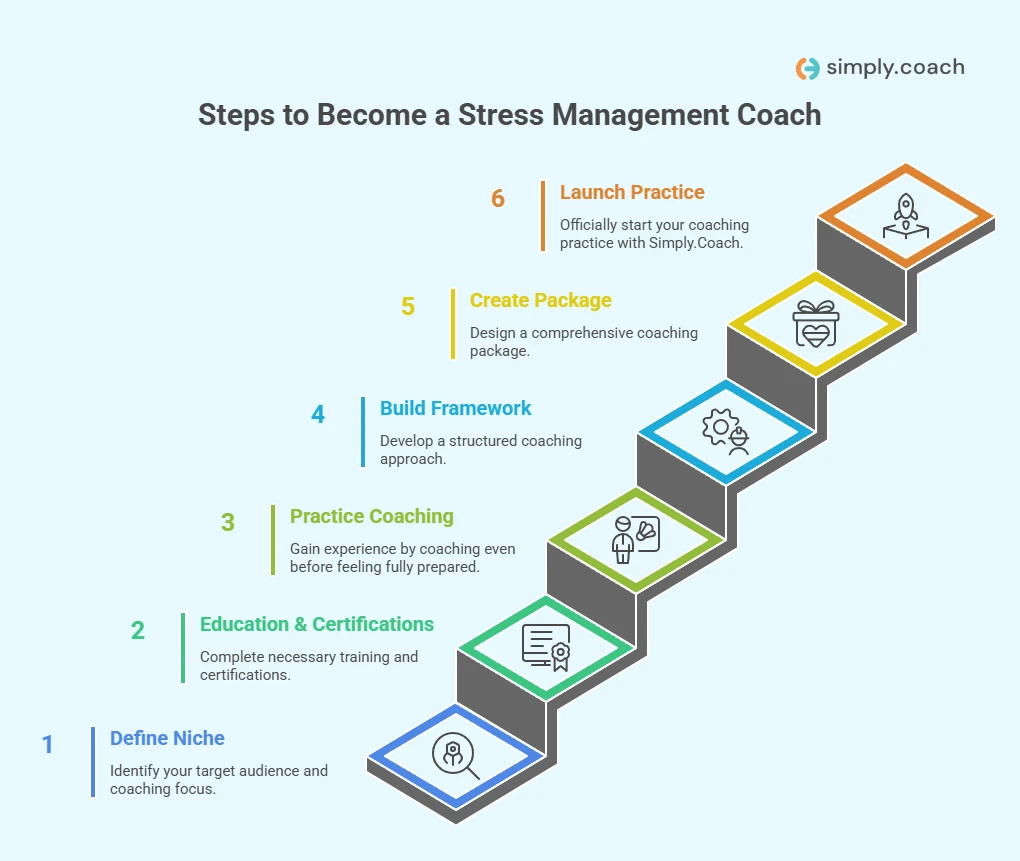
Becoming a communication coach goes beyond helping people speak better. It requires the ability to guide clients to express themselves clearly, connect meaningfully, and influence outcomes in their professional and personal lives. Your experience in corporate or leadership roles gives you a foundation, but structured coaching skills will allow you to turn that experience into measurable client impact.
Step 1: Evaluate your strengths and passion for communication
- Start by reflecting on your own communication journey.
- Consider the areas where you naturally excel, whether it’s delivering presentations, resolving conflicts, or mentoring colleagues.
- Identify the skills that bring measurable results in professional settings.
- Understanding your strengths and passions will help you choose a coaching focus that aligns with your expertise and client needs.
Step 2: Gain foundational knowledge in coaching principles
- Coaching requires more than expertise in communication; it demands a structured approach.
- Familiarize yourself with established frameworks such as GROW (Goal–Reality–Options–Will) and CLEAR (Contracting–Listening–Exploring–Action–Review).
- These models provide a roadmap for guiding clients, setting actionable goals, and maintaining accountability throughout the coaching journey.
- Attending workshops or training programs on applied coaching techniques further strengthens your foundation.
Step 3: Attend workshops and accredited training programs
- Specialized training and certification programs equip you with credibility and practical knowledge.
- Look for courses accredited by the International Coaching Federation (ICF).
- Focus on programs that offer hands-on practice, mentorship, and instruction in areas such as storytelling, behavioral change, and executive presence.
- This step ensures your coaching is evidence-based, structured, and recognized in the professional coaching community.
Also read: Understanding ACC, PCC, and MCC: Guide to ICF Credential Levels
Step 4: Create a coaching package
Once you’ve gained the foundational knowledge and certification, the next step is to design your coaching package. A well-structured package defines the value you deliver, sets clear expectations for clients, and streamlines your workflow.
- Define the focus: Decide whether your package addresses executive communication, leadership presence, or personal communication growth.
- Set duration and format: Packages can range from 4–12 weeks with a mix of one-on-one sessions, group workshops, or hybrid approaches.
- Include measurable outcomes: Incorporate goal-setting, progress tracking, and actionable exercises that clients can implement between sessions.
- Build tiered options: Offer different levels like basic, advanced, or intensive programs, so clients can choose based on their needs and investment capacity.
By creating a structured coaching package, you establish your professional identity and provide a clear roadmap for client success.
Step 5: Launch your coaching practice with Simply.Coach
Launching your practice is easier when you use the right platform. Simply.Coach is an all-in-one coaching platform that helps you manage every aspect of your coaching business efficiently while keeping your clients engaged and accountable.
- Showcase page: Build a professional profile that highlights your credentials, specialties, and testimonials to attract clients.
- Journey builder: Create reusable coaching templates for programs, allowing you to standardize workflows while personalizing sessions for each client.
- Subscription and session packages: Offer flexible session packages or subscription models integrated with payment gateways for seamless transactions.
- Goal setting: Assign and track client goals with clear metrics, ensuring accountability and progress visibility.
- Client workspaces: Provide a dedicated space for clients to access resources, track progress, and engage with your coaching program.
- Reports: Generate detailed progress reports for clients to visualize their growth and understand the impact of your coaching.
Using Simply.Coach allows you to focus on delivering high-value coaching while the platform handles administrative tasks, client management, and progress tracking. This all-in-one approach ensures you can scale your practice without compromising the quality of your coaching.
Also read: 8 Language and Communication Coaches to Follow Online
How Much Does a Communication Coach Earn in the U.S.?
As a communication coach, understanding your earning potential is essential for planning your practice and growth strategy. As of October 2025, the average annual salary for a Communication Coach in the United States is approximately $40,970, which translates to around $19.70 per hour.
Your actual income can vary widely depending on your experience, specialization, and the type of clients you serve. Coaches with more years of experience or those who focus on executive, leadership, or niche communication skills often command higher fees. Similarly, your location and the demand for coaching services in your region can influence your rates.
Here’s a breakdown of what you can expect at different experience levels:
- Average Annual Salary: $40,970
- Average Hourly Rate: $19.70
- Top Earners (90th Percentile): Up to $51,500 annually
- 25th Percentile: Approximately $33,000 annually
- 75th Percentile: Around $43,000 annually
These figures highlight that while many coaches earn a moderate income, you have the opportunity to increase your earnings by leveraging your expertise, building a strong client base, and delivering measurable results that clients value.
Conclusion
Communication coaching is a powerful tool that transforms how professionals and leaders connect, influence, and achieve results. By mastering verbal, non-verbal, and emotional communication, you can guide clients to gain clarity, confidence, and measurable growth. Whether you focus on business, personal, or leadership communication, understanding the coaching process, applying proven tools, and continuously refining your methods ensures lasting impact.
As a communication coach, using the right platform can simplify how you run your practice. Simply.Coach, a leading digital coaching platform, lets you organize client sessions, track goals, and manage programs all in one place. Its intuitive tools help you focus on delivering real results, building strong client relationships, and growing your coaching business efficiently.