
Most clients spend a large part of their lives replaying past events or worrying about what might happen next. As a therapist, you often see how this constant shift between past and future pulls attention away from what is actually happening in the present moment. While some therapeutic models focus heavily on analysing past experiences, many contemporary approaches invite clients to become aware of their current thoughts, emotions, and bodily sensations.
One approach that places this present-moment awareness at the center of the therapeutic process is Gestalt Therapy. Instead of relying mainly on interpretation or analysis, it helps you guide clients to notice what they are experiencing right now. Through this awareness, clients begin to recognize patterns, address unfinished emotional situations, and take greater responsibility for their responses. In this article, you’ll explore how Gestalt therapy works and how it can support meaningful client growth in your practice.
Key Takeaways
- Gestalt therapy emphasizes present-moment awareness as the primary pathway to growth and transformation, rather than focusing exclusively on past events.
- The approach views individuals as integrated beings of mind, body, emotions, and spirit, rather than collections of isolated symptoms or diagnoses.
- In Gestalt therapy, increasing awareness of thoughts, feelings, bodily sensations, and behavior is not just preparatory work, it is the core mechanism of healing.
- By shifting from blame to ownership through conscious choice and “I” language, clients develop greater autonomy, empowerment, and emotional maturity.
- Methods such as the empty chair, role-playing, body awareness, and creative expression bring unresolved emotions into the present, allowing fragmented parts of the self to reconnect.
- For practitioners, managing sessions, progress tracking, compliance, and communication efficiently through platforms like Simply.Coach enables greater focus on transformative therapeutic practice.
What Does “Gestalt” Mean?
“Gestalt” is a German term most closely translated as “whole,” “form,” or “pattern.” It reflects how we naturally perceive life, not as separate parts, but as organized wholes.
This belief that the whole is greater than the sum of its parts forms the foundation of Gestalt therapy. It challenges the tendency to reduce human experience to isolated symptoms or diagnoses. A person is not just their anxiety, trauma, or behaviors. They are all of these dimensions woven together into something far more complex than any single label.
For this reason, Gestalt therapy takes a holistic view. Thoughts, emotions, physical sensations, and spirit are seen as interconnected and constantly influencing one another.
A pain in your stomach during conflict is not separate from your emotions. It is your emotional state expressed through the body. Tension, shallow breathing, or a clenched jaw are not simply physical symptoms but signals from your inner world.
By honoring the integration of mind, body, emotions, and spirit, Gestalt therapy supports a deeper and more authentic form of healing than addressing any one dimension alone.
The Origins and History of Gestalt Therapy
To understand the origins of Gestalt therapy, let’s go to mid-twentieth-century Europe, a continent reeling from two world wars, political upheaval, and deep questions about human existence. Within this turbulent climate, the foundations of Gestalt therapy began to take shape.
Who is the father of Gestalt therapy?
Fritz Perls is widely regarded as the father of Gestalt therapy, a humanistic and experiential approach to psychotherapy that emphasises present-moment awareness, personal responsibility, and direct experience.
However, Gestalt therapy did not emerge from the work of one individual alone. It developed through the collaboration of several influential thinkers and psychological traditions.
1. Early influences on Fritz Perls
- Fritz Perls was originally trained in the psychoanalytic tradition of Sigmund Freud.
- Over time, he became dissatisfied with psychoanalysis because it focused heavily on analyzing the past and often maintained a detached therapist role.
- Perls wanted a more active and experiential approach that focused on what a person is experiencing in the present moment.
2. Collaboration with Laura Perls
- Gestalt therapy was co-developed with Laura Perls, Fritz Perls’ partner and a psychologist in her own right.
- Laura Perls introduced important influences from:
- Existential philosophy
- Gestalt psychology
- Her contributions helped shape the therapy’s emphasis on awareness, relationship, and lived experience.
3. Philosophical influences
Gestalt therapy was also influenced by existential philosophers who focused on authentic living and personal responsibility:
- Martin Heidegger
- Jean‑Paul Sartre
Their ideas emphasized:
- Personal freedom and responsibility
- Direct experience of life
- The importance of living fully in the present moment
These themes became central principles in Gestalt therapy.
4. Influence of Gestalt psychology
Gestalt therapy also drew from early Gestalt psychology developed by researchers such as:
- Max Wertheimer
- Wolfgang Köhler
Their research demonstrated that:
- Human perception naturally organizes experiences into meaningful wholes rather than isolated parts.
- Fritz and Laura Perls applied this concept to psychotherapy, encouraging therapists to understand a person as a whole system of thoughts, emotions, and behaviours.
5. The formal birth of Gestalt therapy (1951)
Gestalt therapy officially emerged in 1951 with the publication of:
- Gestalt Therapy: Excitement and Growth in the Human Personality
The book was co-authored by:
- Fritz Perls
- Paul Goodman
- Ralph Hefferline
The text introduced the theoretical and practical foundations of Gestalt therapy, arguing that psychological growth occurs through awareness and active engagement with present experiences.
6. Establishment of the first gestalt institute
- In 1952, Fritz and Laura Perls founded the New York Institute for Gestalt Therapy in New York City.
- The institute became a major training center for therapists interested in the new approach.
- Additional institutes soon appeared in cities such as Cleveland and San Francisco, helping the method spread internationally.
7. Growth during the human potential movement
During the 1960s and 1970s, Gestalt therapy gained widespread recognition.
- Fritz Perls became closely associated with the Esalen Institute in Big Sur, California.
- His dynamic workshop style introduced Gestalt therapy to many people exploring self-development and personal growth during the human potential movement.
By the end of the decade, Gestalt therapy had grown from a small clinical approach into one of the most influential forms of humanistic psychotherapy practiced around the world.
Core Concepts in Gestalt Therapy
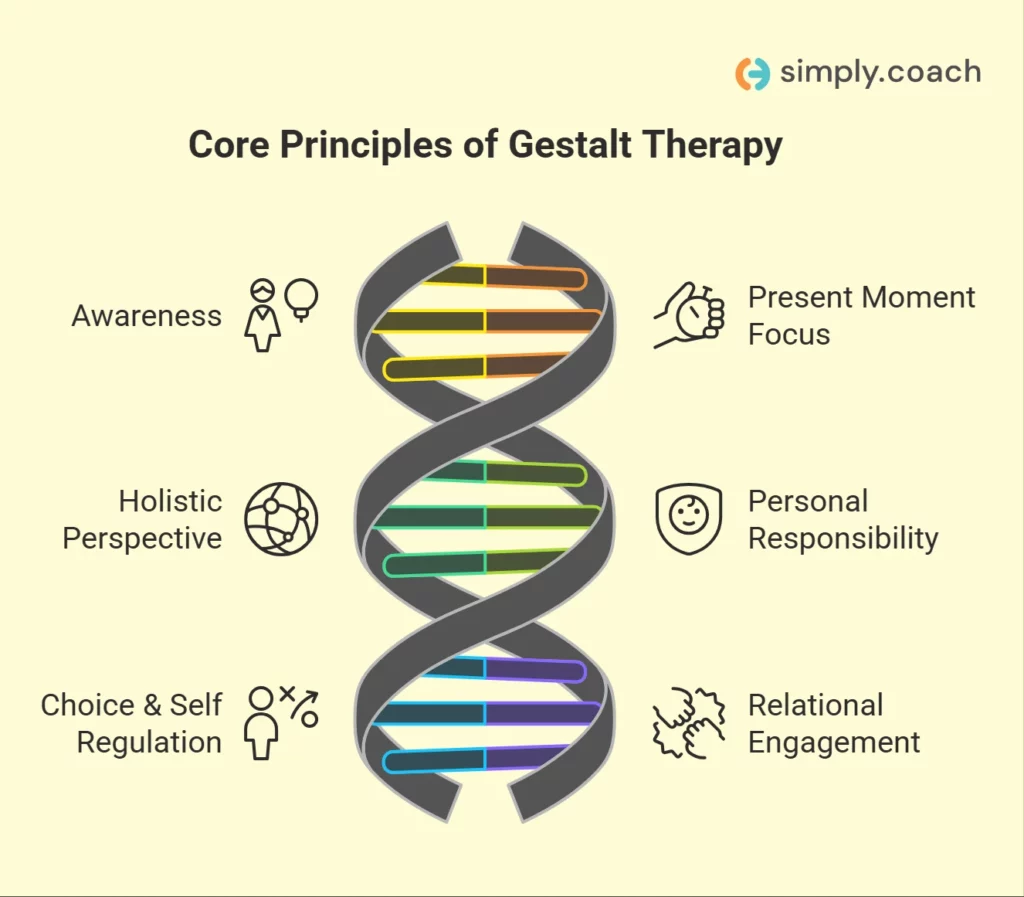
As a therapist practicing Gestalt Therapy, these core principles guide how you observe clients, structure interventions, and facilitate insight. Together, they shape a therapeutic approach that prioritizes awareness, experiential learning, and authentic contact within the session.
1. Awareness
Awareness sits at the center of Gestalt practice. Fritz Perls famously stated that awareness itself can be healing because it allows clients to recognize patterns that previously operated automatically.
In your sessions, this often means guiding clients to notice what is happening internally and externally in real time. You may invite them to observe shifts in breathing, posture, tone of voice, or emotional reactions while they speak. These embodied cues frequently reveal needs or tensions before the client can articulate them cognitively.
Rather than interpreting experiences for the client, Gestalt work encourages you to help clients develop their own awareness of these signals. Over time, this awareness becomes a foundation for self-understanding and behavioral change.
2. Presence and the here and now
Gestalt therapy is grounded in present-moment experience. While clients may talk about past relationships or earlier life events, your focus remains on how those experiences appear in the session right now.
For example, when a client describes a past conflict, you may notice how their body tightens or their voice changes as they recall the situation. By drawing attention to these present reactions, you allow the client to explore unresolved emotions as they emerge in real time.
This approach helps transform storytelling into lived experience within the session. Instead of analyzing the past from a distance, clients become aware of how old patterns continue to shape their current responses and relationships.
3. Holism
Gestalt therapy views the client as an integrated system rather than a collection of separate symptoms. Thoughts, emotions, bodily sensations, behaviors, and environmental influences all interact continuously.
In practice, this means you look beyond a single presenting issue. For instance, a client reporting anxiety may also demonstrate physical tension, relational withdrawal, or internal self-criticism. Exploring these interconnected layers often reveals how the client organizes their experience as a whole.
This holistic perspective also includes context. Clients exist within families, cultures, social roles, and environments that shape how they interpret and respond to life situations. Recognizing these influences allows you to approach their experiences with greater nuance and empathy.
4. Personal responsibility
Another central concept in Gestalt therapy is helping clients develop a sense of personal responsibility for their experience. This does not mean blaming clients for their feelings or circumstances. Instead, it emphasizes their capacity to recognize and respond to their own internal processes.
One practical method involves working with language. When clients attribute their emotions entirely to others, you may encourage them to reframe statements in a way that acknowledges their own experience. For example, shifting from “They make me feel ignored” to “I feel ignored when that happens.”
This subtle change helps clients recognize their emotional responses as their own, which can strengthen agency and open the possibility for new choices.
5. Choice and self-regulation
Gestalt therapy assumes that many behaviors once served an adaptive purpose. Clients often developed coping strategies earlier in life to manage difficult environments, relationships, or expectations.
During therapy, you help clients examine whether those strategies still serve them. Patterns that were once protective may become limiting when applied rigidly in new situations.
Through awareness and experimentation within the session, clients begin to recognize alternative responses. This process strengthens self-regulation and supports more flexible ways of engaging with challenges and relationships.
6. Relational engagement
The therapeutic relationship itself is a key component of Gestalt work. Rather than maintaining a distant or purely interpretive role, the therapist participates in a genuine and responsive dialogue with the client.
Your observations, reactions, and presence can become part of the exploration. When shared thoughtfully, these responses may help clients notice relational patterns that also appear outside the therapy room.
This collaborative engagement reflects the broader humanistic tradition within which Gestalt therapy developed, alongside approaches such as Person-Centered Therapy. The therapeutic relationship becomes a space where clients experience awareness, contact, and experimentation in real time.
The 7 Stages of the Gestalt Cycle (Cycle of Experience)
In Gestalt Therapy, the Cycle of Experience explains how human needs emerge, move toward expression, and reach resolution through interaction with the environment. As a therapist, understanding this cycle helps you identify where a client’s natural self-regulation process is interrupted.
When the cycle flows smoothly, clients recognize needs, act on them, and return to equilibrium. When a stage is blocked, clients may experience unfinished emotional situations, chronic tension, or repeated relational patterns. Your role is often to help clients notice these interruptions and experiment with completing the cycle within the session.
1. Sensation
The cycle begins with a pre-conscious bodily signal that something in the client’s environment or inner world requires attention.
In sessions, you may observe this stage before the client can articulate it.
Common indicators include:
- Physical sensations such as tightness in the chest, shallow breathing, stomach discomfort, or restlessness
- Emotional shifts like subtle irritation, curiosity, or unease
- Behavioral cues such as fidgeting, pausing mid-sentence, or changes in tone
As a therapist, you may gently bring attention to these signals:
- “What are you noticing in your body right now?”
- “Something shifted when you mentioned that. What did you feel?”
Helping clients slow down and notice sensations strengthens their ability to detect emerging needs earlier in the cycle.
2. Awareness
During the awareness stage, the vague sensation becomes clearer and cognitively recognized.
The client begins to understand what the sensation represents.
Examples you may encounter in therapy:
- A client recognizes that physical tension reflects anxiety about confronting a partner
- Restlessness becomes awareness of a need for change in a career or relationship
- Emotional numbness becomes awareness of suppressed grief
Therapeutic work at this stage often involves:
- Encouraging clients to name emotions and needs
- Linking body sensations with emotional meaning
- Exploring how the present experience connects to current relationships or situations
Awareness is critical because clients cannot act on needs they do not recognize.
3. Mobilisation of energy
Once awareness forms, the client’s system begins to generate energy for action.
This stage may appear in therapy as:
- Rising emotional intensity such as anger, sadness, or determination
- Increased physical activation such as leaning forward, stronger voice tone, or animated gestures
- Clearer motivation to change a situation or communicate a need
Your role as a therapist may involve helping the client:
- Stay present with the emotional energy instead of suppressing it
- Explore what the energy is trying to move them toward
- Differentiate between constructive expression and impulsive reaction
If this stage becomes blocked, clients often report:
- Feeling stuck or powerless
- Intellectualizing rather than acting
- Repeated rumination without change
4. Action
The action stage is where the client actively moves toward meeting the need identified earlier in the cycle.
In everyday life this might involve:
- Expressing emotions honestly
- Setting a boundary in a relationship
- Asking for support or clarification
- Making a concrete decision
In therapy, you may support this stage through experiential methods such as:
- Role-playing difficult conversations
- The empty chair technique to explore unfinished dialogues
- Behavioral experiments that help the client try new responses
The goal is not to force action but to help the client explore what authentic expression feels like.
5. Contact
Contact occurs when the client fully engages with the experience, person, or environment connected to their need.
This is often the most meaningful moment in the cycle.
Examples of therapeutic contact include:
- A client directly expressing anger toward a symbolic figure in an empty-chair exercise
- Experiencing emotional connection while sharing vulnerable feelings
- Recognizing a long-avoided truth about a relationship
Healthy contact involves:
- Awareness of both self and other
- Emotional presence
- Clear communication of needs or feelings
In Gestalt work, you help clients stay present during these moments rather than withdrawing prematurely.
6. Satisfaction
When contact successfully meets the need, the client experiences completion and emotional resolution.
Signs of satisfaction may include:
- Visible relaxation in posture or breathing
- A sense of clarity or relief
- Emotional release such as crying or laughter
- Verbal statements like “That feels different now”
For many clients, this stage represents the resolution of previously unfinished experiences.
Therapeutically, you may support satisfaction by:
- Allowing time for the client to fully experience the emotional shift
- Reflecting on what has changed internally
- Helping the client integrate the new awareness into their daily life
7. Withdrawal
The final stage is withdrawal, where the client naturally disengages from the experience once the need has been met.
Healthy withdrawal allows the nervous system to return to balance.
In therapy, this may appear as:
- A calmer emotional state
- Reduced intensity of the earlier issue
- The client shifting attention to a new topic or need
Supporting healthy withdrawal involves:
- Helping clients notice the completion of the experience
- Encouraging reflection on what they learned
- Allowing space for the next emerging need to surface
When the cycle is repeatedly interrupted before this stage, clients may carry unfinished emotional situations, which often appear as recurring relational conflicts or persistent emotional tension. Gestalt therapy helps bring these interruptions into awareness so the cycle can move toward completion.
What Happens in a Gestalt Therapy Session?
A Gestalt session feels collaborative and open rather than scripted. The therapist pays attention not only to what the client says, but also to tone, posture, facial expression, and physical gestures. Subtle shifts such as a clenched jaw, slumped shoulders, or quickened breath can provide important information.
A session may begin with a simple question such as, “What are you aware of right now?” This immediately brings attention to the present. From there, the process follows what emerges. The therapist may invite the client to stay with a feeling, notice inconsistencies between words and body language, or explore something that stands out.
Sessions are experiential rather than purely conversational. Clients engage with their thoughts, emotions, and patterns as they arise in real time, within the safety of the therapeutic relationship.
Difference Between CBT and Gestalt Therapy
Although both approaches aim to improve psychological well-being, they differ significantly in their philosophy, techniques, and therapeutic focus. The table below highlights the key differences between Cognitive Behavioural Therapy (CBT) and Gestalt Therapy.
| Aspect | CBT (Cognitive Behavioural Therapy) | Gestalt Therapy |
| Core Focus | Focuses on identifying and changing negative thoughts and behaviours. | Focuses on increasing awareness of present-moment experience. |
| Time Orientation | Often examines how past experiences influence current thinking patterns but mainly works toward present change. | Strong emphasis on the here and now rather than analysing the past. |
| Approach to Thoughts | Thoughts are evaluated, challenged, and reframed to create healthier patterns. | Thoughts, feelings, and body sensations are explored as they arise without trying to immediately change them. |
| Therapy Style | Structured, goal-oriented, and often follows specific techniques and exercises. | Experiential, open-ended, and based on dialogue and awareness. |
| Role of the Therapist | Acts as a guide who helps clients identify cognitive distortions and practice new skills. | Acts as a facilitator who helps clients deepen self-awareness and emotional expression. |
| Techniques Used | Cognitive restructuring, behavioural experiments, journaling, and homework tasks. | Role-play, empty-chair technique, body awareness, and experiential exercises. |
| Primary Goal | Change unhelpful thinking patterns to improve emotions and behaviours. | Help clients become more aware of themselves and integrate thoughts, emotions, and actions. |
Common Gestalt Therapy Techniques
In Gestalt Therapy, techniques are used to bring a client’s inner experience into the present moment of the session. As a therapist, you use these interventions to help clients move from talking about their problems to directly experiencing emotions, sensations, and relational patterns. The goal is to deepen awareness so unfinished emotional experiences can be explored and integrated.
Below are some of the most widely used Gestalt therapy techniques.
1. Empty chair technique
This is one of the most recognizable Gestalt interventions and is commonly used to work through unresolved relational conflicts.
- Invite the client to imagine that another person, or a part of themselves, is sitting in the empty chair.
- Ask them to speak directly to the chair instead of describing the situation abstractly.
- Encourage them to notice emotional and physical reactions as they speak.
- You may ask the client to switch chairs and respond from the other perspective.
- This dialogue often reveals suppressed emotions, unmet needs, or unspoken thoughts.
- The technique helps clients process unfinished emotional situations and gain clarity about their feelings.
2. Top dog vs. underdog role play
Fritz Perls described a common internal conflict between two opposing voices.
- Top dog represents the internal critic that demands perfection, control, or discipline.
- Underdog represents the part that resists pressure through avoidance, procrastination, or passive rebellion.
- In therapy, you invite the client to speak from each side of the conflict.
- Moving between these roles makes the internal dialogue visible.
- Clients begin to understand the function of both voices rather than suppressing one of them.
- This process often leads to greater self-awareness and integration.
3. Exaggeration exercise
Gestalt therapists pay close attention to nonverbal behavior because the body often reveals emotions before clients consciously recognize them.
- Notice repeated gestures such as tapping a foot, shrugging shoulders, or clenching hands.
- Ask the client to repeat or slightly exaggerate the gesture.
- Encourage them to stay aware of what emotions or thoughts emerge while doing so.
- Amplifying the movement often brings hidden emotional content into awareness.
- Clients may discover feelings such as frustration, fear, or helplessness connected to the gesture.
- This exercise highlights the connection between body language and emotional experience.
4. Body awareness
Embodied awareness is central to Gestalt therapy.
- Ask clients where they feel certain emotions in the body.
- Encourage them to describe sensations such as tightness, heaviness, warmth, or tension.
- Help them observe how breathing, posture, or muscle tension changes during discussion.
- Staying with these sensations can deepen emotional awareness.
- Clients often recognize early signals of stress, anxiety, or anger through bodily cues.
- Over time, this awareness helps clients regulate emotions more effectively outside therapy.
5. Creative and experiential expression
Some clients struggle to access emotions through conversation alone. Experiential methods can help bring deeper material into awareness.
- Invite clients to draw or sketch a current emotional experience.
- Use symbolic objects or imagery to represent relationships or internal conflicts.
- Encourage writing dialogues between different parts of the self.
- Explore feelings through movement or guided imagery when appropriate.
- Creative exercises allow clients to express experiences that may not yet have clear language.
- The focus remains on awareness and emotional expression, not artistic ability.
These techniques help clients experience their thoughts, emotions, and relational patterns more directly, allowing the therapeutic process to move beyond analysis toward meaningful insight and change.
Also Read: 18 Effective Person-Centered Therapy Techniques & Interventions
What is Gestalt therapy used for?
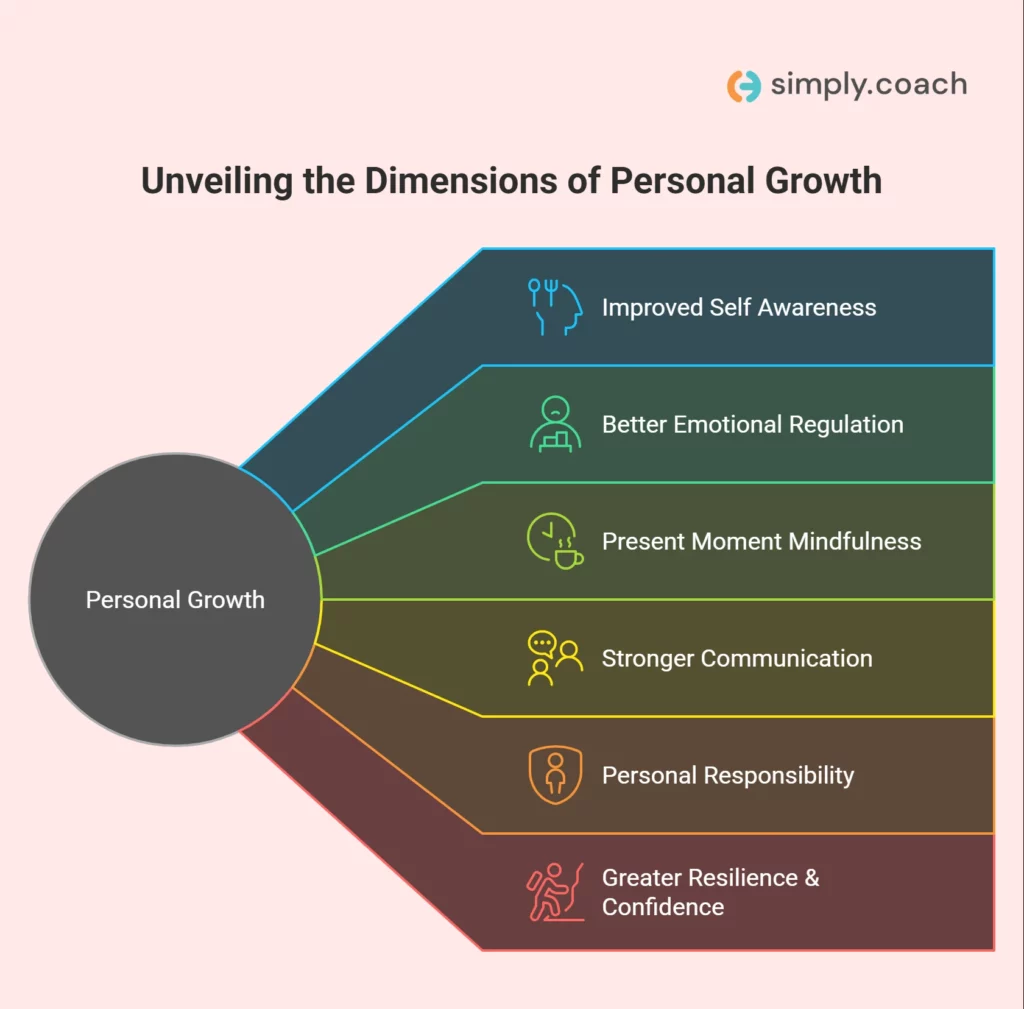
Gestalt therapy offers a wide range of benefits that extend well beyond the therapy room. Because the approach targets the root of how people experience and relate to themselves, the gains clients make tend to be deep, lasting, and far-reaching across multiple areas of life.
1. Improved self-awareness
Gestalt therapy strengthens real-time awareness of thoughts, emotions, bodily sensations, and behavior. As awareness grows, blind spots shrink, and habitual reactions become conscious choices. Clients begin to acknowledge and reintegrate parts of themselves they previously ignored, creating a more complete and grounded sense of self.
2. Better emotional regulation
By encouraging clients to fully experience emotions rather than suppress or intellectualize them, Gestalt therapy builds tolerance for discomfort. Over time, clients become less overwhelmed by difficult feelings and develop a steadier, more responsive emotional life.
3. Increased mindfulness
The consistent focus on the present moment naturally cultivates mindfulness. Clients learn to notice bodily sensations and immediate experience while reducing rumination about the past and anxiety about the future. This present-centered awareness often increases self-compassion and reduces anxiety.
4. Stronger communication skills
As clients practice taking ownership of their emotions through clear “I” statements and honest expression, their communication improves. They become better able to express needs, listen openly, and handle conflict without blame, defensiveness, or withdrawal.
5. Greater personal responsibility
Gestalt therapy encourages a shift from blaming others or circumstances toward owning one’s choices and responses. This fosters a sense of agency and authorship over one’s life, emphasizing freedom and empowerment rather than self-blame.
6. Enhanced resilience and self-confidence
Through integrating difficult emotions and fragmented parts of the self, clients develop a stronger internal foundation. Facing and processing painful material builds resilience, emotional stability, and a quiet confidence in one’s ability to navigate future challenges.
Managing Your Gestalt Therapy Practice with Simply.Coach
Running a Gestalt therapy practice requires more than facilitating awareness in sessions. Therapists also need reliable systems to manage client journeys, track insights across sessions, and handle scheduling and payments. Simply.Coach helps streamline these operational tasks so you can focus more on supporting client awareness and transformation.
- Client journey and progress tracking: Track client goals, reflections, and session outcomes in one place. Structured client workspaces help you monitor patterns, insights, and progress across multiple therapy sessions.
- Session scheduling and delivery: Sync your calendar, allow clients to self-book sessions, and conduct online sessions through integrations with platforms like Zoom, Google Meet, and Microsoft Teams.
- Practice and program management: Manage contracts, digital signatures, invoicing, and payments in one system. You can also create structured therapy programs or client journeys using reusable templates.
- Client engagement between sessions: Send automated reminders, reflection prompts, and digital forms that encourage clients to stay aware of emotions and patterns between therapy sessions.
- Security and compliance: Protect sensitive client information with strong safeguards including SOC2, HIPAA, and GDPR compliance, along with encryption and secure access controls.
By simplifying these operational aspects, Simply.Coach allows Gestalt therapists to spend less time on administration and more time helping clients deepen awareness and complete meaningful therapeutic work.
Conclusion
Gestalt therapy reminds us that meaningful change happens when people become aware of their present-moment experiences rather than staying trapped in past stories or future worries. By working with awareness, body sensations, relational contact, and experiential techniques, therapists help clients recognize patterns and complete unfinished emotional experiences. From understanding its core principles to applying the Gestalt cycle and practical techniques in sessions, this approach offers a powerful framework for supporting authentic growth. When clients learn to notice, experience, and respond to their needs in the moment, lasting psychological integration becomes possible.
To deliver this kind of structured and insight-driven therapy consistently, having the right practice tools also matters. Simply.Coach helps therapists manage client journeys, track insights across sessions, and streamline scheduling, documentation, and payments in one secure platform. With features designed for structured client engagement and progress tracking, it supports the reflective and process-oriented nature of Gestalt work. This allows therapists to focus less on administrative tasks and more on guiding clients toward deeper awareness and meaningful change.
FAQs
1. Why is Gestalt therapy rarely used?
Gestalt therapy is not necessarily “rare,” but it is less commonly promoted than approaches like CBT because it is less manualized and harder to standardize for clinical research trials. Many healthcare systems prefer structured, short-term, evidence-manual therapies, which makes approaches like CBT more dominant.
Gestalt therapy is also experiential and process-oriented, meaning outcomes depend heavily on the therapeutic relationship and client engagement. While highly effective for self-awareness and emotional integration, it may not always fit settings that prioritize symptom-focused or insurance-driven treatment models.
2. What is the difference between CBT and Gestalt therapy?
The primary difference lies in focus and method:
- CBT (Cognitive Behavioral Therapy) focuses on identifying and changing distorted thoughts and behaviors. It is structured, goal-oriented, and often short-term.
- Gestalt therapy focuses on present-moment awareness, emotional experience, and personal responsibility. It emphasizes integration of thoughts, feelings, and bodily sensations.
In short, CBT asks: “How can we change these thoughts?”
Gestalt therapy asks: “What are you experiencing right now?”
3. What are the four pillars of Gestalt therapy?
While different authors describe them slightly differently, four core pillars are commonly recognized:
- Present-Moment Awareness – Focusing on what is happening in the here and now.
- Personal Responsibility – Owning one’s choices, emotions, and behaviors.
- Holism – Viewing the person as an integrated whole (mind, body, emotions).
- Authentic Contact – Emphasizing genuine therapist-client relationship and connection.
Together, these pillars help clients develop greater self-awareness and integration.
4. What are the five layers of Gestalt therapy?
Developed by Fritz Perls, the five layers (or levels) describe stages of personal growth:
- The Phony Layer – Social roles and surface-level interactions.
- The Phobic Layer – Avoidance of painful emotions.
- The Impasse Layer – Feeling stuck and unsure without external support.
- The Implosive Layer – Turning emotions inward, internal confrontation.
- The Explosive Layer – Release of authentic emotion and energy, leading to integration.
These layers represent the movement from superficial functioning toward genuine self-expression and emotional freedom.