
Many nutrition coaches struggle to predict their real earning potential before taking clients and setting rates. Knowing what you can make matters when you price services, plan schedules, and set growth goals.
In the United States, employment of dietitians and nutritionists is projected to grow 6% from 2024 to 2034, faster than the average for all occupations. About 6,200 job openings are expected each year on average through that decade due to growth and worker replacement. This rising demand reflects more people seeking structured guidance on eating habits, weight management, and long‑term health goals.
Understanding current salary benchmarks helps you set competitive rates without underselling your skills. In this blog, you will see clear figures for how much do nutrition coaches make in 2026, including annual and hourly pay. You will also learn how earnings vary by experience, location, and business approach. With this data, you can confidently make decisions about pricing, career steps, and income opportunities.
Key Takeaways
- Nutrition coaches in the U.S. earn about $43,836 per year (~$21.07/hour) on average in 2026.
- Entry‑level coaches typically earn $40,500–$42,000, while top earners can reach about $46,000+.
- States such as Washington, D.C., and New York offer higher pay, often above $23/hour.
- Cities like Nome (AK) and Berkeley (CA) stand out with earnings near $25–$26/hour.
- Specialized niches, like corporate wellness or health nutrition, often pay more than general coaching.
- Your income increases with certifications, experience, and structured programs rather than hourly rates alone.
- Offering group programs and hybrid coaching models creates more predictable income.
- Tools like Simply.Coach help you manage clients, automate tasks, and scale your business effectively.
What Does a Nutrition Coach Do?
As a nutrition coach, you help clients improve eating habits through structured guidance, consistent tracking, and behavior-focused strategies. Your role focuses on practical implementation, not clinical diagnosis, which allows you to work with a wide range of clients. You translate nutrition science into daily actions that clients can follow without confusion. This makes your work outcome-driven and directly tied to measurable lifestyle changes.
Your responsibilities go beyond meal suggestions and require ongoing engagement with each client’s progress and challenges.
- Personalized nutrition planning: You design tailored nutrition plans based on your client’s goals, lifestyle, food preferences, and daily routines. Each plan reflects realistic eating patterns rather than strict or unsustainable diets.
- Habit and lifestyle coaching: You help clients build consistent habits such as meal timing, portion control, hydration, and mindful eating. These small changes drive long-term results more effectively than short-term diet plans.
- Meal and diet tracking: You monitor client progress through food logs, apps, or weekly check-ins to identify patterns and gaps. This allows you to adjust plans based on real behavior instead of assumptions.
- Client education and accountability: You teach clients how nutrition affects energy, weight, and overall health while keeping them accountable through regular follow-ups. This improves adherence and builds long-term independence.
- Corporate wellness programs: You work with companies to support employee health through workshops, one-on-one coaching, and structured nutrition programs. These engagements often involve larger groups and long-term contracts.
- Digital and hybrid coaching: You deliver coaching through online platforms, combining video sessions, messaging support, and progress tracking tools. This model helps you serve clients across different locations and scale your income.
You can also increase your earning potential through specialization. Sports nutrition allows you to work with athletes focused on performance and recovery. Weight management coaching targets clients looking for structured fat loss or body composition changes. Chronic disease support focuses on conditions such as diabetes, hypertension, and digestive issues, where clients need consistent guidance and monitoring.
How Much Do Nutrition Coaches Make in the USA?
If you want to build a sustainable coaching income, you need clear and realistic salary benchmarks. These numbers help you set pricing, evaluate opportunities, and understand how much you can grow over time. In 2026, nutrition coach earnings remain relatively stable across the United States, with moderate variation based on experience and service structure.
Average salary breakdown (2026)
As per recent data, the average annual salary for a nutrition coach in the United States is $43,836. This gives you a baseline to understand where most coaches fall when starting or working in structured roles.
- Annual salary: $43,836
- Hourly rate: $21.07
- Monthly income: $3,653
- Weekly pay: $843
These numbers show that nutrition coaching offers steady income, especially when you maintain consistent client volume or long-term programs.
Entry-level vs. experienced vs. top earners
Your income as a nutrition coach depends heavily on your experience, client base, and pricing strategy. The gap between entry-level and top earners exists, but it remains relatively narrow in traditional roles.
- Entry-level (0–2 years): $40,500 to $42,000 annually
- Mid-level (3–5 years): $42,000 to $44,000 annually
- Top earners (90th percentile): Up to $46,000 annually
This narrow range suggests limited salary growth in fixed-pay roles. You need to move beyond hourly models or salaried positions to increase your income significantly.
Salary percentile breakdown
Looking at percentiles helps you understand how earnings are distributed across the market. This gives you a realistic view of where you stand and what it takes to move higher.
| Percentile | Annual salary |
| 10th | $40,500 |
| 25th | $42,000 |
| 50th | $43,836 |
| 75th | $44,000 |
| 90th | $46,000 |
The small difference between percentiles shows that most nutrition coaches earn within a tight range. To break past this ceiling, you need to change how you deliver and price your services.
Comparison with related careers
It helps to compare nutrition coaching with similar roles to understand your earning position in the market. This also shows where additional certifications or role shifts can improve income.
- Fitness coaches: Typically earn $45,000 to $65,000 annually, with higher earning potential through personal training packages.
- Wellness consultants: Often earn $60,000 to $85,000 annually, especially in corporate or consulting roles.
- Health coaches: Average around $50,000 to $70,000, depending on specialization and program structure.
Compared to these roles, nutrition coaching starts at a slightly lower base but offers similar upside if you expand into programs, corporate contracts, or digital coaching models.
These insights make one thing clear. Your income depends less on location and more on how you structure your services, position your expertise, and scale your coaching beyond one-on-one sessions.
State-by-State Salary Overview for Nutrition Coaches in the USA
Your earning potential as a nutrition coach changes based on where your clients are located. Demand, cost of living, and access to high-paying clients directly influence how much you can charge. Some states consistently offer higher pay due to stronger wellness markets and corporate demand.
If you plan to increase your income, targeting high-paying states or working with remote clients from these regions can make a clear difference.
Top-paying states for nutrition coaches
Report shows the states below offer salaries above the national average, making them strong options for higher earnings.
| State | Annual salary | Hourly rate |
| Washington | $49,648 | $23.87 |
| District of Columbia | $49,536 | $23.82 |
| New York | $47,958 | $23.06 |
| Massachusetts | $47,874 | $23.02 |
| Alaska | $47,209 | $22.70 |
| Vermont | $46,609 | $22.41 |
| North Dakota | $46,382 | $22.30 |
| Oregon | $46,347 | $22.28 |
| Colorado | $46,094 | $22.16 |
| Hawaii | $45,544 | $21.90 |
These states exceed the national average of $43,836, with Washington leading by over 13 percent. This gap reflects stronger demand, higher living costs, and better access to premium clients.
Mid-range states
Several states fall close to the national average, offering stable income with moderate demand and lower competition.
| State | Annual salary | Hourly rate |
| Pennsylvania | $43,941 | $21.13 |
| Delaware | $43,874 | $21.09 |
| South Dakota | $43,836 | $21.07 |
| Virginia | $43,460 | $20.89 |
| California | $43,262 | $20.80 |
| Minnesota | $42,933 | $20.64 |
| Maryland | $42,544 | $20.45 |
| Illinois | $42,478 | $20.42 |
These regions provide consistent opportunities, especially if you build a strong client base or offer specialized programs.
Lower-paying states
Some states offer lower average salaries due to reduced demand or lower cost of living. However, these markets can still be profitable if you position your services effectively.
| State | Annual salary | Hourly rate |
| Texas | $40,840 | $19.63 |
| North Carolina | $39,838 | $19.15 |
| Tennessee | $39,786 | $19.13 |
| Michigan | $38,207 | $18.37 |
| Louisiana | $37,485 | $18.02 |
| Georgia | $37,014 | $17.80 |
| Arkansas | $36,248 | $17.43 |
| Florida | $32,758 | $15.75 |
Florida shows the lowest average salary, which reflects higher competition and pricing pressure in that market.
What this means for your income
Location still matters, but it does not limit your earning potential. The difference between top and lower-paying states can exceed $15,000 annually, which is significant for your overall income.
If you rely only on local clients, your earnings may stay within your state’s range. If you offer online coaching, you can work with clients from high-paying states and charge higher rates. This approach allows you to break location limits and build a more profitable coaching business.
Top 10 Highest Paying Cities for Nutrition Coaches in the USA
If you want to maximize your income as a nutrition coach, location can significantly influence your earning potential. Certain cities offer salaries well above the national average due to higher demand and access to premium clients. These locations often have strong wellness markets and higher-paying private or corporate opportunities.
The cities below show the highest-paying opportunities based on annual and hourly earnings.
| City | Annual salary | Hourly rate |
| Nome, AK | $54,378 | $26.14 |
| Berkeley, CA | $53,674 | $25.80 |
| Pennington County, SD | $52,916 | $25.44 |
| Sitka, AK | $52,808 | $25.39 |
| Zumbro Falls, MN | $52,643 | $25.31 |
| Wyoming, WY | $52,280 | $25.13 |
| Fisher, MN | $52,041 | $25.02 |
| Eugene, MO | $51,867 | $24.94 |
| Alvarado, MN | $51,726 | $24.87 |
| Palo Alto, CA | $51,660 | $24.84 |
Nome, Alaska leads the list, offering salaries about 24 percent higher than the national average of $43,836. Cities like Berkeley and Palo Alto also stand out due to strong demand and higher-income client bases.
One important detail you should consider is the small salary gap across these top cities. The difference between the highest and lowest-paying cities in this group is around five percent. This means relocation alone may not significantly increase your income unless you also adjust your pricing or service model.
Instead of focusing only on salary, you should also evaluate the cost of living, client demand, and long-term opportunities. In many cases, working remotely with clients in these cities can help you earn higher rates without relocating.
Nutrition Coach Salary per Niche
Your income as a nutrition coach changes significantly based on the niche you choose. General coaching roles tend to offer stable but limited earnings, while specialized niches often command higher rates. Choosing the right niche allows you to position your services for higher-paying clients and long-term contracts.
1. General nutrition coaching
General nutrition coaching focuses on weight management, healthy eating, and lifestyle improvement. Most entry-level and mid-level coaches start in this category with standard pricing models.
- Average salary: ~$43,000 to $46,000 annually
- Typical range: $40,500 to $46,000
This niche offers steady demand but limited income growth unless you scale through programs or online services.
2. Nutritional health coach (Specialized coaching)
Nutritional health coaches work with clients on deeper lifestyle changes, including behavior, habits, and long-term health outcomes. These roles often require structured coaching frameworks and certifications.
- Average salary: $55,436 annually (~$27/hour)
- Top earners: Up to $69,773 annually
This niche pays higher because clients expect long-term support and measurable outcomes.
3. Health and nutrition coach (Corporate & clinical programs)
This niche includes roles in corporate wellness programs, healthcare systems, and structured coaching platforms. These positions often combine nutrition guidance with broader health coaching responsibilities.
- Average salary: $68,969 annually (~$33/hour)
- Top earners: $85,040 annually
You can earn more in this category if you work with organizations or healthcare providers offering long-term contracts.
4. High-level coaching and premium practice
Experienced nutrition coaches who build strong personal brands or specialize deeply can earn significantly more. These roles often include private clients, corporate consulting, or hybrid coaching models.
- Typical range: $56,000 to $95,000+ annually
- Median total pay: Around $72,000
Your income in this tier depends on pricing strategy, niche authority, and ability to attract high-value clients.
What this means for your income
Your niche directly impacts how much you can earn as a nutrition coach. General coaching provides a starting point, but specialized roles offer stronger income growth. If you focus on structured programs, corporate clients, or chronic health support, you can move into higher salary brackets.
This makes niche selection one of the most important decisions in your coaching career.
Key Factors Affecting Nutrition Coach Salaries
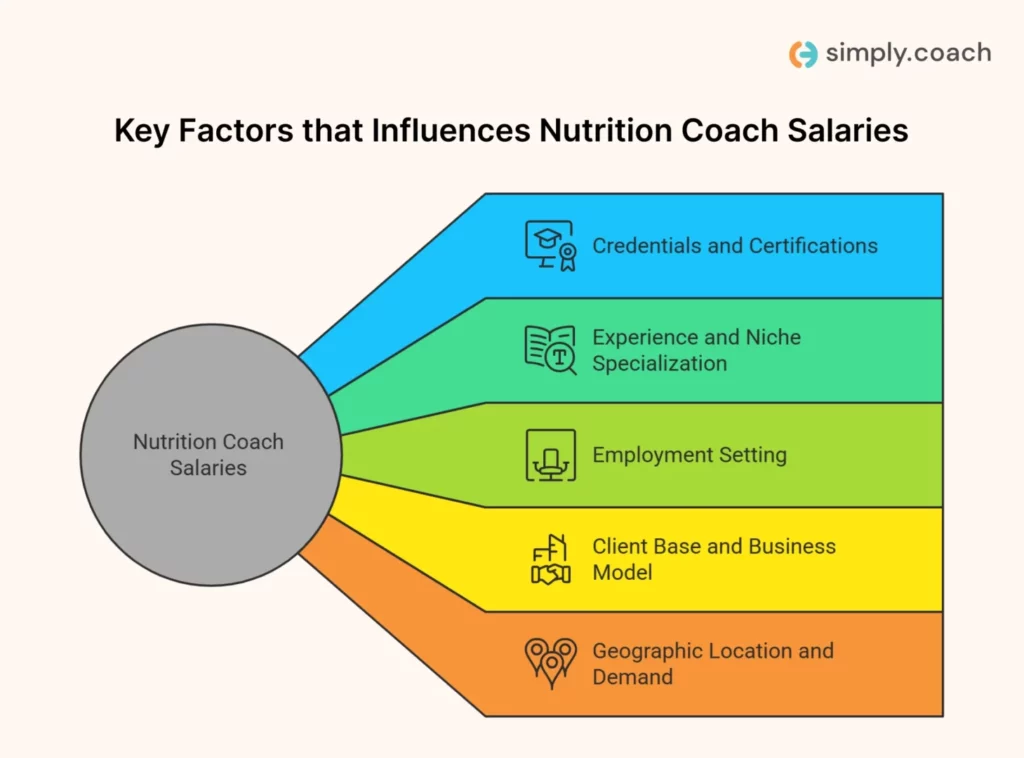
Your income as a nutrition coach depends on how you position your services, structure your programs, and target the right clients. These factors directly influence your pricing and long-term earning potential.
- Credentials and certifications: Certifications such as Precision Nutrition, ISSA, or ACE increase your credibility and justify higher pricing. Clients trust structured training and are more willing to pay for certified expertise.
- Experience and niche specialization: More experience allows you to show proven results and raise your rates confidently. Specializing in areas like weight loss, sports nutrition, or chronic conditions helps you attract higher-paying clients.
- Employment setting: Salaried roles offer stable income but limit earning potential over time. Private practice and online coaching give you full control over pricing and client selection.
- Client base and business model: One-on-one sessions can cap your income if not structured properly. Programs, packages, and subscriptions increase revenue per client and improve income consistency.
- Geographic location and demand: High-demand areas support higher pricing due to stronger wellness markets and higher living costs. Online coaching allows you to work with clients from these regions without relocating.
Also read: Best Certifications for Nutrition Coaching in 2026
Strategies to Increase Your Nutrition Coach Salary
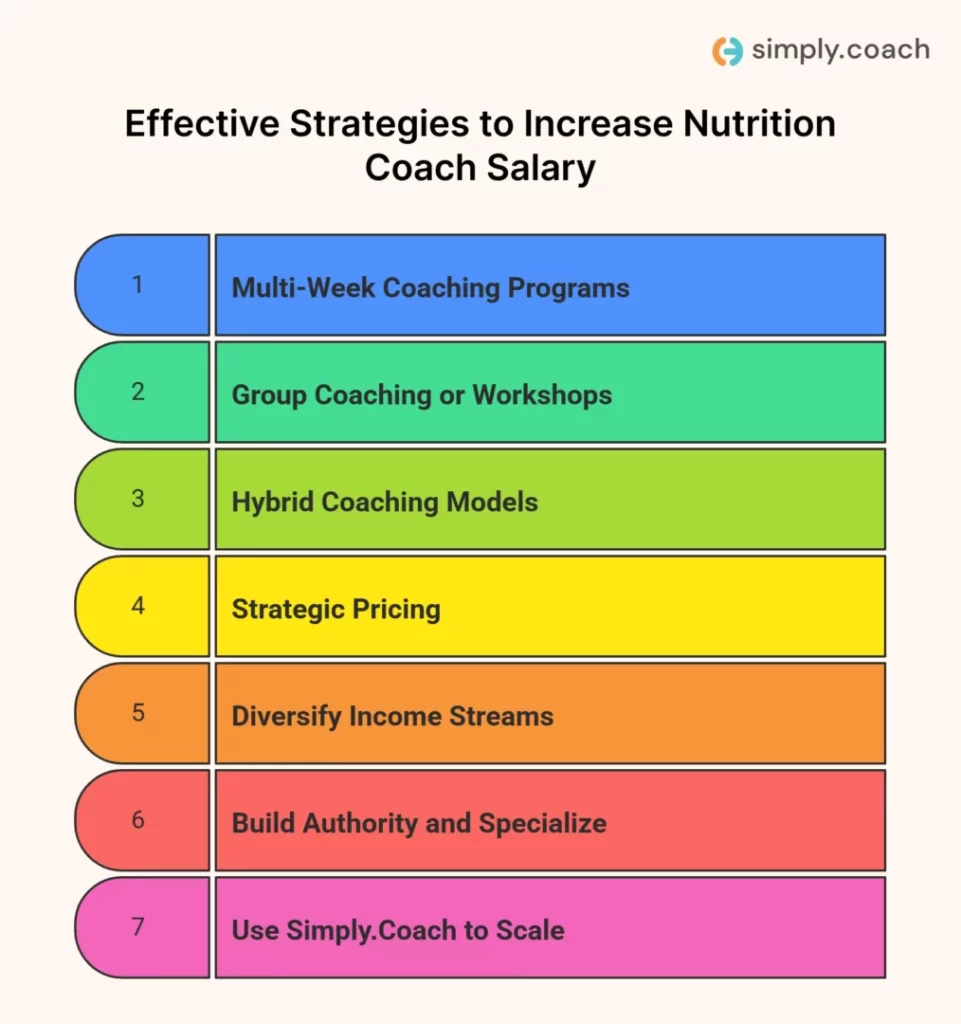
Increasing your income as a nutrition coach depends on how you structure your services and deliver results. Your pricing improves when clients see clear outcomes and consistent progress. The strategies below help you move beyond fixed hourly income and build predictable revenue.
1. Offer multi-week nutrition coaching programs with clear outcomes
Structured programs help clients stay consistent while increasing your revenue per client. You can package your services instead of charging per session.
- Create tiered programs with defined goals such as weight loss, muscle gain, or habit improvement
- Set milestones with weekly targets and measurable outcomes
- Include progress tracking through check-ins, food logs, and habit reviews
- Add resources such as meal plans, shopping guides, and templates
How to Design & Launch Your Signature Coaching Program
If you want a step-by-step system to build profitable programs, explore Simply.Coach’s “How to Design & Launch Your Signature Coaching Program” guide. It shows how to structure offers, define outcomes, and price your programs effectively.

2. Run group coaching programs or nutrition workshops
Group coaching allows you to serve multiple clients at the same time and increase income per hour. It also improves client engagement through shared accountability.
- Keep small groups of 4 to 8 clients for better interaction
- Run focused programs on fat loss, meal planning, or habit building
- Offer virtual sessions to reach clients across different locations
- Include Q&A sessions and peer discussions to improve retention
3. Build hybrid coaching models with online and personal support
Hybrid models combine flexibility with consistent support, which improves client results and retention. This approach also allows you to scale without increasing your workload.
- Combine one-on-one sessions with group coaching programs
- Provide digital resources such as videos, trackers, and guides
- Offer ongoing support through weekly check-ins or messaging
- Allow flexible scheduling to suit different client needs
4. Set strategic pricing based on value and outcomes
Your pricing should reflect the results you deliver, not just your time. Clients are willing to pay more when they see clear transformation.
- Adjust pricing based on certifications, experience, and specialization
- Research local and online market rates before setting fees
- Bundle services into programs instead of selling single sessions
- Charge premium rates for high-demand niches like fat loss or performance nutrition
The Complete Guide: Pricing Strategies for Your Coaching Business.
To build a strong pricing strategy, check Simply.Coach’s “The Complete Guide: Pricing Strategies for Your Coaching Business.” It helps you structure pricing models that match your expertise and client outcomes.

5. Diversify income streams beyond one-on-one coaching
Relying only on individual sessions can limit your income over time. Multiple income streams create stability and increase your earning potential.
- Create online courses on nutrition, meal prep, or habit coaching
- Offer corporate wellness programs for higher-value contracts
- Build membership programs with monthly coaching and resources
- Sell digital products such as meal plans or coaching templates
6. Build authority and specialize to attract premium clients
Your reputation directly impacts how much you can charge for your services. Clients pay more when they trust your expertise and results.
- Focus on specific niches such as weight loss, gut health, or sports nutrition
- Share client results through testimonials and case studies
- Build an online presence through content and education
- Target clients who value structured, long-term coaching programs
7. Use Simply.Coach to manage and scale your nutrition coaching business
If you want to grow your nutrition coaching income without increasing your workload, using a platform like Simply.Coach can give you the structure and efficiency needed to scale.
- Automate scheduling, payments, and workflows: Simply.Coach lets you manage sessions, reminders, and invoicing in one place, reducing manual work and saving hours every week
- Centralize client management and progress tracking: You can store client data, goals, notes, and action plans in a single dashboard, making it easier to track outcomes and adjust programs
- Deliver structured coaching programs at scale: The platform allows you to create repeatable coaching journeys, standardize programs, and manage both one-on-one and group coaching efficiently
- Track results and demonstrate client outcomes: Built-in reporting tools help you measure progress, generate insights, and show clear results to clients or stakeholders
- Reduce admin workload and increase earning capacity: When operational tasks are automated, you can focus on client acquisition, program delivery, and scaling your services instead of manual processes
Simply.Coach is designed as an end-to-end coaching platform that brings your entire business into one system. It helps you manage client relationships, deliver structured programs, and track measurable outcomes without switching between multiple tools.
Read: Mastering Goal-Setting in Nutrition Coaching: A Comprehensive Guide
Conclusion
As a nutrition coach in the USA, knowing how much do nutrition coaches make helps you plan your career and set realistic income goals. Understanding salary ranges, niche specializations, and top-paying locations allows you to make informed decisions. Structured programs, group sessions, and hybrid models increase your earning potential. Applying these strategies ensures you grow both professionally and financially.
Streamline your business and maximize earnings with Simply.Coach. The platform helps you manage clients, track progress, and automate payments efficiently. Run individual, group, and hybrid nutrition coaching programs seamlessly. Focus on results while Simply.Coach supports your growth and boosts your revenue potential.
FAQs
1. Do nutrition coaches make more money if they work remotely?
Yes. Remote nutrition coaches can charge higher rates and reach more clients nationwide, increasing income compared to strictly local in‑person coaching. Remote delivery expands your market without relocation costs.
2. How much do highly specialized nutrition coaches earn compared to generalists?
Highly specialized coaches (e.g., sports nutrition, clinical weight loss) often command premium rates, with average annual earnings often above general coaching ranges due to niche demand and outcomes. Specialized expertise attracts clients willing to pay more.
3. Can nutrition coaches earn six figures?
Yes. Coaches who sell high‑value programs, corporate contracts, workshops, or digital courses can exceed six figures annually, especially with strong marketing and repeat revenue models.
4. Do nutrition coaches earn more than personal trainers?
In many cases, personal trainers with added nutrition coaching skills earn more overall than coaches without dual offerings, as combined services allow for higher package pricing and more value per client.
5. Is certification required to earn a higher salary as a nutrition coach?
Certification isn’t legally required, but recognized credentials (like Precision Nutrition or ISSA) help you charge higher rates and attract clients who trust certified expertise.
6. What is the difference between a nutrition coach and a registered dietitian in terms of pay?
Registered dietitians typically earn more on average due to clinical qualifications and licensed scope of practice, but nutrition coaches can compete with higher income through structured programs and niche services.
7. Does the number of clients directly affect a nutrition coach’s income?
Yes. Your annual earnings increase when you serve more clients, especially if you offer programs or group coaching instead of hourly sessions. Client volume and pricing packages directly impact income.