
As an internal coach, you understand that the most meaningful work occurs when you interact directly with your clients, not when you’re tied down to administrative tasks. This is where internal coaching agreement templates can make a real difference. These templates streamline the paperwork involved in coaching, giving you more time to concentrate on what really counts—supporting your clients as they work towards their goals.
For an internal coach, having a well-structured agreement is crucial. It establishes clear roles and responsibilities, maintains confidentiality, and sets boundaries, ensuring a productive and trusting coaching relationship.
Internal coaching agreement templates streamline these processes, making it easier for you to align expectations and promote accountability within the organization.
This blog will explore how internal coaching agreement templates can streamline your processes and elevate your coaching practice.
Are you ready to reclaim your time and enhance your efficiency?
Let’s get started!
Why Do You Need an Internal Coaching Agreement?
An internal coaching agreement is a document that sets clear expectations and boundaries between you, the coach, and the employees within the organization. It serves as a foundation for a successful coaching relationship by outlining the roles, responsibilities, and goals for all parties.
Implementing an internal coaching agreement, or contract, can provide many benefits for both the organization and the individuals involved. Here’s why you need an internal coaching agreement and the benefits it offers:
Benefits of implementing an internal coaching agreement:
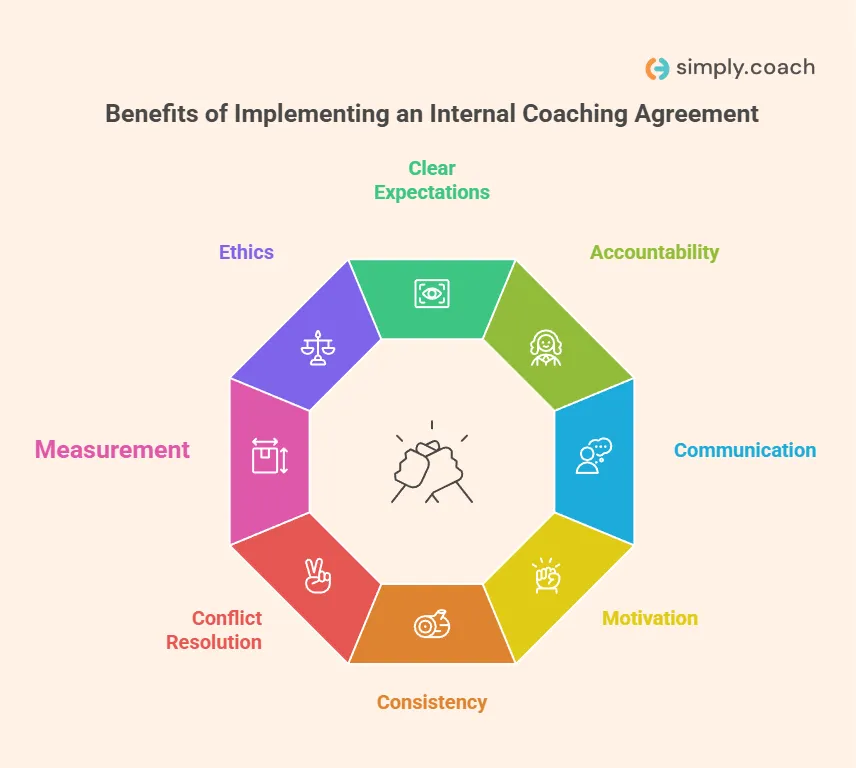
- Clear expectations and goals: An internal coaching agreement helps to clearly define the objectives, expectations, and goals of the coaching relationship. This ensures that you and the client are aligned on what you aim to achieve, leading to more focused and effective coaching sessions.
- Better accountability: By formalizing the coaching relationship through a contract, both parties (you and the client) are held accountable for your commitments. This helps in regular attendance, active participation, and a commitment to follow through on agreed-upon actions.
- Improved communication: A coaching agreement sets the groundwork for open and honest communication. It outlines the protocols for feedback, confidentiality, and how issues will be addressed, resulting in a safe environment for personal and professional growth.
- Increased motivation and engagement: When employees know there is a formal structure supporting their development, they are more likely to be motivated and engaged. The coaching contract serves as a tangible reminder of the organization’s investment in their growth, boosting morale and job satisfaction.
- Consistent coaching practices: Having a standardized agreement ensures that coaching practices are consistent across the organization. This helps in maintaining a high quality of coaching and makes sure that all employees receive the same level of support and guidance.
- Conflict resolution: A well-drafted coaching contract includes provisions for handling conflicts and misunderstandings. This proactive approach to conflict resolution can prevent minor issues from escalating and disrupting the coaching relationship.
- Measurement and evaluation: The contract can include specific metrics and benchmarks for measuring the success of the coaching program. This allows the organization to evaluate the effectiveness of coaching interventions and make data-driven decisions for continuous improvement.
- Professional boundaries and ethics: An internal coaching agreement outlines the ethical guidelines and professional boundaries that must be followed during the coaching relationship. This helps you and the client to maintain professionalism and respect, driving a trustworthy and productive coaching environment.
It’s important to recognize your value as an internal coach within the organization. Your insightful, resourceful, and supportive coaching can truly boost employee engagement, drive development, and improve overall organizational performance.
Why Does an Internal Coach Need a Coaching Agreement?
As an internal coach, you’ve probably felt the weight of endless paperwork pulling you away from your true calling. Internal coaching agreement templates can help lighten this load by streamlining your administrative tasks.
Let’s explore why these templates are essential for your coaching session:
- Establishing roles and responsibilities: The coaching agreement clearly defines the roles and obligations of everyone involved, including the coach, client, and stakeholders like the client’s manager. This clarity ensures that everyone understands their responsibilities and what is expected from them.
- Maintaining confidentiality: Confidentiality is crucial for building trust. The agreement specifies what information will remain confidential between the coach and the client and what can be shared with others, fostering an environment of trust and openness.
- Defining boundaries: The agreement helps set appropriate boundaries for the coaching relationship. It outlines which topics are suitable for discussion and when the coach should refer the client to other resources to help maintain a professional and focused coaching environment.
- Aligning expectations: A coaching agreement sets clear expectations about the coaching process, including the number and duration of sessions, goals, and measures of success. The alignment ensures that the coach, client, and stakeholders are all on the same page.
- Addressing potential conflicts: The agreement outlines how to handle potential conflicts of interest, whether professional or emotional, that might arise during the coaching engagement. Following this proactive approach helps prevent misunderstandings and maintains the integrity of the coaching relationship.
- Promoting accountability: The agreement promotes accountability by detailing the responsibilities of both the coach and the client. It encourages commitment to the coaching process and ensures that both parties are dedicated to achieving the desired outcomes.
A meticulously drafted coaching agreement is imperative for you, as it serves to establish trust, clarify roles and responsibilities, preserve confidentiality, define boundaries, align expectations, preempt potential conflicts, and foster accountability.
This holistic approach is instrumental in ensuring effective and fruitful coaching relationships within the organization.
Also read: What Makes a Good Coaching Contract? Your Complete Checklist
What Are the Key Components of Internal Coaching Agreement Templates?
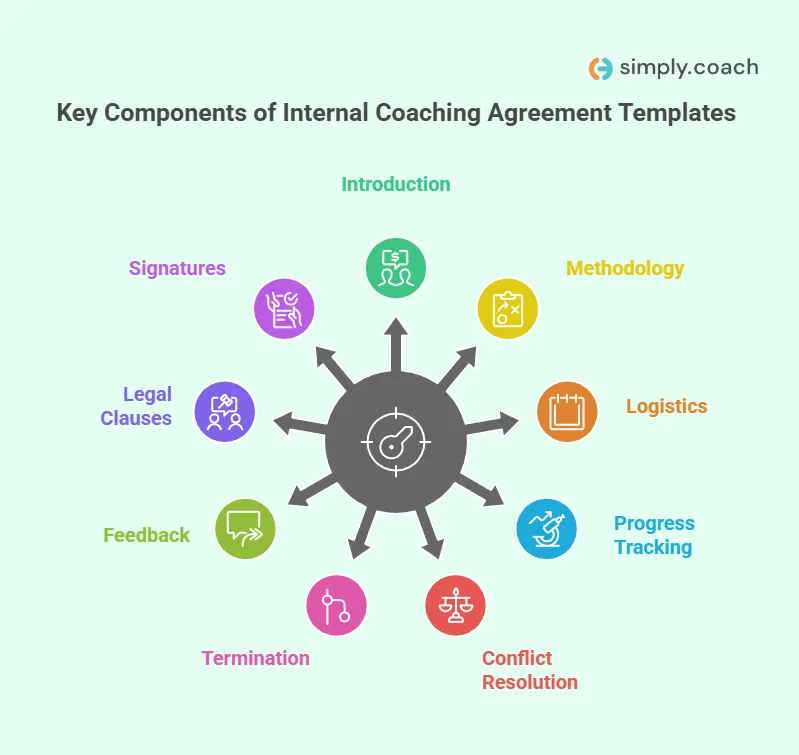
As an internal coach, having a well-structured internal coaching agreement template is crucial. These templates not only streamline your administrative tasks but also enhance the effectiveness of your coaching sessions.
Let’s break down the key components that make these templates indispensable, with practical examples and insights to bring them to life for a step-by-step understanding:
1. Introduction and purpose
Start your agreement with a concise statement explaining why the coaching engagement exists. This helps your clients understand the framework and the goals of your sessions.
- Purpose: Define the scope and intent of the coaching relationship.
- Example: “This agreement establishes a framework to enhance leadership skills, strengthen team collaboration, and support professional growth within the organization.”
- Benefits: Sets a clear direction, aligns expectations, and motivates clients to engage actively in the process.
2. Coaching methodology
Your methodology communicates how you will guide your clients toward their objectives. It ensures clarity and trust while setting realistic expectations.
- Detail your approach: Specify the techniques and frameworks you will use.
- Example: “Sessions will incorporate solution-focused techniques, behavioral assessments, and structured goal-setting exercises tailored to the client’s role and objectives.”
- Why it matters: Clients understand how progress will be made, and you can justify your strategies with measurable outcomes.
3. Session logistics
Clarifying session logistics ensures both you and your clients are aligned on scheduling, duration, and format.
- Frequency and duration: Define how often sessions occur and how long each lasts.
- Example: Bi-weekly 60-minute video sessions, with flexibility for in-person meetings if needed.
- Format and adjustments: Include provisions for remote vs. in-person sessions or rescheduling.
- Example: “If the client’s schedule conflicts, a 48-hour notice is required for rescheduling.”
- Value: Clear logistics prevent misunderstandings and allow clients to commit fully to the coaching process.
4. Progress tracking tools
Tracking progress is critical to demonstrate growth and identify areas for improvement.
- Tools: Use journals, feedback forms, performance metrics, or platforms like Simply.Coach.
- Example: “Client progress will be tracked through monthly check-ins, performance reviews, and a shared action plan document.”
- Benefit: Provides transparency, motivates clients by showing tangible results, and allows you to refine strategies as needed.
5. Conflict resolution
Even in professional coaching, misunderstandings can arise. A defined conflict resolution process protects the relationship and maintains trust.
- Steps to resolve conflicts: Define mediation, discussion with stakeholders, or escalation paths.
- Example: “Any disputes will be addressed through a structured mediation process to maintain a productive coaching environment.”
- Value: Ensures issues are resolved quickly without impacting the coaching engagement or organizational objectives.
6. Termination conditions
Every coaching engagement should outline when and how the agreement can be ended.
- Conditions: Specify notice periods, unmet expectations, or significant changes in client responsibilities.
- Example: “Either party may terminate the agreement with a two-week notice if goals are not being met or circumstances change substantially.”
- Benefit: Protects both parties and sets clear expectations for ending the coaching relationship professionally.
7. Feedback mechanisms
Feedback is a two-way street. Defining how and when it will occur improves the effectiveness of your coaching.
- Methods: Include surveys, one-on-one debriefs, or structured review sessions.
- Example: “Monthly feedback sessions will be conducted to review progress, adjust goals, and gather client insights on coaching effectiveness.”
- Benefit: Timely feedback helps refine coaching strategies, increases engagement, and demonstrates your commitment to client success.
8. Legal clauses
Legal protections safeguard both you and your clients while creating a professional environment.
- Key elements: Confidentiality, liability, indemnity, and compliance with organizational policies.
- Example: “All coaching discussions will remain confidential except when written consent is provided for organizational reporting.”
- Value: Builds trust, ensures compliance with corporate requirements, and protects sensitive information.
9. Signatures
The final step formalizes the agreement and confirms commitment from both parties.
- Action: Both coach and client sign to indicate understanding and acceptance.
- Example: “Client and coach signatures below confirm agreement to all terms, ensuring accountability and mutual commitment.”
- Benefit: Provides a clear record, reinforces accountability, and gives both parties a reference point throughout the engagement.
By including all these components in your internal coaching agreement, you create a structured, professional, and accountable framework that empowers both you and your clients to achieve meaningful and measurable results.
Tips for Using Free Coaching Templates Effectively
Working with a coaching template can be a helpful way to begin, but understanding how to customize it to fit your coaching style and your client’s specific needs is truly essential for success. Here are three valuable tips to help you effectively adapt those free coaching templates to work best for you:
Tip 1: Finding reliable sources for free coaching templates
When searching for free coaching templates, seek trustworthy sources with sleek designs and user-friendly formats. Here’s how to find the best ones:
- Websites dedicated to coaching, like the International Coach Federation (ICF) or other professional coaching organizations, often offer high-quality templates.
- Platforms like Etsy or Canva have sections dedicated to coaching templates. Check reviews and ratings to get good quality templates.
- Join coaching forums and groups on LinkedIn or Facebook, where members often share valuable resources.
Example: Look for templates that align with your coaching style and objectives. If you specialize in career coaching, find templates that focus on career planning and development.
Tip 2: Customizing free coaching templates to fit your needs
Free coaching templates are a great starting point, but they might not always match your style or your clients’ needs. Here’s how to make them your own:
Assess your unique coaching style and client base:
- Consider what makes your coaching unique and what specific goals you help clients achieve.
- Think about the common challenges and goals of your clients.
Example: If you coach leaders, your templates might need sections on leadership qualities and how to become a leader.
Personalize with branding elements:
- Incorporate your logo to make the template look professional.
- Use colors that represent your brand identity.
- Add images or graphics that align with your coaching theme.
Example: For a wellness coach, use calming colors and imagery related to health and well-being.
Adapt language and tone to match your communication style:
- Whether you’re formal or casual, ensure the template reflects how you speak to your clients.
Example: If you prefer a conversational tone, use friendly and approachable language in your templates.
Modify sections and fields to align with specific goals and objectives:
- Remove irrelevant sections, add new ones, and rearrange the layout to suit your coaching process.
Example: Add a section for action plans and follow-up tasks if you focus on accountability coaching.
Incorporate additional features or sections for enhanced functionality:
- Merge elements from different templates to create a comprehensive tool.
- Include areas for client feedback, progress tracking, or resources.
Example: For executive coaching, add sections for leadership assessments and strategic planning.
Conclusion
Creating well-structured internal coaching agreements can transform your coaching practice with clarity and consistency, ensuring everyone knows what to expect. They save time, enhance professionalism, and offer legal protection, allowing you to focus on what truly matters—coaching.
By customizing templates to suit your unique style and integrating continuous feedback and personalized strategies, you pave the way for transformative client outcomes. Embrace these practices today and watch your coaching relationships thrive and flourish, driving remarkable results for you and your clients.
Managing coaching agreements has become more convenient with platforms like Simply.Coach. Whether you’re using ICF-compliant contract templates or creating a coaching contract from the ground up, Simply.Coach provides effortless creation, organization, and storage of contracts.
It also ensures that you are well-prepared for every coaching engagement and enables you to digitally sign and store the contract against the client’s profile for future reference.