In 2024, the U.S. personal development market reached a valuation of $12.14 billion, with projections indicating it will expand to $22.08 billion by 2034, growing at a compound annual growth rate (CAGR) of 6.16%. This surge reflects a growing recognition of the value personal development coaches bring to individuals seeking meaningful life changes.
As someone aspiring to become a personal development coach, you’re stepping into a field that is not only expanding but also evolving. Individuals are increasingly seeking guidance to navigate personal challenges, set and achieve goals, and enhance their overall well-being. This growing demand underscores the importance of skilled coaches who can facilitate meaningful transformations.
In this blog, we’ll explore the essential aspects of becoming a certified personal development coach. You’ll gain insights into the role and responsibilities of a personal development coach, the skills required to excel in this profession, and the certification options available to enhance your credibility. Let’s dive in.
Key Takeaways
- Personal development coaching helps clients improve mindset, relationships, productivity, and life purpose.
- Core skills include communication, emotional intelligence, goal-setting, leadership, and creative problem-solving.
- Becoming certified boosts credibility; top programs include iPEC, Columbia University, CaPP Institute, and Co-Active Training Institute.
- Choose a niche like mindset, confidence, or stress management to stand out and attract the right clients.
- Coaching packages should be structured with clear sessions, deliverables, and pricing to ensure client commitment.
- Market your services through your network, podcasts, online communities, testimonials, and content marketing.
- Use platforms like Simply.Coach for goal tracking, client workspaces, contracts, action plans, and professional showcase pages.
- U.S. personal development coaches earn $50K–$68K on average; certifications and specialization can increase earnings.
What is Personal Development Coaching?
Personal development coaching is a professional practice where you guide clients to improve multiple aspects of their lives. As a personal development coach, you help individuals create actionable strategies to achieve their goals, increase self-awareness, and foster sustainable personal growth. Your approach involves designing structured methods that address each client’s unique challenges and aspirations.
Your focus as a coach spans various areas of life. You might assist clients in their careers, helping them navigate transitions, set professional goals, and enhance productivity. You can also support health and wellness by encouraging routines that improve sleep, nutrition, and physical activity. Many clients seek your guidance to strengthen relationships, develop communication skills, and build social confidence.
You can additionally help clients explore creativity, parenting strategies, or life purpose. Through structured sessions, progress tracking, and personalized action plans, you enable clients to develop positive habits, overcome challenges, and achieve meaningful personal transformation.
What does a personal development coach do?
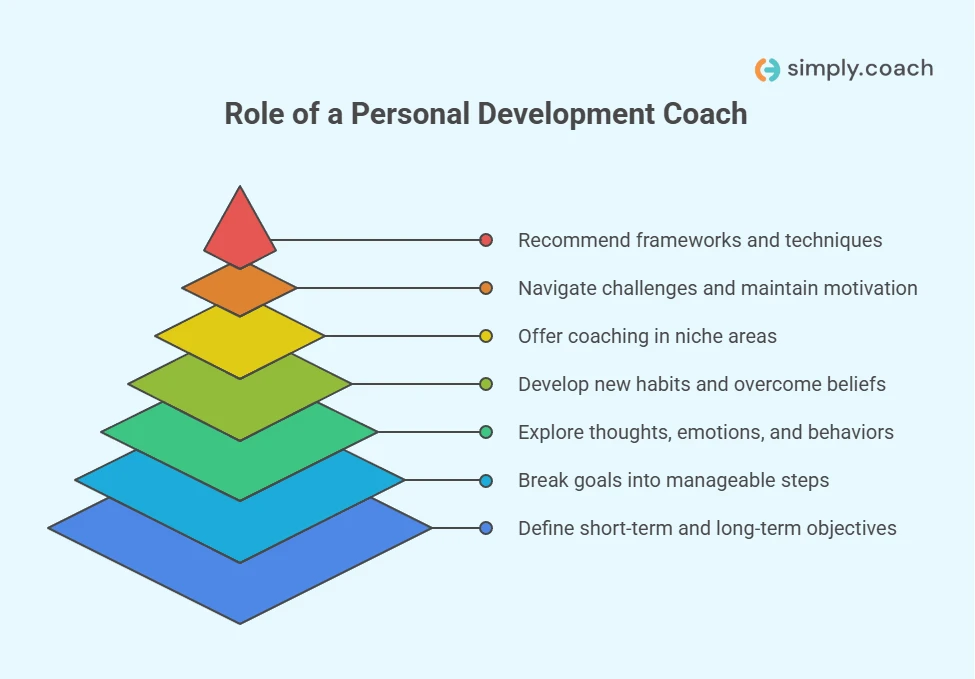
As a personal development coach, your responsibilities include guiding clients through growth and self-improvement. Your roles typically include:
- Clarifying client goals and aspirations: Help clients define short-term and long-term objectives across personal and professional areas.
- Creating actionable plans: Break goals into manageable steps, ensuring steady progress and accountability.
- Encouraging self-awareness: Guide clients to explore their thoughts, emotions, and behaviors for deeper personal insight.
- Supporting behavior change: Assist clients in developing new habits, improving productivity, and overcoming limiting beliefs.
- Providing specialized guidance: Offer coaching in niches such as confidence, mindset, empowerment, stress management, creativity, or communication.
- Facilitating problem-solving: Help clients navigate challenges and setbacks while maintaining motivation.
- Sharing tools and resources: Recommend frameworks, exercises, and techniques to reinforce personal growth.
These roles ensure that clients not only achieve their goals but are also equipped to continue their personal development independently.
Also read: How to Build an Effective Personal Development Coaching Program That Works
Difference Between Personal Development Coach, Life Coach, and Professional Development Coach
Personal development coaching can sometimes feel very similar to life coaching. It’s important to understand the distinctions so you can choose a niche that aligns with your skills and career goals.
| Aspect | Personal Development Coach | Life Coach | Professional Development Coach |
| Primary focus | Enhancing self-awareness, mindset, and personal growth. | Achieving balance and fulfillment across all areas of life. | Advancing career-specific skills and professional growth. |
| Client goals | Setting and achieving personal goals, improving self-discipline, and fostering personal development. | Gaining clarity on life purpose, improving relationships, and achieving work-life balance. | Developing leadership skills, enhancing job performance, and achieving career advancement. |
| Scope of work | Concentrates on individual growth, habit formation, and personal effectiveness. | Addresses broad life challenges including relationships, health, finances, and life transitions. | Focuses on job-specific skills, performance metrics, career planning, and workplace productivity. |
| Typical methods | Goal-setting frameworks, action plans, habit tracking, and progress monitoring. | Motivational coaching, guided self-reflection, accountability sessions, and personal vision planning. | Skill assessments, performance tracking, mentoring, professional workshops, and structured development plans. |
| Outcome for client | Improved self-awareness, clarity in personal goals, enhanced decision-making, and higher personal efficiency. | Greater life satisfaction, improved relationships, reduced stress, and a sense of purpose. | Clear career progression, enhanced job performance, higher earning potential, and professional recognition. |
While personal development coaching is a specialized niche focusing on individual growth and self-improvement, life coaching adopts a more holistic approach, addressing multiple aspects of a client’s life. On the other hand, professional development coaching is centered around career advancement and workplace effectiveness. Understanding these distinctions allows you to choose a path that aligns with your passion and expertise.
Read more: Personal Coach vs Life Coach: Understanding the Key Differences and Choosing Your Path
Important Skills to Become a Personal Development Coach
To succeed as a personal development coach, you need a blend of practical abilities and interpersonal qualities. These skills allow you to guide clients effectively, design actionable plans, and maintain a thriving coaching practice. Broadly, the essential skills fall into hard skills and soft skills.
1. Hard skills
These are technical and practical skills that help you manage your coaching practice, design plans, and provide tangible value to your clients:
- Entrepreneurship skills: Enable you to manage your coaching business efficiently, from planning programs to handling finances and delivering professional client service.
- Leadership skills: Help you inspire and guide clients, model positive behaviors, and introduce new ideas while maintaining ethical integrity.
- Creative skills: Allow you to design personalized action plans, solve client challenges with innovative approaches, and support clients pursuing artistic or expressive goals.
- Digital proficiency: Familiarity with coaching platforms, video conferencing tools, and progress-tracking software helps you manage clients efficiently and deliver resources effectively.
- Networking skills: Help you build professional relationships, expand your presence in the coaching community, and attract new clients through meaningful connections.
2. Soft skills
These interpersonal and emotional skills help you connect with clients, motivate them, and create a trusting coaching environment:
- Communication & active listening: Enables you to understand clients deeply, provide constructive feedback, and guide without dictating solutions.
- Emotional intelligence & empathy: Helps you recognize client emotions, respond thoughtfully, and build trust and psychological safety.
- Goal-setting & action planning: Allows you to help clients translate aspirations into actionable steps while tracking progress effectively.
- Motivational & behavioral change strategies: Supports clients in overcoming resistance, sustaining habits, and achieving long-term personal growth.
- Time management & client engagement: Ensures consistent, well-prepared sessions and maintains client focus and accountability.
Mastering this combination of hard and soft skills ensures you deliver measurable results for clients while building a credible, professional coaching career.
Also read: What Makes a Good Life Coach? 8 Essential Traits and Skills for Success
How to Become a Personal Development Coach
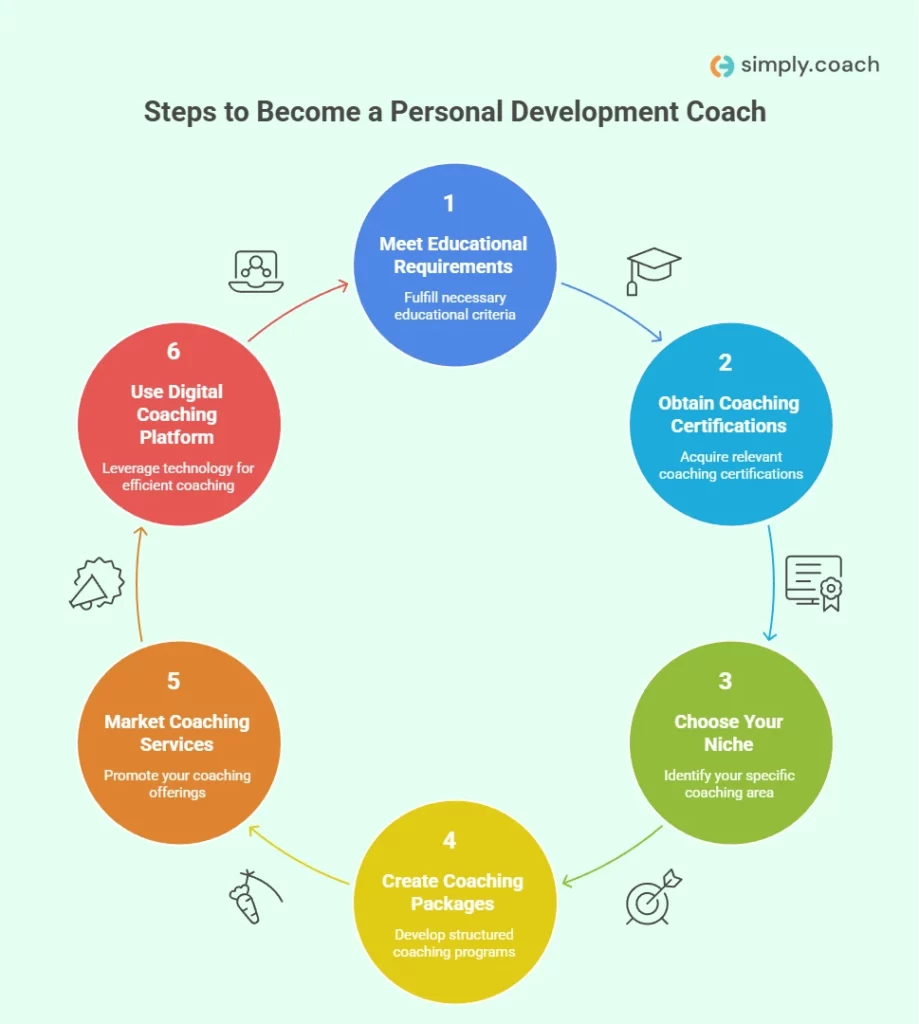
Starting your journey as a personal development coach requires more than passion, it involves structured learning, certifications, identifying a niche, creating programs, effective marketing, and using the right tools. Following a clear roadmap ensures that you build credibility, attract clients, and provide measurable results that make your coaching impactful.
1. Educational requirements
There are no mandatory degrees required to become a personal development coach. However, earning an undergraduate degree can strengthen your expertise, credibility, and ability to guide clients effectively. Here are some degrees to consider and how they add value to your coaching practice:
- Business management: This degree equips you with skills to advise clients on entrepreneurship, career growth, and productivity. It also prepares you to run your coaching practice efficiently and responsibly.
- Psychology: Understanding human behavior, motivation, and emotional patterns is crucial for tailoring coaching strategies to each client’s personality and mindset.
- Organizational leadership: Learning how to guide teams and achieve goals provides insights that are valuable for both career-focused coaching and personal growth strategies.
- Communications: A communications degree helps you assist clients in improving interpersonal skills, professional interactions, and relationship management. It also benefits your own coaching business by enhancing client engagement and marketing.
- Philosophy: Critical thinking and problem-solving skills gained through philosophy help you support clients in exploring new perspectives on life, relationships, and purpose.
Even if you don’t pursue a full degree, short-term programs, workshops, or certifications in coaching, counseling, or leadership can provide targeted skills and practical insights to strengthen your coaching approach.
2. Coaching certifications
Certifications are crucial for establishing your credibility, gaining client trust, and learning proven coaching methodologies. A certification validates your knowledge, equips you with structured frameworks, and allows you to charge premium rates confidently.
Top personal development coaching certifications include:
- International Coaching Federation (ICF): Recognized globally, offering levels such as Associate (ACC), Professional (PCC), and Master (MCC) Certified Coach. ICF training focuses on coaching ethics, communication, and goal-setting frameworks.
- Neuro-Linguistic Programming (NLP) Certification: Focuses on behavioral change, helping clients reframe limiting beliefs and achieve personal and professional goals.
Certifications also provide networking opportunities, access to mentoring, and guidance on building a successful coaching business. For example, ICF credentialed coaches often gain higher visibility in professional networks and platforms.
Also read: Understanding ACC, PCC, and MCC: Guide to ICF Credential Levels
3. Choosing your niche
Defining your niche is critical for attracting the right clients and standing out in a competitive market. Personal development coaching offers multiple focus areas:
- Mindset coaching: Helps clients shift limiting beliefs and cultivate a growth-oriented perspective.
- Confidence and self-esteem coaching: Supports clients in public speaking, personal presence, and decision-making.
- Life purpose and fulfillment coaching: Guides clients to identify meaningful goals aligned with their values.
- Stress management and mindfulness coaching: Assists clients in reducing anxiety, improving focus, and building consistent wellness routines.
For example, if you have prior experience in corporate leadership, focusing on career growth and confidence coaching can make you an attractive choice for executives seeking guidance. Choosing a niche allows you to craft tailored programs, marketing strategies, and content that resonate deeply with your ideal clients.
4. Creating your coaching packages
Well-structured coaching packages make your services tangible and professional. They provide clarity on outcomes, duration, and costs, making it easier for clients to commit.
Key elements include:
- Service duration: Offer multiple options like 4-week, 8-week, or 12-week programs.
- Session frequency: Weekly, bi-weekly, or monthly sessions depending on client availability and goals.
- Pricing structure: Fixed packages or flexible pay-as-you-go options.
- Deliverables: Personalized action plans, exercises, progress tracking, and access to resources.
For instance, a 12-week life purpose coaching package could include weekly 60-minute sessions, email support between sessions, and tailored exercises to track progress. Clear and structured packages help clients understand value upfront, increasing conversions and client satisfaction.
Design and Launch Your Signature Coaching Program
If you want to take your personal development coaching practice to the next level, check out our comprehensive guide on How to Design & Launch Your Signature Coaching Program. This step-by-step resource walks you through creating impactful programs, structuring sessions, and engaging clients effectively.

5. Marketing your coaching services
Marketing is essential to grow your coaching business and reach clients who can benefit from your expertise. Beyond basic promotion, focus on strategies that build trust, credibility, and visibility:
- Tap into your existing network: Reach out to friends, colleagues, and past clients to announce your services. Word-of-mouth referrals are often the most effective initial source of clients.
- Appear on podcasts and interviews: Share expertise on personal growth, productivity, or mindset development to demonstrate credibility. Podcasts allow you to reach targeted audiences interested in personal development.
- Build relationships online: Engage actively in LinkedIn groups, Facebook communities, and coaching forums. Provide valuable insights without selling immediately to build trust and authority.
- Use testimonials and case studies: Highlight measurable transformations and client success stories to show your impact. For example, publishing a case study about helping a client increase productivity or overcome career stagnation can inspire confidence in potential clients.
- Content marketing: Write blogs, host webinars, or share videos on personal development strategies to attract organic leads. Well-crafted content positions you as an expert and provides ongoing value to your audience.
Marketing effectively requires consistency, authentic engagement, and showcasing your results, not just promoting your services.
Also read: Marketing for Coaches: 25 Best Strategies for 2025
6. Using an All-in-One Digital Coaching Platform Like Simply.Coach
Using an all-in-one digital coaching platform like Simply.Coach allows you to streamline every aspect of your coaching business, saving time and enhancing client experience. Instead of juggling multiple tools, you can manage clients, track progress, and deliver professional services all in one place.
- Showcase page: Create a professional online presence where potential clients can view your credentials, testimonials, portfolio, and coaching offerings. This acts as your digital storefront to attract and convert leads.
- Contracts: Generate and manage legally compliant contracts easily for each client. Digital signatures simplify onboarding while ensuring all agreements meet industry standards and specifications.
- Subscriptions and session packages: Offer clients flexible payment options like subscription models or bundled session packages. Integrated payment gateways make transactions seamless and reduce administrative work.
- Goal-setting: Set SMART goals for clients and track progress efficiently. Structured dashboards give both you and your clients a clear view of milestones and achievements, keeping everyone accountable.
- Action plans: Assign and track actionable steps aligned with client goals. Automated reminders help clients stay on track between sessions, ensuring consistent progress.
- Reports and nudges: Generate detailed reports to measure client outcomes and demonstrate the impact of your coaching. Nudges provide gentle, automated reminders that reinforce habits and behavioral changes.
- Client workspaces: Offer personalized spaces where clients can access resources, session notes, exercises, and updates. This fosters collaboration, keeps information centralized, and strengthens engagement.
With Simply.Coach, you can manage your coaching operations efficiently while providing a structured, professional, and engaging experience for your clients, allowing you to focus fully on guiding their growth and achieving meaningful outcomes.
Top Personal Development Coach Certifications
If you are aspiring to become a personal development coach, obtaining the right certification can significantly enhance your credibility, skills, and client trust. These programs provide structured training, practical experience, and recognized credentials that help you confidently guide clients toward meaningful personal growth.
1. iPEC Coach Training Program
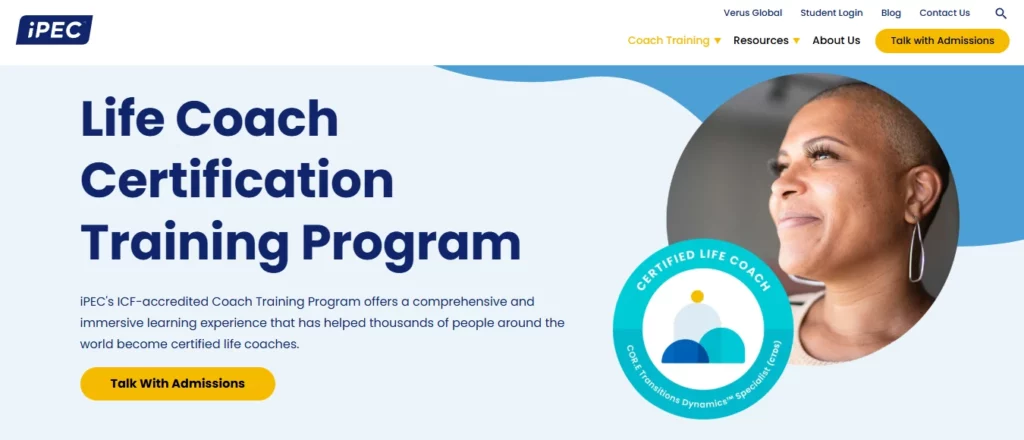
If you want to become a skilled personal development coach, the iPEC program gives you a structured, ICF-accredited path. You will earn three certifications, including Certified Professional Coach and Energy Leadership Index® Master Practitioner. The program combines self-paced online learning with live sessions for hands-on experience. Mentor coaching and peer support help you apply techniques effectively with real clients.
Key Features:
- Duration: Approximately 7–10 months
- Price: $9,995
- Accreditation: ICF
- Mentorship: Includes mentor coaching, success coaching, and peer mentoring
- Learning Format: Flexible self-study with one live mini-course online or in-person
2. Columbia University Coaching Certification Program (3CP)
This program gives you a strong academic foundation in coaching principles and practical applications. It covers three modules: Front-End Coaching, Practice, and Advanced Coaching. You will learn to guide clients in personal development and goal achievement using evidence-based techniques. The program aligns with ICF competencies and is accredited by IACET, boosting your professional credibility.
Key Features:
- Duration: 8–10 months
- Price: $24,100 (In- person) $20,300 (Virtual)
- Accreditation: IACET
- Curriculum: Strong foundation in coaching principles and practical application
- Alignment: Curriculum aligns with 11 of ICF’s core competencies
3. CaPP Institute Coach Training Intensive
Coach Training Intensive (CTI) participants can further their training through the Certified Personal and Executive Coaching program (CPEC). This six-month program teaches practical strategies for coaching clients in personal growth areas such as stress management and confidence building. You will participate in live virtual sessions and receive mentorship from ICF-certified coaches. The curriculum focuses on real-world application and helps you start coaching clients immediately. Completing this program makes you eligible for ICF credentials.
Key Features:
- Duration: 6 months
- Price: $3,895
- Accreditation: ICF
- Learning Format: Live, virtual program
- Mentorship: Guided by ICF-certified coaches
4. Co-Active Training Institute Professional Coach Certification
This program focuses on creating transformative coaching experiences for clients through five key modules. You practice real coaching scenarios with peers while receiving structured feedback. The curriculum emphasizes emotional intelligence, client self-discovery, and sustainable behavior change. Completing the program earns you the globally recognized CPCC credential, accredited by ICF.
Key Features:
- Duration: Approximately 6 months
- Price: $6,500
- Accreditation: ICF
- Curriculum: Includes five transformative modules: Intro, Meaning, Choice, Presence, and Synergy
- Learning Format: Virtual program with weekly practice pods and supervision
Also read: Certified Life Coach Institute Review 2025: Is It Right for You?
Personal Development Coach Salary and Career Demand
As a personal development coach, your earning potential and career trajectory can vary based on experience, specialization, and work setting. According to ZipRecruiter, the average annual salary for a personal development coach in the United States is approximately $56,712, equating to about $27.27 per hour.
Salary breakdown
- Entry-level (25th percentile): Approximately $51,000 annually.
- Mid-career (50th percentile): Around $64,000 per year.
- Top earners (90th percentile): Up to $68,500 annually.
These figures suggest a moderate salary range, with limited advancement opportunities solely based on years of experience. However, specializing in niche areas or obtaining advanced certifications can enhance your earning potential.
Freelance vs. corporate coaching opportunities
- Freelance coaching: Offers flexibility in setting rates and working hours. Income can vary widely based on client base, marketing efforts, and specialization.
- Corporate coaching: Typically provides more stability with salaried positions. Corporate life coaches earn an average of $87,325 per year, with top earners making up to $111,000 annually.
Market growth trends and projected demand
The demand for personal development coaches is expected to grow steadily as individuals and organizations increasingly recognize the value of coaching in personal and professional development. Coaches specializing in areas like leadership, stress management, and career development are particularly sought after.
Impact of certification on salary potential
Obtaining recognized certifications can significantly enhance your credibility and attract higher-paying clients. Coaches with specialized certifications often command higher fees and have access to more lucrative opportunities.
Conclusion
Personal development coaching offers a fulfilling path to help individuals transform their lives, improve self-awareness, and achieve meaningful goals. Whether you are just starting or looking to advance your coaching career, mastering essential skills, obtaining certifications, and choosing the right niche are crucial steps. The growing demand and career opportunities make this field both rewarding and impactful. With dedication and the right approach, you can establish yourself as a trusted personal development coach.
Using a leading digital coaching platform like Simply.Coach can streamline your coaching practice, allowing you to focus on client growth rather than administrative tasks. You can create structured coaching packages, track client progress, manage contracts, and maintain organized client workspaces all in one place. Simply.Coach also provides tools like goal-setting dashboards, action plans, and nudges to enhance client engagement and accountability. By integrating these features, you can deliver professional, efficient, and high-value coaching experiences that set you apart.
Frequently Asked Questions (FAQs)
1. How do I find my first paying client as a personal development coach?
The best place to start is within your existing network. Reach out to friends, colleagues, or community members who might benefit from your services and offer a short pilot program. You can begin with a few free or discounted sessions to collect testimonials and referrals, which help build early credibility and attract your first paying clients.
2. Can I coach without a formal certification?
Yes, you can start coaching without a certification, especially if you already have experience in leadership, counseling, or mentoring. However, certification programs give you structured training, proven coaching frameworks, and greater credibility in the industry. Over time, earning a certification can help you charge higher rates and work with more diverse clients.
3. What is a good hourly rate for a personal development coach?
New coaches typically start at $75 to $150 per hour, while experienced coaches with niche expertise can charge anywhere from $200 to $500 or more. Many coaches move away from hourly billing and create structured packages instead. This approach not only ensures steady income but also provides clients with a more consistent experience.
4. Do clients need to meet with me in person, or can coaching be done remotely?
Most personal development coaching today happens online through video calls or phone sessions. Virtual coaching offers flexibility, allows you to reach clients anywhere, and reduces travel or overhead costs. You can also offer a hybrid model that combines online and in-person sessions if you prefer personal interaction.