
Life coaching is on the rise and for good reason. With 109,200 certified coaches worldwide and 34,200 in North America, it’s clear that people are increasingly seeking guidance in all areas of their lives.
As the demand for life coaches grows, so does the competition. But what makes a good life coach stand out in such a crowded field? It’s not just about having knowledge or experience, it’s about the right traits and skills that allow you to connect with clients, guide them effectively, and make a lasting impact.
In this blog, we’ll break down the key traits and practical skills that every life coach should develop. From empathy to communication, we’ll show you how these qualities will help you build stronger relationships with your clients and boost your coaching success. Let’s dive in and find out how to be a good life coach !
What is a Life Coaching Trait and Why Is It Important?
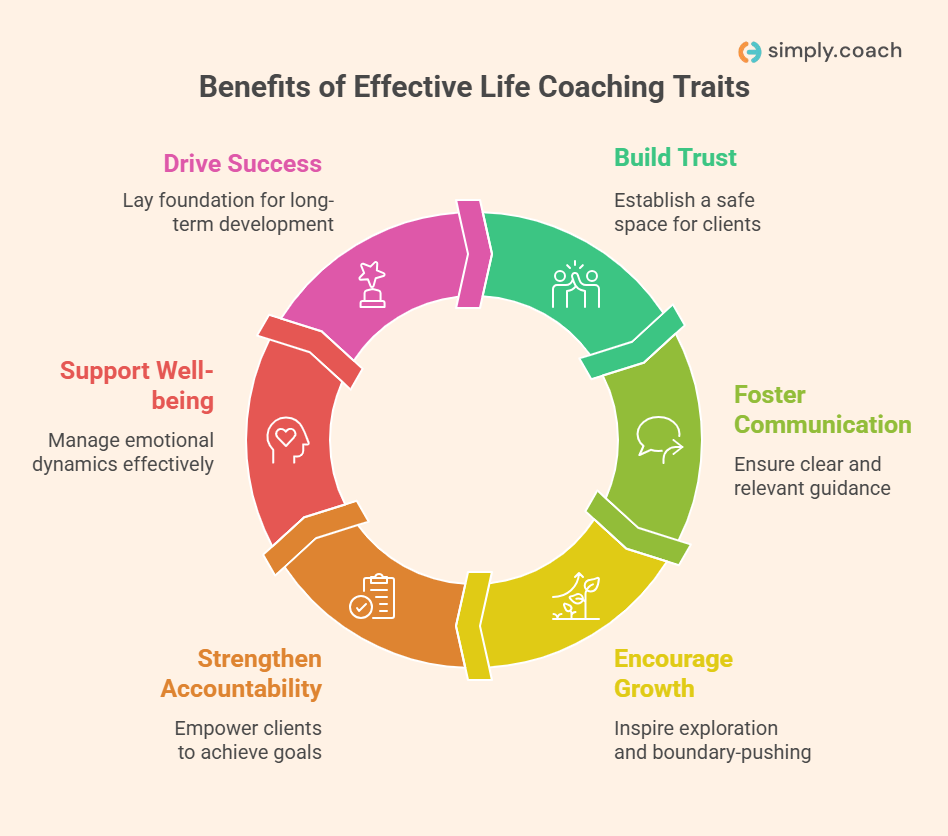
A life coaching trait refers to the essential personal characteristics and qualities that allow a coach to effectively guide and support their clients. These traits enable coaches to foster a deep connection, build trust, and create meaningful change. Life coaching is much more than giving advice; it’s about understanding and empowering clients to find their own solutions and grow in ways that are meaningful to them.
The importance of life coaching traits cannot be overstated. Here’s why they are crucial for your success:
- Builds trust and rapport: Traits like empathy and authenticity create a safe space where your clients feel comfortable sharing their thoughts and challenges.
- Fosters effective communication: Clear communication helps ensure that clients understand the guidance provided, and it helps you as a coach listen and respond in ways that are relevant to the client’s needs.
- Encourages client growth: Traits such as patience, curiosity, and open-mindedness encourage clients to explore new possibilities and push their own boundaries.
- Strengthens accountability: Traits like motivation and responsibility empower you, as the coach, to hold clients accountable, which is key to achieving their goals.
- Supports emotional well-being: Emotional intelligence and empathy help you manage the emotional dynamics of coaching, allowing clients to process and work through challenging emotions.
- Drives long-term success: Life coaching traits are not only critical for short-term results but also lay the foundation for long-term personal development, helping clients maintain positive change.
In short, the traits you develop as a life coach directly impact your ability to guide clients toward lasting transformation. Without these key traits, coaching would simply be advice-giving, rather than the powerful, transformative process it is meant to be.
Build Your Life Coaching Practice
Starting your life coaching journey doesn’t have to feel overwhelming. Simply.Coach’s Life Coaching Track gives you a clear, step-by-step roadmap to understand the coaching profession, choose the right certification path, and confidently move from learning to launching your practice.

Key Traits of a Successful Life Coach
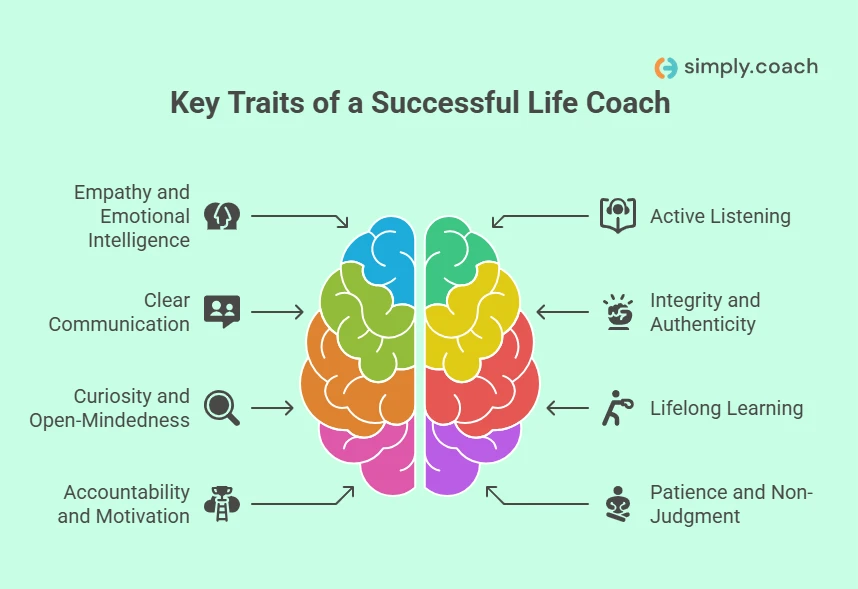
Becoming a successful life coach goes beyond training and certifications; it’s about embodying key personal traits that allow you to connect with clients and guide them toward meaningful change. These traits shape your ability to create trust, offer valuable insights, and foster long-term growth. Here are the essential traits that every successful life coach should develop.
1. Empathy and emotional intelligence
Empathy is essential in understanding the unique challenges and emotions your clients face. It enables you to respond with compassion and support, creating a space where clients feel safe to open up. Emotional intelligence (EI) takes this a step further by allowing you to manage your own emotions and tune into the unspoken feelings of your clients. High EI helps you navigate difficult emotions and guide clients through sensitive topics with care, ensuring a more productive and trusting coaching relationship.
Why it’s important:
- Builds trust and rapport: Clients are more likely to engage with a coach who understands and empathizes with their emotional state, creating a stronger bond.
- Helps navigate difficult emotions: Emotional intelligence allows you to manage sensitive topics and difficult conversations, ensuring your clients feel safe during vulnerable moments.
- Promotes client growth: When clients feel understood, they’re more open to change and willing to tackle challenges, leading to more significant progress.
- Fosters a supportive coaching environment: Clients will be more likely to stay committed to the coaching process when they know they’re in a non-judgmental, emotionally safe space.
Also read: 9 Best Emotional Intelligence Coach Certification Programs
2. Active listening
Active listening goes beyond just hearing words, it involves fully understanding and interpreting both verbal and non-verbal cues. By giving your undivided attention, you create a space for your clients to express themselves openly. This allows you to understand not only their words but also the emotions and needs behind them. When clients feel heard, they are more likely to engage and share more deeply, leading to better insights and a stronger connection.
Why it’s important:
- Enhances client clarity: By listening carefully, you help clients articulate their thoughts more clearly, allowing them to gain deeper insights into their own struggles.
- Increases client engagement: When you actively listen, clients feel more involved in the process, increasing their commitment to achieving their goals.
- Reveals hidden emotions: Active listening helps uncover emotions or issues that clients may not directly express, allowing you to address underlying concerns.
- Strengthens emotional connection: Clients are more likely to trust and feel comfortable with you, creating a coaching environment that fosters deeper, more transformative conversations.
Also read: Three Levels of Coaching Listening: Unlock Deeper Connections & Client Success
3. Clear and effective communication
As a coach, being able to communicate your thoughts clearly and effectively is crucial for client success. It’s not just about being articulate, it’s about using language that resonates with your clients’ unique needs and goals. When you are clear, you eliminate confusion, ensuring your clients understand their direction and next steps. Additionally, asking powerful, open-ended questions fosters self-discovery, empowering clients to think critically about their challenges and find solutions themselves.
Why it’s important:
- Promotes understanding: Clear communication ensures clients grasp the guidance you offer, preventing misunderstandings and misdirection.
- Facilitates client reflection: Thoughtful questions prompt clients to think critically about their challenges and goals, unlocking new insights.
- Encourages personal responsibility: When clients discover answers for themselves, they feel more invested in their own growth and committed to the coaching process.
- Strengthens connection: Effective communication helps you connect with your clients on a deeper level, making them feel heard and valued.
Enhance your ability to ask impactful questions and guide clients toward self-discovery
check out The Ultimate Guide to Asking Powerful Life Coaching Questions. This guide offers actionable insights and strategies that will help you ask the right questions to drive deeper reflection and growth with your clients.
4. Integrity and authenticity
Your integrity and authenticity directly influence how clients perceive you and the coaching process. Being genuine in your actions builds trust, allowing clients to feel safe and respected. When you align your words with actions, you demonstrate reliability and consistency, which is essential for long-term coaching success. Clients are more likely to open up and trust you when they know you are transparent, real, and committed to their success.
Why it’s important:
- Builds trust: Clients are more likely to engage with and follow a coach who demonstrates honesty and aligns their words with their actions.
- Creates a safe space: Authenticity fosters an environment where clients feel comfortable being vulnerable and open.
- Strengthens coaching impact: Clients resonate more with a coach who is relatable and real, which enhances the effectiveness of the coaching process.
- Encourages long-term relationships: A genuine approach creates lasting connections, leading to more referrals and continued success for your coaching practice.
Also read: Building Trust Through Self-Disclosure: A Coach’s Guide to Deeper Client Relationships
5.Curiosity and open-mindedness
Curiosity drives your ability to understand your clients on a deeper level. It pushes you to ask the right questions, explore various aspects of their lives, and uncover hidden insights. Open-mindedness allows you to accept different perspectives and adapt your coaching approach based on each client’s unique situation. This creates a coaching environment where clients feel free to explore new possibilities and ideas without fear of judgment, fostering personal growth and transformation.
Why it’s important:
- Enhances problem-solving: A curious mindset encourages clients to explore various solutions, leading to more creative and effective problem-solving.
- Fosters empathy: Being open to different perspectives deepens your understanding and empathy, strengthening the client-coach relationship.
- Promotes adaptability: Curiosity about new methods and ideas keeps your coaching approach flexible and responsive to clients’ evolving needs.
- Encourages continuous growth: An open mind leads to ongoing learning and personal development, enhancing your effectiveness as a coach.
Explore how coaching is evolving in the digital age and how coaches can stay a step ahead in a tech-driven world.
Tune in to this insightful episode of The Growth Dialogues – ‘Evolving Client Expectations in Digital Coaching – How Coaches Can Stay Ahead’

6. Commitment to lifelong learning
In a constantly evolving coaching field , staying committed to lifelong learning is key to maintaining a competitive edge. Whether it’s attending workshops, reading the latest research, or engaging in peer learning, continuously enhancing your skills keeps you informed and adaptable. This dedication ensures you’re always equipped with the latest tools and techniques to support your clients’ needs. Lifelong learning not only benefits your clients but also enriches your professional growth as a coach.
Why it’s important:
- Maintains professional competence: Continuous learning helps you stay updated with evolving coaching techniques and industry standards.
- Enhances adaptability: Acquiring new knowledge allows you to adjust your coaching strategies to meet diverse client needs.
- Builds credibility: Demonstrating a commitment to learning showcases your dedication to personal and professional growth, fostering trust with clients.
- Improves client outcomes: By integrating new insights and methods, you can offer more effective guidance, leading to better client results.
7. Accountability and motivation
Accountability and motivation are the driving forces behind client success. Setting clear goals with your clients and holding them accountable for their progress helps them stay focused and motivated. When you consistently check in on their progress and celebrate achievements, you reinforce the importance of follow-through. Your motivation and support will encourage clients to keep pushing forward, even in the face of challenges, ensuring long-term success and growth.
Why it’s important:
- Ensures progress: By setting specific goals and holding clients accountable, you help them stay focused and measure their progress.
- Increases client commitment: When clients know they are accountable, they are more likely to stay committed and take action toward their goals.
- Boosts motivation: Regular encouragement and recognition keep clients motivated, preventing burnout and boosting self-confidence.
- Achieves long-term success: Accountability and motivation drive consistent action, ensuring that clients achieve and sustain their goals over time.
8. Patience and non-judgment
Patience and non-judgment are vital to fostering a trusting and supportive coaching environment. Clients may take time to process their emotions or work through their challenges. By being patient and understanding, you give them the space to grow at their own pace. A non-judgmental approach allows clients to explore their thoughts and behaviors without fear of criticism, which encourages openness and vulnerability.
Why it’s important:
- Creates a safe space: Patience and non-judgment allow clients to express themselves without fear of criticism, leading to more authentic conversations.
- Supports client comfort: A non-judgmental approach makes clients feel respected and understood, allowing them to explore sensitive topics with ease.
- Fosters deeper self-awareness: Patience gives clients the time to process their thoughts and emotions, encouraging greater self-reflection and understanding.
- Encourages long-term growth: Clients are more likely to stay committed to the coaching process when they feel safe, respected, and free to explore their own pace.
Foundational Skills for Life Coaches
As a life coach, it’s essential to go beyond just having the right traits. You also need a set of practical, foundational skills that will help you guide your clients effectively and run your coaching practice efficiently. These skills enable you to structure your sessions, manage time effectively, solve problems, and build a sustainable business. Here’s a breakdown of the essential skills you need to master.
1. Goal setting and action planning
Helping your clients set clear, actionable goals is essential for driving progress. Break down larger goals into smaller, manageable steps to make them more achievable. Ensure each goal aligns with their personal values and is measurable, so both you and your client can track progress effectively.
Pro tip: Use Simply.Coach tools like action plans and goal-setting to track progress. Always revisit and adjust goals as your client’s needs evolve to keep them focused and motivated.
2. Problem-solving and adaptability
In life coaching, every client faces unique challenges. Your ability to assist them in navigating these challenges with creative problem-solving strategies will set you apart. Adapt your coaching techniques to address specific client needs, and be flexible in your approach as their journey unfolds.
Pro tip: Develop a problem-solving framework that you can apply across different scenarios. This will help you respond quickly and confidently while adapting to individual client needs.
3. Organizational and time management skills
Effective time management is crucial for both you and your clients. Organize coaching sessions and client goals in a structured way to make each session more productive. Help your clients create time management plans that prioritize their tasks and reduce overwhelm.
Pro tip: Use digital scheduling tools and task management apps to stay organized. Encourage clients to block out time for both personal and professional growth to avoid burnout.
4. Business acumen
Running a successful coaching practice requires strong business skills. From marketing and client acquisition to pricing and budgeting, understanding the business side of coaching ensures sustainability. Develop systems for managing client relationships, tracking progress, and handling finances efficiently.
Pro tip: Set aside time each week to work on your business, not just in it. Focus on refining your marketing strategies and building a network to expand your client base.
Also read: Developing Effective Life Coaching Strategies and Techniques for Different Types of Clients
Conclusion
How to be a good life coach goes beyond knowledge and certifications; it’s about embodying essential traits and mastering practical skills that foster trust, drive progress, and empower clients to achieve their goals. From empathy and active listening to goal-setting and problem-solving, these traits and skills are key to creating a lasting impact. By consistently developing these qualities, you’ll build stronger relationships with clients and set yourself up for long-term success in your coaching practice.
To manage and grow your coaching business effectively, Simply.Coach offers an all-in-one life coaching software designed specifically for you. With tools for goal-setting, client management, scheduling, and business tracking, Simply.Coach supports you in delivering impactful coaching experiences while streamlining your operations.