
Designing a coaching program from scratch can take significant time and effort, especially for coaches managing multiple clients or launching new services. This is where a coaching program template becomes valuable. Templates provide a ready-made structure that helps coaches organize sessions, define goals, and guide clients through a clear development journey without rebuilding the program each time.
Using structured templates also improves coaching outcomes. When sessions follow a logical progression, from clarity and planning to action and accountability, clients are more likely to stay engaged and achieve meaningful results.
In this guide, we explore 20 coaching program templates you can use in 2026, covering different coaching niches and goals. You will also learn how these templates are structured and how coaches can adapt them to design effective coaching programs for their clients.
Key takeaways
- Coaching program templates provide a repeatable framework that helps coaches design structured programs instead of creating new session plans for every client.
- Different coaching niches, such as leadership, career, mindset, and wellness, require distinct program templates tailored to specific client outcomes.
- Well-designed coaching programs typically guide clients through stages such as assessment, strategy development, implementation, and long-term sustainability.
- Using structured templates helps coaches deliver more consistent client experiences and measurable results across multiple engagements.
- Coaches can adapt program templates by adding exercises, reflection tools, and accountability checkpoints that support deeper client progress.
- Designing a custom coaching program template allows coaches to align their methodology, expertise, and niche focus into a scalable coaching framework.
- Digital coaching platforms like Simply.Coach help organize program structures, client goals, and session insights, making it easier to manage structured coaching programs effectively.
What Is a Coaching Program Template and Why Do Coaches Use It?
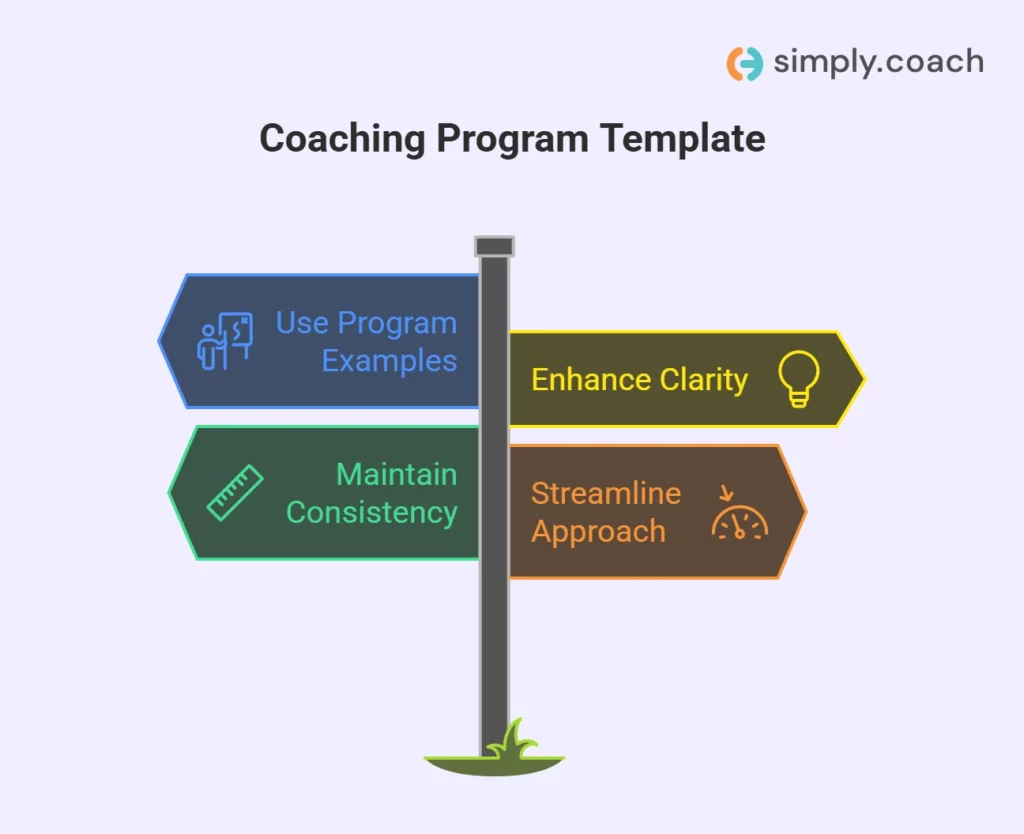
A coaching program template is a repeatable framework that helps coaches design and deliver structured coaching programs. Instead of planning every session individually, a template outlines the overall journey of the program, including session topics, client goals, exercises, reflection prompts, and expected outcomes.
This structure ensures that each session builds logically on the previous one while still allowing flexibility to adapt to individual client needs.
For example, a 12-week transformation program template may guide clients through stages such as goal clarity, mindset shifts, action planning, and accountability. A leadership coaching template might focus on communication skills, decision-making, and team management.
Similarly, a career clarity coaching template could help clients identify strengths, explore career options, and develop an actionable career roadmap.
Coaches use program templates because they offer several practical benefits:
- Save program design time by providing a ready-to-use structure
- Create consistent client outcomes through a clear coaching journey
- Make coaching programs easier to scale as more clients enroll
- Support packaged coaching offers that are easier to market and sell
By using well-designed coaching program templates, coaches can deliver structured and repeatable client experiences while maintaining the flexibility to tailor sessions based on each client’s goals and progress.
Evolving Client Expectations in Digital Coaching
Podcasts like “Evolving Client Expectations in Digital Coaching – How Coaches Can Stay Ahead” from Growth Dialogues by Simply.Coach offers practical insights on adapting your coaching approach to meet shifting client needs.
Top 20 Coaching Program Templates to Use in 2026
Different coaching niches require different program structures. For example, a life coaching program may focus on mindset shifts and habit formation, while a leadership coaching program might emphasize decision-making, communication, and team dynamics.
Similarly, career and business coaching programs often combine strategic planning with accountability and performance tracking.
The following 20 coaching program templates cover a range of coaching contexts; from personal transformation and leadership development to career growth and performance coaching. Each template outlines the purpose of the program, the types of clients it serves best, and an example structure coaches can adapt to their own practice.
1. 12-Week Transformation Coaching Program Template
The 12-week transformation coaching program is one of the most widely used coaching program templates because it provides enough time for clients to build awareness, implement behavioral changes, and reinforce new habits.
The structure allows coaches to guide clients through a clear progression, from defining goals to implementing strategies and sustaining long-term change.
Best for: Life coaches, mindset coaches, personal development coaches, and transformation-focused coaching programs
Structure:
- Week 1–2: Vision, goals, and baseline assessment
Establish the foundation of the program by defining the client’s desired transformation. Coaches typically conduct a deep intake assessment, clarify long-term goals, and identify current challenges, habits, and beliefs that influence progress. This stage also sets success metrics and accountability expectations for the program.
- Week 3–6: Mindset shifts and habit architecture
The focus moves to identifying limiting beliefs, cognitive patterns, and behavioral habits that affect performance or wellbeing. Coaches guide clients through reframing exercises, behavioral experiments, and habit-building strategies that support the desired transformation.
- Week 7–10: Strategic implementation and accountability
Clients begin applying insights through structured action plans. Sessions often focus on decision-making frameworks, performance tracking, and overcoming real-world obstacles. Coaches may introduce progress reviews, reflection exercises, and accountability checkpoints to reinforce consistency.
- Week 11–12: Integration and sustainable change
The final stage consolidates progress and ensures that improvements continue beyond the program. Coaches review achievements, identify lasting behavioral shifts, and help clients create a forward-looking development plan to maintain momentum.
Use case example: An experienced life coach may use this template with mid-career professionals who want to redefine personal priorities, improve performance, and create sustainable lifestyle changes. The structured progression, from awareness to implementation, helps clients translate insights into measurable long-term transformation.
2. Career Clarity Coaching Program Template
A career clarity coaching program helps clients gain direction when they feel uncertain about their professional path. This template is commonly used with individuals considering career transitions, returning to the workforce, or evaluating long-term professional goals.
The program focuses on helping clients identify strengths, evaluate options, and build a realistic action plan that aligns with their values and ambitions.
Best for: Career coaches, transition coaches, and professional development coaches
Structure:
- Session 1–2: Career vision and personal priorities
Explore the client’s long-term aspirations, values, and motivations. Coaches often use reflection exercises and career vision frameworks to help clients define what a fulfilling career looks like.
- Session 3–4: Skills and strengths mapping
Identify the client’s key competencies, transferable skills, and professional experiences. This stage may include strengths assessments, role analysis, and identifying capability gaps.
- Session 5–6: Career options and decision frameworks
Evaluate possible career paths using structured decision-making models. Coaches help clients weigh opportunities, constraints, and long-term growth potential.
- Session 7–8: Strategic action roadmap
Develop a practical plan that may include skill development, networking strategies, job search preparation, or role transitions.
Use case example: A career coach works with a mid-career professional who wants to transition from corporate operations into product management. Through the program, the client identifies transferable skills, explores potential roles, and builds a step-by-step transition strategy that includes skill development and targeted networking.
3. Executive Leadership Coaching Program Template
Executive leadership coaching programs focus on strengthening decision-making, strategic thinking, and leadership effectiveness. This template is designed to support senior professionals who are responsible for leading teams, managing complex decisions, and driving organizational performance.
The program typically combines leadership self-awareness with practical strategies for influencing teams and delivering results.
Best for: Executive coaches, leadership coaches, and organizational development coaches
Structure:
- Session 1–2: Leadership assessment and strategic priorities
Evaluate the leader’s current leadership style, strengths, and key challenges. Coaches often use leadership assessments, stakeholder feedback, or 360-degree insights to establish a baseline.
- Session 3–4: Leadership communication and influence
Focus on improving executive presence, communication clarity, and the ability to influence stakeholders across teams.
- Session 5–6: Strategic decision-making and problem-solving
Introduce frameworks that help leaders evaluate complex business challenges and make confident, informed decisions.
- Session 7–8: Team leadership and organizational impact
Address team dynamics, delegation, performance management, and strategies for building high-performing teams.
Use case example: An executive coach works with a newly promoted director responsible for leading a cross-functional team. The coaching program helps them refine communication with senior stakeholders and develop stronger decision-making frameworks.
4. Business Growth Coaching Program Template
A business growth coaching program focuses on helping entrepreneurs or business leaders scale operations, improve strategy, and strengthen execution. The template combines strategic planning with accountability so that clients can translate ideas into measurable business outcomes.
Best for: Business coaches, entrepreneurship coaches, and startup advisors
Structure:
- Session 1–2: Business vision and growth objectives
Clarify the founder’s long-term vision, revenue targets, and strategic priorities for the business. Assess the current state of the business, including revenue streams, customer segments, and growth challenges. This stage establishes clear success metrics and the direction the business aims to achieve.
- Session 3–4: Market positioning and customer strategy
Evaluate the business’s ideal customer profile, value proposition, and competitive positioning. Coaches help clients refine messaging, identify the most profitable customer segments, and strengthen differentiation in the market. The goal is to ensure the business is positioned to attract and retain the right audience.
- Session 5–6: Systems, processes, and operational improvements
Identify operational bottlenecks that may limit growth, such as inefficient workflows or unclear responsibilities. Coaches guide clients in improving systems related to marketing, sales, or service delivery. Strengthening these processes helps the business scale more effectively.
- Session 7–8: Execution roadmap and performance tracking
Develop a clear action plan that translates strategy into measurable steps. Define key performance indicators, milestones, and accountability checkpoints to track progress. Regular reviews ensure the business owner stays focused on the most impactful growth activities.
Use case example: A business coach supports a small business owner looking to expand into new markets. Through the program, the client clarifies growth priorities, improves operational systems, and creates a structured expansion strategy.
5. Confidence Building Coaching Program Template
Confidence coaching programs help clients strengthen self-belief, overcome self-doubt, and develop the mindset required to pursue personal or professional goals. The program focuses on identifying internal barriers while building habits that reinforce confidence and resilience.
Best for: Mindset coaches, life coaches, and personal development coaches
Structure:
- Session 1–2: Self-awareness and confidence baseline
Explore situations where the client experiences self-doubt and identify recurring triggers that affect confidence. Coaches often assess past experiences, beliefs, and behavioral patterns that influence self-perception. This stage establishes a clear starting point for confidence development.
- Session 3–4: Limiting beliefs and mindset reframing
Identify negative thought patterns or internal narratives that undermine confidence. Coaches guide clients through reframing techniques and reflective exercises to replace these beliefs with more constructive perspectives. The focus is on building a healthier and more empowering mindset.
- Session 5–6: Behavioral confidence practices
Introduce practical strategies that help clients build confidence through action. This may include communication exercises, decision-making frameworks, and small performance challenges that gradually expand comfort zones. Consistent practice helps reinforce new behaviors.
- Session 7–8: Reinforcement and long-term growth
Review progress and highlight situations where the client successfully applied new confidence strategies. Coaches help clients strengthen positive habits and develop tools to manage future challenges. The goal is to ensure confidence improvements remain sustainable beyond the program.
Use case example: A mindset coach works with a professional preparing for a leadership role. Through the program, the client builds communication confidence, improves decision-making, and develops strategies to manage high-pressure situations.
6. Health and Wellness Coaching Program Template
Health and wellness coaching programs focus on helping clients improve physical wellbeing, energy levels, and sustainable lifestyle habits. Rather than short-term fixes, these programs emphasize long-term behavioral changes related to nutrition, movement, sleep, and stress management.
Best for: Health coaches, wellness coaches, and lifestyle coaches
Structure:
- Session 1–2: Health goals and lifestyle assessment
Evaluate the client’s current habits related to nutrition, exercise, sleep, and daily routines. Coaches help clients clarify wellness goals and identify areas where lifestyle changes could have the greatest impact. This stage establishes realistic expectations and baseline metrics.
- Session 3–4: Habit development and behavior change
Introduce practical habit-building strategies that support healthier routines. Coaches help clients design small, manageable changes related to diet, activity levels, and stress management. Consistency and accountability are emphasized during this phase.
- Session 5–6: Overcoming barriers and maintaining motivation
Identify challenges that may disrupt healthy routines, such as time constraints, stress, or lack of consistency. Coaches guide clients in developing strategies to stay motivated and adjust routines when obstacles arise.
- Session 7–8: Long-term wellness planning
Review progress and refine habits that support ongoing wellbeing. Coaches help clients design a sustainable lifestyle plan that maintains energy, balance, and long-term health improvements.
Use case example: A wellness coach works with a professional experiencing burnout who wants to improve energy levels, build healthier routines, and manage stress more effectively.
7. Productivity Coaching Program Template
Productivity coaching programs help clients improve how they manage time, priorities, and focus. These programs are particularly valuable for professionals who feel overwhelmed by competing responsibilities or struggle with maintaining consistent progress on important goals.
Best for: Productivity coaches, executive coaches, and performance coaches
Structure:
- Session 1–2: Productivity assessment and priority clarity
Evaluate how the client currently manages time, tasks, and responsibilities. Coaches help clients identify productivity blockers such as unclear priorities, distractions, or ineffective planning systems.
- Session 3–4: Time management and focus strategies
Introduce practical frameworks for prioritization, scheduling, and task management. Clients experiment with productivity methods that support better focus and more effective use of time.
- Session 5–6: Systems and workflow optimization
Help clients design workflows that support consistent productivity. Coaches may explore task batching, planning routines, or digital productivity tools that streamline daily work.
- Session 7–8: Accountability and sustainable habits
Review progress and reinforce productivity routines that deliver results. Coaches help clients establish systems that maintain focus, manage workload, and prevent burnout over time.
Use case example: A productivity coach works with a founder juggling multiple projects. Through the program, the client implements structured planning routines and clearer prioritization strategies.
8. Mindset Coaching Program Template
Mindset coaching programs focus on helping clients reshape the beliefs, thought patterns, and attitudes that influence behavior and performance. These programs help clients move from limiting beliefs to more constructive perspectives that support growth and resilience.
Best for: Mindset coaches, performance coaches, and personal development coaches
Structure:
- Session 1–2: Awareness of thought patterns
Explore the client’s current beliefs, self-talk, and mental habits. Coaches help clients recognize patterns that influence decisions, confidence, and responses to challenges.
- Session 3–4: Challenging limiting beliefs
Identify beliefs that restrict growth and introduce reframing techniques that encourage more constructive thinking. Clients learn how to question assumptions and develop more empowering narratives.
- Session 5–6: Building empowering mental habits
Introduce practices that strengthen resilience and constructive thinking, such as reflective journaling, visualization, and cognitive reframing exercises.
- Session 7–8: Integrating mindset shifts into daily life
Help clients apply new thinking patterns to real-life challenges. Coaches reinforce strategies that support long-term personal and professional growth.
Use case example: A mindset coach supports an entrepreneur who struggles with self-doubt and fear of failure. Through the program, the client develops a more resilient and opportunity-focused mindset.
9. Startup Founder Coaching Program Template
Startup founder coaching programs focus on helping entrepreneurs navigate the strategic, operational, and personal challenges of building a business. Founders often balance product development, team management, fundraising, and market growth simultaneously.
This template helps founders strengthen decision-making, maintain focus, and build leadership capacity while scaling their ventures.
Best for: Startup coaches, entrepreneurship coaches, and business mentors
Structure:
- Session 1–2: Founder vision and business priorities
Clarify the founder’s long-term vision for the company and define key business objectives. Coaches help founders identify the most critical priorities, such as product development, market entry, or funding strategy.
- Session 3–4: Strategic decision-making and problem-solving
Explore the major strategic challenges facing the startup. Coaches guide founders through frameworks that support clearer decision-making and help evaluate risks, opportunities, and trade-offs.
- Session 5–6: Leadership and team development
Focus on the founder’s role as a leader, including communication, delegation, and building high-performing teams. Coaches help founders strengthen leadership behaviors that support growth.
- Session 7–8: Growth strategy and execution planning
Develop a clear roadmap for scaling the business. This stage often includes defining measurable milestones, reviewing operational priorities, and strengthening accountability for execution.
Use case example: A startup coach works with a founder preparing to scale their early-stage SaaS company. The program helps the founder prioritize growth initiatives, strengthen leadership skills, and manage rapid business expansion.
10. Relationship Coaching Program Template
Relationship coaching programs help individuals or couples improve communication, strengthen emotional connection, and resolve recurring conflicts. These programs focus on helping clients understand relationship patterns, develop healthier communication habits, and build stronger interpersonal dynamics.
Best for: Relationship coaches, life coaches, and communication coaches
Structure:
- Session 1–2: Relationship goals and current dynamics
Explore the client’s relationship goals and identify patterns that influence communication and interaction. Coaches help clients clarify what a healthy and fulfilling relationship looks like.
- Session 3–4: Communication and emotional awareness
Focus on improving how individuals express needs, listen actively, and respond to emotional triggers. Coaches introduce communication frameworks that support clearer and more respectful dialogue.
- Session 5–6: Conflict resolution and boundary setting
Help clients identify sources of conflict and develop strategies to manage disagreements constructively. Coaches guide clients in establishing healthy boundaries and expectations.
- Session 7–8: Strengthening connection and long-term relationship habits
Review progress and reinforce habits that strengthen trust, empathy, and mutual understanding. Clients develop practical strategies for maintaining healthier relationship dynamics over time.
Use case example: A relationship coach works with a couple experiencing frequent communication breakdowns. Through the program, they learn practical tools for expressing needs, resolving disagreements, and rebuilding trust.
Also read: 8 Language and Communication Coaches to Follow Online for additional insights.
11. Transition Coaching Program Template
Transition coaching programs help clients navigate major personal or professional changes with greater clarity and confidence. These programs are commonly used during career shifts, relocations, promotions, or life-stage transitions where individuals need to reassess priorities and redefine direction.
Best for: Career coaches, life coaches, and transition coaches
Structure:
- Session 1–2: Transition assessment and context mapping
Explore the nature of the transition and the factors driving change. Coaches help clients evaluate current circumstances, challenges, and opportunities while clarifying what they want the next phase of their life or career to look like.
- Session 3–4: Identity and values clarification
Guide clients through exercises that clarify personal values, strengths, and motivations. This stage helps individuals reconnect with what matters most as they move through change.
- Session 5–6: Opportunity exploration and decision strategy
Evaluate potential paths forward by exploring new roles, opportunities, or lifestyle changes. Coaches introduce decision-making frameworks that help clients assess options and reduce uncertainty.
- Session 7–8: Action planning and transition roadmap
Develop a structured plan that supports the transition. Coaches help clients identify key steps, resources, and milestones required to move successfully into the next stage.
Use case example: A transition coach works with a professional moving from a corporate role into freelance consulting. The program helps them clarify goals, explore opportunities, and build a structured transition plan.
12. Accountability Coaching Program Template
Accountability coaching programs focus on helping clients stay consistent with their goals by creating regular check-ins, structured milestones, and progress tracking systems. These programs are particularly effective for clients who know what they want to achieve but struggle with maintaining focus or follow-through.
Best for: Productivity coaches, performance coaches, and goal-focused coaching programs
Structure:
- Session 1–2: Goal definition and success metrics
Define clear goals and measurable outcomes the client wants to achieve. Coaches help break larger objectives into manageable milestones and establish accountability expectations.
- Session 3–4: Structured progress tracking and review
Introduce systems that track weekly or biweekly progress. Coaches review completed actions, identify obstacles, and ensure the client remains aligned with their goals.
- Session 5–6: Habit reinforcement and consistency building
Focus on strengthening routines and behaviors that support sustained progress. Coaches help clients identify patterns that affect consistency and develop strategies to maintain momentum.
- Session 7–8: Review, recalibration, and forward planning
Evaluate results achieved during the program and adjust strategies where necessary. Coaches help clients refine their goals and develop a long-term accountability plan.
Use case example: A productivity coach works with an entrepreneur who wants to consistently execute weekly business priorities and maintain focus on key growth initiatives.
13. Resilience Coaching Program Template
Resilience coaching programs help clients strengthen their ability to manage stress, adapt to change, and maintain emotional balance during challenging situations. These programs focus on developing mental and emotional skills that allow individuals to recover quickly from setbacks.
Best for: Stress management coaches, leadership coaches, and personal development coaches
Structure:
- Session 1–2: Stress triggers and challenge assessment
Identify situations, environments, or pressures that create stress or overwhelm. Coaches help clients recognize patterns in how they respond to difficult situations.
- Session 3–4: Emotional awareness and mindset development
Strengthen emotional intelligence by helping clients recognize and manage emotional responses. Coaches introduce reflective practices that improve self-awareness and emotional regulation.
- Session 5–6: Resilience-building practices
Introduce practical strategies that strengthen resilience, such as reframing challenges, stress management techniques, and adaptive thinking patterns.
- Session 7–8: Long-term resilience planning
Help clients develop habits and strategies that maintain emotional stability and adaptability in the future. Coaches focus on building routines that support sustainable wellbeing.
Use case example: A resilience coach works with a senior professional managing high-pressure responsibilities who wants to develop stronger emotional resilience and stress management strategies.
14. Habit Formation Coaching Program Template
Habit formation coaching programs focus on helping clients build consistent behaviors that support long-term personal or professional goals. Rather than relying on motivation alone, these programs emphasize understanding behavior patterns, designing supportive environments, and reinforcing habits through small, repeatable actions.
Best for: Behavior change coaches, life coaches, and wellness coaches
Structure:
- Session 1–2: Habit audit and current behavior patterns
Evaluate the client’s current routines and identify habits that support or hinder progress. Coaches help clients map daily behaviors and determine which habits have the greatest impact on their goals.
- Session 3–4: Behavior triggers and habit design
Analyze triggers that influence behavior and introduce habit design principles. Coaches guide clients in creating small, manageable habits that can be integrated into existing routines.
- Session 5–6: Implementation and accountability checkpoints
Clients begin implementing new habits while tracking consistency and progress. Coaches provide accountability, review results, and help adjust strategies when habits are difficult to maintain.
- Session 7–8: Habit reinforcement and sustainability
Focus on strengthening habits through repetition and supportive systems. Coaches help clients develop long-term strategies to maintain positive behaviors even when routines change.
Use case example: A habit coach works with a professional who wants to build consistent daily planning and focus routines to improve productivity and reduce procrastination.
15. Communication Skills Coaching Program Template
Communication coaching programs help professionals improve how they express ideas, listen to others, and navigate complex workplace interactions. Strong communication skills are essential for leadership, collaboration, and influencing stakeholders.
Best for: Leadership coaches, executive coaches, and professional development coaches
Structure:
- Session 1–2: Communication style assessment
Assess the client’s current communication style and identify strengths and areas for improvement. Coaches may use feedback exercises or reflective assessments to understand communication patterns.
- Session 3–4: Active listening and clarity in messaging
Focus on strengthening listening skills and improving how ideas are structured and delivered. Coaches introduce techniques that help clients communicate with greater clarity and empathy.
- Session 5–6: Managing difficult conversations
Help clients develop strategies for handling challenging discussions such as giving feedback, addressing conflict, or negotiating expectations.
- Session 7–8: Influence and persuasion in professional settings
Explore how communication can support leadership and decision-making. Coaches help clients practice persuasive communication and refine messaging in real-world scenarios.
Use case example: A leadership coach works with a manager who wants to communicate more effectively with their team and provide clearer feedback during performance discussions.
16. Decision-Making Coaching Program Template
Decision-making coaching programs help leaders and professionals develop clearer thinking when evaluating complex choices. The program focuses on strengthening analytical frameworks, aligning decisions with values and goals, and improving confidence in high-stakes situations.
Best for: Executive coaches, leadership coaches, and entrepreneurship coaches
Structure:
- Session 1–2: Decision-making frameworks and current challenges
Assess how the client currently approaches decisions and introduce structured frameworks that support clearer evaluation of options.
- Session 3–4: Values-based decision making
Help clients align decisions with personal values, long-term goals, and organizational priorities. This stage strengthens clarity about what matters most.
- Session 5–6: Risk analysis and scenario evaluation
Explore potential outcomes of different choices using scenario planning and risk assessment techniques. Coaches help clients evaluate trade-offs and uncertainty.
- Session 7–8: Decision execution and accountability
Translate insights into confident action by defining next steps and decision checkpoints. Coaches reinforce strategies that support thoughtful and consistent decision-making.
Use case example: An executive coach works with a senior leader who must evaluate strategic investments and organizational priorities while managing uncertainty and competing stakeholder expectations.
17. Work-Life Balance Coaching Program Template
Work-life balance coaching programs help professionals reassess priorities, manage workload pressures, and create healthier routines that support both productivity and wellbeing. These programs are particularly valuable for individuals experiencing burnout, constant time pressure, or difficulty maintaining boundaries between professional and personal life.
Best for: Life coaches, executive coaches, and wellbeing coaches
Structure:
- Session 1–2: Life balance assessment
Evaluate how the client currently allocates time and energy across work, relationships, health, and personal priorities. Coaches help identify areas where imbalance or overload may be affecting wellbeing.
- Session 3–4: Energy and time audit
Analyze how daily activities impact energy levels and productivity. Coaches guide clients in identifying activities that drain or restore energy and introduce strategies for more intentional scheduling.
- Session 5–6: Priority realignment and boundary setting
Help clients redefine priorities and establish clearer boundaries around work commitments. Coaches introduce techniques for managing workload, saying no when necessary, and protecting personal time.
- Session 7–8: Sustainable lifestyle planning
Develop routines and habits that support long-term balance. Coaches help clients design systems that maintain productivity while preserving wellbeing and personal fulfillment.
Use case example: A life coach works with a corporate professional experiencing burnout who wants to regain control over their schedule and build healthier routines that support both career and personal life.
18. Confidence and Self-Esteem Coaching Program Template
Confidence and self-esteem coaching programs help clients strengthen self-belief, challenge negative self-perceptions, and develop a more resilient sense of self. These programs focus on increasing self-awareness while building habits that reinforce positive thinking and confident action.
Best for: Personal development coaches, life coaches, and mindset coaches
Structure:
- Session 1–2: Confidence blockers assessment
Identify situations where the client experiences self-doubt and explore the factors that contribute to low confidence. Coaches help clients recognize patterns that influence self-perception.
- Session 3–4: Limiting belief identification
Examine internal narratives or beliefs that undermine confidence. Coaches introduce reframing techniques that encourage more constructive and empowering perspectives.
- Session 5–6: Self-awareness and confidence-building practices
Introduce exercises that strengthen self-awareness and encourage confident behavior. This may include reflection exercises, communication practice, and small performance challenges.
- Session 7–8: Long-term mindset reinforcement
Help clients integrate confidence-building habits into daily life. Coaches focus on maintaining positive self-perception and managing situations that may trigger self-doubt.
Use case example: A personal development coach works with a professional preparing for leadership opportunities who wants to overcome self-doubt and communicate with greater confidence.
19. Team Coaching Program Template
Team coaching programs focus on improving collaboration, communication, and shared accountability within groups. These programs help teams strengthen alignment around goals, improve interpersonal dynamics, and develop practices that support collective performance.
Best for: Organizational coaches, leadership coaches, and executive coaches
Structure:
- Session 1–2: Team dynamics assessment
Evaluate how team members currently collaborate, communicate, and make decisions. Coaches often use surveys, interviews, or team reflections to identify strengths and friction points.
- Session 3–4: Shared goals and alignment
Help the team clarify shared objectives and define what success looks like collectively. Coaches guide discussions that improve understanding of roles, expectations, and responsibilities.
- Session 5–6: Communication and conflict management
Introduce frameworks that help teams communicate more effectively and address disagreements constructively. Coaches facilitate conversations that improve trust and openness.
- Session 7–8: Team performance review and improvement planning
Review progress made during the program and identify practices that support ongoing collaboration. Teams develop action plans that reinforce accountability and collective performance.
Use case example: An organizational coach works with a cross-functional leadership team to strengthen collaboration and improve decision-making across departments.
20. Strategic Planning Coaching Program Template
Strategic planning coaching programs help leaders and founders define long-term direction and translate vision into actionable plans. These programs support leaders in clarifying priorities, aligning resources, and creating structured execution strategies.
Best for: Executive coaches, business coaches, and startup advisors
Structure:
- Session 1–2: Vision clarification
Help leaders articulate the long-term vision for their organization or initiative. Coaches guide discussions that clarify purpose, direction, and desired outcomes.
- Session 3–4: Strategic priorities identification
Identify the most critical priorities required to achieve the vision. Coaches help leaders evaluate opportunities, risks, and constraints while narrowing focus to key initiatives.
- Session 5–6: Goal mapping and resource planning
Translate strategic priorities into measurable goals and define the resources needed to achieve them. This stage often includes timeline development and responsibility allocation.
- Session 7–8: Execution roadmap and progress monitoring
Develop a structured plan for implementing strategy while tracking results. Coaches help leaders establish milestones, review progress, and adjust strategies when necessary.
Use case example: A business coach works with a founder preparing for the next stage of company growth, helping them define strategic priorities and build a clear execution roadmap for the coming year.
How to Design Your Own Coaching Program Template
While pre-built coaching program templates provide a helpful starting point, many experienced coaches design their own structures to match their methodology and client outcomes. A well-designed template creates a clear pathway for the client journey, from identifying challenges to implementing solutions and sustaining results.
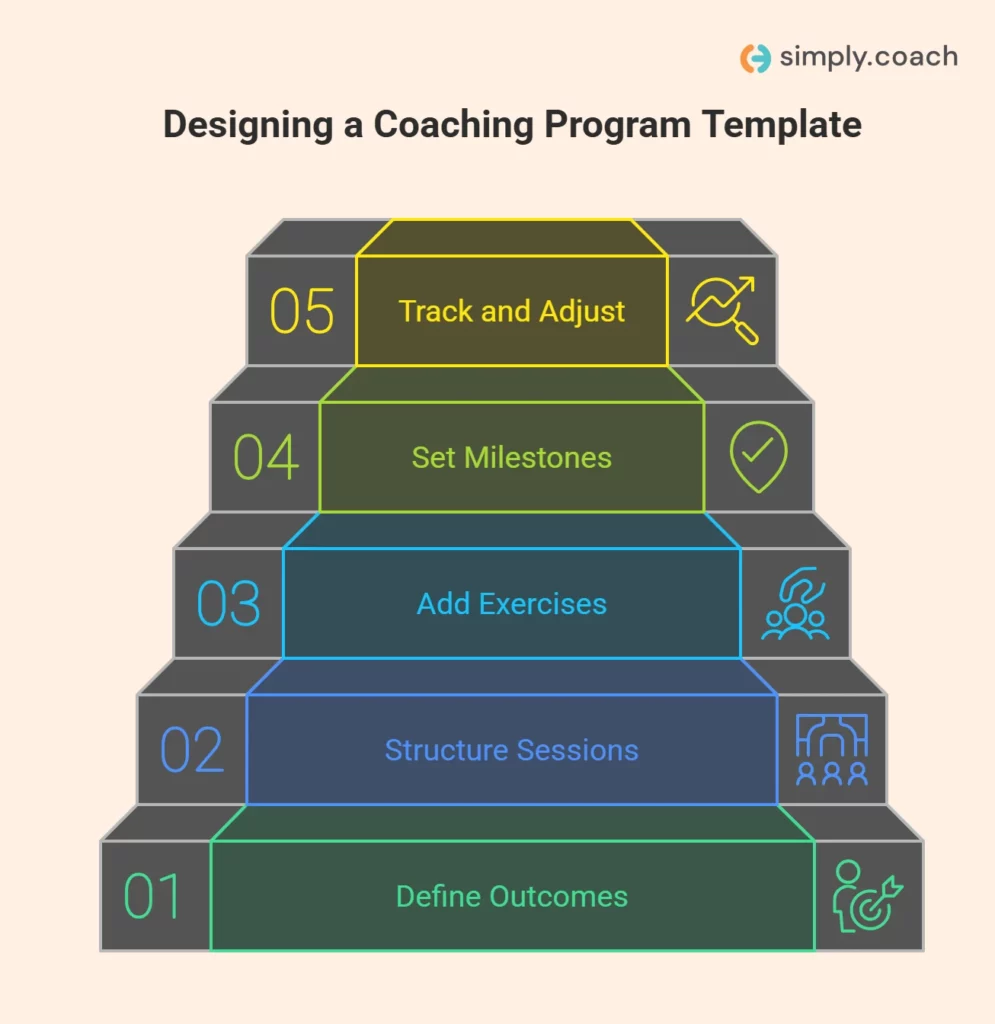
When creating your own coaching program template, consider the following framework:
1. Define the client outcome
Start by identifying the primary transformation the program should deliver. For example, a productivity coaching program may focus on helping clients improve focus and time management, while a leadership program might aim to strengthen decision-making and team management skills.
2. Structure the coaching sessions
Break the program into a logical sequence of sessions that guide the client through stages such as awareness, strategy development, implementation, and reflection. Many coaching programs include 6–12 sessions, giving clients enough time to experiment with new behaviors and track progress.
3. Incorporate exercises and reflection activities
Include tools that help clients actively engage with the coaching process. This could involve self-assessments, journaling prompts, decision-making frameworks, or exercises designed to build specific skills.
4. Set milestones and accountability checkpoints
Define measurable milestones that allow both the coach and client to evaluate progress throughout the program. Regular check-ins help maintain momentum and ensure insights from sessions translate into action.
5. Track progress and adjust the program
Review outcomes periodically and refine the program as needed. Flexibility allows coaches to address emerging challenges while keeping the overall coaching journey aligned with the client’s goals.
By combining a clear program structure with a consistent session format, coaches can design coaching programs that are both repeatable and adaptable. This approach not only improves the client experience but also helps coaches deliver structured, outcome-driven programs that support measurable progress over time.
Also read:Coaching the Growth Mindset: A Mindful Approach to Unlocking Leadership Potential
How Simply.Coach Helps You Manage Coaching Programs More Effectively
Running a structured coaching program involves more than delivering sessions. Coaches often need to design program frameworks, track client goals, document insights, and monitor progress across multiple sessions. When these elements are spread across spreadsheets, documents, and messaging tools, it becomes difficult to maintain a clear view of each client’s progress throughout the program.
Simply.Coach, the leading digital coaching platform, helps coaches manage coaching programs in a more structured and organised way. By centralising client data, session insights, program milestones, and communication in one place, the platform allows coaches to focus on delivering meaningful coaching experiences while maintaining visibility into client progress.
Key features that support structured coaching programs include:
- Client workspaces → Maintain a dedicated workspace for each client where session notes, shared resources, reflections, and program progress can be organised and reviewed throughout the coaching journey.
- Goal and milestone tracking → Define program goals and measurable milestones, making it easier to track progress across multiple sessions and ensure clients stay aligned with their objectives.
- Action plans and assignments → Turn coaching insights into practical next steps, allowing clients to implement strategies between sessions and maintain accountability.
- Session documentation → Record key insights, observations, and session summaries to track patterns, progress, and development across the entire coaching program.
- Integrated scheduling → Manage session bookings, reminders, and calendar coordination while keeping coaching engagements organised in one place.
- Program and engagement management → Run structured coaching programs, group coaching initiatives, or long-term coaching journeys while keeping all related sessions and progress records connected.
By bringing session documentation, program milestones, client goals, and action plans into a single platform, Simply.Coach helps coaches deliver structured coaching programs more efficiently while supporting measurable client outcomes.
Conclusion
Coaching program templates help coaches design structured, repeatable programs that guide clients toward meaningful outcomes. Instead of creating a new framework for every engagement, templates provide a clear roadmap for the coaching journey; covering session themes, development milestones, and actionable steps that support consistent progress.
At the same time, running a structured coaching program requires more than planning sessions. Coaches often need to manage client goals, track progress across multiple sessions, and document insights that shape the coaching journey. Simply.Coach, the leading digital coaching platform, helps coaches organise program structures, session notes, client goals, and action plans in one place, making it easier to deliver well-managed coaching programs while focusing on meaningful client outcomes.
See how Simply.Coach fits your practice.
FAQs
1. How do you create a coaching program template from scratch?
Start by defining the transformation your clients should achieve by the end of the program. Then map the stages required to reach that outcome, such as awareness, strategy, implementation, and review. Finally, organize sessions, exercises, and checkpoints that guide clients through each stage.
2. How many sessions should a coaching program include?
Most coaching programs include 6 to 12 sessions, depending on the complexity of the client’s goals. Shorter programs may focus on a single outcome, while longer programs allow time for deeper behavior change and measurable progress.
3. What is the difference between a coaching session template and a coaching program template?
A coaching session template structures an individual conversation, including check-ins, questions, and action steps. A coaching program template outlines the entire coaching journey across multiple sessions, including milestones, exercises, and long-term goals.
4. Should coaching programs follow a fixed structure?
Not always. While templates provide a clear framework, effective coaches adapt sessions based on client progress, challenges, and evolving goals. The template should guide the process without restricting flexibility.
5. How do coaching templates improve client engagement?
Structured templates create a clear path for the coaching journey. When clients understand the stages of the program and expected outcomes, they are more likely to stay motivated and committed throughout the process.
6. Can coaching templates be used for group coaching programs?
Yes. Many coaches adapt program templates for group coaching environments by including collaborative exercises, group discussions, and shared accountability systems that encourage peer learning.
7. How do experienced coaches refine their coaching program templates?
Experienced coaches continuously improve their templates by reviewing client feedback, tracking outcomes, and identifying which session structures deliver the most impact. Over time, this helps create more effective and scalable coaching programs.