
Burnout rarely arrives as a clear breaking point; it builds gradually in the background of consistent, demanding clinical work. You may still be showing up for sessions, but with less patience, quicker interpretations, and a growing sense of emotional fatigue. Recognizing the signs of therapist burnout early is critical, not just for your well-being, but for maintaining consistency in client care and therapeutic outcomes.
Pushing through this burnout state without addressing the causes compounds the impact. Small declines in empathy, regulation, and focus begin to shape how you respond in sessions, often without immediate awareness. Left unchecked, this can lead to disengagement, both for you and your clients, making early recognition and course correction essential.
In this article, you’ll learn to identify key burnout indicators, understand their underlying causes, and implement actionable strategies that enhance your resilience, session effectiveness, and client outcomes.
Key Takeaways
- Chronic fatigue, emotional exhaustion, and decreased personal accomplishment are early warning signs that require immediate attention.
- Heavy caseloads, administrative overload, and lack of professional support are the leading causes of therapist burnout.
- Unaddressed burnout affects therapeutic presence, session quality, and client outcomes, making prevention essential for effective care.
- Structured strategies like boundary-setting, self-care routines, peer support, and supervision significantly reduce burnout risk.
- Simply.Coach helps you manage workloads, automate tasks, track progress, and maintain client engagement, supporting long-term professional and mental well-being.
What Is Therapist Burnout?
Therapist burnout is a state of chronic emotional, physical, and cognitive exhaustion caused by prolonged exposure to high-intensity client work, administrative demands, and emotional labor. Unlike ordinary fatigue, it gradually erodes empathy, session presence, and professional satisfaction, often without overt warning signs. You may notice subtle changes in your patience, focus, or emotional attunement before more obvious symptoms appear.
Burnout reflects a mismatch between the demands of therapeutic practice and your available resources for recovery and reflection. Factors such as heavy caseloads, repeated trauma exposure, limited supervision, and inadequate breaks can amplify stress. Recognizing burnout as a multidimensional phenomenon allows you to implement targeted interventions that preserve both clinical outcomes and personal well-being.
Once you know what burnout is, it’s essential to spot the mental, emotional, and physical cues that indicate it’s happening.
13 Warning Signs of Therapist Burnout You Shouldn’t Ignore
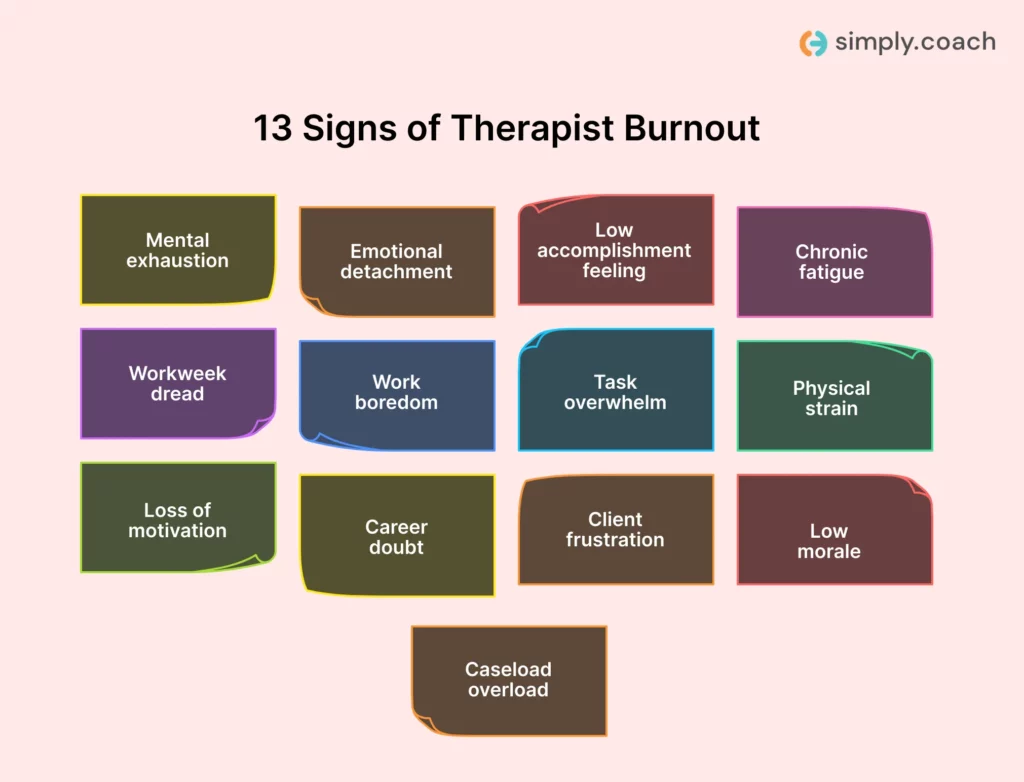
Burnout manifests in ways that go beyond feeling tired after a long day. You may notice subtle shifts in emotional engagement, session presence, or professional satisfaction before more obvious signs appear.
Key indicators include:
1. Mental, emotional, and physical exhaustion
You may feel drained even before sessions begin, with persistent fatigue, low energy, and slower emotional recovery affecting your ability to stay fully present. Over time, this can make it harder to regulate emotions, maintain focus, and sustain engagement across multiple sessions.
Impact on therapy practice: This combined exhaustion can lead to reduced attentiveness, inconsistent empathy, and missed emotional cues. Sessions may feel rushed or less responsive, which can weaken rapport, affect trust, and lower overall client engagement.
2. Cynicism or mental distance from the job
Emotional detachment may appear as sarcasm, impatience, or blunt interactions. You might mentally “check out,” creating invisible barriers between yourself and clients. Over time, this defensive coping mechanism erodes empathy and diminishes engagement.
Impact on therapy practice: Clients notice disengagement, making collaboration harder. Sensitive topics may be avoided, and your reduced curiosity can limit meaningful interventions, affecting client progress.
3. Decreased feelings of personal accomplishment
Even successful interventions might make you feel underwhelming, leading to self-doubt and reduced professional confidence. Recognition from colleagues or clients may not counteract this internalized sense of failure.
Impact on therapy practice: Reduced confidence can lead to overcautious interventions, limited creativity, and less proactive goal-setting. Clients may experience slower progress or sense hesitancy in guidance.
4. Prolonged physical and emotional fatigue
Beyond mental exhaustion, you may experience chronic tiredness, disrupted sleep, and slower emotional recovery. Emotional regulation becomes more difficult, and patience diminishes over the course of a workday.
Impact on therapy practice: Clients may perceive inconsistent empathy, hurried pacing, or flat affect. This fatigue can undermine therapeutic alliance and reduce engagement in emotionally charged sessions.
5. Dread for the week ahead
You start feeling anxious before the workweek begins, anticipating emotional strain and heavy caseloads. Even routine tasks feel burdensome, and the thought of upcoming sessions triggers anticipatory stress.
Impact on therapy practice: Clients may notice delayed responses, lower enthusiasm, or less creativity in interventions. Early-session engagement may be compromised, subtly affecting therapeutic alliance and goal attainment.
6. Boredom with clients, work, and colleagues
Repetitive tasks, similar client issues, or monotonous administrative work can lead to disengagement. You may struggle to maintain curiosity, resulting in a mechanical or perfunctory approach to sessions.
Impact on therapy practice: Clients may sense reduced attentiveness, fewer probing questions, or a decline in session depth. Your lack of engagement can slow client progress or limit meaningful breakthroughs.
7. Feeling overwhelmed by simple everyday tasks
Tasks that were once routine, such as session prep or documentation, start to feel unmanageable. Even minor responsibilities can create stress, making you feel perpetually behind or under pressure.
Impact on therapy practice: Disorganization or delayed follow-ups may occur. Session planning, goal tracking, and documentation can become inconsistent, which affects both client outcomes and professional reliability.
8. Feeling physically unwell
Chronic stress manifests in somatic symptoms, reflecting the physiological toll of emotional labor. Pain and discomfort can further limit energy, focus, and emotional regulation, reinforcing the burnout cycle.
Impact on therapy practice: Physical strain can reduce presence, attentiveness, and responsiveness in sessions. You may inadvertently shorten sessions, avoid emotionally intense topics, or miss subtle client cues.
9. Lack of passion, excitement, or engagement in work
Activities that once inspired motivation now feel obligatory. The sense of purpose diminishes, and you might approach sessions with minimal energy or creativity. This disengagement often extends to peer interactions, professional development, and clinical reflection.
Impact on therapy practice: Reduced passion can weaken client-therapist collaboration, slow goal progress, and limit innovative interventions. Clients may sense flat affect or lack of investment, reducing overall session effectiveness.
10. Existential doubt regarding career choice
You question whether your current role aligns with personal values or long-term goals. Even previously fulfilling work may feel meaningless, triggering uncertainty about professional identity.
Impact on therapy practice: Clients may perceive hesitation or reduced decisiveness, which can undermine trust. You might avoid complex interventions, limiting client progress or exploration of deeper issues.
11. Frustration and anger toward clients or work
Irritability, impatience, or emotional reactivity may emerge even in routine interactions. Minor challenges can trigger disproportionate responses, reflecting cumulative emotional overload.
Impact on therapy practice: Clients may sense tension or judgment, reducing openness and engagement. Frustration can also hinder effective interventions, making collaboration less productive and slowing therapeutic outcomes.
12. Discouragement or low morale
You might also feel hopeless about client progress or their professional development. Setbacks, resistant clients, or lack of recognition can intensify this discouragement, contributing to diminished resilience.
Impact on therapy practice: Discouragement can result in minimal experimentation with techniques, reduced creativity, and decreased investment in clients’ long-term goals.
13. Feeling overwhelmed by client complexity and high caseloads
Managing multiple clients with diverse, complex needs creates cognitive overload and emotional strain. Balancing therapy, documentation, and administrative responsibilities can feel unmanageable, leading to exhaustion.
Impact on therapy practice: You rush sessions, overlook nuances, or struggle to provide individualized interventions. Clients may receive less tailored support, slowing progress and limiting engagement.
Also read: 14 Therapy Challenges and How to Overcome Them as a Therapist
After identifying the signs, understanding the underlying factors, like workload, emotional fatigue, and role conflict, reveals why burnout develops.
8 Major Causes Behind Therapist Burnout in Practice
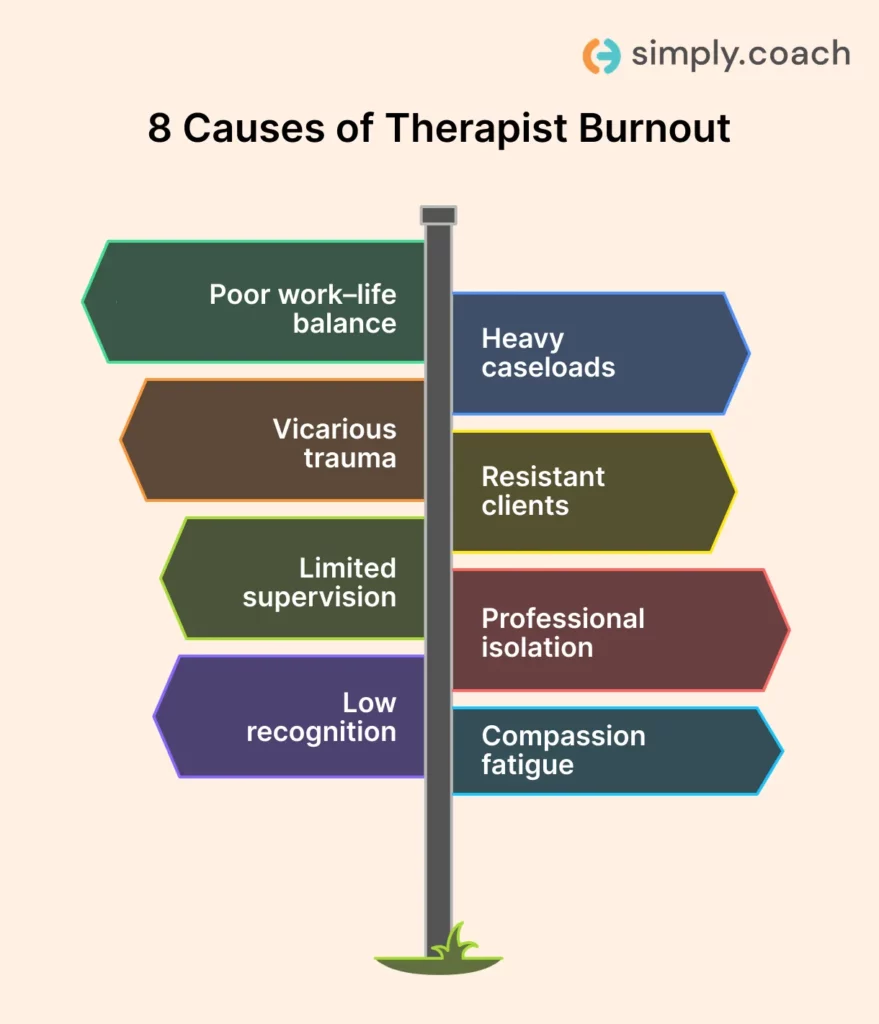
Therapist burnout develops from sustained emotional, cognitive, and environmental stressors. Recognizing these triggers is the first step toward preventing long-term professional and personal strain.
1. Unhealthy work-life balance
If you consistently extend work hours, skip breaks, or bring client stress into personal time, you might gradually deplete your emotional and cognitive reserves. Without clear boundaries, recovery between sessions is minimal, leaving less capacity to manage new client challenges.
2. Heavy caseloads
Managing a large number of clients, especially those with complex or high-risk needs, creates persistent emotional labor. Combined with session prep, documentation, and follow-ups, the load can overwhelm cognitive resources. Sustained high caseloads reduce reflection time, increase errors, and make it harder to maintain therapeutic presence and nuanced interventions.
3. Vicarious trauma
Repeated exposure to client trauma stories or crisis situations can produce secondary traumatic stress. Symptoms such as intrusive thoughts, hypervigilance, emotional blunting, or sleep disruption develop gradually. You may feel drained even outside work, struggle with personal relationships, and notice diminished empathy and attunement during sessions.
4. Slow-progressing or resistant clients
Working with clients who show minimal change despite consistent intervention can be frustrating and emotionally draining. You may question their competence or feel discouraged. Sustained exposure to stagnating outcomes can reduce patience, limit creativity in interventions, and contribute to a sense of professional inefficacy.
5. Lack of supervision and professional support
Limited access to mentors, peer consultation, or supervision restricts opportunities to process stress and refine skills. Isolation prevents you from gaining perspective, sharing strategies, or receiving feedback. Without support, emotional burden accumulates, making it harder to sustain professional effectiveness over time.
6. Isolation
Working alone or without peer interaction diminishes opportunities for emotional support, reflective consultation, and collaborative problem-solving. Isolation increases stress, reduces professional perspective, and makes it harder to process challenging cases effectively.
7. Lack of recognition and reward
Insufficient acknowledgment for client progress, successful interventions, or professional effort can demotivate you. When achievements go unnoticed, emotional exhaustion increases, and enthusiasm for new challenges decreases. Recognition is crucial for sustaining engagement and a sense of professional efficacy.
8. Compassion fatigue
Repeatedly providing empathy and emotional support without adequate recovery depletes emotional reserves. You may experience numbness, irritability, or reduced attunement, impairing your ability to respond effectively.
With the causes in mind, practical strategies can help you protect your energy, maintain boundaries, and restore effectiveness in sessions.
14 Tips to Prevent Therapist Burnout and Stay Balanced
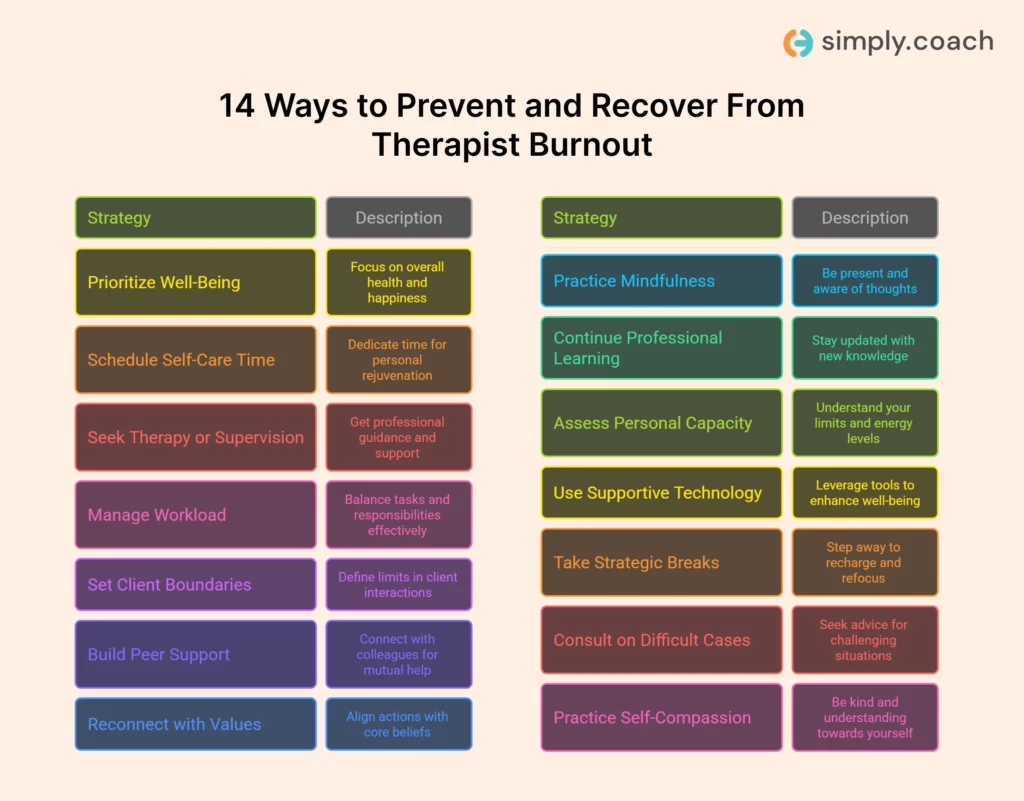
Preventing therapist burnout requires intentional strategies that protect emotional, cognitive, and physical energy. These tips focus on sustainable practices to maintain presence, resilience, and professional effectiveness. Implementing even small changes can dramatically improve well-being and client outcomes.
- Prioritize physical and mental well-being: Consistent sleep, balanced nutrition, and regular exercise protect emotional energy. Incorporate mindfulness practices and brief meditations to manage daily stress. Small habits, like walking between sessions or stretching, support long-term resilience and prevent cognitive depletion.
- Carve out time for self-care: Schedule dedicated periods for hobbies, reflection, or relaxation. Treat these blocks as non-negotiable appointments to recharge. Self-care reduces emotional fatigue, restores creativity in sessions, and maintains long-term engagement with clients.
- Seek therapy or supervision: Regular therapy or professional supervision provides a safe space to process secondary trauma, explore clinical frustrations, and receive objective guidance. Structured support encourages reflective practice, helps prevent emotional blunting, and enhances decision-making in challenging sessions.
- Manage and reduce workload: Evaluate caseload intensity, redistribute complex cases, and delegate administrative tasks. Reducing cognitive overload ensures you remain present, respond adaptively in sessions, and sustain professional focus over the long term.
- Establish clear client boundaries: Set limits on session frequency, outside communication, and availability to protect energy reserves. Maintaining boundaries prevents emotional overextension, reduces burnout risk, and ensures therapeutic relationships remain professional and sustainable.
- Encourage peer support and collaboration: Engage with colleagues for consultation, case discussions, and shared problem-solving. Peer support normalizes stress, provides practical strategies, and mitigates isolation that can amplify burnout risk over time.
- Reconnect with professional values: Reflect on why you became a therapist and revisit core clinical goals. Align daily practice with your mission to restore purpose, maintain engagement, and remind yourself of the meaningful impact you provide to clients.
- Strengthen resilience through mindfulness and reflection: Use grounding exercises, journaling, or breathing techniques to regulate emotional responses. Mindfulness improves session presence, reduces cognitive fatigue, and supports long-term psychological resilience for demanding clinical work.
- Continue professional learning and skill development: Attend workshops, trainings, or certifications to enhance competence and confidence. Expanding your skillset reduces stagnation, improves treatment effectiveness, and helps you respond adaptively to complex client presentations.
- Create a personal inventory of strengths and needs: Regularly assess your emotional, cognitive, and physical capacities. Identifying areas requiring support allows you to plan interventions, request supervision, and implement strategies that sustain effectiveness and engagement.
- Use technology to reduce burnout stressors: Automate reminders, track client progress digitally, and streamline note-taking to save time and cognitive energy. Thoughtful use of tools reduces administrative burdens, allowing more focus on therapeutic interventions and session quality.
- Take breaks and rest strategically: Pause between sessions, step outside, or practice brief mindfulness techniques. Avoid forcing attendance on low-energy days to prevent compounding fatigue.
- Seek consultation for complex or resistant clients: Discuss challenging cases with peers or supervisors to gain perspective, strategies, and reassurance. Consultation prevents frustration, reduces emotional burden, and maintains consistent quality of care for clients who are slow to progress.
- Practice self-compassion and acceptance: Acknowledge limits, celebrate small successes, and forgive mistakes. Self-compassion buffers against chronic stress, supports sustainable engagement, and preserves emotional resources necessary for high-quality, empathic therapy sessions.
Also read: Self-Care for Therapists: A Refreshing and Recharging Guide
Using tools like scheduling and client workspaces by Simply.Coach can turn these insights into sustained energy and client effectiveness.
Reclaim Your Energy and Prevent Burnout with Simply.Coach
Juggling back-to-back sessions, endless administrative tasks, and complex client needs can leave even experienced therapists feeling depleted and on the edge of burnout. When mental fatigue and emotional exhaustion start creeping into sessions, both your effectiveness and your satisfaction as a practitioner take a hit.
Simply.Coach is a leading digital coaching platform that is designed to help therapists regain control, streamline daily workflows, and protect their well-being while staying fully present for clients. From automated check-ins to actionable goal tracking, the platform targets the most common burnout triggers so you can focus on delivering meaningful, high-quality therapy without feeling overwhelmed.
Key features to help manage and prevent burnout:
- Action plans: Assign and monitor client follow-ups to prevent missed tasks and reduce the mental load on your workflow.
- Nudges: Automated reminders keep both you and your clients on track, ensuring consistent engagement while reducing stress.
- Scheduling: Integrated self-scheduling and calendar syncing minimize administrative friction; no more back-and-forth emails or last-minute chaos.
- Notes: Template-based session notes and automated action conversions keep client data organized, saving cognitive energy for therapy itself.
- Reports: Gain clear insights into client progress and therapy effectiveness, helping you identify stress points early and adjust workload.
- Goal & development planning: Set clear session goals, track client progress, and maintain visibility over therapeutic outcomes without feeling overloaded.
- Client workspaces: Centralized client interactions reduce scattered tasks and support collaborative, organized sessions.
- Team engagements: Efficiently manage multiple programs or supervise teams without added administrative pressure.
Simply.Coach enables you to reclaim your time, reduce emotional overload, and deliver consistent, high-quality therapy support.
Conclusion
Therapist burnout is a complex and often overlooked challenge that affects mental, emotional, and physical well-being. Understanding both the signs and underlying causes, ranging from heavy caseloads and vicarious trauma to administrative overload and lack of professional support, allows you to intervene early, preserve their effectiveness, and maintain therapeutic presence for their clients.
Recognizing burnout is only the first step; taking intentional action is essential. Implementing structured strategies such as setting boundaries, prioritizing self-care, encouraging peer support, and using mindfulness or supervision frameworks can reduce stress and restore professional satisfaction.
Simply.Coach, through their all-in-one HIPAA-compliant therapy practice management software,helps you tackle the root causes of burnout by reducing administrative overload, managing complex caseloads, and keeping client care structured and consistent. With goal & development planning, action plans, nudges, scheduling, you can automate repetitive tasks, track client progress, and maintain session focus without mental fatigue.
FAQs
1. What are the most common signs of therapist burnout?
Therapist burnout often shows as chronic fatigue, emotional exhaustion, cynicism toward clients, and a decreased sense of accomplishment. Recognizing early signs helps prevent long-term professional and personal consequences.
2. What causes therapist burnout?
Burnout arises from heavy caseloads, complex client needs, administrative overload, lack of supervision, and emotional fatigue from prolonged exposure to client trauma. Identifying causes allows targeted interventions.
3. Can therapist burnout affect client outcomes?
Yes, burnout reduces empathy, attentiveness, and session engagement. You may inadvertently rush sessions, avoid difficult topics, or fail to maintain consistent interventions, impacting therapeutic effectiveness.
4. How can I prevent therapist burnout?
Prevention includes workload management, boundary-setting, self-care routines, peer support, and using technology to reduce administrative strain while maintaining clinical focus.
5. When should I seek help for burnout?
Seek help if exhaustion, cynicism, or disengagement persist despite self-care. Early consultation with supervisors, peers, or professional support can prevent long-term career and personal consequences.
6. How does vicarious trauma contribute to burnout?
Repeated exposure to client trauma can accumulate, leading to emotional overload, compassion fatigue, and difficulty separating professional and personal boundaries, accelerating burnout risk.
7. Can supervision and mentorship reduce burnout?
Yes, supportive supervision provides reflective space, guidance, and feedback. Mentorship promotes professional growth, reinforces boundaries, and helps you process challenging cases safely.