
You’ve been working with a student for some time. One day, during a session, they tell you something troubling, an account of physical harm at home. They ask you to keep it confidential, but you know that staying silent might not be the right choice. The emotional weight of their words and the fear of what might happen if you report them leave you conflicted.
As a school counselor, you have a legal and ethical duty to protect the students you serve. Mandated reporting is a serious responsibility, and it can be emotionally challenging. When a student shares their experience of abuse or neglect, it’s vital to understand that your role extends beyond counseling. You must report suspected abuse to the proper authorities to ensure the child’s safety and well-being.
In this blog, we’ll explore what do school counselors have to report, what you are required to report, and how you can navigate the complexities of this responsibility. We’ll also provide practical steps to help you understand and follow the reporting process with confidence.
Key Takeaways
- School counselors are mandated reporters, meaning you must report suspected child abuse or neglect encountered in your professional role.
- Abuse that must be reported includes physical abuse, sexual abuse, emotional abuse, neglect, medical neglect, and exploitation or trafficking.
- You are required to report when there is reasonable suspicion, even if you do not have proof or conduct an investigation yourself.
- Student disclosures, visible warning signs, or credible concerns from others can all trigger the need to file a mandated report.
- Reports are typically made to Child Protective Services (CPS) or law enforcement, following your state’s reporting laws and school protocols.
- While confidentiality is essential in counseling, it must be broken when a student’s safety is at risk.
- Accurate documentation and timely reporting help authorities investigate and protect the child effectively.
- Tools like Simply.Coach can help you securely document sessions, track student concerns, and maintain organized records while managing your counseling responsibilities.
What Do School Counselors Have to Report?
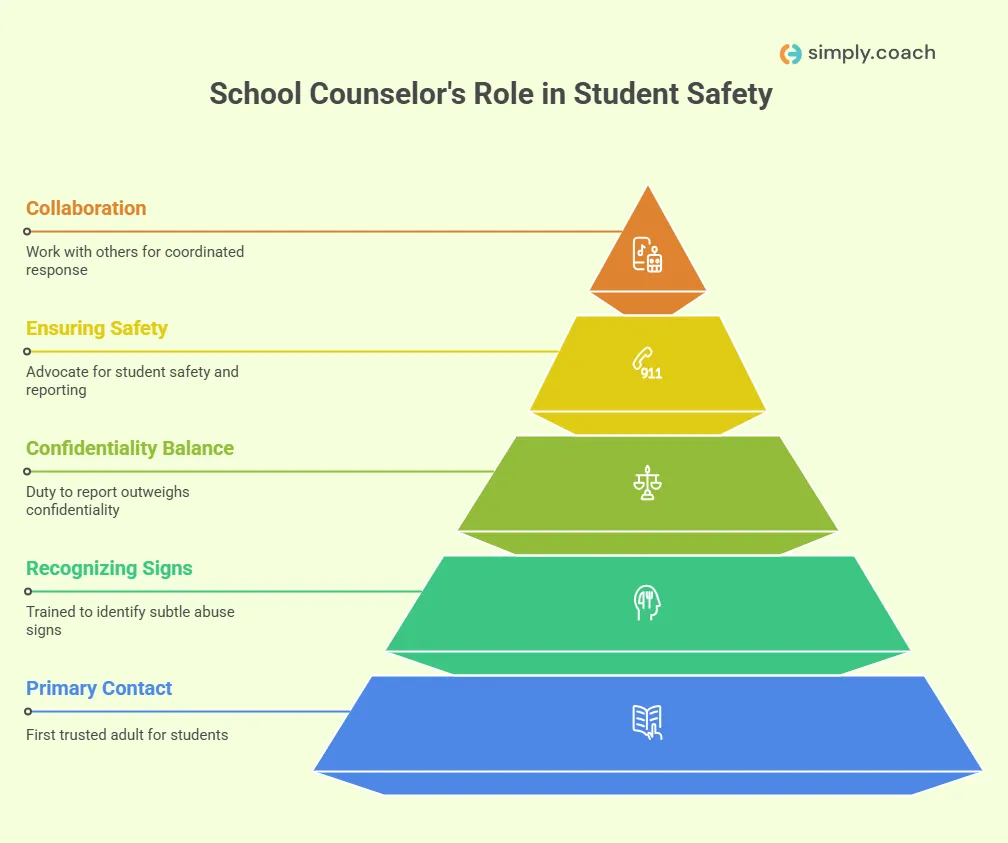
Mandated reporting means that, as a school counselor, you are legally required to report any suspected child abuse or neglect you encounter in your professional capacity. This includes both direct disclosures from students and any signs of harm or neglect you observe. If you suspect abuse, it is your responsibility to report it to the proper authorities, such as Child Protective Services (CPS) or law enforcement, to ensure the child’s safety and well-being.
The Role of School Counselors
School counselors play a critical role in identifying and reporting abuse. Your unique position allows you to build trust with students, making you one of the first to hear about potential abuse.
- Primary point of contact: School counselors are often one of the first trusted adults students turn to when they need help. Because of this unique relationship, you may be the first to hear about cases of abuse or neglect.
- Recognizing signs of abuse: As a counselor, you’re trained to recognize subtle signs of physical, emotional, or sexual abuse that others might miss. Your role is critical in identifying these red flags early.
- Confidentiality vs. legal duty: You are entrusted with your students’ personal information. However, if a student discloses abuse, your duty to report outweighs confidentiality. Understanding this balance is vital.
- Ensuring student safety: You are in a unique position to advocate for the safety of students by ensuring that abuse is reported to the proper authorities, helping to prevent further harm.
- Collaborating with others: While counselors have a direct role in reporting, working closely with teachers, nurses, and administrators ensures a coordinated response to suspected abuse, promoting a safe environment for the student.
Legal and Ethical Obligations: Navigating Confidentiality vs. Mandated Reporting
As a school counselor, understanding the legal and ethical obligations regarding mandated reporting is crucial to ensure both the safety of your students and compliance with the law. Balancing the need for confidentiality with your duty to report suspected abuse can be challenging.
However, knowing the limits of confidentiality and the specific reporting guidelines in your state will empower you to act in the best interest of your students.
1. Understanding the limits of confidentiality for school counselors
Confidentiality is a cornerstone of the counselor-student relationship. Students share sensitive information with the expectation that it will be kept private. However, when a student discloses abuse or neglect, confidentiality is no longer guaranteed. In these situations, your duty to report outweighs the obligation to maintain confidentiality.
The American School Counselor Association (ASCA) Ethical Standards clearly state that “Confidentiality must be maintained unless disclosure is necessary to prevent serious and foreseeable harm.” When you suspect abuse, it is essential to act quickly to ensure the safety of the student. Knowing when to break confidentiality can be difficult, but it is critical to understand that your primary role is to protect the child.
Also read: Protecting Client Confidentiality in Counseling: A Comprehensive Guide for Counselors
2. ASCA ethical standards on reporting abuse and neglect
The ASCA Ethical Standards provide direct guidance on how counselors should navigate their responsibilities. The guidelines emphasize that counselors must inform students upfront about the limits of confidentiality and the legal obligation to report any suspected abuse or neglect.
By being transparent with students, you set clear expectations and build trust. ASCA guidelines clarify that if there is reasonable suspicion that a student is in danger, counselors are required to report it to the proper authorities. This approach ensures that you are adhering to both ethical and legal standards, keeping the student’s safety as the top priority.
3. State-specific mandated reporting laws for school counselors
In addition to federal guidelines, every state has its own set of laws regarding mandated reporting. For instance, California’s Child Abuse and Neglect Reporting Act (CANRA)mandates that school counselors report suspected abuse immediately, either by phone or online. Similarly, in Texas, counselors must report suspected abuse within 48 hours of becoming aware.
States may vary in their definitions of abuse and neglect, so it’s important to familiarize yourself with your state’s specific requirements. Some states, for example, include emotional abuse and medical neglect in their reporting guidelines, while others may have additional criteria for reporting sexual exploitation or drug-related abuse. Knowing your state’s laws ensures that you follow the correct procedures and protect the student effectively.
When Should School Counselors File a Mandated Report?
As a school counselor, you must file a mandated report when you have reasonable suspicion that a child may be experiencing abuse or neglect. You do not need proof or a full investigation before reporting. Your responsibility is to raise the concern so that the appropriate authorities can assess the situation and protect the student.
Understanding when to report can help you respond with clarity and confidence. Below are common situations where a mandated report may be required.
- A student discloses abuse: If a student tells you they are being abused or neglected, you are required to report it. Even if the student later withdraws the statement or provides limited details, the initial disclosure creates a legal duty to act.
- You observe warning signs of abuse or neglect: Unexplained injuries, sudden behavioral changes, fear of going home, poor hygiene, or signs of chronic hunger can indicate possible abuse or neglect. When these signs raise reasonable concern, you should file a report.
- Information comes from another source: Sometimes teachers, peers, or caregivers may share concerns about a student’s safety. If the information appears credible, you may still be required to report it, even if the student has not disclosed abuse directly to you.
- A student faces an immediate safety risk: Situations involving severe neglect, sexual exploitation, trafficking, or ongoing violence require prompt reporting. Acting quickly can help prevent further harm and ensure the student receives protection.
- When you are unsure, reporting is the safest step: As a mandated reporter, your role is not to confirm whether abuse occurred. If you reasonably suspect harm, reporting allows child protection professionals to investigate and determine the appropriate next steps.
Taking timely action helps protect vulnerable students and ensures counselors fulfill their legal and ethical responsibilities.
Types of Abuse and Neglect School Counselors Must Report
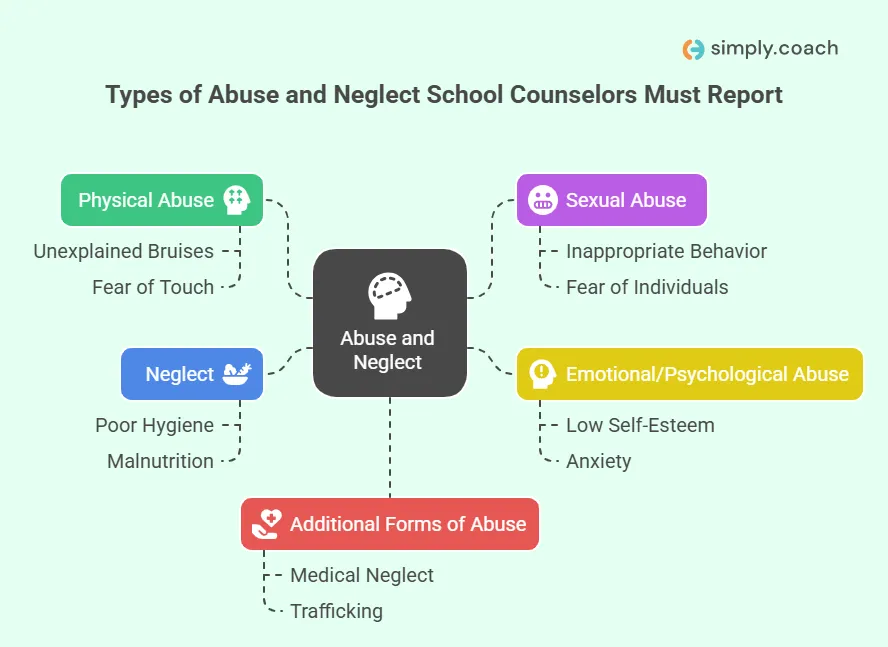
Recognizing the signs of abuse and neglect is essential in your role as a school counselor. Abuse can manifest in various forms, from physical injuries to subtle behavioral changes. Understanding these signs will help you intervene early and ensure the safety of the children in your care.
Below are the key types of abuse and neglect that you, as a mandated reporter, are required to report.
1. Physical abuse: Common signs to look for
Physical abuse often leaves visible marks, but it may not always be immediately obvious. Common signs for you to look out for include:
- Bruises or fractures: Unexplained or frequent injuries, especially in areas not typically prone to accidents (e.g., the face, chest, or abdomen).
- Withdrawal: A child who is typically active or social suddenly becomes withdrawn or fearful.
- Fear of touch: Children who are afraid of physical contact or flinch when touched may be hiding physical abuse.
Recognizing these signs early is critical, as physical abuse can have long-lasting effects. These symptoms may indicate an unsafe home environment, making it essential to report your concerns promptly.
2. Sexual abuse: Behavioral signs to watch for
Sexual abuse may not always result in physical injuries, but it often manifests through behavioral changes. Signs that might suggest a child has experienced sexual abuse include:
- Sexualized behavior: Acting inappropriately sexual for their age, such as drawing explicit pictures or engaging in inappropriate conversations.
- Fear of specific individuals: Expressing fear or anxiety about being around certain adults or peers.
- Excessive curiosity or knowledge of sex: Children who show an unusually high interest in sexual topics may be trying to make sense of an experience.
As a counselor, you may need to intervene sensitively in such cases, guiding the child to ensure they receive the support and protection they need.
3. Emotional or psychological abuse: Indicators to recognize
Emotional or psychological abuse is harder to identify because it doesn’t always involve physical signs. However, there are clear behavioral and emotional indicators that you should be aware of:
- Low self-esteem: A child may exhibit signs of feeling worthless or unloved, often stating things like “I’m no good” or “Nobody likes me.”
- Anxiety: Children experiencing emotional abuse may show signs of anxiety, including excessive worry, fear, or nervousness.
- Withdrawal from social activities: A previously outgoing child may become reclusive, avoiding social interaction or any situation where they feel unsafe.
These subtle but important signs should not be overlooked. Emotional abuse can have a profound and lasting impact on a child’s development and well-being.
4. Neglect: Identifying red flags
Neglect may be one of the most difficult forms of abuse to identify because it often doesn’t leave immediate visible marks. However, there are several red flags that can help you identify neglect:
- Poor hygiene: A child who consistently appears unclean, has body odor, or wears dirty clothes may be neglected.
- Malnutrition: Chronic hunger, an unhealthy appearance, or weight fluctuations can indicate nutritional neglect.
- Inconsistent attendance: Excessive absences or tardiness could signal that a child’s basic needs, such as food or transportation, are not being met.
Recognizing neglect early can prevent further harm, as neglected children are at increased risk for long-term physical, emotional, and developmental issues.
5. Additional forms of abuse: Medical neglect and trafficking
- Medical neglect: Failure to provide necessary medical care or ignoring chronic illnesses can be a form of abuse. If a child’s medical needs are routinely ignored or untreated, this may be a sign of neglect.
- Trafficking and exploitation: In vulnerable populations, trafficking or exploitation is an increasing concern. You should be aware of signs like sudden changes in behavior, frequent absences, or a child who is unusually secretive or fearful of returning home.
By knowing the signs of each form of abuse and neglect, you are better equipped to act swiftly and report concerns. This ensures that students receive the protection and care they need to thrive both emotionally and physically.
Step-by-Step Guide to Reporting Abuse: A Clear Roadmap
Reporting suspected abuse is a critical responsibility that, as a school counselor, you must take seriously. To help you navigate this process, here is a step-by-step guide that will provide you with practical tools to act swiftly and correctly when faced with a potential case of abuse.
1. Initial steps to report
The first step is recognizing the signs of abuse. Whether it’s physical marks or a student’s disclosure, the moment you suspect abuse, you must document your observations immediately. Be specific about the details you’ve seen or heard, and avoid making personal judgments or assumptions.
Record exactly what the child said, how they acted, and any signs that raised your concern. Once you’ve documented your observations, the next step is making the initial report to the designated reporting body, such as Child Protective Services (CPS) or law enforcement.
In some cases, you may need to report the situation to a supervisor or school principal before contacting authorities. It’s important to follow your school’s protocol in addition to state laws. Acting promptly and accurately is crucial, as delays could harm the child further.
2. Key reporting channels
Once you’ve documented and assessed the situation, you need to report it. Start by contacting the appropriate local authorities, often through Child Protective Services (CPS). Each state has a CPS hotline or website for mandated reporters to report abuse. For example:
- California: You can report abuse via the CPS Hotline at 1-800-344-6000 or visit CPS online reporting.
- Texas: Use the Texas Abuse Hotline at 1-800-252-5400 or report online via TXDHS Reporting Portal.
Having direct access to these resources helps you take immediate action, which can significantly affect the investigation and outcomes for the child. You can also find the CPS contact information specific to your state on your state’s Department of Family and Protective Services website.
3. Documentation and evidence
Accurate documentation is one of the most important aspects of reporting abuse. When documenting, always include:
- The exact words the student used (e.g., “My dad hit me with a belt”).
- A description of any physical evidence (e.g., bruises, scars, or changes in behavior).
- Details of your observations, including how the child appeared and how they interacted during your session.
- The date and time of the incident and any statements made.
This ensures that the report is factual and credible, and it supports authorities in their investigation. Keep in mind that your goal is to provide an accurate, clear picture of the situation, without offering personal opinions.
4. Confidentiality and transparency
Confidentiality remains a cornerstone of your professional relationship with students. However, when it comes to reporting abuse, you must balance confidentiality with transparency. While you are obligated to report suspected abuse, you must also respect the privacy of others involved. Keep the information shared as limited as possible, only disclosing it to the necessary authorities and individuals involved in the investigation.
Your transparency during this process helps ensure that the proper steps are taken to protect the student, and it maintains the trust others have in your role as a counselor. Make sure to inform the student, if appropriate, that you are reporting the situation to protect them, and be clear about the next steps they can expect.
By following these steps, you ensure that you are doing everything possible to safeguard the student’s well-being while adhering to legal requirements.
Read: Approaches and Techniques of Counseling Theories in School
Common Challenges and Considerations for School Counselors when Reporting Abuse
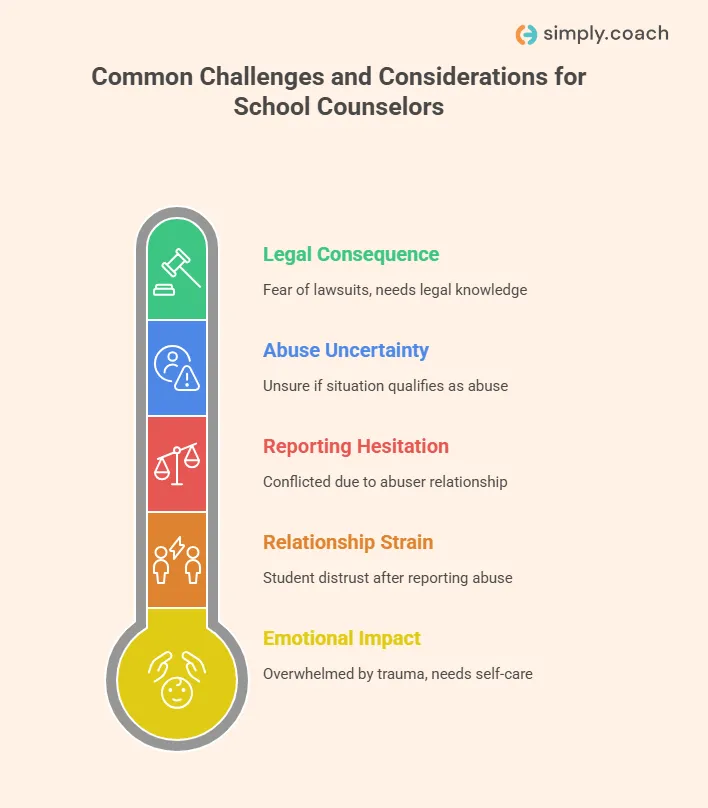
School counselors face various challenges when reporting abuse. These challenges can be emotional, legal, and ethical. Below are five common obstacles you may encounter and ways to address them effectively.
- Emotional impact on counselors: Witnessing trauma and handling difficult cases can be emotionally draining. Counselors often feel overwhelmed, especially when the cases involve children they’ve built relationships with. To cope, seek supervision, connect with peer support, and practice self-care strategies.
- Fear of legal consequence: Counselors worry about being sued or facing retaliation for reporting suspected abuse. However, Good Samaritan laws protect you as a mandated reporter, meaning you’re legally shielded if you’re acting in good faith to protect a child.
- Hesitation to report: You may feel conflicted, especially when the suspected abuser is a family member or close relative. In these situations, it’s important to remember that student safety comes first. Consult colleagues or supervisors for guidance and communicate the necessity of reporting to the student if appropriate.
- Uncertainty about what constitutes abuse: Some counselors may hesitate to report because they’re unsure whether the situation qualifies as abuse or neglect. Familiarizing yourself with state-specific laws and reporting guidelines can clarify the boundaries, allowing you to make informed decisions.
- Strain on counselor-student relationship: When you report abuse, students may feel betrayed or lose trust. It’s crucial to explain the reporting process to students upfront and reassure them that the goal is to ensure their safety and well-being.
These challenges are part of the responsibility school counselors carry. With the right support and resources, you can navigate these obstacles effectively, ensuring both your own well-being and the safety of the students you serve.
Best Practices for School Counselors Responding to Abuse Disclosures
When a student shares an experience of abuse, how you respond in that moment can significantly impact their sense of safety and trust. Your role is to listen carefully, provide support, and ensure the appropriate steps are taken to protect the student.
- Listen calmly and without judgment: Allow the student to speak at their own pace and avoid reacting with shock or disbelief. Staying calm helps the student feel safe and encourages them to continue sharing important information.
- Avoid asking leading or investigative questions: Your responsibility is to listen and document, not investigate. Let the student explain what happened in their own words rather than asking questions that could influence their response.
- Explain the limits of confidentiality: If abuse is disclosed, gently remind the student that you may need to share this information with the appropriate authorities to help keep them safe. Being transparent helps maintain trust even when a report is required.
- Reassure the student they did the right thing: Students may feel scared, guilty, or worried about consequences. Let them know they were brave to speak up and that your priority is helping ensure their safety and well-being.
- Document the disclosure accurately: Record the student’s exact words, the date and time of the conversation, and any observations you made. Clear documentation helps support the reporting process and provides important information for authorities reviewing the case.
Responding with care, clarity, and professionalism helps you support the student while ensuring you fulfill your legal and ethical responsibilities as a mandated reporter.
Conclusion
Understanding what school counselors must report is an essential part of protecting the students you serve. Reporting suspected abuse ensures that children receive the protection and support they need. While the process can be emotionally challenging, understanding your legal and ethical responsibilities allows you to navigate these situations with confidence. By recognizing the signs of abuse and following the proper procedures, you help safeguard your students’ well-being and make a meaningful difference in their lives.
To manage the complexities of your role more efficiently, Simply.Coach offers an all-in-one counseling software tailored for professionals like you. With tools for managing client information, scheduling, and securely tracking progress, Simply.Coach streamlines your workflow, allowing you to focus on what matters most – supporting your students.
FAQs
1. What are school counselors required to report?
School counselors are mandated reporters, meaning they must report any suspected child abuse or neglect to authorities such as Child Protective Services or law enforcement. This includes physical, sexual, emotional abuse and neglect when there is reasonable suspicion, even without proof.
2. Do school counselors have to tell parents everything?
No, school counselors do not have to tell parents everything a student shares. Most conversations remain confidential unless the counselor believes the student is at risk of harm, abuse, or danger, which may require disclosure or reporting.
3. What is the most common ethical violation in counseling?
One of the most common ethical violations in counseling is breaching confidentiality without proper justification. Ethical standards require counselors to protect client information unless disclosure is necessary to prevent harm or meet legal reporting requirements.
4. What is included in a school counselor’s school report?
A school counselor’s report typically includes student behavioral observations, academic or social-emotional concerns, counseling interventions, and recommended support strategies. These reports help teachers, parents, and administrators understand the student’s needs and plan appropriate support.
5. What can a school counselor not do?
School counselors cannot diagnose medical conditions, provide long-term psychotherapy without proper licensing, or ignore legal obligations such as mandated reporting. They must also maintain professional boundaries and follow ethical guidelines when working with students.
6. Is emotional abuse reportable to CPS?
Yes, emotional abuse can be reportable to Child Protective Services if it seriously harms a child’s emotional or psychological well-being. Mandated reporters must file a report when they have reasonable suspicion that emotional abuse is occurring.
7. Do school counselors need proof before reporting abuse?
No, counselors do not need proof before making a report. Mandated reporting laws require them to report when they have reasonable suspicion of abuse or neglect, leaving the investigation to child protection authorities.