
Have you ever wanted to help people bounce back stronger after facing life’s challenges? As a resilience coach, that’s exactly what you’ll do. With more individuals and organizations seeking guidance on how to build mental strength and adapt to change, the demand for resilience coaches is on the rise. In fact, the coaching industry in the U.S. is projected to grow rapidly, with resilience coaching becoming a key focus.
If you’re passionate about empowering others to overcome obstacles and thrive under pressure, becoming a resilience coach could be the perfect fit for you. In this blog, we’ll dive into what it takes to become a successful resilience coach, the essential skills required, and the steps you need to take to get started.
Ready to help others build the resilience they need to succeed? Let’s jump in!
Key Takeaways
- Resilience coaching: Focuses on helping individuals develop mental strength, overcome challenges, and adapt to adversity.
- Five components of resilience: Self-awareness, self-regulation, competence & mental agility, strengths of character & commitment, and community.
- Skills & qualities needed: Active listening, empathy, patience, emotional regulation, and motivation are essential for a successful resilience coach.
- Steps to become a resilience coach: Understand the role, gain foundational knowledge, get certified, practice coaching, and set competitive pricing.
- Certifications: Key certifications include Certified Resilience Coach Program, Certified Youth Resilience Coach, and Certified Resilience Coach (CReC).
- Resilience coach salary: Coaches in the U.S. earn an average of $56,000–$82,000 annually, with potential for higher earnings in specialized niches.
- Client acquisition: Use content marketing, free resources, testimonials, and consultations to attract clients and grow your practice.
What Is Resilience Coaching?
Resilience coaching is a specialized form of coaching designed to help individuals develop the mental strength to overcome challenges, adapt to adversity, and thrive under pressure. It focuses on building the ability to recover from setbacks, manage stress, and maintain a positive outlook during difficult times. As a resilience coach, you work with clients to improve their emotional flexibility, mental toughness, and coping skills.
The core purpose of resilience coaching is to help your clients develop the skills to face challenges head-on and maintain emotional balance. You empower them to manage stress, build mental toughness, and learn how to bounce back quickly from setbacks. Through resilience coaching, you support clients in turning difficulties into growth opportunities, ensuring they remain focused, positive, and capable of navigating obstacles in both personal and professional spheres.
Also read: The Wheel of Life: A Coaching Tool to Help Clients Prioritise & Bring Balance
What Are the Five Components of Resilience?
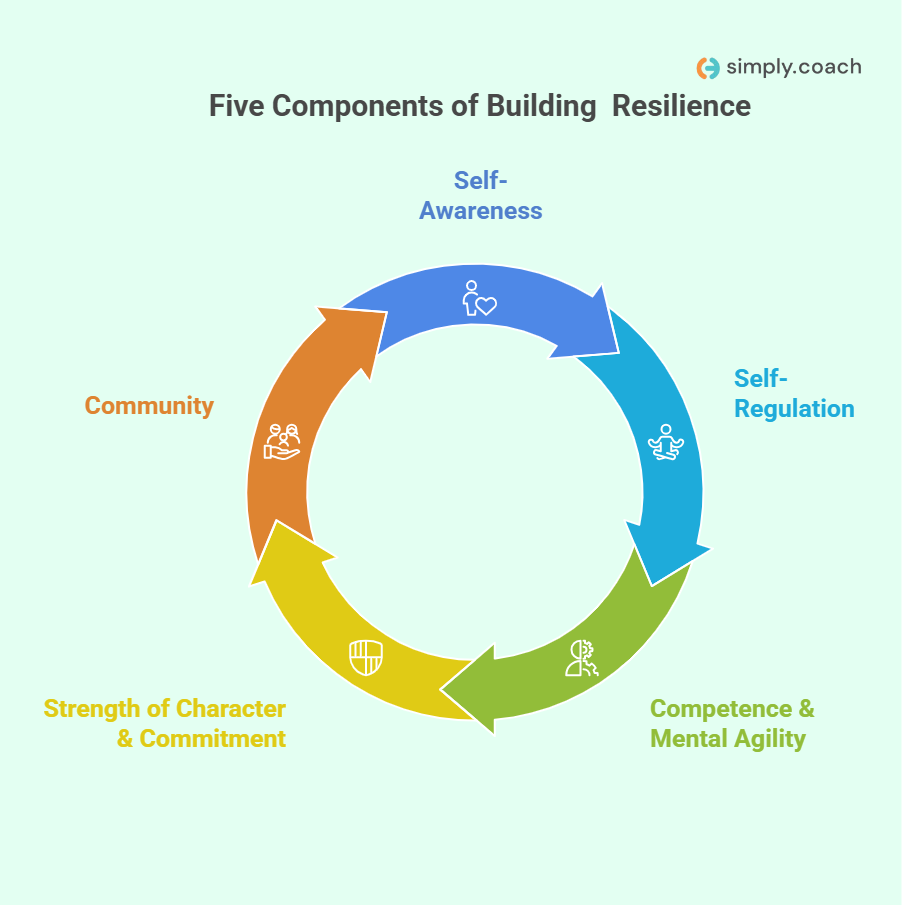
Building resilience isn’t an overnight process. It requires nurturing five key components to equip your clients with the skills needed to overcome adversity and manage stress effectively. As a resilience coach, understanding these components will guide your coaching approach and help your clients thrive in the face of challenges.
1. Self-awareness
The first step in resilience is self-awareness. For your clients, understanding their emotions, thought patterns, and stress responses is critical. You’ll help them recognize how they react to stress and identify their strengths and weaknesses. This awareness allows clients to make informed decisions and better manage their emotional responses.
2. Self-regulation
Once your clients gain self-awareness, the next step is self-regulation. This involves helping them control their emotions and behaviors, especially under pressure. As a resilience coach, you’ll guide them in developing personalized strategies to remain calm and focused in challenging situations, fostering their ability to stay composed when stress arises.
3. Competence & mental agility
To build resilience, your clients need to develop competence, skills, problem-solving abilities, and emotional intelligence. You’ll help them adapt to stress by enhancing their mental agility. This means helping clients think through their challenges, explore different solutions, and choose the best path forward. Competence paired with mental agility ensures that they can handle life’s stressors with confidence and flexibility.
4. Strength of character & commitment
Resilience isn’t just about bouncing back, it’s about growing stronger. In this stage, you’ll work with your clients to strengthen their core traits: perseverance, optimism, and hope. These qualities keep clients focused and committed to their resilience journey, enabling them to stay consistent, push through setbacks, and develop themselves in the process.
5. Community
No one is an island, and resilience is built through connection. To fully develop resilience, your clients need a strong support network. You’ll help them build and maintain relationships with like-minded individuals who provide encouragement and emotional support. A positive community plays a vital role in boosting resilience, offering clients the strength and guidance needed to move forward.
Read more: Empowering Clients through Emotional Self-Regulation: The Emotional Audit Coaching Technique
Skills and Qualities to Become a Resilience Coach
To be an effective resilience coach, there are specific skills and personal qualities that you need to develop. These skills help you guide your clients through challenges, while your qualities set the tone for the supportive and empowering environment you create. Whether you’re just starting out or looking to enhance your coaching practice, understanding these skills and qualities is crucial to your success.
| Key Skills | Qualities |
| Active listening: The ability to truly hear and understand your clients, allowing them to express their thoughts and feelings without judgment. | Patience: The capacity to remain calm and understanding, even when clients struggle to make progress. |
| Empathy: Being able to put yourself in your clients’ shoes, connecting with their emotional experiences and providing the support they need. | Adaptability: The ability to adjust your approach based on your clients’ unique needs and situations. |
| Communication: Clear and effective communication to ensure your clients understand their goals, action plans, and the steps they need to take. | Resilience in your own life: Demonstrating the ability to overcome challenges in your own life, as it sets a powerful example for your clients. |
| Goal setting: Helping clients set clear, actionable goals that align with their values and desired outcomes. | Motivation: Inspiring and encouraging your clients to stay committed, even when the journey gets tough. |
| Action Planning: Guiding clients through actionable steps and helping them create a structured path to reach their goals. | Inspiration: The ability to uplift clients and help them see their potential, even when they face setbacks. |
| Emotional regulation: Helping clients manage their emotions during challenging times to maintain focus and clarity. | Consistency: The ability to be reliable and steady in your approach, offering consistent support and guidance. |
| Conflict resolution: Teaching clients how to resolve internal or external conflicts in a way that aligns with their values and goals. | Optimism: Maintaining a hopeful outlook and encouraging clients to see opportunities in adversity. |
By continuously developing both your abilities and personal attributes, you’ll be better equipped to guide your clients through life’s challenges and inspire lasting transformation.
Also read: What Makes a Good Life Coach? 8 Essential Traits and Skills for Success
Steps to Become a Resilience Coach
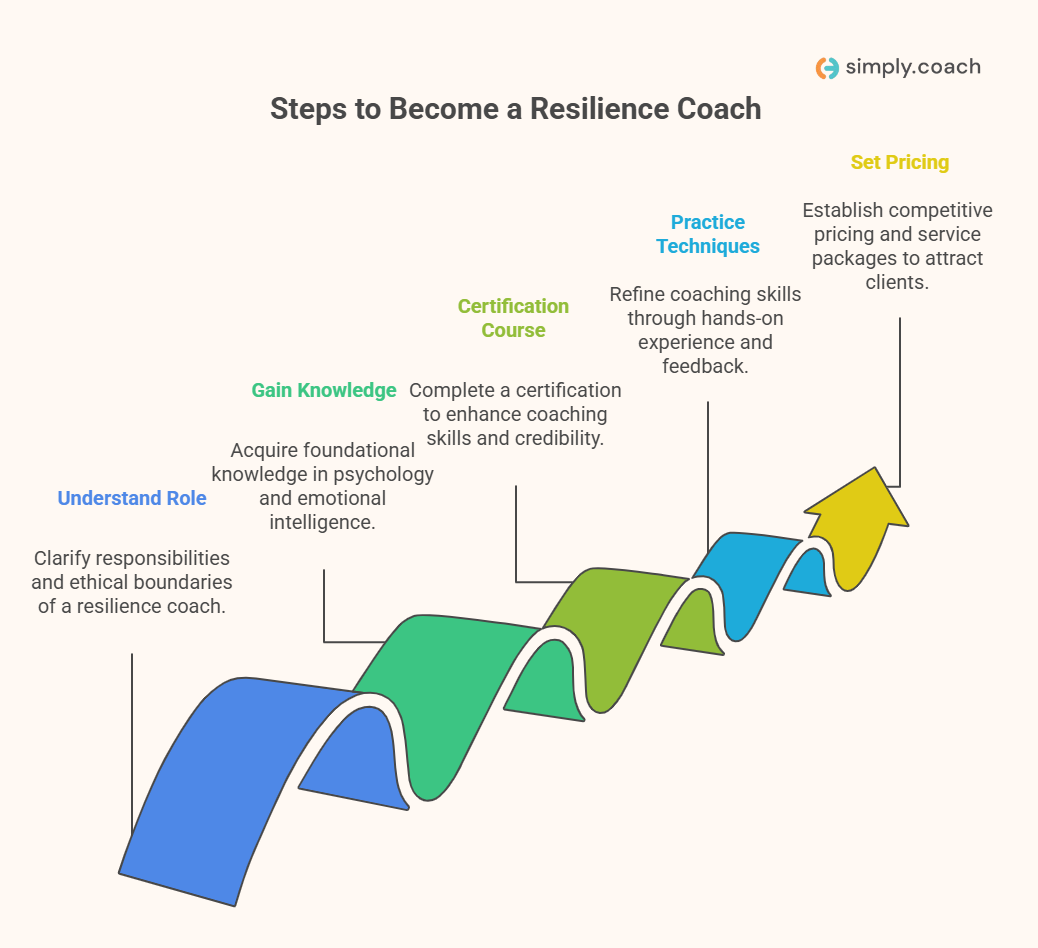
Becoming a successful resilience coach involves more than just understanding the principles of coaching. It requires developing specific skills, setting up a strong business foundation, and building a client-focused practice. Here are the key steps you need to take to build a fulfilling career as a resilience coach.
Step 1: Understand the role and responsibilities of a resilience coach
- Clarify your purpose: As a resilience coach, your primary responsibility is to help clients navigate adversity by developing coping strategies and emotional intelligence. You’ll guide them in building the mental strength to overcome challenges and thrive under pressure.
- Key responsibilities: You’ll be expected to conduct assessments, design personalized action plans, and provide ongoing support to ensure clients stay focused on their resilience-building goals.
- Ethics and boundaries: Understanding the ethical responsibilities in coaching is essential. This includes maintaining client confidentiality, establishing clear professional boundaries, and refraining from providing therapeutic or psychological advice, which falls outside the scope of coaching. These practices ensure a safe and respectful environment for both you and your clients.
Step 2: Gain foundational knowledge
- Psychological frameworks: To support your clients effectively, you must have a basic understanding of how stress impacts the body and mind. Study key psychological principles related to stress, coping mechanisms, and how resilience can be cultivated.
- Emotional intelligence: A core component of resilience is emotional intelligence. Understand how emotions influence behaviors, and learn techniques for helping clients recognize, manage, and regulate their emotions during difficult situations.
- Personal development tools: Equip yourself with tools such as goal-setting frameworks, behavioral change models, and mindfulness practices that will allow you to provide clients with actionable techniques for improving their resilience.
Step 3: Take a certification course
- Research certification options: Look for a certification that specifically focuses on resilience coaching, emotional intelligence, or personal development. A reputable program will provide you with structured guidance and practical coaching techniques.
- Practical application: A certification course should teach you how to conduct coaching sessions, create actionable plans, and assess client progress effectively. It should also offer real-world examples and role-playing exercises to build your confidence as a coach.
- Boost your credibility: A recognized certification adds credibility to your practice. Clients often seek certified coaches because it assures them that you are professionally trained and equipped to guide them through their resilience journey.
Step 4: Practice and refine your coaching techniques
- Hands-on experience: Begin by offering discounted or free sessions to friends, family, or volunteers. This will allow you to practice your techniques, get feedback, and refine your approach.
- Case studies and real-life scenarios: Use real-life scenarios or case studies during coaching sessions to build problem-solving and adaptation skills. This will help you anticipate client challenges and tailor your coaching methods accordingly.
- Get feedback and adjust: Actively seek feedback from clients after each session. Reflect on what worked, what didn’t, and adjust your coaching style to improve results.
Step 5: Set competitive pricing and create service packages
- Why pricing matters: Pricingis not just about covering your costs—it also reflects the value you offer. Setting competitive pricing ensures you’re compensated for your expertise while staying accessible to your target market.
- Develop service packages: Create tiered service offerings to cater to different client needs:
- One-on-one coaching: Personalized, in-depth coaching to target specific goals.
- Group coaching: A more affordable option where clients share the learning experience.
- Workshops or webinars: Group sessions focused on building resilience in a short timeframe.
- Digital courses: Self-paced programs that can serve as an entry point for clients interested in resilience training.
- Pricing Strategy: Research the going rates for resilience coaching in your niche. Position yourself competitively, keeping in mind your level of experience, your market, and the value you provide.
Use Simply.Coach’s Subscription and Session Packages to create and manage flexible service packages, track client progress, and scale your coaching business efficiently.
Step 6: Build a professional online presence
- Create a professional website: A well-designed website acts as your business card and portfolio. Include client testimonials, detailed information about your services, and a blog with insights related to resilience.
- Use social media to engage: Build a strong social media presence on platforms like LinkedIn, Instagram, and Facebook. Share valuable content, such as tips on emotional regulation, motivational posts, and success stories to engage with potential clients.
- Content strategy: Regularly post content that resonates with your target audience. Share case studies, personal anecdotes, or challenges you’ve overcome to build a connection with your audience and showcase your expertise.
To make your online presence even more impactful, use the Simply.Coach Showcase Page. This feature allows you to create a professional, customizable page that highlights your credentials, services, and client success stories. It also includes lead-generation tools like a contact form and appointment scheduling to convert website visitors into paying clients.
Step 7: Implement client acquisition strategies
- Lead generation: Use content marketing to attract clients. Write blog posts, create videos, and share success stories that speak to the common challenges people face when building resilience.
- Offer free resources: Consider offering free resources like downloadable worksheets on goal-setting, stress management, or emotional regulation. These resources will help build trust with potential clients and provide value before they commit to a session.
- Leverage testimonials: Share testimonials from clients who have experienced positive changes in their resilience through your coaching. This helps build credibility and trust with potential clients.
- Free consultations or discovery sessions: Offer a free consultation or introductory session where potential clients can get a taste of your coaching style. This gives them a low-risk way to experience the value you offer before committing to a full package.
The Ultimate Guide to Digitizing Your Coaching Business
Streamline client management, scheduling, and payments with the right digital tools. This allows you to scale your coaching practice while delivering a seamless, professional client experience.

Top Resilience Coach Certifications
A resilience coaching certification can boost your credibility and provide you with the skills needed to help your clients build resilience and achieve real-life results. Here are three notable certifications that will help you stand out as a resilience coach:
1. Certified Resilience Coach Program– The Leadership Wellness Group

This unique, life-changing coaching development program is designed to help you respond to the stress and disruption of modern life, while elevating both your clients’ and your own resilience, health, and well-being. Rooted in evidence-based behavior-change principles and healthy lifestyle practices, the Certified Resilience Coach Program (CRCP) provides you with the tools you need to cultivate resilience and foster sustainable well-being in yourself and your clients.
Highlights:
- Experiential learning: Apply what you learn to yourself and coach others through the process of building resilience.
- Resilience coaching system: Learn a structured framework to guide clients in developing personalized resilience plans.
- Peer coaching: Work with fellow participants to refine your coaching skills through peer partnerships.
- ICF continuing education credits: 36 hours of CCE credits (20 core hours and 16 resource hours).
Accreditation: International Coaching Federation (ICF)
Delivery: Hybrid model (online lessons with live web sessions)
Duration: 12 weeks
Price: $1,499 USD (inclusive of tax) Note: Price increases to $1,599 after September 1st
2. Certified Youth Resilience Coach – Youth Coaching Institute

The Certified Youth Resilience Coach program is specifically designed for coaches like you who want to work with younger clients. This 80-hour training will equip you with the skills to help youth build resilience and navigate the challenges they face. By completing this program, you’ll gain a deep understanding of adolescent development, resilience-building techniques, and essential coaching strategies for supporting young people.
Highlights:
- Training duration: 80 hours of training over 25 weeks, focusing on youth resilience.
- Coaching strategies: Learn coaching strategies tailored to adolescents and how to foster resilience in young clients.
- Professional growth: Includes practicum, supervision, and ICF mentor coaching to ensure professional growth.
- Dual certification: Upon completion, you’ll earn dual certification in Youth Well-Being and Resilience Coaching.
- Flexible schedule: Flexible schedule with live virtual sessions, making it easy to fit into your busy life.
Accreditation: International Coaching Federation (ICF) & Center for Credentialing and Education (CCE)
Delivery: Virtual, Live Certification Course
Duration: 25 weeks
Price: $3,200 (Payment plans available; an additional 5% will be added for installment payments)
3. Certified Resilience Coach (CReC) Certification – Hello Driven

The Certified Resilience Coach (CReC) program takes a holistic approach to resilience coaching, combining cutting-edge neuroscience with practical coaching strategies. This certification offers you advanced tools to guide clients through life’s challenges and help them build lasting resilience. The course is rooted in the scientifically validated PR6 Resilience Model and includes access to digital tools like the Driven Resilience App, providing AI-powered support for your coaching sessions.
Highlights:
- Master the PR6 resilience model: Master the PR6 Resilience Model, a peer-reviewed, science-backed framework for resilience coaching.
- Administer the PR6 resilience assessment: Become licensed to administer the PR6 Resilience Assessment, helping you identify and apply resilience strategies effectively.
- Use the Driven Resilience app: Use the Driven Resilience App to assign interactive, AI-powered activities and track client progress.
- Access coaching resources: Access extensive coaching resources, including PowerPoint presentations, videos, and technical manuals to enhance your sessions.
- Host resilience workshops: Learn how to host engaging resilience workshops using the PR6 Toolkit, adaptable to various client needs.
- Understand the neuroscience of resilience: Gain a deep understanding of the neuroscience behind resilience and how to implement change with lasting effects.
Accreditation: International Coaching Federation (ICF) & Australian Counselling Association (ACA)
Delivery: Fully online, self-paced
Duration: 12 months (Flexible schedule)
Price: $1,150 USD
Resilience Coach Salary in the United States
The earning potential for resilience coaches in the U.S. varies based on factors such as experience, specialization, and client base. On average, resilience coaches can expect to earn between $56,000 and $82,000 annually. However, experienced coaches or those specializing in high-demand niches can earn significantly more.
Some prominent high-demand niches include:
- Preventing and Recovering from Burnout
- Strategic Decision-Making Under Pressure
- Work-Life Balance
- Emotional Regulation
- Manage Uncertainty and Risk
- Overcome Setbacks and Failure
- Academic Stress Management
- Fostering a Resilient Culture
For instance, Master Resilience Trainers earn an average of $56,233 per year, with top earners reaching up to $84,500 annually. Similarly, professionals in resilience-related roles earn an average of $79,632 per year.
It’s important to note that these figures can vary based on location, with urban areas typically offering higher salaries due to increased demand and cost of living. Additionally, coaches who offer specialized services or work with corporate clients may command higher fees.
Conclusion
Becoming a resilience coach is more than just a career choice; it’s a chance to empower others to overcome life’s toughest challenges. As the need for mental toughness and adaptability grows, the role of resilience coaches has become essential. By honing the right skills, earning credible certifications, and applying effective coaching methods, you can guide clients toward lasting change, helping them emerge stronger, more adaptable, and better prepared for whatever life throws their way. Resilience coaching offers a fulfilling and impactful path, allowing you to make a profound difference in the lives of those you coach.
To help you build and grow your resilience coaching business, Simply.Coach provides a comprehensive, easy-to-use platform designed specifically for coaches. From managing client relationships and tracking progress to automating key processes, Simply.Coach allows you to focus on delivering value to your clients while effortlessly scaling your business.
FAQs
1. What are the typical daily responsibilities of a resilience coach?
A resilience coach typically conducts one-on-one or group coaching sessions, develops personalized action plans, and provides ongoing support to clients. They assess clients’ needs, track progress, and adjust coaching approaches accordingly. Collaboration with other wellness professionals and staying updated on the latest psychology research are also common tasks.
2. How can I integrate resilience assessments into my coaching practice?
Integrating resilience assessments involves utilizing tools like the PR6 Resilience Assessment, which provides insights into clients’ resilience levels. These assessments help in identifying areas of strength and areas needing improvement. Incorporating such tools can enhance the effectiveness of coaching sessions and provide measurable outcomes.
3. How do resilience coaches differ from therapists?
Resilience coaches focus on helping individuals develop coping strategies, build mental strength, and enhance personal growth. They do not diagnose or treat mental health disorders but work alongside clients to improve resilience and adaptability.
4. What are some common challenges in professional development that resilience coaches address?
Resilience coaches help individuals navigate challenges such as work-life balance, career transitions, time management, and dealing with difficult colleagues or managers. They provide strategies to overcome these obstacles, fostering personal and professional growth.