
No-shows in therapy practices can disrupt your entire schedule. When clients miss appointments without notice, it’s more than just an inconvenience. It affects your productivity, causes scheduling conflicts, and most importantly, results in lost income. These disruptions can pile up quickly, making it hard to keep your practice running smoothly and effectively.
In fact, research shows that 15.2% of therapy appointments are missed without prior notice, significantly impacting the financial stability of therapy practices.
A well-crafted no call no-show policy template helps address this issue by setting clear expectations for your clients. It outlines the consequences for missed appointments, ensuring that your time is respected. Having a policy in place helps establish professional boundaries, which benefits both you and your clients.
In this blog, we will explore what a no call no-show policy template for therapists is, why it’s essential, and the key components of an effective policy. We’ll also cover tips for communicating it to clients, legal and ethical considerations, and how to evaluate and adapt it as your practice grows.
Key Takeaways
- No call no show policy: A crucial tool to manage missed appointments and protect your time.
- Why it’s essential: Reduces disruptions, ensures client accountability, and prevents revenue loss.
- Key components: Includes cancellation timeframes, fees, exceptions, and repeated offense consequences.
- Communicating the policy: Clearly introduce the policy during intake, provide written documentation, and offer regular reminders.
- Legal and ethical considerations: Ensure compliance with local laws and client confidentiality while setting clear boundaries.
- Evaluating and adapting: Regularly review the policy based on feedback and adjust it as your practice grows.
What is a No Call No-Show Policy Template?
A no call no-show policy is a written document that outlines your expectations for clients who miss appointments without prior notice. It clearly defines what constitutes a “no-show,” including missed sessions where clients neither show up nor inform you in advance. This policy ensures that both you and your clients understand how missed appointments will be handled.
The purpose of this no call no-show policy is to set clear expectations and define the consequences for clients who fail to attend their scheduled sessions without giving notice. By using a no call no-show policy template, you can ensure consistency in how you handle missed appointments. It helps minimize disruptions to your schedule, maintains professionalism in your practice, and ensures that clients respect your time and the structure of your practice.
5 Reasons Why a No Call No-Show Policy Template is Essential

Implementing a no call no-show policy helps you manage missed appointments effectively and ensures a smooth-running practice. Here are five specific reasons why this policy is crucial for your therapy practice:
- Protects your time: When clients miss appointments without notice, you lose valuable time that could have been used for a session with another patient. A clear policy ensures clients respect your time, making it easier for you to plan and be compensated for any missed appointments.
- Reduces disruptions to your schedule: A no-show creates a gap in your schedule that can disrupt the flow of your day. By enforcing a policy, you reduce these gaps, allowing you to maintain efficient scheduling and keep your practice running smoothly.
- Encourages client accountability: A no-show policy reinforces the importance of commitment from your clients. When clients know there are consequences for missing sessions, they are more likely to show up or give you advance notice if they need to cancel.
- Prevents revenue loss: Missed sessions mean lost income. A no-show policy allows you to charge a cancellation fee or full session price, helping you offset the financial impact of no-shows and maintain consistent revenue.
- Upholds professional boundaries: Enforcing a no-show policy shows clients that you take your practice seriously and that their time and commitment matter. It sets clear boundaries, ensuring a professional, respectful relationship between you and your clients.
Also read: How to Cancel a Therapy Session Last Minute: A Guide for Therapists
Key Components of an Effective No-Show Policy

An effective No-Show Policy provides clear expectations for both you and your clients, ensuring smoother operations and better time management. Here are the key components to include:
1. Clear definitions
Start by defining what constitutes a no-show. For example, a no-show occurs when a client misses an appointment without informing you beforehand. You should also differentiate this from a late cancellation, which typically refers to cancellations made within 24-48 hours of the scheduled time.
- Tip: Make sure your clients understand that if they don’t inform you within the agreed-upon timeframe, the session will be considered a no-show.
2. Cancellation timeframe
Set a cancellation window (e.g., 24-48 hours) for clients to notify you of any changes. This gives you enough time to adjust your schedule or fill the slot with another client.
- Tip: Automate reminders a day or two before the session to reinforce the cancellation policy, ensuring clients don’t forget.
3. Fees and penalties
Clarify when and how much you will charge for missed sessions. For example, charging 50%-100% of the session fee for no-shows helps mitigate lost income.
- Tip: Be transparent about the fee upfront, either during the first consultation or in the client intake form, to avoid misunderstandings.
4. Exceptions
Occasionally, there will be legitimate reasons for a client to miss an appointment. Consider offering exceptions for medical emergencies or unavoidable circumstances, but ensure these cases are reviewed individually.
- Tip: Include a clause in your policy that allows flexibility, but also emphasizes the importance of notifying you as soon as possible.
5. Repercussions for repeat offenses
For clients who consistently miss appointments, introduce more stringent measures, such as requiring prepayment for future sessions. This will help maintain respect for your time and encourage commitment.
- Tip: Politely communicate that repeat no-shows will lead to prepayment, and remind them of this when the behavior happens more than once.
Each of these components helps set clear boundaries with your clients and ensures your time is respected, allowing you to run a smoother, more efficient practice.
Also read: Managing Late Clients and Cancellations: Effective Strategies for Therapists
How to Communicate the No-Show Policy with Clients
Effective communication of your no-show policy is key to maintaining a respectful and transparent relationship with your clients. Here’s how to introduce and reinforce the policy in a clear and professional manner:
- Introduce the policy early: Share your no-show policy during the initial intake or onboarding process. Whether verbally or through written forms, make sure clients understand the policy before they schedule their first session. This prevents any confusion later on.
- Provide clear, written documentation: Include the no-show policy in your client contract or agreement, ensuring clarity. Outline key details such as the cancellation timeframe, fees, and exceptions. Having this in writing helps set clear expectations for both parties.
- Obtain client acknowledgment: After explaining the policy, ask clients to acknowledge it by signing the contract or providing verbal confirmation. This ensures they fully understand the consequences of missed appointments and have the opportunity to ask questions.
- Send reminders: Regularly remind clients about your policy before scheduled sessions. Use methods such as email, text, or phone calls to remind them of the cancellation timeframe and any potential fees for missed appointments.
- Maintain an empathetic and professional tone: While being clear about the policy, remember to communicate with empathy. Acknowledge that life can be unpredictable, but emphasize that the policy helps maintain a smooth, efficient practice and supports their progress in therapy.
Legal and Ethical Considerations When Creating a No-Show Policy Template
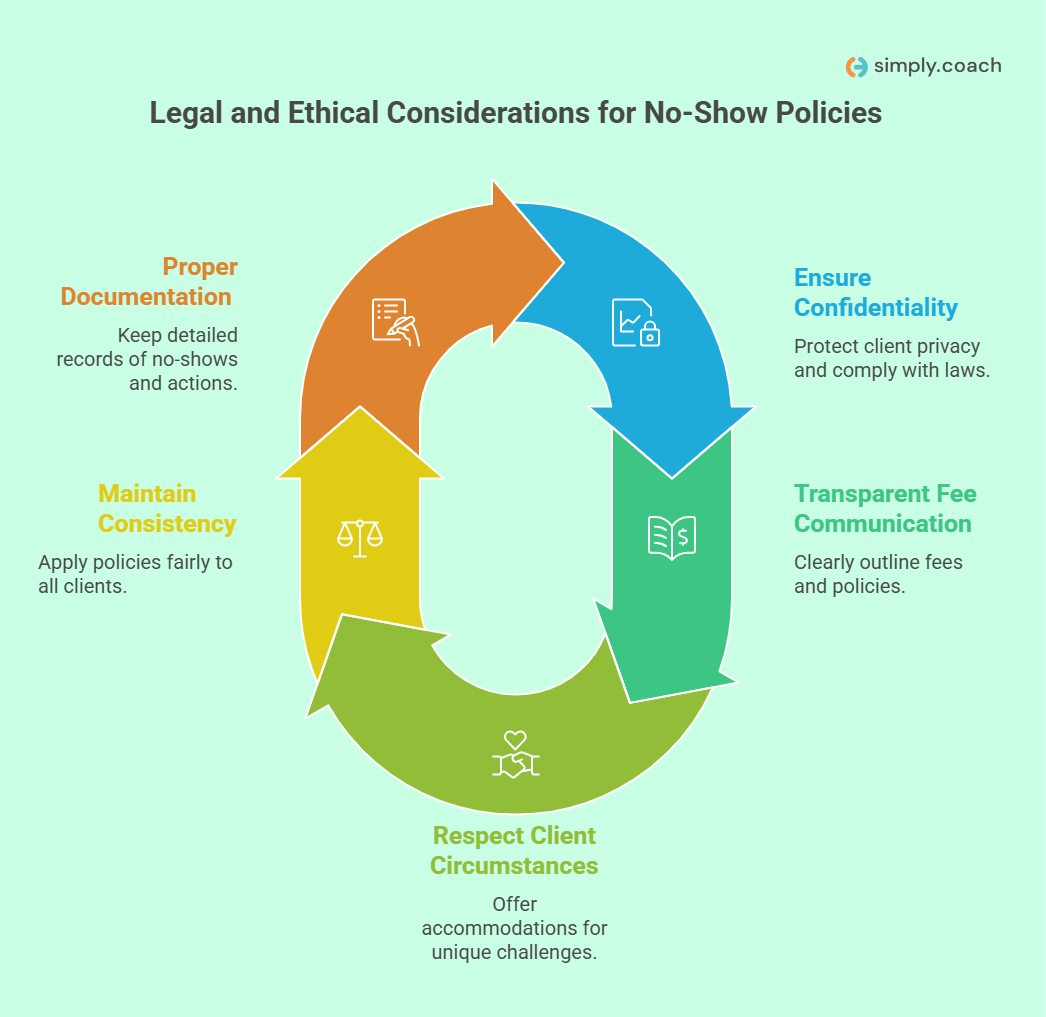
When creating a no-show policy, it’s crucial to ensure that it is both legally compliant and ethically sound. Here are key considerations for building a policy that protects both you and your clients:
1. Client confidentiality and privacy
Ensure your policy respects confidentiality laws, especially if you’re dealing with sensitive information, as required by HIPAA(Health Insurance Portability and Accountability Act). When communicating about no-shows, it’s essential to protect the privacy of your clients. Be cautious about sharing appointment details or fee information in ways that could compromise their confidentiality.
2. Charging fees
While it’s acceptable to charge fees for missed sessions, it’s important to be transparent about these charges. Clearly outline in your policy when fees will apply and communicate them upfront to clients. Ethically, you may want to consider offering flexibility, such as waiving fees in the event of genuine emergencies, which demonstrates understanding and compassion.
3. Respect for client circumstances
Recognize that each client may face unique challenges that affect their ability to keep appointments. Mental health conditions, work schedules, or personal emergencies can sometimes prevent clients from attending. It’s essential to be empathetic and consider reasonable accommodations when necessary, such as offering telehealth sessions or rescheduling when appropriate.
4. Consistency and fairness
Your no-show policy must be applied consistently to all clients, regardless of their background or circumstances. This ensures fairness and prevents any perception of bias. Being clear about your expectations and consequences helps maintain a professional environment and prevents conflicts down the road.
5. Proper documentation
Document every no-show or late cancellation and any actions taken, including charges applied. Keeping detailed records is vital in case of any disputes and demonstrates your adherence to the established policy. These records can help protect you legally and serve as a reference if a client challenges the application of the policy.
By adhering to these legal and ethical guidelines, you can create a no-show policy that is both fair and compliant, fostering trust and respect in your practice.
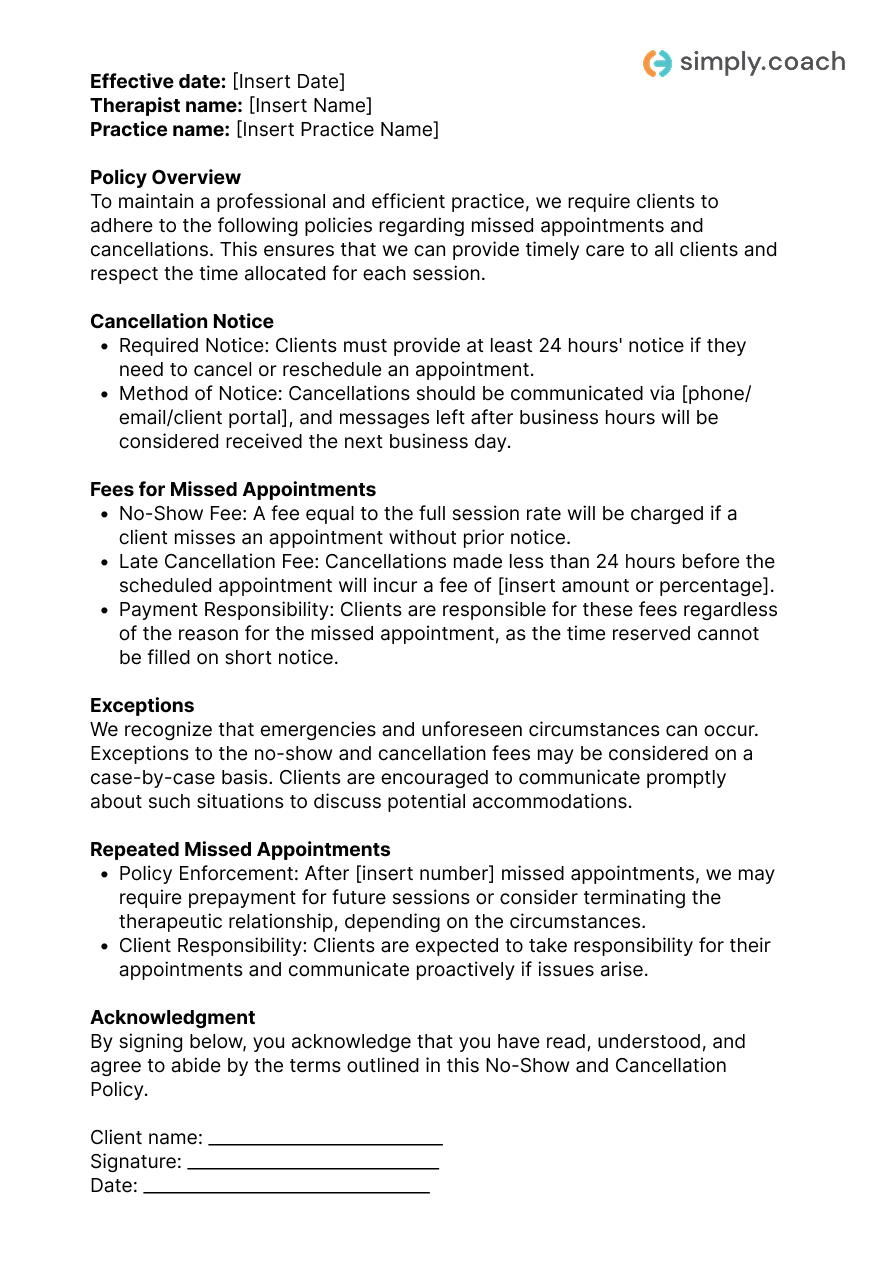
Example of a No Call No-Show Policy Template
A clear and well-structured no-show policy can help maintain professionalism and ensure that clients understand the expectations regarding missed appointments. Here’s an example of a no-show policy template that you can adapt for your therapy practice:
How to Evaluate and Adapt Your No-Show Policy Over Time
As your practice evolves, it’s essential to periodically assess and adjust your no-show policy to ensure that it continues to meet the needs of both you and your clients. Here are some steps to help you evaluate and refine your policy:
- Gather client feedback: Seek input from clients about the policy’s clarity and fairness. Use surveys or informal conversations to gather insights and identify areas for improvement.
- Assess no-show patterns: Track no-show data to identify trends, such as specific times or client groups more prone to missed appointments. Use this data to adjust your scheduling or policy as needed.
- Modify based on changing circumstances: Adjust your policy to reflect changes in your practice or client demographics. For instance, consider the unpredictable schedules of high-demand professionals like first responders.
- Balance firmness and flexibility: Ensure your policy maintains boundaries while allowing flexibility for clients in extenuating circumstances. Striking the right balance helps you stay fair and compassionate.
Regularly evaluating your no-show policy ensures it remains effective and aligned with your practice’s needs while being considerate of your clients.
Also read: The Ultimate Therapist Cancellation Policy Guide & Template for 2025
Conclusion
Creating and enforcing a no call no-show policy is essential for maintaining a smooth, efficient therapy practice. It helps set clear expectations, reduces disruptions, and ensures that your time is respected. By establishing a strong policy, you can protect your schedule, encourage client accountability, and minimize revenue loss. This policy is key to a well-organized and professional practice.
Simply.Coach is a HIPAA-compliant therapy practice management software that simplifies your workflow. With automated scheduling, reminders, and secure client management, Simply.Coach streamlines the process of enforcing your no-show policy. It ensures that your practice runs smoothly while meeting the highest standards for client confidentiality and security.
FAQs
1. What if a client doesn’t agree with the No-Show Policy?
If a client doesn’t agree with the no-show policy, it’s important to have an open conversation to address their concerns. Make sure they fully understand the reasoning behind the policy and its benefits for both parties. If they still refuse, you can consider whether it’s appropriate to continue the therapeutic relationship, as respect for boundaries is crucial in any professional setting.
2. Can I charge a fee for no-shows in therapy?
Yes, you can charge a fee for missed appointments, as long as you clearly communicate this in advance. Make sure your clients are aware of the charges by including them in your intake forms and having them sign an agreement. This helps maintain transparency and sets clear expectations.
3. How can I effectively enforce my no-show policy without losing clients?
To enforce your no-show policy without losing clients, communicate the policy clearly and compassionately from the start. Offer gentle reminders about the policy before each session and emphasize its importance for maintaining professionalism. Be flexible in special circumstances but consistent in applying the policy to foster trust and respect.
4. What should I do if a client frequently misses appointments?
If a client frequently misses appointments, it may be helpful to discuss the issue openly. Look for patterns, such as timing conflicts or personal challenges. You could offer solutions like prepayment for future sessions or telehealth options. If the behavior continues, consider whether it’s best to continue the therapeutic relationship, keeping your practice’s well-being in mind.
5. Can I offer flexible exceptions in my no-show policy?
Yes, offering flexibility for certain situations, such as medical emergencies or extenuating circumstances, is important to show empathy. However, it’s essential to apply exceptions fairly and consistently. Make it clear in your policy that exceptions are considered on a case-by-case basis to ensure that boundaries are still respected while maintaining a professional environment.