
In therapy sessions, you often manage emotionally intense conversations, rising client complexity, and heavy documentation demands, yet formal continuing education rarely fits a packed clinical schedule. That is why podcasts for therapists have become a practical learning medium for many experienced practitioners. A well-chosen episode can surface new rupture-repair approaches, trauma-informed dialogue techniques, or supervision insights during a commute.
If you’re managing 20–30 weekly therapy sessions, this kind of flexible learning becomes essential. Experienced clinicians are searching for conversations grounded in real session conditions, clinical judgment, and therapeutic ethics. The challenge is filtering thousands of mental health podcasts to find credible voices discussing emotional regulation, conflict work, and therapist decision-making.
In this article, we explore the top 40 podcasts therapists are listening to in 2026 and a simple framework for selecting shows that strengthen clinical insight, emotional regulation strategies, and therapeutic decision-making.
Key Takeaways
- Therapy podcasts provide you with accessible exposure to new therapy modalities, research insights, and real-world clinical perspectives outside formal training environments.
- Listening intentionally, through structured schedules, note-taking, and peer discussions, helps you turn podcast insights into meaningful professional learning.
- Podcasts should support clinical development but never replace supervision, accredited training, or evidence-based professional education.
- The most valuable podcasts for therapists are hosted by credible clinicians or researchers and focus on practical, evidence-informed insights that can inform therapy sessions.
- Platforms like Simply.Coach help you translate ideas from learning resources into practice by enabling structured goal tracking, action planning, session notes, and organized client management workflows.
Why Podcasts Matter For Therapists
Between managing client escalation, documentation, and supervision preparation, structured learning time often disappears. You spend most of your professional hours in emotionally demanding conversations at therapy sessions. This is where podcasts for therapists deliver peer insight, supervision-level discussions, and real case reflections without adding administrative burden.
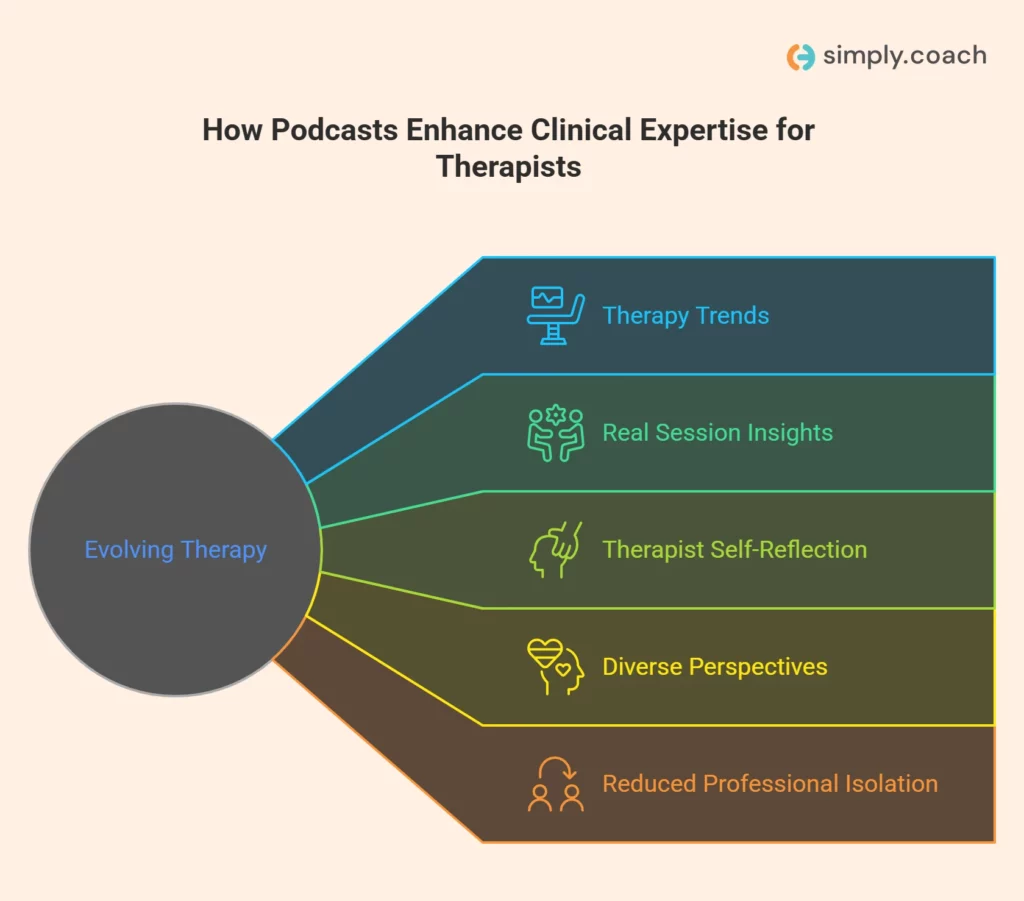
If you’re an experienced clinician, you can also use podcasts as a lightweight form of continuing reflection. Listening to respected practitioners discuss rupture repair, trauma pacing, or therapeutic boundaries can sharpen judgment between sessions. Unlike textbooks, podcasts frequently explore the ambiguity therapists face in real clinical work.
1. Staying current with emerging therapy approaches
Clinical practice changes quickly as trauma research, attachment theory, and neurobiology continue expanding. Podcasts can expose you to new frameworks, emerging research, and diverse therapeutic perspectives without requiring formal training programs.
This helps you refine interventions when working with complex cases involving dysregulation, relational trauma, or chronic conflict patterns.
2. Learning from real therapy conversations
Many therapy podcasts analyze real session scenarios, ethical dilemmas, and supervision cases. These discussions reveal how you can structure dialogue, repair ruptures, and regulate emotionally intense interactions.
Hearing these examples can help you reflect on your own session pacing and intervention timing.
3. Strengthening therapist self-reflection
Therapy outcomes often depend on your self-awareness and emotional regulation during sessions. Podcasts frequently explore therapist countertransference, clinical blind spots, and boundary decisions.
This reflective learning strengthens your ability to maintain emotional neutrality during difficult client interactions.
4. Gaining diverse clinical perspectives
No single therapeutic model works for every client. Podcasts can expose perspectives across modalities such as attachment-based therapy, somatic work, cognitive approaches, and family systems frameworks.
Exposure to multiple viewpoints allows you to adapt interventions based on the client’s emotional regulation capacity and relational dynamics.
5. Reducing professional isolation
Therapy can be professionally isolating, especially if you’re a clinician in private practice. Listening to discussions between experienced therapists can recreate elements of supervision and peer dialogue.
This sense of professional community helps you normalize difficult cases and maintain perspective when working with complex client interactions.
Understanding their importance helps identify which podcasts deliver the most relevant insights for your practice.
Top 40 Podcasts For Therapists In 2026
You can refine clinical judgment by listening to peers unpack real therapy patterns, ethical dilemmas, and emerging research. The list of podcasts for therapists below offers concise conversations that strengthen therapeutic decision-making, emotional regulation strategies, and client-focused dialogue techniques.
1. The Science Of Happiness
Hosted by: Greater Good Science Center
Subject: Evidence-based psychology, emotional well-being, and positive psychology practices
Where to listen: Apple Podcasts, Spotify, Google Podcasts
Produced by the Greater Good Science Center at the University of California, Berkeley, this podcast translates psychological research into practical exercises that improve emotional well-being. These episodes include gratitude practices, empathy development, and stress regulation techniques through scientific studies and real-world experiments.
How to apply these insights in practice:
- Introduce brief gratitude or mindfulness exercises for clients struggling with chronic stress.
- Use positive psychology interventions to reinforce emotional resilience and self-awareness.
- Explore conversation prompts that help clients reframe negative cognitive patterns.
2. Shrink Rap Radio
Hosted by: David Van Nuys, PhD, clinical psychologist and longtime psychotherapy host
Subject: Psychotherapy theory, mental health research, and clinical interviews
Where to listen: Apple Podcasts, Spotify, Stitcher
Shrink Rap Radio is one of the longest-running psychotherapy podcasts and features in-depth conversations with leading psychologists and therapists. Hosted by psychologist David Van Nuys, the show explores psychotherapy theory, emerging treatment methods, and practitioner experiences.
With hundreds of archived episodes and full transcripts available, you can explore detailed discussions on topics such as trauma treatment, Jungian psychology, and mindfulness-based therapy.
How to apply these insights in practice:
- Explore new therapeutic models before integrating them into treatment plans.
- Reflect on complex cases through perspectives shared by expert clinicians.
- Strengthen theoretical understanding across multiple psychotherapy approaches.
3. The Private Practice Startup
Hosted by: Kate Campbell, PhD, licensed marriage and family therapist (LMFT), and Katie Lemieux, LMFT, private practice consultant
Subject: Starting and managing a therapy private practice
Where to listen: Apple Podcasts, Spotify
Many therapists enter private practice with strong clinical skills but limited preparation for operational realities. The Private Practice Startup addresses this gap by sharing practical lessons from therapists who have built sustainable practices.
Hosts Kate Campbell and Katie Lemieux interview clinicians about common obstacles such as establishing referral networks, managing boundaries with clients, and maintaining clinical quality while running a business. The show will help you deal with the transition from agency work to independent practice.
How to apply these insights in practice:
- Structure intake processes that maintain ethical boundaries and clear expectations.
- Build referral relationships with other therapists and healthcare providers.
- Maintain sustainable caseload management without increasing burnout.
4. The Practice Of The Practice
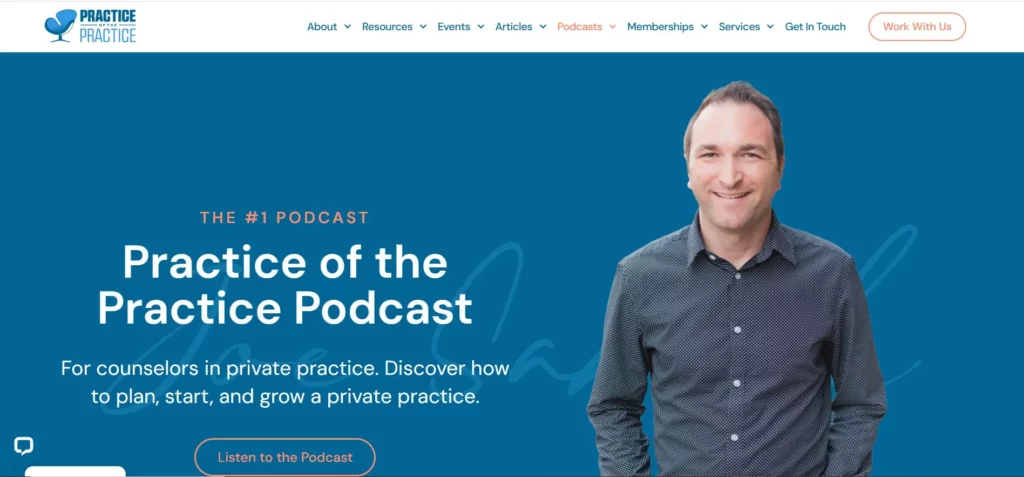
Hosted by: Joe Sanok, licensed professional counselor (LPC) and private practice consultant
Subject: Therapy practice development, professional growth, and clinician well-being
Where to listen: Apple Podcasts, Spotify, Google Podcasts
The Practice of the Practice focuses on the professional realities you may encounter while managing private practices. Episodes explore topics such as clinician burnout, pricing structures, group practice development, and professional identity. Host Joe Sanok interviews therapists, consultants, and industry experts who share practical lessons from their own practices.
How to apply these insights in practice:
- Identify operational systems that reduce administrative stress in private practice.
- Develop sustainable caseload strategies to prevent therapist burnout.
- Learn communication approaches that strengthen client expectations and boundaries.
5. Other People’s Problems
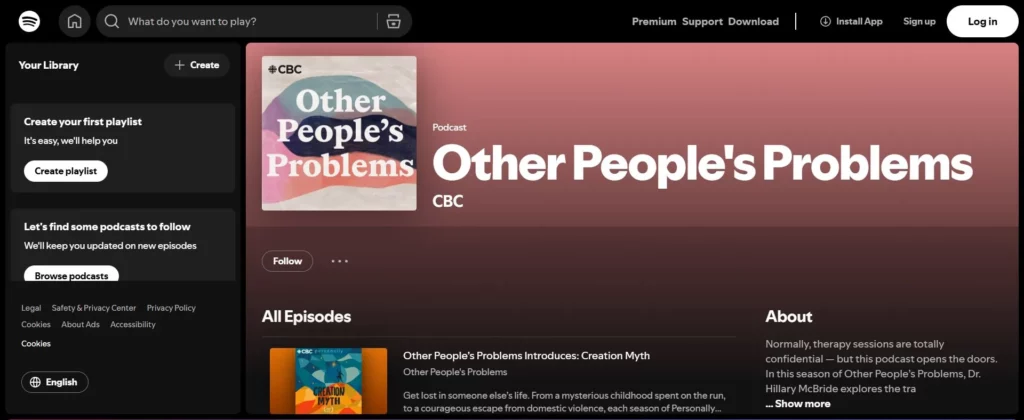
Hosted by: Dr. Hillary McBride, clinical psychologist and author
Subject: Real psychotherapy sessions and clinical reflections
Where to listen: Apple Podcasts, Spotify, CBC Podcasts
This podcast offers something rare in therapist education: recordings of real psychotherapy sessions. Hosted by psychologist Hillary McBride, the show allows listeners to observe therapeutic dialogue, emotional regulation techniques, and rupture-repair moments in real time.
How to apply these insights in practice:
- Observe dialogue patterns that support emotional safety during vulnerable conversations.
- Study how experienced therapists respond to client resistance or relational ruptures.
- Reflect on their own facilitation style and session pacing.
6. Gentler: Practical Self-Care
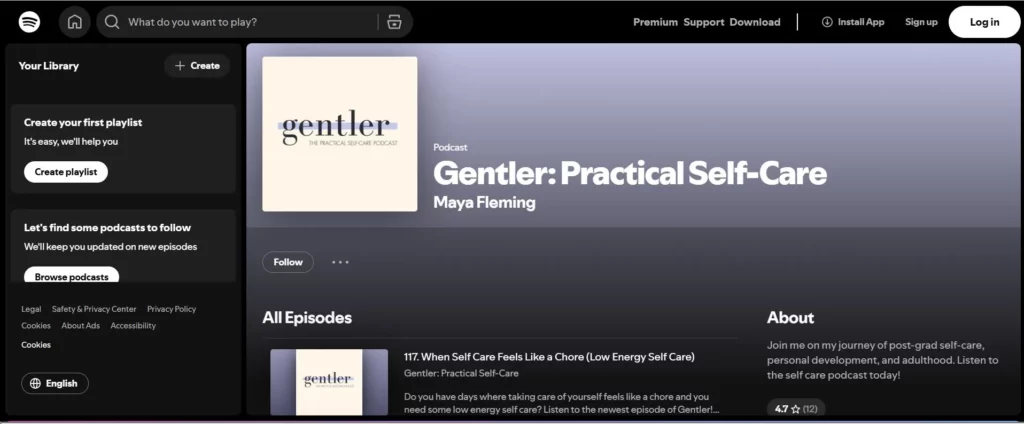
Hosted by: Maya Fleming, mental health coach and self-care expert
Subject: Therapist wellbeing, burnout prevention, and sustainable self-care
Where to listen: Apple Podcasts, Spotify
Sometimes, you might prioritize client well-being while neglecting your own emotional and physical needs. In Gentler: Practical Self-Care, Maya Fleming offers grounded conversations about therapist burnout, boundaries, and recovery practices. Episodes explore financial stress, emotional exhaustion, and the cumulative weight of holding space for clients in distress.
How to apply these insights in practice:
- Implement structured self-care routines that reduce chronic therapist burnout.
- Recognize early warning signs of emotional exhaustion between sessions.
- Maintain healthier professional boundaries with demanding client cases.
7. Power Your Parenting
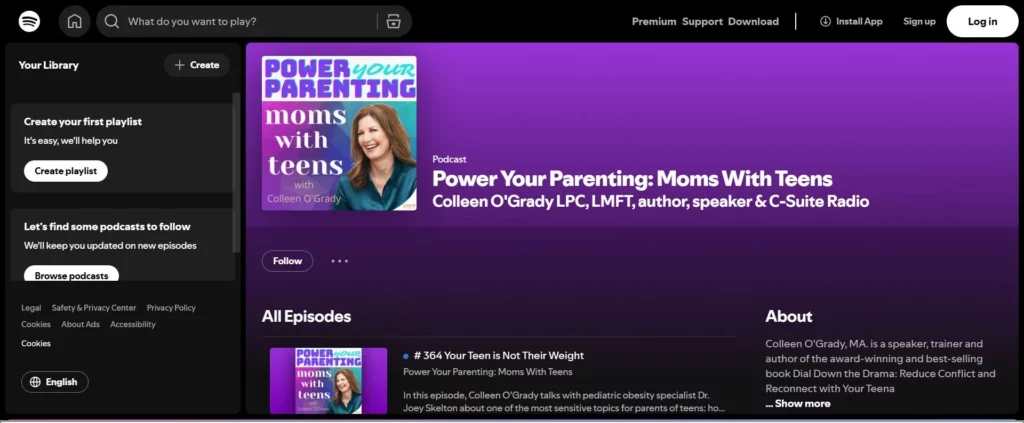
Hosted by: Colleen O’Grady, family therapist and parenting specialist
Subject: Parenting challenges, family dynamics, and adolescent relationships
Where to listen: Apple Podcasts, Spotify
If you’re a family therapist, you might frequently work with parents dealing with conflict with teenagers or children experiencing emotional distress. Power Your Parenting explores these real-world parenting patterns through conversations with clinicians, educators, and child development experts.
Host Colleen O’Grady shares practical guidance on communication breakdowns, boundary-setting, and emotional validation. These insights help clinicians structure conversations that reduce defensiveness and improve parent–child dialogue.
How to apply these insights in practice:
- Guide parents through structured communication exercises with adolescents.
- Identify family interaction patterns that reinforce conflict cycles.
- Support parents in developing emotionally responsive parenting strategies.
8. AAMFT Podcast
Hosted by: American Association for Marriage and Family Therapy
Subject: Family therapy research, systemic approaches, and clinical interventions
Where to listen: Apple Podcasts, Spotify
The AAMFT Podcast offers conversations with leading experts in marriage and family therapy. Episodes explore systemic therapy frameworks, relational dynamics, and practical interventions used by family therapists. Many discussions focus on translating theory into session-level dialogue techniques. It also helps you stay connected to emerging practices in systemic and relational therapy.
How to apply these insights in practice:
- Apply systems theory when working with multi-person family interactions.
- Structure couple or family sessions to prevent escalation and improve dialogue.
- Integrate evidence-informed family therapy interventions into treatment plans.
9. We Heart Therapy
Hosted by: Anabelle Bugatti, licensed marriage and family therapist (LMFT) and couples therapy specialist
Subject: Emotionally Focused Therapy (EFT) for couples and relationship dynamics
Where to listen: Apple Podcasts, Spotify
We Heart Therapy focuses on emotionally focused couples therapy and the relational patterns that define intimate partnerships. Host Annabelle Bugatti explores attachment patterns, emotional safety, and conflict cycles through conversations grounded in EFT principles.
Episodes often unpack real scenarios therapists encounter when couples struggle with disconnection or recurring arguments. The discussions mirror supervision-style reflections that can help you refine your dialogue structure during couples sessions.
How to apply these insights in practice:
- Structure couples sessions around attachment needs rather than surface-level conflict topics.
- Guide partners toward emotionally vulnerable dialogue that strengthens relational safety.
- Recognize negative interaction cycles that escalate recurring relationship conflicts.
10. Let’s Talk: Addiction And Recovery
Hosted by: William C. Moyers, addiction recovery advocate and writer
Subject: Addiction treatment, recovery research, and behavioral health trends
Where to listen: Apple Podcasts, Spotify
Let’s Talk: Addiction and Recovery brings together clinicians, researchers, and recovery advocates discussing substance use treatment. Host William C. Moyers explores current research, policy developments, and therapeutic interventions used in addiction recovery.
The conversations highlight both clinical science and lived experience, which helps you understand the emotional complexity of addiction. Episodes often address relapse prevention, recovery motivation, and stigma surrounding substance use disorders.
How to apply these insights in practice:
- Integrate evidence-informed recovery approaches into addiction treatment plans.
- Improve relapse-prevention conversations with clients going through recovery setbacks.
- Address stigma and motivational barriers during early recovery stages.
11. The Happiness Lab
Hosted by: Dr. Laurie Santos, psychology professor and researcher at Yale University
Subject: Behavioral science of happiness, well-being research, and cognitive biases
Where to listen: Apple Podcasts, Spotify
The Happiness Lab translates behavioral science research into practical insights about human well-being. Yale professor Laurie Santos examines cognitive biases, emotional habits, and culturalmyths surrounding happiness. You can draw on these insights when helping clients challenge distorted beliefs about success, comparison, or life satisfaction
How to apply these insights in practice:
- Introduce research-backed behavioral practices that support emotional resilience.
- Help clients identify cognitive distortions that influence negative self-evaluations.
- Frame happiness as a set of learnable behaviors rather than personality traits.
12. Feeling Good
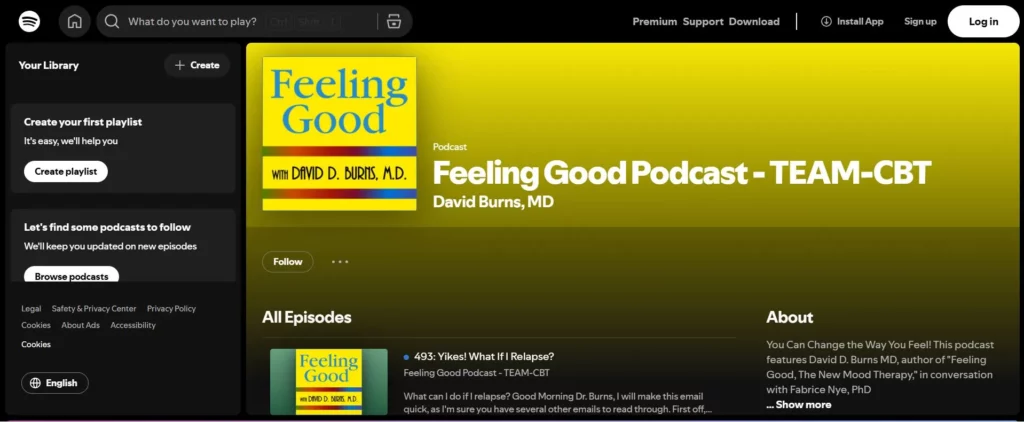
Hosted by: Dr. David D. Burns, psychiatrist and cognitive behavioral therapy expert.
Subject: Cognitive Behavioral Therapy (CBT) techniques for anxiety and depression
Where to listen: Apple Podcasts, Spotify
The Feeling Good podcast explores how cognitive behavioral therapy addresses maladaptive thinking patterns. Hosted by psychiatrist David D. Burns, the show focuses on practical CBT methods used to challenge distorted beliefs and emotional reactions. You can observe how specific questioning techniques change clients’ thinking during anxiety or depressive episodes.
How to apply these insights in practice:
- Use structured cognitive questioning to challenge distorted thinking patterns.
- Guide clients through evidence-testing exercises that change negative beliefs.
- Apply CBT frameworks when addressing anxiety and depressive rumination.
13. Between Sessions With Berries
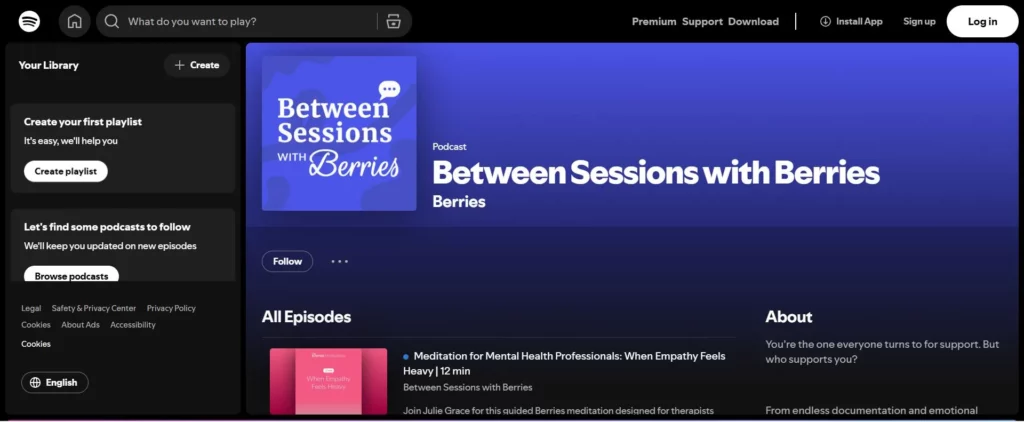
Hosted by: Kym Tolson, therapist and digital practice strategist.
Subject: AI in therapy practice, administrative workflows, and private practice operations
Where to listen: Apple Podcasts, Spotify
Between Sessions With Berries explores how emerging technologyintersects with modern therapy practice. Host Kym Tolson discusses artificial intelligence tools, documentation efficiency, and operational systems for therapists running independent practices. Episodes often focus on reducing administrative workload while protecting clinical focus and ethical standards.
How to apply these insights in practice:
- Reduce documentation pressure by adopting structured note-taking workflows.
- Evaluate AI tools carefully while maintaining strict client confidentiality standards.
- Create operational systems that improve your focus on clinical work.
14. The Therapy For Black Girls Podcast
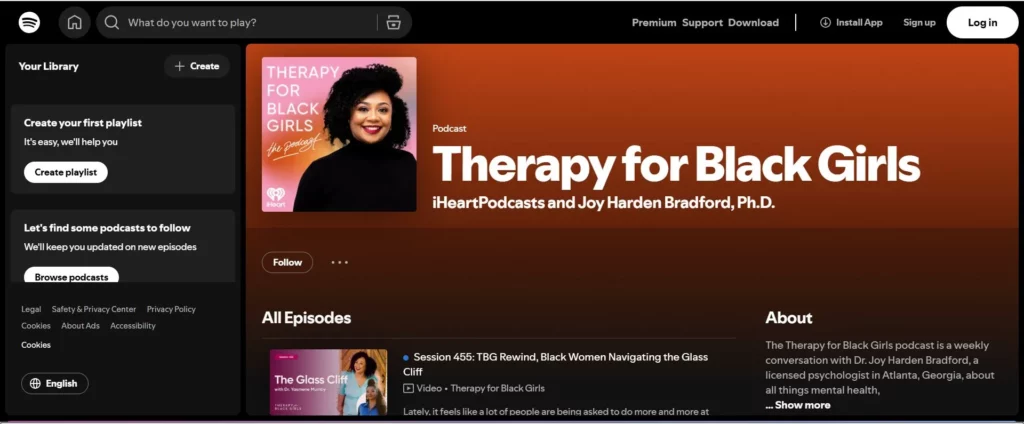
Hosted by: Dr. Joy Harden Bradford, psychologist specializing in culturally responsive mental health.
Subject: Culturally responsive therapy, mental health equity, and intersectionality
Where to listen: Apple Podcasts, Spotify
The Therapy for Black Girls Podcast focuses on mental health experiences within Black communities and the importance of culturally responsive therapy. Psychologist Joy Harden Bradford explores topics such as racial identity, intergenerational trauma, and barriers to accessing mental health care.
If you work with diverse populations, you will gain insights into cultural humility and contextualized care and help recognize how social realities influence emotional expression and help-seeking behavior.
How to apply these insights in practice:
- Develop culturally responsive dialogue when working with diverse clients.
- Recognize systemic stressors that influence mental health outcomes.
- Strengthen cultural humility during therapy conversations.
15. Speaking of Psychology
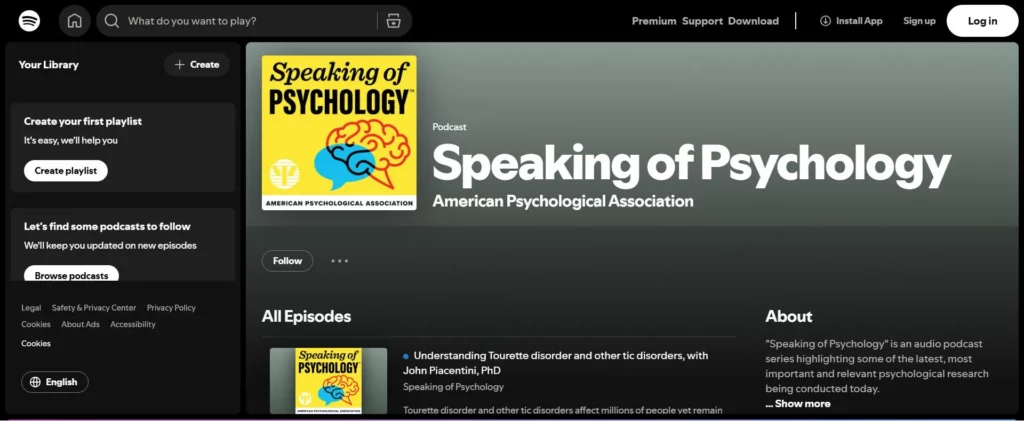
Hosted by: American Psychological Association
Subject: Psychological research, clinical science, and evidence-based therapy practices
Where to listen: Apple Podcasts, Spotify
Speaking of Psychology is the official podcast of the American Psychological Association and features conversations with leading researchers and clinicians. You will gain access to the latest developments across topics such as trauma treatment, behavioral health, and cognitive science. If you’re committed to evidence-informed practice, the show offers a direct link to current psychological research.
How to apply these insights in practice:
- Integrate recent psychological research into treatment planning.
- Evaluate emerging therapy approaches before adopting them in sessions.
- Strengthen evidence-informed clinical decision-making.
16. The Mental Illness Happy Hour
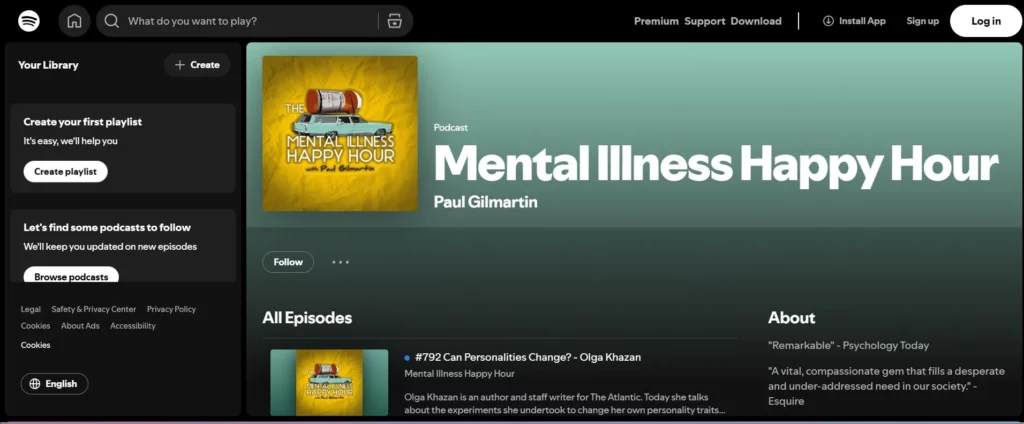
Hosted by: Paul Gilmartin, mental health advocate and storyteller.
Subject: Lived experiences of mental illness and recovery journeys
Where to listen: Apple Podcasts, Spotify
The Mental Illness Happy Hour focuses on candid conversations about mental health struggles and recovery experiences. Host Paul Gilmartin interviews guests who share personal stories involving depression, trauma, addiction, and anxiety. Listening to these stories might help you understand how clients describe emotional pain outside clinical language.
How to apply these insights in practice:
- Better understand how clients describe mental health struggles outside therapy.
- Recognize emotional narratives that may not appear in formal assessments.
- Strengthen empathic listening during difficult client disclosures.
17. Therapy Reimagined
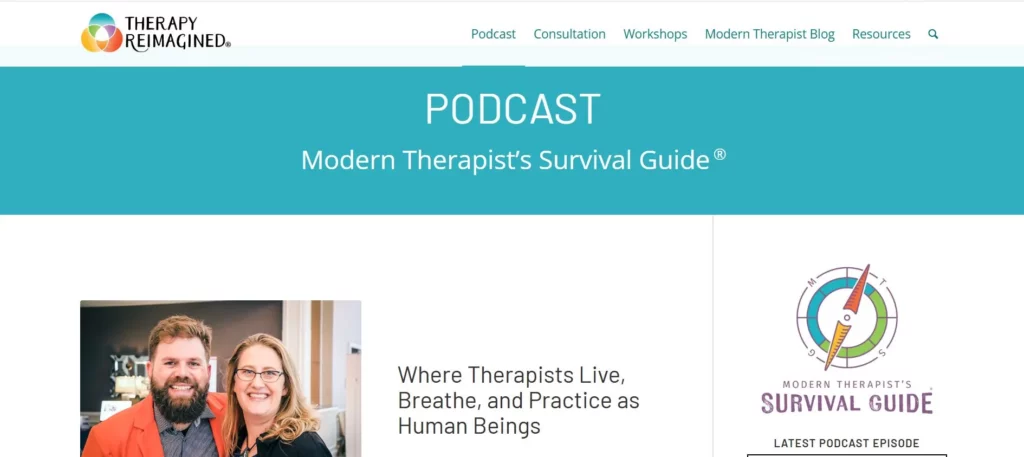
Hosted by: Curt Widhalm and Katie Vernoy
Subject: Modern therapy practices, integrative approaches, and professional ethics
Where to listen: Apple Podcasts, Spotify
Therapy Reimagined explores changing approaches to psychotherapy and the realities modern clinicians face. Hosts Curt Widhalm and Katie Vernoy discuss integrative therapies, ethical dilemmas, and changes affecting the mental health profession. The episodes frequently analyze complex therapy situations and the changing expectations placed on therapists.
How to apply these insights in practice:
- Explore integrative treatment approaches beyond a single therapy model.
- Reflect on ethical challenges emerging in modern clinical settings.
- Adapt therapy structures to contemporary client expectations.
18. The Trauma Therapist Podcast
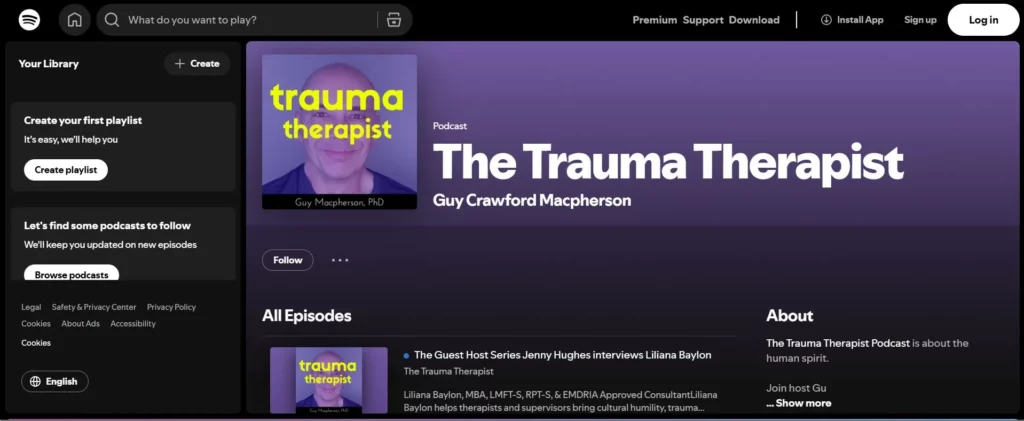
Hosted by: Guy Macpherson, clinical psychologist and trauma-informed care educator.
Subject: Trauma-informed therapy, trauma recovery modalities, and clinician training
Where to listen: Apple Podcasts, Spotify
The Trauma Therapist Podcast is a widely respected resource for clinicians working with trauma survivors. Clinical psychologist Guy Macpherson interviews leading experts across trauma treatment approaches such as EMDR, somatic therapies, and cognitive processing therapy. If you’re a clinician supporting trauma recovery, the podcast offers deep exposure to trauma-informed clinical thinking.
How to apply these insights in practice:
- Adjust session pacing to prevent trauma activation during difficult disclosures.
- Integrate trauma-informed methods such as somatic awareness or EMDR.
- Recognize dissociation and emotional dysregulation patterns during sessions.
19. Let’s Talk About CBT
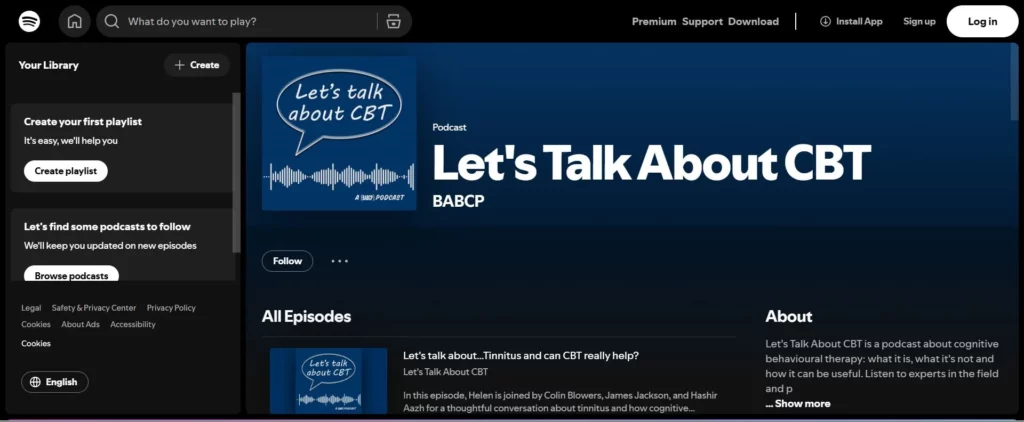
Hosted by: Helen Macdonald, Senior Clinical Advisor at the British Association for Behavioural and Cognitive Psychotherapies (BABCP).
Subject: Cognitive behavioural therapy research, clinical applications, and practitioner insights
Where to listen: Apple Podcasts, Spotify
Let’s Talk About CBT focuses on the practical application of cognitive behavioral therapy in clinical settings. Helen Macdonald interviews CBT practitioners, researchers, and individuals who have experienced CBT treatment firsthand. Episodes break down cognitive restructuring, behavioral experiments, and common therapy misconceptions. If you’re a therapist practicing CBT, these conversations will clarify how cognitive interventions proceed inside therapy sessions.
How to apply these insights in practice:
- Strengthen cognitive restructuring techniques for anxiety and depressive disorders.
- Design behavioral experiments that help clients test distorted beliefs.
- Clarify misconceptions clients may hold about CBT treatment.
20. Therapy Chat
Hosted by: Laura Reagan, licensed clinical social worker and trauma therapist.
Subject: Trauma-informed psychotherapy, attachment work, and holistic mental health approaches
Where to listen: Apple Podcasts, Spotify
Therapy Chat explores trauma-informed and integrative psychotherapy approaches through conversations with experienced clinicians. Laura Reagan interviews therapists, educators, and researchers about attachment trauma, somatic interventions, and compassion-focused therapy. The discussions emphasize relational attunement, therapist presence, and trauma-sensitive dialogue.
How to apply these insights in practice:
- Introduce somatic grounding exercises for clients experiencing trauma dysregulation.
- Apply attachment-informed dialogue when addressing relational trauma.
- Integrate compassion-focused interventions in trauma therapy sessions.
21. Practice Of The Practice
Hosted by: Joe Sanok, licensed professional counselor and private practice consultant.
Subject: Private practice development, therapy business systems, and operational workflows
Where to listen: Apple Podcasts, Spotify
Practice of the Practice focuses on the operational realities you might encounter when running private practices. Joe Sanok shares insights about practice management, insurance structures, referral networks, and administrative systems. Episodes feature interviews with clinicians discussing the challenges of balancing therapy work with operational responsibilities.
How to apply these insights in practice:
- Structure sustainable caseload management that prevents therapist burnout.
- Develop referral relationships with other clinicians and healthcare providers.
- Improve administrative systems that reduce operational stress.
22. Social Work To Wealth
Hosted by: Taylor Jones and Faith Brown, licensed social workers and financial literacy educators.
Subject: Financial literacy, career growth, and professional sustainability for social workers
Where to listen: Apple Podcasts, Spotify
Social Work to Wealth addresses an often overlooked challenge within helping professions: financial sustainability. Hosts Taylor Jones and Faith Brown discuss career development, compensation transparency, and financial planning for social workers and therapists.
Many clinicians avoid financial conversations despite the stress financial instability creates. The podcast encourages professionals like you to approach financial well-being as part of long-term career sustainability.
How to apply these insights in practice:
- Develop long-term financial planning strategies for sustainable careers.
- Reduce financial stress that contributes to therapist burnout.
- Manage compensationand career decisions with greater clarity.
23. Therapist Uncensored
Hosted by: Ann Kelley, psychologist and attachment researcher, and Sue Marriott, licensed clinical social worker and group psychotherapist.
Subject: Attachment theory, relational neuroscience, and trauma-informed psychotherapy
Where to listen: Apple Podcasts, Spotify
Therapist Uncensored delivers candid conversations rooted in attachment science and relational neuroscience. Ann Kelley and Sue Marriott examine how attachment patterns influence emotional regulation, relationship dynamics, and therapy outcomes. Episodes bridge neuroscience research with real therapeutic dialogue techniques. If you work with relational trauma, the podcast offers meaningful insights into attachment-driven behaviours.
How to apply these insights in practice:
- Identify attachment patterns influencing relationship conflicts.
- Use neuroscience-informed language to explain emotional regulation.
- Structure therapy conversations that support secure relational bonding.
24. The Science Of Psychotherapy
Hosted by: Richard Hill, psychotherapist and co-editor of The Science of Psychotherapy magazine, and Matthew Dahlitz, neuroscience researcher and clinical psychology writer.
Subject: Neuroscience-informed psychotherapy and evidence-based clinical practice
Where to listen: Apple Podcasts, Spotify
The Science of Psychotherapy podcast connects psychotherapy research with practical clinical application. Hosts Richard Hill and Matthew Dahlitz interview leading researchers who explain complex psychological studies in clear clinical terms. Episodes explore topics such as interpersonal neurobiology, trauma processing, and cognitive science in therapy. You will benefit from understanding how neuroscience findings translate into session-level interventions.
How to apply these insights in practice:
- Integrate neuroscience-informed explanations when discussing emotional regulation with clients.
- Apply research-backed frameworks to refine treatment planning.
- Stay updated on emerging psychotherapy research without reviewing full academic papers.
25. Speaking Of Psychology
Hosted by: Kim I. Mills, senior director of strategic external communications and public affairs at the American Psychological Association.
Subject: Psychology research, human behavior, and applied psychological science
Where to listen: Apple Podcasts, Spotify
Speaking of Psychology is produced by the American Psychological Association and highlights emerging psychological research influencing clinical practice. Each episode features researchers, academics, and clinicians discussing topics such as resilience, extremism, emotional regulation, and social behavior.
How to apply these insights in practice:
- Translate new research findings into psychoeducation for clients.
- Explore psychological trends influencing client concerns and behaviors.
- Maintain evidence-informed therapy practices.
26. The OCD Stories
Hosted by: Stuart Ralph, mental health advocate and OCD education specialist.
Subject: Obsessive-compulsive disorder treatment, lived experiences, and clinical insights
Where to listen: Apple Podcasts, Spotify
The OCD Stories podcast focuses on obsessive-compulsive disorder from both clinical and lived-experience perspectives. Host Stuart Ralph interviews clinicians, researchers, advocates, and individuals living with OCD. Episodes explore treatment approaches such as exposure and response prevention (ERP) and the emotional complexity of OCD recovery.
How to apply these insights in practice:
- Deepen understanding of intrusive thought patterns in OCD clients.
- Apply exposure and response prevention principles more effectively.
- Recognize the lived experience challenges clients face during treatment.
27. Choiceology
Hosted by: Katie Milkman, behavioral psychologist and professor at The Wharton School.
Subject: Behavioral economics, decision-making psychology, financial behavior
Where to listen: Apple Podcasts, Spotify
Choiceology examines how subtle psychological biases influence everyday decisions. Host Katie Milkman combines behavioral science research with compelling real-world stories to illustrate how people make choices under pressure. The podcast will offer you valuable insights into why clients repeatedly make decisions that contradict their long-term goals.
How to apply these insights in practice:
- Identify cognitive biases affecting clients’ decision-making patterns.
- Support clients in developing more intentional behavioral choices.
- Use behavioral science concepts during psychoeducation discussions.
28. Counselor Toolbox
Hosted by: Dawn-Elise Snipes, PhD, licensed clinical psychotherapist and behavioral health educator.
Subject: Counselor training, addiction recovery, trauma-informed therapy
Where to listen: Apple Podcasts, Spotify
Counselor Toolbox functions like an ongoing professional development resource for mental health clinicians. Dawn-Elise Snipes presents structured discussions on topics such as trauma recovery, counseling ethics, aging-related mental health concerns, and addiction treatment. The episodes often follow a lecture-style format, supported by clinical research and practical examples.
How to apply these insights in practice:
- Integrate trauma-informed care principles into treatment planning.
- Improve counseling strategies when working with addiction recovery.
- Strengthen ethical decision-making in complex clinical situations.
29. Hidden Brain
Hosted by: Shankar Vedantam, journalist and science correspondent specializing in behavioral science.
Subject: Human behavior, unconscious psychology, social dynamics
Where to listen: Apple Podcasts, Spotify
Hidden Brain explores the psychological forces that influence human behavior beneath conscious awareness. Host Shankar Vedantam interviews psychologists, neuroscientists, and social scientists about how invisible mental processes influence relationships, emotions, and choices. Episodes frequently examine everyday behaviors such as memory failures, revenge motivations, and emotional reactions during uncertainty.
How to apply these insights in practice:
- Help clients recognize unconscious behavioral patterns.
- Use psychological narratives to normalize emotional reactions.
- Explore relational interactions influenced by hidden cognitive biases.
30. The Modern Therapist’s Survival Guide
Hosted by: Curt Widhalm, licensed marriage and family therapist, and Katie Vernoy, licensed marriage and family therapist.
Subject: Therapy practice development, ethics, clinical culture, professional sustainability
Where to listen: Apple Podcasts, Spotify, Audible, Amazon Music
The Modern Therapist’s Survival Guide addresses the realities clinicians face while balancing therapeutic work, ethical responsibilities, and private practice management. Curt Widhalm and Katie Vernoy discuss topics such as clinical decision-making, shifting therapy culture, professional identity, and regulatory considerations. Episodes often include expert interviews that explore current issues affecting mental health practitioners.
How to apply these insights in practice:
- Deal with ethical dilemmas within changing clinical environments.
- Adapt therapy approaches to contemporary mental health challenges.
- Maintain professional resilience while managing complex caseloads.
31. The Psychology Of Your 20s
Hosted by: Jemma Sbeg, mental health advocate and psychology communicator.
Subject: Personal development, emotional well-being, early adulthood psychology
Where to listen: Apple Podcasts, Spotify
The Psychology of Your 20s explores the emotional and developmental transitions that often emerge during early adulthood. Host Jemma Sbeg discusses themes such as identity exploration, career uncertainty, relationship formation, and personal growth. Although designed for younger listeners, experienced therapists like you will find the podcast useful for understanding the generational context influencing younger clients.
How to apply these insights in practice:
- Understand developmental stressors affecting younger adult clients.
- Explore identity formation and career uncertainty themes.
- Support clients through relationship transitions and independence.
32. Psychology In Everyday Life: The Psych Files
Hosted by: Michael A. Britt, PhD, former assistant professor of psychology at Marist College.
Subject: Cognitive psychology, social behavior, and everyday psychological phenomena
Where to listen: Apple Podcasts, Spotify
The Psych Files explains psychological theories through everyday situations people experience. Host Michael Britt presents short, engaging discussions that show how cognitive and social psychology influence daily interactions. Topics range from memory processes and persuasion to the psychology behind politeness toward artificial intelligence.
How to apply these insights in practice:
- Use relatable examples when explaining psychological concepts to clients.
- Apply cognitive psychology insights to behavior change discussions.
- Introduce psychoeducation through everyday behavioral examples.
33. Psychology In Seattle
Hosted by: Kirk Honda, PsyD, licensed marriage and family therapist and professor at Antioch University Seattle.
Subject: Clinical psychology, pop culture analysis, relational dynamics
Where to listen: Apple Podcasts, Spotify
Psychology in Seattle explores psychological concepts through discussions about popular culture, current events, and listener questions. Host Kirk Honda often analyzes media narratives and public figures to examine relational patterns, trauma responses, and interpersonal patterns. Episodes also include interviews with therapists, researchers, and authors.
How to apply these insights in practice:
- Examine cultural narratives influencing client beliefs and behaviors.
- Discuss relational patterns using familiar media examples.
- Expand clinical conversations about social psychology.
34. The Psychology Podcast
Hosted by: Scott Barry Kaufman, PhD, professor of psychology at Columbia University and director of the Center for Human Potential.
Subject: Human potential, neuroscience, creativity, self-actualization
Where to listen: Apple Podcasts, Spotify
The Psychology Podcast focuses on the science of human potential and psychological growth. Scott Barry Kaufman interviews leading thinkers, researchers, and clinicians about creativity, motivation, emotional well-being, and personal transformation. Episodes often explore how psychological science informs personal development and meaning-making.
How to apply these insights in practice:
- Explore motivation and self-actualization themes during therapy.
- Support clients seeking deeper meaning and psychological growth.
- Integrate research insights into reflective therapeutic dialogue.
35. The Stanford Psychology Podcast
Hosted by: Anjie Cao, Enna Chen, Adani Abutto, Misha O’Keeffe, and Elizabeth Im, psychology researchers and doctoral scholars at Stanford University.
Subject: Academic psychology research and emerging psychological science
Where to listen: Apple Podcasts, Spotify
The Stanford Psychology Podcast features conversations with leading psychologists discussing their research and professional journeys. Hosted by Stanford doctoral scholars, the podcast provides insight into current academic work impacting the psychology field. Episodes explore topics such as communication research, ethical decision-making, and social behavior.
How to apply these insights in practice:
- Stay informed about emerging psychology research.
- Translate academic findings into clinical reflection.
- Strengthen evidence-informed therapeutic perspectives.
36. The Bialik Breakdown
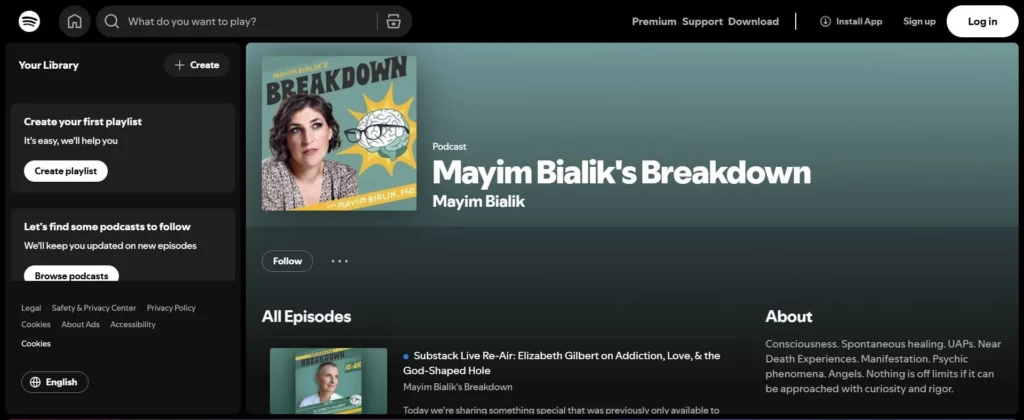
Hosted by: Mayim Bialik, neuroscientist and actor.
Subject: Mental health, neuroscience, mind–body connection
Where to listen: Apple Podcasts, Spotify
The Bialik Breakdown blends neuroscience, psychology, and personal storytelling through conversations with researchers, clinicians, and public figures. Mayim Bialik draws on her academic training in neuroscience to examine mental health topics with scientific grounding. Episodes explore issues such as emotional regulation, resilience, and the connection between physical and psychological well-being.
How to apply these insights in practice:
- Use neuroscience-informed explanations when discussing emotional regulation with clients.
- Normalize mental health conversations by referencing relatable public narratives.
- Connect mind–body research to psychoeducation in therapy sessions.
37. Happier With Gretchen Rubin
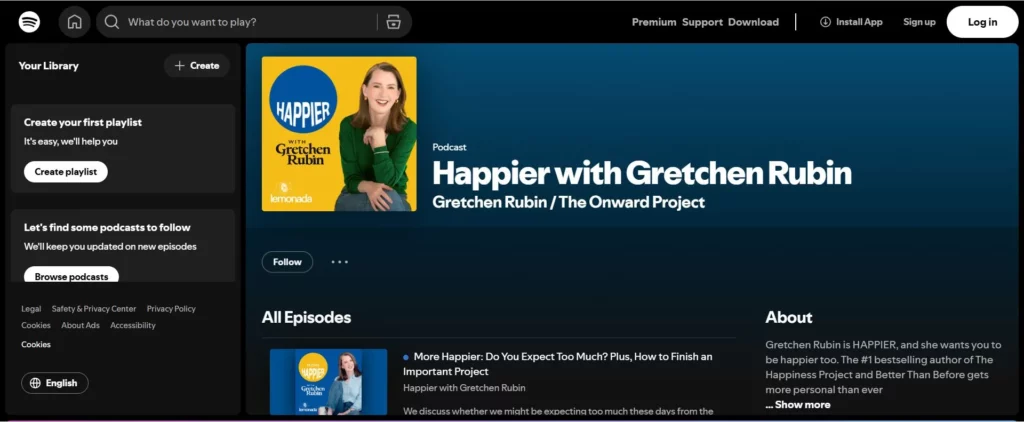
Hosted by: Gretchen Rubin, author and behavioral researcher, with Elizabeth Craft, television writer and producer.
Subject: Habit formation, well-being psychology, everyday behavior change
Where to listen: Apple Podcasts, Spotify
Happier with Gretchen Rubin explores how small habit changes influence well-being and daily satisfaction. Rubin and her sister Elizabeth Craft discuss practical behavior strategies grounded in behavioral science research. Episodes often include personal experiments, listener questions, and simple frameworks for improving routines.
How to apply these insights in practice:
- Introduce small behavioral adjustments that support emotional stability.
- Help clients design routines that reinforce therapeutic goals.
- Explore habit frameworks that align with individual personality styles.
38. Where Should We Begin?
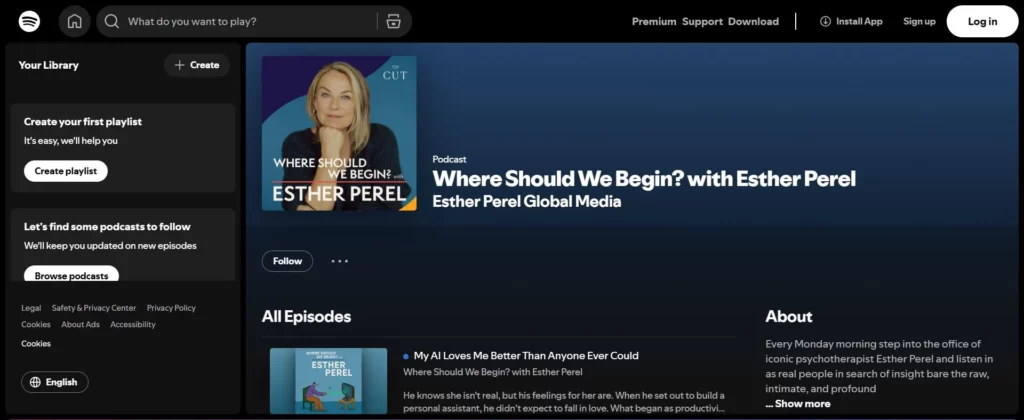
Hosted by: Esther Perel, psychotherapist specializing in couples therapy and relational dynamics.
Subject: Couples therapy, intimacy, relational conflict
Where to listen: Apple Podcasts, Spotify
Where Should We Begin? offers a rare window into real therapy sessions facilitated by Esther Perel. Each episode captures a single therapeutic conversation with couples or individuals experiencing relational tension. The podcast provides insight into relational therapy techniques and therapeutic presence.
As Esther Perel often reminds us, “The quality of our relationships determines the quality of our lives.” In therapy, you can refine your approach to help clients improve these relationships effectively.
How to apply these insights in practice:
- Observe how skilled therapists guide emotionally charged conversations.
- Study the pacing of questions during relational conflict discussions.
- Reflect on therapeutic neutrality while managing couple interactions.
39. Unlocking Us
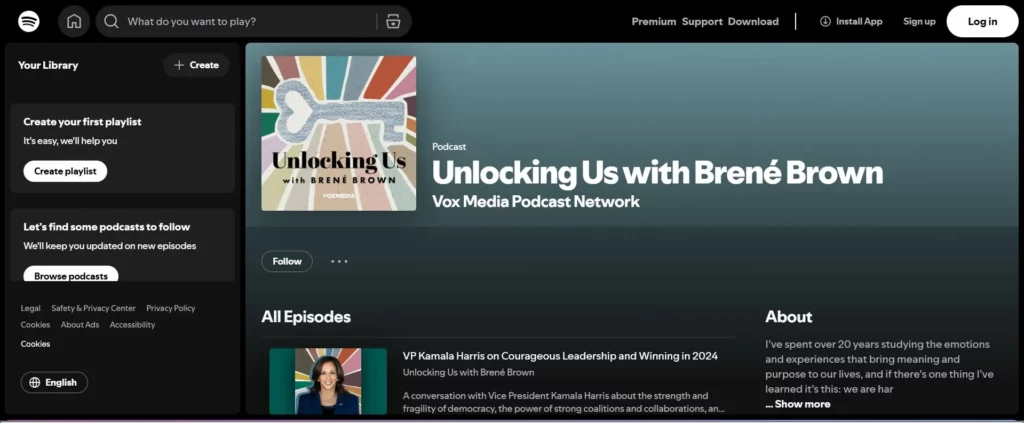
Hosted by: Brené Brown, research professor studying vulnerability, courage, and shame.
Subject: Vulnerability research, emotional courage, human connection
Where to listen: Apple Podcasts, Spotify
Unlocking Us explores the emotional forces that impact how people connect, cope, and grow. Brené Brown interviews researchers, writers, and leaders about vulnerability, empathy, and resilience. The discussions combine academic research with deeply human stories. Episodes often examine how shame and fear influence relationships and personal choices.
How to apply these insights in practice:
- Discuss vulnerability as a foundation for authentic relationships.
- Explore shame resilience frameworks during emotional processing.
- Encourage clients to develop emotional courage during change.
40. The Art and Science of EMDR
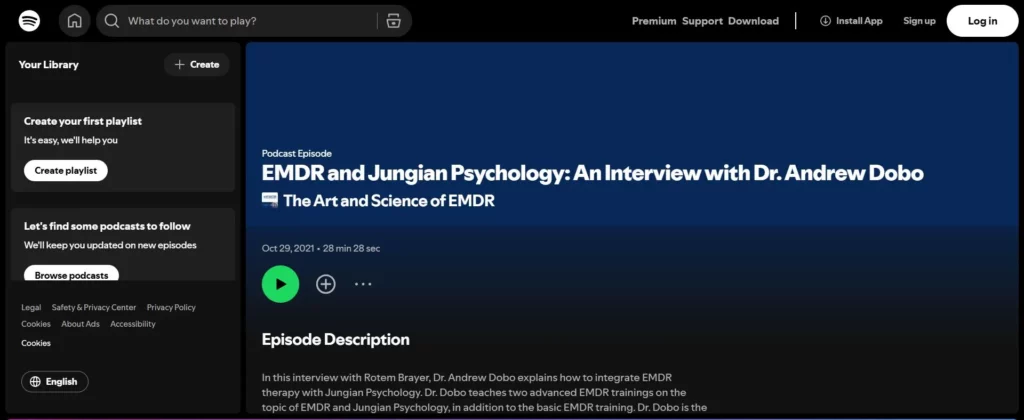
Hosted by: Andrew Dobo, psychologist and EMDR practitioner specializing in trauma therapy.
Subject: EMDR therapy techniques and trauma treatment
Where to listen: Apple Podcasts, Spotify
The Art and Science of EMDR focuses on the clinical application of Eye Movement Desensitization and Reprocessing therapy. Andrew Dobo interviews experienced EMDR clinicians about working with complex trauma presentations. Episodes examine case conceptualization, treatment adaptations, and clinical decision-making. The podcast assumes familiarity with EMDR fundamentals and builds on advanced clinical discussions.
How to apply these insights in practice:
- Refine EMDR treatment strategies for complex trauma cases.
- Explore nuanced case conceptualization for trauma therapy.
- Strengthen confidence when dealing with challenging EMDR sessions.
Also read: Top HIPAA-Compliant Scheduling Software for Therapists in 2026
Knowing the top podcasts is useful, but selecting the right ones for your clinical focus requires strategy.
How to Choose the Right Podcasts for Your Practice
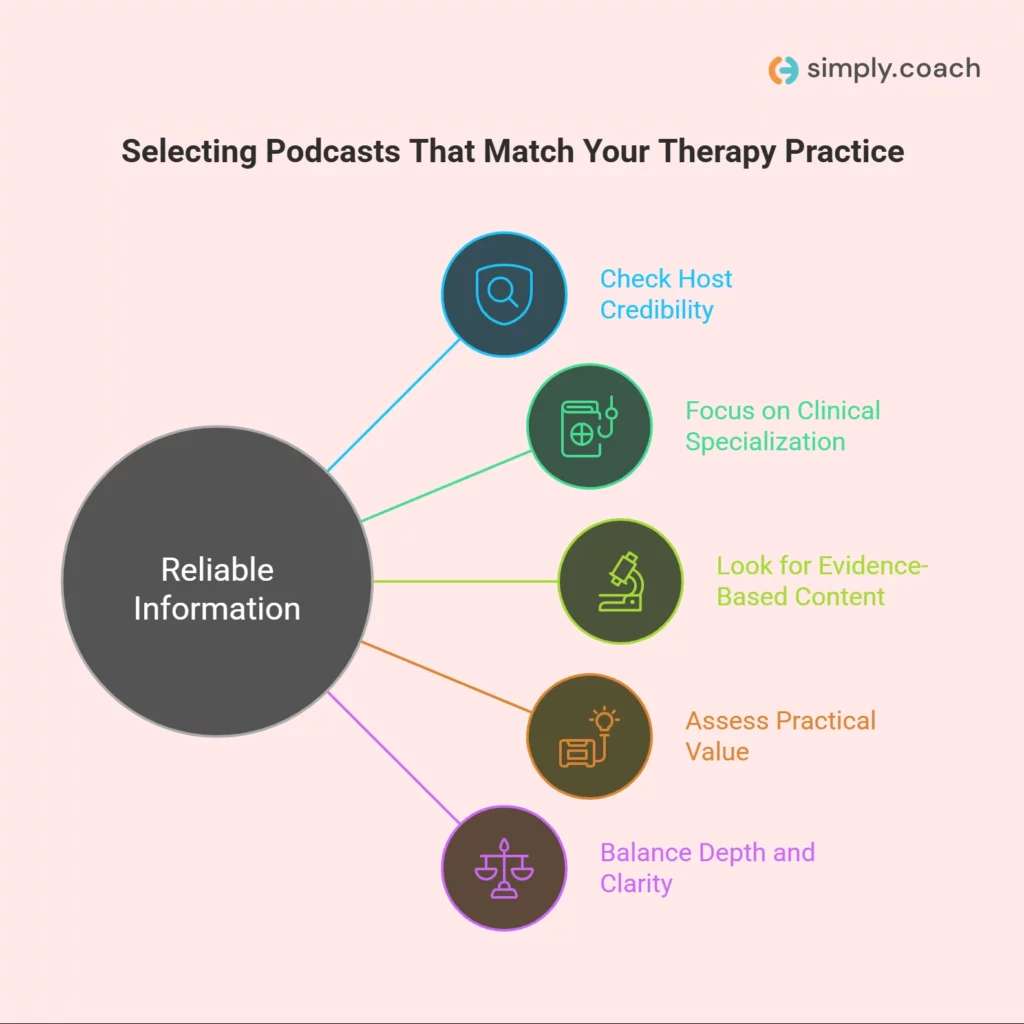
With many mental health podcasts available, selecting the right ones can be challenging. A simple decision framework can help you prioritize meaningful and credible content.
- Check the host’s professional credibility: Prioritize podcasts hosted by licensed therapists, psychologists, or researchers. Professional expertise often leads to more reliable insights.
- Focus on your clinical specialization: Choose podcasts related to the populations or modalities you work with. This ensures the learning remains relevant to your practice.
- Look for evidence-based discussions: Podcasts referencing research, case studies, or established therapy models tend to offer stronger educational value.
- Assess practical applicability: The most useful podcasts translate theory into clear therapeutic insights that can inform real client conversations.
- Balance depth with accessibility: Good podcasts simplify complex concepts without losing nuance. This makes learning easier to absorb during regular listening.
Once you’ve chosen the right podcasts, learning maximization ensures these insights translate into practical clinical skills.
How To Maximize Learning From Therapy Podcasts
Podcasts can be a valuable learning tool for you when used intentionally. Structuring how you listen helps turn insights into meaningful clinical knowledge.
- Create a listening schedule: Block specific time each week for professional listening. Consistent learning helps build a deeper understanding over time.
- Take notes and reflect: Jot down key ideas, frameworks, or case insights from episodes. Brief reflection helps connect podcast learning to real clinical work.
- Join discussion communities: Discuss useful episodes with colleagues, supervision groups, or therapist communities. Shared reflection often reveals practical applications you may miss alone.
- Apply learning in small ways: Experiment with relevant ideas during appropriate sessions. Testing insights gradually helps integrate them into your therapeutic style.
- Use podcasts alongside clinical supervision: Podcasts should support professional learning, not replace supervision. Complex clinical decisions still require guidance from experienced supervisors.
But even with proper strategies, common pitfalls can reduce the real-world impact of what you learn.
How to Learn Better : 5 Mistakes to Avoid with Podcasts
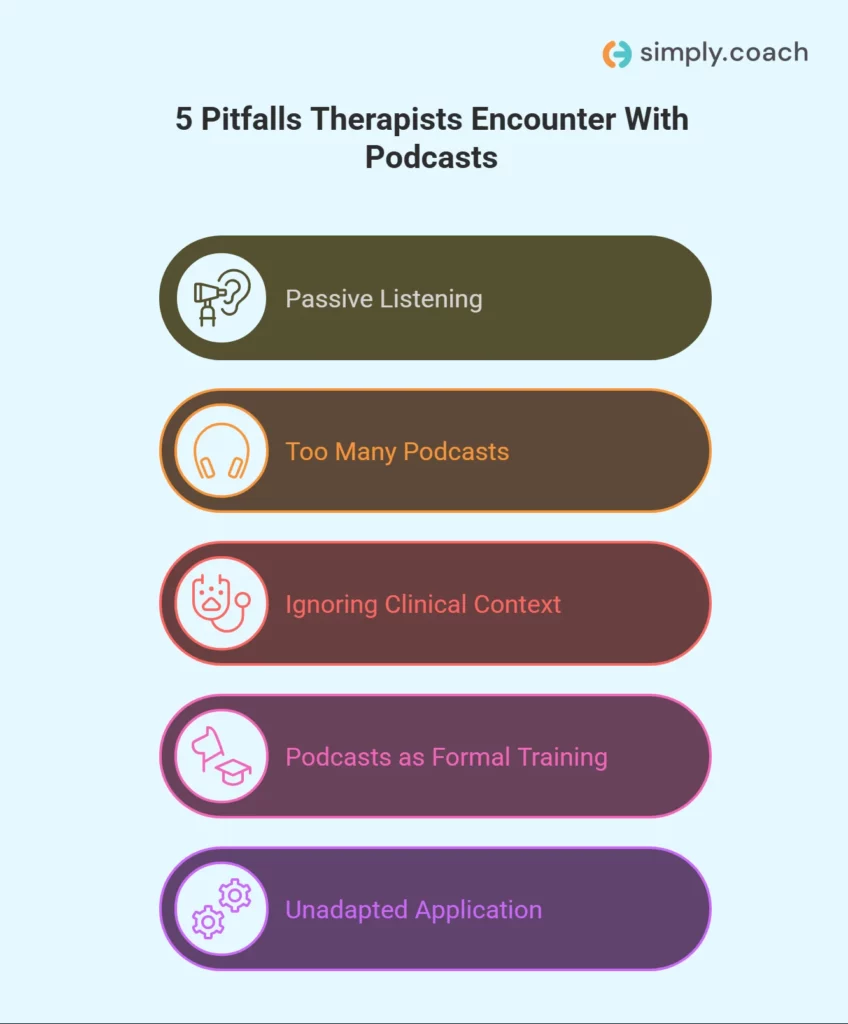
Podcasts can enhance professional learning, but certain habits can limit their value. Being aware of these common mistakes helps you use podcasts more effectively.
- Passive listening without reflection: Listening while multi-tasking can make it difficult to retain insights. Taking brief notes or pausing to reflect improves learning.
- Following too many podcasts at once: Subscribing to too many shows often leads to shallow engagement. Focusing on a smaller set of quality podcasts allows deeper understanding.
- Ignoring clinical context: Not every technique discussed in a podcast will suit every client situation. You should evaluate ideas carefully before applying them.
- Treating podcasts as formal training: Podcasts provide valuable perspectives but are not substitutes for structured training or accredited education.
- Applying ideas without adaptation: Directly copying techniques may not fit your therapeutic style or client needs. Adjust insights thoughtfully to match your clinical context.
Also read: Narrative Therapy: Key Principles, Techniques, and Benefits
Integrating insights into structured client progress ensures that learning becomes measurable and practice-driven.
Turn Podcast Insights into Structured Client Progress With Simply.Coach
Therapy podcasts can spark powerful ideas, a new CBT reframing technique, a fresh way to explain trauma responses, or a smarter approach to goal setting. But translating those insights into consistent client progress requires structure. That’s where a dedicated practice platform makes the difference.
Simply.Coach helps you convert learning into action by organizing sessions, tracking client development, and reducing administrative work. Instead of juggling multiple tools, you can manage the entire client journey in one secure platform.
- Goal & development planning: Turn insights from therapy podcasts into structured SMART goals for clients and track progress over time.
- Action plans: Convert session insights into clear client actions so therapeutic work continues between sessions.
- Notes: Capture session reflections and key takeaways using template-based notes, and convert them into follow-up actions.
- Forms: Create customized assessments, exercises, and reflection forms inspired by therapeutic frameworks you discover through learning.
- Client workspaces: Provide clients with a dedicated space to access shared resources, track goals, and stay engaged throughout their growth journey.
Beyond client management, Simply.Coach also helps you streamline scheduling, automate reminders, manage programs, and scale your practice without increasing administrative workload.
Conclusion
Therapy podcasts have become a useful learning resource for you if you want to stay informed and inspired outside formal training. They offer exposure to different therapy modalities, research insights, real clinical perspectives, and conversations from experienced practitioners. From trauma-informed care and CBT techniques to private practice growth and therapist well-being, the podcasts in this guide cover a wide range of topics relevant to modern clinicians.
Clinical supervision, peer consultation, and accredited training remain essential for building safe and effective therapeutic practice. The podcasts for therapists listed in the article simply provide an additional learning channel where they can hear how other professionals approach cases, explain psychological concepts, and deal with challenges in the field.
Simply.Coach, through their all-in-one HIPAA-compliant therapy practice management software, helps you translate insights from learning resources into structured client work. The platform supports client progress tracking, secure session notes, goal and action plan management, and automated scheduling and reminders, allowing you to stay organized while focusing on meaningful therapeutic outcomes.
FAQs
1. What are the best podcasts for therapists?
Some of the most recommended podcasts for therapists include Where Should We Begin?, Hidden Brain, The Modern Therapist’s Survival Guide, Counselor Toolbox, and Speaking of Psychology. These shows cover clinical techniques, psychological research, therapist wellbeing, and private practice insights.
2. Can I use podcasts for continuing education?
Most podcasts are not accredited continuing education (CE) sources. However, some episodes may be approved for CE credits by professional organizations. You should verify accreditation requirements before relying on podcasts for formal learning.
3. What podcasts help improve clinical skills?
Podcasts like The Science of Psychotherapy, The EMDR Podcast, Counselor Toolbox, and The Self Careapist Therapist Podcast focus on therapy techniques, treatment modalities, and clinical decision-making.
4. Which podcasts are helpful to start a private practice?
Shows such as The Therapist Experience, The Entrepreneurial Therapist Podcast, and The Modern Therapist’s Survival Guide discuss practice management, marketing strategies, and operational challenges for you when building private practices.
5. How can I learn effectively from podcasts?
You will benefit most when you listen intentionally, take notes, reflect on key insights, discuss episodes with peers, and carefully apply relevant ideas in appropriate clinical contexts.
6. Should I rely on podcasts instead of supervision or training?
No. Podcasts should complement, not replace, clinical supervision, peer consultation, and formal training. Professional guidance is essential when making complex clinical decisions.
7. How can I organize insights from podcasts into my practice?
You can document ideas in session notes, translate them into client goals, create action steps for clients, or integrate them into treatment planning frameworks using structured practice management tools.