
Attention Deficit Hyperactivity Disorder (ADHD) is a neurodevelopmental condition that affects individuals across the lifespan. In the United States, it is estimated to impact about 6% of adults and approximately 11.3% of children (ages 5-17). The prevalence of ADHD is higher in boys (14.5%) than girls (8.0%). The figures for ADHD diagnoses have steadily increased over the past two decades, prompting a growing demand for specialized support services, including ADHD coaching.
ADHD coaching is a tailored approach designed to help individuals with ADHD develop strategies to manage their symptoms, improve executive functioning, and achieve personal and professional goals. As the demand for ADHD-related support continues to rise, the coaching industry is expanding rapidly, offering ample opportunities for those interested in becoming certified ADHD coaches.
If you’re passionate about supporting individuals with ADHD and want to transform that passion into a rewarding career, learning how to become an ADHD coach is the first step. This guide will walk you through the essential skills, steps, and top ADHD coach certification programs to help you launch a successful career in this in-demand field.
Attention Deficit Hyperactivity Disorder (ADHD) is a neurodevelopmental condition that affects individuals across the lifespan. In the United States, it is estimated to impact about 6% of adults and approximately 11.3% of children (ages 5-17). The prevalence of ADHD is higher in boys (14.5%) than girls (8.0%). The figures for ADHD diagnoses have steadily increased over the past two decades, prompting a growing demand for specialized support services, including ADHD coaching.
ADHD coaching is a tailored approach designed to help individuals with ADHD develop strategies to manage their symptoms, improve executive functioning, and achieve personal and professional goals. As the demand for ADHD-related support continues to rise, the coaching industry is expanding rapidly, offering ample opportunities for those interested in becoming certified ADHD coaches.
If you’re passionate about supporting individuals with ADHD and want to transform that passion into a rewarding career, learning how to become an ADHD coach is the first step. This guide will walk you through the essential skills, steps, and top ADHD coach certification programs to help you launch a successful career in this in-demand field.
Key Takeaways
- ADHD coaching helps individuals with ADHD manage symptoms, improve executive functioning, and achieve personal and professional goals.
- Key differences between ADHD coaching and therapy: coaching is future-focused and skill-building, while therapy addresses past emotional and psychological issues.
- To become an ADHD coach, you need a mix of skills like active listening, patience, and goal-setting, as well as certifications to enhance your credibility.
- Top ADHD coach certifications include Simply ADHD, MentorCoach, iACTcenter, and more, each offering different structures, costs, and durations.
- Choosing the right certification depends on your career goals, desired flexibility, budget, and the accreditation of the program.
- Becoming an ADHD coach is a rewarding career that requires the right blend of training, practical experience, and ongoing support.
What is ADHD Coaching?
ADHD coaching is a specialized form of coaching aimed at helping individuals with ADHD manage their symptoms and improve their daily functioning. As an ADHD coach, your role will involve guiding clients in developing effective strategies to manage challenges such as time management, organization, goal-setting, and maintaining focus, skills that are often difficult for those with ADHD.
You will work with children, teens, and adults with ADHD, helping them achieve personal and professional goals. Additionally, businesses with employees who have ADHD can also benefit from ADHD coaching to improve workplace productivity and team dynamics.
Difference between ADHD coaching and therapy
ADHD coaching and therapy are often confused, but they serve different purposes. Below is a comparison to help you understand the distinctions as you prepare to step into your role as an ADHD coach:
| Aspect | ADHD Coaching | Therapy |
| Focus | Future-focused, skill-building strategies for managing ADHD symptoms and improving daily life. | Focuses on addressing emotional, psychological, or mental health issues, often by exploring past experiences. |
| Approach | Develops practical skills such as time management, organization, and focus to tackle ADHD-related challenges. | Focuses on emotional healing and mental health interventions to address deeper psychological issues. |
| Support | Provides ongoing support with specific, actionable steps to help clients manage ADHD. | Provides therapeutic support to treat mental health conditions, typically through emotional exploration. |
| Target | Primarily individuals with ADHD – children, adults, and even businesses seeking improved productivity. | Focuses on individuals dealing with broader emotional or psychological struggles unrelated to ADHD. |
Role of an ADHD Coach
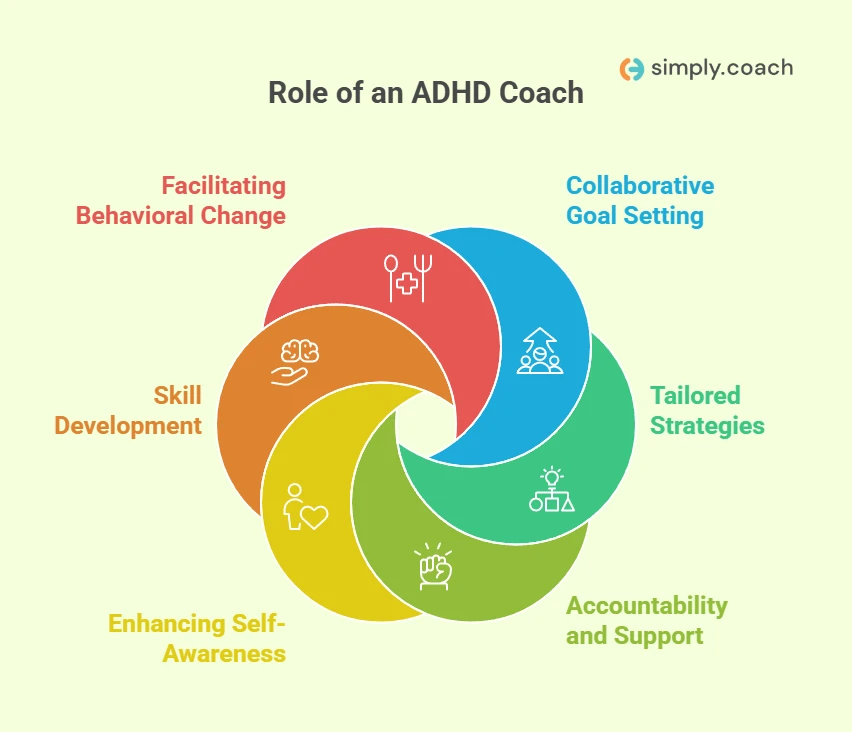
As an ADHD coach, your role is to provide clients with practical, individualized strategies to manage their ADHD symptoms effectively and make meaningful progress toward their goals. The goal is not just to offer support, but to help clients thrive in their personal and professional lives by building skills, confidence, and self-awareness. Here’s how you can make a real impact:
- Collaborative goal setting: Work closely with clients to set realistic, personalized goals that align with their values and priorities, ensuring they feel motivated and engaged in the process.
- Developing tailored strategies: Create systems and routines based on the client’s unique ADHD challenges, like time management, organization, and task prioritization, to make everyday tasks more manageable.
- Providing accountability and support: Regular check-ins and consistent follow-up help clients stay on track, adjust strategies as needed, and maintain motivation throughout the coaching journey.
- Enhancing self-awareness: Guide clients to recognize their strengths, challenges, and how ADHD affects their behaviors, fostering a deeper understanding of themselves and increasing confidence.
- Promoting skill development: Teach clients essential executive functioning skills such as planning, prioritization, and emotional regulation to improve their ability to function in everyday situations.
- Facilitating behavioral change: Support clients in developing and maintaining positive habits, coping mechanisms, and ADHD-friendly routines that lead to lasting, sustainable improvement.
By focusing on these areas, you help clients build the confidence and skills necessary to thrive with ADHD.
Skills and Qualities to Become an ADHD Coach
As an aspiring ADHD coach, developing both the right skills and qualities is essential to effectively support your clients in managing their symptoms and achieving their goals. Below are the key skills and qualities you will need to succeed in this rewarding profession.
| Skills | Qualities |
| Active listening: Engage deeply with clients to understand their needs and challenges. | Empathy: Demonstrate genuine understanding and compassion for clients’ experiences. |
| Goal setting: Assist clients in setting clear, achievable goals tailored to their ADHD-related challenges. | Patience: Exhibit patience, recognizing that progress may be gradual and non-linear. |
| Time management techniques: Teach clients strategies like time-blocking and prioritization to manage tasks effectively. | Flexibility: Adapt coaching methods to suit the unique needs and learning styles of each client. |
| Organizational strategies: Help clients develop systems for organizing tasks and responsibilities. | Non-judgmental attitude: Create a safe space where clients feel accepted and understood. |
| Accountability systems: Implement structures to track client progress and maintain motivation. | Resilience: Encourage clients to persevere through setbacks and challenges. |
| Coaching frameworks: Utilize structured approaches such as the PAAC competencies to guide coaching sessions. | Cultural competence: Be aware of and sensitive to the diverse backgrounds and experiences of clients. |
| Feedback delivery: Provide constructive feedback that promotes growth and self-awareness. | Ethical integrity: Uphold professional ethics, including confidentiality and respect for client autonomy. |
| Adaptation to ADHD needs: Modify coaching techniques to address specific ADHD symptoms and behaviors. | Enthusiasm: Show passion for coaching and a commitment to client success. |
These skills and qualities are essential for you to establish a successful and supportive coaching practice for individuals with ADHD. They will not only help you provide effective coaching but also build trust and foster collaboration with your clients.
Also read: 5 Traits of a Great ADHD Coach
What Qualifications Do You Need to Be an ADHD Coach?
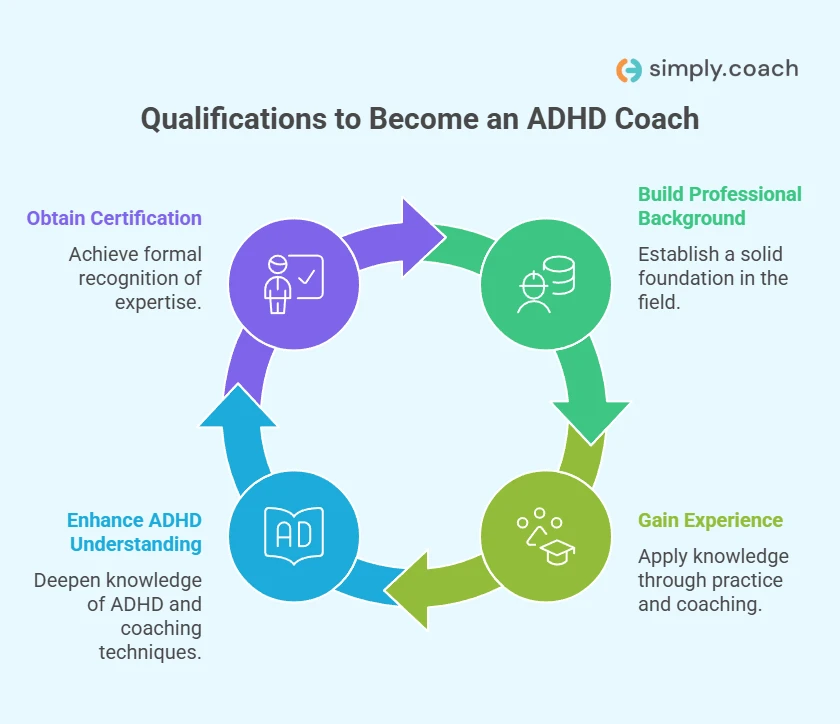
To become an effective ADHD coach, it’s crucial to combine professional training with a deep understanding of ADHD principles. Personal experience, either with ADHD or through close relationships, can also help you build empathy and connection with clients. Formal training equips you with the specialized knowledge needed to coach clients effectively.
Here’s a breakdown of what you need:
1. Professional background
While there is no strict educational requirement, having a background in a helping profession such as psychology, counseling, social work, or education can provide a strong foundation. Many successful ADHD coaches come from these fields, as they bring valuable knowledge in human behavior, emotional support, and development, which are crucial when working with individuals with ADHD.
2. Experience: Personal experience and coaching practice
Having personal experience with ADHD or a deep understanding of how it affects daily life is highly beneficial. Many successful ADHD coaches have either lived with ADHD themselves or have supported a family member or loved one with ADHD. This experience helps you understand the struggles your clients face and build a connection through empathy.
While personal experience is helpful, practical coaching experience is essential to develop your skills as a coach. This includes:
- Working directly with clients to develop tailored strategies for managing ADHD.
- Gaining hands-on experience through paid coaching hours and supervised mentor coaching.
- Engaging in volunteer coaching or workshops to gain exposure and practice.
3. ADHD Understanding: In-depth knowledge of ADHD and coaching techniques
Becoming an ADHD coach requires a deep understanding of ADHD, its symptoms, and how they affect clients in their personal and professional lives. Some key areas to focus on include:
- Understanding ADHD behavior: Knowing how ADHD manifests in various contexts (work, school, relationships) and how these behaviors impact clients.
- Coaching techniques: Being familiar with tools like SMART goals, cognitive-behavioral techniques, and executive function strategies.
- Neurobiology of ADHD: An understanding of how ADHD affects brain function and behavior can improve your coaching, particularly when explaining ADHD symptoms to clients.
These skills are gained through formal ADHD coaching training, where you learn how to apply theoretical knowledge in real-life scenarios.
Also read: How to Become a Certified Executive Functioning Coach
4. Certification
Certification in ADHD coaching demonstrates to clients that you have the necessary skills and education to effectively support them. Here’s why certification is crucial:
- Structured training: Certification programs, such as those offered by the Professional Association for ADHD Coaches (PAAC) or the ADD Coach Academy (ADDCA), ensure you receive specialized training in ADHD coaching.
- Credibility: Certification enhances your professional credibility, allowing clients to trust that you’ve undergone rigorous training and are equipped to handle their needs.
- Networking and continued learning: Certification often comes with access to a network of ADHD professionals, mentorship opportunities, and continuing education, which can help you stay updated on best practices.
Certification is essential not only for building trust with clients but also for positioning yourself as a credible and knowledgeable ADHD coach in a competitive market.
Top 6 ADHD Coach Certifications You Should Consider
If you’re looking to specialize in ADHD coaching, obtaining the right certification is key to gaining the knowledge and skills needed to make a real impact in your clients’ lives. Below are six highly regarded ADHD coach certification programs that will equip you with the tools, techniques, and credentials to thrive in this field.
1. Simply ADHD (ADD Coach Academy – ADDCA)
The Simply ADHD course, offered by the ADD Coach Academy (ADDCA), is designed to equip you with the tools and knowledge to support individuals with ADHD. You’ll learn how to address the unique challenges that come with ADHD, focusing on emotional regulation, executive function improvements, and leveraging strengths. This course is perfect for you if you’re looking to become a certified ADHD coach or simply deepen your understanding of ADHD.
Program highlights:
- Learn proven tools and models to help you explain ADHD clearly to your clients, their families, and teams.
- Gain insights into how ADHD impacts daily life and develop strategies to address these challenges effectively.
- Focus on improving emotional regulation and executive function, while helping clients minimize struggles and highlight their strengths.
- Receive 21 accredited training hours towards ADDCA certification or PAAC/ICF re-certification.
Mode of delivery: Live virtual classes via Zoom, with recordings and transcripts available for flexible review.
Duration: Approximately 6 weeks (with 2 classes per week)
Cost:
- Payment Plan: $497 deposit + 3 monthly payments of $323 (Total: $820 USD)
- Payment in Full: $780 USD
Accreditations:
- ADD Coach Academy (ADDCA) Certification
- PAAC and ICF Re-Certification (for existing coaches)
2. MentorCoach ADHD Coach Training
The MentorCoach ADHD Coach Training program integrates Positive Psychology with ADHD coaching strategies, offering a comprehensive curriculum accredited by both the International Coaching Federation (ICF) and the Professional Association for ADHD Coaches (PAAC). This program is designed for individuals like you who aspire to specialize in ADHD coaching, providing both foundational and advanced training to equip you with the necessary skills and knowledge.
Program highlights:
Level one (Associate ADHD MentorCoach – AAMC):
- Foundations course: 31 hours
- Safe Passage: The New Ethics and Risk Management Master Class: 10 hours
- Positive Psychology and ADHD Coaching: 13 hours
- Positive Psychology and Advanced ADHD Coaching: Adults: 14.5 hours
- Positive Psychology and Advanced ADHD Coaching: College Students, Teens, Children, and Parents: 14.5 hours
- Individual Coaching Supervision: 6 hours
- Oral and written exams
Level two (Certified ADHD MentorCoach – CAMC):
- Intensive Individual Coaching Skills: 24 hours
- Individual Coaching Supervision Class: 18 hours
- Advanced Supervision Sessions: 3 sessions
- Final Certification Exam
Alternative path for certified coaches:
- For those already holding certifications like Certified MentorCoach (CMC) or ICF Certified Coach (ACC, PCC, or MCC), a streamlined path to PAAC Certified ADHD Coach Practitioner (CACP) is available.
Mode of delivery: All courses are delivered remotely through live virtual sessions via Zoom, allowing you to participate from anywhere.
Duration:
- Level one: Approximately 6 months
- Level two: Approximately 6 months
- Alternative path: Duration varies based on prior certifications and experience
Cost:
- Level one (AAMC): $6,181
- Level two (CAMC): $9,942
- Alternative path for certified coaches: $3,141
Accreditations:
- International Coaching Federation (ICF)
- Professional Association for ADHD Coaches (PAAC)
3. Certified ADHD Life Coach (CALC) – iACTcenter
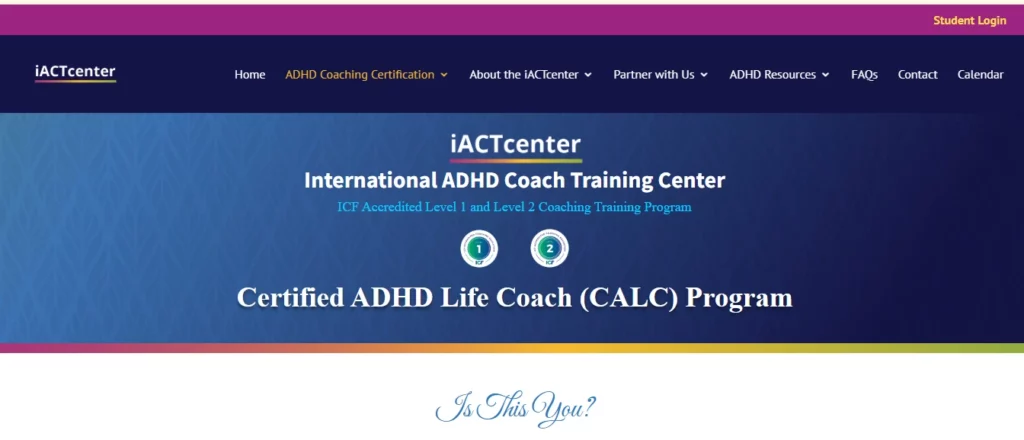
The Certified ADHD Life Coach (CALC) program by the International ADHD Coach Training Center (iACTcenter) is an ICF Level 1 accredited course designed to equip you with the skills and knowledge to coach individuals with ADHD and other neurodiverse conditions. This program emphasizes practical coaching techniques, ADHD science, and application, preparing you to become a certified ADHD Life Coach.
Program highlights:
- 124 coach-specific training hours: Comprising 10.5 hours per week over 12 weeks, focusing on ADHD science, coaching theory, and practical application.
- Live virtual classes: Interactive sessions conducted via Zoom, allowing you to engage with instructors and peers in real-time.
- Mentorship and support: Access to experienced coaches for guidance and feedback throughout your training.
- Comprehensive curriculum: Includes modules on ADHD fundamentals, coaching methodologies, and client management strategies.
Mode of delivery: Live virtual classes via Zoom, providing an interactive and flexible learning environment.
Duration: Approximately 12 weeks, with 10.5 hours of training per week.
Cost:
- Full payment: $9,700 USD
- Payment plans:
- 3 monthly payments of $3,278.33 USD
- 6 monthly payments of $1,639.17 USD
- 12 monthly payments of $819.58 USD
Accreditations:
- International Coaching Federation (ICF): Level 1 accreditation
- Professional Association for ADHD Coaches (PAAC): Meets certification requirements
4. JST Coaching & Training
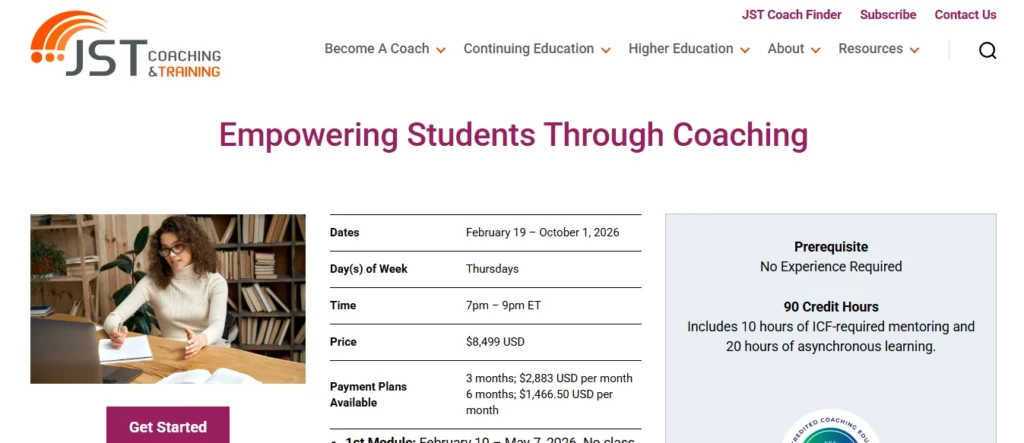
The Empowering Students Through Coaching (ESTC) program by JST Coaching & Training is a research-based, ICF-accredited Level 1 program designed for individuals who want to specialize in coaching neurodiverse students. Whether you’re focusing on ADHD, ASD, or executive function issues, this course will equip you with the tools to create lasting change and make a significant impact in your clients’ lives.
Program highlights:
- 90 credit hours of comprehensive training, including live classes and asynchronous work.
- 60 hours of live virtual classes with interactive coaching sessions.
- 10 hours of ICF-required mentoring to deepen your coaching practice.
- 20 hours of asynchronous learning to complete on your own time.
- Coaching practice with a Coaching Buddy for real-world application.
- Life coaching skills assessment for an ICF Associate Certified Coach (ACC) credential.
- Focus on neurodiversity coaching for ADHD, ASD, and executive function challenges.
Mode of delivery: Live virtual classes, with access to recorded sessions for review.
Duration: 90 hours of training including mentoring and practical exercises.
Cost:
- $8,499 USD
- Payment plans available: 3-month plan: $2,883 USD per month, 6-month plan: $1,466.50 USD per month
Accreditations:
- International Coaching Federation (ICF) Level 1 Accreditation
- ICF Associate Certified Coach (ACC) certification pathway
5. Coach Approach Training Institute – Life & ADHD Coach Training
The Life & ADHD Coach Training program from Coach Approach Training Institute deepens your coaching skills, focusing on the proprietary TOSCA and BE-CAUSE Coaching Process Models. The course is designed to enhance your ability to coach individuals with ADHD by teaching 17 new coaching techniques, building essential client structures, and guiding clients to a life that fits their unique values and needs. It challenges your learning with recorded coaching sessions for evaluation and a comprehensive assessment.
Program highlights:
- ADHD essentials: Learn core skills, best practices, and ethics of ADHD coaching.
- Tailored techniques: Develop coaching strategies to support clients in creating “A Life That Fits” based on their passions, values, and needs.
- New skills: Gain 17 new coaching techniques to add to your professional toolbox.
- Client essential structures: Learn how to address client self-talk, self-knowledge, executive functioning education, action plans, support systems, and boundaries.
Mode of delivery:
- Online, live sessions via Zoom with interactive discussions and exercises.
- Skills Building Groups (SBGs): Weekly 90-minute sessions with a classmate to practice coaching.
- Between-class assignments to reinforce learning.
Duration: 6 weeks, with weekly 90-minute classes. Includes Skills Building Group meetings outside of class and comprehensive final assessment.
Cost:
- $835 USD (includes all course materials, ebook, resources, and trainer support).
Accreditations:
- 11 Continuing Education Units (CEU)
- 13.75 Continuing Coach Education (CCE) Hours or Approved Coach Specific Training Hours (ACSTH)
6. 3C Activation® Program for Coaches
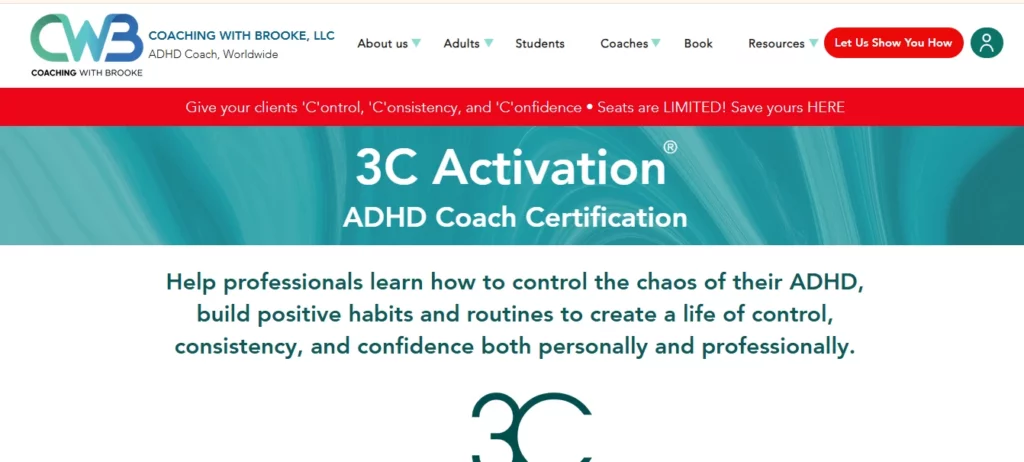
The 3C Activation® ADHD Coach Certification, created by Brooke Schnittman, is an intensive program that helps you understand and implement ADHD-specific strategies to assist your clients in creating more organized, consistent, and fulfilling lives. This program will teach you how to help clients manage their executive functioning, build positive habits, and overcome the chaos they experience daily. If you specialize in ADHD coaching, career transitions, leadership, or personal development, this course is perfect for you.
Program highlights:
- ADHD essentials: Learn core coaching skills and best practices that are essential when working with ADHD clients.
- Tailored coaching techniques: Discover how to support clients in creating a life that aligns with their unique passions, values, and needs.
- New skills: You’ll gain 17 new coaching techniques to enhance your ADHD coaching practice and better support your clients.
- Executive function snapshot: Understand the importance of executive functioning in ADHD and how it impacts your clients’ behavior and goals.
- Neuroscience-based: Learn how the latest ADHD research and neuroscience can improve your coaching approach.
Mode of delivery: Online, live interactive group classes, supplemented with asynchronous learning for flexibility.
Duration: The program is 13 weeks (hybrid model) with a combination of live classes, individual coaching sessions, and group discussions.
Cost:
- Full payment: $7,497 USD
- Payment plan: $2,832.33 USD per month for 3 months, totaling $8,496.99 USD. Please note that a processing fee of $247.68 is applied per installment.
Accreditations:
- International Coaching Federation (ICF) – Approved for Continuing Coach Education (CCE) hours
- ADHD Coaches Organization (ACO) – Certification upon completion
Also read: Effective Marketing Strategies for ADHD Coaches: Reaching and Empowering Individuals with ADHD
How to Choose the Right ADHD Coach Certification
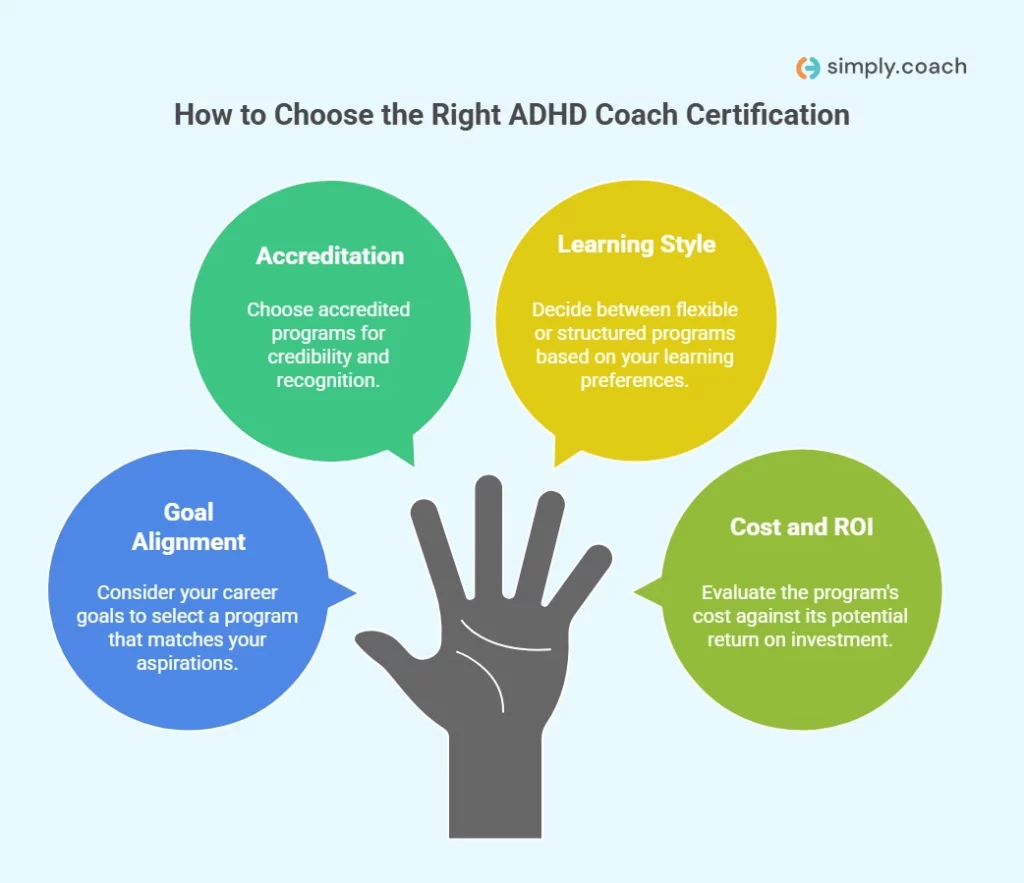
Choosing the right ADHD coach certification can significantly impact your career, and with so many excellent options available, it’s essential to find one that aligns with your personal and professional goals. Here are four key factors to help you make a confident and informed decision:
1. Consider your goals
Start by identifying what you want to achieve with your certification. Are you looking for a comprehensive program that prepares you to coach professionally, or do you need a more specialized course to focus on specific ADHD challenges? Understanding your long-term career goals will help you choose the best program for your needs.
2. Accreditation and recognition
Look for certification programs that are accredited by respected organizations such as the International Coaching Federation (ICF) or the Professional Association for ADHD Coaches (PAAC). Accredited programs add credibility to your practice, which can be crucial for attracting clients and building your professional reputation.
3. Flexibility vs. structure
Some certifications offer a flexible, self-paced learning experience, while others have a more structured, cohort-based format with live classes. Think about what fits your learning style and lifestyle best. Do you need the accountability of scheduled sessions, or are you comfortable with independent study?
4. Program cost and ROI
The cost of ADHD coach certifications can range significantly. It’s important to balance your budget with the program’s offerings. Consider not just the financial cost but also the return on investment (ROI). Will this certification help you attract clients, build a successful coaching practice, and achieve your career goals?
Ultimately, your choice should reflect your aspirations as a coach and how the certification will support your journey in making a meaningful difference for individuals with ADHD.
Also read: ADHD Coach Salary Guide: U.S. Rates, Factors & Strategies to Boost Income in 2025
Conclusion
Becoming an ADHD coach is a rewarding path that requires the right blend of knowledge, skills, and passion. Learning how to become an ADHD coach starts with selecting the right ADHD coach certification program, which provides the tools and insights needed to guide clients through their ADHD journey and create lasting, positive change. Whether you’re just starting out or looking to specialize, your choice of certification will shape the success of your coaching practice. With the right training, you’ll be fully equipped to support your clients in building the structure, strategies, and routines they need to thrive.
At Simply.Coach, we understand the unique challenges ADHD coaches face, and our all-in-one life coaching software platform is designed to simplify your coaching process. From client management to progress tracking, Simply.Coach gives you the tools to enhance your coaching practice and provide even more value to your clients.
Frequently Asked Questions (FAQs)
1. Is a formal ADHD diagnosis required to become an ADHD coach?
No, a formal ADHD diagnosis is not required to become an ADHD coach. However, having personal or professional experience with ADHD can enhance your understanding and effectiveness as a coach. Some training programs may prefer candidates with such backgrounds.
2. Can I become a certified ADHD coach without going through ICF or PAAC?
Yes, you can become a certified ADHD coach without going through ICF or PAAC. However, certification from these organizations is widely recognized and may open more professional opportunities. Some training programs offer their own certifications, but they may not meet ICF or PAAC standards.
3. How long does it take to complete an ADHD coach certification program?
The duration varies by program. For instance, the Simply ADHD course is approximately 6 weeks, while the Empowering Students Through Coaching program spans 90 hours over several months. Programs like 3C Activation® offer 13-week hybrid models.
4. Are there payment plans available for ADHD coach certification programs?
Yes, many programs offer payment plans. For example, the Simply ADHD course provides a payment plan of a $497 deposit plus 3 monthly payments of $323, totaling $820 USD. Other programs may offer different payment structures.
5. Do insurance companies cover ADHD coaching services?
Generally, insurance companies do not cover ADHD coaching services. Coaching is considered a personal development service rather than a medical treatment. Clients typically pay out-of-pocket for coaching services.