
Life coaching has always been about empowering individuals to align their actions with their core values, overcome obstacles, and achieve meaningful goals. However, integrating life coaching and trauma-awareness takes this process a step further.
Coaches must understand that many of their clients may have experienced events that shape their behaviors, decision-making, and even their emotional reactions to coaching interventions.
Trauma-informed coaching creates a safe, supportive environment for clients to heal and grow. It addresses the emotional and psychological impacts of trauma.
In this blog, we will understand life and trauma-informed coaching and explore how integrating these principles can enhance your coaching practice.
Key Takeaways
- Trauma-informed coaching helps clients process past experiences by creating a safe space where they can heal and grow at their own pace.
- Recognizing signs of trauma, like avoidance or emotional withdrawal, allows coaches to adjust their approach and provide targeted support.
- Empowering clients to make decisions and set their own pace fosters autonomy and promotes long-term growth.
- Knowing when to refer clients for professional help ensures they get the right care, preventing further harm.
- Specialized training in trauma-informed coaching enhances a coach’s ability to manage sensitive topics and create a deeper connection with clients.
What’s the Role of Trauma in Life Coaching?
Experienced coaches already know the power of self-awareness and goal-setting. Yet, as the life coaching market in the U.S. continues to grow, projected to reach USD 4.74 billion by 2033, trauma awareness becomes essential. It even applies to those with years of experience.
Without trauma awareness,coaches mayunintentionally trigger or push clients with unresolved trauma making it harder for clients to progress.
- Clients who have experienced trauma often come to coaches looking for support. However, they may find it difficult to fully engage in the coaching process. This happens mainly when clients are confronted with goals or areas of growth that bring up past emotions.
- Trauma can impact how clients think, feel, and behave. It can affect their ability to manage emotions, make decisions, and take action. If not addressed, trauma can also create barriers to personal growth.
- By recognizing how trauma affects a client’s responses, coaches can create a supportive space. The goal should be to help clients heal and move forward, instead of deepening their challenges.
Pro Tip: Coaches with a trauma-informed approach will notice how trauma can shape decision-making and communication. For example, some difficult clients with complex trauma may struggle with setting big goals or avoiding conflict due to underlying fears of failure or rejection.
How Trauma Influences Client Behaviors, Decision-Making, and Growth?
Trauma can create pervasive patterns of avoidance, hyper-vigilance, or self-sabotage that impact all areas of life. It could be personal, professional, and relational.
Life coaches need to understand the subtle ways trauma manifests, even in high-functioning individuals. For instance, a client who is constantly “overachieving” might be masking feelings of unworthiness or fear of failure, both rooted in childhood trauma.
Additionally, clients with trauma histories often face barriers to emotional regulation and goal-setting. Coaches should be aware of how clients’ emotional responses to coaching, whether through avoidance, over-attachment, or withdrawal, are often trauma-related.
How to Recognize Trauma in Life Coaching?
Understanding how trauma shows up in coaching helps create a safer space for clients. Recognizing the subtle signs of trauma allows you to provide more effective support tailored to their needs. Here’s how you can do it:
Identifying signs of trauma in clients
Trauma isn’t always visible. Clients might not show classic signs like emotional dysregulation or hyperarousal. Instead, look for more subtle cues:
- Avoidance of certain topics: Clients may steer away from discussions that feel too personal or challenging.
- Lack of engagement in goal-setting: Trauma can make it difficult for clients to commit to long-term goals.
- Persistent procrastination: Delaying tasks or decisions might be a defense mechanism linked to trauma.
Advanced techniques to spot trauma
- Body language and non-verbal cues: Pay attention to shifts in posture, facial expressions, or eye contact. For example, micro-expressions or sudden changes in body posture can indicate emotional discomfort or past trauma resurfacing.
Recognizing these subtle signs allows you to tailor your coaching approach to be more trauma-sensitive. This ensures your client feels safe and supported throughout the process.
What are the Core Principles of Trauma-Informed Life Coaching?
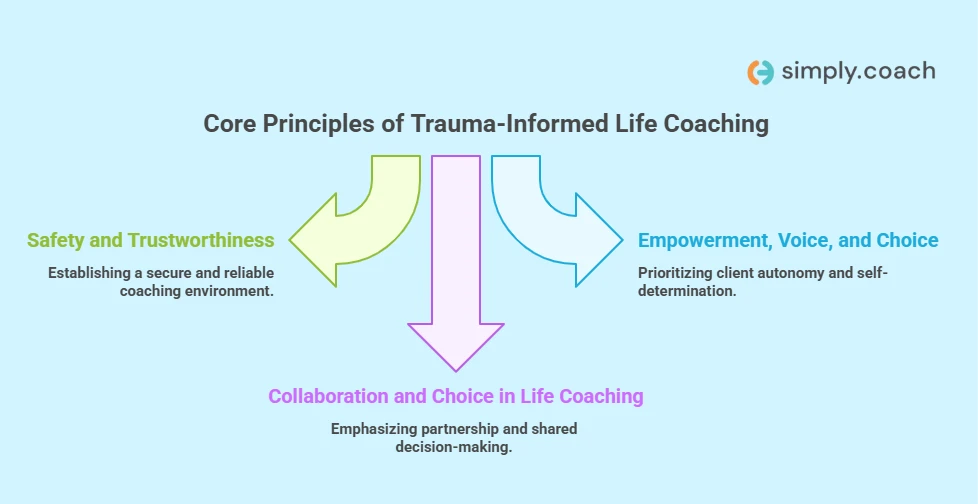
Trauma-informed life coaching focuses on creating a safe, empowering environment where clients feel supported in their journey. Understanding key principles like safety, empowerment, and collaboration allows coaches to effectively support clients dealing with trauma.
1. Safety and trustworthiness
Creating a safe space is foundational for trauma-informed coaching. Beyond physical safety, it involves emotional and psychological safety, ensuring clients can be vulnerable without fear of judgment. This builds trust and promotes open communication, helping clients feel secure enough to work through challenging emotions.
Key strategies to incorporate:
- Consistently remind your clients that the space is non-judgmental and supportive.
- Establish and maintain clear boundaries to foster a sense of trust and respect for the client’s emotional limits.
- Be open about the coaching process and techniques, ensuring the client understands each step they are taking.
2. Empowerment, voice, and choice
Trauma can leave individuals feeling powerless, so empowerment becomes an important aspect of trauma-informed coaching. Clients must feel they are active participants in their journey, making choices that align with their values and goals. It is about guiding clients to reclaim their agency over their lives.
Advanced practices to follow:
- Set actionable goals together, respecting your client’s autonomy and pacing.
- Focus on strengths-based approaches, emphasizing resilience and existing coping strategies, rather than solely on vulnerabilities.
3. Collaboration and choice in life coaching
A coactive partnership is key in trauma-informed coaching. It involves creating a shared, equal partnership where the coach and client both contribute to the process. The client maintains control over the depth and timing of their work, promoting a sense of ownership in their healing process.
Expert-level strategy to implement:
- Use coaching contracts to clarify roles, boundaries, and expectations. This allows flexibility as your client progresses emotionally and adjusts to their healing journey.
Also Read: What Makes a Good Coaching Contract? Your Complete Checklist
Practical Approaches for Integrating Trauma Awareness into Life Coaching
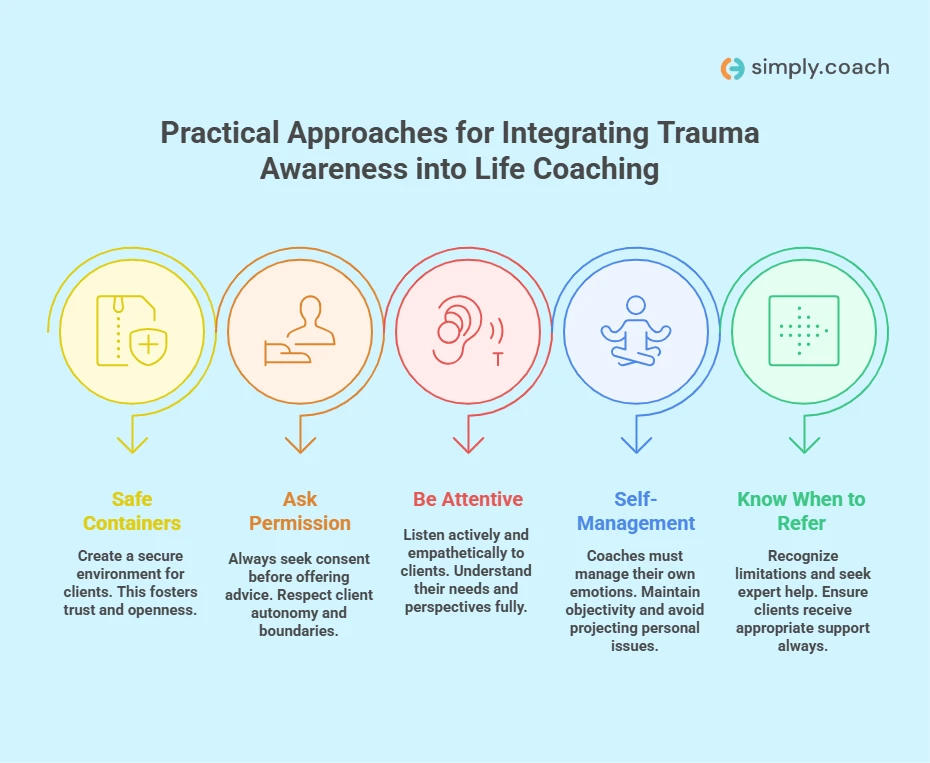
Trauma-informed coaching requires you to implement practical approaches that foster a safe and healing space for clients. Below are key strategies that can be seamlessly integrated into your coaching practice for a better outcome.
1. Establish safe containers
Creating emotional safety is essential in trauma-informed coaching. It’s not just about a comfortable, physical environment. You have to help your clients feel emotionally contained, especially when dealing with sensitive topics.
For example, imagine you’re working with a client who’s opening up about a past traumatic relationship. To create a safe container, begin each session with a check-in on their emotional state.
A simple, “How are you feeling today about our work together?” can help you gauge their readiness to dive into deeper topics. Set the tone by giving them control over the pace, ensuring they don’t feel rushed or overwhelmed.
Pro tip: Use grounding techniques at the start of each session (such as deep breathing or mindfulness exercises) to help clients feel centered and emotionally present before exploring trauma-related content.
2. Ask for permission
Consent is a critical aspect of trauma-informed practice. Always ask for explicit permission before delving into topics that may trigger painful emotions or memories.
For instance, if a client shows signs of hesitation when discussing their childhood, you could say: “I’ve noticed you’re becoming a bit guarded when we talk about your past. Would it be okay if we explore that further today? If not, we can focus on something else.”
This approach respects their autonomy and allows them to feel in control of the session. If they choose to postpone, honor that decision; it shows that you prioritize their emotional safety.
Pro tip: Reassure clients that they have the right to say “no” at any point and remind them that their choices drive the coaching process. This empowerment helps foster trust.
3. Be attentive
Trauma doesn’t always show up in direct language; it often manifests in subtle shifts in body language or changes in tone. As a trauma-informed coach, it’s crucial to practice heightened emotional awareness to identify these signs.
For example, during a session, a client may say they’re “fine,” but their shoulders are hunched, and their voice is quieter than usual. This could indicate underlying emotional tension.
In this case, you might gently ask: “I noticed you seem a bit withdrawn today. Is there something on your mind that we should explore?”
Pro tip: Keep an eye out for non-verbal cues, like a sudden change in posture or eye contact. These can be indicators that something deeper is at play. If a client is retreating emotionally, it’s an opportunity to check in and offer a softer approach.
4. Self-management for coaches
As a coach, it’s important to practice self-regulation when dealing with clients’ trauma. Clients may bring intense emotions or challenging issues into the space. So, it’s advisable to manage your own reactions to ensure a stable, professional environment.
For example, during a session, a client might begin to cry while discussing a painful loss. Instead of mirroring their distress, take a moment to breathe deeply, grounding yourself in the present.
You could say: “I’m here with you, and I can feel how difficult this is. Take your time.”
Pro tip: Journaling or self reflection after sessions can help you process your emotions, ensuring you don’t carry them into future sessions. Consider using tools like mindful breathing or emotional boundaries to stay emotionally present and maintain clarity.
5. Know when to refer
Recognizing when trauma goes beyond the scope of coaching and requires clinical intervention is one of the most critical skills in trauma-informed life coaching.
For instance, let’s say your client is showing signs of severe PTSD. They’re having flashbacks or panic attacks during sessions. As a coach, you must understand that these symptoms need professional support.
You might say: “I’ve noticed that our conversations seem to be bringing up more intense emotions. I believe it may be helpful to work with a therapist who specializes in trauma. I’d be happy to help you find the right support.”
Pro tip: Refer early, not when things escalate. As a coach, your ethical responsibility is to ensure clients receive the appropriate care when needed. Establish this early in the coaching relationship by discussing the possibility of referrals upfront.
Also read: Intuition in Coaching: Building Stronger Client Relationships
How Life Coaching Differs from Trauma Recovery Coaching?
Life coaching focuses on goal-setting and personal growth, while trauma recovery coaching helps process trauma and heal emotional wounds. When trauma is involved, life coaches must refer clients to trauma recovery professionals for specialized care.
When and how life coaches should refer clients to trauma recovery professionals:
- When progress stalls: If trauma is preventing coaching engagement, refer them.
- Emotional dysregulation: Clients overwhelmed with emotions need professional support.
- Behavioral signs of trauma: Self-sabotage, avoidance, or emotional triggers point to deeper trauma.
- Collaborative care: Partner with therapists to create a full healing plan.
Referring clients ensures they get the right support without limiting their growth.
How to Choose the Right Training for Trauma-Informed Life Coaching?
For seasoned coaches, trauma-informed training is about enhancing your emotional toolbox and deepening your ability to support clients with trauma histories. The right training will help you identify trauma symptoms, create a safe space, and know when to refer clients for professional help.
What to look for in trauma-informed training:
- Trauma education: Ensure the training covers trauma’s physiological and psychological effects. This gives you a robust understanding of how trauma shapes client behavior.
- Practical tools: Look for programs that provide specific techniques like grounding exercises, emotional regulation strategies, and trauma-sensitive coaching approaches.
- Ethical boundaries: The training should help you establish clear boundaries, know when to refer clients to mental health professionals and ensure ethical coaching practices.
Learn more: Maintaining Ethical and Professional Standards in Life Coaching: A Guide to Code of Ethics for Coaches
Limitations and Boundaries in Trauma-Informed Life Coaching
Trauma-informed coaching expands a coach’s practice but comes with its own boundaries. While life coaches are equipped to help clients with trauma-related challenges, there are limits to what can be addressed through coaching alone.
Key considerations:
- Recognizing the limits of coaching: If a client’s trauma impacts their daily functioning, coaching isn’t enough. For example, clients with severe PTSD or deep emotional dysregulation need clinical therapy, not just goal-setting.
- Collaborative approach: As a coach, understanding when to collaborate with mental health professionals ensures a holistic approach to client care. This can mean working alongside therapists to help clients move forward in both healing and personal growth.
Also read: Empowering Clients through Emotional Self-Regulation: The Emotional Audit Coaching Technique
How Simply.Coach Supports Trauma-Informed Coaching
Simply.Coach equips you with the tools needed to integrate trauma-awareness into your practice. This creates a supportive environment where clients feel safe and empowered to heal. The platform streamlines your work, allowing you to focus on guiding clients through their growth and transformation.
Here’s how Simply.Coach can help your practice:
- Goal-setting & progress tracking: Set and track personalized goals for clients while monitoring their emotional and personal development through intuitive dashboards.
- Client workspaces: Facilitate collaboration with clients by providing secure spaces for them to access resources, exercises, and notes, promoting engagement at their own pace.
- Automated reminders & check-ins: Use automated nudges and check-ins to ensure clients stay engaged and on track, while respecting their emotional readiness.
- Data-driven insights: Utilize detailed reports to assess client progress, making it easy to adjust your approach and offer trauma-sensitive support to those who need it.
With Simply.Coach, you can provide your clients with a safe, organized, and emotionally attuned space for meaningful growth and healing.
Conclusion
Trauma-informed coaching is about guiding clients through emotional healing and growth. By recognizing trauma’s impact, you can empower clients to overcome obstacles and redefine their true potential. To provide truly effective trauma-informed coaching, you need the right tools to track progress, manage sensitive sessions, and ensure continuous support.
Simply.Coach offers an all-in-one life coaching platform that helps you manage client journeys, automate key processes, and gain actionable insights. This makes the trauma-sensitive coaching seamless and impactful.
Frequently Asked Questions (FAQs)
1. What qualifications do I need to be a life coach?
To become a life coach, you’ll typically need training from a recognized coaching program, certification (such as from the International Coaching Federation). You will also be required to have practical experience working with clients.
2. What are the 5 trauma-informed practices?
The five trauma-informed practices are safety, trustworthiness, empowerment, collaboration, and choice. This ensures that the clients feel supported, respected, and in control during their healing process.
3. What are the benefits of working with a trauma-educated professional?
Working with a trauma-educated professional ensures sensitivity to emotional triggers, promotes healing, and helps clients navigate past trauma. Doing so can help in fostering a safe space for personal growth and development.
4. Is a “life coach” legitimately qualified to help people deal with traumatic events such as sexual assault?
While life coaches can support clients’ personal growth, they aren’t trained to handle severe trauma like sexual assault. Specialized therapists or trauma recovery professionals should be involved in such cases.
5. What is the best example of trauma-informed care?
A best example of trauma-informed care is creating a safe, non-judgmental environment. Here, the individuals can feel respected, heard, and empowered to make decisions regarding their healing process.