
As a health coach, you know that helping clients achieve lasting change can sometimes feel challenging. Many clients struggle with motivation, clarity on their goals, or consistent habits, leaving you searching for the most effective way to guide them. One of the most powerful tools in your coaching toolkit is asking the right questions.
Asking the right health coaching questions is essential because it helps uncover your clients’ true priorities, encourages self-reflection, and drives actionable progress. By focusing on the right health coaching topics, you can guide conversations that inspire change, strengthen accountability, and create lasting results.
In this blog, we’ve curated over 100 powerful health coaching questions designed to spark meaningful reflection, uncover your clients’ motivations, and guide them toward tangible results. These questions are organized around key health coaching topics, including goal-setting, lifestyle habits, mindset, accountability, and long-term success. By incorporating these prompts into your sessions, you can build stronger connections, inspire action, and create a more impactful coaching experience for every client.
Key Takeaways
- Health coaching questions are essential tools that help coaches guide clients toward clarity, motivation, and lasting behavioural change.
- Asking open-ended and reflective questions encourages clients to explore their habits, mindset, and personal challenges more deeply.
- Structuring questions around areas like goals, lifestyle habits, mindset, and accountability makes coaching sessions more productive and focused.
- Avoid common mistakes such as asking closed-ended questions, skipping follow-ups, or rushing through topics without reflection.
- Using well-structured health coaching questions consistently helps build trust, strengthen client commitment, and drive measurable progress.
- With the right approach, coaches can turn everyday conversations into meaningful breakthroughs that support long-term health success.
- Platforms like Simply.Coach help streamline coaching sessions by organizing client notes, tracking goals, and managing progress—allowing coaches to focus more on impactful conversations.
Why Asking the Right Questions is Important
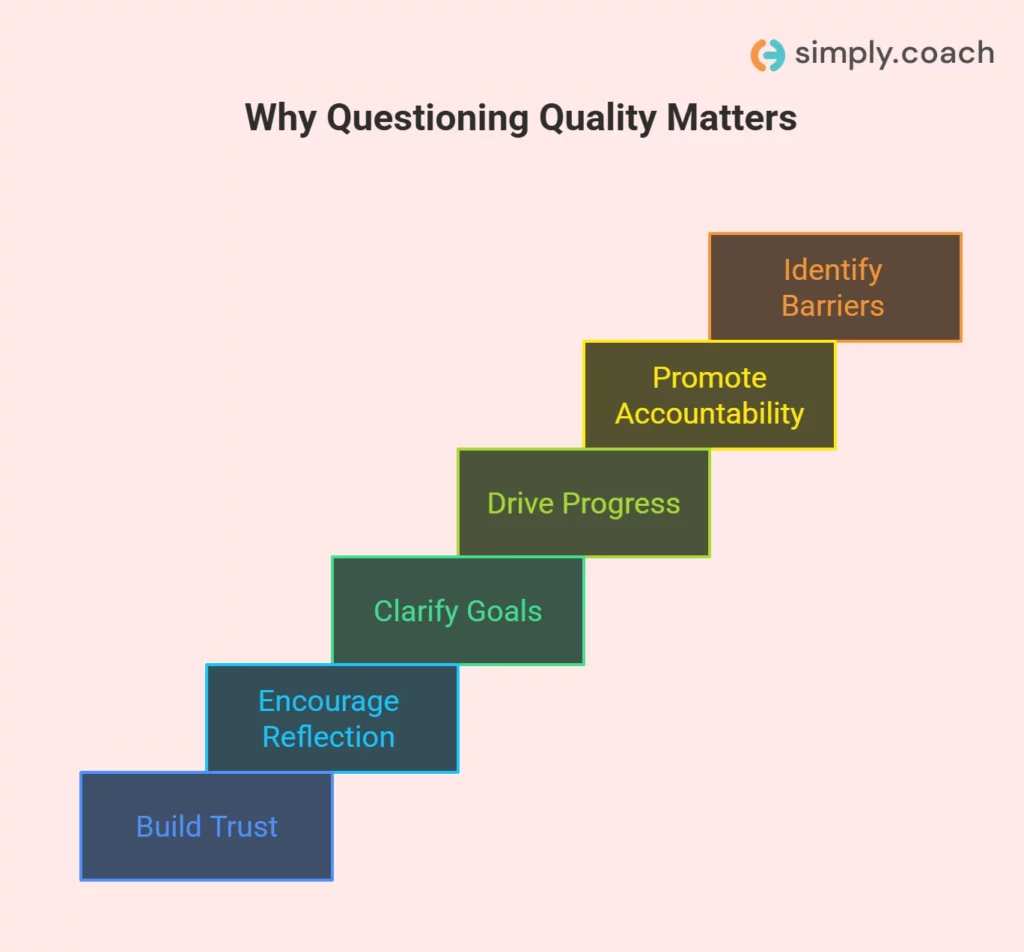
Asking the right health coaching questions is essential for guiding clients toward meaningful, lasting change. These questions do more than gather information—they create a structured framework that drives reflection, accountability, and measurable progress across key health coaching topics.
Here are six specific reasons why the right questions are so important in health coaching:
- Build stronger rapport and trust: Thoughtful, open-ended questions create a safe and supportive environment where clients feel comfortable sharing their challenges and goals.
- Encourage self-reflection: Questions focused on habits, mindset, and routines help clients gain insight into their behaviours and identify areas for improvement.
- Clarify health goals: Well-crafted questions guide clients to define clear, realistic goals across vital health coaching topics such as nutrition, exercise, stress management, and sleep.
- Drive consistent progress: By asking actionable questions, you help clients break down goals into steps they can follow, ensuring steady advancement toward their desired outcomes.
- Promote accountability: Reflective questions encourage clients to monitor their habits and progress, increasing ownership and commitment to their health journey.
- Identify barriers and solutions: Insightful questions uncover obstacles such as limiting beliefs, environmental challenges, or lack of support, allowing coaches to develop practical strategies to overcome them.
Using the right health coaching questions across these key topics ensures each session is productive, outcome-focused, and tailored to the client’s unique needs. For a more in-depth exploration of this topic, refer to our article on Simply Powerful Coaching Questions to Ask Your Clients.
How Should You Prepare the Client for a Health Coaching Session?
Preparing your clients for a health coaching session sets the stage for a productive and focused conversation, ensuring you both make the most of the time.
- Setting expectations: Clarify the structure, purpose, and objectives of the session to ensure your client knows what to expect and can come prepared for a focused discussion.
- Encouraging self-reflection: Encourage clients to reflect on their progress, challenges, and goals before the session. This helps them enter the conversation ready to engage and prioritize their most important health related objectives.
- Preparing mentally and emotionally: Guide your clients to approach the session with an open mindset. Being mentally and emotionally prepared allows for a more honest and productive conversation about their health journey.
- Providing pre-session forms: Use pre-session forms like progress check-ins or goal reviews to help clients organize their thoughts and give you valuable insights into their current state before the session.
- Creating a safe space: Ensure a non-judgmental and supportive environment, so clients feel comfortable being open and vulnerable, leading to a more effective health coaching experience.
Powerful Health Coaching Questions and Topics to Drive Client Success
Asking the right questions is crucial to guiding your clients toward their health goals. This list of 100+ health coaching questions will help you explore key areas like goal setting, progress tracking, and overcoming obstacles, ensuring productive sessions and lasting results.
Exploratory questions to uncover health goals
These questions help you understand your client’s health concerns, desires, and overall health definitions. By exploring their health priorities, you can guide them toward setting realistic and meaningful goals
- What are the most important health concerns you’d like to address?
- How would you define a healthy lifestyle for yourself?
- What are the key health areas you’d like to work on?
- What health habits are you currently focusing on?
- What changes would you like to see in your health over the next year?
- What does health look like for you in your day-to-day life?
- What obstacles have you encountered that have affected your health?
- How do you currently feel about your physical health?
- What areas of your health would you prioritize for improvement?
- How do you define wellness, and what would that look like for you?
- What’s the most important health change you’d like to make?
- How do you envision your health in 6 months?
- What’s one health goal you’d like to accomplish in the next year?
- What makes you feel empowered about your health?
- How do you feel about the progress you’ve made so far in your health journey?
Lifestyle and habits assessment questions
Explore your client’s daily habits and lifestyle choices that impact their health. Understanding their routines allows you to identify areas for improvement and create personalized coaching strategies.
- How do you typically handle stress in your daily life?
- How is your current sleep routine, and how do you feel upon waking?
- What types of physical activity do you regularly engage in?
- How often do you make time for exercise each week?
- What’s your daily routine like when it comes to food and nutrition?
- How do you manage your mental health and stress levels?
- How do your current habits align with your overall health goals?
- What are your daily eating habits?
- How often do you get time for self-care?
- How do you feel about the amount of movement you get daily?
- What’s one thing you’ve done recently that made you feel healthy?
- How much water do you drink daily, and how do you feel about it?
- How would you rate the quality of your sleep on a scale from 1-10?
- What’s one habit you’re ready to change to improve your health?
- How does your environment support or hinder your health goals?
Goal-setting and planning questions
Help clients clarify their objectives and create actionable steps for achieving their health goals. These questions will help clients visualize their success and develop a clear path to reach it.
- What are three specific health goals you’d like to accomplish this year?
- What time frame do you have in mind for reaching these goals?
- What motivates you to work towards these goals?
- How will achieving these health goals change your life?
- What are the most important steps for you to take toward your goals?
- How will you measure success in achieving your health goals?
- What’s one goal you’ve been hesitant to commit to?
- What are the top priorities for your health right now?
- What is your long-term vision for your health?
- What’s the first step you’re going to take today to start working on your goals?
- How do you plan to overcome any obstacles in achieving your goals?
- How can you break your health goals down into smaller, achievable steps?
- What are some resources you need to help achieve your goals?
- What tools or methods do you prefer to use when tracking your health goals?
- How will you celebrate your progress along the way?
Deeper exploration: Understanding commitment and challenges
Dig deeper into clients’ motivations, past experiences, and obstacles they might face in achieving their health goals. This will help uncover any potential barriers and build a plan to overcome them.
- How committed are you to making the necessary lifestyle changes?
- What has worked for you in the past, and why do you think it succeeded?
- What challenges do you foresee in making these changes?
- How can you stay motivated when facing setbacks?
- What’s your biggest obstacle in maintaining healthy habits?
- How do you typically respond when faced with a challenge in your health journey?
- What has prevented you from reaching your health goals in the past?
- How can you address the reasons you’ve struggled to make lasting changes?
- What would need to happen for you to feel fully committed to your health journey?
- How does your current environment support or hinder your goals?
- How do you feel about making significant lifestyle changes?
- What’s the biggest barrier to staying consistent with your health routine?
- How can we make your health goals feel more achievable?
Self-reflection and insight-gathering questions
Encourage clients to reflect on their health journey and uncover key insights that drive their transformation. These insights can be powerful motivators in helping clients stay focused on their goals.
- How do you feel about the changes you’re trying to make?
- What would it feel like to achieve your health goals?
- What is one thing you can do today to move closer to your goal?
- How would you describe your motivation right now?
- What insights have you gained during our coaching process so far?
- What are some things you’ve learned about yourself through this journey?
- What are you discovering about your relationship with food or exercise?
- How do you feel when you think about your health goals?
- What does self-care mean to you, and how do you prioritize it?
- What patterns have you noticed in your behavior that could affect your goals?
- What has changed for you since you started working on your health goals?
- How do you envision your future once you’ve achieved your health goals?
Identifying and overcoming obstacles
Explore potential barriers that could prevent clients from achieving their health goals and work through solutions. By addressing obstacles head-on, you can help clients find ways to stay on track despite challenges.
- What obstacles are currently standing in your way?
- How would it feel to remove this obstacle from your path?
- What steps can you take to overcome these challenges?
- What’s one thing you can do today to get closer to overcoming your obstacle?
- How can we create a plan to help you work through any setbacks?
- What limiting beliefs do you have about yourself and your health?
- What’s the biggest challenge you’re facing right now?
- How do you plan to address challenges that come up unexpectedly?
- What will happen if you don’t take action now toward your health goals?
- What’s the first step to breaking through the obstacle that’s blocking you?
Mindset and motivation-boosting questions
Build a growth mindset and motivate clients to stay committed even when challenges arise. These questions are designed to reinforce their motivation and help them stay positive and focused on their health journey.
- What motivates you to maintain these health changes long-term?
- How do you typically talk to yourself when facing setbacks?
- What mindset shift would help you stay on track with your goals?
- How can you shift your thinking to remain more positive and focused?
- What helps you stay disciplined when life gets busy?
- What would it take for you to develop a more consistent health routine?
- How can we make your goals feel exciting and inspiring?
- How do you remind yourself of your “why” when facing challenges?
- What would you do if you knew you couldn’t fail?
- How can you maintain momentum during tough times?
Support and resources for success
Encourage clients to assess their support systems and available resources to assist in their journey. Identifying these resources helps clients feel supported and better equipped to reach their fitness goals.
- Who in your life can help hold you accountable?
- What resources or tools do you need to help achieve your health goals?
- How can your family or friends support you during this journey?
- What support system do you have in place to help you stay on track?
- Who can you reach out to when you’re feeling discouraged?
- How can you build a stronger support network to help you succeed?
- What resources, such as apps or tools, have been helpful in your health journey?
- How can you seek support from other individuals or communities on this journey?
- What role does your support system play in your ability to achieve health goals?
Tracking progress and accountability
These questions keep clients on track by encouraging regular reflection on health progress and accountability. They help clients maintain momentum and recognize their achievements along the way.
- How are you tracking your progress toward your health goals?
- What’s been your biggest win since our last session?
- What are the steps you’re taking to stay accountable?
- What would success look like for you in the next few weeks?
- How do you plan to monitor your daily progress?
- What are some ways you can hold yourself accountable outside of sessions?
- What obstacles have you faced since our last session, and how did you handle them?
- How can we measure your success more effectively in future sessions?
- How can you celebrate your health progress, even with small wins?
- How do you reflect on your successes and setbacks after each health coaching session?
Future vision and long-term success questions
Help clients visualize their future success and maintain a forward-focused mindset. These questions will guide them in creating long-term health goals that align with their overall life vision.
- What will your life look like once you’ve reached your health goals?
- How will achieving these goals positively affect other areas of your life?
- What’s one small goal you can set for the next two weeks?
- How will your health impact your relationships or career in the future?
- What does a year of success look like for you?
- How will you ensure your health goals are part of your long-term lifestyle?
- What steps will you take to keep progressing toward your long-term health vision?
Closing reflection and follow-up questions
These questions close the session, helping clients reflect on their achievements, struggles, and the next steps. They provide a sense of closure and set the stage for continued progress toward their health & wellness goals.
- What’s one key takeaway from today’s session?
- How will you handle challenges that might arise between now and our next session?
- What action steps are you committing to for the upcoming week?
- How do you feel about the progress you’ve made since our last meeting?
- What are your next steps for continuing on your health journey?
Also read:Effective Freebies for Health Coaches to Attract Clients
How to Use Health Coaching Questions Effectively in Sessions
Using health coaching questions effectively can transform your sessions from routine check-ins into impactful, goal-driven conversations. By applying the right strategies, you can guide clients through meaningful reflection, uncover insights across key health coaching topics, and help them take actionable steps toward their goals.
- Prepare in advance: Review key health coaching topics and select questions that align with your client’s goals and challenges.
- Start with open-ended questions: Encourage reflection by asking questions that cannot be answered with a simple “yes” or “no.”
- Follow a logical flow: Sequence questions from understanding goals → exploring habits → identifying obstacles → planning action steps.
- Focus on one topic at a time: Avoid overwhelming clients; concentrate on a single health coaching topic per session if needed.
- Encourage reflection: Give clients space to think and respond thoughtfully, fostering deeper insights.
- Use questions to build accountability: Revisit previous answers to check progress and reinforce commitment.
- Adapt based on client needs: Be flexible—adjust questions depending on the client’s mindset, readiness, and emotional state.
- Combine with action plans: Pair questions with next-step tasks to translate insights into measurable outcomes.
- Review and reflect: Conclude each session by summarizing key insights and discussing follow-up actions across the health coaching topics covered.
By using these strategies, you can maximize the impact of every session, ensuring your clients make steady progress while staying motivated and engaged.
Common Mistakes Coaches Make When Asking Questions
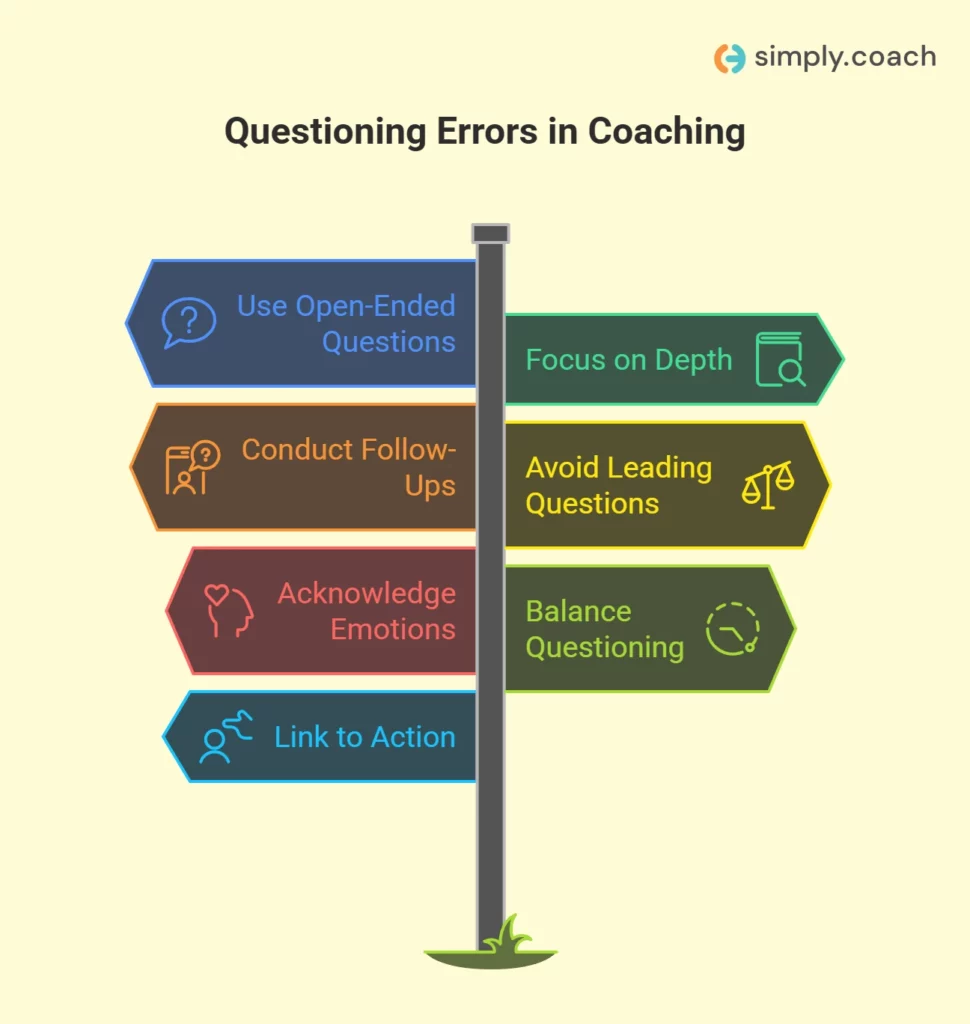
Even experienced coaches can unintentionally limit the effectiveness of their sessions by asking the wrong type of questions or missing opportunities for deeper exploration. Being aware of these common mistakes can help you improve how you guide conversations and ensure your health coaching questions lead to meaningful insights and action.
- Asking too many closed-ended questions: Questions that lead to simple “yes” or “no” answers can restrict conversation. Instead, use open-ended health coaching questions that encourage clients to reflect and elaborate.
- Focusing only on surface-level issues: Some coaches focus only on visible behaviours like diet or exercise. Effective coaching should also explore deeper aspects such as mindset, motivation, emotional triggers, and lifestyle patterns.
- Skipping follow-up questions: When coaches move on too quickly, they may miss valuable insights. Follow-up questions help uncover the root cause of habits, challenges, or limiting beliefs.
- Leading the client toward a specific answer: Asking questions that suggest a preferred response can limit honest reflection. Neutral and exploratory questions allow clients to arrive at their own insights.
- Ignoring emotional context: Health decisions are often influenced by emotions, stress, and personal circumstances. Addressing these factors helps create more meaningful breakthroughs during coaching sessions.
- Asking too many questions at once: Rapid questioning can overwhelm clients and reduce clarity. Allow time for reflection and keep the conversation focused on one topic at a time.
- Not connecting questions to action steps: Questions should ultimately guide clients toward practical changes. Linking insights from health coaching questions to clear next steps ensures the conversation leads to progress.
By avoiding these common pitfalls, coaches can create more productive sessions, encourage deeper reflection, and ensure that conversations lead to lasting behavioural change.
Also read: Top 15 Health & Wellness Coaches to Follow in 2026: Essential Insights for Health Coaches
Conclusion
Asking the right health coaching questions can transform the way coaches guide their clients toward lasting change. Thoughtful questions encourage self-reflection, clarify goals, and help uncover the deeper motivations behind health behaviours. When used effectively, they turn coaching conversations into powerful moments of insight and accountability. By incorporating the right questions throughout your sessions, you can help clients stay focused, motivated, and committed to their health journey.
Managing coaching conversations, tracking client progress, and organising session insights can become much easier with the right platform. Simply.Coach helps health coaches streamline their practice with tools for client management, goal tracking, session notes, and structured coaching programs.
By centralising your coaching workflow, you can focus more on asking impactful questions and supporting client transformation. Explore Simply.Coach to simplify your coaching process and deliver more effective sessions.
FAQs
1. What are open-ended questions in health coaching?
Open-ended questions encourage clients to share detailed thoughts instead of giving simple yes/no responses. They help coaches explore behaviours, motivations, and personal challenges more deeply during sessions.
2. How often should health coaches ask reflective questions during sessions?
Reflective questions are typically used throughout the session to help clients process their thoughts and behaviours. Coaches often revisit them when reviewing progress or discussing lifestyle changes.
3. What is the difference between health coaching and medical advice?
Health coaching focuses on behaviour change, goal setting, and accountability. Coaches support clients in building healthier habits but do not diagnose conditions or provide medical treatment.
4. What topics are usually discussed in a health coaching session?
Sessions commonly cover areas like nutrition habits, physical activity, stress management, sleep quality, and lifestyle balance. Coaches explore these areas to help clients identify habits that influence overall well-being.
5. How do health coaches measure client progress?
Progress is often tracked through goal milestones, behaviour changes, and regular check-ins. Coaches may also use assessments, feedback, and health metrics to evaluate improvements over time.
6. How long does a typical health coaching session last?
Most health coaching sessions last between 30 and 60 minutes. The duration allows enough time for discussion, reflection, and setting actionable steps before the next session.
7. Can health coaching help with motivation and habit change?
Yes, health coaching focuses heavily on behaviour change strategies and accountability. Regular conversations and structured action plans help clients stay motivated and maintain healthier habits over time.