
Every day, counselors work at the intersection of psychology, human behavior, and real-world decision-making. They help individuals navigate anxiety, relationship conflicts, identity questions, career uncertainty, and other complex life challenges. According to the American Psychiatric Association, nearly 28% of U.S. adults reported speaking with a mental health professional within the past year, signaling a growing reliance on professional counseling support.
For psychology students and emerging practitioners, understanding what counselors actually do in practice goes far beyond textbook definitions. Counseling involves structured assessment, evidence-informed interventions, ethical decision-making, and long-term client support across diverse settings such as schools, hospitals, and private practices.
In this article, we examine what counselors do, the responsibilities they carry in different environments, and the practical impact their work has on individual wellbeing and community resilience.
Key takeaways
- Counselors support individuals in navigating emotional, psychological, and life challenges, helping clients develop coping strategies, improve relationships, and make informed decisions.
- The role of a counselor extends beyond conversations, involving client assessment, structured sessions, intervention planning, and progress documentation.
- Counseling professionals work across diverse environments, including schools, mental health clinics, hospitals, career centers, and private practice.
- Becoming a counselor typically requires a bachelor’s degree, a master’s program in counseling or a related field, supervised clinical experience, and professional licensure.
- Choosing a counseling specialization depends on factors such as preferred client populations, work environments, and long-term career goals.
- Effective counseling sessions follow a structured flow, including check-ins, exploration of concerns, therapeutic interventions, action planning, and documentation.
- Digital platforms like Simply.Coach help counselors organize session notes, goals, and client progress, supporting more structured and efficient counseling practices.
What Do Counselors Do? Everything New Practitioners Can Expect
Counseling is often described as helping people navigate emotional or psychological challenges, but the day-to-day work of a counselor involves far more structured responsibilities.
For new practitioners entering the field, counseling combines psychological theory with practical application, which includes assessing client needs, guiding reflective conversations, applying therapeutic techniques, and documenting progress over time.
The role can also vary depending on specialization and work setting. School counselors may focus on student development and academic wellbeing, while mental health counselors address emotional disorders, trauma, or life transitions.
Understanding these differences early helps new practitioners identify which counseling path best aligns with their interests and training.
As psychology students transition into practice, several professional skills quickly become essential:
- advanced listening and reflective communication
- asking thoughtful, therapeutic questions
- identifying patterns in behavior and emotional responses
- maintaining ethical boundaries and confidentiality
- documenting sessions clearly and accurately
- practicing cultural awareness when working with diverse clients
Developing these abilities helps counselors move beyond theoretical knowledge and build the professional competence required to support clients effectively.
Core responsibilities most counselors share
While counseling specialties differ, most professionals perform a similar set of core tasks throughout their work:
- Conducting intake assessments to understand a client’s background, concerns, and goals
- Establishing a therapeutic relationship built on trust, empathy, and confidentiality
- Applying evidence-informed counseling approaches such as cognitive behavioral therapy or solution-focused methods
- Helping clients develop coping strategies and behavioral goals
- Monitoring client progress across multiple sessions
- Maintaining detailed and confidential counseling notes and documentation
- Collaborating with educators, healthcare professionals, or family members when appropriate
These responsibilities ensure counseling remains both supportive and structured, balancing empathy with professional guidance.
What Happens During a Typical Counseling Session
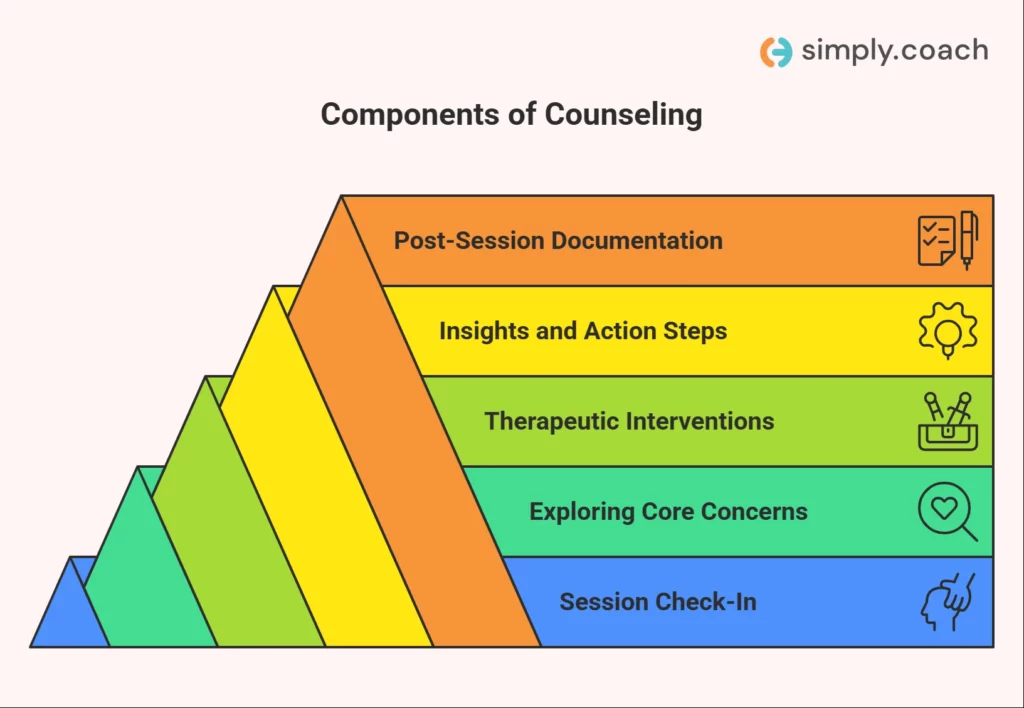
For new practitioners, one of the most important shifts is moving from theoretical knowledge of counseling models to understanding how a real session unfolds.
While each counseling interaction depends on the client’s needs, most effective sessions follow a structured flow that helps maintain focus, build insight, and guide meaningful progress over time.
Rather than being a free-flowing conversation, counseling sessions often move through distinct phases of exploration, intervention, and reflection. This structure helps counselors balance empathy with purposeful guidance.
1. Session check-in and context review
Most sessions begin with a brief check-in to understand what has changed since the previous meeting. This stage allows the counselor to assess the client’s current emotional state and identify any immediate concerns that may need attention.
Typical questions at this stage may include:
- What has been most challenging since our last session?
- Have there been any significant events or emotional shifts this week?
- Were you able to try any of the strategies we discussed earlier?
For new counselors, this phase is also an opportunity to observe behavioral patterns, such as shifts in mood, language, or body language that may indicate underlying concerns.
2. Exploring the client’s core concerns
Once the context is clear, the session typically moves into deeper exploration of the client’s experiences, thoughts, and emotional responses. This stage relies heavily on active listening, reflective questioning, and emotional validation.
Rather than immediately offering solutions, counselors help clients examine the situation from multiple perspectives. For example, a counselor may guide the client to reflect on:
- the thoughts influencing their reactions
- the emotions connected to those thoughts
- the behaviors that follow those emotional responses
This process helps clients develop greater self-awareness, which is often the first step toward meaningful change.
3. Applying therapeutic interventions
After gaining clarity about the client’s concerns, the counselor may introduce specific therapeutic techniques that help the client reframe their experiences or develop coping strategies.
Depending on the counselor’s training and the client’s needs, this stage may involve approaches such as:
- cognitive behavioral techniques to challenge unhelpful thought patterns
- solution-focused questioning to identify practical next steps
- emotional regulation exercises to manage stress or anxiety
- role-playing conversations to practice communication skills
For new practitioners, it is important to remember that interventions are not rigid scripts. Effective counselors adapt techniques to fit the client’s personality, cultural context, and readiness for change.
4. Identifying insights and action steps
Toward the end of the session, counselors often help clients summarize the key insights that emerged during the conversation. This reflection reinforces learning and ensures the session translates into practical progress.
Together, counselor and client may identify specific actions or reflections to focus on before the next meeting, such as:
- practicing a new coping strategy
- observing emotional triggers in daily situations
- having a difficult conversation that was previously avoided
These steps are often small but intentional, allowing the client to gradually apply insights from counseling to real-life situations.
5. Post-session documentation and reflection
After the client leaves, counselors typically document the session to maintain a clear record of progress and important observations. These notes may include:
- key themes discussed during the session
- emotional or behavioral patterns observed
- interventions used during the conversation
- agreed-upon action steps for the client
Accurate documentation helps counselors track long-term patterns, prepare for future sessions, and maintain professional accountability.
For practitioners early in their careers, understanding the structure of a counseling session helps build confidence and clarity. While conversations may appear organic from the client’s perspective, experienced counselors are often guiding the discussion with intentional stages, moving from exploration to insight to practical action.
Over time, this structure becomes more intuitive, allowing counselors to adapt naturally while still ensuring each session contributes to meaningful client progress.
What Education or Certification Do You Need to Become a Counselor?
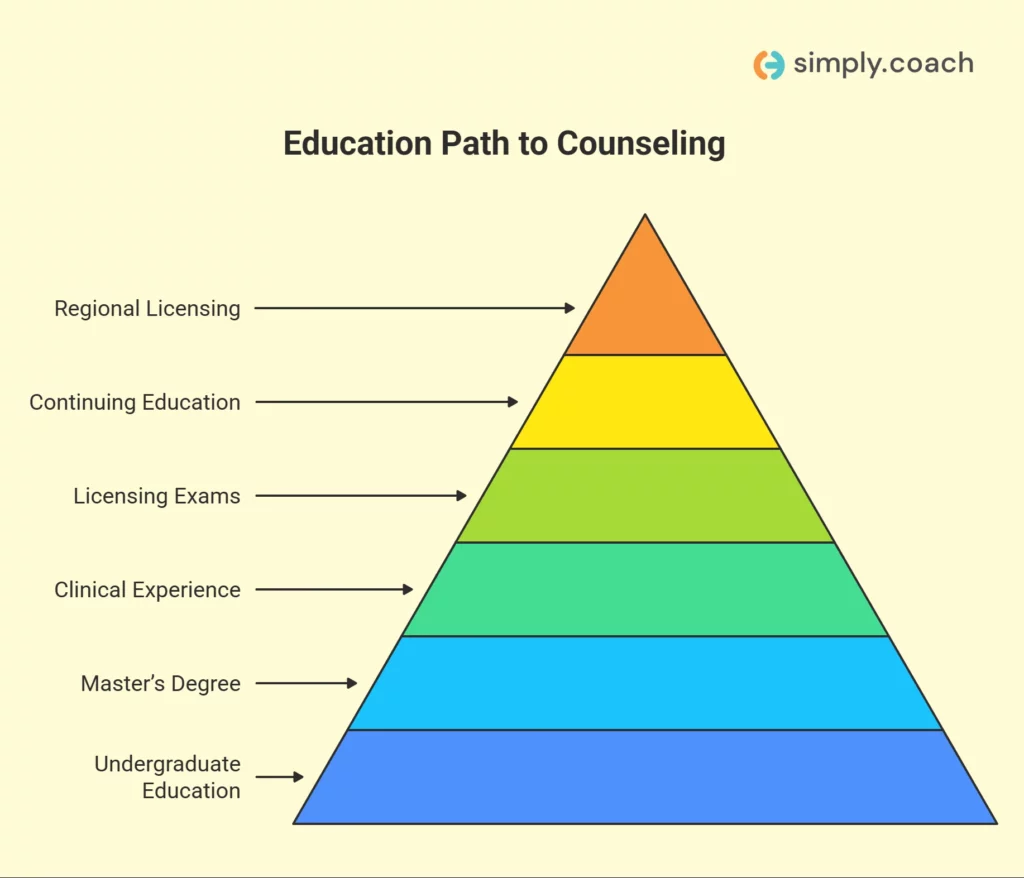
For psychology students considering a career in counseling, entering the profession requires more than academic interest in human behavior. Counseling is a regulated field in most regions, meaning practitioners must complete specific education, supervised training, and licensing requirements before working independently with clients.
While requirements vary slightly by location and counseling specialization, most counseling careers follow a structured pathway that combines academic study with practical clinical experience.
1. Undergraduate education
The first step toward becoming a counselor is earning a bachelor’s degree. Many students choose majors closely related to counseling practice, such as:
- psychology
- counseling
- sociology
- social work
- human development
However, an undergraduate degree does not always have to be in psychology or counseling. Many graduate counseling programs accept students from other academic backgrounds as long as they complete prerequisite coursework in behavioral science.
During undergraduate study, students often begin building foundational knowledge in areas such as human development, abnormal psychology, research methods, and counseling theory.
2. Master’s degree in counseling or a related field
To practice as a professional counselor, most countries and U.S. states require a master’s degree in counseling or a closely related discipline. These programs typically take one to two years to complete, depending on the structure of the program.
Graduate counseling programs usually include coursework in:
- counseling theories and therapeutic approaches
- ethics and professional standards
- psychological assessment
- multicultural counseling
- research and evidence-based practice
Many programs also include supervised practicum or internship placements, allowing students to gain real-world counseling experience while completing their degree.
3. Post-graduate supervised clinical experience
After completing a master’s degree, most regions require counselors to complete supervised clinical practice before obtaining full licensure.
In many U.S. states, this stage involves:
- 2,000 to 4,000 hours of supervised counseling experience
- approximately two years of professional practice under supervision
During this period, new counselors work under licensed professionals while continuing to develop skills in client assessment, treatment planning, and ethical decision-making.
4. Licensing examinations
To practice independently, counselors must usually pass a state-recognized licensing examination. In the United States, common exams include the National Counselor Examination (NCE) or other state-specific assessments.
These exams evaluate a practitioner’s understanding of:
- counseling theory and practice
- ethical standards
- assessment techniques
- professional responsibilities
Passing the licensing exam demonstrates that a counselor meets the professional standards required to work with clients safely and ethically.
5. Continuing education and professional development
Becoming a counselor does not mark the end of professional learning. Most licensing boards require counselors to complete continuing education courses each year to maintain their credentials.
These courses allow professionals to stay updated on:
- emerging therapeutic approaches
- changes in ethical guidelines
- new research in psychology and mental health
For many counselors, ongoing education becomes a lifelong process that strengthens both professional competence and client care.
6. Understanding regional licensing requirements
Licensing and certification requirements can vary depending on state, country, or counseling specialization. Psychology students planning to pursue counseling should review the regulations for the region where they intend to study and practice.
Understanding these requirements early helps aspiring counselors choose the right academic program and prepare for the training necessary to build a successful counseling career.
Where Counselors Work (And How the Role Changes)?
One of the most important decisions new counseling practitioners face is choosing the professional setting in which they want to practice. While the core principles of counseling like empathy, structured dialogue, and evidence-based intervention remain consistent, the daily responsibilities, client populations, and goals of counseling can vary significantly depending on the environment.
Understanding these differences early helps psychology students and emerging counselors identify which path aligns best with their interests, training, and long-term career goals.
School counseling
School counselors work primarily in elementary, middle, and high school environments, supporting students’ academic, emotional, and social development. Their work often combines counseling with educational guidance.
Responsibilities may include:
- helping students manage academic stress, peer relationships, or behavioral challenges
- guiding career and college planning discussions
- facilitating group counseling sessions on topics such as self-esteem, bullying, or emotional regulation
- collaborating with teachers, parents, and school administrators to support student wellbeing
Unlike many clinical roles, school counselors often balance individual counseling with broader student support programs, making the role both preventative and developmental in nature.
Mental health counseling
Mental health counselors typically work in clinics, hospitals, community mental health centers, or private practice, focusing on psychological and emotional challenges affecting clients.
Their work often involves:
- supporting individuals experiencing anxiety, depression, trauma, grief, or life transitions
- applying evidence-based therapeutic approaches such as cognitive behavioral therapy or solution-focused counseling
- conducting intake assessments and developing treatment plans
- collaborating with psychiatrists, social workers, or other healthcare professionals
For new practitioners interested in clinical work, mental health counseling often provides the most direct therapeutic experience with diverse client needs.
Career counseling
Career counselors focus on helping individuals make informed decisions about education, employment, and professional development. They often work in universities, career development centers, or private consulting environments.
Typical responsibilities include:
- helping clients explore career interests, skills, and personality traits
- guiding students or professionals through career transitions
- assisting with job search strategies, resume development, and interview preparation
- helping clients navigate workplace challenges or professional uncertainty
For practitioners who enjoy combining psychology with vocational guidance, career counseling offers a unique opportunity to influence long-term professional outcomes.
Rehabilitation counseling
Rehabilitation counselors specialize in supporting individuals with physical, developmental, or emotional disabilities as they work toward independence and employment.
Their responsibilities may include:
- helping clients develop strategies to adapt to physical or cognitive limitations
- coordinating services such as vocational training or workplace accommodations
- collaborating with healthcare providers, employers, and social services
- supporting clients in building confidence and long-term self-sufficiency
This role often requires strong advocacy skills and a commitment to helping individuals overcome systemic barriers.
Marriage and family counseling
Marriage and family counselors focus on relationship dynamics, helping couples, partners, and families improve communication and resolve conflicts.
Their work may involve:
- facilitating conversations around relationship challenges
- helping couples navigate life transitions such as marriage, parenting, or separation
- identifying patterns of communication or behavior that affect family systems
- guiding families toward healthier interaction patterns
Because this work involves multiple participants, practitioners must develop strong skills in facilitating balanced dialogue and managing complex interpersonal dynamics.
Choosing the right path as a new practitioner
For psychology students entering the counseling profession, exploring these environments can help clarify where their interests and strengths lie. Some practitioners are drawn to clinical mental health work, while others prefer the developmental focus of school counseling or the systems perspective found in family therapy.
Gaining exposure through internships, supervised practice, or early career roles often provides valuable insight into which counseling path feels most aligned with a practitioner’s long-term goals.
Also read:Coaching the Growth Mindset: A Mindful Approach to Unlocking Leadership Potential
Counselors vs. Therapists: Key Differences You Should Know
As a counselor, you play a vital role in guiding clients through life challenges, focusing on personal growth and mental well-being. But how does your role differ from that of a therapist? While both professions share similarities, there are key distinctions that set your work apart.
Counselors and therapists often overlap in their roles, as both aim to improve the mental health and well-being of individuals. However, the key differences lie in the focus, treatment duration, and qualifications. Let’s break down these distinctions:
| Counselors | Therapists |
| Short-term focus: Your work is typically short-term, addressing specific challenges such as stress, relationship issues, or career transitions. | Long-term focus: Therapists generally work with clients over a longer period, focusing on deeper emotional issues, often related to mental health disorders like depression or anxiety. |
| Solution-based: You provide practical, solution-oriented strategies to help clients cope with immediate challenges. | Healing-focused: Therapists often delve deeper into emotional healing, exploring past trauma and long-term mental health conditions. |
| Life skills emphasis: Your approach focuses on helping clients develop life skills, such as communication, emotional regulation, and stress management. | Emotional healing: Therapists focus more on emotional healing, often using techniques like psychoanalysis or Cognitive-Behavioral Therapy (CBT) to treat complex mental health disorders. |
| Qualifications: Counselors typically hold a master’s degree in counseling or a related field, with a focus on life issues and specific counseling techniques. | Qualifications: Therapists often have a master’s or doctoral degree in psychology, social work, or psychotherapy, with expertise in diagnosing and treating mental health disorders. |
While both roles require advanced degrees, therapists typically have more in-depth training in clinical and psychological treatment, making them more suited for treating complex mental health conditions.
Understanding these distinctions helps you recognize the unique value you bring as a counselor, particularly in providing short-term, practical solutions that can have an immediate positive impact on your clients’ lives.
Things to Consider When Choosing a Counseling Career Path
For psychology students and emerging practitioners, one of the most important early decisions is choosing the counseling path that aligns with their interests, skills, and long-term goals. Counseling is a broad field, and while the foundational skills remain similar, the nature of the work can vary significantly depending on the population served and the professional setting.
Rather than choosing a specialization based only on academic interest, new practitioners benefit from considering how their strengths, working style, and preferred client groups fit different counseling roles.
Consider the population you want to work with
Different counseling paths involve working with different client populations. Some counselors work primarily with children and adolescents, while others focus on adults, couples, families, or individuals navigating career challenges.
For example:
- School counselors primarily support students navigating academic, emotional, and social challenges.
- Mental health counselors often work with individuals experiencing anxiety, depression, trauma, or life transitions.
- Marriage and family therapists focus on relationship dynamics between partners and family members.
- Rehabilitation counselors work with individuals with disabilities seeking greater independence and employment opportunities.
Understanding which group you feel most motivated to support can help narrow your career direction.
Reflect on the work environment that suits you
Counseling professionals work across many environments, including schools, hospitals, community organizations, universities, and private practices. Each setting has its own pace, structure, and expectations.
For instance:
- School counseling often involves balancing individual sessions with group programs and collaboration with educators.
- Clinical mental health counseling may involve longer-term therapeutic relationships and treatment planning.
- Career counseling frequently includes guidance sessions, assessments, and professional development planning.
Thinking about the type of work environment you prefer, like structured institutional settings or independent practice, can influence your specialization choice.
Understand the emotional demands of the profession
Counseling can be deeply rewarding, but it also requires emotional resilience and strong professional boundaries. Practitioners regularly work with individuals facing difficult life situations, including trauma, grief, or significant life stress.
New counselors benefit from developing:
- strategies for maintaining professional boundaries
- habits that support personal wellbeing and self-care
- supervision and peer support systems
A strong support network helps counselors remain effective while protecting their own mental health.
Explore your long-term career goals
Some counseling paths emphasize direct therapeutic work, while others involve education, advocacy, or career development.
For example:
- Clinical counselors may focus on long-term mental health treatment.
- School counselors may develop programs that support student wellbeing across entire schools.
- Career counselors may work with individuals navigating professional transitions.
Thinking about how you want your career to evolve, whether toward private practice, leadership roles, research, or community programs, can guide your specialization decisions early on.
Gain exposure through practical experience
Internships, volunteer work, and supervised placements often provide the most valuable insight into the realities of counseling practice. These experiences allow students to observe how different counseling environments operate and identify which areas feel most meaningful.
Many practitioners discover their preferred counseling path only after working directly with clients in real-world settings.
Choosing a counseling career path is rarely a single decision made at the beginning of a career. Instead, it is often shaped by experience, training, and evolving professional interests.
By exploring different counseling environments and reflecting on personal strengths, new practitioners can gradually identify the path where their skills can make the greatest impact.
How Simply.Coach Supports Counselors in Their Professional Journey
As counselors progress from training to independent practice, their responsibilities extend beyond conducting sessions. Managing client notes, tracking progress, scheduling appointments, and maintaining organized records quickly become essential parts of daily work. When these tasks are handled across multiple tools or manual systems, it can become difficult to maintain consistency and track long-term client development.
Simply.Coach, the leading digital coaching platform, supports counselors throughout their professional journey by bringing these essential tasks into one organized system. From managing individual sessions to monitoring client progress over time, the platform helps counselors maintain structure while focusing on meaningful client interactions.
Key features that support counselors include:
- Client workspaces → Maintain a dedicated space for each client where session notes, reflections, shared resources, and goals can be stored and reviewed across sessions.
- Goal and progress tracking → Define client goals and monitor their development over time, helping ensure counseling conversations remain focused on long-term outcomes.
- Action Plans → Convert insights from sessions into clear next steps, enabling counselors to track how clients apply strategies and reflections between meetings.
- Forms and reflection tools → Use built-in forms and questionnaires to gather client reflections, assessments, or feedback before or after sessions.
- Integrated scheduling → Manage session bookings, reminders, and calendar coordination in one place, helping reduce administrative complexity.
- Session and engagement management → Organize one-to-one counseling engagements or group sessions while keeping all records, insights, and client progress connected.
By bringing session documentation, goal tracking, scheduling, and client reflections together, Simply.Coach helps counselors maintain organized practices and clear client journeys, supporting both effective counseling and professional growth over time.
Conclusion
Counselors play a critical role in helping individuals navigate emotional challenges, life transitions, and personal growth. From conducting structured counseling sessions to guiding clients through practical coping strategies, their work combines psychological expertise with compassionate support. For psychology students and new practitioners, understanding what counselors do provides a clearer view of how theory translates into meaningful client impact across schools, healthcare settings, and community organizations.
At the same time, effective counseling involves more than conversations. Managing session documentation, tracking client progress, and maintaining organized records are essential parts of professional practice. Simply.Coach, the leading digital coaching platform, helps counselors keep session notes, goals, reflections, and action plans organized in one place, making it easier to manage client journeys while focusing on impactful counseling work.
See how Simply.Coach fits your practice.
FAQs
1. What are the main roles of a counselor?
Counselors take on several roles depending on their setting and specialization. Common responsibilities include assessing client concerns, providing emotional support, facilitating self-awareness, guiding decision-making, developing coping strategies, monitoring client progress, and maintaining ethical documentation of sessions.
2. What are the seven roles of a counselor?
The seven commonly recognized roles of a counselor include:
- Advisor – helping clients evaluate options and make informed decisions
- Listener – providing a safe space for clients to express thoughts and emotions
- Supporter – offering emotional encouragement during difficult situations
- Educator – helping clients understand psychological patterns and coping strategies
- Facilitator – guiding conversations that help clients gain new insights
- Advocate – supporting client wellbeing within institutions such as schools or workplaces
- Record keeper – maintaining confidential counseling notes and documentation
3. What are the 10 roles of a counselor?
In broader professional practice, counselors may fulfill multiple roles such as:
- Active listener
- Problem-solving guide
- Emotional support provider
- Behavioral change facilitator
- Educator on mental health and coping strategies
- Mediator in conflicts or relationship issues
- Career or life decision advisor
- Client progress evaluator
- Ethical professional responsible for confidentiality
- Advocate for client wellbeing
These roles can shift depending on whether the counselor works in clinical settings, schools, rehabilitation programs, or career counseling environments.
4. What are the 5 P’s of counseling?
The 5 P’s of counseling are commonly used in psychological case formulation to understand a client’s situation. They include:
- Presenting problem – the main issue bringing the client to counseling
- Predisposing factors – background conditions that increase vulnerability
- Precipitating factors – events that triggered the current difficulty
- Perpetuating factors – behaviors or conditions that maintain the problem
- Protective factors – strengths or resources that support recovery
This framework helps counselors analyze client concerns more systematically.
5. What are the 3 C’s of counseling?
The 3 C’s of counseling often refer to essential interpersonal qualities required for effective counseling:
- Compassion – understanding and empathizing with a client’s experiences
- Communication – listening carefully and asking thoughtful questions
- Confidentiality – maintaining trust by protecting client information
These qualities form the foundation of strong therapeutic relationships.
6. What skills are most important for counselors to develop?
Successful counselors rely on a combination of professional and interpersonal skills, including active listening, emotional intelligence, critical thinking, ethical decision-making, and the ability to identify behavioral patterns. Strong documentation skills and cultural awareness are also essential for effective counseling practice.
7. How do counselors measure client progress over time?
Counselors typically track progress through session notes, behavioral observations, client reflections, and goal tracking across multiple sessions. By documenting themes, interventions, and outcomes, counselors can identify patterns in client development and adjust their approach to better support long-term progress.